Episode 308: Supporting Airway Health with Kristina Wolf, MS, DMD
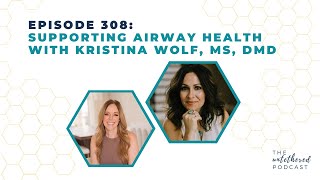
Podcast interview (Episode 308) where host Hallie Bulkin speaks with Dr. Kristina (Christina) Wolf (DMD, MS) about airway-centered dental care. Dr. Wolf describes her clinical and personal pathway into TMJ and sleep therapy, mentorship with Dr. Steven Olmos, and her practice/teaching roles in Cleveland. The conversation introduces the Nuvola (Freedom) system from Italy — a combined clear-aligner + prefabricated myofunctional appliance approach intended to stimulate palatal sutures and affect cranial base mechanics — indicated in some cases for children as young as four and for adults. They discuss timing and role of myofunctional therapy during appliance-based treatment, the importance of comprehensive airway screening (validated questionnaires like ABEARs/PSQ, focused history, physical exam, and CBCT imaging), interdisciplinary care, and the clinical value of addressing even mild sleep-disordered breathing rather than dismissing it based solely on AHI thresholds. Practical contact details for Dr. Wolf and course/recording references are provided.
Chapters
Hi and welcome to episode 308 of the Untethered podcast. Today we have Dr. Christina Wolf joining us. Dr. Wolf is a Cleveland native and a mom of two amazing little kids, Kaya and Leo. It was actually these two little humans that got her interested and involved in the world of sleep. What further intensified her desire to get involved in the disciplines of sleep and pain was her own struggles and healing journey after suffering with TMJ and sleep issues. She has a private practice dedicated to pain and sleep and is also a professor at her alma material, Case Western Reserve University School of Dental Medicine where she teaches the sciences, including anatomy, physiology and neuroscience. She received her Doctor of Dental Medicine, DMD from CWRU, as well as a Master's of Science in Applied anatomy. Her mentor, Dr. Steven Almost, has now brought her on board as the primary educator for TMJ and Sleep Therapy Center International where she leads the mini residency program domestically. Quick disclaimer. All information, content and material of this podcast are the opinions of the speakers and is for the informational purpose only and not intended to serve as a substitute for the consultation, diagnosis and or medical treatment of a qualified healthcare provider. Welcome to the Untethered Podcast. I am your host, Halle Balkan. I'm a certified myofunctional therapist, feeding specialist, podcaster, business owner and mentor. This podcast is all about getting your questions answered and collaborating with colleagues to bring you the most up to date information in the orofacial myofunctional therapy, airway tether, dural tissue and pediatric feeding therapy space. If you're new here, I challenge you to keep an open mind and join my mission to spread this message far and wide. If you've been around since June 2019, thanks for being a loyal listener. As we jump into today's episode, remember to listen with correct oral rest. Posture, tongue up, lips closed, teeth apart, breathe through your nose. Let's get started. Christina, welcome to the podcast.
Hi Ali. How are you today?
I am good. I'm excited to have you here. So we're gonna jump in and before we do, I would just love for you to share with everybody a little bit about who you are and how you got into this airway space.
Yeah. So I am Dr. Christina Wolf and I have a TMJ and sleep therapy center here in Cleveland, Ohio. Um, I got into airway and everything, all the facets of treating TMD and comorbid airway disorders because I had my own problems. And I'm sure, as most of your audience knows and you know, then you look around at everybody, you Know, and. And you see it all over the place. You can't unsee it once you see it. So it's so prevalent. And so of course, then I was seeing it within my own family, right? So my stepdad, who had AFIB that couldn't get under control, and I said, you know, you're shake in the room, and I'm pretty sure you have sleep apnea. And of course, once we treat these things, those go away. My kids, both of my kids who we found out had sleep apnea and sleep breathing concerns that we had to treat in them as well. So unfortunately, as again, I'm sure most people know when you kind of get into this and you start looking around and you start seeing, you also start to recognize that there's really nobody doing this or not enough people doing it. And so I said to myself, you know, you know, if I was having this hard of a time finding somebody to treat myself, my kids, my family, all these other people that I'm seeing, there's just not enough of us out there. So that for me was a pretty quick changeover of. I need to completely shift gears. I want to go completely out of doing any general dentistry, and I 100% want to treat TMD and sleep. And I was very fortunate enough to be introduced to Dr. Omos and the TMJ and sleep therapy centers. And, you know, he mentored me and raised me up right and taught me all these wonderful things, and then here we are today.
That's awesome. And he's incredible. And as you know, he's been on the podcast and he's taught for us and just such a wealth of information. So how cool that that was a mentor of yours. Because I'm sure that, you know, now you get to carry forward all that information with your practice. And that's really cool. Yes, it is. It's really hard to find. I know. Before we hit record, we were talking about how my kids have been. One has been in two rounds of expansion and one has been in one round, and now I'm taking them for consults to see if the older one still needs any more and if the younger one, you know, the younger one needs it. So it's really just a matter of what are we doing next and how are we supporting the airway. But it's so hard to find airway truly airway centric professionals, because one of the initial people that I did go to when I moved down to Boca did a really great airway assessment with the treatment plan was a really traditional ortho approach. And I was like, well, that's disappointing. And then they proceeded to tell me that everything that I knew to be true and that I learned. And all my colleagues were basically just, you know, a crock of, you know. Yes. And I was like, okay, our, our time here is done. Thank you so much for your time. I was like, wow, well, that was a great evaluation. Unfortunately, we'll be going somewhere else or fortunately, but anyways.
Yeah.
So it's, it is. It's so hard to find somebody. And I was driving over an hour down here even just to take my kids because of. That's how important it was to me to like, get this treated. And if anybody knows south Florida traffic, it's. That's, it's just brutal. It is brutal. And coming from D.C. it's not much better. But at least up there I had someone who was like 10 minutes from home and she's a good friend of mine and fell into the airway space. And I was like, I even said to her the other day, I'm like, I think I just need to come to you for like, regular cleanings when I come to visit because I miss your office.
Right. Just make the trip back up to D.C. every. You gotta go visit family and things and just, you know, take everybody with you and go see her.
Exactly 100. Although we're going up this weekend and she's coming down to Florida, so we're, we're missing each other. But, but anyways, so. Yeah. So I, I love that, I love your, your story. I love that you decided to kind of step up into this space because like you said, it is so needed and it's so hard to find providers who get it. So. So we're going to dive into like, all things pediatric obstructive sleep apnea today and sleep disordered breathing and all of that fun stuff. But I know we were talking about this system, right? This pediatric obstructive sleep apnea system that you all, I guess, are using. And so I'd love for you to speak about what that is and share with our listeners because I think they're going to be excited to hear about this.
Yeah. So it was really exciting. It was introduced to us, I want to say, about two years ago. So it's a system that comes out of Italy. So Dr. Alessandro Carofiello, he was trained kind of how. I think we're all starting to learn how to train ourselves where it's a full body dynamic of things. It's not just the teeth and the maxilla and the mandible. So he was trained, you know, not only to evaluate the dentition, because he's an orthodontist there, but he was also trained as an MD So he was trained to evaluate posture, he was trained to evaluate breathing, he was trained to evaluate kind of everything. And so in that training and working with the osteopathy doctors and things that he was working with, you know, he came to realize there's just so much limitation to what we do orthodontically. We're just kind of focusing on these mechanical forces. We're strictly focusing on dental alveolar forces. And so he came up with this system called the Nuvola system, whereby we can basically merge the constant orthodontic forces, those light forces that we're getting, and using it with a clear aligner system, actually. So some adaptations that he has in there, which I'll talk about with his aligner system. It's, it's, you know, the, the similarity it has to other clear aligner sisters is that it's clear, but basically the mechanisms by which it's made is completely different because what we're trying to do with this, in the use of this what we call freedom appliance, it's kind of similar to things like myo brace, right? So it's this prefabricated myofunctional appliance, but these clear aligners and these, this PMA or this myofunctional appliance are made to work together. And the way that they are made to work together and what they're attempting to do is essentially unraveling the entire cranial base. Because again, I know, you know, as your listeners and your audience and yourself understand is the, the bones of the skull are many, right? And when we're, when we're moving one single bone, we're obviously going to be affecting other bones, other sutures, right. Other areas of the skull. So it's. How do we adapt our treatment beyond just looking at the teeth and the dental alveolar forces? But how do we completely three dimensionally unre, unravel and basically establish normalcy or a lack of dysfunction in the entire cranial base? And so with that, you know, kind of also promoting all these great cyclical forces essentially that we see, right? The cyclical forces of mastication, the cyclical forces of breathing, promoting proper respiration, which we know is only through the nose, right? Not through the mouth. And then how do we work with these myofunctional components, the muscles? And so it's the combination and the union of these two things together, where we get this truly functional, dynamic, dynamic orthodontic system that can be used in kids as young as four really is where they indicate that four, which is, which is fantastic because again, we're getting entire proper function from a whole three dimensional perspective as opposed to just where are the teeth in space and do we have the proper measurement, you know, from. From molar to molar. So it's just looking at all the dynamics of it.
I love that. So you mentioned, it's that you mentioned something about Myo brace, but this is different. Like, this is very different than myobrace. So can you just clarif clarify that for our listeners? Like, what are the major differences between something like a Myo brace or a Healthy Start or tooth pillow or any one of those kind of appliances versus.
Novella, this Freedom appliance. Yeah, so when we kind of look at the major differences of this. So when we look at this, and I know again, we were talking about the Myo, the myobarase and Healthy Start and some of these prefabricated myofunctional appliances that we see the real big difference in this is it is meant to be used with the clear functional aligners. So when we look at the aligners themselves, and again, we'll include pictures for everybody so you can see kind of the differences and how they would differ versus any other aligner system. Because I have had, you know, myofunctional therapists kind of say, well, can I just use like Invisalign with like a myobrace? Right. Isn't that the same idea? And when you look at the nuances of this system itself, not really. Because the entire purpose of this is to stimulate these cranial sutures and allow deformation of the palate in the skull and all these sorts of things. So, so when you look at the aligners, I'll with their first. Even though I know your question was about looking at the, the PMA or the myofunctional appliance first, but when you look at the aligners themselves, one of the first things we see is that we have these palatal reinforcement areas, so versus traditional aligners, where obviously the plastic is going to stop along the borders of the teeth. In these nuvola aligners or these Freedom Pro aligners, we're actually going to have some, some reinforcement areas essentially along the palate, so along that lingual surface. So again, as I send you a picture, you'll see you have them along the lingual surface, essentially around the premolars, first molar area, where it's going to be some thicker, and it's going to cover a little bit more of the palette. Right? We obviously don't want to cover too much of the palette because we're trying to foster proper tongue positioning. Right. Proper functionality there. So we don't want to take up a bunch of space on the palette. So that's number one thing that we're going to see on these clear aligners themselves. The second thing that we're going to see is they have these lingual pins that are going to sit directly sort of around that incisive papilla area. Now, these lingual pins are going to work with this myofunctional appliance in order to stimulate the cranial bones. But obviously also, as we've seen in some of these other myofunctional appliances, while either the kids or adults are wearing them during the daytime, it is going to foster that sort of proprioceptive sense to draw the tongue up to the roof of the mouth. So as they're wearing these things and they have these constant orthodontic forces all throughout the day. Daytime, you know, we're kind of getting some more of this proprioceptive feedback for about 30 minutes during the day. They need to clench on this myofunctional appliance. And so when we look at the myofunctional appliance and how it works with that, right, we have the upper lip shield, right. Like you would see, similarly to a lot of these things, to stimulate the muscles, right. Orbicularis oris, for proper lip closure so that we can get proper nasal breathing. But we also have this lingual ramp that actually pushes up against those pins that were on the clear aligner system. So they work together, right? So as you're masticating and basically contracting on this myofunctional appliance, it's pushing up against this clear aligner, and that's pushing on those palatal suture errors, causing deformation along those clear aligners. So that we're stimulating, right, not only the mid palatal suture, but all the sutures on the maxilla, because there's more than a singular suture along the maxilla that we need to address. Okay. The other thing that we see is as we're having this masticatory force and we're chewing on this. This myofunctional appliance, it's pushing up against those pins on the maxilla that is actually going to kind of work against the apices of the teeth. And the real magic of this is by pushing up there, we're actually using that anterior nasal spine of the maxilla to push up against the Vomer. And now we're using the vomer as a piston to essentially translate that force to sphenoid bone, the occipital bone. So now we're getting inclusion of the entire craniofacial complex as opposed to just, you know, the maxilla or the mandible. So by, again, that's, that's reinforced areas, those lingual pins, along with this myofunctional appliance, which is specially made to again, sit against those pins and push against those reinforcement areas. That's where we're getting this entire unraveling, this three dimensional unraveling of all those cranial bones, ergo, correcting the malocclusions kind of at the source. Because when you can look a lot of these source of these malocclusions, right? It's not just, you know, we know, it's the breathing and we know airway and things like that, but that creates cranial dysfunctions and that creates cranial dysfunction distortions as well. And so we got to correct those as well. It's just kind of moving the teeth by these dental alveolar and mechanical forces. That's.
I'm like sitting here just picturing all of it. I'm like, this sounds really cool because I feel like, you know, having had my kids in expansion, having done adult expansion myself after traditional ortho and expansion as a kid, you know, having worked with many patients in expansion, I don't, I haven't seen anything like this. Now. I've seen people in these orthodontic appliances. I've seen people in clear aligners for, with the purpose of expansion, especially like younger kids, younger kiddos. But to see like the concept of them together to achieve what you're explaining is incredible because, you know, we, we know that sometimes there are appliances that are created that are out there that are supposed to accomplish something similar. And I think it varies as to whether or not we can actually accomplish that. So to see these two working together is fascinating to me, especially because, you know, again, just having had my kids go through some airway expansion, I'm over here going like, huh, I wonder what would have happened if we had combined these two types of appliances. Or like use the novella where, you know, they have the clear aligners, but we also then have that orthodontic appliance and combo. So, so very, very cool and exciting and I know you guys have the article that's coming out soon, so are you able to share, like, what. What your findings are or what the general discussion is around this in the article, or does that have to wait till it's published?
No. So, I mean, I'll give you the gist. So the general article, what we're. What we were attempting to do at this initial kind of phase of things is really introduce the system. So again, it kind of dives a little bit deeper than I just did in that quick kind of, you know, elevator pitch of kind of what we were telling you there. But it dives a little bit deeper into the biomechanics. So again, so we can kind of see what's working. You know, we look at some of the comorbidities that we see between pediatric OSA and TMD and pain. And as we were talking about, right. What do we see in these kids with OSA that's going unrecognized, undiagnosed and untreated? Right. We see increases in, you know, adhd, Right. Or even autism spectrum disorder. We see kids that are suffering from depression and anxiety, and it's not because of anything else, but the fact that they're not sleeping. So even when you look at what a lot of psychiatrists and psychologists are telling, you know, these days is we have to be evaluating the sleep. We have to be evaluating these kiddos sleeps because we're unfortunately putting them on all these medications and things that we could likely do away with if we were just properly evaluating their sleep and in some of these other things. Right. So we do dive a bit into that and we look at a lot of the research that kind of backs up that, not just from the dental literature, but from medical literature, psychiatric literature, all across the board. And then we kind of finish it up diving specifically into pediatrics. So how can the pediatric population benefit from this, you know, and what are the future advances that we can do in treating pediatric osa? So this is really kind of an introduction to this for everybody, so everybody can start to learn about this system. I will say as well that Dr. Carafiello was actually in Philadelphia with us. So he was actually coming and giving us all the ins and outs in that really in depth view for us in Philadelphia. And if people are interested in this, like if you are interested in this, you can actually buy the recording of the course. And so it was live streamed. And so if you really wanted to get into the science of that, you can actually do it@the tmjtherapycenter.com but we kind of want to take this further and test our kiddos. So the kids with the diagnosis of pediatric OSA and when we utilize this system, how quickly can we see resolution of their obstructive sleeping? You know, where can we look as far as their facial kind of anomalies being addressed in a lot of different things that we hope to achieve through time. But really just kind of introducing this because it is such a unique system and we've been fortunate enough to use it for about the past year and a half, two years, and on kids as young as four and adults are who, of course, as well, and we're seeing these dramatic, amazing results with everybody. So it's, we got to get this out there because it's so much more than, you know, you know, teeth. Right. So much more than just.
Yeah. So what are the ages? Like, how young can a child use this? And you mentioned adults, so this obviously can go through adulthood use as well.
Yep. So even kids as young as four, so with the sprint palatal expander that they have, which is a double palatal arch bar that is in the system, they have indications for use for kids as young as 4 years old. Now, you know as well as I do, a lot of that does depend on compliance with the kiddo. So every person is, you know, different and every kiddo is going to be different. And so some 4 year olds may be indicated for that and some may not, just depending on how compliance comes with them. But we can actually see it at these very, very young ages. Right. So we don't have to wait till these kids are 6, 7, 8 years old to start with these things.
Amazing. And then just what is your opinion on myofunctional therapy and when to start that? Because when children are in an appliance, and I always like to ask everybody this question because I think people have varying opinions and differences here. But, you know, for a child who, for example, comes to my practice and they get assessed and we're like, you know, we really don't have enough room for the tongue to live up in the palate yet. So we can start working on some things in the myofunctional therapy space, but we truly can't work at perfecting oral rest posture yet, assuming they can breathe through their nose if the palate is too high, too narrow, and so on and so forth. So do you have any thoughts, opinions, you know, on myofunctional therapy and when to take a break or when that plays in and you know, do we allow for expansion first before we then work towards the tongue coming to the roof of the mouth. Do we expect that that might happen with this appliance? Because it's the combination of the myo appliance with the clear aligners and, you know, would love to hear your thought on that.
Yeah, I mean, I think we have a similar thought process. Right. I. Obviously, for me as a dentist, and I know there's some dentists that do myofunctional therapy for me personally in my office, I do choose to work with a myofunctional therapist who is completely separate. I am a firm believer that we kind of all have our little areas of expertise, expertise and specialization. And, you know, my myofunctional therapist can see things that my eyes would never see, you know, that we're never really trained to see. So she can see all these dysfunctions that. To me, I'm like, oh, wow, that's incredible. You know, I'm so, like, impressed and amazed with my myofunctional therapist all the time. But, you know, to your point, yes. You know, sometimes there is only as far as you can go. So typically, I do defer to my myofunctional therapist. Make an assessment for me, please. Let me know what you see. Let's at least see what we can do to get some things started. Right. At least just trying to foster some better nasal breathing to start, if that's the only thing that we can do until we can get some expansion, until we can get release of the tethered oral tissues, until we can kind of work down this whole cascade of things, you know, maybe we just are at a stand, a standstill at some point in time. And if that's the case, that's okay. At least we're working. We know what our end goal is. And that, I think is the important thing is, yes, these things might take a little bit more time for. For certain patients and certain populations. Regardless, we're going to at least try and do something to get started, and then, you know, we'll eventually get to point B. We will eventually get there, but sometimes some people just have extra steps they need to take in between. So, you know, I do agree with that. I do agree with everything you said. I think it's great to get properly evaluated, you know, to get assessed, to understand where we're at, what our limitations are, and then work to those limitations until we can get that growth that we need, need.
Love that. Love that. Now, another thing that you mentioned, too, was all these children, the behaviors that we sometimes see or these diagnoses that they often walk around with without having a proper assessment. And I'm really excited because, and I'm sure you've seen this as a dentist, but the AAPD is now actually acknowledging, I think there was this article that came out that's flying all over social media this past week. They're recognizing that airway health actually impacts, affects our oral health and pediatrics. And so we're like, oh, what do you know, the things we've been screaming from the rooftops for years now. And so finally I think they're officially stating things like airway dysfunction affects jaw growth and facial development. We're like, well, yes, thank you, thank you for telling us what we know. Again, can we. So anyway, so they had a bunch of, a whole bunch of other things like mouth breathing, snoring and sleep issues should not be ignored. And myofunctional therapy supports proper oral function and long term health. And you know, pediatric dentist, dentists should be screening for this and all that fun stuff. So I'm just curious, I mean, because obviously you already do all of these things, but do you feel like we might be headed towards a shift in the pediatric dentistry world? Will it be more of a push for like all pediatric dentists to really take pause and at least screen for airway issues, even if they're not the ones who may be fully assessing or treating them? Like, any, any thoughts on that?
I do, and to be honest, and I'm sure you notice it as well, is over the last few years we really have seen a transition or a switch from people with sort of that, that very stringent black and white, like, no, there's no room. And stop trying to practice medicine. You're a dentist. And that whole thing that happens, you know, there, you know, a lot of, a lot of things we could talk about in that vein of things. But I think I've seen a gentle transition over the years. I've even seen a transition in, you know, people in my area. So pediatric dentists and dentists in my area, you know, I have the pleasure of actually educating with Dr. Olmos. And so that's another part of what I get to do. So I do a lot of study clubs locally and you know, these sorts of things. And I'm seeing so many more pediatric, not just dentists, but even physicians and doctors and ents really gravitating to the work that we can do. You know, we have a pediatric sleep doctor who works with us in our office, which is amazing. Because again, it's not that this siloed off like us versus them mentality anymore, but it's how do we all support and nurture and grow with each other for the benefit of our patients, right? So that's really where the mindset shift has to come in, is this is not a turf war. This is not sleep doctors versus dental sleep doctors and, you know, all these other things. But it's how do we put the person first? How do we put that, you know, aspect of it all first? And so I do think, and to be honest with you, according to the ada, pediatric dentists and dentists should have been screening for airway disorders as far back as 2017, if you look at the policy statement that they made. So, you know, there was a policy in place that we should all be screening, and if we don't want to treat, that's fine, but at least screening, evaluating and referring them as is necessary. But all of this research and all these things that come out just, just gives so much more, you know, give so much virtue to our cause, right? So it gives so much more presence to what we've been kind of out here and trying to do and teach and educate, pat patients on. Because also, as you know, you know, it's, it's heart wrenching when you tell a parent something or you talk to a patient about something and they're like, well, I went to my pediatrician and they said that's not true. And so, you know, not, not just with pediatric dentists, but just even pediatricians just understanding this relationship so that we're not butting heads and we're all on.
The same page 100%. I mean, this is something. I was just giving a pediatric feeding screening training to a bunch of SLPs and OTs last week. I do this, like free training a couple times a year and on the last day I always give them like a bonus training. And it's all about how do we actually connect? Because we talk a lot about tethered old tissues and high narrow palates. Because as feeding therapists, we need to be looking inside the mouth. Hello. No one's ever really taught them that before, but we're going to do that now. It's not like we work in the mouth every day or anything, but hey, so on my last day, I do this like free bonus training on how do we connect the professionals who get it in our area. How do we find these people? And I actually open their eyes to the fact that more dentists are getting into the airway Space, it's still hard to find them, but you might be able to. And like, here's how we can search for them online. Because I've, I've personally found that dentists, pediatric and just, you know, family dentist, adult, you know, geriatric even, they really, I'm noticing that, that you all are more flexible in your interest even to learn. And I, my, my friend, my colleague who I took my kids to, who started their expansion journeys and did my adult expansion up in Maryland. She and I, I remember we sat at a CEU event together and learned about tether world issues and really dove deeper into it. And that was not necessarily. It was maybe towards the beginning of my journey eight or so years ago, and I think it was maybe towards the beginning of her tots journey too. And it was just powerful. It was so cool to sit there with a colleague who's in a completely different, you know, space and be able to have these conversations and learn together. And then we started a study club and we started just, you know, reading different airway books. And there's some individuals in our area who actually wrote books who were able to come and speak to us. And then we started to build and build and finally we had like 10 different types of professionals sitting around my kitchen table. We're all passing around one singular case. Case, looking at it. And it was so mind blowing right at that point in my career to go, we all are looking at the same case, but with our lens on. Right. With the different perspectives that we all come to this table with. We're all seeing something different.
Yeah.
And how, how cool and powerful and crazy at the same time is it that we can all see the same case, the same photo, the same videos, the same medical history and all take a very different approach to what? To the patient sitting in front of us. And it just really opened my eyes to exactly what you were saying, that we can't treat in silos. We really need to. That's not like one, you know, one and one out as far as professionals go. It's like we all need to be sitting around a table together. Not that modern medicine really allows for that. Thank you. Traditional, you know, modern insurance. But, you know, a lot of us are, have become private pay or we have been private pay because it allows us to do this. And so we really worked very hard to create that collaborative model to the extent that we can. And remember, we have a patient, a human sitting in front of us and they are a whole being and our entire body works together from the tip of our tongue to the tip of our toes and everything in between, you know, and it's, it's just like, we've got to stop treating in silos like you were talking about. We really got to take this holistic whole patient approach. So I love that you brought that up because I think that that's always been a big theme on my podcast and I'm just hearing more and more people talk about that now, and I'm like, oh, yes, please, can we, can we continue to move in that direction? Because it really just benefits. Benefits the patient.
Yeah, yeah. And that comprehensive team based approach, that's. That's key. Right? So. And I know it can be frustrating. So I know some of you, if you're just getting started out on your journey, you're frustrated because you're like, I can't find the ent and I can't find the sleep doc, and I can't find these people that I want to work with. And yes, sometimes it can be unbelievably frustrating because you do want to move this forward and you want to have that team and you want to have that collaboration. And unfortunately, you're just not getting those people. But just don't give up because you will find that team of people, and I promise you, you will find that team of people. But you know, just like Hallie said too, it's. It's getting out there and it's going to these CEUs and meeting different people and getting different vantage points and. And that way we can hear what they're saying to us too. So. Yeah, I love what you said. It's so much of a collaboration and we have to think of it as how do we all work together.
Yeah. Because, I mean, I know at the end of the day, the most frustrating thing, like you said, is educating a patient. They're all, they're all ready to go. They go to the next provider and that provider is like, like, you're fine. Or no, that's not true. Or, you know, and you're just like, oh, okay, here we go again. Just unraveled all the work that we did.
Right, thank you.
Exactly. So you mentioned the screenings and that the, that basically dentists, I guess, since 2017, should be doing these airway screenings anyways. You know, it's great that the aap, you know, PD finally got on board with, you know, the general, I guess, that the general dentist organization that has put out. Thank you. I was like, it's escaping me at the moment, but I know what it is. So what Should a like screening look like when someone's and a dentist is screening for an airway issue or trying to determine if further assessments necessary?
And so that should be pretty in depth, right? So when we're screening, we want a pretty, a pretty rich health history when they come in. So there's things we want to see if we're specifically talking about, you know, pediatric population. Besides just kind of chief complaints. Do we notice any mouth breathing? Right? Do we notice any snoring? Do we notice any like kind of labored feeling, drooling, you know, at nighttime? Do we notice frequent tossing and turning, sweating, you know, nighttime urination, wetting the bed? You know, all these sorts of symptoms that we can see in kids. Any irritability, right? Any hyperactivity? So these are all symptoms that we can see. And that should all be on our health history form. So. So parents fill all that out beforehand. All the things that they're kind of assessing need addressed, you know, but as well, besides that screening, then we're going to do physical exams for them as well. I should go back and say on the health history, particularly if we are screening for airway, A bears screening is a validated questionnaire. And then of course the psq, which is the pediatric sleep questionnaire. So those should be included on there also. So we want to go through main symptoms that we would see on kids, main signs that we would see on kids, and kind of have all that information ready to go prior to them, you know, walking in the door, or at least prior to us going into the room and starting to kind of just look at their mouth and their jaws. We want to know what has been experienced prior to this point, what is the parents experience prior to this point? Because again, you know, because you had children with these same issues, it's not just what the child has experienced, it's the agony that the parent is experiencing as well. When you are so desperately saying, somebody please hear me, there is something wrong with my child. And yet nobody is addressing it. Nobody's paying attention yet. You know, they'll grow out of it, you know, these sorts of things. So it's, it's. What is everybody kind of dealing with and what have we all experienced up to this point? And then of course, when you're addressing it physically. So when, you know, the child or adult depending. But if we're talking about kids specifically in this situation, you know, when they're in their office, office, what are we looking at? We want to look at, is the child developing, you know, do they have maxillomandibular growth in the way in which we would anticipate. So with children, you know, as you've mentioned, we don't want this narrow, high vaulted palate. If you just even look at the teeth, does the kid have primate space? Do they have those big old large gaps between their teeth? You know, parents get so excited because they don't know and they're like, my kid's teeth are so straight and they're touching and I'm like, that's so bad though. We don't want that. I want this big gap, like kind of gawky looking children. That's what we want, right? That's what they're supposed to look like. All right, so, you know, assessing that, assessing the proper development and growth for us as well, you know, besides just airway, we have to remember that airway isn't just the oropharyngeal airway, it's your nasal airway too. When we're assessing the upper part of the airway, it's your nasal airway as well as your oral airway. So when you're looking at the oral airway, let's look at the tongue, right? Because the tongue is going to give us a lot of clues. Do we see that the tongue is spilling out over the occlusal surfaces? Is it retracting into the airway on opening? Do we notice any tethered tissues? Look in the back of the throat. What do the tonsils look like? Okay, do we see enlargement of tonsillar tissue? Are we grade one, two, three or are we completely obstructing at a grade four? You know, does the uvula look like it's been shaken around from all the snoring the kid has done? Is it large and swollen? You know, so all these things we can assess in the physical exam, but even so, you know, kind of identifying is the kid the whole time, like they, they can't catch a breath through their nose. And so then we have to say, okay, is, is there something we can do to address the nasal airway as well? Depending on the age of the kid too, and depending on some of their symptoms, CBCT imaging might be necessary. Where, which we can actually look at some of those nasal tissues. We can look in the throat, we can evaluate the oropharynx, kind of see dimensionally what things look like and you know, as well as addressing a lot of those concerns there. And then, you know, is there a need for further assessment from a sleep doctor, a pediatric sleep doctor? From what we've seen so those are kind of, you know, in short, the things that we would mainly be looking for.
Awesome. And I was going to ask you nes what kind of imaging you recommend or what you do, but you mentioned the cbct. So is that the primary imaging that you'll do? And did you do that in office?
Yes. So we do have a CBCT machine in office and we do do it. So we're able to do that kind of right away, you know, with that. And when we're treating pediatric sleep apnea, you know, we, we know that getting both vertical dimension as well as AP dimension, so anterior positioning also you can actually evaluate kind of before and after how well of a job you're doing at sort of opening that airway and just using some, some, some metrics that we can get through some modeling and some, some software.
Awesome. Love that my kids have had. Well, Mia's had one cbct, Lily's had two at this point at different phases of her expansion journey. And I'm quite certain we'll probably have a new updated one in about three weeks when we go for our next consult with the new airway ortho that we're going to go see. But it's really incredible. It's very cool. And I kind of geek out over those reports that come back with them because it's very cool to see things that I wasn't even aware of. When my now 9 year old was 4 and we did her first CBCT, I had no idea that her sinuses were almost completely obstructed. In addition, I mean, I knew her tonsils were big and I kind of figured that her adenoids were big too based on all the symptoms and everything, you know, everything that I could see. But when that came back and I saw her sinuses and I saw just how congested she was and how swollen she was through her nasal airway, I was mind blown. And then to see a year later after some, you know, expansion at age 4, about a year later at age 5 when we did a follow up and this is a very holistic, crunchy kind of dentist. And she was like, we really don't have to do the cbct. I was like, no, I need you to do it. Because for learning purposes, I'm like, it's okay. It's very, it's a quick snapshot. I'm not worried about it. And because they're very cautious of like radiation and all that. And she's like, I know it's not a lot and it's just a little. She's like.
But I just want.
I have to say this. And I'm like, it's fine, it's fine. So we did it. And her sinuses were clear.
Clear.
And her nasal airway was beautiful and clear. And her adenoids were a healthy level. And her tonsils, you could see through the mouth. Her tonsils were a healthy level. And on the cbcd, you know, it's just like to see the difference night and day between, you know, where she was at age 4 and age 5, I was like, okay, I'm sold, I'm sold. What else do we do? We need to do anything else? She looks so healthy now. And it was, it was really incredible to see how much her health benefits benefited from that as well, because she's definitely my more hyper kiddo, bouncy, off the walls kind of kiddo. And I have absolutely no doubt because I was diagnosed around probably age 5 with ADHD. So I haven't absolutely. And my mother refused to medicate me. Thank you, mom. But she. And I was more like irritable and distractible and not so hyper and destructive in a classroom or anything. But anyways, with my now 9 year old, I can see how this would have gone very, very differently in the school setting had we not gotten in there and done that. Because I, you know, she was a good listener in school and she was calm and cool and collected and everything. But when we, when the pandemic happened and everything switched to virtual, which she was pre K going into kindergarten. In pre K, it was like she was sitting in a chair and after five minutes she was like, I'm bored and just like falling out of the chair. And I was like, and we're gonna do kindergarten for 23 hours a week? Like, no. And I ended up homeschooling her because I just felt like, this is not, this is ridiculous for a 5 year old. But that's neither here nor there. Yeah, it was really amazing just to see how she changed over that year because this was all happening at the same time. And even her attention level and her ability to sit for four hours and do work on a Sunday so we could take most of the week off from our homeschool curriculum. At age 5, I was like, I am absolutely floored. So it was just, it was very cool to see that. And I think that before and after CBCT was just, just. I mean, I use that all the time. And I even show people the difference between her palette, just the photos of her palette when she started and when she finished that first round of ortho. Absolutely incredible.
Yeah, yeah. And like, you know, and especially, you know, in your. In your field. Right. So how. How can we do a proper assessment and proper myofunctional therapy if the person can't breathe through their nose? You know, and so looking at that and understanding that and like you said, even just seeing some of that tissue hypertrophy or sinus congestion, but even in, like, adults, I can't tell you how much bony obstruction there is. You know, deviated septums and conchabilosa and all these other things and. Yeah, right.
Yeah.
We gotta know what we're standing up against, too. So imaging is very crucial as well.
Yeah. I mean, and it's interesting you bring that up because for me, personally, I mean, I'd had traditional expansion and braces, and my teeth were beautifully straight, and I had permanent, you know, wire retainers behind my upper and lower teeth. And. And I think when I turned 30, I went to my dentist and I was like, you said these were going to fall off in a couple years. They have been on for like, 15. So can we, like, can we. Can we take them off or. He took them off and my teeth started to shift, and I was like, what is happening? Okay, this is almost 10 years ago now. And over the course of several years, I noticed my teeth just. They were crowded and. Anyways, so I then knew what I knew and ended up getting adult expansion, but after the fact, went to an ENT down here in Boca. She did a cb. She sent me right down the hall for a CBCT in my console and pulled it back up on the screen. When I came back down the hallway and we had this whole conversation, I had a deviated septum, but it was like in the left, back left, so you couldn't really see it on my nose. Like, I had gotten a little bump in pregnancy because I was swollen and my airways definitely was definitely impacted. But. But I also had enlarged turbinates. I had enlarged nasal swell bodies, which I had never heard of before. And so she. Ultimately, we fixed all of that. But it was amazing to me because I also dropped, like, 15 pounds after that surgery when I could breathe again. And how long had I been trying to get that baby weight off? I mean, it just wouldn't come off because my body was clearly. You know, I'd had sleep studies, no osa, maybe uars, which was still so new that, like, most people don't recognize upper Airway restrictive syndrome.
Right.
So I was really more so presenting with that. And everyone's like, you're fine. And I go to the ENT here, finally. And she's like, you're not fine. And I'm like. I was just like, oh, thank you so much. So. But it was really amazing because even being in this space, I still didn't realize how much life I was missing out on and how much more energized I could feel, how much better I could feel, really, until after the procedure, which was just absolutely mind blowing to me because I get a lot of adults who go through expansion, who go through Maya, who sometimes have to have nasal surgery or whatever the case may be. And I hear the same thing. I had no idea what I was missing out on.
Yeah. Because if it's. If your nasal obstruction is a function of your dysfunctional growing. Right. So not forming properly when you were a kid, that's all. You know, you went through your whole entire life with that. So for you, that was normal breathing. That's what you have to explain to, you know, patients too. It's like. Well, they're like, I feel like I breathe fine.
I was like.
Because that's all, you know. You know, this very limited ability to flow air in and out of your nose. Like, you don't know what real, full, functional breathing feels like. And, you know, they get it done and they're like, oh, my. I didn't even know that. I was like, yeah, that's. That's air. That's wild. It's like a whole new phenomenon. Like, what is that?
The body just was like, oh, we don't have to hold on to all this inflammation anymore. You. You sleep now, and you get actual restful sleep. I mean, I was sleeping, but clearly I was not getting actual restorative, like, restful repair. You know, my body was not able to repair itself during that. During that sleep, I think I. When I had the raw data on my home sleep test read, I was basically waking up to a certain alertness level every single time my body tried to go into rem. So it was never actually getting into rem, which is just so destructive for. For your body and your brain, even. And so I'm like, I'm glad I figured it out when I did, but it just made. It really opened my eyes, you know, even beyond what I already knew as a professional. Professional, which was just incredible. So I'm very grateful for the whole process, but really makes you also just recognize how important it is to address this as young as we possibly can.
Yeah, absolutely. Because you'll see. I mean, you'll start to see Some subtle deviations in kids, little ones, you know, just because again, if. If we're growing and we're not, if the nasal volume isn't where it needs to be, we're just going to kind of. And things are just going to shift over. So if we can address these things asap, so much better. And again, to your point too, you know, because you were kind of saying, you know, talking about, you know, everyone's just kind of like, it's fine, you're fine. Right? It's the whole like. And you're just a new mom. It's fine. You know, you're just like that whole situation.
That's normal. Yeah, yeah.
Let's get over it, you know, so. You know what I mean? But I'm, I'm happy and I'm grateful for you and for whoever your provider was, your ent, that they didn't just kind of take it at face value of, oh, it's, it's fine. Just, you know, toughen up, buttercup, and, you know, do that. And they did properly evaluate you, and that's why we have to do these complete evaluations. We can't just make any assumptions. We need raw, objective data. We. We can't just go on some of these subjective things.
Yeah, it was very exciting. And she also happens to be a board, a double board certified facial plastic surgeon, as well as an ent. So I was like, so while we're in there, can you get the. Rid of the, get rid of the bump? And just. I was like, I don't really need you to put, like, reconstruct the whole thing, but can we just make it look, like, straight? And she was like, yeah, okay. I was like, we're going under anyways. Meanwhile, she was like, I don't have to put you all the way under. She's like, we could do. She does, like closed, you know, surgeries and open. And so she's like, it'll be an open one and then you'll really have to be under general and it'll be longer. I was like, that's fine. So we did the whole shebang and I can't. I mean, I love it. And I now look at my nose as something that I love and it feels like it's very healthy. This, like, center of my face feels very healthy, whereas before I could look at my nose and I just felt like this is the cause of all of my problems.
There's something not right there.
Something is off here. Okay, so the last thing I wanted to ask you about and, or Maybe just ask you to kind of touch on is, you know, I think a lot of times parents and even providers sometimes hear things like, oh, the child has obstructive sleep apnea, and we treat that as an emergent kind of thing. But then we hear, oh, the child just has mild sleep disordered breathing or moderate sleep disorder breathing as if it's not important or it can be kind of brushed under the rug. I've learned that it's, that's just as equally important to address. Can you just speak to that? I mean, how do you educate on that? And what are some things that people should really be aware of when it comes to just even mild sleep disordered breathing?
Right. And so that, that is when we talk about things that can frustrate one, you know, provider, that is something that really significantly frustrates me is, is, you know, well, it's not that bad. And, you know, when you look at the literature and when you look at the research and when you look at the more up to date research, when we're talking about sleep apnea, number one, the way in which we score it, even Dr. Guillemano, you know, has stated, I never meant for it to be that simplistic. I never meant for it to be just a number. And you look at the number and you say it's normal or abnormal or mild or moderate or severe. We're always meant to look at the data within that study as well. Like, we can't just go, oh, ahi, you know, an adult is five or less, or in a kid, it's one or less and you're normal, right? Even if everything comes back normal, do we see hypercapnia? Do we see hypoxia? Okay, and even if we don't see significant amounts of hypoxia, do we see frequent arousals at nighttime? Because when you look at all the destructive and negative downstream consequences of untreated sleep apnea in both adults and kids, like, you know, the fact that your brain can shrink, right? You see hypertrophic changes to the, to the gray matter in your brain, increased incidence of type 2 diabetes, diabetes, cardiovascular risks, all of these things. When you look at the disease mechanisms there, the disease mechanism is not strictly hypoxia. So it's not just how much did you obstruct and how, how much did you desaturate in your oxygen levels. The other facet of that is frequent arousals, right? So frequent awakenings. So it's a combination of the hypoxia and the frequent arousals that are happening. And so we can't really just go, oh, well, the number stated that it's mild in nature, so it's okay, maybe you can treat it, maybe you don't have to. Yet the patient is still walking around symptomatic, basically saying, I feel like garbage all day, every day, and I don't feel my best and I am so much brain fog and I have so much fatigue and I can barely function. Right? And we can't go, oh, well, the number value said it was fine. Objective data is good, but we have to be able to, you know, evaluate all of the objective data. So. Because it's not just that number, it's not just that ahi. And again, when you look at a lot of the research that's coming out, it's saying it goes so far beyond just the AHI, right? Looking at the CO2, looking at the O2D sets, but also just looking at how many times somebody's arousing or awakening at nighttime, that's going to cause disease as well. It's not just how low your oxygen drops and how often it happens. But, you know, not getting into those deep restorative sleep stages, that fragmented sleep puts you almost at a similar risk for having all of these consequences as well. So we, we can't just look at it like one single. And I see it way too much. And that's why when somebody comes to me and they're like, well, I had a sleep study. My doctor said it's normal. I was like, can I still please see it?
Please send me the raw data, please.
Because I'm just gonna look at a few different things, you know, and then you see that, you know, it's, it's, it's. Yeah, okay, fine. Your AHI was 5 or less. And yes, it is mild, but there's so many other things that contribute to good sleep. Just like you said, even, you know, for you, that UARS and just the inability to breathe properly through your nose, look what a difference it might made, right? Even though you didn't have apnea, so to speak, you still had a form of sleep disorder breathing. You still lacked the ability to breathe properly and functionally through your nose. And look what a difference it made.
Yeah, well, and thankfully I had access to somebody who does home sleep tests where he actually reads the raw data. And, you know, I knew what I was getting into when I did it because I figured, well, he knows how to read all the data that's going to come through, like, exactly everything you were talking about, right? He went through it with me afterwards and was like, this is exactly what's happening while you're sleeping. This is a position you're lying in when it happens. This is how this happens. And I was like, this is so cool. But also, no other doctor ever goes over this with you, right? I mean, I'm sure there's other ones out there who do read the raw data, but it just seems so hard to find that. That sleep doctor. So, anyways, yeah, it's. It's so critical. So thank you. Thank you for speaking to that. Because, you know, I know I've said it before, too, that I know G never really intended for the skill to be used in the way that insurance really uses it, which kind of dictates how some doctors will then approach it. And it's like the same thing in the tongue tie world. I hear all the time, oh, it's just a slight tongue tie. It's just a mild tongue tie. It's just a. I'm like, either we have tight tethered tissue or we don't. Either it's impacting function or it's not. I'm not sure why. You know, it's pretty absolute. And then how we approach it might look different. Maybe we need a release, maybe we don't. Maybe behavioral interventions are enough. Without surgical interventions, maybe they're not. Right. It's going to vary from patient to patient, but it's like something needs to happen, something needs to be done. You were here for a reason in the first place. Obviously, there's probably a functional impact, right? So it's just. It's very fascinating to me that, you know, every time I hear someone go, oh, it's just a slight tie, or, oh, it's just, you know, you know, mild stb, sleep disorder, breathing, I'm like, oh, okay. All right. Well, that's very helpful information. Thank you. Let's have a conversation. Okay.
Like you said, obviously somebody's here and they're symptomatic, so there's obviously something going on in this case of mild needs to be addressed.
Yes, totally amazing. Well, I know we've talked about a lot today. Is there anything else that we didn't cover that you want to speak to before we wrap up?
No, this was fantastic. I really enjoyed kind of coming on here. Like I said, the Nuvola system, we're excited about. So I'll definitely send you that when it goes out, but I'll definitely include those pictures and images for you guys because it's just such a revolutionary system. And it's, It's. It's, I think, going to change the game for how we can treat, you know, some of these issues and how we can treat some of these palatal constrictions and improper facial growth and development because we're going to be able to not only do the maxilla and the mandible, but all of the cranium along with it, which is just.
That's awesome. Yeah, that's so awesome. I worked with a physical therapist whose whole business was, like, unlocking your body. And, you know, he's like, pri trained, but also a whole bunch of other types of trainings, too. And I told people, I'm like, I feel like he barely put his hands on me when I was in the session, but when I would leave, I'm like, I feel like I had an entire, like, full body massage because everything is just, like, moving and flowing and everything's working together again. It to the point where, like, I couldn't even turn my appliance without seeing him halfway through the treatment because I was so locked up. And I would see him and then I could turn the appliance again. And so it really. All that also really opened my eyes to, you know, all these cranial sutures, just the sutures throughout our body and how we really need to be flowing and things need to be, you know, not so locked up. So really cool. I'm excited to learn more about this appliance and dive into it a bit more. So thank you for sharing this with us.
Of course. Thank you for having me. I had a great time today. Ali.
So, Christina, real quick, tell us where anybody can find you if they're like, I want to see. Christina, I know you're in Ohio, but how do they find you? Either as a provider or even someone who could speak to a group.
Yeah, so I am in Ohio, but like I said, so I've. I've doctor almost mentored me. And so I've actually helping him and I'm taking over as his lead educator for his mini residency series. So we do, you know, teach him mini residency, talking about treating comorbid TMD and sleep disorder breathing in both adults and children. So you can find me and information about me there at TMJ Therapy Center. R e c e n t r e.com and then also my personal site is clevelandtmjsleep.com so you can reach out to me there. I am always happy to speak. I love talking and talking about all these things. It brings me tremendous joy to do these things. So you could also reach out to Tiffany. So Tiffany is kind of our Director of Operations on TMJ International and so that's Tiffany. Mjtherapycenter.com Amazing.
Thank you so much.
Thank you.
Thanks for listening to this podcast. If you found value in this episode and want to hear more of these Myotots, Airway and Feeding related episodes, be sure to leave a review on Apple Podcasts and share this episode on your social media platforms. You can access free resources at all I offer@halibalkin.com or/hop over to Hollybulcken on Instagram to get all the latest updates.
More from Hallie



What I Was Missing in Feeding Therapy: ARFID, Airway, and Myo with Samy Hernandez





