Episode 46: Solo Practice to Dream Team with Dr. Tommy Spears, DDS, FOM
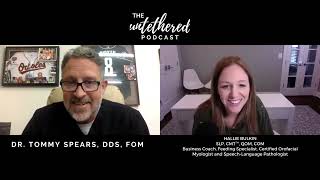
Dr. Tommy Spears moved from solo dentistry to a multi-practice model focused on airway and sleep medicine. He incorporated home sleep testing, frenectomy lasers, myofunctional therapy, and built a team of lactation consultants, speech pathologists, and ENTs. His own BiPAP use and mouth taping drove the shift.
Questions this video answers
1986
Maryville, Tennessee (hometown practice).
Three dentists (main practice).
No — he explicitly states: 'No children. I do not tape children.'
LightScalpel (CO2) laser.
Chapters
Hi and welcome to episode 46 of the Untethered podcast. Today we've got Tommy Spears, DDS, Pham, joining us. Tommy graduated from the University of Tennessee in 1986 and he's been practicing general dentistry in his hometown of Maryville, Tennessee for 33 plus years. He's got his wife Sandy, his children Wes, Olivia and Emory, and he says now that his children are grown, he has the time and energy to take dentistry to the next level. He is a member of the iatp, the iaom, the aacp, aada, FBI, ICAP, and Healthy Start. He owns multiple practices and he says that he's got lots of hobbies now that he's too old to play sports that include hanging with his family, being outdoors, old cars and learning and more learning. His existing practices are based in airway, sleep, myo and much more, and giving his patients the best systemic assessment and treatment possible. Quick disclaimer all information, content and material of this podcast are the opinions of of the speakers and is for the informational purpose only and not intended to serve as a substitute for the consultation, diagnosis and or medical treatment of a qualified healthcare provider. Welcome to the Untethered Podcast. I am your host, Hallie Balkan. I'm a certified orofacial myologist, feeding specialist and mentor. This podcast is all about getting your questions answered and collaborating with colleagues to bring you the most up to date information in the orofacial myofunctional therapy, tethered oral tissue and airway space. I challenge you to keep an open mind and join my mission to get this information out to the masses. Let's get started. Tommy, I want to thank you so much for being on the podcast today. I'm really excited to have you here.
I'm very flattered, very flattered. I'm shocked you asked me to speak and I hope I can give something for somebody out there.
Absolutely. Well, I really think you have a story that's going to resonate with some of our listeners and, you know, so I'm excited to jump right in and talk about that and I would love for you to share, you know, your evolution from being a solo practitioner to really where you are today.
Okay. Well, I think the beginning of this is because I take my lunches on Thursdays and I go out to the Turkey Creek Development center out in West Knoxville and I go through either Panda Bear or what is it Panda. What is the. The fast food Panda. Oh, Panda or Zaxby's and I listen to your podcast. I so you've got so many people that I know and gotten to know through the seminars I've been to. And I had to come up with the contact I needed for Ken Rooks. And you provided that and you asked me to speak. And I was shocked. But I turned around and thought, well, maybe I do have a little bit of something that somebody can use. And so my story began 34 going on 34 years ago. I'm a dentist in Maryville, Tennessee, which is in the mountains. And you can probably tell that the way I sound. Every time I go somewhere to a seminar, everybody says, where are you from? And I make them guess. And it's never Tennessee, it's always Texas for some reason. But I got into just doing dentistry. You know, I was having babies and married and trying to figure out life and just trying to figure out how to make a living and learn dentistry when I could. Because as you know, right now, when you have young kids, it's hard to. To get into the scene of education and continue your growth. But about six years ago, one of the turning points of my career was I brought a consultant in, and her name is Holly Bryant. And I'm gonna plug her a little bit because she's changed my life, she's changed my practices, and she's just been a really huge player in my world. But about 10 years ago, I brought a partner on or an associate. He's now a partner, and we have since brought another associate on. So my main practice, we have three dentists here, and then I have a satellite. I work with another dentist and I have another practice. So we're trying to infiltrate this philosophy everywhere. But going back to the beginning, Holly Bryant came to our practice just to assess our systems, trying to make us better on how we were doing things, trying to make us more efficient. And so the first day she assessed our practice, it was, you know, crazy and busy, thank God. And we sat down the end of the day and I said, holly, tell me your story. And her story, which I think probably I won't tell in detail because I think she would awesome guest for you to have sometime led me down the road of airway. She had had issues and again, I won't go into detail, but she was so versed in the airway centric airway, dental offices and philosophies out there, and got to know a dentist named. Well, she worked for Ross Nash, who in our world of dentistry is one of the big players. And she was an assistant there. And Ross connected her with her problems of TMD and issues with EDSA out of wake Forest in North Carolina. Ed's an outstanding dentist and she was treated by Ed and her life changed. She had chronic migraines, you know, just. Just a terrible way to live. And she was kind of, you know, having a tough time and Ed pulled her out of it. So as she was telling me that one of my best friends who I've had all my life, his wife was a patient of mine and she was a chronic TMD craniofacial pain person that I would help a little bit but not help completely. And she would have her flare ups every year and I was always chasing her fires and went to the pankey trying to learn more. Went through the pancy and went through some Dawson courses and tried to apply what I was being taught, even though some of it didn't sink in. Probably as good as other people, but she seemed to be doing good, but then had a really life crisis and I kind of lost her, so to speak. And I started feeding her to people locally that were much more in the tmd. But I was telling Holly about this person and she goes, well, I know a guy named John Highsmith. He's a dentist in. Oh, I've got this written down somewhere. John is in Clyde, North Carolina. John is an LVI fellow. I think he teaches at the LVI. And I'm like, the LVI. I'm not sure about the LVI. I learned about the LVI 20 years ago and wasn't real sure about Bill Dickerson. Now I know that he's legit like the rest of these philosophies. All these disciplines are so important, but they all are kind of used in the airway principles. So I went to see. We drove my friend's wife and my partner, Jake Goza, my dentist friend, buddy here, wanted to learn. So went to see John Highsmith. And John start talking about sleep and how important it was to treat this young lady. And so that kind of triggered my thinking and it also triggered Dr. Goza to where Jake has been through. He's a fellow of LBi now. He's a big time. He does a lot of TMG TMD treatments here at our office. And it's an outstanding thing, but I'm kind of in charge of the sleep. So I started studying sleep and getting into that. And Holly was very versed in that and helped me down this road. And we decided my office is kind of big. This is kind of a sidebar. But when I built this office building, it was on field dirt, so my basement was useless. So we ended up Developing my basement into like a little seminar conference area. Oh, cool. Yeah, it's really been a good thing. Luckily, and we started having quarterly meetings to where we would have the medical community come in and we talk about airway and how it affects my world as a dentist. And so Holly, you know, brought in Michael Gelb out of New York, and he talked to some of the medical community here. And Michael gave a seminar the next day with some dentists around the south, and he was phenomenal. And then she brought in Brian Hockle, who is a Bill hang disciple out of the west coast with orthotropics and facial growth philosophy. And about this time, as I was studying this, I got to the point where I realized my dad died in 2006. He was my hero and he died of Alzheimer's. And I'd read enough to know that there's tons of data that link chronic, you know, obstructed sleep with that, with the beta amyloid and the tall and the proteins collecting in the brain. And so my wife and I were out of town. We're in West Virginia, and she told me how much I snored. And I'm out. You know, here we go. This may be me. And by that time, I was on blood pressure medicine, acid reflux medicine two a day, two 20 milligram omeprazole a day, 40 milligrams of lisinopril, 40 milligrams of Crestor. And my primary care physician, Dr. Drew Dearmeyer, wanted to test me for diabetes because my sugar levels were popping up. So I said, okay, time out. Let's go through this. So Holly led me again. Here comes Holly again. She goes, well, I can get you a home sleep study out of Las Vegas. There's a group that does this. This was probably six years ago, and they shipped it to me. Slept with her three nights, little monitor that lays around your chest area. Pulse oximeter and two nasal cannons. So the first night I didn't sleep hardly at all. It was really weird. The second night I was a little bit, but got better results of getting sleep than the third night. I was a dead man because I was so worn out from the two nights. They were able to read really good what it said. So I had mild sleep apnea. So Holly suggested, why don't you go see a board certified pulmonologist, the airway kings in our area. And he's a sleep person. So I did Dr. DeBaugh at my hospital and he said he did the full poly, the full in lab. They said, you need a BiPAP. I said, bring it on. I don't want to have Alzheimer's, you know, I was again in the middle of just trying to learn. Then we brought Brian Hockle into one of our quarterly meetings, and Brian lectured on facial growth. You know, how we need to push out the maxilla and not pull it back and trap the tongue and all these soft tissue issues. And to shorten the story, the second day of the seminar, we again, we had about 20 different dentists in the south at my office, which was so flattering. But his last two hours of his speaking, he pulled out a roll of tape. He said, I'm going to show you what I do every night. He taped his mouth. Actually typed up and down. But he said, you can do it however you want to. Pass the tape around the table. Said, everybody tape. And I'm gonna talk for 20 minutes, and if you pass out, we got to get the tape off of you. It was horrible. It was awful. It was claustrophobic. But he talked about nitric oxide, talked about the whole philosophy of this whole deal. So I went to him after everybody left. I said, showed him my. In lab studies, my HSTs. And he said, yeah, just take. Probably gonna drop this down to where the sleep world. It's gonna be fine. And it did. So I've taped for six years and I don't miss a night. I've gotten to the point now where I saline with the simple saline. You can buy from home, Walmart or cvs, Walgreens. And I'll saline my nose with that. Then I'll do the neti pot action with the simple saline. Then I acne wipe my nose. My kids are rolling their eyes when they see this right here. They're going to. Absolutely. But anyway, I wipe my nose, I put a breathe right strip on, and I tape. And I sleep like nobody's business because I used to get up and pee twice a night. I used to sweat about 10 days a month. Sweat. I mean, sweat. And then I was just not doing well. So since then, long story short is I don't get up and pee. I've never sweated. I dream really, really vividly now. My medicines have dropped some of them completely off, some of them in half. My diabetes scare is gone. I'm a new person. So, yeah, it's crazy. So I immediately said, okay, I got to start using this in my practice. And so we start integrating sleep. And so we have hsts. And our practice, we use. We start out with a resmed acne links and now we've moved over to the Z machines, plus the pulse oximeters. Ken Rooks is helping us get set up with a watch pad. I've got the nomar. I think it's nomar pulse oximeters that we use. A lot of people can't even put on the home sleep study. They're so touchy feely, claustrophobic type people.
Are you doing sleep studies in your office or you're sending them home with.
Yeah, I don't know. It's. I'm not. I'm just a dentist.
I was like, hold on a second. You've gone. You've really got a whole new niche now.
That would be so illegal. So I do home sleep studies. I think I'm a little bit brow getting browbeated a little bit by the medical community from it. But I see, you know, our practice is busy. We see a lot of people. And it's funny, when you start learning something, you got to be really prepared that it's not a nail every time, but it is especially myofunctional, by the way, that's something I'll talk about in a minute. But now I see all these red flags in the mouth, and I'll say, okay, we got to talk about this, because your mouth looks like my mouth, which looks like a lot of people's mouths. All these different things. Worn teeth, acid reflux. Sandblasted gold crowns, which is acid reflux. High roofs, uvulas that look like an index finger. Tonsils that are there, not there, when not there. That means something was wrong to begin with, obviously. And so there's a lot of different. There. Mount Potty. I don't know if I'm pronouncing that right. We talk about that. It all is a big player. Scallop tongues, obviously, tongue ties. So as I was going through that chapter of my life, learning about this, trying to do the sleep, I got a card from the American Association. What is the aacp? A? American association of Cranial Facial Pain. Sent me a flyer that talked about going to watch a lecture on tongue ties and releasing babies that can't latch. And it was Stacy Cole in Fort Worth. I don't know if you know who that is, but he's. And he. I don't know if he's been on your podcast. A lot of these people.
Not yet, no.
Almost listen to all of them, but Stacy is awesome. So I went out there and my life changed, and I felt like it was a spiritual kind of awakening. And this is something I should do because it Linked everything that was going on with me and all these other things I was reading about that are in between that could be prevented if we start out with the best latch we can and get the nose doing the breathing and the tongue gets the position to live in and builds the mid face out. And that's kind of it. So as I watched him do this, he had a CO2 laser there in Fort Worth. Had a beautiful office, is so nice. And he's kind of like Andy Griffith. He's just a sweet, sweet man. He changed my life. Without belaboring this, I came on back. I already had a bunch of diodes in my office because we use diodes in our hygiene side, which we still use. Now we change that over to the no more hygiene to where we do the DNA swabs and try to find particular bacteria, which is another link to all this, by the way, because a lot of that is open mouth breathing problems. But so I came back and I started doing the quarterly meetings with Holly again. She's instructing me on a lot of this. It was so helpful with the lactation community out of Knoxville, which is the bigger city, close to my town in Maryville. And we would bring some lactation in and we would talk about things. So I started getting referrals for these babies because some of those lactations said, yeah, we need help with that. And hardly anybody was doing it in Knoxville, but I was using a diode. And I'm not begrudging people using a diode, but it is just not what I should have been using. And so I didn't really know not to use it. I started researching it and I said, okay, if I want to do this, I want to try to be as good as I can. So the first person I called was one of your previous podcasts. It was Larry Kotlow. Called him. I said, is there any way I can come up and see you and watch you work? And he was awesome.
Yeah, he knows all the lasers.
So I went up there. I took a colleague of mine who's up the road from me about two hours. She's a pedodontist and she releases babies also. And by then I bought the lightscalpel. I went to a malfunctional world congress in Chicago. And I'm not sure if it was 17 or 18 and it wasn't the IAOM sponsored scenario, but it was a place where I saw the lightscalpel as part of clinics. And I thought, oh, that's pretty cool. Thousand dollars. It's not 200 but so I decided to buy that. And it changed my world on working on these babies. The CO2 laser. And it's mainly for soft tissue, actually, it's all soft tissue. But I went up to see Kotlow and Dr. Heldeman, and I did. And he was just phenomenal. He was. Watched everything. Let's watch everything. He let us pick his brain. I spent the day with him. He's probably going to hate me because some of your dentists that are listening to this now said, okay, I'm going to call him and see if I can go up there. But he's that kind of person and I think it'll be fine. He's. He's about helping the world. And if you can educate more people, why not? And that's kind of why I'm here. I'm not sure I can offer much, but this is kind of what happened to me. So when I came back from Kotlow, you know, my kids are grown. I don't go to sporting events anymore. I don't coach anymore. I'm bored. So I've got time to really hammer out as good as I can this pea brain of mine to get as good as I can. So then I called Richard Baxter. I said, can I come down and see you in Birmingham? Of course, being the person he is, he was awesome. I took some staff members down there. We sat for day and watched him. Learned a bunch from him too. And that was great. Then I saw Bobby. Harry was coming to Atlanta. My son lives in Atlanta. So I went to this lactation meeting in Atlanta at a hospital, as a matter of fact. And Bobby spoke there. And I stayed and cornered him and talked to him for a little bit. I'll eventually go watch him in his neck of the woods, but that's a long flight and I'm not a good flyer. And then Steve Siegel, Scott Siegel. I got to know Scott through the American Laser Study Club. And I'm getting ready to go to Fort Lauderdale for that next weekend. I was a light scalpel kind of sponsor that Peter Vitrick, I'm sure super guy does this. So I've gotten to know Scott that I asked him, I said, can I come up and watch you? Because you know, as you well know, all these people are so nice, and Scott's no different. Unbelievably benevolent with his knowledge, humble as pie. And I went up to Manhattan, and it was definitely the country boy in Manhattan. But I got to his office, his staff was phenomenal. He was phenomenal. I got to learn some more from him and I very much appreciate that. So I bring it back and apply it to my practice. I think I've jumped through this almost completely. That's where I am now. I kind of in the middle of this also, Holly was preaching to me about myofunctional therapy and we ought to get a hygienist that's on this. And so I did. I got one of my hygienists to go get trained. I'm not sure who she trained under, but she didn't last in my office for various reasons. And so I said, I'm going. So I went to Sandra Holtzman's class in Raleigh and went for the weekend there and got my eyes wide opened and overwhelmed.
Yeah, that's who I trained with too. I love her.
Yeah, she's awesome. Was with her and she, they're just, they're in it for the right reasons and. But it was overwhelming.
A lot of information in four days.
Yeah. I was like, I know so little. And so the good Lord blessed me again. About probably a year later, I decided to become a fellow because I felt like I still do a lot of normal dentistry. And in my office I have two rooms I can close off. And so we're working the babies when they call, we'll work them in that day or next and try to get them take care of the mamas and the babies. But Matthew Rao called me, another one of your podcast people, and he said, hey, my comms coming your way. Crystal Rashinsky.
Ah, yeah.
I said, all right. So he put us.
I know Crystal.
Yeah. And she's a stud and she's great. And so I was smart enough to know, I said, crystal, I got a satellite in that West Knoxville. It's a little bit more high end stuff. You can, you know, why don't you come in there and work your people into that? Because it wasn't real busy as a zero patient start. So we weren't, we're still not hugely busy, but. But it's getting going, getting going. But she uses that place and I refer, you know, again, I see a kid, it's almost invariably they're, they're, they're deficient here. They've got my functional issues and I say, go get assessed. Crystal hopefully is benefiting from me, but.
She'S awesome, she's amazing. And actually she and I had talked about this, I think before she made her move. We actually were chatting business and about the move and you know, she was wildly successful where she was and she was moving and so I'm really happy to hear that. I didn't realize that you were the connection.
Yeah.
For a new location, that's amazing.
I'm a very lucky person. But this has even evolved to the point where part of my lower downstairs is about 1500 square feet. Well, let me back up again. Crystal and I, she started getting involved in our quarterly meetings. We'd have lactation and sleep come in. So we have 30 sleep SLPs come in, some lactation, and we feed them adult beverages and lemonade and water and chick fil a. And so we talk, and we just sit back and talk. And Crystal had them with her every word. They're unbelievably wowed by her, which we all are. When you get around her, her knowledge is crazy. And so the SLPs, most of them work for Blount memorial, which is a local hospital here. So now they've called, said, would you. Would you and Crystal come speak to our slps? So I'm not, as you can tell, this is not my forte, and I'm not sure I have a forte, but I don't public speak. But I went and we spoke, and as it turns out, I told him, I said, you know, I'm thinking about doing something with this 1500 square feet. That's going to be. I'm going to take my sleep downstairs and my babies downstairs. Would you all want to abuse that space? And so blount memorial is getting involved. So again, another lucky move. But that's yet. It's almost done. It's not. It's not in completion yet, but it's almost done. But this. This is crazy. I now, you know, I try to get everybody that looks at our patients now to say, okay, you've got eight red flags here. Let me tell you what they are. We've got to first start when we have a lot of tmd people, you know, we even pay attention to the ones that pop and click. I'm fine. I pop and click, or I used to pop and click, but I'm fine now. That's the evolution of a condyle just wearing away. And the disc is gone. But we said, we gotta start with airway first. And it all goes back, you know, it all links up. It all goes back to, you know, what happened in their young life. Did they have a bottle? You know, it's just crazy, the studies of it. Scott was telling me about some of this uncontrolled gerd that's been hammered with the chemicals, has maybe has something to do with our allergies now. Yeah, peanuts and stuff like that. So it's just crazy how all this just connects, and it has changed me completely. Totally, completely. I've never been so fired up about being a dentist and being in this world of malfunction and speech, you know, Now I know a little bit more speech than I ever did, and body work and nutrition, and there's so many disciplines that fit this deal. But we look and we say, okay, let's. Let's start. And some people look at me like, I've got three heads or two heads and say, nah, you know, came in here, get my teeth clean.
They're gonna get those. Yeah. They're like, I came here to clean my teeth. Why are we having this conversation?
I say, you know, it's me. This is me. I've got to tell you, I got to give you my testimony, and you got to listen to it. You can never come back, and that's up to you, and you can never do any of this. But this is what I know, and I've got to preach it a little bit.
I get those evaluations in my office, too, where they come and they're like, well, this SLP referred me to you. We've been going to them for, like, a year or two, and they want me to come to you for a MYO evaluation. And I tell them, you need to bring a snack. I want something crunchy. I want something, you know, like, bring a cracker. Bring something they can eat off a spoon. Bring. You know, I want to see them drink from an open cup and from a straw. And we go through the whole thing, and they're like, why are you watching my child eat when they can't make an S sound? Like, I don't get the connection. I'm going. I'm looking holistically at everything going on in your child's mouth. Their face, their posture. You know, I'm looking at, this is holistic. And when I start to explain it, most of them get that. You know, occasionally you get the people who are like, I'm not interested in that. Just fix the S. And I'm like, well, if you're not interested in that, that's how we're gonna fix the S. So it's. It's. You know, But I think it's really cool what you're doing with the education, because somebody has to introduce this to them and start to get, you know, get that info into their head.
And I keep looking for resources. I'm a healthy start dentist. And so we use some of Their habit correctors. But as Crystal has taught me, she's a big, mild brace person. And so we, you know, we're 2 to 5 range. We're limited on what we can do with the mid face. Yeah, that's where we are with them. But then, then I kept researching and found the Facial Beauty Institute, which is Stephen Layla out of Collierville, Tennessee. He lectures all over the world with Stephen Deal out of Greenbrier, Arkansas. And this is the. What we call the FBI Facial Beauty Institute. And so this is the. The expander. You asked me on the email. Yeah, man. And we do. I've expanded forever. I'm not an orthodontist. I haven't done a whole bunch of ortho. But we have tried to expand people because we knew a little bit about it. Not as much as I know now, and it's not as much as I'll know tomorrow. But as I've studied under Galela and Deal, the growth appliance, which is like the aga, in essence, it's made by a different lab, it goes a little different, but it's mainly. It's, you know, we do get expansion here, but it's got to be more sagittal. And that's the problem there. I think McNamara and I don't have this study, and I'm going to try to find it and send it to you. But McNamara did this huge skull study where, you know, 85% of the general population is deficient in the anterior maxilla, premaxilla. I'm not sure we call it that, but we're deficient there. And part of that, if not all of that. I know genomes are part of it, but it's the tongue. You know, there's the hammer and the nail, and so the nasal breathing, open mouth, tongue, lower posture, all that stuff, you know, I'm preaching the choir here. But so now we integrate myofunction with everything we do. It's nuts. And so I can't. Yeah, it's just nuts. And I do think this is not just not gonna go away. It's gonna eventually be a cornerstone of health, and it'll be recognized as that. I think our medical community is finally coming. We gotta, you know, for my little pea brain thinking of this, I think that we got to be careful. There's so many schools of these malfunctional schools of thought, and if it's practiced improperly, our reputation is going to get kicked to the dirt. And that's not good. So that's why I'm the IoAM. I believe in that. I believe with what they're doing. I went down. Were you in New Orleans?
Yeah, I wasn't able to make it.
To New Orleans, but great speakers down there and they did a great job down there. And Crystal was with me there. We met up down there and she, you know, she was in agreement how good it was, but it's just crazy, you know, I can't stop reading about it. It makes complete common sense. I'm still a pariah with my medical community when it comes to talking about this with them. My pediatrician comes to me, quite a few of my pediatricians, not me, I'm not a kid anymore. But it's my baby's doctors and they look, you know, they back up, say, okay, time out. What are you talking about? But now I've got one of them taping, at least. Taping.
Oh, nice.
We probably have 400 people taping. But we start with the home sleep study and then if my. We started with the ENT reading them, but now we have a board certified person reading them. But if there's some raw data that says, okay, we gotta go do an in lab, then I send them that way. If they're severe, I send them that way. My oldest brother's on a cpap. But when they're mild or moderate, we look at same things that may help, comorbidities, maybe a dental sleep orthotic. And we look at those things first, CPAP still the standard of care. And I sure don't want to keep people from doing that, but their compliance is so bad. I think there's a study, one's 50%, one's 80, that people don't wear them or they take them off in the middle of the night and so they're wearing them half the night. They're still, you know, the morning time is when we worry about the heart attacks in bed and the death in bed. Because of that.
I have a question for you. So on that topic, for someone who does have more severe sleep apnea, are there any applied appliances or anything that we can do to expand to possibly get them off of that machine?
Great question. So the thinking is, and I think this has been proven again, this is. Your disclaimer's covering me here.
So you're covered. This is your opinion.
But the facial Beauty Institute, that is also, that discipline is taught at LVI. It's taught at, I think at about 30% of the Ortho schools. The ortho residencies in schools, you know, they still have the older Thinking, you know, it's okay, take out bicuspids, pull everything back, trap the tongue, not worry about myo. But the FBI is all about myo and expanding everything out, getting everything out. So to answer your question, the easy fix right now, when somebody takes a sleep test and they definitely test out into the severe, they want the CPAP immediately go and do something quick because you don't want them dying the next day. And unfortunately, there's some of that literature out there. People that kind of waited and they had their moment. And so you start out with a CPAP and you see how you do. Again, the compliance is the question. Even though some of these attachments are getting better and better and better, and that's awesome. The nasal pillows are a big one. Now we got to worry about the mouth. You know, they'll give them a head wrap, but. Well, I just don't wear that head wrap. Well, I'm not sure how it works. Well, it gets off kilter with my mouth open. But I don't trust that to answer your question completely. Once the CPAP is going, then if you want to try to get away from the cpap, then the actual studies are saying when you bring the Maxcel out and the mandible follows it, you're opening that system in the back. A lot of this, along with nutrition, along with weight loss, along with other things can get you off of cpap. But Miles still there. Got to get mild going. Got to get the nose doing the work. But to answer your question, absolutely, yeah.
I mean, I wear a DNA at night and we're, you know, I've been in expansion as an adult and I had it as a kid too. I have family members who wear cpap. I have, you know, I've got family members who have very narrow, high palates, who, that's where I got my tongue tied from, you know, so it's all genetic. But anyway, so I'm always curious to hear different opinions on that, especially when we're talking about severe sleep apnea, because I wasn't in the severe range per se myself, but I know too much. And so obviously this was a road I was willing to go down. Full on effort with bodywork and expansion and all the things. And we've got Lily, my 4 year old, in an ALS. She's had amazing growth since August, which has been fun.
Airways, kind of important, you know, airways.
Everything that's like, you can't breathe, you're dead. That's what I tell people.
Well, I'm getting ready. Go speak to. And again, I've been asked to speak. I don't like it. I get nervous as a cat on a hot tin roof like I was today morning. But I'm going to Newport, which is the moonshine capital of the world, by the way, and I'm gonna speak to a hospital group there. And the girl text me. They said, what's the. What's your speech? What's its. How are you going to. What's its title? And I, and I just go kind of go on the. Just shoot from the hip. I said, well, it's called how you breathing instead of how you doing? How you breathing? And so that's what I'll start out with and talk about, you know, why we do this. I mean, I feel like I know I'm going to learn a gazillion information more, but it just take my life. It's just taken me to the end first. And it started coming back. Stacey Cole got me back to the lip ties. You know, Scott Siegel was saying there's some studies out there that's 30% of babies out there with these restrictive ties, not 6 or 8 or 10%. So it's out there. You know, you can find the tethers. They're there. Are they restrictive? And so there's a lot of compensating going on. But the malfunction is the key. And I know you agree with me, but it's the key. And honestly, it ought to be taught in schools, it'll be taught in hospitals. It ought to be taught everywhere. We got to get the nose, the lips. I know I'm preaching the choir.
And actually they are requiring that a myo that OMDs or efficient myofunctional disorders and myo be a part of grad school programs for speech language pathologists. I believe I could be wrong, but I believe it's in effective this year at some point. Because what we're, you know, what we're finding is one, this is in scope of practice for speech language pathologists, and we know also with registered dental hygienists as well, and obviously dentists. But the problem is that there are so many schools, even the school I went to, which was a fantastic program, they didn't teach me pediatric feeding. They didn't. They didn't. Yeah, they didn't teach me. And this is, I'm now teaching a course on this that we're launching next month called Feed the peds, because so many people don't get that education. They don't get education on tongue ties. They don't get education on anything related to oral motor work or myofunctional therapy. And I'm going, how are we addressing sounds that we produce with muscles in our mouth? But nobody's teaching you other than, oh, the tongue should be placed here. What if the tongue can't go there? There's a bigger issue here. So it's really. We're teaching compensations without knowing the root cause, without actually dealing with the root cause. And so I'm really glad to see that our field is going in the right direction as a speech language pathologist. But there's. There are a lot of us out there practicing that don't have this knowledge, and it's confusing the parents. Parents are, you know, why did this speech pathologist send me to. You can't they. Can't they do the same thing you're doing? And, you know, you don't want to throw anybody under the bus. But basically my response is, you know, this is not something they taught us in grad school. And many of us have had to go out and spend thousands of dollars and years of our time to learn this information on our own. And one, that's just not feasible to everybody. And two, some people don't realize that this information is even out there and that they should be doing something. Something differently. So your therapist was great, but then they realized they couldn't help you any further and sent you to me. You know, it's an interesting conversation.
Same battles I bought. I've got three books, and I should have. Should have them up here. I don't think I have them up here. I have them downstairs. But one of them is Patrick McGowan, out of Ireland. Got his auction advantage book. I've got his small little close your mouth. I give the mamas close your mouth book. Baby comes in, Mama, read this. It's not just about, you know, little Johnny. It's about your husband. It's about you. It's about everybody else who.
Family can benefit.
Yeah, we talk about that. So I end up, you know, not that I'm trying to generate more patients, but they'll come back like that. And we. It's a nice thing because when you can help somebody and they say, wow, I'm better. We have, I bet, 400 patients taping now.
And so it freaks me out a little bit. I'm not gonna lie. I've never done it myself.
And I tell everybody that. I mean, I remember sitting in the downstairs when Dr. Hockle was talking. I said, there's no way in heck, I can do this. There's no way. But I persevered. And it took me about three or four nights to get used to it. Three or four bad nights of sleep. But now I won't blow leaves outside without putting tape on everything. Filtered everything. You know, I tell my son, my son has to fly everywhere.
Yeah. Are there any disclaimers for anybody listening who might be new to this idea of taping, you know, as far as, like, the child and making sure that their airway is truly patent before we tape or anything, you want to plug in there?
No children. I do not tape children.
You don't tape children. Okay, well, good. I'm glad we went there.
12, 13, 14. We might think about it.
Got it.
That might be an ENT look. Upper airway look. But there has been some tragedies with that not. Thank God, you know, I'm sorry it happened, but it's not here. But I think there's three kids taped and aspirated when they got sick. So I'm a big fan of no children. Myofunctional stops the children not tape. And so I was going to tell. I was telling you, the nose just is everything. You know, it filters everything. My son flies all over the country with his job, and I tell her, so, Wesley, don't touch anything and keep your mouth shut.
That's right.
Think you're gonna fall asleep, tape your mouth, maybe cover it up so they won't look too crazy. But.
Well. And I think people don't realize how many germs we do take in through our mouth and our nose, depending on how you're breathing. And I saw this interesting little. Not really a study, but a little experiment that a mom did who's a big. She's got a big following in, like, the fitness, healthy eating space. And she had a little boy who was a preemie and so huge following and just an incredible person. And so I follow her, and she did this little experiment where she took her son. They went to the park, and he came home, and he touched a piece of bread with his hand. They put that piece of bread in a plastic bag, and then she had him wash his hands and touch another piece of bread with that same hand, and they put that piece of bread in a plastic bag. A week later. This, like, gives me chills. A week later, the bag where he had not touched his. He had not washed his hands yet. It was moldy, you can see. And it's where he Only. Where he. His hands touched the bread, only in that area was it moldy and green and gross? And the other bread that after he washed his hands, that bread was perfectly clean still, and looked beautiful. And I was like, holy cow. I mean, these are the things people don't realize when we say, wash your hands, wash your hands, wash your hands. But you're also not realizing that you're breathing this all in through your mouth. And your mouth doesn't. I always tell my parents and the kids I work with, your mouth doesn't filter, it doesn't soften, it doesn't warm. So you're taking all the germs in. And that's often my.
It also doesn't form nitric oxide.
Yeah, yeah.
It's crazy.
Yeah. So, you know, but I think that the education is amazing that you're doing, because people don't know. And keep your mouth shut and wash your hands.
When I was at Pankey, one of the years I was at Pankey, there was a pain specialist that taught us, when you go to the Pankey, and you probably heard this, you live with your instructors, you're eating and breathing and talking dentistry all day long. And one night we went out to eat and Parker Mayhem, who was a real famous dentist, world famous dentist with pain management out of Gainesville, Florida, we were eating one night, and my best friend, another best friend's daughter, Mama came in one day, said, my daughter's grinding, just grinding like crazy. I can hear it through the walls. And So I told Dr. Parker, man, I said, doctor, man, what's going on there? Could that be what's airway Was never talked about. This was 20 years ago. He said, well, it could be pinworms. Have y' all talked about pinworms? You know, people, you know what I'm talking about here?
Yeah, yeah.
It blows my mind that pinworms are even around anymore, because kids don't go outside anymore. They're on their tv, they're on their video games. But this girl had pinworms. I came back and said, well, Leanne, it might be pinworms. And so they checked. I know you can get through that with another podcast. I won't do that here. But they had pinworms, and it's crazy. So grinding. In my world, I have talked about pinworms. I know about it, which is rare, but I've had three cases of that in my practice. Pinworms, crazy. But most of it's airway. They're just trying to get their airway. We've had a crystal close the mouth and get these tonsils that Used to be infected and touching resorb back cause they're not getting gushed with air and certain no surgery. You know what a great story that is. We don't have that enough. And of course, Crystal's been involved with a few Conor Deegan scenarios to where, you know, it changes. Mama loves the kid again and the kids growing and eating and it's just. It's just a great thing I was going to tell you. Holly also had me, had Patrick McGowan Skype into my quarterly meeting one time. I mean, we've just. She's just been so instrumental with all these people. I don't know how she's connected, but he, he is. He's been a real, real, real important part of my education too. He's a phenomenal educated man. But like I said, we give those book ways. When I get the medical people, when my doctors come in here and I'm treating them, I'll give them the actual oxygen advantage. But there is. There's another book that I found that I can't remember who gave this to me. It's by George Gatlin. It's called Shut yout Mouth, It May Save youe Life. And I think it was written in 1860. Have you about that book. He was a painter by hobby. He was a lawyer up in Washington, D.C. and they were. He was up in Washington, D.C. when they were trying to figure out where they're gonna put the Native Americans, what, you know, reservations or not. And when tribal reps would come up to find out what's going on. He noticed how their posture was, their faces were out here, the cheeks were high, their teeth were white and straight. Because back then they called us black teeth because processed foods were already involved in. So I went back to paint him. He went back and went to their camps, not reservations at that time. He started painting them. You know, as soon as the mama would get the baby off the breast, she would hold the lip shut for minutes, not just for a little while. Because they knew nasal breathing. I don't know if they knew about malfunction, but they knew it was nasal breathing. But anyway, we have those things.
If you do that with a baby, though, that early on, you don't have to do myofunctional therapy later because you're basically doing that. You're doing, you know, what my friend Michelle Emanuel might call Baby Mile. To some degree, you're kind of. You're setting baby up for life. So, yeah, that's why I got it.
I thought that was my thinking you know, if I get this started right, well, John will be fine. Now I got to worry about mom and dad and his older siblings, and we really do. I mean, every now and then, you'll find that person lays down on their side and they go to bed, and they sleep eight hours, and they don't move the bed, and they keep their mouth shut and they don't get up. And those are the people that we yearn to be. It's not normal to sleep worse as you get old. My mother said that as she got older. Honey, as you get older, you don't sleep as well. That's not true.
They say you need less sleep. You sleep less. You don't sleep as well. I've heard all these things, and I'm.
Going, I do sleep a little less. I think Harvard came out with a study says you get six and a half. I'm almost. I'll be 60 in October. So in my age group, if you can get six and a half to seven and a half of interrupted sleep, your Alzheimer's chances is decreased immensely.
That's still a good amount of sleep. I mean, I've had people tell me, like, oh, I just need four hours of sleep, like, one sleep cycle. And, like, I don't. I don't think that's accurate. But I could be wrong.
I'm not the expert, but my hillbilly answer to that is, it depends on your makeup, you know, your host resistance, your genomes, everything. But we've epigenetically got to where we are now. We need to epigenetically get back. Right. And get our faces out. And we. And it can be done. We just got in. You know, this is, I think, the tip of the iceberg. Mm.
Yep. Well, that's why I'm putting myself through it and my daughter through it. And that's where I felt, you know, if I really enjoy it for myself, not to prove anything to anybody, but I'm like, if I can do this for myself and be that example, you know, I had my tongue tie released with James Ryan, and I had my daughter's tongue tie at both my daughter tongue ties were released one at age 2, one at 5 days of life, two very different experiences. The sooner the better.
Listen to your podcast.
You're like, I know your story. It's been incredible, though, to see how much function you've gained. And the interesting thing, too, especially with Lily, is we've seen her tonsils change a lot just since August, where they were massively enlarged. They looked infected. They were Almost touching. She had a very swollen and like you said, like the, like a finger sized uvula, you know, it was swollen and it was almost like that was, that was blocking any space that her tonsils weren't taking up. And that has decreased. That's less inflamed now. Her tonsils have decreased in size and even when she has a cold now her tonsils will get a little bit more enlarged. They don't look as veiny, but they're not blocking her whole airway way. It's already changed to the, to the effect where her body can handle either one. It's handling that, you know, that respiratory infection better or we have more space now and it's just not taking up as much space as it once did. So I don't know what it is. And you know, I've been, I've been told to delete posts that I post in Facebook groups because God forbid your cons will shrink if you expand because one doesn't is related to the other. But you know, I'm over here saying, look, firsthand experience, this is what I'm seeing with my own child. And I've got, I've got, you know, the evidence to prove that her tonsils were chronically inflamed and enlarged for two years prior to her going into the alf. And then all of a sudden she goes into an ALS and her tonsils disappear and then they, you know, flare up a little bit during the cold and then they go back down again. You know, I'm like, that's. I kind of, you know, I'm pretty sure that's the alf.
Common sense, you know, I think you're. If you're logging sickness, it probably decreases. If you keep your mouth shut and get it goes through the nose, things just slow down. It has for me and I won't get sick for saying that it has. I'm getting ready. I'm glad you said what you said because I'm getting ready to go through the growth appliance. I'm getting ready to do that. I'm six years old. I'm getting ready to expand my. Yeah. And then we did a cone beam. We do cone beams on everybody. We send them off to be assessed. We also have a radiologist that reads everything. So they'll read their adenoid tissues that are. There's just so much lumps and bumps that we need to be checked out by the medical community. So we try to cover all bases, but it'll change. Yeah, that's the thing. It's going to change. And that's a frustrating thing. When I was middle of my practice 15 years ago, I was like, okay, you know, money's fine. We can live off this. I don't need to keep hammering out seminars. And I quit learning. And I think a lot of people, because of life circumstances, can't put the time in to learn more. But we got to motivate ourselves to try to open it up and listen, because so many people will have their lives changed and everybody around them changed. And it's happening with me, and I couldn't be more thankful for it.
Yeah, yeah. No, it's definitely impacted me as well. I had a history of getting sinus infections. I would get them, like, in the spring and in the. The fall, and sometimes they would last for three months at a time. They would put me on. You know, they put me on a Z pack, which I eventually became immune to, build up resistance to. And so I remember the day I went into my GP's office and I said, look, if you look at my chart, this has gone on for the last three spring, fall seasons that we've had. You guys always put me on two rounds of Z pack, followed by a round of Augmentin. Can you just give me the Augmentin right now? Because. And when I had to do that, I was like, this is not normal. There's something going on here. And so five years down the road, I fall into this myofunctional, you know, space. And it's funny because when I got started, I saw a bunch of speech pathologists on a private practice listserv, and they both got this calm after their name. And here I'm thinking it's calm for communication something, because that's what we do. We do communication. And I'm going, gosh, what is the com thing? And so I just kind of fell into it accidentally and was like, well, hard for it. Yeah, well. And I spoke to a colleague who's local to me who had taken Sandra's course, and she was like, this has. And she doesn't do my own. But she said, this has changed the way that I approach speech therapy. This has changed the way that I practice. And I was like, oh, my gosh. Well, if you're giving it that this big stamp of approval, like, I have to go take this course. And so I signed up, I got pregnant. I called Sandra and said, can I please come to your Chicago class instead of your Jersey class? Because I'm not going to make it to New Jersey in September or October, whenever it Was. And so she said, yeah, yeah, yeah, you know, come on. Come on over. And that was the best decision I ever made. And it's completely changed my life, my practice. How, you know, I even. I came back and I basically said to all of my patients that would allow me. I said, can I do a free myofunctional evaluation on you this week? Because one, I just want to get my hands on many faces and look in as many mouths as I can, like, with this new knowledge.
And.
But two, we might want to change the treatment plan. And, you know, I don't think you should have to pay for that. Like, this is my new thing, so let's, you know. So it was. It was pretty exciting. And I really jumped in feet first, got certified within seven months because I was about to have my second baby, and it was like, it's now or never.
So.
And, you know, and it just came just full force. And now, within the past couple of years, yeah, it's. I have a whole myofunctional therapy practice in addition to the traditional stuff, speech and OT and feeding therapy that we do. But, you know, I've trained my team to look at everything differently because we're done with, you know, teaching compensations, we're done with allowing compensations, and obviously, we meet patients and families where they're at and what they desire. You know, we can educate, and then you can only. You can only do so much sometimes. But, you know, we feel like it is our job to educate. So I love what you're doing, and I love how you've created this whole, you know, holistic practice.
Like, truly had to, you know, it wasn't something I was like, okay, let me modify. This happened. And I couldn't ignore it. Yeah.
And that's what happened in my practice, too. It just kind of happened. It was like, oh, my gosh, like, we have to use this information.
And so there's somebody out there that's a little bit like me back six, seven, ten years ago that's like, okay, maybe I should look into this. And when they do, yeah, you can call me anytime, anybody call me. I'm not gonna charge anybody for anything. I want it when it comes that. And by the way, we do free. If mama doesn't have money, they don't have. Let's take care of those babies. Now, I obviously charge. That light scalpel is not free. But we do charge. But we. Everybody, we need to benevolently kind of get this information out there and help as many as we can. But if there's a dentist out there that's kind of battling how to do this. Between Holly and I, myself, mainly Holly, that these can get there. We need to. We need to get this out there. This is the most important thing that's ever happened in my career as a dentist, and I'm very fortunate to have time to do it. But it's not going away. It's just gonna go away.
That's why I keep joking. And you've heard me say this probably ten times already, but I'm like, dentists are our next pediatricians. Because 10 years down the road, I heard that, yeah, health starts in your mouth. That's the oral health and breathing. And I mean, that drives everything else. And when everybody starts to realize that you guys are going to be busier than our pediatrician's offices.
Yeah, that's one of my gripes. And I'm probably going to get chastised from somebody, but the ADA can take a real charge here with this, and they haven't yet. And they're on a big campaign right now to raise more members and get more money, and that's fine. I understand that you got to make a living, and ADA does a lot of good things with the insurance help and a lot of lobbying, but this systemic health issue through the mouth is just nuts.
Yeah. Well, thank you. I really, I appreciate you sharing your story. I know that, you know, sometimes people say, what, you want to have me on the podcast? Well, yes, I do, because, you know, your story is important and there are people who are going to hear it and go, huh, maybe, you know, maybe.
I. Yeah, I hope so. I sure hope so. It's affected me tremendously and it'll change, and I would love to help anybody that's maybe looking at this transition.
That's so, so kind. Is there anything else that you want to share that we haven't discussed?
No, I had a pile of note cards and I didn't. I just rambled. So I honestly, it's all good.
I told you. But, you know, the way that I record these is very laid back, conversational, and that's why our listeners, you know, actually our listeners tell us that they love that, so.
Well, I think I covered most everything. I'm. I'm very appreciative of you having me. Hopefully it'll help somebody.
Yep, I know it will. Tommy, thank you so much.
You're very welcome. Thank you.
Thanks for listening to this podcast. If you want to hear more of these Myo Tots Airway and Feeding related episodes, be sure to leave a review on Apple Podcasts or pledge a small amount on patreon.com the untethered podcast if you found value, others you know in this space will too. So be sure to share this episode on your social media platforms and join us over on Facebook on my Facebook page at Hallie Balkanbiz on Instagram at Alibulkin. And you can head over to theuntetheredpodcast.com to grab a copy of the Show Notes, where you can also subscribe to be kept up to date on the latest podcast episodes.
More from Hallie



What I Was Missing in Feeding Therapy: ARFID, Airway, and Myo with Samy Hernandez





