Episode 51: Be a Fierce Unapologetic Advocate with Seanna Nichols MS, OTR
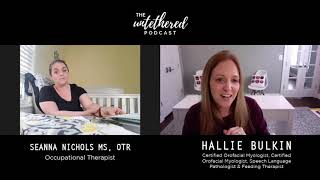
This is Episode 51 of the Untethered Podcast (host Hallie Bulkin) featuring Seanna (Shauna) Nichols, MS, OTR. The episode blends lived experience and clinical perspective about newborn feeding difficulties—particularly tethered oral tissues (tongue/lip-ties)—and the downstream effects on lactation, family functioning, and parental mental health. Nichols recounts her daughter’s prolonged painful breastfeeding, delayed diagnosis, multidisciplinary pathway (lactation consultant → feeding therapist → myofascial/chiropractic care → surgical releases), and the importance of post-procedure follow-up and bodywork. The hosts critique dismissive medical messaging ("they're gaining weight, so it's fine"), warn about PPI overprescription for infant reflux, and emphasize validating parents, screening and referring for perinatal mental health, and empowering families to be "fierce, unapologetic advocates." Practical resources (Postpartum Support International, CEU options) are recommended for clinicians and parents.
Chapters
Quick disclaimer all information, content and material of this podcast are the opinions of the speakers and is for the informational purpose only and not intended to serve as a substitute for the consultation, diagnosis and or medical treatment of a qualified healthcare provider. Hi and welcome to episode 51 of the Untethered Podcast. Today we have Shauna Nichols joining us. Shauna is an occupational therapist working with both adults in the inpatient setting and early intervention with children with feeding and sensory challenges. Shauna is trained in tummy time method, the SOS method, and other sensory motor based approaches. Shana has a passion for feeding therapy and postpartum health and wellness. Having had a child experience difficulties with feeding as a newborn, she hopes to bring awareness to the postpartum period and help support families and children by normalizing and validating their experiences. Shana, thank you so much for joining us on the podcast today. I'm really excited to have you here.
Yeah, thanks so much for having me, Holly.
I am excited to jump into this topic because I know that you have a background as a therapist, but you've all said that you're a mama with a story and so let's just jump on in and tell us a little bit about you first and then we'll talk more about your story.
Yeah, sounds great. I am an occupational therapist. I work both with children and adults, but my true passion is feeding therapy and I think that really stemmed from my experience being a mom of a child with feeding difficulties from the very beginning. Even though I didn't know it, I actually started my career in early childhood, special education, infant mental health, all that kind of world, and then got into therapy. So with that background, I really wanted to come today and just talk about my experience as a first time mom, postpartum experience, especially with a child with feeding difficulties related to tethered tissues. Because as we know, that's such a complex issue right now and really kind of a hot topic and a button that is really sensitive to a lot of families and practitioners and everybody out there in the healthcare world. Absolutely. Yeah.
And you know, and thank you so much for being open and sharing your story because I know it's going to help a lot of people who might be experiencing this, who may not know why they're experiencing what they're experiencing, who don't have answers or don't have practitioners nearby who can give them answers or even just relate to their experience and who may be brushing them off and sending them on their way. And you know, there are parents who listen to this, but there's also a lot of professionals who listen to this. And so I want to ask those professionals listening to listen closely because it's always a good reminder of what our patients, our families, our moms, our babies, our dads, our grandparents, whoever the caregivers are, what they might be going through. And you know, I think we need to really keep that in check.
Right.
Like our goal is working with a family as a family unit, especially when we're dealing with babies who are having trouble feeding and moms who are having trouble feeding their babies. So again, thank you so much. Cause this is such a huge topic and everyone who follows my podcast knows that I had trouble with this with my first as well. And so my second one also had. And so it's near and dear to my heart. So thank you. Let's jump on in and you know, I'll let you just kind of start sharing your story and go for it.
So I was a therapist before I became a mom and the type of person I am, I'm addicted to continuing education. I'm always learning something and wanting to be in the know and know what I don't know. And so there was no difference with me being a first time parent as well. Right. You read all the books and, and you ask all the questions and go to all the appointments and write down all the questions. Especially as a first time parent, I will say a lot of our families are living away from their villages right now. They're living across the country from their extended family. Even sometimes they've moved somewhere new and they're having a child and they're very excited. But we've lost this support network where we get a lot of this wisdom and family history and we've lost our village in child rearing. So I think it also is kind of an additional pressure on families who are getting into having their own family with feeling like they have to do it all and know it all and rely on themselves and that's a big burden. So I was no different than that. I thought I was ready as any first time parent thinks. Right. And then my daughter got here. We had a great pregnancy. No complications, no anticipated problems. My husband and I are healthy. Nothing we were concerned about. My daughter arrived, second night syndrome hit and they were all like, oh, breastfeeding will be fine. She looks happy, she looks satisfied, it's good. And the whole time I was thinking, wow, this really hurts. What's going on? Why does this not feel right even on the second night? Oh well, just a first time parent. I don't know what I'm doing.
Give it a few weeks, like, you'll be fine. You just have to toughen up.
Exactly right. So we all get the idea that, you know, nursing and breastfeeding was important to me. No matter your feeding goals, whether you were in the know or not, whether you have family or previous experience, every child is a different child. Every child has their own sensitivities and personalities from birth. And I just, I think in general you have to get to know your child. But at the same time, if you're dealing with feeding difficulties and you have your own goals that can be really disappointing. You can't meet them from the very beginning. So all of that being said, we got home, things were doing okay. Learning from each other, learning who my daughter was, learning how to be a parent. My husband went back to work. I'm home with this baby figuring it out. And babies occupations are sleep, eat, bond. That's all they do for the first three months. And so we see this picture of people who fall in love with their babies and have an amazing experience. And I wondered why was I not having this experience? What was going on? She was unsettled all the time. Someone tried to tell me she had colic, which, let's be honest, is not a thing. I'm just gonna put that out there and I'm probably gonna make a lot of people mad. I love it. Colic is a symptom, it's not a cause. Went back to the pediatrician. Gaining weight really well. My supply was really good. No real concerns until about two and a half to three months passed. Thinking about going back to work, trying to get my baby to feed from a bottle. Couldn't do it. Screamed, arched her back. Not only was my mama gut going off my therapist brain and that siren in the back of my head was saying, something's not right about this. I didn't know anything about tethered oral tissues. I just knew something didn't look right. Talked to our pediatrician, he said her weight gain was fine, so nothing was wrong.
They're growing, their weight's okay, we're good.
And she was growing, thankfully. Right. I didn't have problems from day one except for discomfort and just in general having these anxious feelings about something wasn't quite right. I couldn't go out in public. She never felt really satisfied. We were stuck at home for three months. I remember distinctly trying to go to UPS one time to drop off a package. A seven minute trip from my house. Couldn't do it. Couldn't do it because she was upset in the car seat. Positional problems that we know are associated now with tether tissues, all these other things that I just thought I had a really sensitive, fussy baby, but I couldn't get out of the house. Thinking about the family unit. My husband could never be alone with her for more than 15, 20 minutes. She was nursing around the clock. Every, I'd say a good stretch was an hour. So in general, and to all the professionals out there, thinking about a mom not being able to have time to herself and our family unit is a mom and a dad. A dad not being able to feel like he can participate in those daily infant care routines, which we know is more than feeding. But dads just really want to get involved in that process, too, because it's something they do all day. So by three months, we had pretty much hit our limit on something's wrong, something's not right. I scheduled an appointment with our lactation consultant from the hospital where she was born, who I absolutely loved. Went in, they did an assessment. They watched me nurse her. I had to do kind of some crazy positions to try and get her latched. Y' all can't see my video. But it was pretty insane how I had to nurse her to even be successful. And they said, well, she might have something called a tongue tie, but we don't know how to assess for it. So we want to refer you to someone who can. Ding, ding, ding. Best thing you can say if you don't know what's going on, help that parent find an answer or someone who can. And I know you've spoken a lot about that, too, so if you have anything to add or any questions up till now, because that's just kind of the tip of the iceberg, feel free to ask.
Yeah, well, no, I mean, I love hearing that someone was able to say, hey, we think this is the issue. We don't know what to do as far as, you know, assessing or treating it right here. But we would love to refer you to somebody who does. I mean, that is like the. That just makes. Gives me chills. Because there are not enough people who are truly, like, tot savvy. We call them tot savvy practitioners. Are they in the know with the latest research?
Because it's not.
There isn't a ton of it in the tethered oral tissue space. And that's part of the issue, too. There are issues with, you know, pediatricians kind of going back to their gold standard textbook, which says, oh, hey, it might impact breastfeeding but it'll stretch or it'll spontaneously fix itself. They'll recover from this. Like, you don't need to do anything about it. Unless maybe there's a little bit of a breastfeeding issue. Like, it depends, like, what text you're reading. And I don't know the name of them off my head, but I know that these exist and this is often what they're going on. I also know that. Goodness, what was it recently? I think it was the ents. And again, I'm totally butchering this, but like their organization that puts out statements basically, again, said that Tabitha, tissues do not need to be. They're not a problem. We don't need to do anything with it. These are ents. I mean, so it's just. It's really crazy that this is the information that's being posted around the medical community. But this is why we get so much pushback and this is why they go, well, they're gaining weight, so that's like their gold standard. Like, as long as they're gaining weight. Pediatrician's not worried, you know, for the ent. As long as we see this, we're not worried. But what if function is impacted? And that can be function for both mom and baby. And so that's where, like, you know, I'll let you keep talking, but that's what it comes down to. Is function impaired? If function is impaired, we have to get back. We have to get down to what the actual issue is that's causing all these symptoms and not just put a band aid on it. Not just say, oh, it's fine right now. Let's just wait and see. Or, oh, let's, you know, put baby on a medication because they seem a little refluxy, because we know those are not safe now. So, you know, I know how things change so quickly. One of them has a cancer or carcinogenic ingredient in it, causing cancer, and the other ones are just breaking all the kids bones by the time they're five or six. I know that's an over exaggeration, but.
That'S what it feels like to a parent, though. Yeah, that's exactly how it feels like to a parent who either has been prescribed that medication for their child or. Or has been giving it to them for so long because of all these things. And then how heartbreaking it is when they realize that was not truly treating the issue. Right, right. And there are some families that I work with and some of my friends who have experienced that as well. And I fortunately, was not involved in that, but at the same time, it's just truly heartbreaking to see how they're reacting to that. Yeah.
And I think for any moms who are listening that have babies on these medications, I would urge you to ask the. So first of all, the one thing I learned was that pediatricians and ENTs should never prescribe these PPIs or these reflux medications, these antacid medications. It should be prescribed by a GI doctor. A gastroenterologist should be the only person who ever prescribes this, because in some cases we might have babies with reflux and it might be unnecessary treatment. However, it's being over prescribed by a lot of medical professionals and I'm not one of them. So send me all the hate mail you want, but I'm just reporting what's out there. They're prescribing this without understanding that the reflux these babies are exhibiting is reflux of milk, not reflux of acid. Little infants eat so often that there isn't even time for acid to typically become produced in the short time between feeds. It's milk that they're refluxing. So to give them an antacid, it's not going to help inhibit anything. They're going to continue to reflux the milk. And there's other things we can do to help these babies that are behavioral treatments or positional treatments, or maybe let's look at tethered oral tissues or whatever. I'll let you continue, but that's my little soapbox on that one, because I feel very strongly about keeping babies off these meds. And so if I ever get a patient that has them or I'm talking to a friend whose child's on them, I always go, I want you to go back and I want you to ask them, how do you know my child is refluxing acid? How do we know that it's not just milk they're refluxing? They don't see, you know, how do we, how do we track if this is helping or not helping? How long does baby need to be on it before they're helping? And how long do you expect to keep baby on it? Because that's, it's also the longevity of how long they're on these things that impact, you know, the bones and what we're seeing with children actually having a higher incidence of breaking bones in elementary school years. So, you know, that's where I tell them to start asking questions, because then that kind of alerts that doctor to the fact that we're doing research and we know the information that's out there. And I want you to be thinking about why we're doing this and give me real answers and not just slap the medication on my baby. Because I'm telling you there's a problem and this is the only band aid you have in your arsenal to fix it out. If you seriously think they need that, send them to a gi. Let the GI make that decision. So that's my little soapbox on that topic today.
No, I appreciate that because I think you bring up an important point. I don't know if our parents in this vulnerable, sensitive, postpartum phase that I'm speaking from have enough permission to empower themselves to ask good questions. We rely on healthcare professionals who we see frequently for our child. Once after six weeks for mom, don't get me started on that. That is changing, but it's not changing fast enough, especially with what we know about postpartum mood disorders. But we're relying on healthcare professionals and we don't want to be labeled as that parent who I have seen through my previous careers as the parent who questions or thinks they know better or has a degree from WebMD. Right. Because who wants to be that parent, labeled that way, seen that way. And if you do feel that you're challenging the status quo, for lack of a better term, how does that affect the relationship you have with someone who may be caring for your child long term? And so that sense of empowerment is difficult because I didn't have that. I felt the whole time. Yes, exactly. You trust because you feel you have the ability to trust. And I just want to say to all the pediatricians out there, I respect you, because people put a lot of burden of knowledge on them. Sleep, feeding, breastfeeding, medical care, medications, vaccinations, behavioral health, all of these other things. That's a lot. And that is way more than they get education on, clinically or research wise. So we as parents are relying on very, very few providers for information that historically has come from our village, and we just don't have that. So my postpartum experience, when I went to that pediatrician that said, something's not right, something just doesn't feel right. My therapist's brain was going off and I was having anxiety, I was having panic attacks because I couldn't leave my house with my child. I could take her on a walk in the neighborhood, but I wasn't getting any stimulation. And for my personality type, I need stimulation. I need someone to talk to. I need to interact back and forth and have that kind of contact. So my husband would get home and I would just be. Which isn't really healthy for him either. So thinking about what we do with this family who's experiencing all these difficulties, which, you know, if you work with parents in that postpartum period, you can feel if something's going on. You can't put words to it, but you can feel. And if you're good at reading body language, which many of us are, you know something's there. You just don't know how to ask about it. I went to my pediatrician, I said, here's what's going on. Extremely painful. Three months out, I cry whenever I have to nurse her. This is my goal. But I'm failing. And I do like what Leah Mason, Virgin, said way back in the podcast, that moms aren't failing. Our healthcare system is failing our moms. I say mom because I speak from a breastfeeding relationship and a nursing relationship. That was very important to me. And I felt like the onus was on me, the burden was on me, and that was crushing. So that caused me. I didn't reach out for help from behavioral health until like, a week after seeing my pediatrician. Even then, it was two and a half weeks before they could get me in to see somebody. Two and a half weeks. For a mom who's calling her midwife office and saying, hey, I'm not doing great, I didn't have intrusive thoughts. But, you know, all of the things that come with postpartum anxiety, depression, you know, thoughts of loneliness, and this is just a really vulnerable topic for a lot of our families. And it's taken me a long time to be able to talk about it openly and advocate for it, because the postpartum period is not just three, six months. It's 18 months, it's two years. It's whatever you want it to be and however you cope with it. So it's easier for me to talk about it now, but in the throws, couldn't do it, couldn't acknowledge it, couldn't recognize it was a problem. And I think part of empowerment is also if you have a provider who's dismissive, even if they're trying to make you feel better, it does not make you feel better.
No.
And it almost makes you feel worse. Yeah.
Well, yeah. I have a lot of parents who say. Who will say to me in tears, you know, thank you so much for hearing me, for truly hearing me. Not because I listened to the words that came out of their mouth, but because I allowed them to speak. And I did not say, oh, you and baby will be fine. Oh, you'll get through this. Oh, everything's gonna be okay. They don't want to hear that. I didn't want to hear that. As a mom, I wanted to hear, oh, hey, there's something wrong with you or your baby and we can fix that. Or, hey, I'm going to help you, right? Like parents want to know that there is help in it. It's hard, like you're saying, like, it's hard to come forward and ask for that help. So then to be dismissed or for someone to just go, oh, everything's going to be fine. You're like, why the heck did I even share this in the first place? And it kind of just knocks you back down five steps. Like, why do you want to go tell another practitioner just to hear the same thing again?
And that's what happens to a lot of our families. One, even if you're educated and you feel like you can stand up for yourself, that's still happening because that happened to me. And I speak the lingo. So I'm a good example of even if you speak the lingo, you get knocked down a couple pegs. Pediatrician was a good example. After I spoke with or after my daughter and I saw the lactation consultant, they were so wonderful. They validated my feelings of frustration, which lactation consultants are just so amazing at doing, because they see that feeding dyad and they include the mom in that. And that's key. Got an appointment with a local provider and I will say, I won't say where I practice, but I can tell you there is a gag order in our well known pediatric health network and my pediatrician was part of that network. And so I also want to give a little bit of forgiveness to that as well, that you don't know what you don't know. And yes, we put a lot of onus on our pediatricians and yes, we would expect them to continue to pursue education. But if you're being told this and your entire network is being told this, what do you do? Who do you believe? Do you believe the mom coming in and telling you, I saw this online. The lactation consultant told me this. I'm going to challenge your, you know, 30 years of pediatric experience. Oh, yeah, sure. I'm going to change my opinion on the fact doesn't happen. I had an appointment with our preferred provider in our area, didn't know anything about it, didn't know that he was eventually the person I would come back and Knock on his door and say, hey, please help me. My pediatrician basically told me she's gaining weight. Well, she can stick out her tongue.
That would kill me.
She took a pacifier, but she was so freaking mad at the appointment because she was never full, that she took a pacifier out of sheer desperation. And so I stood there and I was like, good Lord, haven't been able to get her to the pacifier. Right.
And all of a sudden, that's what happened with me with lactation and Lily. I went into my lactation consultant at my pediatrician's office and they were like, what's the problem? She's nursing great. And I was like, they're like, it's just positional. It's just how you're positioning her. And I was like, now, thankfully, they have received. I'm no longer at that St. Pete's office because we moved. But they, they have received additional training. And with my second child, when she was born with Todd, it was a very different experience there. So I have to give them mad props for that because they really did up their game and I can respect that a lot. And I think that the lactation consultant was fabulous. Despite kind of pushing me down a few pegs with the first child, she definitely helped elevate me with the second. So they're learning and I have to give them credit for that.
Well, and what an amazing testament to being open minded and pursuing continuing education that honestly, I think is incredibly respectful to be open to growth. So my daughter could stick her tongue out. She was gaining weight. Well, she was even on the chunky side. So she was doing really, really well. Couldn't take a pacifier. And I was told, this person that you made an appointment with. Oh, I'm not going to say gender, they laser and they clip no matter what. 90% of their babies they see don't need to have anything done. So basically scared the living daylights out of me. I went home, got on the phone, canceled my appointment, and that was that. They made an appointment or they made a referral for that health network. Speech therapy. I was already in early intervention. I knew how long it was going to take for me to get my daughter in. We needed help. Now I got on the phone, I literally called the one place in our area that unbeknownst to me, had a feeding therapist who knew about tethered tissues and knew our network in our county. And from there on, it was just a completely different story. Went in to see her, she said, hey, I have a lactation consultant you should see a myofascial therapist. You should see. Let's work together. Go back to that preferred provider, get the assessment. Let's get you on the right track. I even think I get emotional about it because she was that gatekeeper for a completely different postpartum experience for me. And I thanked her many times, but I don't know if she's ever going to understand that, you know, if you believe in divine intervention, in that moment, that was probably divine intervention. I picked up and I called the office of one of the main people who knew all these other people in this network. And I wouldn't say underground, but sometimes it feels like it's underground where you get in with the right people. It was overwhelming to think, oh, man, I gotta see like a chiropractor and a myofascial therapist and a lactation consultant and a feeding therapist. You have four to five appointments, sometimes a week, plus your pediatrician. Props to families of children with difficulties. I went through about six months of it and I. I don't know how they do it. They're the real heroes in our society because that is their daily life. For me, we got through it. She was eventually diagnosed with two restricted buccal ties, a tongue tie, a lip tie, had all of them corrected, went through body work, feeding therapy, chiropractic work, lactation work, and here we are, she's almost 2. We're still nursing well, she's doing beautifully. We go in for what I call tune up visits with our body workers when she goes through gross fort. As anyone who's listening, if you're professional, you know, and if you're a family member or a parent, it doesn't just stop with the procedure. It's a lifelong congenital thing, which isn't meant to be scary, but it's just part of who you are. And I think people don't often realize that it's not just the procedure. We have a lot of families who aren't getting the aftercare education that they need that every. I know when my daughter goes through a growth spurt because she has facial asymmetry, and I'm like, oh, time to go back to the therapist. Time to go back to the chiropractor. You're growing. And as a result, these things that you had as an infant are affecting them. So I will say that that one therapist going back to. I'll say her name. Colleen. I won't say her last name. She is near and dear in my heart. She was the first person I told that I was Having severe anxiety and depression, and she normalized it. She made me feel like I was the most amazing mom in the world for sharing that and trusting her with it. And I get a little emotional about it now, just talking about it. It kind of speaks to your mom heart. But I hope for anyone who's listening that they have the opportunity to be that provider. It makes a huge difference, and it changes the trajectory of a child's life and a family's life. My husband could care for her. I went out one time for an hour by myself. After six and a half months, it was heaven. Six and a half months. Right. So that was our experience. Had I not been fortunate enough to get in with the network of providers, I did have the resources, have the ability to pay for those services, which are not always covered, as we know. My experience would have been very different. And my goals and my expectation of postpartum would have been so different. And it's not something that ever leaves you. You always think, okay, is this anxiety creeping back up on me when I think about having another child? Am I ready for all that? Could it possibly be re traumatizing? So it never really goes away, but it just kind of blends into your experience? Yeah.
I mean, as you're sharing this, it's making my mom brain go off and my therapist go off. And, you know, on the mom side of things, what I haven't heard as much of is, is the relationship that I have with my children. And, you know, while I don't feel that I had postpartum, truly postpartum anxiety, which is very common now and which a lot of moms that are listening, like, if you're feeling like you were not an anxious person before kids, and you may not even have feeding issues and you may still be experiencing. It's a real thing. And so if you're someone who's listening, who's wondering what postpartum anxiety is, or if you feel anxious but not necessarily depressed or, you know, you wouldn't relate with someone being depressed, but you feel like, wow, I can't. I'm afraid, like, this is gonna hurt my child or that's gonna harm all the stuff going on in the world is gonna. It's just, how do I even raise my child in this? And it's really just keeping you up all day and all night, and you're stressed over it, and you just can't seem to brush it off. You know, talk to somebody, reach out to somebody, ask for help. If it. If your child's pediatrician does not give you a referral.
Call.
Call your ob. Ask your OB for a referral, because there is somebody out there or your general practitioner. There are people out there that can help you. And I think that postpartum anxiety, in addition to depression and all, it's a real thing. And I think that there are so many moms that don't realize it's even a thing. And they don't realize that they even ask for help. And so thank you for bringing that up because I think that's super important. And for me, I was so. I was stubborn. I was like, I am going to nurse this child no matter how much it hurts, no matter. I know too much about brofacial development. And that was before I took my MYO class. That was like, she. I was like, no, no. Like, I'm not feeding her a bottle more than the two days a week that I work. And I only was working for like six hours on those two days. So I had my own private practice. So. So I was like, I'm going to ease back into it. Didn't start back until she was already like five and a half months old. It was like, I think January she was born, you know, almost end of August. I went back in January of the following year. And so it was about 5ish months, 5 1/2 months. Did not want to take the bottle. Bottles were. She eventually did take it, but it would take her just as long to eat on a bottle as it would on the breast. And it was like I was feeding her around the clock. So part of me almost feels like to keep my sanity because I'm also that person who. Who needs to be doing things. And like, I don't need to leave my house and be on the go, but I need. I'm an extrovert. I can be a couch potato and home, But I'm also very extroverted. So, you know, while I don't feel like I have to be around people, I needed to be doing something else other than feeding my baby. So for me, that was treating two days a week. And so I went and I went into, like, some preschools and some homes for, you know, the younger kiddos and went back to doing a little bit of treatment. And I was like, you know what? If she refuses bottles for six hours, she'll be okay because I'm there to feed her in the morning and I'll be there to feed her, you know, middle of the afternoon. I don't know how moms do it that go back to work Full time with a baby who cannot take a bottle, with a baby who refuses to eat all day. Because we do get. I get those patients and they reverse.
Cycle and then that mom's up all night. Right.
It seems that a lot.
If you're a therapist or a professional, and baby couldn't take a bottle, mom has to go to work or has to be away from the home or do something else, away from feeding that baby 24 7, which is a full time job. And then you ask, how did they survive? Well, I was up all night, so I was a teacher and I taught all day. And then I came home and my baby nursed all night. Wow. Isn't that incredible?
It's amazing. I mean, I don't even know. I don't know how I did it. I know she would nurse in the morning and the afternoon and I didn't have to work full time. And I was only doing that a couple days a week. And I had that flexibility. So I was very thankful. That would have been like the straw if I had to go back to work full time. Like, I don't know that I would have survived the breastfeeding relationship at that point. And I mean, and it was to the point where sometimes it was so painful I would grimace and look away while latching her, which is horrible because forget about the pain for me. Well, not forget about it, but you're supposed to be bonding with your baby and this is supposed to be a, like, look at your baby, enjoy the experience together. Which I think is why it's so hard for some moms, because they are in pain and it's not comfortable and it doesn't feel good. And so, you know, I would look away so the baby would not. So she wouldn't see my face when I would latch her. And then I'd wait about 30 seconds and then I would turn back to her and like with a big smile on my face, like, who are you kidding, Mom? Like, this is ridiculous. It wasn't. You know, and I nursed her for 13 months and she would nurse for 45 minutes. Like that entire time. We would take a break for an hour and then we'd be nursing again. And so like you said, like, I did make a point of trying to go out in public, but I always went somewhere that had a nursing room, like Nordstrom or, I mean, because I knew I could go shop for 45 minutes and then we'd be right back in that chair for another 45 and then I can get in the car and drive home. And be home in 15 minutes, unload the car, and then we'd sit down and nurse again. And so my entire life revolved around how long and when I needed to feed my baby. And I now realize that it definitely. Even though I love my child and I did bond with her, I feel like the bond was very different with my second child, who was released at day five. And, you know, like you said, that feeling that parents feel, like, where you're like, oh, my God, I just never knew I could love something so much. And, like, I just, you know, it's not that I didn't love my first child, but it's heartbreaking to me that I had to go through pain with her because it definitely impacted it. And, like, it makes me emotional because I know that, you know, I look at the two of them, I'm like, I love them both equally. They're both, you know, my beautiful children. But, like, how much easier it was with my second and how naturally that all came to me and I didn't have to work for it and work at it. And, you know, I wasn't in pain because we released her tethered old tissues at day five of life. And, you know, so it's. It's really. And that's. I think you also mentioned how sometimes parents will have had couple children who had no feeding issues, and all of a sudden, baby three is born, and they have all these issues that we've talked about, and parents are like, but my first two kids were totally fine. Like, why would my third one have it? And my third one's fine, too. And then they realize, well, no, they're not so fine. And it's. It can go the opposite direction. And so, you know, just be aware, because I also have parents who come in and they said, well, I never expected this to happen to me because my first two fed fine, and it wasn't until I had the third one that we started to have all these issues. So I thought that was worth sharing because I don't know that I've actually ever talked about that on the podcast, but it definitely impacts your relationship.
And I often say the first three months of my postpartum experience, I feel a lot of it was wasted on worry because I was experiencing a lot of that. I felt robbed of that experience that I felt was owed to me and my daughter and my husband. And let's talk a little bit about partners here, too, because we don't give enough recognition to postpartum depression, which 15% of mothers develop significant postpartum depression. 6% of pregnant women actually exhibit anxiety, perinatal anxiety, which are higher risk for postpartum anxiety. 10% of postpartum women, 1 in 10 can develop postpartum anxiety, not even comorbid with depression. And so even teasing apart those symptoms, we think of postpartum depression as a woman disheveled, saying, I'm going to hurt myself and my baby. I don't want to do this anymore. Showing up and just. Or checking out, not participating. We see in movies and social media, and we kind of expect what we would think that mom looks like. You know, postpartum anxiety is the complete opposite, prepared for all avenues, looks put together, especially if you work in healthcare and you can talk that lingo. I know I skirted through appointments because I knew what to say and how to make myself presentable, because I didn't want to be that parent. I didn't want to be that mom who didn't know what she was doing and was a wreck. So in order to compensate for that, I didn't let it show. And I think you have a good point where, like, you don't know how to be vulnerable in that situation. And then think about our partners, our dads, our other moms, our aunts, our boyfriend, our, you know, girlfriend, whatever that family unit looks like. You know, I can't speak directly to what my husband would say if he was on this podcast, but I did talk to him about the family fact that I would be sharing our experience because we are a family and he was a big part of that. And I think it's just interesting because one in there's some differing statistics here. One in four to one in ten. The statistics are all over the place of men will develop paternal postnatal depression. One in four versus one in ten. That's huge. What attention are we giving to partners in this as well? And dads are 50% more likely to exhibit depressive symptoms if their partner is already exhibiting those symptoms. So if you think about just how much it bleeds into the rest of our life. And I also want to say there's also research coming out and if anyone has ever taken the SOS with Kay Toomey, she does a great job of explaining some, like, research related to families and the dynamic around feeding. Maternal mental health is not directly associated with causing feeding issues. Feeding issues is directly correlated with maternal mental health. So correlation does not mean causation. But that's big, right? If your baby or your child's having difficulty feeding, even on into early childhood, because we know like eating is a very stressful time for a family. That can directly affect the mental health of the family unit. But let's not go ahead and say that mental health is going to cause feeding problems because that's not what we're here to say either. But how dynamic is it that we're already not well versed enough on how to tend to our moms, our families in the postpartum period, but then add on this complex area of feeding difficulties when our professionals are getting involved and that's key. We don't know what to do with our families. Personally, I think if you're going to be working with a pediatric population, open your mind to taking a course on perinatal mental health, infant mental health. Well, verse yourself in. You are not to treat that person, but try and help them connect with someone who can help them with those problems. We're all part of it. Right? This is our village now and there's a lot of people out there who are struggling silently and it's affecting their relationship. And yes, we love our children. But I often think about if I had another child, how would that feel different than my first postpartum experience? What would that feel like? And I don't want to have any kind of resentment or unknown feelings, but it is. And it's a vulnerable place to be when you start thinking about that too. So I think that's important as well. Yeah.
Yeah. With my second one I ended up having. So I found it at the end of the pregnancy with, with Lily that my platelets were low and so they wanted to put me on steroid treatments so that I could have an epidural if that's what I chose to do. And then with Mia, they started checking earlier and wanted me to be on steroids earlier on. And so the pregnancies themselves, they also told me I had gestational diabetes. With Lilly, I later found out I did not. I actually have a reaction to corn syrup and corn in general. And so it's. Of course my body couldn't process it and it spiked things at the three hour mark when as it. Whereas it didn't spike it at the one and the two hour mark, they let me test a different way and found out I did not have it with my second pregnancy. And so it's so interesting I say these things because as we're talking about it, everybody kind of goes into what their expectations are going to be and I kind of went into pregnancy and delivery and just the whole thing as though I have no clue what's going to happen. I'm going to educate myself on what could happen. I'm going to do what you know, and then I'm just going to throw my hands up in the air and kind of go, like, all right, we're going to see what happens and just deal with. Roll with the punches. That's not how most people approach life. I'm very different than a lot of people. A lot of people, like you said, like, we read the books, we do this, we have our birth plans, we know, blah, blah, blah, blah. Oh, yes, I heeded the advice of people who said, make a birth plan, but be ready to throw it out the window in two seconds. And not meaning that you should give up on everything you want, do everything your doctor says, you know, but things can change with a drop of a hat. Like, you could have a medical issue, and that could mean you're changing the whole birth plan, and you don't want anything of what's about to come. But then I also had people who said to me, you know what?
Don't be a hero.
Don't feel like you have to be a hero. You do what feels good to you in the moment as the mom delivering that baby. You know, that keeps you both safe. But that also is in line with how you feel in the moment, because that might change when you're in a lot of pain. And so I kind of went into the whole thing, like, not gonna be a hero. Don't be a hero, Halle. Like, just do what you gotta do. So kind of allowing myself to feel, experience and not judge myself, but then also not give too, you know, not gonna say it about what anybody else thought about how I chose to proceed with my own, you know, delivery and parenting or whatever afterwards. And I did not read a lot of the books. We took a course. We did read a lot of what they provided us from the hospital because I wanted to be educated. I wanted to know, like, what all the possibilities were. But at that point, I was like, I just need to know the basics. Like, just tell me the basics.
I bought the books.
I didn't read them. I was that person. I was like, we're not going to read these. We're just going to kind of figure it out as we go. And, you know, it's funny, because I went to a chiropractor who did a stress test on me while I was pregnant, like, a whole workup. And she said, I have never seen a pregnant woman in the green, like, who has zero stress, like, how do you do it? And I was like. I was like. Because I decided the day. I'm like. Because at that point, I was. I was kind of a control freak. And I let that go, too. Since having children and birthing business, that's a whole different conversation for another day. But I said to her, I said, you know what? The second that I got pregnant, I just made this decision that I was not going to let anything stress me out because my responsibility was having a healthy baby to the extent that I could. And then whatever else happened, happened. And so, like, what I put in my body, on my body, how I chose to perceive everything going on around me, like, that was on me, and then the rest was on. It was basically on the universe. And so. And that's kind of how I've approached life. I'm like, I will do what I can do, do. And then the rest is just whatever happens, happens. And so I found that kind of interesting because I do think it really helped me kind of throw my hands up in that whole experience of like, well, this is how it's going to be. And so some would say, well, arguably you just kind of sat back and took it and didn't do anything about it. But no, I did. I sought the help, and the help basically told me I was fine and didn't need anything for my child. And nobody looked under her tongue or under her lip. And then with my second one, I diagnosed it in the hospital and was like, hey, yeah, did I see that? And they were like, oh, yeah, yeah, we see what you're talking about. And it wasn't until my pediatrician came and said, yep, I see the tongue tie. And they didn't look for it. I told them so then they looked for it. So then the hospital came in and said, oh, we see what you're seeing. Because that pediatrician said it, because they would not have diagnosed it. They also have gag orders. But then the most interesting thing happened. They said, do you want our hospital surgeon to release that for you? And I was like, no, I do not. I've got my guy, and you are not touching my baby. You wouldn't even look, let alone diagnose. And now you want to do a surgical procedure? Like, I don't think so. That's not how this works, folks. So, you know, there's just. We're definitely moving in the right direction, but there's still so much like you've talked about here that is not discussed so much about how mom is feeling. The family unit, you know, the partner, the support system that may not Be present. It might be like you said, our villages are not always near us. A lot of them are far away, location wise, distance wise. And that can be really hard. I remember my mom, who is. Who lived at five minutes down the road from me, came and like, I was like, you're not going home. Like, you're sleeping here.
For a couple weeks, right? Okay, great.
And then I remember, like a couple weeks in or whenever it was like my in laws came to stay with us and we needed the bedroom for them. And mind you, my mom is five minutes away, and I just sat in my room sobbing. And my mom was like, what's the matter? What's the matter? I was like, you can't leave me. You can't leave. And my mom was like, it's gonna be okay. Like, I'm five minutes away. You can call me anytime. But I think it just goes to speak to, you know, the hormones and the changes, and there's just so much that until you've gone through it as a mom or the partner of that mom, you truly don't get what you're dealing with. And so I really caution everybody who is treating this population, especially if you have not birthed a child or been with somebody, you know, in a relationship who's birthed a child to just really, like you said, take those courses. I mean, that's a really great tip because until you can understand even just the basics, you know, learning one thing and experiencing are two different things. But do yourself a favor and learn what you can learn through those ceus so that you can maybe have some. Some glimpse of understanding as to what the family's going through and that unit. Because until you do, you really. You can't help people. You really can't truly help people.
Well, and I think a lot of people are concerned about not saying the right thing or making someone feel guilty. But if you don't know what to say, just normalize and validate it. Say, I hear you. How many times do. Are we frustrated and we're venting and someone wants to give us a of sense solution and we don't want to hear it? No, no, I hear you. Right. And that's what Colleen did for me. She said, I hear you. Thank you for trusting me with that. Because I scheduled two behavioral health appointments and canceled them both because I was afraid, right? I was afraid of going to that and being vulnerable because that's not my normal state of living. But having someone who just says it's okay to feel that way, that in and of Itself will help that person in that moment. Because we don't get that. We get. It'll be okay. Don't worry. Feel better, you know, what can I do for you? Well, one, we don't know what you can do for us besides just tell us, you know. I hear you.
Yeah.
And I think that's just an easy thing that anyone can say that doesn't require education. I hear you. You can be in this space with me. I'll listen to you. And so I think especially just, every child is different. Every family is different. And we could talk about resources and education and statistics till cows come home, but it's an experience that'll never leave you as I know that. You know, and it's just. It's not normalized enough. We think we know what it looks like, but you've seen it once. You've seen it once. You felt it once. You felt it once. Right. And I just. I think every time I see a client now going back to practice, I just think about, if I was that parent, how would I feel? And I think that's something we try and do with our clients, but we just don't know how. And that's a challenge. Yeah.
Well, thank you so much for sharing that.
It's.
This is going to help more people than you know. And these are always the type of episodes where I get parents who will email and say, like, oh, my goodness, thank you so much for talking about that. Thank you. So, you know, I was able to go and get help with X, Y and Z. I have a platform. I can put this out there. And so the more that we can do to help both our families going through this and the practitioners that are working with these families, you know, I invite everybody, practitioners, families, keep an open mind and, you know, allow yourself to be in this space and recognize that something is not feeling right, something is feeling off. You know, you owe it to yourself or you owe it to the families that you're working with to be the person that can either help yourself get help or help that patient, that family unit, get the help that they need. So thank you. Is there anything else that you want to add today?
I think the best for professionals and parents, just for information. Postpartum Support International is really the gold standard when it comes to access. They have a local provider network. They have online support. They have. Actually, I'm pursuing my certification in perinatal mental health. It's really just 20 hours of CEUs, and it prepares you to just know what that looks like. Pesi. The Continuing education company has great courses, but PSI is really great because they're international and they have. They refer you to emergency hotlines, they have online chats. If you need someone in the moment, you can chat with someone. Just really lots of good information there and lots of really good reliable statistics. So I'd encourage anyone who's listening, just check it out. They're really open and they have just a lot of resources that I think are really helpful. And they do bring to light partner support as well, which sometimes we feel can be missing from the pamphlet we get in all of that pregnancy education about postpartum mood disorders stuff you find.
Two years when your child's like two years old in a pile. Oh, that's where I put that.
So. And if anyone out there is listening and has these feelings and they don't know if it's, you know, just being a parent, because let's just face it, being a parent is anxiety provoking in general. But if they don't know if it's normal or not, it's okay to reach out and it's okay to talk to somebody. And it doesn't mean that you're less of a parent. It doesn't mean that you don't know what you're doing. Actually. It means you're such a strong individual who knows that they could use help to be a better person and be better for their child and their family. And that is the strength it really does take to be a parent that not many of us are given permission to do. Yeah.
So this is us giving you permission to, you know, exert your strength and be vulnerable and ask for the help. Or even, you know, if you are sitting there in front of somebody and you need the help and you're not even sure what to ask for, just tell them, I think I need some help. I'm not sure what's going on. And maybe that person can either talk you through it or help refer you to somebody who can. So don't feel like you have to have all the answers for yourself or even all the questions. Just let somebody know that you're seeking.
That help and be a fierce, unapologetic advocate for yourself and your child. Yes. And whatever your goals are. Because being a mom, being a parent is being a fierce advocate. And the unapologetic part is what we're not okay with living, especially in our society these days. So I think that's what I'll leave it with. But I'll also make sure if there are any questions or questions about resources I'll make sure that I'm available and can send that to you after the podcast as well.
I love that. I love be a fierce, unapologetic advocate for yourself and your child. That's beautiful. We will end there today. Thank you so much, Shauna. It's been a pleasure having you on the podcast.
It's been so great to be here. Thanks so much.
Thanks for listening to this podcast. If you want to hear more of these Myotots, Airway and Feeding Relationship episodes, be sure to leave a review on Apple Podcasts or pledge a small amount on patreon.com the untethered podcast if you found value, others you know in this space will too. So be sure to share this episode on your social media platforms and join us over on Facebook on my Facebook page at Halibalkin Biz, on Instagram at Alibulcan. And you can head over to theuntetheredpodcast.com to grab a copy of the Show Notes where you can also subscribe to be kept up to date on the latest podcast episodes.
More from Hallie



What I Was Missing in Feeding Therapy: ARFID, Airway, and Myo with Samy Hernandez





