Episode 52: The Dysphagia Outreach Project with Kristen M. West and Hillary Cooper
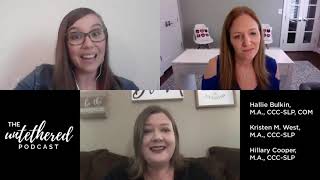
Podcast episode (Untethered Podcast, Episode 52) hosted by Hallie Bulkin with guests Hillary Cooper and Kristen M. West describing the Dysphagia Outreach Project (a volunteer-run 501(c)(3)) and its programs (notably a Dysphagia Food Bank). The episode emphasizes that dysphagia affects all ages and that schools are a neglected but legally-covered setting (IDEA → OHI). Kristen describes building a county-level consultative model: one trained SLP resource who supports school teams, trains cafeteria/support staff, standardizes identification/referral, and escalates cases to medical imaging or external specialists when needed. The hosts discuss related court cases and legal precedents, practical first steps for clinicians (compile cases/data; request meetings with administration; propose a pooled-resource specialist), and calls for volunteers/clinicians to contact the nonprofit for support.
Questions this video answers
A 501(c)(3) nonprofit organization.
teamysphagiaoutreach.org (spoken as 'email us@teamysphagiaoutreach.org' in episode).
Chapters
Quick disclaimer. All information, content and material of this podcast are the opinions of the speakers and is for the informational purpose only and not intended to serve as a substitute for the consultation, diagnosis and or medical treatment of a qualified healthcare provider. Welcome to the Untethered Podcast. I'm your host, Hallie Balkan. I'm a certified orofacial myologist, feeding specialist, SLP and mentor. This podcast is all about getting your.
Questions answered and collaborating with colleagues to.
Bring you the most up to date information in the orofacial myofunctional therapy, oral tissue and airway space. I challenge you to keep an open mind and join my mission to get this information out to the masses.
Let's get started.
Quick disclaimer. All information, content and material of this podcast are the opinions of the speakers and is for the informational purpose only and not intended to serve as a substitute for the consultation, diagnosis and or medical treatment of a qualified healthcare provider. Welcome to the Untethered Podcast. I am your host, Hallie Balkan. I'm a certified orofacial myologist, feeding specialist and mentor. This podcast is all about getting your questions answered and collaborating with colleagues to bring you the most up to date information in the orofacial myofunctional therapy, tethered oral tissue and airway space. I challenge you to keep an open mind and join my mission to get this information out to the masses.
Let's get started.
Welcome, Hilary and Kristin to the podcast today. I am really excited to learn more about the Dysphagia Outreach Project. Thank you for joining me.
Thank you for having me. I'm super excited to be here.
Thanks for having me too. I'm so excited.
I know we're gonna get some good information out to the public today, especially about dysphagia in the school. So before we jump, you know, take a deep nose dive into that. Hilary, why don't you tell us a little bit about what the Dysphasia Outreach Project is. Is and the mission.
So the Dysphagia Outreach project is a 501c3 nonprofit. So we are a nonprofit organization. Our mission is to provide meaningful assistance to individuals who are affected by dysphagia across the lifespan. So across the lifespan being, you know, the key word. So we're not just a pediatric organization, we're not just an adult organization. Everyone eats from birth, death, everybody eats. And so it affects everyone. So we make sure that that is very well understood, that we cover everyone. We have a bunch of different projects that we have going on underneath the umbrella of our mission. And one of them is the Dysphagia Food bank, which is a really interesting and unique, one of a kind program that we have where if we have families and individuals who cannot afford to purchase their dysphagia supplies, such as thickener, adaptive equipment, bottles, those kinds of things, we have a food bank set up for them to be able to request assistance, and then we give it to them free of charge. So we have multiple research projects going on. We have, oh, gosh, I feel like we're juggling like I'm herding cats most days because we have so many different projects going on. We have some really great resources for parents of children with dysphagia coming out that I'm really, really excited about. Things to help promote hydration in children with dysphagia and those kinds of things. And, you know, the reason why we're here today is one of our goals is to advocate and to provide a voice for individuals with dysphagia across the lifespan. And one of the areas that we found is really significantly neglected is dysphagia in the school system. So we brought on. I met Kristen through the Medical SLP Collective, and we just immediately meshed. And I love her passion for spreading awareness of dysphagia in the schools. So whenever we started the nonprofit and we started to think about how we were going to reach these different populations, I was like, oh, my God, Kristin, you have to be on the team. And so I begged her to do it, then she begged me to do it, because then I forgot. And so we begged each other to do it. And then finally we met up and we since launched some really, really big things. Some of them are going to be longer term projects, others are shorter term projects, but definitely with that whole eye to improving awareness that dysphagia doesn't stop when a child walks into a school building. So on that, I think since I'm an adult specialist, dysphagia specialist, I actually don't walk in that world. So that's why Kristen is my right hand when it comes to this. And so I'm going to let her take it away from here. Yeah.
So, you know, my background was I was an acute care SLP prior to kind of taking this role. And then now currently I am an SLP that targets dysphagia in the schools. So, you know, when I kind of came into that role, I didn't go into the role actually hired in to be a dysphasia specialist. I kind of needed a change of pace and a change of life. So I took the job with what we call like a local educational agency here in pa. We kind of have, like, smaller districts, were not county run in pa. So then what ended up happening is all the specialized services are pooled in one kind of setting. So I went in there thinking, like, I'll go and I'll use my like, low incidence skills and work with these kiddos kind of in the early intervention program or in the schools and kind of go from there. And then couldn't. We were teaching kids to walk and to talk and we were helping with potty training. And I was like, you know, dysphagia.
Like, eating is so basic.
And thankfully, you know, there was administration that was there that was willing to hear what I had to say. And I was really able to kind of encourage them to take a deeper dive. And they were really receptive to hear that because, you know, when I first started there, you know, there was a, we know you're medical, we don't do dysphagia here. And then what actually kind of how it happened was we had a kid that moved in from somewhere else that had services into our area on their iep. And an IEP is a legally binding contract for service. So the district that had that happen kind of said, we don't do this, we don't know what to do. They reached out, they knew I had the experience. They asked me to kind of help with this case and then said, you know, we're willing to revisit this now. Like, let's talk, let's see. And then we built a program from there after we were able to kind of review all of the legal stuff and to kind of go through it all. And we kind of had that change of pace and that was fast. That was like in a 12 month period of time. And it kind of happened to be happenstance. But even if that child hadn't moved in, I really think that we would have gotten there because we took a dive into some of the legislation and really into Asha and really kind of to see, you know, what is out there to support this need for students. And you know, on the flip side, when I was in acute care, that was one of the big, even outpatient. It was one of the biggest frustrations. I worked birth to three, I worked outpatient. I would make recommendations. You'd send that off to the school mom be like, well, I conveyed this, but I don't. I don't really know what happened at school or. Well, school says they're coughing and choking, so they're Making them do a small city. But like, I could never really. Well, did you see? No, it's just, you know, the lunch lady told me so I was like, whoa. So I had kind of both perspectives coming into this setting and kind of thought, you know, this is really an area where children for nine months out of the year are spending six or seven hours a day. Breakfast, lunch, you know, snacks sometimes. So almost three of their meals are there. And, you know, we're just such a big part of that. That's such a big part of our scope of practice. So that's really where, you know, we're kind of. I frame it and I know there's a lot of conversation that kind of happens sometimes in this setting of, you know, well, feeding and swallowing. Is it educational? Is there an educational impact? It's not one of the disability categories of idea. Actually, it does fall under idea. It falls under OHI or other health impairment. Even when you kind of dig back in deeper into the legislation, when IDEA went to be reauthorized, there was a petition to actually add speech, language pathology and dysphagia services in there for SLPs to provide services for children that qualified under OHI, including dysphasia. And they came back during that period and said, we are not going to specifically name dysphagia because this is supposed to be broad for a reason. So it's not exclusionary of other things. But we meant it to be broad, so we didn't close the door on any services. And so at this point they literally said the definition is sufficiently broad to include services for other health impairments such as dysphagia. And therefore we declined to revise the definition to include this specific service. So they're not saying it's not educational, they're just saying we're not going to name dysphagia because then it's going to cut off some other OHI service that we didn't think of. So this isn't an all encompassing list, it's just broad to be a reason. So that's one thing that I think sometimes people, and I'm not saying SLPs, but just people in education in general don't kind of get that it's encapsulated in OHI and it's broad for a reason. And so some of the other things that I like to talk about when I talk about this is talking about the link between learning and hydration and nutrition.
So.
If you lack certain nutrients, if you are dehydrated, if you don't get enough calories while you're at school, you cannot optimally learn. And that ties to free and appropriate education. So you need to have maximal benefit of your education. That's what FAPE like ensuring FAPE means. And if they are not adequately fed or hydrated or they're chronically ill all the time because they have some dysphagia that's resulting in chronic illness and it's not being addressed in the schools that directly impacts their ability to access their education. So that's like kind of another spot where, yeah, it's not defined there, but if you look at the definition of FAPE and take it with OHI together, you see that it marries very nicely that, yeah, this is something we should be addressing. And so, you know, that's just another thing that I think is a really good resource to kind of think about when we talk about these kids at school. You know, we want them to learn. They're there to get an appropriate education to maximize their potential. But if they don't have enough food, they're not getting enough variety of food, they're not hydrated enough, they're not going to learn. I am the person who always drinks too much caffeine and not enough water. So I chronically have a headache, right? So if I go to a meeting and I am in one of my caffeine induced headaches, I can't focus, I don't know what I did, I don't know what anybody said, I can't remember what I'm supposed to do. But think about these kids that maybe are under hydrated all day long. How are they gonna sit and learn, right? So, and they may not even, and they may not be verbal, so they may not be able to tell you, they might just be irritable. It might be viewed as a behavior, you know, so there's a lot of things that I think tie back to feeding and swallowing that maybe just incidentally gets overlooked. And if you look at the more bigger picture, you'll really see that some of this has tie. The other thing that really goes into that as well is just talking about like when you look at nutrition and learning, we have a ton of that shows what the effects of malnutrition or undernutrition is on learning outcomes. So like there's research to show that children that have malnutrition or undernutrition, like score 7% lower on math tests or they're 19% less likely to read a simple sentence by the time that they're eight and then they'll go on to earn 20% less as an adult. So that's undernutrition in typical peers. So then you're layering on kids that may have other disabilities, and you're talking about trying to get them ready to go out into the world to, you know, be able to hold a job and learn. Layer that on top of that. And you're really putting these students at a disadvantage.
So if it's okay if I interrupt real quick, I just have a point that you just made me think about. So with this coronavirus pandemic that's going on and the schools being closed down, you see a lot of programs where the school. School is providing food for families to take home. Because of that undernourishment and the problem with access to food, these children with dysphagia are not being serviced by that. So could you tell me a little bit more? Because with our work with the dysphagia food bank, we provide thickeners and things and products for people who cannot afford them. But what's the school's role in providing those things? In the schools, are they supposed to. Or the family's supposed to bring it? This is something that. It's a very hot topic, I'm sure.
Yeah. And there's a gray. There's a gray area on that. So I don't have good kind of legal law on that. And I think some of that might vary state to state. I know in the area that I work in, the districts will work with families. So if families offer up to send it in, they say that's not a big deal. You know, this is what we use. We have enough supply, we'll send it in. If accessing it is not. If it's not accessible for them or they don't get it. Like, sometimes in pa, we can get it through medical assistance. So if their insurance, medical assistance is covering it and covering enough for the full day, they'll send an allotment to school with the child if they can. If it's not covered because it's really finicky to get it covered in pain and they can't, then I can't think of a situation where this has happened where they've not just said, tell me what I need, like, what is this? Can you show me where to get it? And then they have provided it for the family. There's so much that's state specific that it's kind of hard to nail that down. But it kind of goes back to things like nursing support. So, like, a lot of times, if A child has to go to school with a nurse that's typically paid through the child's insurance and their own kind of private side of that. So that's typically where it goes first. And then, you know, sometimes it falls to the districts after. I don't think they're obligated to pay it, but I don't think that I've had a situ. That I've seen. I've never seen it have to go to court or I've never like read of that yet. Not saying it wouldn't be coming, but I've never seen it not happen either that way. Although.
What about iddsi? So idsi, Adaptation or modification of diet?
They're required for that. So yeah, so there are a lot of court cases that actually came up that have kind of a component of if a child requires modification to the diet or modification to the liquid, are they providing that? And if they aren't, then kind of what has happened there? And the courts have consistently said if they were not provided what the child is needed and that impacted their ability to end school, then they were found at fault. Those districts were. There are situations where even children that have attention or impulse have like gotten a hold of a food, like from a peer, reached across the table at a party, overstuffed their mouth, choked, ended.
Up in the hospital.
Those districts have been found liable in those events. And there's a bunch of different court cases which we don't have to go through all of them. And I can give you a resource, Hallie, if you kind of want to post it, of different court cases that kind of come back to that and say they weren't provided adequate supervision. They were known to be impulsive. So as a result they were found to be to be liable. There was a pretty big one in the state of New York a couple years ago where a child got into a cabinet of food that was being used for reinforcers because it was a self contained classroom and the lock like was either not working or broken and like an order had been placed, like they were aware of it, they had said this needs to be fixed, but it just hadn't yet. And then the kid had a, like a behavioral kind of meltdown and they were trying to like help controlled the child. They got into the food, they ended up choking, they ended up passing away and the family was suing the district for a large sum of money. So even. So the other part that I always talk about too is it's not just the cafeteria. You have to think about food and Liquid in totality of the school day, including parties, snacks, field trips. So that's a lot of kind of what, you know, what I end up having to talk about too is you have to think of not just the cafeteria, but all the other stuff, because everything we do, celebrations include food. You know, parties include food, treats, snacks, you know, cupcakes, things like that. And so you have to think about, do you have something that's accessible to this child who has feeding and swallowing needs as well. Districts are required to accommodate allergies. So, you know, if you are milk intolerant, they have to give you a substitute for milk. If you are gluten casein free, they have to accommodate that as well. So then if you are on a modified diet, that's another component of that. They have to accommodate that.
That's what I think is very interesting is that my child has f pies. I don't know if y' all are familiar with f pies. So he has multiple food allergies and things that he can't have. And so he's enrolled in preschool. So we had to go through the whole process of, you know, is it an, is it an allergy? Does he need an EpiPen? No, he doesn't need an EpiPen, but he can't have milk. And here's a list of other things he can't have. And, but with dysphagia, I think that the district, if I was to tell them my son has, you know, oral phase dysphagia and he can't chew food as well as he should, his age matched peers, I feel like that's where.
They'Re like, womp, womp, womp.
Like, this does not fall in our scope of practice. This is not something we're going to do. Sorry. But if it's an allergy or, you know, medical condition like f pies, then, you know, obviously they're going to jump to it because they realize if they give him milk and my son reacts and he goes into shock because he vomits to shock because of his f pies and they gave him a thing of chocolate milk, then they're going to be liable for that. So can you talk a little bit about how do we. And this is something I know you and I have talked about before, but how do we encourage SLPs to get in there and have that conversation to. What is it that I'm trying to say, Hallie?
Well, I mean, I think what we're looking at, and correct me if I'm wrong, but how can we encourage SLPs who are in the schools to support these kids, maybe even if they're not the ones who will be doing the support.
Right.
Because we know not everybody is a feeding therapist. Right. Obviously, I have a course for teaching people how to do that. None of, I don't think anybody in our course currently works in a school system where they're just an SLP 100% of the time and they've never done feeding before or they obviously, you know, there's obviously a vested interest in feeding and they either also work in a private practice or in a hospital setting, or they're looking to get a job there. And so there's this big misconception, right, that we don't do feeding in the schools. And we're all over here saying, yes, yes, we do. And as you've heard in the first part of this podcast, so, yes, how do we get through to, I guess, all of the SLPs in the school system and help them kind of encourage what we're suggesting today and help take some action, even if they're not going to be the actual therapist providing the therapy, or maybe they'll be supervised by somebody else who can help them implement certain strategies on a daily basis.
Yeah. So that's a lot of what the situation I'm in right now is. I'm the only one in my area in the entire county that kind of, that specializes in feeding and swallowing needs for kiddos, but I don't go see those kids every single day. And honestly, this was a baby step process. So what we started doing was, okay, we recognize that this is a need that needs to be met. So then we had meetings with administration of the county's districts. All of them came in, their special ed directors, and we said, listen, we reviewed the research, we reviewed the data. Here's what IDE says, here's these court cases. When you're talking to administration, a lot of them aren't SLPs, they're teachers, so they don't. But they talk money and the money talks for them. So if you tell them, here's these lawsuits that have happened and I know this is going to cost you money, but it's going to save you money. So I know Hillary's been in this conversation talking about fees and imaging and how do you get imaging and acute care. It's the same argument in schools. It's, I know it costs you money, but it saves you money because you're not going to have a lawsuit when you show that you've done what we call due Diligence. So that's kind of how we successfully had these conversations. When we said, okay, we know this needs to be done. How do we get buy in? We showed them the court cases that have been out there. We talked about that, and then we said, okay. So their response was, well, we can't train all of our SLPs, right? That's not something that we can do well or that all of them may want to do, or all of them may be able to get competent in. So how do we do this? So the model that we ended up running with was one person who had the interest and the skills and then maybe just needed some additional training, then became the resource in a consultative model to all of the students. And we started first just at the ground floor. Go to your caseloads, take a look. Is there a kid that in their IEP or their medical history, you see that they have dysphagia? It's been documented, but you don't really know what accommodations they need, or you've heard some rumblings about something going on in the cafeteria. Maybe you've never gone there. Compile a list, take a pass through the cafeteria, lay some eyes on them. If you think there's something wrong, then go ahead and make a referral. And then there was one person that then would come in, and I go as a component, almost like an AT consultant or an assistive tech consultant to help with that. And so what they kind of did was when we told them, your staff just has to identify, but we will have one person that's a resource that you all share. It becomes cost saving as well. So you're training one person that's the expert person that's then going to work with those SLPs in the school. So those SLPs that say, I got in the school because I don't want to touch dysphagia, that's fine. Because in our model, what happens is I come and say, I don't want to touch your fluency kid or your R kid. And I'm fine with that. Here's what I think that you should do. Here's what this looks like. I train them on that. I train them, even their support staff, the cafeteria. And then they're the point person for coming back to me if something's not working. And we started really basic, so we didn't go all day, like, okay, no services to everybody's getting feeding therapy. We went through, addressed kids with known dysphagia, started identifying kids that were having dysphagia concerns. Now we've kind of morphed into looking at oral motor and choking risk. A lot of those kids that have that and looking at the specific and the other thing that I always tell people is you have to think about the cafeteria. It's such a unique stuff setting. So there are kids that have trouble at school that they don't. They have delayed oral motor skills. Maybe it's mild, they really are okay at home. But at school, the sensory environment, it's loud, there's a lot of smells, they're tired, it's a long day. You know, all of these factors play in. And then they go to the cafeteria and they're either shoveling and not chewing their food because they just want to get out of there or they're too fatigued or their positioning is wrong because they were on the bus and then their wheelchair was repositioned. And you know, so we tell people to look at that too, because there are some kids that really may only have significant trouble at school and don't have it other places. So yeah, that's kind of how we did it. We kind of said, you know, it's hard to get everybody trained to do this well, so why don't we pool the resources and have one person and then I go and work with that school based team. So that's why I always encourage people if they are interested in feeding and swallowing and you have the expertise or the knowledge and you're in a school setting and you're that person that's like, I want to get out of the schools and get into acute care. Like there is a way to bridge that or stay and find, you know, happiness there where you are. Because if you step up and volunteer and say, like I volunteer as tribute to be the speech therapist that wants to start targeting this and helping everybody else in my district, you know, and you can present it from a budget standpoint that it's going to save them money. And then you're also doing right by the kids and adhering by your code of ethics from Asha, meaning that you're meeting the child's need, but you're also like practicing within the skill set you have. I think that becomes like a really good resource for them. You just have to figure out how to talk to people that aren't in your discipline. Is what I really found and learned in the schools was I'm not talking to an slp. I'm talking to somebody that is a teacher or a psychologist or something else. And they don't really care when I tell them. Asha says that we should do this. They're like, I get that you have asha, but we follow the department of Ed. So then when I said, well this, my state teaching certificate says dysphagia and IDEA says other health impairment and the federal registrar said this and these court cases and then money, they go, oh wow. And that was the face I got.
Yeah.
I think when you made two great points, right? So one, I love how you compared it to like being an AT provider. Like in my county we have Interact and Interact is a small team of specialists who go into the schools that they're assigned to and they work with the children who need the all, you know, the augmentative communication and devices, other means of communicating. Many are non verbal. So you know, it's, they're the specialists but they go and they bring the devices, they bring the things and they train the everyday providers that are with these kids how to implement. They're not the specialists. And if something, like you said, if something is not working, then they go back to that interact contact and they say, help, help me.
What do we do?
And so I think that, that hopefully a lot of people listening, if you're interested in, were able to take a big deep breath when you said that because it takes a lot of onus off of the therapists in the school being like, you don't have to be the end all, be all, everything to this child from point A to point Z. Like we're saying, hey, let's start with one dedicated person, whether it's to a whole county or just to a designated number of schools, depending on how big that county is where you live and start there. And then the other thing that you said that I absolutely love was how you have to approach anything in the world of business, time and money. If you can show them, this is going to save you time and this is going to save you money. You can generally get a lot of people on board. And my favorite question is always, well, where will we be 12 months from now if you don't start doing this like time wise, money wise, like how much money are we going to lose a year from now? And they'll still sit here and think, well, none, because if we don't even get started, like what can they sue us over? Well, no, actually you could probably be like millions and millions and millions in the hole when you don't treat that child who has that support service on their IEP that came in from another county or you know, as one of the examples you gave. So I love how you put Positioned it because obviously we know we have the law on our side. And unfortunately, we live in a, you know, litigious society where you can throw some cases at somebody, they go, oh, man, now we have to pay attention. But, hey, you do what you got to do to get these services that for the kids that need and deserve them, right?
And even in the past couple years, I mean, so we started this three years ago where I am now. And then I did, like, an update presentation this fall to staff in our county, and when I went back to review the case law, there were more. There was about three or four more that had happened, and two of them were in New York. So we're pa, so that's very close. So we take. We take precedent on that. And then there was one that was in, that was going to go to the federal level out of North Carolina, where literally the mom was saying, you're teaching my kid. It was a kid coming in from a Birth to three program to the three or six program and was advocating for feeding service. Her argument was, it's a denial of fape. He's an iep, so you're required to give him preschool services, and FAPE applies. But I can't get him to therapy outside of the day that days and times he's supposed to be at his school. So if I have to remove him for outpatient services, there's a denial of FAPE there, and I'm taking you to court. And then they ended up settling out of. If you were to contact her, she would give you all this information, too. But they ended up settling out of court because I wanted to know what happened. So I found she has a blog post, an advocacy post. And I emailed her and said, I really want to know what happened. She's like, oh, I'll freely share, like, shared all the information with me because I wanted to know where it ended. And she was able to advocate to get the services. And one of the pieces that came up, which I thought was interesting in her argument was the school district came back to her and said, well, fine, our SLPs, it's in their scope of practice, so we'll just treat it. And she goes, well, how can you prove to me that they have the expertise and knowledge they need?
They.
Because you told me six months ago that you didn't have anybody qualified. And now that I'm taking you to court, you're saying that same person's qualified. And so then the district said, we'll contract with a specialist for you for the services. And here's their resume. And she said, okay, that's better.
Cheaper than going to court.
So. Right. But districts would rather not pay out. So that's the other thing is if they get themselves in that situation, you know, they're going to pay a private practice person a lot more money than if they pull it from their internal staff. And even when I started, like, I didn't just transition from a speech therapist serving another caseload to just doing dysphagia services. Even now I still split my time because our county is kind of small. So I still, I just incrementally chipped away at that kind of more traditional speech and language over time. And it grew. And I'll tell you, we're a small county. It grew X exponentially each year. So once you give those arguments and you are able to catch their ear, they go back and they reflect. And then all of a sudden those kids start getting identified. And the other thing, I think that's really important because I know a lot of times the question comes, well, even if I'm not the SLP that's going to be seeing this kid or implementing this plan, it's still like, how am I supposed to make this work in my day, right? Like, how am I supposed to find the time to go see this. This child or check in on them, make sure that they're getting what they need? And so I. We've started shifting a lot of our training not just to the SLPs, but the support staff. So the personal care assistants, the cafeteria workers, the lunch ladies, like you are in the cafeteria. If you feel like this is what risk factors are, if your students are doing and just doing the real basics with them, or you have concerns about chewing or, you know, come find that SLP and then they'll come lend an eye on that student. So I've even seen once that training has happened, a lot more students be identified because the support staff was like, well, I didn't. They're not SLPs. So they're like, I don't know. I just thought that was what he did. But now that you told me, that's bad. Like, oh, my goodness, I don't want, like, just be here to help this kid. I don't want to hurt them. So they like go running and then we're able to, you know, make progress with them.
That's amazing. That's really. And kudos to you because this is not easy to go.
I mean, it's.
We're making it sound like this is easy to do just by sharing it in such a quick podcast, and as you said, it took 12 months, which can be really. That's actually pretty quick. And in the world of dealing with school systems and anything, you know, on a political level. So, I mean, I want to give you a big round of applause because it's not. It's not easy to do, and it obviously takes a lot of advocacy, but, I mean, gave her these kids who are getting the services that they need.
Yeah. And I think, like my administrator, I was lucky because my direct supervisor was an slp, and she's very receptive, and she's all about the kids and what is best for the kids and what do the kids need and how do we do that. And she's very mindful of, you know, practicing within your scope and your comfort and building capacity, and so how do we work within all of that? So, you know, once we decided to embark on this, she was very cognizant of it. We still don't do feeding therapy yet. We're working that way, but it's because we don't want to make the jump because we all know that that intervention is so risky that we want to make sure that we're low fruit to high fruit. Right. So we're working through it. So I know I. We don't. We're not doing feeding therapy. I wish we were there, but I. But what she really helped teach me was, like, one step at the time, like, and Hillary will know this is me. Like, I'm like a hundred. Like zero to 100.
Right.
It's really fun.
I understand.
So I guess can you explain what that looks like then? So if you're not truly doing, like, feeding therapy, like, what is it that we are providing to these kids right now?
Right now? We have been going in and standardizing and actually making sure that people know what they're supposed to be doing with these children if they have dysphagia, actually identifying it, making the appropriate referrals, coming back, making sure those implementations are being. Some of those recommendations are being implemented, kind of also giving them some suggestions of things of like, okay, well, when you're working on, you know, when you're offering this, use this shape of spoon versus that shape of spoon, and making kind of some of those small incremental recommendations that are still going to help progress their skills, but not quite yet at the point where we're doing all this intervention, because we were at the point where nobody was even mentioning dysphagia and iep, so we really had to go back and kind of start at where are our safety risk kids? Where are the kids that we need to make sure that they're efficient and safe eaters Right now before we go to this now, I'm gonna give once a week, blah, blah, blah, for intervention. Like, we had to really start down there and kind of prioritize what our steps were. So now, you know, some of the districts make their own. Their own kind of determinations of where they want to go. But with internal programs, we're starting to say, okay, now we know where we are here. Now where are we going? Now that everybody knows what they're looking for. These SLPs that haven't touched dysphagia for a while, you know, what does that look like? And then we're kind of starting to move into that consultative, like, facilitation of the skills. Like, that's where we're going. But we wanted to be very cognizant when we started implementing it that we weren't asking people to do something that they didn't have the expertise to do. And also realizing that I'm one person. So, like, I couldn't go give once a week therapy everywhere right now. But if we empowered people to kind of start at the ground, and we kind of grew their capacity and their understanding that we could get to that point. So baby steps. Everything is small and baby steps, but it's definitely way more than what we were doing four years ago for these students. And definitely we're moving in that direction. And I've been able to see some of these SLPs I've worked with be like, so if I wanted to work on this skill, I feel like I could do this and this and this is that, right? And you're like, oh, now we've got you on the bus. Like, yes, I get that first.
Yes, that little.
Yes.
And then we kind of hook them.
Right?
Exactly. And they're seeing the outcomes, though. They're seeing the children not have as many behaviors at the end of the day or be more awake and alert.
And participatory because they're seeing that impact.
Of nutrition and hydration and learning and participation. And then when everybody gets in the field to help, so when they see it's helping the student that they're there to help facilitate their development, then they really get on board.
Well, it also makes their life easier in therapy or in the classroom. Right. If this child has proper nutrition and if we're keep making sure they're safe, even if they're not getting that direct therapy yet. But we're kind of doing consultative things to make sure, hey, let's just put these few things in place until we can get them more direct therapy. Then that's where I think arguably, like, yeah, that child's going to be more alert, more ready to learn. They're going to be, you know, less combative. Maybe they'll have fewer behaviors and hey, how much easier does that make everybody's life? So that's a really good point.
Yeah. Do you know of any other clinicians or areas in the country that are doing what you're doing? I know I heard of a clinician. I can't think of her name off the top of my head. I'm so sorry. If you're listening to this in Arkansas, I have like 50,000 names in my head and I can't remember my own name half the time. So I'm with you. It's ok. I know in Arkansas they've made some really good progress. Louisiana, where I live, not so much yet. And although if someone's out there in Louisiana doing it, oh my gosh.
Actually Emily Homer, who kind of Emily Homer is kind of who started really developing a lot of programs for modeling in the school. She's out of Louisiana, but I want to say, not your area south, but she. They're there.
They have a whole program in south.
Louisiana that's like where Mardi Gras and all the fun stuff is. So I'm not surprised. Yes. So I, on behalf of the Dysphagia Outreach Project, those clinicians that may be listening to this going, yes, this is my jam. We want to hear from you. We want to know where you are. Because one of the things that we do is families come to us and they ask us questions. And if we're providing them with product and their child is school aged, then we want to advocate for them or give them the tools to advocate for asking for those modifications to be done in their schools or if their school will provide thickener. If that's an option, then absolutely, we want to encourage them to do that too. But we need to know where the clinicians are around the country who are providing this amazing service in the school. So if you happen to be listening to this or you know, someone who provides dysphagia services in the school, have them email us@teamysphagiaoutreach.org so that we can, you know, keep track of where everyone is. And if we have someone reach out to us who needs assistance and we can refer them in that direction. So I absolutely love that.
And we'll make sure that's in the.
Show notes too, so that if they're.
If you're driving and listening to this.
Or you just can't write it down.
Immediately, we'll have that in the show notes so that you can go back and grab that email to contact Hilary.
Yeah, there's. I think they do. I met somebody at ASHA that does it in Texas. I'm blanking on what metro area in Texas it was. I know some in New York outside of D.C. some school, some of the county schools are doing it. They're doing it in some counties in North Carolina, I believe now. So it's catching on. It's just, it seems to be like so many things in pediatric dysphagia sometimes and pediatric feeding is all, it seems to be very scattered and there's no consensus in it. But yeah, I mean, the laws on our side, it's just, it's a process. I mean, I think that's.
Yeah, I think that's how it is here too. In Maryland, at least in my county. I don't even, to be honest with you, I have zero clue what they're allowed to do or not allowed to do in the schools. And I was someone who started in the schools and as I was telling you guys before we recorded, I started in a classroom with children who had full time nurses and who were, you know, in wheelchairs and asleep for half of their school day. And these were, these were three year olds and they basically, as a new clinician right out of grad school in my clinical fellowship year, they gave me an IEP and said, here you go. And I was supposed to treat that child and feed them. And I had no clue what I was doing. Nobody had trained me. And so, I mean, it was like, holy cow, I'm going to hurt this kid. And the nurse was taking a break while I was doing the feeding therapy, which was not a good idea in my opinion. But that's just the reality of what was happening because that was her break time. They scheduled it when the SLP was coming. So, you know, it's interesting to see that they do feeding, but they only let me do feeding with the kids in that classroom. I was not allowed to put feeding goals on the IEP for children at the same school with the same age, maybe with a similar diagnosis, but who are in a higher functioning classroom. There was just so much politics surrounding it and I was like, I wanted to do feeding. This really is what threw me into it so. Because I was like, holy cow. Like, I don't know what to do with these kids and nobody's advising me and nobody does feeding in the SLP office. So it's up to me. And I started just going down the rabbit hole of taking courses and reading books and reading research and just, you know, trying to figure out how can I safely feed these children or show the teachers in the classroom what they should be doing because this didn't exist, right? And this was like back in 2009. But what it, what I do know now is that they are doing it in some of the preschool classrooms. Like one of my kiddos, for example. The OT will work on feeding with him, but it's limited as to what they will do. Like I've sent her emails and they offered him a curb spoon and they're trying to teach him the scoop so he can become an independent eater. But I'm over here going like, well, he's got all this. I mean, the OT has been wonderful, but she's like, I'll say, oh, well, we're just trying to see like what other things we can get in his mouth, like will he crunch on, you know, a snack or whatever. And she was like, oh, I don't work on that. I'm like, well, where do we draw the line? Like, what is it that you do work on? What is it that you don't work on? And why is it it that we only seem to be having preschoolers work on this right now, but nobody else seems to have this on their IEP and that's why they're coming to us in private practice. So, you know, I definitely think that there's room for improvement and I would love to see this take off in my county because there's a lot of money here and I'm sure if we just put it in the right parents ear, we could get that going pretty quickly around here.
Yeah, definitely. I think, you know, I think when we just think about sending kids out with, you know, from special ed with the least amount of support possible, that's just something that we have to have to consider. How do you know eating is such a component of that? It's an everyday skill. So, you know, I'm grateful that I've been in a facility where there will or in a, in a place that I'm working now in an educational environment where they're willing to hear that and recognize that. And you know, and I also appreciate that we're being smart about how we're doing it and always making sure that we're not at a spot where we're gonna ask somebody to do something with a kid that's gonna hurt them, and we're making sure we're building up quality intervention, not just, like, turning on a dime. So, you know, I think that that's a real kind of fine line because you want to start, but how do I get started? And, you know, some people are like, well, it's like opening a can of worms. Like, how do I give some. But not. But if you have a strategic plan that you follow step by step, you can get there through baby steps. The first thing is you just have to get them pushed.
When. How are you guys doing assessments? Or how are you other than looking at, like, a kid who already has the IEP goals? For example, because you mentioned there are children, obviously, where you're going, oh, like, hey, here are some risk factors. And now the staff knows what to look for. And so they might be calling you in, but is somebody doing, like, some type of formal assessment before you add IEP goals? So that's you.
Okay.
So we do it as a consultative process. So it's. They don't call it assessment. They call it a consultation. So it's separate. So I come in and do a separate consultation workup. But essentially it's written like an assessment. It just has to do with terminology and, like, education. So we do a consultation where I come in, I do an observation, I do a full, like, oral neck. I do, you know, like a cranial nerve exam. I get a parent questionnaire, a teacher questionnaire, an SLP questionnaire. I get a medical record release. So I that off from their pediatrician or their, you know, if they're at the children's hospital. I'll get that information, I'll review it all, I'll talk to the parents. I go in, I do a whole observation in their natural. So show me what you've been doing. Hands off. Okay, now let me, like, intervene. Write it up. We write up a plan. All of that goes into, like, their SDI with all of the modifications. I do team training. And then they. And that, like, so at that point, that's where they open the IEP is and they put it back in there, that there's sti, that there's a feeding plan. We do all the training. I observe. Some of the staff now that I've worked with are like, oh, I know I can train on that. Now that I've worked with you a little bit, I just want you to write the plan. So that kind of depends. We support them as much or as little as they need based on how comfortable they are. But then they train the fan. Everybody signs it. It's a part of their IEP paperwork. It's in the sub file. It's in the PCA file. It's in. You know, it's everywhere. So everybody knows what they need to. In some of the schools now they're starting to. Even so they're, like, looking. We've had. We've sat down with, like, dietary staff and been like, okay, well, this is probably, you know, they can't have this, but what can they have? Like, looking at their menu, and we always kind of have an IEP team meeting after, where we call come together, and I, you know, say, I'm the consultant. This is what I saw. This is what my recommendations are. These are some strategies that I'm recommending. Here's some interventions that if they're comfortable doing, you know, would be possible, that could possibly be beneficial. Tell me what support you need, and I'm happy to support the team. And then I circle back if I need to or not. But it's like a separate, freestanding report that we call a consultation report. So it's a full. And then I'll make a referral if I need to. So, like, there's been situations where I've said, I need you to go get it, or I need you to go back to your physician. Or, you know, I think this is, you know, whatever, like, just like you would an outpatient. It just takes a little bit more coordination, because now I'm dealing with a medical pod of professionals and an educational pot of professionals, and I'm like.
And then the family.
And then I'm bebopping between all of that, trying to be an integrator. Right.
Just integrating all the pieces together.
Yeah, I have this visual. I did an actual presentation on this a couple years ago about how we developed the program. I guess that would be two years ago now. And I had this visual, and it was like. Like my role in the middle, and then all these little bubbles that was like outpatient OT school, ot, outpatient pt.
The physician, the. This, the. That the school nurse manage.
It's a lot like.
That's a lot of stuff. Yeah.
Yeah.
Right. Yeah. So I guess my question, too, is that if you. Have you found a child where you're like, we need to send them for an instrumental evaluation, like, yesterday, and then are they allowing you to do that? Number one, and then number two.
Two.
Obviously, those kids who are at risk of aspirating or they're Constantly penetrating. There's some serious medical issues going on with just swallowing in general. What have those next steps look like if you are not yet doing true treatment in the schools yet?
So I have been in a situation where I've had to send them back for like a repeat swallow study and.
It'S been well received.
So part of the reason why we get the family medical release is and we can talk. So then when I'm done, when we talk, we can like call that physician and I'll say like, this is what I'm seeing. My concern is that we don't know what we don't know. So I might see something that's concerning clinically, but I don't know what's going on. I don't want to add thickener or do something. I did some single sips or we did any of those kind of like more conservative accommodations. And it might be helping, and it.
Might be helping, but I don't even.
Really know what's going on and what I'm helping or not helping at this point because I don't have the imaging so I really need image or so I really know. But I don't know because I don't have a swallow study. And then those physicians have almost immediately said to me, I'll write a script so we can get a swallow study and then we'll come right back around. And then because I have the medical release, then I can call the hospital and say, this is what we're seeing. You know, this child is sick and this child is always coughing and choking and they have these medical conditions. So this is why I'm worried. And that's why I get on the onset too, because I want to know if they've had one beforehand but they have it, then I send them that way and then they send me back that report and then I come back in and then I do all of the training based on what I'm seeing. I've even gone so far as sometimes to been like, hey, this child needs to go back now. Like we need to go back to the ENT or we need to go back to this imaging, you know, to kind of help families that have trouble kind of keeping track with of that like circle back to their medical providers and kind of make sure that they're still getting that follow up. So if they were put on thickener, do we still need that? Like have we gotten better? You know, because maybe they've made for some of like my little ones or my more involved because they've made some like postural improvements and things like that. And what does that look like for them? Dysphagia is one of the things where people are very quick to like, want to get the imaging and stuff. But there, it's probably honestly the one intervention that'll be the last one to come in in the schools because there is just so much expertise on it that, like, I would be comfortable intervening, but I'm one person. Right? So how do we. How do we help manage that is a little bit trickier, but we're thinking about it and we're working about it. We're just trying to move through kind of the process to get there and to get there in the right way that we're not going to do something that's going to harm a patient either. But that's also why I'm always so advocating for that swallow study if I need it. And I know a lot of people say, well, my district won't let me recommend a swallow study because then they're going to have to pay. One thing that you will see if you even in Emily Homer's book and all the literature, the school district is a payer of last resort. So they're all the way at the bottom. But I've really never even had to go so far in a meeting and say, like, I need you to get a swallow study. I just start talking about everything I'm seeing and why I'm concerned that they're high risk for aspiration. And instantaneously that doctor will always, if I, because I always have them be there is like on the phone even, or that PA or whomever, they'll say, okay, we're going to write an order for a swallow study. So just they need to hear it and then they're going to hop on it and take ownership of it and run.
That's great.
That's great.
I thank you for explaining that. I think some people are like, well, how do we get from point A to point B? So if there's anybody who is really interested in this, and obviously we, you know, we told them, like, reach out to teamystasiaoutreach.org and, you know, if you are either doing this already or interested in doing this in your area. So we kind of have this map that we're creating of like, who we know, who's where. Like, what are we sort of planned this ahead of time, Kristin. So I'm sorry I'm throwing this at you, but, like, what are three tips that somebody could do? Like right now if they want to get this going. And they had, you know, they're starting, like, from point zero. What are, like, three things they could go and do, like, today or tomorrow and get this, you know, get things moving in their accounting.
So I would say compile the case studies, which I can even give you some resources for their name. So, like, here you go. Compile the case studies and the. And the court cases that are going to support the need. I would even come and say, because sometimes the argument is, well, I don't think we have those kids here, which I'm always like, you do. I just don't think you've noticed them. So maybe go back to your list and say, I know these are kids that I'm worried about. Here is this. And then ask for a meeting. I always say, ask for a meeting for the first line of defense and kind of throw yourself under the bus. Say, I'm not asked. Come with a solution. So not, I think we need to do this, but I don't know what that looks like. Here's this. Here's this. Okay. Now I want to have a meeting. Figure, I'm volunteering to do this, or I'm volunteering to help you find somebody, because I don't want to do it, and I don't feel comfortable. But I believe that we need to do this, you know, so be part of the problem solving. I found that to be helpful, too.
Always coming with a solution versus just asking or complaining. If you ask or complain, people are gonna go, okay, that's great. Bye. But if you come up with a solution and you say, by the way, there's a need, and by the way, legally we're required to do this, then they can't. They can't push you away. I mean, they could, but then you're gonna have a big legal issue in your hands. If this gets out to parents that somebody internally is saying one thing and the other side is saying another.
So do you.
You mentioned that you have some of those resources, like the cases and the legal case. Is that something available like, that they can somehow get through you guys.
As a resource.
Working on it.
Okay, cool, cool.
I know that's a big ask, so.
I didn't want to, like, throw that out there, but I'm like, that would be really cool if it was sort of like, hey, here you go, guys. Use this.
Absolutely. And I know that Kristen has written one inside the Medical SLP Collective as well that I think was a pretty short. It was just a sort of brief overview of some of the biggest cases. But. And I found that that resource in that group to be very, very educational for me. So there's that resource inside the Medical SLP Collective. And then we're also compiling some, some other data and research and things to promote some of our research studies that we have going on. And we do intend to make those things public as well once we get them and get them all nailed down and all the details and stuff. So it's absolutely on our to do list. Sometimes it's hard for me to realize that our organization is only a year old. We're like a newborn baby organization and we've gotten so much accomplished in such a short amount of time. And so if anyone is interested in volunteering and helping with us getting this effort completed, please email us. Teamysphasiaoutreach.org we have a whole army of volunteers. The entire organization is volunteer run. So I think just recently we had a big call for volunteers. We had 15 different people come out of the woodworks who just felt drawn to help with our cause. And I tell people, if you really feel pulled to help, I've got a job for you. I have a whole laundry list of things that I can assign depending on what people's likes and wants and skills are as far as volunteering. So if there's anyone out there who feels that call to help out with this organization and spread our mission, then email us and we'll definitely, we'll set you up.
Awesome. I know that you and Kristin are both very busy people, so I don't want to ask you guys to have to create anything. But I know that if there is that obstacle, right, sometimes where people are like, well, how do I even read an entire interpret these studies, the law and these cases and where do we even find them and how do we get access to these things?
So yes, if there's anybody who wants.
To help them, compile that, reach out to them. Because I would love to see that one done.
Yeah.
So some of like the big name cases are like Irving versus Tetro, which is like called the Bright Line test. So it kind of just, it kind of said, what is a medical service? What. What is a OHI service that a school is required to provide? And so that kind of said if a physician doesn't have to do it and it's necessary for a child to attend school, then the school has to provide it. So that goes into like dysphagia services. But it was specifically like about catheterization and like trach care and stuff like that. But that's like One that really draws kind of what they call the bright line test, which is that if a physician doesn't have to provide it and it's required to go to school, then a school must provide it. So that's a good one. And then there's like, a similar one at Cedar Rabbits vs Garrett, which is kind of specifically mentions dysphagia in it. So that's another really good one. And I always, like, mess up this district, and I swear somebody from New Hampshire is eventually gonna like, yell at me and email me and tell me, like, it's this, But I think it's Kentuck Valley School District in New Hampshire. Like, they had a court case that was related to, like, dysphagia in the schools. There was one from New Mexico. Ainsburg vs. Wake is the one that I was talking about in North Carolina. It was settled out of due process. There was Robertson versus East Baton Rouge Parish School Board was another one. So there's a lot out there. If you look at, like, the article that I gave you that was, like, power to floor, they're kind of that big ethical considerations in treating dysphagia in the school. They go through that really well as well. But just a couple, like, cases just to get you out there. But there's a million if you keep looking.
Awesome. And where can people find these? If they just Google it and it'll come up. Yep.
If you Google, get the court case name and you type it into Google, it'll come right up. There's like, some actual, like, law websites, but it's better if you Google because you'll get the summary versus having to read through the whole legal document, which is hard.
Awesome. Well, that's super helpful. So we'll make sure to capture those names, too, and put them in the show notes as well, so that you guys can go on and Google away. Hilary, is there anything else that you want to add that we haven't changed share here today about the organization or the mission?
I think Kristin has done a fantastic job talking about the need for dysphagia awareness in all settings across all ages. And I love having her on this team because there's so many times where I'm like, hey, Kristen, look at this idea I have. And she's like, no. And so I feel like, you know, we really want to be inclusive of all of the different populations that are affected by dysphagia. And I love the fact that this is becoming a groundswell movement. Getting out there and showing that just because someone walks into a certain building or a certain setting. Dysphagia does not stop. That is something I actually tell every single grad student that I have the fortune of teaching or lecturing to or working with is that just because you think you're going to go into the schools doesn't mean that you should flush that all that knowledge you got in your dysphagia course out of your brain and just never touch dysphagia again. Because if your patients, if you're working on talking, then that patient probably eats. And if they're not eating, then maybe we should be working with them to try to get them to eat. So everyone who speaks should be eating. And we use the same musculature and everything. So we should absolutely not be like, oh, I don't do that. And it's okay if that's not your comfort zone and that's not your area of expertise, but to always be mindful of at least being able to recognize it, to be able to refer it out to those people who do treat it. Now, I don't treat fluency. Don't even get me started with treating.
Fluency, or bear with you.
But I can recognize when someone has a fluency disorder and I can refer them to someone who does have the skill set to be able to treat that. So I think that that's really important for the clinicians that are in the schools to really kind of take those blinders off and start realizing that you don't have to treat it. You can just recognize the problem and then move forward. And the dysphagia Outreach project is here to help with that. And if anyone's having any struggles or difficulties, if there's any other ways that we can help to advocate, we're definitely interested in hearing feedback from clinicians that are in the schools and what struggles and problems they're having, because until you acknowledge the problem and put a name to it, you can't fix it. And that's just the general truth and everything.
Very true.
And if anyone is interested in volunteering time effort products to the dysphagia food bank, if you know a company or a district or something that has a whole bunch of product that maybe they're not using right now because we can't go into the schools, reach out to us. We absolutely will take it and find a home for those things. And you know, we welcome all kinds of contributions, whether it's your time, money, products, any of that. So awesome.
Well, thank you, Hillary. Is there anything else, Kristin, that we haven't covered that you want to add.
In no, I just think, you know, I just echo what Hilary says. You know, the Outreach Project is a nonprofit that is run by an exceptional board of all volunteers. And we're all just there because we really just want to advocate for everybody that has dysphagia, wherever they are, wherever they spend time in their day schools, nursing homes, home health, you know, everywhere, hospitals, everywhere. We just want to make sure that these people are getting what they need and have the access that they need and that the SLPs that are serving them have access to the resources that they need to advocate for their patients as well.
So thank you guys for what you're doing. It's absolutely very needed and I look forward to watching the company, the organization grow and getting the work out there. So as we mentioned before, you can reach them@teamysphasiaoutreach.org Again, that will be in the Show Notes. We will put all this other fun stuff we talked about in the Show Notes as well, including the three top ways you can get started today, going out there and advocating in your area. And just Ladies, thank you so much for being on the podcast today.
Thank you for having us.
Thanks for having us.
Absolutely. Thanks for listening to this podcast. If you want to hear more of these Myo Tots, Airway and Feeding related episodes, be sure to leave a review on Apple Podcasts or pledge a small amount on patreon.com the Untethered podcast. If you found value, others you know in this space will too. So be sure to share this episode on your social media platforms and join us over on Facebook on my Facebook page at Halibulcan Biz, on Instagram at Alibulcan. And you can head over to theuntetheredpodcast.com to grab a copy of the the Show Notes where you can also subscribe to be kept up to date on the latest podcast episodes.
More from Hallie



What I Was Missing in Feeding Therapy: ARFID, Airway, and Myo with Samy Hernandez





