Episode 54: Everyone Has The Right To Better Airway With Howard Hindin, DDS
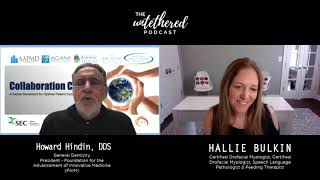
Interview (Untethered Podcast, Ep.54) with Dr. Howard Hindin discussing COVID-19 implications for healthcare and dental practice, immune modulation and the role of internal 'stockpiling' for immune resilience, and the centrality of airway (nasal breathing, maxillary expansion, myofunctional therapy) to overall health. The episode emphasizes interdisciplinary collaboration (dentists, myofunctional therapists, ENTs, PTs, physicians), clinical sequencing/decision-making in airway cases, and practical practice adaptations during the pandemic; it also points listeners to organizations (AAPMD, Foundation for Airway Health) and educational resources.
Chapters
Quick Disclaimer all information, content and material of this podcast are the opinions of the speakers and is for the informational purpose only and not intended to serve as a substitute for the consultation, diagnosis and or medical treatment of a qualified healthcare provider. Welcome to the Untethered Podcast. I'm your host, Hallie Balkan. I'm a certified orofacial myologist, feeding specialist, SLP and mentor. This podcast is all about getting your questions answered and collaborating with colleagues to bring you the most up to date information in the orofacial myofunctional therapy, tethered oral tissue and airway space. I challenge you to keep an open mind and join my mission to get this information out to the masses. Let's get started. Hi and welcome to episode 54 of the Untethered podcast. Today we have Dr. Howard Hinden joining us. Howard has been in practice for over 50 years. His practice, the Hinden center for Whole Health Dentistry, focuses on sleep, airway, TMJ and craniofacial pain, oral systemic conditions, as well as restorative and cosmetic dentistry. He is the President of the AAPMD American Academy of Physiological Medicine and Dentistry and the founder and Director of the foundation for Hairway Health. He and Michael Gelb authored GASP Airway the Hidden Key to Wellness. Dr. Hinden is one of the creators of Collaboration Cures and is a passionate advocate for interdisciplinary collaborative care and for the patient, being a partner in the process. Howard, thank you so much for joining us on the podcast today. I'm excited to talk to you and.
I'm happy to be here. We have a lot of downtime and why don't we use it?
Well, absolutely, and I think just based on what's going on in the world, obviously we have a lot of good information to impart on our colleagues. So let's talk about the elephant in the room. Let's talk about COVID 19 and see what we have to offer.
Like you with your podcast, we with the aapmd, I've been doing a lot of webinars and the thing that people want to hear most about is Covid, which is something that none of us have experienced in our lifetime. I happen to be older, so I remember my parents telling me about the Spanish flu of 1918. Actually, my mother lost one of her sisters who was late teens as a result of the flu, and as a result of that she always had this concern, wash your hands, don't touch anything. You had to eat the right foods, you had to get enough sleep because there was this fear that if you got sick, there wasn't anybody that was going to save you that you could die. So taking care of your health was your responsibility. And so before I went to dental school, I was a history major. So I love, love history. So looking at the history of medicine and dentistry, we went through that period of fear, and then World War II came along and we discovered penicillin. Penicillin changed the whole world of pharmaceuticals. Before penicillin, there were very few drugs. Nothing sold a lot. You went to a pharmacist and they took a mortar and pestle. But two, fast forward. All these drugs got created for you. Name it. In fact, I'm just reading Covid downtime provides a lot of time for reading a reading book called Pharma, which is how the pharmaceutical industry grew. And so this is. It was this belief that no matter what happened, there would be a procedure or medication that would solve that problem. And we became more or less reliant on. On drugs. In fact, today, when somebody goes for a medical visit, the first thing they do is they ask for the insurance card. It's not about the care, it's about who's going to pay for it and how it's going to be paid. So this is. We move from a period of maybe 100 years ago where there was fear that something could happen and threaten the lives of your life, the life of your family, to this feeling like, well, things would never happen, that would be bad, and if they happen, a medical system would take care of it. So one of the lessons that we've learned from our Covid experiences is one that our healthcare system is very disorganized, that we have. Government doesn't talk to the pharmaceutical industry and hospital systems. They don't talk to each other. So there's complete lack of coordination or to use my favorite word, collaboration. And now they're scurrying. And now people from one state are sending masks to New York when they need it. And that's the way it should be. There should be more collaboration. And the other deficit of the COVID crisis was a lack of stockpiling, that we didn't put away things for the future. We didn't have enough masks, we didn't have enough ventilators. We didn't put away things for a rainy day. How do we put this in terms of my thinking? Because for about five years, when we started this collaboration cures movement, that in order to provide optimal care and wellness, there needs to be collaboration. No one discipline, no one practitioner has all the answers. We often delude Ourselves, because we get somebody with a problem, you or another. Myofunctional therapy. Do what you do. I can treat somebody's airway, dentally, somebody, an integrated physician could treat somebody nutritionally, and the patient will always get better. And we're happy. The patient's happy. But have we provided optimal care? Do we know what other piece of the puzzle is missing? My analogy is to a race car or any car, Car goes over a bump and the frame gets bent and the car doesn't ride properly. The tires wear out. You fix the tires or you fix the brakes, but still not right. But you haven't gotten down to the core structural problem and treated that. So that's one area is collaboration. The second area is stockpiling. What we need to do is stockpile our internal resources, the things that will make our immune system better. We have this incredible immune system that protects us. It works 24 7, never even talks to us, never asks us anything, doesn't ask for a pay raise, doesn't ask for a vacation. It works. And it's not a question of our immune system fighting a problem. It's fighting it correctly. You don't want it to underreact, and you don't want it to overreact. And it has two stages which everybody's probably heard about. One is the innate immune system. Immune system which as soon as it recognizes an enemy, it will respond. And then when it learns what that particular attacking agent is, it develop an adaptive immune system where it responds secondarily. So one of the problems with COVID is it's not the disease that gets you, it's the immune system. It's our immune system. It's overreacting. It keeps sending out troops, more troops than is needed. There's a drunk on the corner. You don't need to send out an army. You could send out one police car and tell them to go home. But sometimes our immune system doesn't work like that. So why is it important to us Is because all the things that we do, all the people who are in our collaboration, curious movement, who are really interested in getting down at the cause of the problem, have the ability to make the immune system better, not necessarily stronger, but it's called modulating the immune system so it mounts to appropriate response to whatever is going on. There's a great interview with public health doctor his name is David Katz, who talked about how we don't look at these chronic diseases because how our immune system fails or doesn't respond is related to all the chronic diseases we Have. You may not know how many cases of diabetes we have in our country. 122 million people. They say by 2040, 50% of the people in this country will either be diabetic or pre diabetic. You had cardiovascular disease, dementia, and cognitive loss and other things. These are all related to chronic inflammation and our immune system. The problem with that is the harm that occurs, the risks that occur going back to childhood, you don't see the problem until decades later. And when you don't see it, you can't connect it. And so, you know, try to tell a kid that, you know, the things you take care of today will pay dividends tomorrow. They don't want to hear it. I didn't want to hear it when I was that age. But now with COVID you get sick, and 80 or more percent of the people have no effect. They don't even know they had it. They walk around, maybe they feel sick for a day. And there are the other people, the aged, the sick, and those with comorbidities. And what are the comorbidities? Same ones we just talked about. They're the ones who are at risk and die. I think 80 or 90% of people who go on ventilators ultimately diet. And so one of the lessons is we have the power to change our immune system, and it really starts in childhood, because every stress that is put into our body that we come across, we have to adapt, or maybe not adapt to. We compensate for. And every compensation pays a price. And so that this gives us the opportunity to, one, look how we really all connected and work better together, and two, work together to stockpile our resources, our internal resources, so that our immune system is ready for whatever attack comes along. And then there's talk that maybe we haven't exercised our immune system enough in the Amish country, where the mothers take their young babies into the barn while they milk the cows and the babies sit on the floor of the barn. They have almost no autoimmune diseases in their population. So maybe we're not. We're being overprotective. These are. These are things we have to look at. So I'm optimistic because it's a terrible thing. The news is terrible. What do we do? How do we get people back to functioning? Because now we're beginning to see the problems of people being out of work, not having money to buy the right food, the stress that it caused, and people begin to lose sleep. Now we don't know the problems caused by. I think everybody has Covid, whether you have the disease or you suffer from the spread of whatever's happening about disease, everybody's affected by it one way or another. So that's my little Covid background and I'm sure that you can sort of resonate with this a bit.
Yeah, absolutely. And I think obviously I would absolutely agree that everybody has been affected in one way or another, whether it's health wise or the mental health, the stress. I mean, obviously that's health too. The financial burden, just the new normal that everybody's experiencing right now. But I think that what it comes back to and what we've really been trying to focus on over here is still that patient centered care for the people in our practice and just reaching out to everybody we know to check in on everybody and make sure from a mental health standpoint, in addition to physical health, immune system health, we should everybody is affected and it's going to take a toll one way or another. And the faster we can get back to whatever our new normal is, the better. But what is your take on that in terms of return to some sense of what everyone considers normalcy or new normalcy?
Well, there will be a new normal. And I think that certainly from. I can talk from the dental perspective that I think that those people who look at more of the total health will be, will thrive better in this world. We've started calling our patients and we asked them a question like how likely are you to come into for an appointment? Some say as soon as you're open, I'm ready to come in. And some other people say maybe a year. But I'm not even leaving my house for a year, let alone going to dental office. And the CDC said don't go to the dental office unless it's emerging because that can be the most dangerous place to be with all the aerosol spraying around. So now what we've done in the last weeks is dental offices generally have open rooms with no doors. We put doors on all the rooms. We put HEPA filters in all the treatment rooms. We have defoggers using hypochlorous acid that they use in emergency rooms. We have shields over our masks. And, and then we looked at do you have a level 2, a level 3 and M95. What mask? M95 masks, which were a dollar or less. And now some companies are selling them for six, eight dollars. If you can get them, what can you do? And they say maybe dental hygienists won't be able to use their ultrasonic cleaner. So what can you do? So one of the things we talked. And then the other issue, I mean, if you ever think about a dental office, dentist is working, hygienist is working with patients, is I need to have an exam. So dentist has to get up and go in and do the exam. So now that we're gowned and gloved and shielded and we have to take us off our stuff, go into the hygiene room, Regan reglove, do the exam and then go back and reverse it, which is time consuming using supplies. So one of the suggestions is the hygienist takes all the information, takes photos, does a little video of the mouth, even can do a recording of what's bothering the patient, records all that data. Dentist never goes in and goes back later and on a zoom call does a, does the examination there. So, well, you know, we don't know how that'll work. On the one hand, you know, maybe patient may say, you know, I didn't see the dentist, I just had the hygienist. But hygienist is spending an hour with the patient. Dentist runs in for five minutes maybe and is thinking about getting back to the other room where they were working. Talk to the patient with their mouth open, ask them questions while they're examining them. It might be a much better experience if you're sitting facing somebody like I'm facing you and I can put up all your X rays. And that might be a better educational moment because the goal isn't to have people come in for repair. The goal is to make people not need you. If you're a good doctor, you should have struggle having patients because everybody you see, you help them get better. So the other thing they're talking about is we call self prophy, where you teach people how to take care of their own teeth rather than having to come in because, you know, traditionally and again because I'm older, I remember the history of what went on. You go to the dentist twice a year to have your teeth cleaned. If you're not doing a good job, then you go three times a year. And if you're not doing a good job, you go four times. And if you're really not doing a good job, they have you come in, you know, and the definition of insanity is keep doing the same thing over and over again and hope you get a different result. So what we do in our practice, we have a microscope and we look at the bacteria in the mouth and how that's affecting the body and looking at things that are related to it. So one of the interesting things about periodontal Disease, One of the bacteria that causes periodontal disease causes platelet clumping. Platelet clumping makes your blood thicker and makes you more prone to blood clots. What is one of the real damaging factors of COVID blood clots? And so there could be a tie into that. And so they just looking at periodontal disease and we'll get to airway in a moment. Is maybe dentistry is more central than the government claims. Because I could fly to Georgia and get a tattoo. I can go to a spa somewhere. All the liquor stores are open. And I think that those of us who are doing dentistry or myofunctional therapy or nutrition are really a lot more essential. Somehow along the way, we lost our way. So those are the challenges of what we're going to do. It's an interesting story. So we have to wear these face shields in order to avoid splattering, but we wear these magnifying glasses that help us see better. And the shield won't fit against the glasses. So my son Jeff, who I'm lucky I work with my son and daughter in law, he rides motorcycles. So he got shields that they use for motorcycle helmets that are offset a little bit that provide enough room between the in the face and the mask. So as I said before, this is a terrible time. You can either sit and wring your hands and say, woe is me. I hope that something will happen. Or you say, all right, what's going to be different about the world? People are going to realize government, that my medical system is not going to take care of me. I have to take better charge of my health. I have to seek out those practitioners who are going to be part of my team that I'm gonna establish a team of what I need. I know that you work with surgeons and other people in orthodontists in your area because you realize the importance of a collaborative team. You know, somebody asked me what the definite definition of collaboration is, and somebody says, well, I'm taking care of a patient and this patient and no matter what I do for them isn't working out. And I'm sitting, how do I get them out of my office and send them to somebody else who can I collaborate with? Well, that's not really collaboration. That's sort of off boarding. Collaboration is at the very beginning of treatment, as you're having that initial visit, that initial interview, saying, who should be on this person's team? Who do I need? What are my resources for this patient? Because if you establish that at the beginning, the patient is much more motivated. They're excited because you're doing something that nobody else has done for them before. If you do it later, then they're already discouraged that the results they expected to get, even though you may not have promised them, but even if you don't promise them, they believe that going to satisfy their every need. But putting together a team and having a way to communicate is really important. So then we should talk about airway and physiology.
Yes, let's talk about airway.
Let's talk about air. So are you a member of the iaom?
I am, yes. I'm certified through them.
Okay. So a number of years ago, when they were at a meeting, one of our meetings, they said, you know, you're not really giving us enough attention. I said, but it's in your bylaws that you can't talk about airway. That was about maybe five, six years ago. And I thought they would go away and never come back. But then six months later, they called and they said, we changed our boilways. I'd like you to come to our meeting. And it's great because the group of people in that organization are fantastic. They're trained, they're tested. And if you're certified, people should know that you have jumped through hoops in order to get your certification. And so airway is essential. What we look at is how do we get people to breathe and keep their airway open? Because the number one thing that people want, number one physiological function, is to breathe. Our physiology, our nervous system, is monitoring the way we are breathing every single second, every fraction of a second. That if we have less air than we need, the heartbeats a little bit faster, blood pressure goes up. We measure something called heart rate variability, which measures interbeat heart rates. So that if your heart rate is, let's say, 60, you would think it's one beat a second, but it's not. It could be 1.1 second, 0.9 seconds. It's that variability that shows you're healthy. Variability shows resilience, the ability to adapt to things. If you look at posture, if I bend over to get something, I don't fall over. Because as soon as the thought occurs to me, my brain says these muscles have to tighten, these muscles have to relax. And instantaneously more blood is sent to those muscles that need to be tight, Only those muscles, which is fantastic and never consults us, it happens. What I learned some years back is while I am concerned about how people get the air in, people who deal with speech, deal with how the air comes out, because without the exhalation of air, you can have no speech. And then the other thing we look at is from a dental perspective, the airway is affected by. If the tongue sits too far back in the mouth. Well, when you think about our tongue, it has to be one of the most incredible things, because what's involved with, it's involved with breathing. It's evolved with speech, it's evolved with swallowing, and a little bit with facial expressions. So imagine somebody who has an airway problem, because when we talk, we don't say, I better stop talking for a second so I can breathe. We figure out how to pause and create pauses so that we can breathe. People have an airway problem, their speech changes. They have more pauses in their speech. If they have a swallowing problem, speech breathing and swallowing will come first, then speech will come later. So back in those years, those years ago, I didn't understand how speech language pathologists really weren't looking at, at airway and breathing, which, you know, or maybe you're young, you may not remember back then, but now it's so essential to teaching people how to speak well, because if you don't deal with an airway problem, then you're not dealing with the whole problem. I was telling you before we went on this podcast about this great nasal breathing summit that we did a couple weeks ago, where we had speakers from around the world. And one of our speakers was this ENT doctor from Massachusetts, Peter Catalano, who, fantastic, has written some papers. He works with an orthodontist in Boston, John Walker. And they're doing nasal surgery. Young kids, nose jobs on young kids. If they see that there's a nasal obstruction, and young kids, they'll go in with a laser and reshape it or trim the bone or things that have to be done. And they've been doing it for a couple of years because sometimes you can't get expansion of the arches if there's a nasal breathing problem. We were all very attuned to the importance of nasal breathing, production of nitric oxide. And there are some papers that show nitrous oxide reduces the viral load. They haven't shown it for the COVID 2, but certainly for Covid 1, it shows that it reduces the natal load. So breathing, Nasal breathing is really important. If you don't have good nasal breathing, you're not going to get good maxillary expansion. Because if you're not getting air through your nose, your brain's gonna say, I don't need it. It's not doing me any Good. So I'm gonna try to get more volume in my. Through my mouth and build these nice vaulted cathedral ceilings. And so they've been going in and doing surgery on these young kids where appropriate, and fantastic results. So he said the most amazing thing was about six months ago, he got a email from a father of a patient whose kid was autistic. And within a couple of days after the nasal surgery, his autism started reversed. The kid is now complete. It's completely gone. Since that time, he wasn't treating autism. He was just looking for nasal blockages. But since that time, he has had five other children. I think it's five, two or three with autism and two with really bad add. Nothing else was done but doing the nasal surgery. Nasal surgery and doing rapid palatal expansion. So, you know, you say, well, you don't do nose jobs on. On young kids because you wait until they get older or. And it's more for aesthetics. But they used to say, you don't do orthodontic treatment on young kids. You wait till all the. All the baby teeth fall out and they're. They're teenagers. So where do these rules come from? Somebody made them up. And then they continue, because the heads of all the organizations that teach you say, these are the rules. Now you go, and you. Don't follow the rules. So becoming more certified tends to make. Sometimes make you more narrow in your thinking. So I think that's really exciting about what they're doing with nasal surgery. So in our office, we refer to a myofunctional therapist almost every day. That one way I could look at it is, say, is, you know, all of a sudden I'm getting all these people with myofunctional problems. I don't know where they came from. Or maybe it's because you're looking at things with new eyes. A number of years ago, we gave a talk at NYU Dental School, and the. One of the professors from the pediatric dental department was there. Wonderful guy in practice 35 years, very busy practice. Never looked at airway problems. The next time we saw him, six months later, he said, I can't tell you I'm looking. I never knew they would. I never looked at tonsils. I am sending people to. Back to their pediatrician, Back to ents having sleep studies done every day. I can't. I'm so upset of who I may have missed in 35 years of practice. And I said, you know, you can't be blamed for not doing what you don't know. But once you know it now you're responsible for it. So and so I think that, I mean, we could chat about stuff like this, but I think the important thing is that this information needs to be shared and spread. It needs to be spread with our colleagues. We have to be less insular. We have to be less isolated. We have to go out and learn more, not only about what, what we do so we can do our part of the job better. We need to know what other, other practitioners can do. I mean, we work with myofunctional therapists, we work with physical therapists that when we talk about the autonomic nervous system, we are getting information from our internal body and our external body every fraction of a second that we. How do we know where our body ends and the rest of the world begins? We get input from our eyes, from our ears, from our teeth, from our tongue, from our hands, from our feet, just feeling the ground beneath us. We can make an oral appliance and change the way somebody walks. We can make an oral appliance and change the way somebody sees. Somebody can put on glasses with prisms and it'll change the way they bite or the way they walk. Somebody can put different lifts in their shoes. It can change the way they see. Everything is so connected that if you can identify that from the very beginning, you know, who needs to be on your team. I say if a dentist walks into the room to greet their patient, they are missing a lot of, a lot of information. They should watch them walk down the hall, how they walk, how they sit. You know, do they cross their legs? Do they cross, always cross one leg over the other. When they look at you, they tilt their head to the side. There's so much information. And the way people have certain posture will determine how the jaws and the arches develop. They arches develop, then their tongue will be off to one side, which will affect their speech. So I think hopefully I gave you more questions than answers, which was my goal.
Yeah, no, this has been, this has been amazing. I mean, you've given us a lot of good information. And you're preaching to the choir. Right? This is what I do every day. I have an amazing collaborative team. We're very thankful that the Natural Dentist associates, which is our holistic dentist that we work with, and James Ryan, who's the oral surgeon that I also work very closely with, and I work with others in the area too, but they are two of my primary go tos for my dentist and oral surgeon, and they're very holistic. And Dr. Tippograph and Dr. Baer at Natural Dentist Associates, they do everything you described. You know, I won't go back through it because you already mentioned it, but we put my daughter Lily into an ALS at just under four years of age. She was about to turn four, and that was last August. And to see the tremendous growth and the change and the fact that when they assessed her, they watched her walk down the hall, they took a video of her walking towards them, they took videos of everything to see. See, you know, we say it changes everything from the tongue to the toes. And on that team, We've got the PTs who do modern counterstrain technique. And I'm also in a DNA myself. And so I've noticed firsthand how having those adjustments in office from the PT who's doing a modern counterstrain technique allows my maxilla to continue to move and expand and I have a partially turned in maxilla on one side. Just, it's been amazing. It's amazing to see how that holistic team really works together. Like you said from day one, not just when we hit a wall, but everybody needs to be in place day one. We need to have that functional evaluation. Everybody on the team needs to know what piece of the puzzle they're playing into that patient's role or what role they play in that patient's case. And yeah, it's been really amazing to see it both as a mother, but also as a practitioner and as a patient. I've been able to play all three of those roles. So I love how this whole, you know, the collaboration that you speak of is a. That's a big, big thing I talk about constantly on the podcast.
You know, that if, if it was only me talking to you, I probably wouldn't be doing this. But I know that there might be other practitioners who will hear this. Yeah, and, and members of the public. Because when I talk about collaboration and building a team, the patient is part of that team. You don't do something to or for a patient, you do it with them. They need to be an active participant. And when some people enter this world of better airway and breathing, they may not do it through a practitioner. They may say, you know, let me go and get one of these nasal dilators, like a mute or something, or, you know, let me try taping my mouth or something. That we live in a generation where people aren't running to practitioners, they're trying more home remedies. They may even try a over the counter sleep appliance, which is fine because anyway, they say, you know, I am noticing if I'm breathing better, I'm feeling better. Let me then take the next step. So, so. And there's no one, one treatment that, that works for everybody. And knowledge is important. My daughter is an acupuncturist, cranial psychotherapist. Great. She basically works with mothers and babies before, during, after birth. She does craniosacral therapy on one week old babies. And you can see the difference in the way they nurse. When she had her first child and she was breastfeeding Mackenzie, everything was fine, no problem. It took maybe half hour or whatever. Then she had a second child, five minutes, he was done. And she never realized that when she was nursing her first child that there was some problem. And it turned out that she developed a narrower arch. And then we put her in some early expansion at like age 3 with some cranial sacral work. But she said, I'm smart, I know this stuff. And I never thought, I wouldn't have known that my breastfeeding wasn't, wasn't what it should be until I have had my second child. And it's something to compare it to. So getting this information out, not necessarily so you can promote your practice and getting people in, just sharing information so people can be healthier. And as I said at the beginning, teaching them how to take care of themselves is really the important thing. You know that ideally we should be so successful that we have no patience. It won't happen. And don't be afraid because it won't happen in our lifetime.
Yeah. And I know you have patience to get back to, so I won't keep you too long. But that was the whole point of this podcast. It's funny because I went to look for it as a mom who went through that same experience as your daughter. And with my first one not knowing it was an issue until I had my second, but also until Lily was already 2 and I looked under her tum after getting my certification in orofacial. Myology went, holy cow, she has a tongue and a lip tie. And I was turned away by all these practitioners. So there was the passion project behind it and educating other moms and practitioners. But there was also the fact that I went to look for this podcast and nobody had created it yet. And so I said, we need something that talks about myo and airway and tethered oral tissues. And since this is the no side that I've taken, like I said, as a mom who's a mom to these kids, the patient who's going through adult expansion after orthodontic relapse. And the practitioner who is treating everything from feeding therapy with babies to myofunctional therapy as well across the lifespan. This information needs to get out there. And so that was what birthed this podcast in July of 2019.
Let me tell you one more story about a patient. And then.
Absolutely.
Okay, there's a patient who came in to see us. She's in her 50s and through divorce, a lot of stress, and her developed terrible pain. She works in an office not in the same building as us. And one of her colleagues, one of her teammates brought her in and said, you can fix her. So we just injected a. The trigger point and relaxed her muscle spasm. But she had a TMJ problem and said. But said, you know, you have a very narrow archer molar. Distance between upper first molars was 23 millimeters, which was. We know it should be 38 to 40 millimeters. And she had an incredible tongue tie. And so we said, all right, you know, we have to release that tongue tie because that probably contributed to developing this narrow watch. But how can you learn to put your tongue in the right place when your arches are narrow? What do you do? What do you do first? You know, so we had got to see a myofunctional therapist to learn the exercise, which you couldn't do because you had no place to put her tongue. And then we said, we're gonna. We're gonna do make an expansion appliance, but it didn't fit, so we had to put. Instead of putting it with one screw, we had to put two mini screws in just so we can make it wide enough so we get a bigger appliance in order to do that. And then we got her to about 30 over a period of maybe less than. Yeah, 30, 35 millimeters, which is tremendous. Now she had a little bit more room. And then we had. She went and had a tontai release, which was videotaped, and everything just relaxed at the time, at the time, and it was like a miracle. She continued to do her exercises, but had some more stress in her life, and then didn't necessarily follow them. Things scarred down a little bit. And then the next thing that happened is she said, my tongue is all over the place. I don't know what to do with it. And because she had. She still didn't have enough expansion in her molar area, but she had more room in the front, so kept coming forward. And then we were orthodontically trying to close her anterior open bite, but couldn't because her tongue, which was now looser, was causing a problem. And now we're looking at sending her for nasal surgery because she has a really bad deviated septum. And the side she can't breathe on is actually the side that she has a TMJ problem, which we always find that the side where your nasal breathing is poorer is the side that you have the problem on. And there's a lot of times when you use an ALF or an expansion appliance and one side expands more than the other, you should look at whether there's a difference in the nasal breathing that could affect how things are expanding more one way or another. But the point is that even when you know the parts you want to put together, the sequencing of it is important. And it's so much better if you find out what you're missing at the beginning than to try to figure out, all right, why isn't this working? So can I give you my sales pitch?
Absolutely. Go for it.
So it said on my little instructions that I can promote one thing, so.
So I'm gonna promote, too. Go ahead.
So I have. I'm involved in two organizations. One is the aapmd, the American Academy of Physiological Medicine and Dentistry. And it's a membership group of professionals where if you are concerned about airway and breathing, whether you're a physician, dentist, myofunctional therapist, nutritionist, chiropractic, anyone, you are. You have an equal seat at the table because everybody has something. And the goal is to learn how to network together so that we have. We have courses about everything. We have a meeting scheduled in November. We have no idea what's going to happen in November. It's in Seattle, and it was originally going to be for three days. We added a day. One of the features we've added to that is we're going to have a whole day put on by Saroo Sagi from the Breathe Institute. It's called Outlook. I'm going to talk about the latest research, and we're going to have people come and submit research projects they would like to do. So we have things for every practitioner, but we have modules with different practitioners, talk about how they work together. So that's great. And then we develop. You might be interested in this. Layla nehrush, who manages Dr. Zaghi's office, and she's a board member of our AAPMD, put together AAPMD liaisons, forming study groups within different areas in order to help promote the message. So that's AAPMD. People can join AAPMD.org and maybe you put that up.
Yeah, we'll put that in the show notes so that they have access to that link. And then tell us also about airwayhealth.org?
Okay. So then the second organization is the foundation for Airway Health. We thought when we form the apmd, this was gonna change the world. You know, I have I don't have lofty goals. I just wanna change the world. But we realized that it's not practitioners who are gonna change the world. You know, the vast majority of orthodontics don't even look at Airway. And they will change when nobody will go to them and people won't go to them if they learn how important Airway is. And so the.
More from Hallie



What I Was Missing in Feeding Therapy: ARFID, Airway, and Myo with Samy Hernandez





