Episode 55: Airway Is Everything With Kimberly Baer DDS, ND
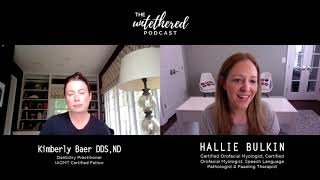
Interview podcast (Ep.55) featuring Dr. Kimberly Baer (DDS, ND) on airway-centered dental care. Dr. Baer describes her clinical journey (including her son's severe pediatric sleep-disordered breathing resolved after tonsil/adenoid removal) and personal experience with airway appliances (ALF, DNA/Vivos, RPE, fixed expanders). The episode emphasizes diagnostic tools (digital CT with airway interpretation), tongue-tie assessment across ages, multidisciplinary care (ENTs, myofunctional therapists, physical therapists/bodyworkers), adult airway issues, treatment decision-making, and patient outcomes (improved behavior, sleep, health). Hosts stress early screening, team-based care, and links between chronic low oxygenation and systemic health.
Chapters
Quick Disclaimer all information, content and material of this podcast are the opinions of the speakers and is for the informational purpose only and not intended to serve as a substitute for the consultation, diagnosis and or medical treatment of a qualified healthcare provider. Welcome to the Untethered Podcast. I'm your host, Hallie Balkan. I'm a certified orofacial myologist, feeding specialist, SLP and mentor. This podcast is all about getting your questions answered and collaborating with colleagues to bring you the most up to date information in the orofacial, myofunctional therapy, oral tissue and airway space. I challenge you to keep an open mind and join my mission to get this information out to the masses. Let's get started. Hi and welcome to episode 55 of the Untethered podcast. Today we have Dr. Kimberly Baer joining us. Kim was born and raised in Maryland and went to College park at the University of Maryland, receiving a degree in Biology. She then went on to the University of Maryland's Dental School and received her doctorate in dental surgery in 1999. She completed a master program at NYU and implantology in 2001 and she followed this with a mastership in Orthodontics with the American Academy of Orthodontics. In 2007 she did a Master's program in Biological Medicine and Toxicology and during this program she completed a board certification in Naturopathic Medicine. This has been followed up by millions of classes and certification programs which I can vouch for because both her and her partner, Dr. Kip Tip, are CEU junkies like myself and she is also a Fellow of the iaomt. Kim, thank you so much for being on the podcast today. Obviously I'm super excited to have you here since we personally work together and treat some cases together. So welcome Kelly.
Thank you. Love working with you too. It's really changed the way we actually work. So this is an honor. Thank you.
Thank you. So let's just dive right on in to talk about how you fell in love with treating airway from a dental perspective and then, you know, also share your journey because I know you've had your own experience as a patient.
So I graduated from dental school in 1999 and I had lots of sleep issues and that were passed off probably as depression and narcolepsy and different things like that, and lots of jaw, neck issues, all that stuff. I didn't put it together with airway. And then in 2007 I was starting my mastership program with the American Academy of Orthodontics and I had at the Time. My son was 7 years old, and we were having terrible issues with him. He was in an isolated classroom. They couldn't figure out what was wrong with him. It was like. It was like temper tantrums, but rage. And no one could figure out what was wrong with him. And we were told that he'd probably have to be institutionalized. So, anyways, so of course I start this mastership program, hoping for a little distraction. Baltimore, and they are very big. This academy is very big on Airway, which I really had no training on. And the very first day, the very first lecture by Chris Baker in Baltimore, she did it all on Airway with children. And she threw up these slides and showed skeletal things and what their mouth would look like, what their tongue would look like. And I sat there. And then she described how she sees these kids and they're propped up on a million meds and they've got diagnosis like add, adhd, bipolar, things like that. And really what they have is most of them have severe sleep apnea. They are living oxygen deprived. And she described skeletally my son to a T. And I just sat there and I drove home and it was like, oh, my God, I got to get a digital ct. I know what's wrong with them. And I got one that week, and I took it, and she was dead on. And then I found the youngest, most progressive ENT I could find who's no longer practicing in the area, sad to say. And I didn't say anything to him. And I brought my son in the following week, and I said, I want you to do an evaluation on his tonsils and adenoids, because I was told they did not need to be removed by Ents. His pediatrician, he was never sick. And the guy took a look down his throat, and I showed him the. My CT scan. He laughed. He's like, I never see this when they come in. But he was like, I don't want to get your hopes up, but I don't think your son's going to need any medications when I'm done with him. He has severe sleep apnea, no doubt. He's not getting enough air. He feels like as if you and I would feel if we'd been up for 48 hours straight working. And this is all he has known. So you take an immature kid who doesn't know he's tired, he can't tell you he's tired, it's going to come up as hyper or lethargic, moody, you know, all these things. And we had his tonsils and adenoids removed as soon as we could. It was maybe six weeks later. And then he went from being one of the highly, most highly medicated 7 year olds at NIH to basically almost off all his meds within 6 months. Now this is an extreme story. And he went from being in an isolated classroom with a bunch of dangerous children to being in a GTLD program the following year. His diagnosis was from bipolar to maybe a little Asperger's. So now my son is finishing up his freshman year in college and he's a different person. But that made me just opened up my eyes to the whole airway thing. And then, you know, I started doing alfs with that academy and I do everything. We do the DNA, it just depends on the person, the DNA. There's all kinds of different appliances. I have some kids who are super non compliant because, you know, you have an airway issue. Let's say you're a little add, you're very. They're usually very sensitive orally. They can't, you know, they have all kinds of proprioceptive issues going on. And sometimes I just, you just can't keep that ALF in their mouth. So I will put them in like a rack expander cemented in or usually about six months and get the width we need, which increases the oxygen pretty quickly. It's not ideal skeletally, but at this point you got to choose lesser evil. And then I'll usually switch them over. They're much more compliant at that point to the ALF or whatever we decide. But it's a journey depending on the kid. And the craziest thing is, and I was little, you know, I did some myo training and I remember I work with Dr. Jennifer Tippograph and she really brought you in, Hallie. And she was like, I want all my expansion cases and going to see the myofunction. That's been crazy seeing the difference in patients that work with you or work with another therapist. And then the outcome, you see the first of all, the results are always better and faster. So it's been really, really cool seeing what a huge difference. And you guys like really? I always tell my patients it's very interesting because if you have an airway issue and you go see, you got. It's a, you guys, there's a finish line with the treatment you do like they do the work. It doesn't take that long to see the result. It's crazy. So, you know, I, you know, I tell my patients, you know, you're investing this time and this money, like you can get great results or we can do as good as we can without her. But, you know, why would you. You know, and when they put it like that, patients like, you know, so, yeah, so I think what you guys are doing is a huge part of it. But then.
So I.
And I really didn't dive in so much into the adult aspect of it for a few years. And then when I turned 40, which was a little while ago. A while ago.
Okay, you still look like you're 30.
Almost 10 years ago. So like 10 years ago, I. My daughter who was sleeping with me sometimes she had a nightmare or whatever. She would say, mommy, you're snoring. And I was like, no way, I am snoring. Then I had to stop and take a look at myself in my airway. Sure enough, upper airway resistance, you know, And I don't know if people understand the difference between the upper airway resistance and sleep apnea. You don't have to stop sleeping at night if you're snoring. There's something in the way that equals less oxygen, you know, Is it worse or better than sleep apnea? Not necessarily either. You can have upper airway resistance in a manner that it's just like decreased oxygen all night long. And that's what I was having. And that's what I always had. And you know, it's so interesting because my son. I should have learned, right? All of a sudden, you know, I start. I did it. I did alpha myself first for the first year. I was pretty small. And then I did. I moved on to a DNA. And I like to make all the mistakes first before I treat my patients with the items. And then I saw. It was just huge. All of a sudden I could come in to work and I wasn't exhausted. My staff noticed there was nothing wrong with me. I wasn't depressed. I was tired. You know what's depressing? Being tired. That's depressing. It's like this crazy. It was a total misdiagnos on, you know, in dental school. I was just exhausted. I was exhausted because my quality of sleep was nothing. And you know, and I know, like, you know this, but when we have patients coming in, it's crazy because you see it. I see it more so than I don't see it. So like someone can come in and I can look at their jaw, I can look in their mouth and I know, I know what's going on there. And you have to like, hold back because otherwise you start to sound a little crazy. Like everybody needs to be expanded and everybody needs frenectomy, but the truth is it's probably most of us do in this country.
Epigenetics, you know, things are changing and it is.
And you know, but it's not a, you know, you know, sometimes it can be the right treatment, wrong time. Everybody's got a journey, you know, and there's a certain, you know, earlier, better. But we do work with 70 year olds, expanding them and opening their airway and get the same, get great results. It's just a matter of what chronic issues, you know, have been developing for all these years. Like for instance, my family, everyone in my family dies of cancer. So, like cancer, what does cancer love? A low oxygenated situation. So, you know, hopefully I'll at least buy a few extra years.
I mean, that's amazing. And thank you for sharing your story and your son's story because I think you're gonna help a lot of moms who listen to this podcast. Parents, fathers who might go, holy cow, like, that's my kid. Or maybe it's not that extreme, but they see certain, you know, things they can relate to and how their child just seems to be acting out all the time or walking around. Or maybe they're the kid who sits backwards at circle time in preschool. Or maybe they're the kid who can't sit still and needs to like lay on the floor at their elementary school to do their schoolwork. Or, you know, they come home and they just melt down because they just, they've used all of, they've expended all their energy at school and they have nothing left by the time they get home at 3pm and you know, these are more extreme cases than like your typical child who might just be tired. Like this is, you know, it's not tired from the day of school. It's tired because like you said, they're constantly in this state of fatigue and they don't know anything different. They are not getting restful sleep. And that's what I always try to explain to our patients, is there's a difference between a child who sleeps 12 hours straight and doesn't wake you and they're actually sleeping and getting restful sleep, and the child who's sleeping 12 hours at night, who doesn't wake you and you have no clue that there's upper airway resistance even if sleep apnea is not present. Like, they may not be gasping for air, they may not be snoring, but maybe you can hear them breathing still. Maybe their mouth is open and it's audible breathing or Their mouth is just open and maybe we don't hear them, but they're still mouth breathing. There's generally some form of resistance. And I listened to a really great talk on this yesterday that was really highlighting this too. And I think it's a really big message because so many people, one don't know that snoring is not normal. And I put things up on social media saying, like, snoring is never normal, but neither is mouth breathing. Your mouth should always be closed. And so I think I'm starting to drive that message home, because I asked on Instagram yesterday, I'm like, what is the number one thing you've learned from me? And people responded. They said, no snoring. Your mouth should be closed. I was like, oh, thank goodness. The message is getting through.
That's huge. And if you can't do that, there's a problem. Yeah. And that's.
And hopefully they understand who to seek out or, you know, I've been really, you know, with the platform I have. I get a lot of people asking me, who should I see? Do you know anybody in this area? And I can often go back to, like, a Facebook group or a listserv and be like, hey, guys, I need a practitioner here and connect people. And while it's very time consuming, I'm happy to do it because if I can help somebody get started on their journey and, you know, to better health, better airway, and all the things we're talking about, then I feel like my. That's the whole point of this podcast. So, you know, it's really exciting to see that people are getting the message and, you know, airways. I always say airway is everything. If you can't breathe your bed air.
And water, like, you can't.
Yeah.
No one. Everyone feels better if you get more.
Air and you're hydrated, too.
Yeah, no, no, it's so, so, so true.
Now, you also talked about how you. Do you use various appliances in your practice. Can you speak a little bit to that? Because I know we've. On some of our chair patients, obviously I've done als. I think we've had some go into, like, aga. We've had MRNA DNA. I know you mentioned rapid palatal. I don't think I've had any kiddos with you yet that have had rpe, but I think all the others, I've had patients that had one of those four or a combination or something. You know, the assignment.
Yeah. So, I mean, there's probably so. Yeah, I've been doing expansion for about 13 years. So there's. There's very few appliances I don't use. I have not tried always for trying something different, you know, ideally the elf. I love kids. You can use the DNA on kids. It's just, it's tricky because, you know, they're losing teeth and it's not as you don't have as much control, you know, they don't keep it in all the time. So, you know, it just depends on the case. But I have some kids, I've put removables in. It also depends on, you know, the parent, what the parent can do. A lot of parents don't, cannot have the time or the energy to, you know, deal with that. But I have patient, a lot of patients. I start on the ELF and they get older, in their teens. We move to the DNA. You know, I love all these appliances. We're not, you know, I didn't. The Vivos community, which is the DNA community, they bought the DNA out. It's a great organization. We work with them a lot. We're not members per se, but it's only because even though I love, love, love everybody there, you know, they're doing amazing work, is I. You know, in our practice, we don't commit to one appliance. So, you know, it just depends on the situation. Some kids, you know, and adults. I have a lot of adults that come in, they want something fixed in their mouth. These are small appliances you can't see. Some adults don't want to deal with, you know, having to put something in and out of their mouth at night. And so, and it's very interesting because especially with my adult patients, it always seems a little overwhelming to make this commitment for the expansion. But it becomes an addiction. And I struggle cutting people off from treatment. Every day I'm a patient where I'm like, okay, we started this one year treatment three years ago. I think we can stop now, like, because they feel so good, you know, which I like.
But yeah, that were like, I don't.
Know if I can do this. I don't know if I can do this. And I'm like, well, I don't know if you can. Can you do this? Like, I can't wait to get how good, how important is it to you to make these changes? And 9 out of 10, they do it and they love it.
So I'm laughing because, you know, Jen asked me, Dr. Pippograph asked me. She's like, so, you know, do you think, what do you think? Like, what do you think about the space up There. Now do you think we're done? And I'm like, well, what do you think? So she's like, I think we're getting there. We're pretty good. And I was like, I don't think we're done yet, because the back of my tongue still touches my back molars. Like, some more space back there. She was like, okay. But I was like, oh, gosh, I'm that patient, where it was like, I'll probably have you in this for a year, and, you know, maybe a year and a half. We'll see. I mean, I also know that, like, I hit a wall unless I have bodywork. And that would have happened about halfway through my treatment. Like, I was moving. Mo moving. I could crank it, crank it, crank it. And then, like, halfway through, we realized that my maxilla is turned in on one side. Manny realized that, and we had thought that there was, like, other misalignment in my mandible, and we realized, nope, it's the maxilla. He, like, looked at me, and he's like, wait, no, like, your mandible is aligned. It's your maxilla. And so I'm like, look, my. You know, incisors, my central incisors don't match up on top and bottom. And so I said, you know, I don't really want to stop until we can figure this out. And I don't want to break my jaw either, Manny, so fix me. So we're working on that, but, you know, but I also noticed halfway through that if we. If I do the body work right, I see Manny for the physical therapy, the modern counter strain technique that he uses. I'm then able to adjust my appliance again, whereas, like. Like, the day prior to seeing him, like, I could no longer crank the appliance. Like, it didn't matter what I did. Nothing was shifting or moving. And then I would get treated by him, and all of a sudden, everything's moving again. And I can now, like, continue on with the appliance work. So I've also been seeing him in between my dental appointments to try and, like, help that go a bit. A bit further. And I think my expansion now is where I want it. But I want to make sure that before we pull the DNA out, my maxilla is where we want it to.
Yeah, you can't. Anyone who thinks that you can do the expansion without, you know, the bodywork, the IPR or the manipulation. I mean, this is the top of the zipper, and as you go down, if you're a little off, it Just gets worse. So you can do the expansion without the tongue. You know, issue myotherapy and the structural therapy, like with Manny Kim or Louise Kelly, who's amazing ipr. But you will never get the results. And that is why we brought them into our office, because I had an issue. Right after I started expanding myself, I started running marathons. It was a bucket list thing. I never ran a marathon before. Anyways, I qualified for Boston. I was so pumped. It was my second marathon, and six weeks before, I had this knee issue. And I saw an orthopedic surgeon. He did a shot, and he was just like, with these issues, you're going to be off. You can't run for a year. You're done. And I was like, no. So I saw a friend of mine refer me to Louise Kelly who works. You know her. Manny used to work together. And that's how I met Manny Kim. Dr. Manny Kim. And she did some dry needling, and then she did some structural evaluation. And she basically took these sticks and said, and I could not walk without pain. I was in so much pain. And she taped them together, and she was like, your skull is off kilter. I was expanding myself. You know, I wasn't getting structural work. She's like, you're. So when she stacked them up to, like, a certain distance and put them on the right side of my mouth, she was like, now get up and walk. And I'm biting on them, which evened me out. And my knee didn't hurt. And I was like, that's crazy. She was like, I want you to get back to your office and make your guard that thickness on that side and then try running with it. And so I did it four days later with the guard in the lower guard. I was running no pain. I ran that marathon, and I've ran one every year since. And I never had any knee surgery. And so then I altered my bite to, like, even out my skull. We did some work, and let me tell you, I was like, so like, oh, my God. This is like voodoo crazy. Like, how many people are having surgeries and, like, fixing muscles and bones and doing all this stuff when it's all here? And how many of my patients am I expanding? How do I know I'm making this bigger? But if they've got something else going on, how do I know it's not affecting their ankle or their knee and they're not going to put it together? But now that I know, I can't go back. So then I was like, I need to figure out a way to bring you guys into my office. And I had no idea how I was going to do that. So I brought her Louise Kelly in on Tuesdays and Dr. Manny came on Thursdays. And this was six years ago, seven years ago. And we just paid them to come in for the day. And I was just randomly saying had patients on my schedule. I was like, oh, I bet they have something structurally wrong. And I would just have them not charge my patients and do an evaluation on them because they would say, oh, you're going to do this crown or you're going to do this expansion. They were like, you really need to, you know, open the bite up on this side or do this or that. And they're like, and that would fix their ankle. And I'm like, okay, I look like a genius. Okay. I was like, I'm just gonna make a crown anyways, but they're gonna tell me how to fix it. And then I was like, they, they're very big on the expansion in the airway. And then we had them seeing every patient we were seeing and the results were just phenomenal. And yeah, no, it's, it's a no brainer. Like, you know, you, you know, like you said with you. I mean, I'm a dentist and I know this and I've learned a lot of other things, but this is what I'm supposed to be focusing on. So, yeah, we're so fortunate to live in a place with such smart people.
I mean, I mean, it makes it easy to have a team approach when you have people who get it here. I always joke, I'm like, I've got my, I've got my amazing team. We've got all the puzzle pieces. We're just missing one. We need that ENT locally who really is truly airway centric and gets it. Because, you know, we have some great ents that we can refer to. And if we have like blatantly obvious sleep apnea, they're going to take those tonsils and adenoids out. But if I send a kiddo, usually and I say, I have like concerns about upper airway resistance, they, you know, or I say, please check the tonsils and adenoids. Oftentimes my kids get, the families get sent away and then I look like an idiot for wasting that parent's time going to that appointment. So, you know, it's one of those things where feel like we've got some practitioners locally, but I don't know that anybody's really. And maybe you know somebody, maybe you're working with somebody that I'm not familiar with, and we need to talk about that. So tell me if I'm wrong, but I have not been able to find anybody.
I don't know of anyone in particular. But I do know my patients that I send off to the ent. I will send a report and say that they're structurally their job. They need the surgery for structural growth reasons. And they're more apt to do that with, like, a CT scan and a report saying. Because then it kind of holds them. Like, they don't. And then things get worse. They're actually responsible. So, yeah, you could try that.
And we'll just send them through you. We're gonna send them go see natural dental associates.
We can show them. If we can show them an X ray or scan. Yeah, clearly. And we do the air. We have an airway interpretation on the scan now. And it will say, too small. It's growing narrow, you know. Yeah. We need to widen them out. Beautiful.
I love that. Because you can't argue with, like, documentation that, you know.
Yeah. When you see it, it's hard. It's hard to argue with it when you can see the problem. I think that's like that for all of us, though.
Yeah, definitely. 100%. That's what I tell my patients all the time. And that's why I take so many photos and videos, so I can show them and I can explain to them and say, you know, do you see that? Do you see how the jaw just moved this way? We don't want that to happen. It should stay over here. You see how the tongue and the jaw move together? They should be working independently of each other. And when we tried to teach it, they couldn't do it. And so I think when we can show parents, like, what we're seeing, as well as practitioners, you know, whether it's through our reports or when I sit down with my parents and I show them the videos and kind of talk through it and so explain why we want it to be, you know, a certain way. It's really powerful. I always say pictures don't lie.
So, Ellie, how many adults would you say that you work with? I know you primarily work with, so I'm.
Yeah, I'm primarily pediatric, and right now my caseload is much smaller, just given the pandemic. But, you know, probably. I've probably worked with less than 100 adults total. But I have to say that my adults are some of my favorite because they move through the program, the MYO program, just much quicker. Obviously, from a Cognitive level, they're able to grasp what we're asking them to do much faster than like, let's say a five year old. My teens also move through pretty quickly as well. But my adults are really fun because they, they are able to really grasp it, kind of like run with it. And you know, if we, I feel like if they, they don't get something and they need to work on something a little bit longer, we'll give them an extra week to do it. We won't meet. You know, we'll do like two weeks between our sessions. And sometimes I'm done seeing them in five sessions total. Like, it just, it just depends on the person. Sometimes if they're not compliant, it could take longer. But my compliant ones could be in and out in like five, six sessions easily.
Yeah, yeah. I think the adult tongue tie thing is just so it's like my new. That's becoming my new like focus because I, for me, that was like the last piece of the puzzle as far as like neck tension and sternum issues. Yeah. That muscle is so crazy. No one thinks that it wraps around your neck and your jaws and it's just. And most of us are airway issued patients and the tongue is like, that's part of the problem if it's being held down. So my kids had no problem latching.
Or.
You know, they didn't have any obvious speech impediments, but they are all tongue tied. And what you see is as an adult, like, my son's starting to get neck issues. You know, we expanded his airway, but we didn't untie his tongue. So we're getting ready to do that. He's older now, so it's a little bit of a fight, but we'll get done this summer. What do you.
So this is a great question because we get this a lot, right? We have parents who. I have parents will bring their babies to me for an assessment. So like, okay, well, you do a ton of infant tongue ties, right? Like that's kind of like my little love is the babies. And. But they'll say, well, they're nursing. Okay. They're transitioning to solids. Like they're hitting their motor, their developmental milestones. And so I'll tell them it's not a tongue tie unless there are symptoms, right. If they're asymptomatic, like, it's not a tongue tie. However, we need to monitor for like these things coming down the road. We need to pay attention to posture, we need to pay attention to airway, we need to Pay attention to sleep. You know, we'll kind of, we'll run them through the gamut, like all the things that you need to be aware of, like all the red flags and sometimes they might come back a couple years later. And so, you know, as a practitioner, I sit here and I go, well, I know it's not a tongue tie, but do we interview now because we know that there's going to be issues down the road or do we wait till the first symptom, you know, happens?
You do it, I think you intervene knowing, I mean, you can ask the parent, like, why, I mean, reflux, heartburn, you know, it's all. If they're having problems, if it's tied, I mean, they're gonna have, I mean, the airway. I mean, especially as they get older, once your testosterone levels start to drop, especially with women like late 30s, your soft tissue, your airway gets smaller. It doesn't. I'm a huge fan of bioidentical hormones, by the way, because that really helps with that. But you know, your airways just get smaller and then you're just getting less and less air. And it really makes you think about aging. Like, you know, aging is aging. You know, we've already like, people are aging better now than our parents generation. But you know, how much of aging is really due to chronic decreased oxygen levels? If you were to take somebody and they got the same oxygen they were getting when their airway was big and open at 20 throughout their life, what, how would they age? Because that's a huge part of it. Yeah. You know, Americans at a certain age, you know, especially in their 70s, you know, are going to have, you know, sleep disorders. They didn't have that like you have like dementia, it affects dementia, Alzheimer's, cancer. I mean, cancer loves a low oxygenated environment. I mean, you were to eliminate that. Not to say that none of these things would still happen, but what would the numbers be? You know, what a cool study that would be.
Yeah, that's, that's fascinating. Yeah. You know, and you mentioned like a number of the symptoms when it comes to tongue tie. And in my 30s is when I realized I was, I mean, I'm still in my 30s, but I realized I was tongue tied. And like about five years ago and my, my mom said to me, well, yeah, you know, you, your aunt who's a speech pathologist locally, she's like, well, she said you were like the floppiest baby she'd ever seen. And I'm like, great, thanks guys. Like, are we talking about like you know, eh, Lord Danlos syndrome here. Like, are we talking? I've now worked with a physical therapist who's like, I think you have, like, great. You know, this is probably why I've never been able to get, like, a really strong core. Like, no matter how hard I work, even when I was like a, like, tight size 2 doing like, insanity workouts and P90X, like, still, like, the hardest thing for me to ever get in shape, no matter how tiny I got, was like, still, like my core. And I'm like, this just makes so much sense. But I also was tongue tied and had a sleep disorder breathing.
Didn't know any of that.
It's interesting because I. I, well, not interesting, but couldn't breastfeed. They put me on all kinds of alternative formulas. They think they thought I couldn't drink the milk. And I had a milk allergy. And so my mom's like, you refuse to drink the soy formulas because back in the 80s, they smelled like dirty socks. She was like, this is like, my history. This is how my mother reports my infant history.
It did smell like dirty socks, right?
Dirty socks have been super floppy. I'm like, great, that really sticks in your brain. And then so I get through school, I get, like, good grades all through school. I go to college, and all of a sudden things just fall apart. Like, I practically flunk. Not really. Like, I got passing grades, but for me, it was like, flunking. My first semester of college, I was like, what the heck? Like, I'm doing everything I've always done. I went from being like an A student to being like a C student. Like, what is this all about? And I would go back and I would actually went back to a test that I got a C on in the business. I was. I went into the business school, into the classes, and then ended up switching, obviously. But I was like, I know 13 of the 15 answers I got wrong two weeks after the test. I haven't studied or picked up the material since. Like, what the heck? And I just started to realize that, like, it was probably my sleep disorder breathing. Like, I could not focus when I was taking tests. Especially in a large classroom with, like, an auditorium size, with, like, every time someone would, like, you know, take a pen and, like, do this, I was like, there went my attention. And so I was highly inattentive, couldn't focus, and exhausted, I'm sure, because what do you do in college? You party and then you study the night before your exam. So that's what I was clearly doing. So anyways, my parents had me go get tested for adhd. And the backstory on that is that when I was five or four or so, and I was in preschool going into kindergarten, all the teachers said I had add. And my mom refused to believe it. She said she used, like, I called one doctor before they ever met you. They diagnosed you over the phone. I called another one, and they brought me in and met with me, but hadn't met with you and diagnosed you without meeting you. And then I took you to a third one who kind of, like, was like, well, I don't know. And so I went with that person, and so. And she was like, I just refused to medicate you because they didn't think you needed it. Okay, well, that's, you know, neither here nor there. I ended up doing okay, but I was also a child who was, like, angry a lot. Like, I had temper issues. And I would call my mom mean names and tell her. She, like, it was just. It was not nice. And fast forward to college, right? I go and I get tested as an adult now. And they basically said, well, your IQ is too high, so we're not going to give you a diagnosis of adhd, but you're a candidate for Ritalin. So here's the medication. You're highly inattentive, and, you know, take it. And it ended up really helping me in college. I hated myself on it, but I took it throughout college, throughout grad school. I went up to like, a 3.5 GPA my first semester on it, and then a 4.0 through the rest of college and all the way through grad school. And as soon as the day I graduated grad school, I was like, I'm done with this stuff. And I stopped taking the medication. I actually did a research study on it and was like, there's no longitudinal studies on this. I could be, like, destroying my body. Like, I hate this stuff. I'm done. Even if it really helps me, like, focus. I'll figure out other ways in all that. I also behaviorally learned how I needed to study for myself and I needed to start a week before, and I needed to chunk my study sessions. And I was able to retain information in different ways. But, like, when it came to actually taking the tests, like, the medication really helped me. And now what I later realized was, wow, maybe if somebody had looked at my airway, we could have avoided all of that. And, you know, it just. It's so fascinating as an adult to look at my history because everything is tied into my airway issues.
So Yeah, I think that's the American way that we medicate for symptoms instead of treating the problems. And once you start thinking like that, I'm not anti medication, like, I a believer that first of all, it's a personal choice. And second of all, once you really start looking at what's the problem, like, why is this happening? To fix it, to fix it correctly. It's not quick. So maybe you need something to get you through a period of time or whatever. It's different for everybody. But in this country, we want a quick fix. I'm guilty of it in many ways. You just have to be patient. So you didn't develop that problem immediately, you're not gonna fix it immediately. You know what I mean? And sometimes, yeah, it really, like, why this is really off kilter. Like for instance, why do I have, okay, I have a friend who has high blood pressure. Why does he have high blood pressure? He's not overweight, he's ridiculously fit. And I say, so why do you have high blood pressure? Like, if you asked your doctor, he's like, oh, it's genetics. And I'm like, yes, everything is genetics. Why do you have high blood pressure? It's not super high, but your blood pressure should not be high. You probably have like 10% body fat, your cardio, you know, you're in sick shape. Why are you taking this flu dose? And then you think our bodies are amazing. So why does your body need your blood pressure to be high? Right. So I eventually talked him into coming into the office. He's a trainer, and I did a CT scan on him. And he has the smallest airway I've ever seen.
Wow.
And you, to look at him, he's clearly compensating well, but his body, he's getting, let's say you're just getting, you need, let's say 100 liters of oxygen, and you're only getting 10% of oxygen. Your body is so amazing that it will take that 10% and it will restrict the blood vessels and move it around as fast as it can to try to make it into 100. You know, get it to all the important organs and do all that. So your body's working overtime to move this oxygen around because all it has is this 10% of oxygen. And it's compensating and it's working well because your heart is strong. You're compensating, you're eating well, and then you take a blood pressure medicine that dilates your blood pressure so your blood can't move. The oxygen around the same way, right? How is that good? Like, wait a minute. Why. Why are we. Why does he have high blood pressure? Number one? Number two, now we just undid what your body needed to do, and now diagnosis is add. We're going to put him on ADD with this low, and I'm just like, this is like, one of the healthiest people I know. And so he's finally on board with the whole airway thing. But I'm like, I am only a dentist, but I do know when we make these changes in people, we fix airways or decrease infections in this area, their blood pressure goes down and they tend to be over medic. They tend to not even need their medicine or need to alter the dose. They have to see their doctor. But I was like, you shouldn't need this medicine. You should.
Why?
And I think that that's just a big problem. I mean, people don't even think they're like, oh, no, I need this, because I need this. But why do we put so much.
Trust in our doctors? Right? They are Doctors. They have MDs after their name, whether they're a general practitioner or a specialist. Like, we go to them for a problem, and they're supposed to know the answers. And I think that, you know, that's just. That's American culture. And I think anytime one of us challenges that, they kind of go, wait, whoa, you're not a doctor or you're not. You know, and it's like, maybe not, but I can see the results I'm getting for my patients. And I don't really have people challenge me because I'm not typically going against what their doctor says. I'm just trying to provide alternative. Which I'm sure you're doing, too, is like, we're providing alternative means to figure out the root of the problem rather than slapping a band aid on it. And that's, you know, American culture is slap the band aid on and move on, move along.
Like in the beginning of your podcast, when you make that statement and you're like, open up your mind. It's so true. Because I. Doctors, and they're not the. They're not the enemy. Like, they can only do so much. I mean, they're seeing. You know, they're seeing you. And their job is to make sure your blood pressure's not high so your kidneys don't. You know, I get it. Like, we have to take. You have to take responsibility for yourself. You have to advocate for yourself. You have to do everything you can do. Because that internist Cannot fix everything. He cannot. And I know being a practitioner, I remember graduating from school and realizing when they gave me that license to write prescriptions, I was like. I remember feeling like I knew nothing, you know, And I think every doctor, they might not want to admit this, but unless there's something wrong with them, they should feel that way, because you really know the minimum. You know, the minimum. And I remember realizing I don't know everything. I don't know enough. And honestly, the longer I practice, and I've been practicing over 20 years, I know less and less. I know less and less. And I will never discount anybody. Now I say, whereas maybe 10 years ago, I say, no, no, that's not true. Now I say, well, not that I know of, but nothing would surprise me at this point. And I don't think that that's a bad thing. I think that we can learn from each other. And I think as soon as you stop, you know, and you think, this is how I do it. This is what works. And you start closing out new ideas. It's hard. It's hard to hear, you know, I mean, even like working with, like, with a speech therapist on, every patient I'm going to do a tongue tie release on, I mean, there is an initial response of, ah, do they need that? Dry? Patients really need that, you know, and then, you know, but you gotta be like, okay, maybe they do need that. And then you see, you know, so you don't, you know, you don't know till you try. I mean, there's so much information out there, especially right now with the whole crazy pandemic stuff. Yeah.
Oh, yeah. So let's talk about, you know, unaddressed airway issues and COVID 19. Well, you had to share with us.
About that, the common sense. So I had Covid in February. They were not testing. That was. I wish I had videotaped.
Was.
I mean, I had it. Like, you would have it. Like, it was like horrible bronchitis. I had all of it. And I'll tell you, the second week when the cough started, it felt like I had emphysema. So I didn't have a fever anymore. So I felt like I was getting. I was better. I was going to feel infectious, but I run. So even when I'm sick, I don't have a fever. I'm not too achy or whatever. I'll go out and I'll jog a few miles, and even if I have a cough or whatever, it all comes out, I feel so much better afterwards. And I would go Try to run a mile or two. And I treadmill because it was cold and it sounded like I was dying. So I would get through a mile. I just got off and I was like, man, I feel like I have lung cancer. I can't run. I can't get enough air. And I was like, ugh, I'm gonna wait another week before I go back to the doctors. And a week later, it was getting much better, so I was fine. But, you know, most of us, and I feel like the news isn't saying this, you know, telling people this. We're only hearing the scary stuff. But for most of us, this virus is just that, like getting bronchitis. It's a horrible virus, like a horrible flu. And you'll be fine for most of us if you get it. But definitely. And I kept thinking if I had an airway issue, and I got this because you're definitely getting less oxygen. People just have to not panic. Because I see, okay, I sedate people and I see their airways on a regular basis. Let me tell you, most of us are already not getting a lot of oxygen. And I've seen some really bad cases. And these are people that are don't even know. They're not even noticing any problems. So I was like reminding myself I can live like this. People live like this for years. I just need to get through the next week or two. But I did a little research online and of course, you know, there's actually I found some really great articles. And like sleep apnea or airway issues, which, you know, are all the same, decrease oxygen saturation when you're sleeping. Because I definitely noticed, you know, you're getting less oxygen when you have this virus. And there's some research they did on sars, which is very. As far as the lungs go, similar, it's basically almost identical. So Covid and SARS are basically. They consider just coronaviruses and they're considering it sars, like this whole thing they're calling a corona epidemic and starting back to when SARS first came around. And so they have patients who they're seeing. If you had a sleep issue, if you had a breathing issue, you definitely are going to battle this a lot harder. Then also they're seeing people who come through it on the other end, if they didn't have an issue to begin with because of the scarring and the fibrosis in the lungs, that happens. And I felt that they were ending up. They're saying long term results are sleep apnea, you know, breathing issues. It probably Took me a month or two to be able to take a deep breath really well, not cough. I mean I was feeling better every day and now I'm 100% and I'm running, it's not a problem. You feel like, just like I could still run but I felt like if I took a really big breath I would cough, you know. But if you listen to, there's some great stuff out there. Some pulmonologists are saying how if you have this virus. I was listening to Dr. Radio the other day and I can't remember his name, but he was great. And he was, I really liked because he was like his pulmonologist in New York and he was saying how one of the problems they're seeing is when people lay down. First of all, you're only using like a 30 year long and if we're not moving around, you're not doing cardiac. If you're not really moving, you're using very little, like half maybe. So if you're running and stuff, you're using like going to whole other depths. And I think that gives me an advantage because you know, I do that and my self turnover is going to be faster. And he was like, we don't want people laying in bed doing nothing. We want them being as active as they can be, you know, if they can work out, work out. Because he's like, that is how your lungs heal, you know, not being careful and staying in bed, you know, an active recovery. So like if you get up, move around, do everything you would normally do clearly, you know, without infecting anyone else. But yeah, I mean it's, you know, but the thing is moving forward, this herd thing, most of us are going to get this. Most of us are going to get this. They're not going to have a vaccine for a year, you know. So I think that people just need to be aware, especially you know, this how important airway issues and tongue issues. You know, if you have this issue now, you know, it's something you should address because you know this isn't going to be the last virus. And if you don't have a good airway, there's no chronic disease you're gonna fight. Well, I mean it's just a fact. So I think it's something to think about. And with your kids, for instance, like you said, do you treat it now? I would treat it now, yes. I would give my kid every advantage, especially knowing, you know, what I went through. I mean I wouldn't wish that on any parent. I see kids with Airway issues that are just amazing kids and there are no issues. But I still tell those parents, treat this airway issue because this is what it's going to look like in 10, 20 years.
Yeah, I think that's really good perspective to be able to give to a parent too. You've experienced it both with you and your son. And I think that obviously makes you just a much more compassionate provider. Because when you've lived through something, you can see it through a totally different light. Just like I have on my end with the Maya with me and with Lily. And I keep looking at Mia because Mia is my airway kid. And so while Lily would get colds a lot and she might be my airway kid in that we need to expand her airway. She was pretty okay otherwise. Like we needed to release that tongue, you know, I keep looking under her lip and going, I think we might need to release that upper lip too. But we'll defer to Dr. T on that when she goes back to see her next. And she's doing amazing in her alp. And people are actually noticing in pictures I'm posting online, they're going, wow, her face has changed since August. I mean, she's four, so it moves so quickly. Like, it's so cool. But she's now also eating new foods. And every single day we have a star chart that came kind of by accident with a little magnetic calendar I got her when we got stuck at home a couple, you know, two months ago. And she was like, oh, let's use this. I was like, okay, great. It's like a behavioral chart. So I was like, great. So every night now we go through like, did we eat our food today? Did we try something new? Did we, you know, follow directions in the morning, in the afternoon, in the evening? And she's like so into it, which.
Is, ellie, I need you to come to my house and embrace my children, please.
I mean, this was like totally by accident, like unplanned, but probably really good too, because everybody being here, like cooped up, you know, with my au pair is the best human in the world. Because Lily is like a four year old with massive attitude some days and not sleeping as well as she used to. So now she's also like in our bed, which also impacts her behavior the next day. So anyways, my little tangent there, it's been really cool because with the expansion, she's now willing to try things and they she has better management of the food. And so instead of immediately going, mmm, that smells. And like that Being enough to just set her off. She's going like, I don't know. And then she's putting it in her mouth because she knows she can spit it out. If she doesn't like it, nobody's gonna force her to eat it. We weren't forcing her before either, but she couldn't manage it before. She couldn't move it with her tongue, chew it properly. And so the combination of the appliance and myo is really. It's just incredible, which is really cool. And then on the flip side, I look at Mia, who was also released, but at day five, much earlier than Lily. And she was my kid who no one wanted to give her a torticolls diagnosis because she was hitting her milestones. They were just always, like, at the tail end. But she was the kid who dragged her foot behind her when she crawled and never crawled until, like, a couple days after she walked and was on the. You know, it was already starting to get late. Not really late, but late. For me, it was like, 13 months. So we went to Dr. Steele and Dr. Koop. We took her to the osteopaths, and what do you know, like, two, three days later, she gets up and she starts walking. And then a couple days after that, she crawled, and I was, like, beside myself. I was like, she's crawling. And my husband's like, bit cheery walks, like, what does it matter? I'm like, you don't get it. Like, it matters on so many developmental levels because this is my kiddo who, like, had torticollis and was dragging her leg and things weren't integrating. And it's just everything like you talked about. It's like that zipper. It starts up here and goes all the way down the body.
I wouldn't kids to have you as a mother. I mean. I mean, how. Seriously, though, how. I mean, it would be. You can't know, but, like, it would be very cool to. I mean, I have no doubt she's. Her life will be very different for the better.
Well, and the interesting thing about Mia is she's my croup kid and my RSV kid and my kid who landed us in the ER twice last year, like, in. Within, like, a month because of her airway stuff. And I keep thinking, like, maybe we should, like, take an X ray of her. Maybe we should do a scan on her and see, like, what her airway actually looks like to see if we should be concerned, you know, just knowing how the palate forms when they're in. But even at 2, she's got a really good lingual palatal section. Her mouth is closed. She's not a mouth breather. So I'm kind of, like, riding that wave. But now, even with the interesting thing to me is that even with being home, right after we started being home, she was put on an antibiotic for what seemed to be moving towards croup. She was getting that croupy cough at night, and I'm like, oh, here we go. She's had this four times in her life already at the age of two. I know. So we put her on antibiotics. I'm like, I do not want to go the emergency room at Suburban right now. So let's, you know, let's just be proactive here. And that seemed to kind of. That seemed to help. And then Lily got something. And so then Lily was on an antibiotic, and then Lily was on a second antibiotic, which didn't work for her. And then we realized it was allergies, so that seemed to knock it out. Although no allergy issues since. So I'm not entirely convinced it was allergies because she's not on any medication. So going back to Mia three days ago, she started again with this coughing, and I've given her some allergy meds. I'm not a mom who loves to just slap on the meds, but I'm like, right now, let me see what I can do to treat the airway out of the E.R.
The last thing you want is a kid that's coughing, because I've been taking allergy meds, and I never take them because people look at me and run out of the room, and I'm like, oh, yeah.
And so she's got this cough, and it's mostly now at night or first thing in the morning. And, you know, I'm like, let me try the allergy meds first. That's probably the least invasive thing we can do before putting her on, like, you know, an antibiotic again. It's not helping. So I'm like, wait. You know, I'm like, we're gonna go text the doctor when we get off the recording and be like, hey, we're headed back towards croup again. Which is so interesting to me because she hasn't left her house. She hasn't been out of the house. And this is where I start to wonder, like, is she going to be my kid who's kind of on that path to asthma, which a lot of those creepy kids turn into, despite the fact that she really has not been exposed to new germs in the past two months being quarantined in our house. So I don't know, it's a little situation, but I kind of want to get her scanned now and take a look at, like, why this keeps happening, figure out what the underlying. The root of the issue is so we see can stop medicating her.
But I know it's. Yeah, my daughter was born with asthma. That's a whole different.
Yeah, yeah. So, you know, but it's. You look at these kiddos with these airway issues and, you know, it's like, I want to like, reintegrate my family back into the world, obviously, once the stay at home order lifts. But then I look at me and I go, is that safe? Can I really do that for her? Because I don't want her back in suburban ER on eight hours of foods and, you know, because then she starts to get dehydrated and it's a whole. A whole kitten caboodle. So fun times. You know, kids, they keep us on our toes.
Oh, for sure. Yeah. I'm glad my. Mine are older now. I've done my time, but different problems. Maybe video problems, cars and lots of strong opinions.
Well, this has been amazing. Kim, is there anything else that you want to add that we haven't covered? I mean, I know we talked about, you know, what you do in your practice, your own personal experience with you and your kiddos, as well as tongue tie release across the ages and COVID 19. Anything else we haven't touched on?
Yeah, yeah, no. I mean, there's a million things I'd love to talk to you about, but no, I think, you know, I think that what you're doing is great and I think it's gonna become, you know, people, you know, it's just gonna be. I think it's just gonna become like part of the whole, you know, you go to the dentist, you go to the my. I think it, you know, every kid should be screened. I think. What's the downside? There's no downside. Like, what's the downside to doing that frenectomy or doing that expansion? There's no downside. Really. There's no downside.
So, you know, I'm actually creating a quick myo screener that I kind of got a little friend joining us here in the back. A quick myo screener that, you know, we can even send to you and you can give them to your hygienist and when they're.
Oh, yeah, that's awesome. That's awesome.
One Page, little checklist. And so when they're doing a routine dental visit, they can kind of just go through that checklist in their brain or even have it there to check off while they're waiting for. For you to come in and see the patient. Because I think that, you know, obviously it can be very costly to add MYO in. And I think that's the biggest objection that anybody has is it's just, it's another thing. It's another time investment and money investment. And. But if we can really.
What's it saving exactly?
That's exactly how much does it save you in the long run? Health wise, money wise, time wise. If we address the issue now, like, where will you be a year from now, two years from now, five years from now if you don't address this issue? And so I think that, you know, the earlier we can identify it, the less intervention we usually need. You know, it's, it's. I say less intervention, meaning we may need to do fewer things with kids than we might need to do with an adult who has all these other issues going on and all these other specialists involved. That doesn't hold true for every case. But, you know, it's. It is interesting to see how many of the checkboxes are checked off with my adults versus my infants or my toddlers, who I'm going, oh, I know in the Future, those other 15, 20, 30, 40 things. Because there's 50 checkboxes on my screener. 40. I think we have like 40 checkboxes on the screener. And a lot of my adults have them all checked off. Yeah, crazy. So anyway, so yeah, we can. We'll definitely send that your way. And that'll actually be. We'll be launching that like in a week, but the goal is just to get them in as fast as, you know, as early as we can, like you said. So we can deal with the issue as before.
There's a chronic problem, then you're treating the problem and the root of the problem.
Yeah. Awesome. Well, thank you, Kim.
Thank you, Holly.
I'll see you guys soon.
All right, take care.
Thanks. Bye. Thanks for listening to this podcast. If you want to hear more of these Myotots, airway and feeding related episodes, be sure to leave a review on Apple Podcasts or pledge a small amount on patreon.com forward/the untethered podcast. If you found value, others, you know, in this space will too. So be sure to share this episode on your social media platforms and join us over on Facebook on my face page. @hallebulcken biz on Instagram at Hallebulcken, and you can head over to theuntetheredpodcast.com to grab a copy of the Show Notes, where you can also subscribe to be kept up to date on the latest podcast episodes.
More from Hallie



What I Was Missing in Feeding Therapy: ARFID, Airway, and Myo with Samy Hernandez





