Episode 57: Cultural Sensitivity: Our Role As SLP’s With Dominique Kennedy, MS, CCC- SLP
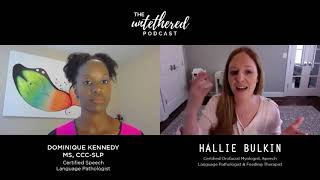
This content was created by Hallie Bulkin. This content was uploaded by Hallie Bulkin. This is a YouTube podcast episode (Episode 57: "Cultural Sensitivity: Our Role As SLP’s With Dominique Kennedy, MS, CCC-SLP") recorded Feb 19, 2021. Host Hallie Bulkin (introducing herself as an orofacial myologist/SLP) interviews guest Dominique Kennedy, a certified speech-language pathologist. The conversation covers cultural sensitivity and inclusion in speech‑language pathology and feeding therapy — topics include defining culture beyond race/ethnicity, intake practices, avoiding assumptions, differences vs. disorders, family dynamics and decision‑makers, practical/functional homework strategies, feeding access and resources (including nonprofits and thickeners), insurance/out‑of‑network guidance, and empowering families. The episode is practical and clinician-focused, offering examples and concrete suggestions for making services more accessible and culturally responsive.
Chapters
Quick Disclaimer all information, content and material of this podcast are the opinions of the speakers and is for the informational purpose only and not intended to serve as a substitute for the consultation, diagnosis and or medical treatment of a qualified healthcare provider. Welcome to the Untethered Podcast. I'm your host, Hallie Balkan. I'm a certified orofacial myologist, feeding specialist, SLP and mentor. This podcast is all about getting your questions answered and collaborating with colleagues to bring you the most up to date information in the orofacial myofunctional therapy, tethered oral tissue and airway space. I challenge you to keep an open mind and join my mission to get this information out to the masses. Let's get started. Hi and welcome to episode 57 of the Untethered Podcast. Today we have Dominique Kennedy joining us. Dominique is an experienced and certified speech language pathologist. She earned a bachelor's degree and master's degree in Communication sciences and Disorders with an emphasis in Speech Language Pathology. Her experience across settings includes schools, hospitals, rehabilitation centers and early intervention. Through her private practice, she serves children and adults. She is a member of the American Speech Language Hearing association and special interest groups, sigs fluency and fluency disorders and augmentative and alternative communication. Through her desire to empower families, she has developed educational programs and professional development courses. Dominique lives in the Atlanta metro area of Georgia with her husband and their two daughters. She enjoys fine arts, music and culture. Well, Dominique, thank you so much for joining us on the podcast today. I'm very excited to talk about our topic. Big welcome to you.
Thank you so much for having me today.
So I know we're going to talk about culture and inclusion and diversity as we experience it as speech language pathologists. And obviously we have a field made up of various different areas that we practice in. So I'm going to hand it over to you and let you kind of decide where you want to start, whether that's with speech or language or fluency. But I would love to talk about, you know, how we as therapists are, how we need to be more culturally sensitive or how we should be approaching some of these areas that we treat as practitioners.
Certainly. Thank you so much for passing the mic to me. Just to get started, I think one important thing would be to talk about what we do as clinicians, as speech language pathologists, and also clarify what culture is. So you mentioned how broad our field is. We can see any patient anywhere from birth to death or birth to transition. We can work with patients and clients on articulation or speech, sound production, language areas of feeding, cognitive linguistic areas. We have so many different things that we cover. And I think that with that wide range of areas that we do cover and address with families, it's important to understand how to consider different things when it comes to culture, how to consider different things when it comes to how to just interact with the family that may be culturally and linguistically different than maybe the clinician or practitioner. So when we think of culture, I feel as though many people consider just minority groups or certain ethnic group or certain race. But culture is comprised of many different things. It may include age or demographics or social class or any number of areas that can comprise what a person values and how a person identifies. So I think it's important as clinicians, and we consider all of those different areas, not just the more surface or kind of immediate things that we consider or think about as it relates to culture.
Yeah, and that's a really great point, because this is also a term we hear people throw around a lot, you know, and we are all taught on some level, probably not significantly enough in grad school that we need to, you know, approach our families for who they are, what you know, we need to be sensitive to culture and obviously inclusion as far as what we do. And we work with special needs populations, we talk about inclusion in that way. But like you said, it's not just about the minority groups. And so I want to dive deeper into that and really hear what you have to share with us.
Sure, definitely. And, you know, thinking about culture, you know, I try to make certain, at least at my practice, when I encounter a family. You know, certainly we have our different ways in which we do intake or receive a family or get them set up to begin or initiate the process for services. But one thing I like to do is make certain that I at least get a feel for, you know, their thoughts on their communication status or if they're a caregiver for that individual or even a parent, their ideas about the communication status of that individual that will be treated at the office. Do they consider what is going to be addressed as a disability? Do they consider it just a difference? You know, who are the decision makers in the family? Is it more patriarchal? Is mom the lead on this particular area? So I think it's important to kind of make sure we're clear on, you know, who would be addressed and how to do that in a respectful and honorable way and then moving from there, you know, getting a feel for. We get some information as to have they participated in services before, what are their ideas about clinicians and practitioners and thoughts about how services look in the family? Sometimes we'll encounter families, and it may appear as though, if we take a child, for example, that child may appear as though they're not given as much independence as they could, or there may be a level of dependence that's perceived in a family. However, if we think about, talk about, and consider how that family's makeup is, and maybe in that particular group, in that particular individual family, the members of the family externally or internal family take on different roles. And that person who may have a difference in speech, or if it's considered a disability in that particular family, maybe it's the role of that particular culture or family to assume things for that particular individual. So I think we have to really get a feel for how family approaches, how to address and treat and how family considers what their role is in the treatment process. So that's one thing we definitely try to keep in mind. Again, it's a lot of information to try to take in, but again, if we just keep it in the forefront of our mind as a consideration as the process unfolds, we're able to just make sure we're honoring both sides of the situation.
Yeah, no, I think that's an absolutely brilliant point, because I know there's always room for us to change things, even on our intake paperwork. And we ask people on our intake paperwork what languages are spoken in the home, who do they live with? Who's filling out the paperwork? Sometimes that's a good indication of, you know, where things might stand in that family, you know, anyway. So there's definitely ways that we can go about kind of gathering some initial information in our intake paperwork and then continuing that conversation when we meet them in person, or if you're speaking to them on the phone, to kind of gather more information that you've mentioned here. So I think those are really great points. And I know I'll get people saying, well, how do you do that? So I wanted to kind of put that in there because there's no right or wrong way to do it, but you can definitely do what feels good to you and what works best for you and your families and utilize that intake call, the intake paperwork, your first session. And obviously, therapy is dynamic and ongoing, so it's going to change. You know, I've worked with various different cultures, ethnicities, religious, you know, people of different religions and people, you know, even within the same culture or religion, a family can operate very differently than another family. And so I think it's just remembering like what that specific family unit looks like is more about that family. And we need to not have these preconceived notions of what we think based on the fact that, you know, they're from this country or they speak this language or they have this skin color. You know, I think it's really important that we remember that the family unit is what's going to drive everything. So I love how you shared, you know, some of the things that we should be asking and paying attention to.
If I may add to what you said, you brought up a really great point about assumptions. I think that's really key as practitioners, as clinicians to make certain that we don't come in the door with assumptions just based off of a family we've worked with before. We don't come in the door with assumptions based off of where we believe or perceive that family to be from or where are they from or what, what ethnicity are they. We don't want to make assumptions. We want to give each family an opportunity to, you know, share individually what they value, how they approach different particular areas and make certain that we, again, just don't make assumptions about families. I think that's really key so that you can allow for those things that need to be brought up in the particular session or things that need to be covered along the therapeutic process that you give room for and space for that particular area because you just don't know each family is going to identify. So cultural identity is different than, you know, what assumptions sometimes will have us to perceive. So you have to think about how does that family identify not just how they look. And I can give you an example. We have a family that my children attend school with and filling out paperwork for a particular something that this particular mom had to fill out for her child or her children. And you know, you check the boxes if you'd like to, about ethnicity or culture or race. And she, instead of checking the prefabricated boxes, she chose to write in the cultures that she identifies with, whether she's a person that's brown skinned. And so the particular office, not our kids school, but the particular office that she was filling paperwork out for, approached her and said, hey, I noticed that you wrote some other things. Now can you just check one of these areas? And she said, well, you know, I actually don't identify with the actual boxes that are available. That's why I chose to fill in for you how my family identifies. And it was like this really interesting dynamic in which she felt really uncomfortable unfortunately, because the way that the particular office perceived her, just based off her look, based off of her skin tone, they thought she had to fit this particular box or had to check this certain thing. And she did her best to, you know, and stood her ground and said, hey, my family is comprised of many different cultures and this is how we identify. So I think it's important, again with the paperwork, to just leave room for, you know, honoring what, how families identify culturally.
Yeah, no, that's, that's a beautiful point. To also give them space to add in their own information and if they do that, not try to then fit them back into a box. Right. Because that's definitely a fault of the world that we live in today that everybody somehow fits into this nice, clean.
Clear cut little box.
And that's just not how life operates. It's not how the world operates. And I think the quicker that everybody realizes that we are allowed to have, be our own beings and have our own identities and, you know, live outside of the box, like, that's actually where the beauty happens. So it breaks my heart that they had to even experience that and that, you know, they were able to write in their own thing under that blank space. And then somebody still came back and said, oh, hey, yeah, we see this, but we still need you to check the box.
Like, Right.
How is that? Okay.
Again, social sensitivity. I think it's really important to just, you know, honor that and be mindful of those areas.
So, yeah, like, what rule are they breaking or how is that hurtful to this practice that they didn't check that.
Right, exactly.
You also mentioned before differences versus disorders or disability, and I think that's a great topic to talk about as well, because I know, you know, for me, what I was taught in school and working with some of the populations I worked with in the elementary schools when I came out, or I was in elementary school, but I was actually working the preschool population when I came out of grad school. I was always taught that, you know, differences are okay and this is what a difference looks like, and the difference is not a disease order. And these children who might have some differences, and maybe they're struggling to speak English because English is a second language, or they speak a different variation, you know, of, you know, English, that still is a difference. And we don't categorize these children as having a disability or a disorder. And I think there's definitely a lot of over identification. Some would argue it might be under, and some would say it's over depending on which part of the conversation you're discussing, but I think that especially in the schools, we definitely see some over identification of children being qualified as having a disorder when they truly have a difference. So I don't know if that's something that you would want to add in on, but I'd love to hear your thoughts.
Sure, definitely. Thank you for the lead in. And you're right, I think it's important that we really not only hone in, but really examine our own clinical judgment when it comes to the difference in disability area. I do share with my families, you know, because I do build to insurance. I do have some different care sources that our particular office and clinic. I let families know, you know, when you see the reports, you're going to see a particular diagnosis code, you're going to see a particular label there, and that's just to justify the access to the services. However, I respect and understand that in your particular family you may choose to identify, you know, in your own way, as far as how you like to label what you're seeing or label what's happening with your child or in your family or how you choose to address it is still your right and your choice, you know. So again, there's different things to consider as it relates to disorder and disability. I think that especially thinking about English as a second language learners, making sure we understand differences in like regional dialects or just dialect as a whole, or making sure we're able to understand, you know, what is spoken in the home, how saturated is that particular language in each setting, making sure that we just account for all of those areas so we don't misdiagnose, so that we don't call something that's just a difference a disorder. I think that's so important for us to think about as clinicians.
Yeah, absolutely. And thank you for commenting on that. I think another thing that we can discuss too is how this plays out. Obviously we've talked a little bit about the language side, but then also how this impacts speech or even feeding. You know, obviously there's so much that comes into play when we're dealing with kids who truly do have a delay or a disorder and how we still need to be very sensitive to, you know, that family unit. Right. Even if it is a child in the schools and we may not have a lot of interaction with the family or, you know, as a private practice, we sometimes see a lot of kids that are with their nannies or that are with their au pairs or that are in their school setting, their preschool or their daycare, and that Might even play into culture a little bit, too, based on, you know, how that setting is set up, which could be very different than the family unit at home. And so there's just, there's so many variables that obviously play into what we do as clinicians and how we treat, like the whole, the whole team approaches that family unit and who's involved. But I would, I would love to know, you know, your thoughts on that, you know, being culturally sensitive to children who are, you know, in speech therapy. And then also we can talk about feeding therapy as well.
Sure, sure, definitely. So just to speak and add to what we've already discussed, you know, thinking about the family unit and how that family decides to, you know, approach their therapeutic approach, whether it is that you're, whether you're coaching parents, whether you're coaching nanny, whether you're coaching a grandparent, how that family chooses to pull in those stakeholders, if you will, and how that family chooses to approach the extended practice of what happens outside of the clinic is really important. So perhaps a family decides, well, we're going to allow you as a practitioner to lead in this particular area. You're the specialist. So we won't do anything outside of what you decide for us to do, or we won't do anything outside of even the clinic. This is like the service delivery time. So that's when they get their speech versus carrying that over into the family and home setting, where it's an extension and an ebb and flow of what particular therapeutic interventions are provided to that family. So even getting a feel for what is home life look, and how can we incorporate what is done in the clinic into routines at home? Sometimes families will. Oftentimes families will ask, you know, what can I do to help my child speech or what can I do to help my loved one with their speech? So just knowing what their routines and dynamics are is really important. And just to give an example, you know, I have a family I just recently worked with. This happens. I mean, working families, you know, schedules can be really hectic or long. And, you know, maybe there's a lengthy time at the daycare, or maybe there's a lengthy time with the caregiver. And then by the time that child may get home, it may be close to bedtime. So making certain that we're not making judgments about a family's way in which they operate their day to day, you know, we may want that particular family to do all these interventions, or we may have a whole list of things that we want families to do. But keeping in Mind culturally or linguistically or just time management, certain things are going to fit better into the overall dynamic of that family unit than others. So being sensitive to how can we support that family and carrying over the interventions or the different strategies and techniques, but still respecting that their family dynamic may be one that is pretty full or late nights or, you know, early mornings, just thinking about all the different considerations. So that if that particular child comes into your office and maybe they should be a little further along based off of how long you work with them, or maybe you would like them to have mastered a certain technique or strategy. But again, keeping in mind, how can we rework the system, still support the need, but also honor that particular family's dynamic? So again, going back to not making assumptions, you know, not making judgments, and just trying to work, you know, in tandem with the family.
Yeah, and I, you know, I'd love to give some examples, I know, for us in my practice, because we do have a lot of dual working families, and some of them have their kids. Their kids are in daycare or in preschool all day. And like you said, they don't come home until maybe they've got a quick dinner. They do bath, they do books, they do bed. And, you know, let's say we're working on some speech goals and they just, they're like, I don't have five minutes or the energy to fight my child and sit down and do this for five minutes. Like, our playtime looks very different. So what I really encourage my team to do and what I like to do is I call it functional homework. Yeah, we try to give them like one to three suggestions of how they can incorporate this one homework activity throughout their week. And it could be something like while you're driving home from daycare in the car, like, look out the window if you see a blue car. Say, blue car. Look, blue car. You know, it's like, let's just when you're in the bath, like, try doing this when you're sitting at the dinner table. And I also tell them, like, and you don't have to do it at every meal every day. You don't have to do it in the car every day. These are just ideas. Try to think of one place every day for a few minutes that you can incorporate this and make it super functional, because your child won't even realize that they're necessarily working on those goals and, and then leave it on us to like, really fine tune, you know, things in our, in our sessions. Because like you said, like, families, especially these days, up until the pandemic, everybody was like, go, go, go. Run, run, run. Like, you know, and who knows how many kids are in that family and how many different activities they have going on in addition to, you know, whether it's a one or two, you know, dual working family or if there's a single parent or there's, you know, there's just. There may be grandparents there, they might speak a different language. They may not speak English at all. So it may not be appropriate to ask them if we're doing therapy in English, it may not be appropriate to ask that caregiver to be working on these skills because that's not their zone of, you know, what they're comfortable with. And just. There's just so many. And that's just. That is why I love how you stress, like, know your family unit. If you don't know your family unit, how can you possibly create a treatment plan, you know, do an adequate assessment even to then create that treatment plan and provide ongoing therapy that's going to be useful and meaningful to these families and this child. And so I think it's just so important that we know the family unit and we tweak what we're doing based on what they are receptive to. And my little trick for this is getting a yes. So I always try to get a little yes. So if a family says, like, yeah, yeah, we can, we can do homework in the car for five minutes now, I know, like, we are on the same page. I've got their buy in, they're willing to try, and I haven't totally overwhelmed them. Right. So I just, I think that's so. So it's such a key, a key component of the therapy working, right? It's kind of meeting your families where they're at and doing what's functional and important to them.
I think you brought up some really great points, Holly, and I would love that you not only talked about what's functional, what's practical, you know, thinking about the suggestions. We can give all kinds of recommendations and, you know, share all this, these long lists of things that we want to see our families doing, but I love that you talk about considerations and getting the buy in. You know, I think sometimes we, you know, talk about different things that we want families to do and assume that they got it just right there, but making sure, you know, decide how you would want to interact with that family and decide, okay, should I have them repeat back to me what they think is reasonable, or should I have them, you know, just give me a yes, on this is something I can do. How can you, you know, interact with that particular family to know, A, I have the buy in and B, that it's functional enough for them to incorporate into their daily routines and activities. That's so key. That's really key. And some, you know, thinking about culture, some families may not ask you because they feel like maybe I'm challenging the professional, maybe I'm challenging the experts. So I really try to empower my families to know that you're your child's first and best expert. I'm here to partner with you, I'm here to walk through the process with you. But I want to make certain, because you're going to spend the most time with your child at home or, you know, in the community, it's important that you feel empowered to do the things that we discuss. And I want it, I want it to be easy for them. I really want it to be things that they can do and feel comfortable in, you know, implementing. So great points on that.
Yeah. No, and I also love how you mentioned that you try to really work to empower the families. And you know, I always tell parents, I'm like, there are a lot of professionals out there. I'm not hating on all the other professionals, but there's a lot of professionals who kind of put themselves on a pedestal and they're like, I'm a professional, this is what I do. I'm the expert in this. You might be the expert in your child, but I'm the expert here. And I basically put that family right up on there on the pedestal with me. And I go, look, you are the expert in your child and this is not going to work unless we're on the same page. And so I leave open ended questions and I leave periods of silence to give them the opportunity to speak because like you said, some people may either feel intimidated or culturally, they may see that the doctor or the therapist or somebody as like, well, they're, they're telling me what they need, like what I should be doing. And even if I don't agree with that, I'm not going to speak back. I'm not going to tell them I don't agree with that. So I would rather a family say to me, you know, you know what? I don't really think we can do that. And me then go, okay, well let's figure out what we can do. Like if this is not where we're at yet, like, what would be reasonable for you? Like, or what do you, what do you think would be a good activity this week that, you know, maybe you could do in the car. And so I'll give them a little bit of context or an idea to kind of get the juices flowing. And it's rare that my families and I have had that conversation at that level where they're blatantly like, no, sorry, not gonna do your homework. I have had a family or two say that. And oh, yeah, I was like, oh, that's different. Okay, well, hold on. Let me get myself together here. Let me get my thoughts together. But I think it's also because, like I said, we really try to understand who our family is that we're dealing with. We really try to figure out what's going to be functional for them and give them suggestions that are functional. And look, if they don't do it at that point, like we. You can lead a horse to water, you can't make them drink. Right. It's kind of like one of those things, like, we can't force anybody to do anything, but we at least know that we're doing our best to try and meet them where they're at. And we could still be failing, who knows? But, you know, I think if you keep trying and you keep getting to know your families and respecting that, there are going to be differences between how, like, what you as a practitioner see as see their family unit as and what they might see their family unit as. I think, you know, we really need to be more sensitive to our perspective might be different than their perspective. Even though we feel like we've gathered all this information and we really know the child, we don't always know what's going on at home.
So. Yeah, and to your point about perspective, just making sure, you know, hopefully you don't have to have many conversations where you're having like this heart to heart of understanding or wondering why things aren't being done in the way you thought that you had discussed with the family. You thought it should be reinforced or played out. But sometimes you may have to just think about how can I approach the family in a way that is honorable and respectful and find out what is it that I can do as a clinician to better support you? What is it that I can do or what can we do in our practice to better empower you or reinforce the things that we discussed that will be beneficial to your loved one or your child, you know, really having that conversation? Because you're right, sometimes it may not be brought up and sometimes people may not want to bring up different factors that are you know, impacting their family dynamic or their family unit. So knowing how to approach the conversation and knowing when it's a good time to do that and honoring what may come of that particular conversation and just meeting in the middle some way, just making sure that can be done in a way that's just addressing both things from either end.
Yeah. And I always like to believe that speech pathologists are special people and that we have like this loving, caring heart. That's why we got in this profession anyways. And I think if no one else, who else is more perfect to, you know, do this and kind of go on this journey with the family and truly understand, you know, the differences between how we perceive something and how they may perceive something and then kind of figuring out how to come together and see it from each other's viewpoints and really, you know, elevate that family and encourage them. One thing that we do in our practice, that I'm very happy that I've done it for a long time. And I really feel like it's been beneficial to a lot of our families because we are private, paying out of network. And despite that, we really try. I don't know if you guys heard that. Sorry. We really try to make sure that all families can access our services to the best extent possible. And so what we've done is we've created some. We've created some documents so if a family calls and they are asking if we take insurance, we will tell them like we don't. We. You pay us up front, you submit the super bill, you can get direct reimbursement if your policy allows for that. And so we'll give them a document we've created that has all the questions, possible codes, the fees. Like this is what you go and ask your insurance company so that they are empowered and they're able to take this into their own hands. Because there are some families who will have to pay thousands and thousands out of pocket even to go to an in network provider. And nobody's giving them this information usually. So we basically said, hey, go to them, ask these questions, come back and let us know if you have more questions. They need more information from us. Oftentimes, you know, you don't need an evaluation to, or I'm sorry, you don't need approval to have the evaluation. They'll at least give some sort of reimbursement for that. But then the ongoing services is where we need to know if there's a pre authorization. You know, sometimes we'll tell you how much they're going to cover, but not always right until you actually submit your first bill. So some families will come and do like a session with us and then ask for the bill to submit because we usually just do like a month of sessions after they occur at a time. And so we really try to work with families to make it so that it is accessible and we also give them a handout on like, this is how you submit your claim form to insurance. It's going to look different from one company to the next. But this is a general process. This is what you do when you call what you need to ask for. And we've actually, we've been very successful with getting a lot of our families who have come to us and said, you know, I would like. In network services, we've been able to get a lot of them out of network coverage, thankfully, even when they weren't sure if their fan if their plan allowed for that. So, and again, it's going to differ from plan to plan insurance to insurance, you know, even plan within that insurance company. But, you know, I think it's our jobs as providers to provide a certain amount of information and we put it into a PDF format so that we're not repeating ourselves on the phone and they're not having to sit there and jot down all the notes that we're giving them.
Right.
Yeah. Just to make things a little bit more accessible to everybody. And I think that that's also just because that's how some of our families start with us. They're seeing, you know, oh, this is a little different. Nobody else has given me this. Nobody else is cared enough to, you know, not maybe that they don't care, but they haven't done the research or realized that this is even a possibility. They just say, no, I'm sorry, I don't take your insurance.
Fine. Right.
Which again, as a business owner, it's hard to navigate these waters. Right. You kind of, you live and learn. But you know, I take inclusion very seriously and it goes from everything from being in network or out of network to having a different disability to being culturally sensitive. You know, inclusion to me is a very large arena. So did you want to add something to that?
Yeah. Well, you know, I love that you talked about empowering families through providing information. I think that it's easy to assume that even if a family has gone through the process before, one office to the next can look different and how that particular office approaches their service delivery model or their providers, you know, way in which of interacting with families even for families that are just getting started along the process, it can be very overwhelming. You know, first of all, you're processing the fact that, hey, there may be something different in my loved one or my child that I have to address formally and therapeutically. So that's one just bite out of the apple to address. And then the other side of things, of how do I fund this particular service, how do I get this service covered? That's a whole other area. So I love that you at your practice, you know, really address things from a standpoint of just giving families information up front. Don't leave it to them to have to fight a try to seek out or look for or hunt out, you know, different information. Certainly there's going to be some things that they have to do on their end, but it's nice that you lead with giving them information that they can kind of comb through and digest in that way. And then speaking about accessibility, it kind of makes me think about the feeding aspect of things. When we're working with families for feeding and, you know, coaching them on different things they can be doing at home. Just thinking about access to resources, access to different food items, access to, you know, where is your local market and how. What does it take for you to get there or what, you know, do you have in your resource bank to get this particular texture of items or get this particular consistency, you know, thinking about access in that way. You know, we are aware of food scarcity in different areas and access accessibility issues. So making sure we're sensitive to what families have access to as it relates to feeding and swallowing and what families are able to, you know, get their hands on to continue the work that needs to be done in the home.
Yeah, absolutely. And it made me think of Nina A. Johansen's course. I don't know if you've taken the AEIOU feeding course or not, but she's worked a lot with inner city Baltimore. And so she actually speaks a lot about this in her course because she's very nutritionally focused. She really wants, you know, and so she's actually. It gave me a lot of great ideas when I took that course about how to avoid food waste in general, because even families who. I have a lot of families who might have a lot of money, but when you start to talk about wasting food, like you can see their anxiety going up, that is. So that is of high value to them that do not waste food, you know, and then you've got families, where can they even get to the grocery store? Do they have the funds to even purchase it. You know, the canned green beans that we're recommending, that cost 99 cents for where I can. So there's just so many different levels and factors that play into feeding therapy. And when you're dealing with these kiddos who, especially the kids in feeding therapy, I mean, that's a whole other medical complexity in and of itself and adds a whole other level of, you know, anxiety and stress and challenges. And the last thing we want to do is pile on more for that family. So, you know, I try to be. I try to just sharing some ideas. I will suggest to families. If you can find things that are frozen or you can make something and freeze it in smaller quantities and take those out, because your child doesn't need to have the whole can in front of them, right? They could just take like three green beans at that meal that are cut up into this little tiny size, and that might be sufficient. And, like, that's gonna last you two months. Like, that 99 cents is gonna last you two months. So, you know, I think when we start to work with our families and show them what's possible, like, that really falls on us, but we. To be sensitive to who we're working with and what's going on. Another plug that I'll make is the Dysphasia Outreach Project. It's a newer nonprofit, and I actually had them on the podcast just recently. And what they. They're taking donations. And what they do ultimately is provide the types of resources that families who do experience, you know, food scarcity or who. Maybe they've got kiddos who need thickener. And really, that's. That's a safety issue, like these children. But if these families can't afford thickener because it's not cheap, you know, and they can't even figure out how to access it and let alone they can't pay for it. But now there's shipping costs on top of that. You know, it's. It really adds up really fast. And then you've got these parents who feel like they're failing their children because they can't. Do I put. Do I pay my electric bill and put food on the table for the rest of my family? Or do I buy my child this thickener because they say she might aspirate if she doesn't have it? You know, like what. Who becomes more important in that situation? And obviously, no parent wants to have to make that kind of a decision. But how much easier can we make their life by offering them resources that we know about? And I know, for example, the Dysphagia Outreach project will provide these thickeners at no cost to these families and that they're able to do that through donations that people make. So really cool nonprofit that is super. They're in like their infancy, they're super young, but they're already making such a huge impact. I know they've got a food pantry. I don't know if that's just local to where they're located, but I know that they're able to offer the services across the country for some of the other services that they offer. So there are things out there that we can also use. And again, you know, sometimes we become those case providers, right? Those case managers who are doing a little bit more than our SLP role. We're helping them to find those resources. But look, it's going to make our therapy, our therapy is going to go a heck of a lot better if we're able to get them access to what they need access to. So I take that on sometimes.
Yeah, good for you. And I love that you gave those resources. You know, again, one of those things where I may not know. I've not had any experience with this. I don't have any other families that I know that have been dealing with this particular area. So just again, empowering the family to feel, A, I have access to it or have some way to access to it, and B, I have the information necessary for me to know how to, you know, address this particular area. And I love that you brought up the area of. I mean, I don't like that anxiety is a thing, but I love that you talked about the fact that it doesn't have a face or a demographic or a class. You know, when we're thinking about addressing things maybe from a parent standpoint or caregiver standpoint, you know, we kind of meet in the same place when, you know, I have a concern, I love my family member, I have a concern for them. I want that particular need met. You know, and thinking about culture, even if we think about like generationally, you know, maybe your parents or your grandparents were taught to finish their plates or maybe you were taught to not playing your food. I mean, that kind of opens up a whole different arena for us because we approach things in a play based, you know, very hands on way of.
Just.
Involving the families and the child or the loved one in approaching feeding and therapy in that way. So this may even be from a cultural standpoint. We don't do that at the table or that's not what we do, you know, in our home. So even understanding, you know, those particular differences and maybe how a family may approach their mealtime is important for us as clinicians and practitioners and providers to keep in mind, too. You know, don't try to change the family's way of doing things. Maybe be open to how we can still make it fit the routine in which they do at their table. Maybe introduce some different ways of thinking about that particular approach to meal time and feeding. But still honoring, hey, they have a particular way in which they do meals, so how can we make it work, you know, in that way?
Yeah, no, I think those are. Those are really great examples. And. And I know, you know, you're gonna encounter all different kinds of patients and families and family dynamics and cultures and religions and, you know, just ethnicities, everything, you know, throughout your work and what we do and, you know, we've. I've had situations where it's as simple as just understanding, like you said, like, we don't put our hands in our food. And my parents are losing their mind over it because they watch my child. What else can we do? And just figuring out, you know, I've even said to parents, well, will they put them in the bathtub and let him play with it there and then turn, you know, and then give them a bath afterwards?
Like, is that really creative, right?
Like, can we separate different meal times so it's not a mealtime thing? And they're like, well, I'm like, okay, that's not okay. Let's figure out another idea, right? So it's kind of working with our families because there isn't one right answer. And if the family's not comfortable with or willing to do what we're asking them, they're not going to make progress. So we need to come up with a different idea, you know, And I've got families where they're, you know, the mom might be making excuses. Like, the child sitting there refusing to put something in their mouth and be like, oh, well, maybe they're teething. Or, oh, maybe they're, you know, it's sort of like this. Like, you see the defense, right? Like, all of a sudden they're on the defense. Like, it's not. It's not me. Like, there's something going on with them.
That they won't do it.
I can't force them. And that's. That, to me, is a signal of, okay, we need to take it down a few notches, and we need to give this parent, empower this parent some more, and Give them something they feel like this child can, can achieve right now. And so there's a lot of reading between the lines as therapists too. It's not always blatantly obvious. They don't always offer up all of the information to us.
Exactly, exactly.
It's, you know, as a feeding therapist, you get it, like you have to watch the cues on the kid's face and like the second they like pull back a centimeter, you're like, oh, okay, that's our first stress cue. Okay, what's coming next? And then I start to turn their head sideways and the foot comes up on the table and you're like, well, there are three rescues. We better change up the food we're working with.
Right. Always thinking ahead and kind of being several steps ahead of the process. So reading so many different things. We, you know, we're not just play based therapists. We not, I say essay, just not minimizing any particular person's role or way in which they do therapy. But there's so much that we're thinking about when it comes to the way in which we approach clients especially or particularly as it relates to feeding. Because, you know, that's a medical risk there. You know, having to think about all these different areas. So being so keen and being so in tune or tuned to watching for those little nuanced areas and little changes in body language is so important. And then helping the family to know, okay, they're doing this particular thing that is communicating something. So let's figure out what are they communicating through this particular behavior, through this particular, you know, posture. Let's look into that and maybe help them understand how to navigate that particular area.
Yeah, absolutely, absolutely. And I, you know, as I'm thinking about all of this, I'm thinking about what I learned in school, what I didn't learn in school. You know, I feel, I want to say, I could be wrong, but I want to say we maybe had like a one credit class on like, you know, cultural and linguistic, you know. Yeah, there was probably one diversity, like mate. Maybe I could be even making that up. It might have been a book we read in one of our courses. Honestly, it's not jumping out in my memory, but that's a problem. The fact that I don't even remember if I had it or not clearly means that we didn't talk about it enough. So I wonder if you have any advice for new graduates. I have a lot of new graduates in our feeding program right now. So I'm thinking of them because we've interspersed this conversation throughout the pandemic past three months in the course that's about to end. And we decided instead of like integrating it within, we're actually, we're gonna still do that, but we're gonna have like a separate module on the topic as well. Because I feel like grad students for speech language pathology at least are just, they're not getting this information that sets them up for success when they leave grad school and go into their cf.
So what are your thoughts on that? You know, I'm glad you brought that up and I think that's an awesome challenge for us in the field. In thinking about are we preparing our new graduates or new clinicians for what they are to encounter likely and possibly on the job or in the field. So, you know, I was even trying to think about and preparing for our discussion of what things did we cover in grad school. And I feel as though there's definitely room for an opportunity for us to do a lot more in that particular area. I know we're not going to necessarily rewrite things overnight, but I certainly think it's an opportunity for us to actionably challenge the material and challenge what we have access to. Even at the graduate level, we want to make sure our clinicians are prepared for what they're going to encounter. Prepared from a mindset standpoint, from a practitioner standpoint. We can't just think, well, told you all of these things. I gave you these tools, you know, the strategies, you know, the techniques, you know, the theories behind it. Well, after the theory, after the, you know, information from the book, you still have to be able to interact, you know, functionally and as a human being with another human being. So I definitely would challenge different graduate programs to really look at and examine how much information is being shared. How saturated is that particular course? Is it just a section in a book that we may cover in a class, or do we have opportunities where that can be offered in a way that would, you know, offer a preparedness approach to cultural and linguistically diverse families being addressed in a way that is appropriate? I would say that, you know, it's going to. Until we, as we challenge those different areas and until we see the changes happen where it's a full on series of courses, I would say each individual clinician definitely do your part in exposing yourself to different groups, you know, asking questions, having conversations, you know, maybe you're going to take on. We have a pretty heavy caseload in grad school, but maybe you decide to add something in volunteer basis or you know, ask your professors, what other experiences would you recommend that I participate in that would help me feel more prepared in working with different families? I would say reaching out to other clinicians that are already pretty seasoned in the field and ask them, you know, what experiences do you think will be beneficial, or can I volunteer at your particular practice, or what things can I do to just help me feel more ready for what I'm going to encounter? Trying to think about some other things, you know, educating yourself on your time. You know, you may not get everything in the textbooks that we have to, you know, read during the course, but you may want to do some supplemental reading on your own. There's lots of different resources even now with this current climate, which I say current, but some things are just surfacing from what is already there. So making sure you grab a hold of the information that's being circulated now. And I would say just really go beyond the textbook material. Go beyond the course and the class. You know, our particular field happens to be intensely very small. I don't know how many people you graduated with. There were probably about 30 to 35 that graduated with me. So even just, you know, using your. That as a sample group, you know, hopefully there's representation and diversity. There's maybe using that as a sample group opportunity to just have those conversations, you know, talk out those things during study groups and, you know, just get the information there. I'm also looking forward to, in talking about sample groups and how we're represented. Represented. I'm hoping that we get more representation from other groups in our field. It tends to be pretty saturated with one particular look over another. And I'm hoping that we're able to not only promote the field in a way that helps people to understand what we do, how we do it and be attracted to it, but also understand the value in having representation from different areas, whether it be culturally, whether it be you speak multiple languages and you're able to go in this particular area or, you know, knowing regionally or from a different community or culture. You know, I can bring that to, you know, what I do as a clinician. So I'm looking forward to that continuing to grow and expand and, you know, be added to our field. Just representation there.
Yeah, well, and I think you. You bring up some good topics. And I'm, you know, as the host of the show, I don't, you know, I'm. I'm happy to just throw some words out there, but, yeah, I know that a lot of the representation in our field are white Females. Right. And that tends to be probably. What is it, 90? Is it like 91% of our field? And I think that the other eight, it's either 8 or 9% of what they consider people of color. Right. So I'm not sure if the black community is a larger percentage of that, and then the Hispanic community is a smaller percentage. I'm not sure, like, what the breakdown is there. But I've seen a lot of my colleagues who, especially some that are local to me, who are multilingual and consider themselves people of color. You know, they have been sharing a lot of this on Instagram. I had no idea. Think this is our profession as a whole. To the numbers. Exactly. So don't quote me, because I think this is. We were talking more about members of asha, and so those are where they were sharing some of those figures. But it was pretty eye opening to even me because the conversation then turned into, well, there's actually a lot of racism that happens in the grad programs. And it broke my heart. And I. I remember having. There was a. There was a girl in my program who ended up dropping out. I don't know her personal reasons for dropping out. She actually made it, like, 75% of the way through the program. And I don't know if it had something to do with something personal or something. You know, I would say our group as a whole was very welcoming, and I'm very happy, you know, about that, at least from my knowledge. But it was. It was heavily white females, and, you know, that was praying. That was most of the makeup of our team. And within that, sure, there's different ethnicities and cultures and religions and. But, you know, you're just looking at skin color. That's the reality. So, you know, and I understand that there have been people who apparently have stories about dropping out of grad. The speech pathology grad programs, because they've experienced racism or they were told to speak a certain way and that the way they spoke would not be tolerated or acceptable. Because here we are as communication specialists and hearing these stories that people have shared, just Absolutely. First of all, it breaks my heart. And second of all, that should never have happened. It's just. It's wrong. And to hear that we have programs where, hello, we work with all kinds of colors and disorders and religions, and just, you know, the list goes on and on. Like, we are all about. We're supposed to be all about inclusion. We're supposed to be modeling that type of behavior. So to hear that there are people in these programs, whether they're clinicians or they're the clinical directors that are still, you know, pushing this agenda, you know, and they're racist and there isn't an anti racism type of policy in place. That's where I think as a profession, we have a lot of work to do. And, you know, I was really happy to see the push for Asha to come out with a statement, but we'll have to see if they put their money where their mouth is, because we know that that was a big debacle last week where they kind of put out some old statement that really danced around the topic and didn't mention black or racism or people of color or police brutality or anything that was going on. And I was part of one of the people who basically said, hey, Asha, this is what Aota and Apta put out. Like, what are you doing? Here are some great examples of what you've done to support their members.
Hello.
And so I was happy to see that they did come out with a statement at the end of the week. However, that needs to translate into actually taking actions. It's great to have the policy. I'm happy they have it, but what else are they going to do? You know, it's time to put your money where your mouth is ashes. So, you know, that's where we'll see what happens. We'll see how things continue to evolve. But, you know, I'm hoping that there will be more of a representation of, you know, black voices and people on the boards and involved in Asha because I also have understood from some members that there's a lot of racism that even goes on at the conventions. You know, I don't. I've only ever attended one when I was in grad school and I've never been back to one. Something about them, it's just like not been my. Just not been where I spend my time. Yeah, but, you know, it's. It was just very eye opening to me and definitely a learning experience for me. And it angered me, actually. I was, I was angry for you guys. I was angry for everybody who's ever, ever experienced some sort of not feeling like they belong because of what they look like or, you know, where they grew up or what language they speak or how they might be slightly different from the next person. Because that just, to me, that goes against everything we do as speech language pathologists. So we can do better.
We can definitely do better. And you brought up the inclusion piece. I think that's huge. And it's so many different layers and dynamics of that particular area. But I'm glad that you were able to share that. You know, you reached out to different people, you took actionable steps to gain more information and get some knowledge. Because it's going to take all of us, with the policies to be changed and for us to change our mindset about, you know, how we approach this particular area of diversity and inclusion and cultural representation and linguistic differences. You know, we have to make it a collective effort. You know, certainly there are particular things that we're seeing both in the media and just in our systematic areas that are favoring or showing certain things being disproportionate for one group versus the next, the other group. But we also have to think about looking at it from a standpoint of a collective. Like, we need to change this as a whole. We need to. For this particular group. Yes. But collectively, as a field, we all benefit from having the representation there. So I appreciate you bringing up those points, and I am also saddened to hear about those stories where individuals were discriminated against or had unfortunate experiences due to any number of factors. We get into even the code switching area of things, and we talk about different dialect and regional differences. And certainly we are looked upon as speech and hearing professionals and expected to hold a certain standard. But we also want to make sure that we leave room for that clinical professional side, but also leave room for that person just expressing themselves individually as well. So I appreciate you bringing that up, and I'm looking forward to seeing the changes through the policy and through the actionable steps as well.
Yeah, that was so beautifully said. I think you speak really well on this topic, and I am so grateful that you agreed to be on the podcast.
Oh, thank you for having me.
You know, I know these can be difficult topics for some people to discuss, and I, you know, I find that until we get into some of these conversations and we put this information out there, we have these difficult, uncomfortable conversations. You know, for me, today was not uncomfortable because I did some of the uncomfortable work last week where I really took a hard look at myself, and I've got plenty of things to learn. I've got plenty of room to grow. I am not the expert on this topic by any far. Like, my thing is like cots, mayo and airway. Right. Like that. I will tell you all day long, but it is my job to also be sensitive to who I'm working with and to my colleagues and just as a human in general, in society and with the people who, you know, I encounter on an everyday basis. And so it's been a good learning experience. I actually took a lot of, like the past week off. I pushed my free training back a week because I wanted to take a good hard look at where this was in, where I was in my own life, where I was, you know, working from, with my own kids, you know, where, where we could just do better, you know, because whether you consider yourself to fall into one category or another or you, you know, you don't see yourself as something or you do, that doesn't matter. What matters, like you said, is that we all work together as a collective whole. It's a we, we need to do this together. No one group is responsible for basically taking this thing on and, you know, overcoming racism as a whole. Like, we need to work together. And I think the beauty of working together is probably going to be exactly how we do overcome the issues in this country. So. And universally. So, you know, we definitely have a lot of work cut out for us. But I know I've seen a lot of people pull together in the speech pathology community in this past week or so, which has been a beautiful thing. Really great to see. Yeah. In the past two weeks. And so, you know, I hope that that continues. I hope that we can make some big strides in, you know, our profession as a whole. Whether, whether, you know, certain organizations are in line with, aligned with what we're doing or not, that will. Time will tell. But as the members of the organization, the paying members, you know, we can still take action and take control of what we choose to do on a daily basis. So.
Yeah, yeah, I love what you brought up. I mean, I think the thing that I took most from what you just said was that you took the time to approach things and educate yourself. You took the time to examine what your family's doing, you challenge yourself and those around you. You know, took the steps and said, hey, this is what I'm saying. That's kind of not good enough. What can we do better, Asha? What can we do? Individual, friend or colleague or, you know, professional person, and then making sure, even from a standpoint, I have children myself. I have a seven year old and a five year old. You know, what materials are we putting in their hands? What things are they seeing around them? My husband and I talked about this recently and we said for any particular culture, you have to think about whether you're saying something directly, indirectly, things are being communicated. If we only see a particular group in a very subservient or a very, you know, a particular role, that is creating a thought process in that particular individual, particularly that child's mind, you know, we may not say, well, those people or that person or we don't. We may not use those particular terms or that particular language. But if all that child sees is this particular person with this particular look in this particular role, that's my thought about where they stand in my mind. That forms a position for me on, you know, what role they play in my life. So I think it's important as parents, you know, to expose our children to seeing people represented in many different roles. Make sure your child has a coach that may look different than them, has a teacher. Think about the school system that you're, you know, considering for your kiddo, and is there representation there? Maybe even decide on the extracurricular. That would just give them an opportunity to see someone in a leadership role that does not look like them so that they can start to formulate ideas about where people stand and what contributions they have in this world and how they're formulating ideas and thoughts about that. You may want to start with the book. I know that I believe you all posted some different reading material and you shared something that you're reading with your children. You know, you may start there. Make sure you look at your library. Is it saturated with one particular look or another? There's a lot of character books. Maybe add in some real people, some real accounts and stories, and actually have some things. My girls brought in a few things. This is a book that we've had since my daughter, 7, since she was little. I mean, this is a book by Spike Lee and his wife. There's another book I have. I Love my hair. You know, maybe your hair doesn't look like that, but let me just learn more about some other things. This is one that we love, Little leaders, bold women in history. And it's all about, you know, different women represented. So not even just culture from a standpoint of minority group, but let's see some women in some leadership roles. Let's see some, you know, girls doing some things in STEM and, you know, medical field. And then this is another that we absolutely love as well. This is two sisters and their perspective. And you guys may recognize Lupita from different areas in the film industry. So I just think it's. And there's so many more we have. I just have these few. But just again, just as an example, you know, thinking about what things are we exposing our children to as parents? What kind of things are they seeing around them and what information are they taking in just by the immediate environment that we're in, the places that we take them and the roles that people play in those particular areas.
Yeah, no, that's. And that's so perfectly said. I mean, I definitely took a good hard look at, you know, what, what do the dolls look like that my children have? And, you know, I was actually my. My little one, my two year old has been walking around with her baby CeCe doll from Doc McStuffins. And I've always loved that show because my name's Hallie and the hippo's name is Hallie. And I'm like, nobody ever has my name. So I was really happy that, you.
Know, there's a character that has my name.
But we've been big fans of Doc McStuffins. And so she, you know, she's been carrying her little CC doll. And, you know, I was actually happy to see that because we don't really differentiate color or in our household, that's a baby. The baby is a baby. And this baby might have this color skin, and this baby might have this color skin, but it's still a baby. And so I felt really good about that. Then I looked at the rest of the babies and I was like, all the other babies are white babies, so we can probably do better and we will. But I did go and I ordered a bunch of books on Amazon and I went to some other sites to try and order directly through, through some of the creators who sell on their own sites just to bring in discussions and talk about like, oh, look, this child has black skin. This child has brown skin. Like, what would you call that skin? That was kind of peach, you know, and just talking about it and talking about, like, wow, they're all friends. Well, how do you think he's feeling? And you know, just having conversations you would have in general, but also addressing the color of the skin, because that was one thing that really hit me smack in the face was I used to think, well, you know, there is no color, right? And that was one of the big messages that I took home very early on two weeks ago was that, you know, stop referring to, you know, there's no such thing as color, right? Because there is color and we should address it. And, you know, black and brown and purple and orange and blue and green and yellow and white, like, they're all beautiful. And so let's call it what it is. And let's also be very. Like you said, we create the reality for our children. And so it's not just what we're saying or not saying in our home, they're seeing these things. And so whatever they're exposed to or not exposed to is going to shape their reality. And that whether you are doing it directly or indirectly and you're not even aware you're doing it, which think there are a lot of people who may not consider themselves racist but have no clue that every baby doll book coach, like you said, they all look the same as the child. And so we definitely have space to do better and make some intentional choices that will help to expose our child to all people and, you know, give them the opportunity to realize that we are all equal and we can all do big things in life and we all have, you know, there's a place for all of us in leadership roles. You know, we can all be entrepreneurs or speech language pathologists or doctors or, you know, mommies or daddies or whatever. You know, there's. Yeah, so there's a lot of great take home messages in that. And we will link some of the books that you shared here because I know we didn't mention all the titles or all the names. We'll link them in the show notes so that if people are interested in some of the suggestions, we can definitely share those.
And I will actually plug a friend of mine, Dr. Lakeisha Johnson. She has a platform entitled Maya's Book Nook and there she shares a lot of material on diverse books and diversity and characters. So that's really a great resource. She promotes things primarily on Instagram, but you can find her and just find that material. I would really encourage families to do that. And you know, one other point I was going to make, you know, whether people go out and flood their Amazon cart or you know, go and, you know, grab everything off of the shelf, I'm happy that we're able to talk about here. You know, okay to talk about color or hues or different skin tones, it's okay to talk about that. I think sometimes we shy away from it when it is a reality. I have brown skin. That's okay to say, you know, it's okay to talk about that. It's all about celebrating and honoring and respecting that. That's a difference. It's just as beautiful as this particular person's and how they were, how they're represented or just as beautiful as that person, how they are represented. So important to not be afraid to use the language because if we don't, just like in our profession, if we don't have a word for something, we're not giving language for something. How can we talk about it in a way and exchange in a way that is discussing that particular area. So it's okay to give language to that. And then one other thing I would encourage families to do, and this is not like trying to just, you know, point out people doing things or anything, but another point of examination, maybe look at some of your kids birthday photo pictures and look at the groups of kids that have been invited to the family birthday or look at who's represented in those pictures. If you look at that. And true enough, we are tribal people, so we tend to maybe tribe up and you know, associate ourselves with who's in our immediate area or immediate neighborhood. Or maybe I just connect with this particular person a different way or that's okay. So I'm not telling you to just change your whole friend group. What I am saying is to maybe use it as a springboard to ask yourself, hmm, you know, I don't see a lot of diversity in my kid's birthday photo of their friend's, you know, picture. Maybe I can think about how I can get to know another family at my kid's school or I can get to know another family at my kid's extracurricular activity or you know, maybe join my kids school board to, what do you call it, PTA board to, you know, get to know some other families. What can I do in my home? Just in those, you know, base level things. You may not be writing to Congress, which you can, but just start at home, decide what can I do at this base level so that we can open up the door for conversation, you know, discuss the words and terminology as okay to talk about and just get to know the stories of other people. I think that's how we learn, you know, rather than making assumptions and having misperceptions, just get to know the stories and lives of other people and their lived experience, whatever particular cultural identity they have, you know.
Yeah, no, I think that's a wonderful suggestion. I actually haven't heard anybody else say that yet, but I think that's one really good way to take a good hard look at the reality of who you hang around, who your kids hang around, who is in those photos, who's on their team, you know, who is, you know, who's being included. You know, there might also be space for creating things in your community. I've actually seen there's a Facebook group for our small community that I'm in near our downtown area, just in our little kind of nook. And there is, there is definitely a group of people who have already taken action and who are saying, you know, hey, I want to create this, like, this committee, this diversity committee, and we should, you know, what can we do to support people in our community and how can we involve everyone? And, you know, obviously that we're still in a phase one of pandemic in my area, hopefully moving into phase two next week. But, you know, so we were planning on, like, a park play date for up for up, you know, for rising kindergartners. I have a little going to kindergarten. Everybody's invited, and like, you know, let's see who shows up and who we. And these are the types, you know, when that can actually happen because the parks here are still closed, you know, but it's when things like that can actually happen. Get uncomfortable, right? Like, get uncomfortable. Step out of your comfort zone. Don't just gravitate towards a person that looks like you or who you feel like you could probably have the easiest conversation with, because that is what we tend to do. We go to what is comfortable. Go up to the person and just start up a conversation, and you have no idea. That person might become your best friend. But if you don't give the opportunity for that, and maybe they won't, but, you know, at least start making changes in your own life. Because again, as parents and as community participants, we need to lead by example. And so if it is meaningful to you, and hopefully it is, get uncomfortable and stay uncomfortable, that's how we make change, and that's how we're going to benefit each other. So thank you. Thank you so much for sharing. Is there anything else we didn't cover that you want to share?
I think we covered a lot.
We did.
I really appreciate the opportunity to exchange and share with you. And thank you for being able to get yourself uncomfortable if you were. I mean, you seem very comfortable. But thank you for being able to open up the door for the conversation to be had. And it's certainly not going to stop here. It's certainly something that's just a springboard for more conversation. But at least we're, you know, opening the door to begin discussions in a way that are authentic and genuine and, you know, ones that we can just utilize as a tool for change, hopefully. So thank you very much.
Thank you for being here. And if anybody's listening and you feel like you have something that you want to contribute or you would want to be a guest on the podcast to discuss some of these topics further, I would love to invite you to reach out to me. So please do. And we can always set something up. So thank you so much, Dominique for being here. Thank you.
Thank you so much for having me. You have a wonderful rest of your day. You too. Thank you so much.
Thanks for listening to this podcast. If you want to hear more of these Myo Tots, Airway and Feeding related episodes, be sure to leave a review on Apple Podcasts or pledge a small amount on patreon.com the Untethered podcast. If you found value, others you know in this space will too. So be sure to share this episode on your social media platforms and join us over on Facebook, on my Facebook page at Halibalkin Biz, on Instagram @hallebulcan. And you can head over to theuntetheredpodcast.com to grab a copy of the show Now Notes, where you can also subscribe to be kept up to date on the latest podcast episodes.
More from Hallie



What I Was Missing in Feeding Therapy: ARFID, Airway, and Myo with Samy Hernandez





