Episode 59: Fast And Functional TMD With Timothy J. King and Sarah Beach
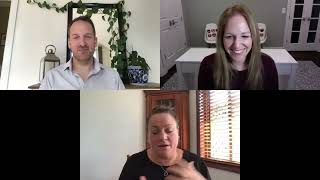
Untethered Podcast Episode 59 (host Hallie Bulkin) interviews Timothy J. King (myotherapist) and Sarah Beach (advanced-scope oral health therapist). They describe integrating fast neuromyofascial/manual fascial techniques with myofunctional therapy for TMD, tongue‑tie care, and orofacial pain. Key points: clinical rationale linking fascia and pain science; a brief intra-/extraoral four‑muscle protocol (3–5 minutes) that can quickly improve jaw/neck function; decision-making around frenectomy vs myofunctional retraining (Breathe Institute observation that ~50% of patients presenting for release improve with retraining alone); and practical, interdisciplinary care pathways. The episode is aimed at clinicians (dentists, oral health therapists, myofunctional therapists, bodyworkers) seeking fast, clinic-friendly interventions and referral strategies.
Chapters
Hi and welcome to episode 59 of the Untethered Podcast. Today we have Timothy King and Sarah beach joining us. Timothy King is a myotherapist of 20 plus years living in Melbourne, Australia. Myotherapy is like a cross between physical therapy and myofascial release. Clinically, he has a special interest in cervicogenic headache and TMD with much clinical success. He's provided well over 60,000 appointments with over 7,000 patients and today he provides training in a very fast, efficient neuromyofascial technique for physical therapists and soft tissue therapists of all varieties. The techniques that he and his colleagues have developed over the past few decades rely heavily on the latest science around fascia pain science and movement and are much faster than the traditional myofascial release techniques. This has made these techniques very popular among body workers and very accessible adjunct to professionals in the dental myofunctional therapy and speech pathology world. Sarah beach graduated dental school as an oral health therapist over 20 years ago in Australia and has since worked in Switzerland and Singapore as well as Australia. She studied myofunctional therapy about six years ago and has since worked heavily in the tongue tie area providing pre and post OMT for frenectomy patients. Her interest lay in pediatric dentistry and complex pain patients. She represents Lightscalpel lasers in Australia and has a company called iHealthCo which delivers international speakers for continuing education as well as co co founding Orofacial Myology Australia. She's a very patient husband, three young children and loves to travel. Quick Disclaimer all information, content and material of this podcast are the opinions of the speakers and is for the informational purpose only and not intended to serve as a substitute for the consultation, diagnosis and or medical treatment of a qualified healthcare provider. Welcome to the Untethered Podcast. I am your host Hallie Balkan. I'm a certified orofacial myologist, feeding specialist and mentor. This podcast is all about getting your questions answered and collaborating with colleagues to bring you the most up to date information in the orofacial myofunctional therapy, tethered oral tissue and airway space. I challenge you to keep an open mind and join my mission to get this information out to the masses. Let's get started. Tim and Sarah, thank you so much for joining us on the podcast. I'm so very excited to have you here tonight.
Great to be here.
Yes, thank you so much for having us Hallie. We're really excited.
Well, let's dive right on in and let's just start by telling everybody a little bit about each of you and then we can talk about how you came together.
So my name's Sarah beach and I'm what you call an advanced scope oral health therapist. So I'm a dental practitioner here in Australia. I've spoken to spent most of my career in pediatrics, but I am trained to do general dentistry on adults and children. Over the past few years, I've become aware and enlightened by myofunctional therapy. It was probably about five or six years ago I started working in a dental clinic that specialized in frenectomies and that started with infant frenectomies and then we moved on to infection kids and then we moved into adults and chronic pain. So I've also done a couple of degrees in communication and public health. So I, yeah, I kind of have lots of interest in lots of different things. Over the past few years also I've collaborated with the Breathe Institute as well as running my own CPD courses out here in Australia. So we've had Larry Kotlow out here and Marty Kaplan and Sandra Colson and a whole range of really wonderful American pioneers to come and try to educate health professionals in Australia. That's been my passion and my drive behind everything is get that education out there.
That's awesome. And Tim, how about you?
So I'm a myotherapist now. Myotherapy is a therapy that was kind of coined in Australia some 35 years ago or so. And it's basically like a physical therapist but with a special interest in chronic pain and myofascial pain and dysfunction in particular. And so my therapists, whereas physical therapy these days is moving away from hands on, myotherapy is the hallmark of myotherapy is hands on. So hands on soft tissue work, myofascial work. So for the last 20 something, 22 years or whatever, I've been practicing clinically. And my little part of my story is doing hands on work can be hard work. And I started after a year or two. Once I started to get busy, I got a bit fatigued and so I did a lot of research into fascia and a lot of research into some very, very efficient techniques, thankfully from some practitioners very close to me in where I am in Victoria in Southern Australia, who practitioners who had very efficient techniques but had no idea why they worked. And so I managed to combine my uni education and further research into fascia to figure out how I could get results much, much more quickly with soft tissue. And I accomplished that So I ended up seeing like 100 patients a week doing the hands on, which not a lot of soft tissue therapists can do, but all word of mouth, great results. And I have a real passion about cervical spine, cervical genic headache, tmj, so helps thousands of patients with those type of complaints.
That's incredible. I need to hear more about that, obviously. But first let's talk about how you two came together and, you know, what that relationship came to be or how it came to be.
So like I said, I was working in that tongue tie clinic. Now, prior to that, I've worked in Switzerland, in Singapore, in Australia, I worked in every dental specialty practice that exists. So I've seen a lot. And as you know, in speech pathology, there's a lot of unanswered questions. It's just you're told, you know, there's a tongue tie, make a note of it. That was my extent of training in tongue tie. I remember really clearly parents asking me, what do we do with that? And I said, oh, just leave it, you know. And so anyway, when I returned to Australia and started working in this dental practice, frenectomy clinic, I started to not only see, you know, it's like a religion. You see these newborn babies coming in, having their tongue ties released, Hallelujah, they can feed again. And that whole learning journey that comes with it, it's not as simple as just do the release, all the body work and all the, you know, the tummy time, everything else that goes part and parcel. Now as you, as you move through those babies and you start to identify the toddlers and the kids. So I'm seeing pediatric dental patients and starting to recognize these oral restrictions and then starting to move into adults. And it was my brother, my older brother actually, who I remember for years, you know, he had issues with eating with his mouth open and his wife would always say, close your mout. Don't eat with your mouth open. And so I thought, let's release his tongue tie. So we had him come in and then it was my nieces and nephews, and then we went on to adults and then we became known for adult frenectomies. And so what we started to see come in was the people that had really obvious tongue ties, but also the people who, that had tongue ties that weren't so obvious or maybe weren't even restricted tongues, but had gone to every practitioner out there suffering with tmd, so temporomandibular joint dysfunction or headaches or neck pain, and they started, there was this movement of, oh, well, it must be the tongue tie. So I started to interact with these patients. So by then I'd studied myofunctional therapy. I'm doing all the pre and post care for the frenectomy. So guiding them through that, seeing incredible changes in their speech and their eating and in their pain levels and just the overall appearance of their faces, these kids and adults. And to the point where I was starting to notice some of them were much better before they had the frenectomy. And actually the frenectomy wasn't really a good move for them, but they were hell bent on having that frenectomy done. So I had amazing compliance from these patients. Now what I started to observe was my functional therapy. It can be hard work on a patient who's dysfunctional. So we always worked hand in hand with the body worker. But finding a body worker who could help these adult chronic pain patients was really challenging. And so I started to do my research and go to different chiropractors and physios and osteopaths and say, show me what you do. And I started to just integrate those moves in the practice. I didn't know. I didn't know what I was doing, but I knew it wasn't harmful. But, you know, patients were responding and, you know, when you do that, my headaches go. And so then I thought, I've really got to do some formal training because nobody knows, so maybe I need to learn. And we had a physical therapist from the United States come out here, Walt Fritz. And I did his course. You know, he targets speech pathologist. So I was the only dental practitioner in the room, was full of speech pathologists. And during that course, I said to him, you know, what am I feeling for? How long do I hold it? I can't do this in a dental chair. I can't sit there for five minutes or 50 minutes and not have a clue what I'm actually feeling. And so anyway, so meanwhile, I'd noticed this guy, Timothy King, online teaching myofascial release, but it was for the body. And I said to him, can you just teach me stuff for the head? Because nobody's doing that fast and effectively. And I'll never forget the first time I spoke to Tim. You know, he was in Mauritius doing some humanitarian work. And I'm saying, can you just create a course just for me? I just need to learn this. And he's like, oh, well, I can, you know. Anyway, so over the years, I was sending him videos of patients and basically saying, what do I do here? What do I do there? And slowly started to learn and apply his techniques until eventually I got. This is not going to sound good, but I got really sick of patients wanting to come back to me to be helped after we'd finished our myofunctional therapy and frenectomies. And I just wanted to be a dental practitioner. And they were saying, but I don't get the same relief from my body worker, so I need to come back to you. So I was saying, okay, well, maybe we can do three monthly checks and cleans and I can do it then. So anyway, long story short is I said to Tim, we need to teach people this stuff because it's crazy that I'm not a formally trained body worker, but patients are getting the most relief they've gotten from me. And I said, so let's collaborate, because I know that bodyworkers don't like sticking their fingers in people's mouths. And I'm really comfortable in the mouth. And, you know, and conversely, dental practitioners, we don't like putting our fingers outside people's mouths. So getting that combination right and having it fast and being able to integrate it into a myofunctional therapy session or into a dental examination or a dental treatment was the key. And that's basically what we've come up with. Sorry, Tim, I didn't give you much of a chance to talk.
That's right, you said long story short. But it was more long story long. But that's okay.
Yeah, yeah.
Anything else you should add to that?
Well, from.
Yeah, I was on the other side of the planet, like Sarah said, and after 20 years of clinical practice, I took my family and did some humanitarian work overseas. And I needed to. I had this idea in the back of my mind to teach manual therapists the techniques that I'd learned, because there were similar techniques being taught, but with basically a terrible scientific rationale, like no solid foundation under why it works or how it works. And I'd thought through a lot of this and done a lot of my own research and had a pretty strong scientific, up to date type of rationale. I thought therapists really need to know this. And so I started training therapists online. And the main reason, one of the main reasons, was to generate some kind of income online while I was overseas. And that's where Sarah saw me online doing that. And she said, I don't want that whole body thing. I just want the jaw bit from the neck up. You just make it up. And I said, well, no, I don't really have anything like that specifically. So. But we started talking. I went and did some training with Sandy Colson along with Sarah, and have since sat under and collaborated with the Breathe Institute and Dr. Siri Sagi as well as Larry Kotlow. Sat under Larry Kotlow and I don't know who else, just name after name and learned in the last two to three years, just clinically, I've always had very good results with TMD and sarcogenic problems and headaches, very good, which has made me very, very busy. But, wow, have my eyes been opened in the last few years with all the research and understanding the role of tongue posture and understanding maxillary growth and understanding really just has expanded my understanding of the TM joint, the jaw joint in particular, and its relationship. And so this is kind of Sarah's fault. But the beauty of it was that unlike most, whether it's craniosacral work or whether it's myofascial release, those kind of techniques are very slow and they're very kind of specialized. The beauty of the way I work is that it is very fast. And so if you, if you're quite precise and you can watch closely and mimic and practice the techniques, then as Sarah has learned, you can provide relief for people very, very quickly, and it can improve function very quickly. So there's a lot more to say on that. Probably. One little thing on that is when I sat, when I first heard Soroush speak, he came to Sydney, Dr. Zahi, and he one of the stats, and Sarah alluded to this a minute ago, one of the stats that he had observed clinically, they found that 50% of people who they suspect need some need a frenectomy or for a neoplasty. They do the myofunctional retraining and their symptoms go away. Their airway improves, and they find, well, you know, 50% of the time, they don't actually even need the release because they're functionally improved. And I thought, well, that's wonderful. Like, it's a perfect mirror of what the physical therapy world is learning. So the physical therapy world used to be very interventionist. I'm the specialist. Let me put my hands on you. I'll fix it. Don't you do anything. You're just the patient. You're not qualified. Now the physical therapy world is going, oh, wait. Science is teaching us that movement brings healing. And so I need to get that patient to move that knee or load it more, even though maybe initially it might be a bit uncomfortable. But that's what stimulates so much improvement. And so more and more physical therapy is being directed towards corrective exercise now and kind of a bit less hands on, but the science underneath that is really exactly the same rationale that we see functionally around that orofacial complex. And so when I heard those stats from Breathe Institute, I thought, that makes sense. It's perfect, it's great.
And I think just to further qualify that what Tim's saying is not that everyone who presents with a very obviously tethered tongue falls in into that category because if they're very obviously tethered, they need the work. The difference is the patients that come to us or go to the Breathe Institute are a wide range of patients who think they need a frenuloplasty. So 50% of those who are presenting with symptoms that they think might be related to a tongue tie, when in actual fact it's, you know, they work collaboratively, so it's something else. But it's really driven by the fact that the, the patient hasn't been helped anywhere else. They've exhausted all options. And that's the beauty, I think, of where the Breathe Institute sit and where I sat here in Brisbane is I got to see this select group of patients who had, all the red flags had been eliminated. They'd done every kind of, some of them had spent hundreds of thousands of dollars. A lot of them were just at the absolute end of their mental and phys tether, you know, suicide attempts and mental health issues. And, you know, I really got the cream of the crop to be dealing with, which really challenged me because I didn't want to let them down. And when I saw such incredible results happening, but so varied, you know, some people responded so quickly and then I started to take into account their mental health or how they'd been treated in the past by other clinicians. And I remember saying to Tim once, I, I said, I don't understand this because this guy, this patient of mine, he needed a back operation and I've done myofunctional therapy and we've done a frenectomy with him and now he doesn't need a back operation. And he was really depressed before and now he's really happy and he's changing jobs and all these incredible things that would happen that I knew weren't just physical, I knew there was something to do with. And I used to say to these patients, because they'd come from, you know, some of them would drive 2 hours, 4 hours to come and see me And I'd say to them, we could do this over zoom, you know, and they'd say, no, we're going to come and see you. And again, I didn't understand that, but I was putting my hands on them. I was doing these release techniques, I was talking to them. And then Tim started presenting me with studies about therapeutic alliance and how if you show your patients you care, it actually helps in their healing. And I went, wow. Like, this is how, you know, we.
Had to do scientific research to figure that out, you know.
Exactly.
Isn't it sad that there's so many people out there who do not, or just based on the medical system, I know in the US it's like as many as you can get in and get out in certain facilities that there isn't time for that patient care. And I do think that's why sometimes our patients latch on, you know, in my practice or to my team that I work with, because we sit and we spend the time with them and we're not rushing them in and out. They might have a set therapy time, but we build into that time, the conversation with them to understand, what are you feeling? What are your goals? How can we help you? Why are you here today? What are you expecting out of this? Before we ever start to assess them or even get into talking about a treatment plan, I definitely can relate to that. I think that was a really good clarification because I also get a lot of people who come to me, whether it's moms of infants who are trying to either nurse or get back to nursing or just feed their baby in general, or we're getting older kids or even adults who I treat with myo. I would probably say that, you know, half the cases that come to me too are borderline right where they think they're coming because they need that pre op work. And then I'm going back to the dentist or somebody and going, well, hey, actually they're kind of borderline. They're like, you know, when I take their measurements, I'm seeing like that between that 50 and 60 mark. And I'm not entirely sure they actually need it. But come back to me, let's give them three weeks. Let's see what they do at home with their, you know, their program and let's see where they are three weeks from now before we jump in any further, because they either might still need it in three weeks or we might know, you know, that we think they're well on their way to correcting this. So I think that's A really good point that one, not everybody needs a release, even though they may think they do when they initially come to you. But, you know, and obviously there's people who are very anteriorly tightly tied, and no matter what they do, they're not able to elevate their tongue. And that's a very different story. But we get a lot of those borderline cases and so many health issues that no one has ever pinpointed before. And that's why they're ending up in my chair. I mean, I've had teen swimmers who are up all night who cannot sleep, and then they're getting up at 4am or 5am to go swim after not sleeping all night. But they had obstructive sleep apnea. And unfortunately, that was the end of the swimming career. I felt horrible about that, but that was actually the teen's decision. So we get these really interesting cases, but they've been to 20 other practitioners and not one person has been able to help them. And you see that depressed teenager or adult sitting across the table from you, and you're like, I gotta figure this out. I gotta help them. So that resonates. I love hearing when other people are clearly very passionate about it and get it from that point.
Yeah. And there's so many healthcare providers out there. I was listening to a podcast recently with an oral medicine specialist, and he was saying that pain patients, people with orofacial pain, can be really depressed. And if you're not ready to have those conversations, he didn't say steer away from them, but just be mindful that maybe you as a clinician might not want to have those conversations. And for me, with my experience, I kind of, you know, sometimes those initial consultations can be really long and really heavy. But if you get that out the road to healing and also just ongoing, it's not an uphill battle anymore. It's all just been laid out on the table. And, you know, if you listen to your patients, and we quote this in our course, if you listen to your patients, they will tell you the diagnosis, but quite often we don't listen. We just hear what we want to hear or what sits in our little bubble. And we don't listen to the trauma that they've had or where it all began. It's just we're so quick to just put a band aid on what they present with instead of going back to the cause of their problems. And as you know, in feeding right back to in utero, if you can, you can go right back there to.
Week 12 when they started swallowing in utero.
Exactly. So you know, it's. Yeah, just listen to them. Communication. If you don't know the answer, tell them you don't know. But tell them you sure as heck gonna send them to someone who might know. And if they don't know, you'll send them to someone else, be their person who helps them. And there is no, it's not a scary place at all to be. It's an amazing place to be, to sit there and to be able to help them achieve either resolution or certainly a far better quality of life.
Absolutely, yeah.
The whole thing breaks down a little bit when you said you got the cream of the crop and you were describing those highly complex patients with long term chronic pain, Sarah. And these are the patients that end up getting referred to specialists often. And a specialist has a mindset, basically, they're specialised in their area, they're critical and essential for so many life threatening illnesses and yet they're biologically focused. So if they can't see the problem with the biology, if there's not a tumor there, if it's not a deformation, it's not a nerve compression, not something they can see, then they kind of, that's it. And it's pretty quick and not that hard for a specialist to screen for those things. And so the consult's 10 minutes, you know, it's 15 minutes or whatever. But we now know that. And Hallie, I'm sure you're across this, that the predominant and emerging description of pain is the biopsychosocial model of pain, where the bio is one part of the. This is true with chronic pain patients in particular, but the psychological component and the social triggers and anxiety components are huge, huge components of pain. But your specialist really focuses on the biological and that's fine, that's his job. But this is why therapists like ourselves, who can spend a bit more time, ask the questions, are starting to address some of those more underlying components of chronic pain.
I love that. And so I want to know what. Obviously you can't teach your whole course over a podcast by any means. Nor am I asking you to, but I want to know, like, what is it behind this? What makes it so fast and functional? Like, what is the fast component to it that's working so beautifully?
Yeah, absolutely. So in the course we basically help therapists to. So dental oral health therapists. The main reason why people visit a dentist or even an oral health practitioner of some description is because of pain. And so that's kind of statistically out there. And so, and yet we found as I've talked more with Sarah and I've interacted with a lot more dentists and orthodontists and oral health therapists, et cetera, et cetera, the knowledge of pain and the differential diagnosis of pain that presents like even just trismus and you know, the type of jaw pain and things that occurs can often occurs after a prolonged dental procedure or after orthodontic interventions. What to do with that pain, how to differentially diagnose it, is not really taught. Like it sounds pretty simple. And we know the red flags for pain. We know when it's a tumor or a trigeminal neuralgia perhaps or something more serious. But these very invisible, hard to identify and much more common types of pain around that jaw and orofacial complex are very poorly diagnosed. So I see patients who are sent to me by a specialist with Trismas, for example, and the dentist has put them on antibiotics, but it's just, just totally the wrong diagnosis. And if you can. So what we, the course is four modules and basically the first three modules we unpack acute joint pain and how then that looks different in module two to chronic muscular myofascial pain. And then in module three, what you need to be thinking about when it comes to the more complex long term chronic, those patients where there's definitely sleep components, definitely tongue, posture components, definitely anxiety perhaps components or social triggers and that type of thing. So if an oral therapist, a dentist can, lactation consultant, you name it, can categorize a patient into one of those areas and it's not that hard to do when you know what you're looking for, then your prescriptions are going to be accurate, you're going to have them on the right track. And the tragedy is when these, when that initial triaging is not done well, patients often end up becoming chronic pain type patients and highly complex and actually become very multifactorial. They're the kind of patient that need to see six different practitioners to get to the bottom of their condition. And yeah, much, much, much harder to fix or get, get good results with. So the fast part is basically the soft tissue, how do I say this? Very quickly and simply, if you can improve function, then you will typically get improvement in pain. But if you just address pain, you know, drugs or don't use it anymore, you know, just immobilize the jaw or the neck or whatever it is, then you might get temporary relief in pain, but you won't get a lasting outcome. So the first priority is improving Function. Now, that might be neck range of movement, it might be jaw function and range of movement in the jaw. And so what we found is that a very simple and quick soft tissue manipulation to the. To the right parts of the jaw, face intra and extraoral. We've made a little four muscle protocol that's very simple. You can do it in three to five minutes, can change function dramatically very quickly. And that may not get rid of the patient's pain instantly, but as they use that improved function again, it's the same kind of philosophy as myofunctional neuromuscular retraining as that. And so we combine it with myofunctional exercises. Then they get not just pain relief, but they actually get lasting change. And sometimes it's almost saddening how quickly patients with 18 months of pain or two years of pain actually get better. And you kind of think, oh, they could have done this a long time ago. You know, it takes a week or two weeks or something.
So, Hallie, over the course of Tim and my adventure, every time we go to a conference or we somewhere together, we always come across patients or practitioners who say, oh, I've had this particular pain for however long. The amount of dentists and TMJ specialists and everything that say, can you just have a look at this? Because. Because they're all sort of stuck here. And, you know, and Tim goes, well, your problem's coming from here. And they say, oh, I've done every TMD course out there. They never told us that, you know, that the head was connected to the body, essentially. And I guess. And I filmed. I filmed every. All of these cases that Tim does because it's. It's like, it's miraculous. It's ridiculous how fast he can solve their problems. And like he said, some of them, you know, they're just pure coincidence. You know, we went and saw a prosthetist down at the Gold coast when Steve Olmos, who's a big TMD dentist in the States, was here. And this was Steve Olmos, lab technician. And we went into his laboratory and his assistant is saying, oh, I've had this pain for 18 months, like right in the thick of this. And I said to Tim, you have to treat her, treat her now. And I'm gonna film it. And she's one of the cases that we've presented that one treatment with some myofunctional therapy exercises. And her life changed. Like, that's how simply it can be solved. But it's almost too simple for people to Kind of go, it's got to be more complex than that, surely. You've got to put gadgets and make splints and do all this expensive stuff. When you see the way that Tim breaks down his rationale and why it works, it makes total sense. And the fast part is the part that you and me as clinicians, we need it to be fast because that's not our focus. We need something that's going to be quick, give results, give the patients hope, and then we send them off to Tim or the bodyworkers of the world. But at least they know that there's something that can be done in conjunction with what we do as well. So I think it's very much designed in a way to fit into a dental practice or a myofunctional therapy practice, because there's no point in. Like when I went to craniosacral and other physical therapy classes that I've done and I just, in my head, I couldn't work out how I'm going to apply that practically. So this takes the bodyworker's skill and knowledge and even me, who's not a body worker, can, you know, get enough specific sort of instructions. I know where the masseter is, I know where the temporalis is. If I do it this way, I tell you, it's pretty idiot proof, isn't it, Tim? If I've been able to do it. And the great thing about it is it less is more. At first, I used to do it and do it and do it because I thought it had to be a long massage, because everyone taught long massage. But this is literally. You go over it once. And so the way we integrate this protocol into our examinations is it's while we're doing an assessment. So I'm doing an assessment on a dental patient and there's really no harm. And it's. Everyone has these freak outs. Is it in your scope of practice? Well, yes. I've been trained to palpate the lymph nodes and I'm allowed to touch the masseter and I'm allowed to touch the temporalis. And while I'm assessing, I'm actually treating, I'm getting feedback, I'm communicating with the patient. How does that feel? You know, let me know if it hurts, tell me to stop if you don't like it. If the patient isn't a pain patient, it's still not lost because they go, oh, that just feels really good. So what a nice way to start a dental appointment to go, oh, that feels really good. Now if they are a pain sufferer, they'll go, oh, yeah, on the right side. Yeah, actually, I've always had problems there. And then it opens up a conversation for you to be able to help them, because most of these patients are not being asked the right questions to be able to find the people that can help them.
Yeah, well, and I can see how a myofunctional therapist, speech pathologist, RDH is doing, you know, doing myo could absolutely integrate this right into what they're already doing in their evaluations, because I know that's, that's what I'm touching when I, when I'm on their face. And I'm, you know, we do, for my feeding cases in my pediatrics, I do go in the mouth too, a little bit too, to feel muscle and tension and what's going on. And, you know, why does this side look overdeveloped and this side is underdeveloped? I'm guessing you only chew over here. But, you know, we know what that's, that's going to turn into as they continue to use those patterns, those maladaptive patterns. So this is fascinating. And I'm sitting here going, hi, I probably could help my mom. And I have your course sitting in my inbox. So now I'm going to. Now that I've met some of my deadlines and I'm doing a conference this week online. So I'm like, as soon as that is over, I'll be doing your course and I'll just, I'll let everybody know how it goes. But I'm really excited because this sounds super functional and something that I teach in my feeding course to speech pathologists and OTs. The online that we recently, recently launched is Fascia is Connected. And I say from your tongue to your toes, because I want to drive home. And the whole concept of nothing works in isolation in the body. It's all interconnected. And I had a really fantastic practitioner on, Monica Berger, who is a chiropractor, and she teaches some courses too, I think online as well, actually. And she was one of the first people I had on the podcast who also spoke to that concept that we are completely interconnected. And what you do here, especially in the mouth and the tongue and the jaw, you know, impacts the rest of the body. And I was like, oh, thank you for saying out loud what I have just assumed to be the truth, the case. But nobody ever presented research to me or I haven't really gone to find the research that supports what I believe or hypothesize I don't know if it even exists. And so she and I had an interesting conversation about that, because I work with bodyworkers. I've been treated by bodyworkers. I've taken my family to bodyworkers. But like you said, there are so many people out there who will admittedly say there isn't research to back what I'm doing. I just know it works, and that's enough for me. But I know that's not enough for most of the medical world. And I think it is nice, us as healthcare providers, if we can explain to our patients this is why we're doing what we're doing. This is working because of X, Y and Z. And yes, everything in the body is interconnected. So I love that you've been able to pull that together, which sounds like is a big premise of the work.
Embrace it behind it. And I think that's been the feedback we've gotten from some of the really, like, prominent myofunctional therapists in the States is. It's what I've always thought. So it's so nice to hear that it's actually real. And you pull it all together to validate what I'm thinking and what I'm feeling. And you know yourself, once it's validated, then you go with power. You go, okay, yep, I've got that now. What can I learn next?
And like, when I was working clinically and just getting good results and consistently fixing, you know, getting lasting results for patients who had tried everything else, it just kind of became normal. And that builds word of mouth, obviously, and makes you a very busy practitioner. But I couldn't figure out how it worked so quickly. And so that set me on my own journey to really study fascia. And there's probably two big ways of thinking about fascia and its connectivity. One is that fascia is fairly inelastic, so it's soft. But structural tissue, it's literally wrapped around and interwoven throughout all of our body. So the frenum under the tongue, for example, is. It looks like a fascial string, but it only looks like a string because it's actually more like a sheet of Glad Wrap until you lift the tongue and it draws it together, which makes it look like a string. And it's contrary to some popular opinion, you can't stretch it technically. And so this kind of connective tissue, this fascia, is literally connected from the tongue through the. Through the neck and the thorax to the diaphragm and the hip flexors, etc. All the way through. There's continuity all the way through. When you apply that kind of thinking about fascia to the lower limbs. When you walk, for example, your body is incredibly efficient. So it's not a matter of muscles having to contract fully to perform every movement. But it uses the fascial bands to as preload or stored energy. So when you swing your leg forward, it creates an amount of load or stretch through the fascia that makes it naturally want to start to swing backwards to take the next step. And so the body uses these fascial, this fascial connectivity for great efficiency with movement. But it also means that my thighs and hip flexors and diaphragm are all fascially very structurally connected. So we've kind of been learning about that thanks to the likes of Carlo Stacko in Italy, who's an orthopedic surgeon who's done a lot, probably more than anyone, fascial dissection, and others like Tom Myers in the US but the other side of fascia is the fact that it's a thinking tissue. And so fascia has always been seen by the medical profession as the white stuff you cut through to get to the real organs. And no one's ever actually studied it exclusively until literally the last decade or so, maybe 10, maybe 15 years. And what we're finding is that it's very, very rich. Proprioceptively, it's packed full of mechanoreceptors and proprioceptors. In other words, it's connected to your central nervous system and it's conveying information about whatever it covers into the central nervous system. And this goes so far as to, you know, how you go to the doctor and they do it, do a knee tap reflex, you know the one. Well, you know, we can attribute that reflex to you Golgi tendon organs, which is in that fascial layer. What happens is the fascia senses the mechanoreceptors in the fascia, sense the stretch and decide, wait a minute, do I need to react against that? They shoot a message to the central nervous system. And the fascial conductivity is so fast that it creates that reflex from back, from that segment of the spine without it even reaching the brain. So the brain hasn't caused that reflex. It's a fascial reflex that the mechanoreceptors in the fascia have created. So without talking all day, it just helped me to understand if I stimulate especially the epimysium, which is the layer of Fascia kind of on the surface of the muscle. If I stimulate it the right way on a skeletal muscle. So on a masseter, for example, I would find clinically that the function of masseter would change virtually instantly. And it wasn't because I massaged it really hard. In other words, I didn't loosen it, but I stimulated it. And that's a very different way of thinking. And so it means that a lot of those heavy, slow, painful kind of techniques really come from a way of thinking that says, I'm the therapist. That muscle's tight and it's not meant to be. I know better than the body, and I'm going to mush it until it's loose. I'm going to massage it really hard until it's loose, no matter how much it hurts. Whereas a much more subtle stimulation. And osteopaths have been over this for. For 100 years, but the research is really just starting to come out now. A very subtle stimulation. And then let's just do like the full muscle protocol. Make it brief, three minutes, and just look at your movement again. Let's see if it's changed. And very often it's changed, and you're like, okay, it's changed. Well, why would I do more? Why would I keep pounding away at those muscles? So I apply that rationale to whether I'm working on a lower back or a knee or a neck or a jaw. And it's been very, very faithful for me. Clinically.
That's actually very helpful. It makes a lot of sense because when I took my daughter to the osteopath, she wasn't yet crawling. And I think she had just started walking maybe. But I know as a developmental therapist that we need to crawl. Crawling is a very important developmental milestone for many reasons, more so than we'll go into here. And within. She wasn't walking yet either. Within three days, she stood up after that appointment. And, you know, when you go to an osteopath, it looks like they barely put her hands on her. She was sitting on my lap. And you know, the husband, wife, team, and, you know, they did their thing, and I was like, okay. And that was my first experience as a mom going to an osteopath with my child. And three days later, she stood up and started walking.
And then.
And she was not delayed yet, but we were getting there. And she was that kid who was treated by traditional PT from Torticollis, had her tongue tie release, you know, the whole thing, and never really fell behind her milestones. But also Never crawled. She would drag one foot behind her, but she was on her front hands. She could get up the stairs that way. She could very quickly get across the room. And I just sat there as that therapist and the myo mom going, oh, come on, put that knee down, put that knee down. And a week after she started walking, she started crawling. And I was so excited. And I was like, oh, my gosh, this is the best day. My husband's like, why are you excited? She's already walking. I was like, you have no idea what this means for development and full body connections and all the things that are happening right now. And he was like, okay, whatever. But, you know, it makes so much sense when you explain it the way you just did, as to, you know, that that minimal input that she needed after all that time we spent in physical therapy, traditional physical therapy, you know, that one appointment is what I attribute to her success with walking and then crawling right after. And I was like, wow, something about the fascia just needed to be.
Yes. The beauty of that is that, you know, your allied health, you know, other than bodyworkers, so your dentist and orthodontist and other oral health therapists can leverage that and use it like, you don't need to know everything about the cervical spine and everything about every piece of fascia in the mouth, but that four muscle protocol where you can do this and just see if it changes that person's function. And I think, well, the more we talk to dentists and train dentists in particular, the more we kind of think every dentist should have this up their sleeve because half the time their prolonged procedure leads to some kind of dysfunction in that face and jaw. And it could be corrected very quickly and simply, or at least identified and referred a lot more quickly and simply.
This is amazing. I love it. I love it. Is there anything else that you want to add either about your program or do you want to share a little bit about the program that you have that you're offering so everybody knows where to find you?
Yeah. So the original program that I've created that I. That is really targeting bodyworkers. So the kind of rationale that I've just unpacked, that's a six week course. And it goes through the science, it goes through the rationale, it goes through the application, 70 or 80 videos. And it's really for bodyworkers, whole body. So we treat everything from the big toe to headaches as far as pain goes, using this technique. And yeah, it's very, very exciting. I just love hearing feedback from therapists that do it because a lot of the time they can actually reduce their timeframes and be much more efficient in what they're doing. Personally, I can work very efficiently, and so I can kind of juggle my timeframes. If I have a patient that's highly complex and I need to talk to them for a lot longer, I'll just, Just create more space. But the majority of people, you can treat them a lot more quickly than most physical or soft tissue therapists realize they can. So that's fastandfunctional.com is. It is the website. There's plenty of info on there. So physical therapists, body workers, massage therapists, chiros, osseos have all done that kind of training. And then what Sarah and I have just developed is. Can be found on the same site. But we can put links under this.
I guess we'll put them in the show notes and. Yeah, so that very easily.
Yeah, at least the link. So that TMD program is on the same site and a page on that site. But even on the page where you, where you get access to the program, there's probably a good half an hour of videos on there. Just like if you're not sure what it looks like or what you're getting yourself into, there's a. Lots of information. All the modules are spelled out. And so it's a little. It's useful for education in and of itself. Just that page. Yeah.
That's fantastic.
Oh, sorry. I was gonna say, and the technique, the thing that really blows me away about this technique is I can have any sort of a problem. Tim and I, when we do see each other, I've always got something. I've got whiplash or I've got a sore elbow or a sore wrist or something. Tim, my elbow's been really sore. Can you fix it? Yeah, yeah, Sarah. Yeah, I will. And then I'll be driving him to the airport and say, you didn't fix my elbow. And he'll literally. It's literally, you know, 20 seconds, 10 seconds. And I'm like, can't you just spend a little bit more time? Because surely that can't fix it. And I'm not kidding you. Like, I reversed into a pole once before I picked him up, and I thought, for sure I'm going to need a chiropractor, because that was a big jolt.
Train wreck, Sarah.
I know. And I had this. I was nursing this sore shoulder and sore neck and we ran a course up here and then I said to him, you've got to fix that. And I thought, I'll get him to do a little bit of the soft tissue and then I'll go and see my chiropractor. And lo and behold, he did whatever he did on those muscles and I didn't need my chiropractor. And I thought, wow, this is really, you know, it just constantly, even after three years of knowing him, my mind is still blown at how effective the technique is and also at how easy it is to apply. So for me, it's crazy. When I go for a massage now, I try to tell the massage therapist, I used to love the good deep tissue massage, but now I can feel how counterproductive it is. And I want them to just do some of Tim's technique because the results are so fast, you know, so, yeah, so I just think it's a really incredible technique. And then we brought it into our world and like, you know, unless something is explained and the rationale is given, you don't understand it and you don't apply it or you don't refer to use it. This, I think just, you know, Tim is amazing at explaining the pain science and how he has put this technique together, like the science behind why it works. I think like you said, you went to the osteopath and you're kind of like, well, did they really do anything? But if you understand it and you can apply that to your patients and they get relief, then you can. It's actually an amazing segue into getting patients to see body workers, because there's a whole group of people out there who will not go to a chiropractor or an osteopathic because they've been told that that's pseudoscience or whatever, they've got no idea. So if you can apply a little bit of, you know, this, this magic and. And they go, wow, that's the most relief I've had in forever. And then I say to them, go and see the physiotherapist who can do these techniques. Tell them you've seen me. You know, collaboration is everything and understanding what that body worker can do and also recognizing, you know, I need them to assess you because there might be something wrong with your cervical spine or your back or whatever. It's all about popping our head up for long enough to understand what exists out there. So ultimately we can help our patients get better outcomes. That's what it's all about, get better outcomes by working together.
Yeah, well, and I like that message too, because it goes back to what is causing the pain initially and let's treat the root of the problem, not just slap the band aid on it, which is often like, it's what you've talked about. Obviously, when we don't figure out the root of the problem and we just hand them a medication that clearly is not going to treat what's going on. I think we've probably all been there at some point in our life where we're like, this is not working. But that is a big message that I often share with people is my goal is to help get to the root of your problem. And sometimes that takes a team. But, you know, we have to figure out what your team looks like because not everybody's team is the same. And, you know, thankfully, as a mom, I've been able to go to enough practitioners between me and my kids that I usually have a personal story. And so when I say, well, look what they did for me, or look what they did for, you know, Lily or Mia, they're like, okay, fine, we'll go. So, yeah, I mean, when you can show them or have them feel, like you said, how well it works just in that instant that, I mean that, how powerful is that to be able to just get a little bit of relief real fast? And they go, okay, if I can get more of this, like.
I mentioned earlier, that biopsychosocial kind of model of pain and the psychological and social triggers that can be part of pain if a patient who is convinced they can't get better can get relief. So you might not fix them, but if you give them relief, not only have you improved biological function, but you've improved their mindset, like instantly, they're gone. Oh, oh, that actually feels different. Or I can move that more. And so you're really kind of killing two birds with one stone in that respect. It's really, really powerful. And so the training is called a functional approach to tmd. So it's really combining the myofunctional retraining with that hands on. Because so much TMD treatment has been shrouded in. This is really serious and, you know, you might die and you know you.
Need.
More fastest chronic pain for the rest of your life is the message that most of my patients have when they come in with TMD issues. And I've also been taught as a myofunctional therapist. Oh, be so careful when you're touching, when you're asking your myofunctional therapy patients to do this, this and this, because you don't want to trigger that and that you Know tmj, they've got to say, function up there and don't set it off. Don't ask him to pop anything or do this. And so can you speak to that at all? Like, is there anything that.
Well, yeah, yeah. So I've got a little story on that just came to mind when I was in Seattle with Sarah and we were at a breathe. We're speaking at a part of a breathe workshop. There were about 70 dentists in the room and sure enough, many of them came to me in the break. I've got this, I've got that, you know. And I saw a lady with. She had a history of TMD and she had it treated like a decade ago and she got better, but she put up with it for years and it was horrible for her and she was terrified of ever getting it again. And she's a dentist and she experienced. I can't remember if she had a procedure or whether something changed, but she was experiencing some premature contact in one of her molars. And that sensation had started to trigger a reactive symptom. And she started to get those tmj, TMD symptoms that she'd had years ago. And she was quite anxious when she saw me. And that's a classic. That kind of scenario reflects. I was talking to another dentist who was head of some associations or something, and she was at the same conference and she was saying, we know that a 1mil difference in occlusal, you know, in occlusion or premature contact can trigger tmd. Now that's kind of true, kind of. But you need a bunch of other factors for that to be true. So when I saw this lady at the same conference, I gave her some treatment. I did some intra and extra olo, did the four muscle protocol on her. I said, let's just retest your movement. And she put her teeth back together and she said, I can't feel that premature contact anymore. And I thought it's a little bit superstitious. Like it's a bit. Seriously, you know, I'm a skeptic, okay.
Of your own work.
I love getting great outcomes and sometimes I just. I don't care how it works as long as it works.
But.
But I'm a skeptic. So I'm like, okay, that's probably, you know, a psychological thing. Like I haven't changed that tooth, you know. And so I was honestly, I saw her once and then the reason why I bring this story up is because that lady with the fear associated, the history associated could very easily have gone she was like, I don't want to get the tooth shaved down, I don't want to get extracted. You know, she was nervous about all of these things. And the only reason I remember, to be honest, is because I got a phone call from a lady just last week. So this was about 12 months ago, that story. And I said, oh, how did you hear about me? Because she was inquiring about doing some training and she said, oh my, I work for this dentist. And she told me, you're the guy I have to speak to. And I said, oh, what happened? And she described the story and it was that lady. And I was like, oh, is she good? And she's like, yeah, she's good. Like from that day on she was, whatever, it was solved. And so there's a lot of the TMD treatment world does put a lot of stake, a lot of clout in occlusal contact and all of that. And yes, that can be a trigger, especially if your sleep's rubbish and your airways rubbish and your aerobic fitness is rubbish and, and you've got all these comorbidities, then that little trigger is going to be enough to potentially lead to 10D. But if you're a relatively fit, relatively healthy individual, your airway is okay, you're sleeping okay, there's really no reason. It doesn't come down to 1 mil of contact. Again, that's really putting all of the emphasis on the biological. So you can see how this gets so easily confused. It's just multifactorial. And so that lady's story is a good one.
Yeah, that's amazing. But it's a great example. I think that'll really resonate with some people. And you know, like I said, we were trained that you just have to be so careful because you can just set things off and you. So that's all.
I don't want to dissuade people because you can, you know, you can set things off.
Yes.
But the long term solution is always going to be more function, not less.
Right, right.
Function, increase function. You're going to get solutions, you're going to get lasting solutions. And so I don't want to. Also, just to be clear, as a caveat, I don't want to say, you know, splints and kind of high end TMD treatment protocols are a waste of time. There's definitely a place for those, definitely. But our passionate kind of plea is, well, let's do the simple stuff, let's do the myofunctional, the retraining, the simple hands on, maybe the bodywork. And that will either solve the patient's problems or it will set them up to be very responsive to the high end and the splint therapy and that type of thing. So that's our heart.
Well, and you make a good point. Right, because it could. If it's not the only solution, how much more successful will they be and responsive to these other treatments? Because you've set them up for that and there's already more function gained. Right. I'm assuming most people are not walking away with no function gain. So whether it might not be the final answer, but I mean, that's. I like less is more. Right? Start with less and let's slowly build up if we need more.
And I think from a myfunctional therapist perspective, because we are asking them to do a lot with their tongue, with their face, you know, they're, you know, for want of a better word, exercising that quite intensively. So, you know, if you're exercising your body intensively, you want to go and get a massage or get releases done. So this is how this comes into play is movement is a healing agent. But in doing that, we acknowledge that there's restrictions or there's tensions that we need to help with body work. So it goes hand in hand. The movement is the key. But being able to release that, to be able to move, to be able to get better, is where the beautiful partnership comes in.
I love it. Well, wonderful. Is there anything else that you guys want to add?
We'll just have to do another podcast.
Sounds great.
You can apply this to babies, to, to toddlers, to, you know, it's just a different, you know, level of intensity, I guess. And in the, in the program, you know, I've got an infant in there, so I just show you how I would apply this to an infant. And again, you've always just got to remember and it's like I said, it's taken me years. Less is more. It's. It really doesn't require much to stimulate that. No, you're not going to hurt them, you know, because it's. You can only help them with this. But communication is key. And yeah, let's make those patients better.
Fantastic. I'm like, I need to get my hands on this right now because I have families who are like, yeah, we'll go to body work. And then they leave and get the release and they don't go to body work. And then I can tell when they come back, I'm like, you didn't go to body Work you didn't go where you said you were gonna go. And so if I can have something that can at least help that child beyond, you know, the intraoral work I'm already doing with them, you know, that would be. Or in place of it, who knows? That would be phenomenal.
Yeah. And one last story. Sorry, I was just thinking of this patient when I was. When we were in LA last year with Dr. Zagi at the Breathe Institute, I was sitting in quite a lot of consults with him. And so you can, again, you imagine the patients that go to him have quite severe problems. And I was sitting through this consult of. He was, you know, a man in his late 40s, and he. He said, I just want to be able to eat a hamburger. His opening was 22 mil. He was so restricted. And he said, I'm just sick of it. It's been years and years. I've done everything I can do. It's time just to get surgery done. Here I am. Take it away. And anyway, so Dr. Zagi did this phenomenal consultation, I tell you, sitting in there. I said to Dr. Zagi, you need TV cameras in here. It's amazing how he operates. And at the end of it, I said to Dr. Zaghi, Can I just take him patient into the next room and just do the fast and functional protocol just to give him some relief in the meantime. And Dr. Zaghi, you know, Dr. Zaghi is so open to everything. He's like, sure, go for it. And we went into a consult room, and so very gingerly, I did our four muscle protocol, and we got 10 mil extra opening now to go from 22 mil to 32 mil for this man was life changing. And he could not believe that something so quick made such a difference. And he said, where do I get this done? Like, that was, you know, that was just phenomenal for him. And I said, well, we're here training people and. But that's how quickly the muscles responded in someone who was so chronic. So, yes, every story and the bounce in that man's step and the excitement to, you know, go ahead with my functional therapy and, you know, and I haven't asked Dr. Zagi whether or not he went through with the surgery or whether or not doing myofunctional therapy coupled with the physical therapy was enough to have him eating his hamburgers again, you know, so that's the difference something really simple and collaborative can make.
Yeah. And I think that's a perfect story to end on. I mean, it's beautiful, right? The little things you can do to just make such a big difference in someone's life. His goal was eating, but you also never would have known that unless you had asked him why he was there and what you can help him do. So that whole conversation with your patient, they come in and you're like, okay, surgery, let's go. Which, unfortunately, is the model in so many places. And this guy just wanted to eat a hamburger. I love it. I know. We can talk all day. You guys have been amazing. I'm super excited to go through the course myself. Is there anything else that you want to add?
No, we're just really, really grateful. Thank you so much for your time and thank you for what you do in spreading the word. It is so desperately needed. And, you know, our philosophy is always, if it helps one person, it was worth it, you know, and so, yeah.
That say, oh, my gosh, that episode was so informative and so new and so. So I think we'll be excited about your course too.
Yeah, beautiful. Thank you so much for having us on.
Thank you, guys.
Thank you so much, Ellie.
Thanks for listening to this podcast. If you want to hear more of these Myo Tots, Airway and Feeding related episodes, be sure to leave a review on Apple podcasts or pledge a small amount on patreon.com the Untethered podcast. If you found value, others you know in this space will too. So be sure to share this episode on your social media platforms and join us over on Facebook, on my Facebook page at halliebulcan, Biz, on Instagram at Alibulcan, and you can head over to theuntetheredpodcast.com to grab a copy of the show Notes, where you can also subscribe to be kept up to date on the latest podcast episodes.
More from Hallie




What I Was Missing in Feeding Therapy: ARFID, Airway, and Myo with Samy Hernandez


