Episode 80: A Certified Orofacial Myologists Guided Functional Frenuloplasty With Kayla Fontenot
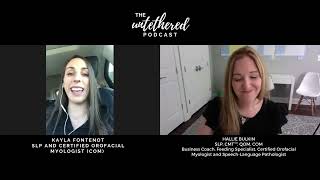
This content was created by Hallie Bulkin. This content was uploaded by Hallie Bulkin. This is a YouTube podcast episode titled "Episode 80: A Certified Orofacial Myologists Guided Functional Frenuloplasty With Kayla Fontenot" (created 2022-08-31, last edited 2026-01-21). It’s an interview-style conversation between host Hallie Bulkin (certified orofacial myologist and feeding specialist) and guest Kayla Fontenot (speech-language pathologist and IAM‑certified orofacial myologist). They discuss Kayla’s pathway into myofunctional therapy, personal experiences with nasal breathing and mouth‑breathing, pre‑ and post‑op myofunctional preparation, a guided functional frenuloplasty she recently underwent (team approach with osteopaths and surgeons), airway imaging and safety considerations, appliances (DNA, Invisalign, ALF), and clinical implications for interdisciplinary care. The episode mixes clinical details, patient‑care philosophy, and personal anecdotes aimed at clinicians and adults considering treatment.
Chapters
Hi and welcome to episode 80 of the Untethered Podcast. Today we have Kayla Fontenot joining us. Kayla is a speech language pathologist and IAM certified Orofacial Myologist. She helps clients across a lifespan, from infants to adults, to speak, eat and live with optimal oral function. Her approach to therapy is integrative and she examines the way that muscles work during speaking, eating and eating to identify problems such as muscle imbalance, lack of strength compensation, tepidural tissues and motor planning. She she works with a network of providers to ensure that clients are able to achieve all of their goals both in and out of speech therapy. She's worked in hospitals, rehab centers and school districts across the state of Texas. She's been in private practice, her favorite setting, since 2012 and she's licensed in the State of Texas and holds a Certificate of Clinical Competency from the American Speech, Language and Hearing Association. Kayla founded Flower Mound speech therapy in 2015 because she saw a need to provide in depth personalized services for her patients. She wanted to work on a team that believed in going beyond the one on one therapy session to provide for their clients with a focus on continuing education and client care. Every therapist on her team comes with experience and education that extends well beyond licensure requirements. She also works closely with her team of therapists to ensure that the needs of every family are met. Quick Disclaimer all information, content and material of this podcast are the opinions of the speakers and is for the informational purpose only and not intended to serve as a substitute for the consultation, diagnosis and or medical treatment of of a qualified healthcare provider. Welcome to the Untethered Podcast. I am your host, Hallie Balkan. I'm a certified orofacial myologist, feeding specialist and mentor. This podcast is all about getting your questions answered and collaborating with colleagues to bring you the most up to date information in the orofacial myofunctional therapy, tethered oral tissue and airway space. I challenge you to keep an open mind and join my mission to get this information out to the masses. Let's get started. All right. Welcome Kayla to the Untethered Podcast. I'm super excited to talk with you today.
I'm so excited to talk to you, Hallie.
Yay. I mean, I feel like we talk all the time anyway, so now we just officially are going to share our conversations with the world.
Yes.
And you know you recently had a tongue tie release done and we'll get into talking about all of that and what specific type of procedure you had, but tell us a little bit about, like, how you even got into the myo world in the first place.
Sure. So back in 2012, I was in private practice and I actually officed next to a myofunctional therapist. And I was so intrigued by what she was doing because I saw adult clients coming into her office and they would come in maybe just one time, and then I wouldn't see them again until the following year. And I just wondered, what's going on? What's she doing in there that's really helping these people that they only need to come once a year for what she called a recheck or a touch up appointment. And I was really intrigued by it. So I started doing my research back then. And I found there wasn't a lot on the web back then in 2012 on myofunctional therapy. I mean, there just wasn't much at all. But I did find a therapist that was putting out before and after photos of what clients kind of facial profiles looked like after completing myofunctional therapy and some of the positive outcomes that they were having in terms of nasal breathing. And that's when it all kind of made sense to me and it clicked. I realized I had never been a nasal breather in my life. And I have just memories of being a child and sitting in class and trying to close my mouth and breathe through my nose like everyone else, but my jaw just hung slack and I had to almost gasp for air. So, yeah, yeah. So I thought, you know, this could be something that I could maybe start trying to do for myself, you know, and I. And it kind of started in that direction.
That's incredible. I mean, I feel like so many of us have stories as to, like, what threw us into the Mayo world. I mean, so many of us did not get this training in graduate school, despite it being in our scope of practice and technically being something that we could do without, you know, an additional. We don't need additional certification. We don't. You know, as SLP is like, you and I both could just do this, but we don't have the training without these additional courses because nobody taught it to us. So I know that there are goals to change that. But, you know, it also was. It was so similar for me because I just remember I was actually having coffee with a local SLP who had taken a course, and she was like, not doing full on myo, but she was using principles of myo and just look, she was like, it changed the way I practice. Like, I'm not doing myofunctional therapy. But I look at all of my. My speech and language kiddos differently now, and I'm treating them differently, and I'm taking different approaches. And if I feel like they need traditional myofunctional therapy, I'm referring them for that therapy now because I now understand, like, why we were hitting a wall with certain cases and why certain approaches are just not as effective as I thought they once were. And so it was really interesting and really fascinating to me. And I was like, wait, what are you saying? Like, what does this mean? And she basically, at the end of it, what I. What I gathered from it was myofunctional therapy was helping these kids, Kids actually graduate out of therapy versus staying, you know, in therapy for years on end. It was helping kids, like, you know, it was just helping them getting. It was helping them to get on track. These kids were motivated because they saw progress. You know, they were excited, the families were happy, people are graduating. And I was like, what is this magical thing you're speaking of? And so that is, like, that is why I threw myself into it. And so when I took my course and then I learned about tongue ties and came home and looked in my own child's mouth, like, that is. I wasn't sold that I was actually going to go down the certification route by any means. That was just not my goal when.
I took the course.
I just wanted to gather information. And when I came back, I was so excited. I jumped right on into it, started treating patients, looked at my own child, and I was like, holy cow. Like, I need to fully immerse myself in this. And, like, that is why I ended up getting certified. But it's just so fascinating to hear, like, how different people started, like, where, you know, like, your origination into the world of mayo. And I love it because I love how far you've come. And, you know, now you've obviously been able to help a lot of others as well as yourself and your own family. So. Yeah. So let's talk a bit about, like, next steps for you. So after you kind of started to immerse yourself into this myo space, like, what happened next?
Sure. So. Well, not much happened next. So I kind of went down the rabbit hole. I looked at everything I could find online, and I felt like I kept hitting walls because there just wasn't enough information out there yet. But as a feeding therapist, I was really interested in tongue tie, and I wanted to learn more about that. So I kind of went down that avenue for a while, and I didn't actually stop and say, I need to get certified until I had my first child. And I inspected him. Like, I mean, I delivered him. I looked in his mouth. I go, okay, we've got tongue and lip tie. But I don't know what to do next. And I. That's when I said, it's time to take a course. It's time to learn this for yourself so that you can help your child. And that's when I really got started with it all.
Yeah. So. So after that point, then, like, did you come back from, like, the first course you took and have, like, an idea?
Oh, gosh, Hal, I know this is.
A big, long rabbit hole, but.
Oh, my. Oh, my goodness. So, you know, when I went to the course, I had a really solid background in feeding. And so I remember I was just sitting in this course, and I was just nodding my head, going, yep, yep, yep. Okay, this makes sense. That makes sense. And as soon as I left the course, I went home and I changed the way I practiced everything.
Yeah, no, and I love that, because one thing you've said twice now, which I say all the time, is that the reason why it was so easy for me to insert myself into doing myofunctional therapy with patients was because I had a solid feeding background. I was already a feeding therapist. I was specialized. That was a huge chunk of the cases that I was working with were either children with more severe speech sound disorders. Not necessarily apraxic kids, but kids with, you know, you really, like, at the age of four, still only understood 50% or less of their speech. So they were really exactly right. Like, it was those kiddos or feeding. So. And I was not working with adults at the time. Like, really, adults for me came in after I added in myo because I was like, I'm gonna work on myself. I'm interested in working with adults, too, especially because some of them were parents of the kids I was treating. So it just kind of naturally happened. But I was not working with adults prior to that. I was always working with pediatrics and young peds, like, birth to five. So, yeah, so this changed things for me a bit, because traditionally, we know MYO is for the four plus crowd, but again, because I had the background in pediatric feeding and that infant and toddler age group more so the toddler age group. At that point, I really threw myself into infant feeding. After I got involved in myo, I started to go, huh? Why is nobody looking at the goals of myofunctional therapy? Why is nobody paying attention to the fact that this child can't close their mouth and that they're not just drooling because they're drooling, they're drooling because their mouth is hinged open, that nobody necessarily has excessive saliva production. Maybe they do, maybe they don't. But, like, what would happen to get this child to nasal breathe and then close their mouth? Why is nobody looking at this? You know? And so that's where it completely changed my feeding therapy approach. And I always say it's a twist of myo, a twist of tots in myo, because I feel like that's really what it is, right? It's more of a passive approach, but with the goals of MYO in mind. And that's why I teach this, because nobody's talking about this stuff.
But I'm like, you can't be an effective therapist.
You can't really truly treat feeding if you don't have the ideas behind nasal breathing, closed mouth, tongue up, correct swallow postures. Like, our tongue needs to be up, lightly suctioned to our palate when we're swallowing. And if it's not, we're thrusting our tongue forward, that's compensatory. That's not what we want, right? So it was just, for me, it was sort of like I was mind blown. I was like, whoa, this just makes everything. Everything just fell together. But again, it's because of that feeding background, which I know you absolutely relate to and I think is so important to mention. And that's why I like to include OTs and SLTs, especially, you know, in myotherapy, because we have that anatomy and physiology and understanding of the feeding and swallowing systems, if you will. So, you know, not to, like, leave our RDH friends out or anything, but I'm just as far as feeding and swallowing being in scope for SLTs and OTs, I think for us, it just makes so much sense because of the work we're already doing. So anyhow, that's my little tidbit on that. So I loved that. But for you, I know that you then started kind of on your own journey, and so where did you go next in your own treatment? Sure.
So as soon as I left the class, I started working on my own child, but I also started working on myself during the coursework. You know, we're taking photos and we're analyzing and evaluating ourselves and our partners. And so I immediately got to work on myself. And that was almost, gosh, three years ago that I did that. I took lots of photos of, you know, what I think what I thought needed to change, and I started kind of just treating myself, which I don't, you know, I don't recommend doing without support. But in my case, it wasn't a stretch. And I have a really good. A really good team of professionals that.
I work with, so. And that's so helpful, too, to have that team of professionals, obviously, that can support you in the work you're doing. Because I think that one of the other things that is not discussed enough that we. I feel like it's becoming more of a discussion and that I've hopefully nailed into people like, really, like, screw that, you know, screwed that screw in real tight, is that it's so important to work from a team approach. It's, you know, you can do myo all day long. You can do a tongue tie release. You can do all these things if you do them individually of each other and not on a trajectory that makes sense for the patient in front of you, because for every patient that's gonna look different, what is actually working. We don't know what's working. And oftentimes my patients come to me. And I think this would be really interesting to talk about too, because I know some of your results from your tongue tie release, which we'll get to, were just amazing. But a lot of people will say, well, I've been going to a PT for years, and I have chronic neck and back pain. And I'm like, well, you know, that can be related to what's going on in your mouth. And they're like, what do you mean? And I'm like, let's look under your tongue. Let's see how you swallow. Let's see. And they're like, wait, why does my tongue have anything to do with my neck and back? My back? And I'm like, it has everything to do with it. Like, go listen to my episodes that I recorded with pts. It has everything to do with it. And, you know, I think that it's really important that we recognize that. But also, this is why sometimes our body work type of therapies, like going to a pt, going to craniosacral, going to a chiro. These things don't hold.
You have to. Exactly, exactly. That's such a great point. Such a great point. You know, I started kind of my bodywork journey as a yoga instructor when I was 17 years old. And I have to say, I have had back pain, neck pain chronically, and I feel like I've done every treatment under the sun. You can possibly do, you know, laser therapy, dry needling, chiropractic, just everything. And I did it all on a very regular basis. And I have to say, the longest that results have ever really held for my body in particular, maybe three to six months, maybe if I was really lucky. But nobody was making that connection for me until I started looking, you know, why can't I get my posture correct? I do so much body work. You know, everybody's working on me. I'm trying to get my shoulders back. I'm trying to get my head and neck back. Why can't it happen for me?
Yeah.
You know? Yeah.
And that's. I had this. I had this similar experience where it's like I have like the little dowagers bump or what a humble, like behind the neck and the top of my spine. And it was like my, my shoulders sit very, like, forward and I kind of sit hunched over. And people say, oh, well, it's because you sit at a computer. You know, a lot of the day I'm like, I really don't actually sit at a computer.
Right.
Like, that's maybe an assumption you have about me. But no, that's not true. And yes, you're okay. I was working with young children, so maybe I'm at a desk or on the floor. But bottom line for me is one I should, you know, disclaimer. I do have low, Like, I do have low tone overall. Like, I am a low tone person, especially in my core. But. And we know, like, you've got low tone in the core, that's obviously gonna be reflected in the mouth. So, you know, better. There is that piece. However, despite the work I've done, even when I was like in the best shape of my life, like doing insanity workouts and like, you know, a tight, like size 2 pants, which I am not after kids, but when I was even then, it was like the most challenging thing. Like, I could exercise, eat right, sleep, like, do all the right things. Just getting like, you know, getting the same type of results as the next person was nearly impossible for me.
Yeah.
And so just kind of knowing that about myself, but then also realizing later that I was tongue tied and I had orthodontic relapse and I wasn't breathing properly and, you know, I had that forward head and neck posture and malocclusion and all these symptoms. You know, it's kind of like one of those things where you learn and you go, holy cow. Like, I've literally myself to try and get myself from point A to point B and Basically, it wasn't possible based on the anatomy and physiology of like.
What I'm, you know, right here.
So, you know, I hear you saying too, like, you were doing all the right things. You were a yoga instructor, you know.
Yeah.
All this body work, all these treatments, and still you couldn't achieve that end result.
Yeah, I mean, I was getting massages weekly just to deal with the pain of being, you know, in this forward head, neck posture. I mean, it was chronic.
Yeah, yeah. And that's the other thing. It's chronic. And I don't think people. I think, and I was actually talking to my husband about this yesterday. We live in a society where it's truly like a mouth breathing pandemic and people are living in exhaustion and they write it off to like, lack of sleep, busy lives, things. And I will tell you, when I've had patients go through a holistic program that deals with all of the issues we're talking about, and maybe they've had a tongue tie release, maybe they've had expansion work, maybe they've had the body work along with all of that, and things actually start to hold pretty immediately following the release of the tongue. Because they've done all this pre op work and because they've got like this very individualized treatment plan, most of them are, you know, I hear from adults where they're like, I had no idea what I was missing out on in life. Like in tears. Like, no idea that this is what being rested felt like. I had no idea that nasal breathing would mean I'd get better sleep and I'd actually be able to like, run miles around my kids and, you know, fully live life. Like, they were like, I had no clue that I was even missing out on this. And like, that to me, gives me chills because I'm like, we live in a society where we're literally working and driving ourselves into the ground.
Absolutely. And I'm guilty. I mean, I'm guilty of that as well. We all are. I mean, I have to say, you know, when I left, when I left the MYO course training, I went home that weekend and I was lying in bed and I was thinking, it's actually possible for people to close their mouths and sleep with their mouths closed. That's something that other people do. I didn't know that I could train myself to do that without feeling like I needed to gaspring for air. And that was profound for me. I just thought, you know, it's normal to sleep with your mouth open. Maybe there's a little drool Maybe not. You know, I wasn't an attractive sleeper. I was. I snored. You know, I tossed and turned all night. And my family always told me, you know, like, it's like you're running a marathon in the bed. You know, that was me, too.
I was. Whether it wasn't always snoring, but definitely mouth breathing. Like, mouth open.
You can.
Some audible breathing, even if it was snoring, but then also congestion that I've always blamed on, like, oh, have a dog. And I have a slight dog allergy. And, you know, there's room. And I have an dust allergy. And, you know, all these things that I just kind of wrote it off to, which I do have those things. I'm not saying they don't exacerbate the issue, but they are not necessarily the cause of all my problems, that I kind of blamed it all on them. And, yeah, I was the same way. Like, I would kick in my sleep. I would have entire conversations in my sleep, whereas my family would be like, so you were talking about this? And I was like, what am I going to say when I'm sleeping? Like, this is scary. Yeah, like some conscious thing that nobody needs to know about. But no, it was. I was the same way. Like my mom. We'd go on vacation. My mom would be like, I'm not sharing a bed. Like, you get crazy.
I know. Oh, gosh. I was mortified. I was mortified to share hotel rooms with people. I just. I'm like, I'm gonna have to go down the hall, guys. You know, I don't think we can share a. Share a hotel room.
So what did you do? Like, how did you start changing that for yourself?
Just sleeping with your mouth closed or what?
Yeah, just sleeping with your mouth closed, working on that nasal breathing.
So. Well, you know, I was, you know, like you said, the person that always blamed everything on allergies. And I have, you know, I said, well, you know, I have chronic allergies, and that's hereditary because my dad has really bad allergies, and he's been treating those for his whole life. And so. So it's just allergies. And so I went and I saw an allergist to pretty much confirm that I'm allergic to everything under the sun, everything. And I started doing just saline nose rinses. And then I learned that your body, when you close your mouth to nasal breathe at night, if you've been a mouth breather for a really long time, your brain automatically sets off the alarms to make you Breathe through your mouth, thinking, I'm not getting enough oxygen, even when it really might be getting enough oxygen. And it took about a week of me lying in bed with my mouth closed and my tongue lifted and my nasal passages clear, practicing, okay, you're calm, you're safe. You're breathing through your nose. You're getting enough oxygen. And I would tell myself these things over and over and over until I felt safe. And by the end of the week, I could do it. And, you know, yeah, it is interesting.
Fight or flight mode. As if, like, this is not safe. Don't even try this. Like, exactly. Think about how our patients feel when we're asking them to do these. How cool you've had that experience. Just in the sense that, you know kind of like, how to work through it and that you even have to work through something like that. It's not as simple as just going, okay, I'm gonna close my mouth while I sleep. And maybe.
Absolutely. Yeah, yeah. You can't just tape your mouth sh. And expect to. Not expect it to work the first time without having trained your body to respond to breathe through your nose.
And so do you do mouth taping.
Or anything like that? I don't, actually. I did try some perioral taping in the beginning when I was practicing those exercises to give my lips just a little bit of extra support to stay closed. But, no, I haven't needed it.
That's awesome. That's great. For me, mouth taping has always been one of those things where I think because I was a mouth breather, the idea of putting things around my mouth sent my brain into that fight or flight. And I'm like, I can't do this for myself. Why would I ask a patient to do it? So I will never recommend something to a patient that I am not willing to do myself or that I haven't tried, you know, to a certain extent, obviously. So, interestingly enough, having gone through my own DNA appliance work and having just finished two years of that and now going into Invisalign as my next step, I've noticed the DNA forced my mouth open, so I've now had two years of mouth breathing.
Yeah.
I could not close my lips with that appliance in. And so I'm now having to retrain myself, like, effective. I just got the Invisalign two days ago, and I know my mouth was open, so I actually just ordered some Myotape to see if I can use that to maybe work on retraining the lips, give them a Little extra support and achieving the closed mouth posture. Because I know even when I'm congested from some fall allergies, I know I can breathe through my nose. And so it's just. For me, it's more of a just creating that new habit, bring back the old habit and make it new again. Because I've now fallen into an old pattern of mouth breathing that is not serving me well when I'm sleeping.
So, yeah, I think something I want to add here too. That was huge for me as a person who had chronic allergy attacks, especially seasonal allergies. In the past two and a half to three years, I haven't had any. And that's because I'm now a nasal breather. I'm not breathing through my mouth all the time. I have a way to filter out the allergens as they're coming in, and then at night I'm clearing them out with saline. So it's working for me. It's not necessarily going to work for everyone, but it works for me. And it's amazing.
No, and I love that because when I explain to patients the importance of nasal breathing, I share with them. Your nose is basically a filter. If you think about, like the different levels of allergy filters that are marked on the filters that you put into your own fat system right at home. And obviously this doesn't make sense to kids, but like, for an adult, they usually get this. You know, I say there's different levels. And so they say if you have allergies, get the more expensive one because that one's going to filter out more allergies. So I'm like, yes, your nose as being the more expensive filter and your mouth being like the cheapest one you can buy. So your mouth is really not filtering anything out. It's just kind of there to help you breathe because we need it. We have to breathe, right? So, you know, and I kind of just.
I make that.
And they're kind of like, huh? I'm like, yeah, so your nose really filters out a much larger number of allergens, foreign particles. It softens the air, it warms it. You know, it makes it so that it's not this harsh air hitting our system. And we need that. Our body needs that. Our body thrives on that. And so when we mouth breathe, we lose all of that. And then they're like, oh, nobody's ever told me that. And I'm like, yeah. So I think that's a really awesome point because it's really. It's the basis of what I do in explaining and educating my patients on the importance of nasal breathing on the very basic level. So I love that point. I love that that's been so helpful for you to even be able to recognize for yourself.
Absolutely.
So then after that, what was next for you? So I know you were kind of doing your own MYO program. You worked on nasal breathing, especially while sleeping. At what point did you feel like something was still missing or did you hit a wall at all in your MYO program?
You know, Hallie, I work with a lot of adults doing myofunctional therapy and a lot of adults that get releases. And when I take them in to have an evaluation, I show them before and after photos of my other adults that have come through. And I show them my before and after photos. And I always disclose this person did or did not have a frenectomy. I always, you know, I have that on my slides. And I was looking at my photos and I thought, you know, my before and afters with myo alone look really great. Like, I bet I can out MYO myself and avoid this whole frenectomy thing in general because, well, first of all, I had pretty severe dental anxiety to where I was. I had a really hard time just getting through a hygiene cleaning because my teeth were sensitive and things like that. So I thought, I'm just going to avoid the frenectomy. I don't need it. There's no reason to put myself through that. And, you know, my patients were having amazing results from their frenectomies with their postures. I put everyone in front of the posture grid, and we look at what their backs and their shoulders and their hips are doing and their heads. And I thought, well, you know, maybe. Maybe one day. And then it just so happened that Dr. Zaghi happened to be coming to my city half a mile from my house, half a mile from my clinic, and Flower Mound, Texas, of all places, just north of dfw. And he was doing a training with another provider here, Dr. Hal Stewart. And I thought, okay, they're both here. And then they were also working with my osteopath, Dr. Barker. And they were all going to all three be in one location doing releases. And I thought, okay, if the stars have ever aligned for anything, it must be this, because they're all here, ready to go. And all I have to do is say the word Universe is telling me something. You know, at that point, I just said, okay, I'm at peace with it and I'm ready to do it. Let's go. Let's get it done.
And so you just had that literally four days ago. Five days ago. What are we five days out?
Yeah, today's day five. Yeah.
So let's talk about that because I know everyone wants to hear about that. So what, what procedure did you have done?
So, okay, you might want to edit this out. I don't, I don't know if Dr. Zaghi has a special name for the way that he goes about doing a release. Do you want to say, do you know what's that?
He usually calls it a frenuloplasty.
A frenuloplasty. Yeah, I know. I'm like, is it. I don't want to call it the wrong thing.
Okay, so I will edit, I will edit that out. So let me re. Ask the question and then you can answer it. And it'll be easy, It'll flow better.
Okay.
Okay, cool. So what exactly was the procedure that you actually had done?
What we called a functional frenuloplasty or a guided frenuloplasty where the osteopath is on the team. And I received an hour of osteopathic manipulative treatment prior to the release. And then during the release, Dr. Stewart and Dr. Zaghi were on a team performing the procedure together. And then we had Dr. Barker, the osteopath, coming in and kind of checking things out as we progressed along. And we were all, they were all making decisions together about, do we release this buckle? Do we not release this buckle? Do you feel more tension here, more tension there? Just kind of making on the spot decisions based on the way my body was responding to the release. Just in real time. Yeah.
And that is so super cool. One, to have all providers in the room. Two, to have Dr. Zagi there with your own providers because we all know that he is a big name in this space and you know, he really is so highly skilled in functional frenuloplasties. But I mean, I think that one thing people don't realize is that frenuloplasty, frenectomies, frenautomy, like whatever the procedure is that your provider is doing, they are not one off procedures. And while you might not live in an area where you're gonna have a guided release, it may just be a single practitioner in the room and that might be okay. Like that might be fine. What does need to happen is sufficient pre op work. We need an optimal, you know, an optimal amount of pre op work so that the patient is ready for that release. So it wasn't just absolutely. You didn't just walk into this and then have them there. And they did the one hour of osteo before and then they guided the release like you've been doing years of pre op.
And you know, Hallie, they didn't even take my word that I've been doing years of pre op. I still went through every single step of the process that any normal patient would go through where they pre checked me for everything, made sure that my oral tissues were ready for release and they really looked at all of those things. And before, you know, a lot of people want to say, okay, well how fast can I get a frenectomy done? And that's not the answer. It's not about how fast can we get a frenectomy done. It's what results are you looking for and how can we get you there in the best way possible.
Absolutely. And that's, you know, to that point, you know, sometimes we get calls from patients who go, they'll call and say, oh, I have a frenectomy scheduled for next week. I'm supposed to get an NCU first. Or oh, I have it from two weeks from now, or you know, oh, it's you know, October 8th and I need to use this on, I need to do this on my insurance before the end of the year. Well, that doesn't always work. Like we can't guarantee a certain number of sessions. I've had people that are fully prepped in a couple of weeks and ready to go. But that's more rare than it is common.
Absolutely.
We have a lot of unwinding to do and just by nature of how long it can take to get, get into certain practitioners and get certain therapy started, whether there needs to be an osteopath or a chiro or a PT on the team, whether we need to consult with the oral surgeon, dentist, release, you know, whoever the release provider is, ent first, whether we need to deal with, deal with some airway stuff first. In some cases we actually need to do some dental expansion and myo before.
We go for a release.
You know, in other cases that expansion provider might say, well, you know what, I actually think it would be helpful if we release the tongue first before we start, you know, this expansion or this appliance growth, appliance process. So it's just so individualized and there is no one right way to do it. And that's why for me, the first step is always an orofacial myofunctional evaluation. And then that Provider can tell you who you need to see next or what the next step might be.
I agree 100%. 100%.
It drives me up a wall because you see people giving out, like, treatment plans and Facebook groups, and it doesn't work that way. It just doesn't work that way. And if this is.
Yeah, yeah. If you want a tongue tie release and you're an adult, the first thing you do is not call the provider and say, how fast can you get me in? Right. Let me find a myofunctional therapist that works with a team of providers that can provide me the best support. Because we all know that there are providers that will do a release the same day you walk in the building. And if that, you know, that's not what I'm looking for, and that's not what I want for my patient.
Well, and then they come back and they say, oh, it reattached. I have to do it again. Or, oh, it didn't work.
It didn't work. It didn't work.
It didn't work because all you did was release some fascia. And now you still have the same anatomy and physiology to deal with, and nobody's helping you habituate it or rehab it, depending on what your pre op, what you were pre op. And hey, if you do that and call us after the fact, we have no idea what your baseline is. And we can still provide therapy, but if we don't know your baseline, we have no clue what we're working with. And now it's kind of like throwing darts in the dark. We're just kind of grasping at straws to figure out and guess as to what the next best step might be for you. So true. Like, the best patient care, in my opinion, happens prior to going through any one medical procedure and starting with that myo eval. And so, you know, I think that we've made that very clear. But I mean, anything else you want to add on that front?
Yeah, I do want to say, I do want to talk a little bit about the imaging that I had done before the procedure, because I think this piece can be missed sometimes, and it's crucial. And I require this of all of my adults in my programs that they are working with a dentist that can actually look at their airway before they're having a release. Because as adults who have been mouth breathers our entire lives, we have usually steep maxilla, maxillas, and it's possible that you don't have enough space for your tongue to go after the release, and you're more at risk after you have a release. So it's just not safe to not be looking at those things.
No, I think that's a great point for people who might be new to that whole topic. We can even talk about that for another minute and just highlight that the whole idea behind growing a growth appliance in an adult or possible surgery, maybe you're not a candidate for a growth appliance, is to widen the palate. Whether, you know, we want to widen it, we also want to grow it anteriorly. That whole, like, ap movement of the palate and the lateral. It's not just expanding it sideways like we might do in a lot of young children, which, again, is the best approach either. But we need to grow the palate. Typically, when we grow the palate, we also open the airway. The airway widens. And so that is. So by having this imaging done before a tongue tie release, we might see, oh, hey, this is actually really dangerously narrow. And if we already have concerns about obstructive sleep apnea, it's possible that that tongue tie or that fascia might be anchoring the palate in place. Right? Or palate the tongue. Edit that out. Hold on.
Okay. You recording the minute that we messed up?
Yes. So what's really important to realize is that, you know, by looking at the airway and knowing if it's really narrow, dangerously narrow, versus if it's at least wide enough that we think they might be able to get air. You know, we have to look at that. We also have to consider the fact that that tongue tie or the fascia might actually be anchoring the tongue in a way that it's preventing the tongue from falling back in the airway and protecting this person while they're sleeping. And by releasing that, if the tongue then falls into the airway and they have a really narrow airway to begin with, basically what you're saying is, like, this could be very dangerous recipe. Like, this could be a recipe for disaster. These people might be really struggling to get air, and we could send them from maybe a mild sleep apnea to a severe obstructive sleep apnea with a procedure like this. So that's why it's also really important not to just blindly go in and release tissue without fully understanding holistically what this person is dealing with or looking at. And obviously, I know that you've talked about this. You don't require that your pediatrics go for imaging. We don't want to expose all pediatrics to, especially young kids to radiation Unnecessarily. However, if they are kids who have major airway things going on, then that might be necessary. And I know for my daughter, I wanted to see that. The work that we did for growing her palate, we had a whole discussion about this, my dentist and I, because we did it at the beginning before her ALF appliance went in. And then we actually, we had a discussion. We were like, well, she's so young. She's five. Like, we don't want exposure to unnecessary radiation. And my dentist was like, I know, I can see that. Like, she's breathing better. Her tonsils have decreased in size. Like her, you know, she did her MYO program. Like, she looks good. Like, we know she's breathing well. We know we can see the growth in her face. Like, she's. Overall, she's grown. She's a healthy kid. Like, we don't need to put her through another CBCT for another. For some additional radiation. And then I was kind of like, but I think it would be really helpful for science. You know, I'm like, debating, like, do I do it for my child? But I am genuinely interested in seeing hers too, because she now has allergies kicking in now that the ALF is out and she was not dealing with them last year. And I'm kind of like, this is interesting that, like, we now all of a sudden, like, there's a lot of sneezing and coughing, like, as soon as that came out. And I don't know if it's that we're. We've switched seasons at the same time that this happened and it was bound to happen anyways or if that ALS in place was truly activating her in different ways that was preventing her from having this. This same type of reaction to allergens in the environment. So anywho, you know, I just think it's a very big topic and one that's not discussed. So I love that you brought that up. So on that note, how I want to know, like, report to us. How are you feeling? Because you are 5 days post op. So what does that feel like for you being on here? Talking even?
Yeah. Oh, talking feels just fine. I feel great. I feel amazing.
That's awesome. And eating. How's eating going?
Eating is going fine. I was almost eating pretty much back to normal the day after my release. But I think maybe we should go into what kind of happened during the. During the release, because I. I had laser and I had sutures as well. And I think that's something that people ask a lot of questions about, you know, what's healing like with the laser. You know, you should only use sutures. You should only use a laser, that kind of thing. And, you know, I had a. Four different release methods going on at one time in my mouth. So, yeah, I do have some laser healing and I do have some suture healing, too. In fact, one of my sutures in my lip was working its way out at the beginning of the call.
Did it pop out while we were talking?
It did.
Well, look at that, people. So you didn't even know that one of her sutures came out while we were speaking just now. So what did. So you mentioned they have different things going on. So did they use a combination of laser and scissor? And then did they also. I know they sutured you.
Yes, yes. They did a lot of blunt dissection once they were in there, which is just releasing the fascia underneath the edit. I don't know what I'm trying to say. Edit.
So they were basically releasing. What were they. So, like, releasing the fascia. Just releasing the fascia further under the. Maybe the surface level fascia or I don't know, like, what would. I don't know what you would call it. Like, so not my.
I know I'm like, I don't have the technical term for this, but what we did was cut open my tongue and then started to blunt dissect all of the fascia posterior to the first incision.
That's so interesting. And so, like, what did that feel like? Were you in pain? Could you feel it?
You know, I was anxious for the. For the procedure in general. Just, you know, I gave you my little history on that. I tend to metabolize anesthetic really, really just freakishly fast. And so I was really concerned that there was going to be pain. And I didn't experience any pain during. During the procedure. At any point, I could feel things being tugged on and pulled and pushed and prodded, but I didn't feel pain. And so it took me. It took me a minute or two to get comfortable with what I was doing, feeling so that I would kind of know what to expect. But no. No pain during the procedure at all.
Awesome. And so did you have pain after the procedure?
Immediately after the procedure, I was. I could already feel a soreness starting to kick in. So about. Well, not immediately. It was about an hour after. And I, you know, I got some, I guess, frozen quinoa and just put it on my mouth and sat there for a couple of hours with that. And I will say I did take some Advil before the procedure as well, so I think that was really helpful.
Did you have any pain, like, in the days following day? 2, 3, 4 now?
Yeah, I took an Advil on the second day, and I don't think I took any after. That was fine. And I only took it because my tongue just felt a little stiff, you know, like, just almost like my tongue just felt a little heavy and bruised. And I know that full mobility wasn't back yet, so it was just kind of.
Yeah, just a little sore.
Okay.
Any other interesting, like, things that happened after the procedure that you weren't expecting, or was it pretty, like, smooth sailing? I mean, I know you're a myofunctional therapist, but.
No, I. I kind of went into it with low expectations because I've seen all different kinds of results from tongue tie releases, and I've seen patients react differently all across the board. And, you know, when Dr. Zaghi looked at my mouth, he goes, oh, you're narrow. And I said, you know, I'll address expansion down the road. I said, what I really want this to do for me and what I'm just really hoping for is that it releases my racer back pain. And they go, what?
Yeah, so tell us about that.
What? I'm like, you know, the pain that you get when you wear socks, Sports bra, okay. You guys don't know, but it's that pain at the base of your, you know, at your neck, and it goes in between your shoulder blades. And I said, you know, I put one on for about five minutes, and then I rip it off because I'm. I can't tolerate it. And they go, well, okay, then, you know, this should be a good release for you. This will be great. And, you know, we went on our way and they start doing the release, and, you know, I'm just. I'm just lying there and I'm waiting, and I'm waiting and keep waiting for something to happen. Nothing's, you know, they're just poking around. I'm like, okay, we're going to get through this. It's going to be fine. It'll be over. And then. And then my eyebrows relaxed, and I was like, okay. But my eyebrows weren't tense, so how did they relax? And then the rest of my head relaxed. And then it just felt like my face was melting. Like, it felt really good. It was like, whoa. Okay, everything's really calm. This is weird. Okay, I can get on board with this. This is good. And then a few moments later, I Breathed. And it wasn't just a normal breath. It was a breath that was into my back that I feel like I've never been able to breathe into before. I feel like oxygen has never touched that area of my lungs before. Like, it was like everything just expanded and it was like filling this hole with oxygen. And that's. I know that's abstract, but that's what it felt like in the moment. And. And then my shoulders just instantly dropped down from my ears and. And I started to cry in that moment where I took this deep breath of air because I had. I wasn't expecting it. And it was huge release for me. I never, you know, I never.
Yeah, I mean, it's. And I think that like you and I are both little. Woo. Woo. So like when we say release, it's more that. It's more than just a release of tissue and it's like a release of energy out of the body. And it's like all of a sudden your body is able to function, you know, optimally in a way that it's.
Like that part of my back has been giving me great chronic pain for 15 years and now I can breathe into that spot and it doesn't hurt. Are you kidding me? Like, how long is this gonna last? This is incredible. Can I do this every day? Like, this is so cool. They're like, okay, guys, just. Just give her a minute. Give her a minute to process and just have her moment here. And I just, I was just lying there going, what on earth? This is so cool. But that's not everyone's experience. It was. I was lucky for it to be mine. Another thing that was interesting, we released my upper lip tie and my lower lip tie and we also released some buckle ties on the right upper side as well. But I'll go into what they did in the lower lip because I wasn't expecting this either. They're doing just all this blunt dissection down there with the hemostats, which kind of look like scissors. They're stuck, really releasing all this fascia and getting in there really deep. And it was mildly uncomfortable. But then I felt my, my temporalis. So right here at the, at the tmj, my whole jaw just everything released up there. And I, I told the doctors, I said I didn't even know I was carrying pain there. I didn't know I was carrying tension there. That was. My baseline of function was just to hold tension there. I didn't even know. And when it was gone, it was jarring, really.
Yeah, Well, I mean, and that is why I spent time, like, even saying earlier in this recording, and like, we've talked about it and others too, that, that pre, you know, you have to have that myofunctional evaluation because that's what we are feeling for as myofunctional therapists. So you may not recognize it on yourself. You may not realize that. And even you, as a myofunctional therapist who has assessed your own face, Right? But like, here we are in some. Sometimes. The other point to be made too, is that if you are in chronic pain elsewhere, it just dumbs down the pain. You don't feel, minute pain or minor pain that might be occurring in other places because you're just compensating the best you can and your focus and all your energy is really going to the chronic extreme pain that you're on a regular basis. And you're saying, realize that you've got dysfunction elsewhere. So that's why that myofunctional evaluation is so critical, because we put our hands on faces and we feel. And I feel tension and I can feel a face and I can touch. Tell a patient, I know where you primarily chew. Like, I know you this side of your face most of the time. And I know this is, you know, and, oh, hey, by the way, like, do you do this, that or the other, or do you sleep on this side or, you know, and people go, how can you tell from just like, putting your hands on my face?
Just putting your hands on face?
Yeah, because I've done this so many times and I've been told by so many people. And you start to put patterns together and you start to observe how people are functioning, and you start to look at history and you talk to other providers and you take these holistic approaches and then they get these various treatment plans that we, you know, offer and create together for patients. And the results, I mean, it's really this holistic process that you then start to realize that everybody. And that's what I was talking about way back earlier in the beginning of the episode, where if there's a pandemic or an epidemic, I should say it's an epidemic. We are in a pandemic. But that aside from it's an epidemic of people walking around completely sleepwalked who are, you know, they don't realize that it's not because you're busy and your mind is racing. It's because you truly don't have the anatomy and physiology to serve you in sleeping properly. And then you also carry all this other Tension. And so, you know, it's really this holistic approach that we need. Otherwise, people continue to walk around day to day going like, well, I'm fine, I'm just tired. Well, no, that is that and that is their baseline not realizing so much better, right?
Absolutely.
I got chills when you were saying that because I am like, how cool is it for you as a specialist to have this experience of your own?
So it has absolutely changed my perspective of just everything, everything, every, every bit of my perspective has shifted. Absolutely.
That is incredible. And so how's the back doing? Does your back still feel really good 5 days post op? Yeah.
You know, this is one of my little victories. I am able to wear a sports bra now for an entire day. In fact, I almost slept in one the other night because I forgot I was wearing it. So that was a huge win. But another thing, gosh, a way that I wasn't able before to like to towel, turban up my hair, you know, after you get out of the shower and you put a turban with a towel on top. I couldn't do that because the towel was heavy and it hurts. Hurt my neck, I mean, just was excruciating. I couldn't even towel up my hair and now it's like, oh, I can, I can put a towel on top of my head. But I do wanted to touch on. Another thing is that because I was carrying chronic pain in my neck and my back, I didn't realize how often throughout the day I used to brace myself in anticipation of pain. I used to fix my body or position it in ways that would either prevent me from feeling pain or would just kind of relieve some of the pain. You know, like if, gosh, I've got two toddlers at home, so like, you know, one of them's a boy and he likes to tackle. And you know, if I'm anywhere near the ground, I'm constantly like, oh, like he's about to get me and scream out in pain because my neck would hurt so bad. And after the release, basically what happened, I went to kind of brace myself for something and it happened and there was no pain. And I went, oh, how often throughout the day was I constantly compensating and fixing other parts of my body so that I didn't feel pain in that one spot. So I feel like now it's time for me to relearn how to use everything optimally now that I've got just really good range of motion. And we're right after the frenectomy you know, I feel like I'm retraining the body to do things differently and to react differently to a stimulus would be amazing. So I'm excited to explore that a little bit more.
And that, that's absolutely incredible. I mean, one, how cool is it to be able to like play with your kids and not have to like be.
Now?
Oh my gosh, two toddlers, That's a lot of activity, right? I know I've got little ones. But you know, I think that you mentioned something really important too in that we have to rehab the body. Like our body just went through a major, it might have seemed like a minor procedure. You heal quickly. It's not like you're in bed for six weeks after this procedure like you are for other types of surgeries out there that might arguably do less for your body than the sun tight release did or tongue tie, lip tie, buckle release. But you know, we really have to look at the whole body. It has to be a holistic approach. And just as important as the pre op is, the post op is equally important. And I don't like to say one is more important than the other. I think they're equally important. They're both necessary. And so when people come to me and they say, well, I'm working with a budget, I don't have a lot of money, how many sessions can I squeeze in, you know, beforehand and after to make sure we do like the minimal amount? Like, my response to that is, look, I'm going to try and work with the patient to the best of my ability because I understand people have different goals for themselves. But I'm also going to give a disclaimer that if that is our approach that we are taking one that is not an approach that I typically work from. And you know, that might be better served by a different clinician because I don't want to work from that place. I'd rather try to help you find some providers who might be able to help you get some insurance reimbursement, you know, if possible. But really, you know, yes, there are bare minimum, minimal things, but then also expect that you're going to get bare minimum results. So is it even worth going through the procedure at this point if you're not willing to do the pre op and the post op work? And if, you know, really, I also, and I hate to say this, but I feel like we spend money and energy and time on the things that are important to us. And so that means taking some time to set money into an account to pull together the funds, whether it's going to take you six months or a year to do that versus going through the procedure, not getting optimal results and then having to do it again in a year. You know, I write the first time.
Time, right, the first time, yes.
Unless there's like something chronic going on or you're at risk of something and you've got an ENT saying, nope, this is an emergency procedure. Right. I'm not going to speak against doctors, but that has only ever happened in kids that had, you know, severely enlarged tonsils and adenoids where we were very concerned about them sleeping at night in general. And so they've gone in for like an emergency, you know, tonsil adenoidectomy. You know, that's a different situation. I'm not an ent. I'm not going to advise you one way or the other on that. But when, you know what I'm talking about is like, if you're electing, this is an elective procedure, you're electing to have a tongue tie release done. The other things that need to support that need to be in place. Otherwise what's the point?
It's just a procedure in isolation if you don't have everything else.
Yeah, absolutely, absolutely. So I think we've drilled that in enough, hopefully. But I think also your results speak to the importance of that holistic approach and I'm super excited to see where this goes for you and, you know, learn more about your ongoing treatment post release. So is there anything else that we didn't talk about that you want to add about your experience with this release or anything else that came up? Loaded questions.
I know we covered so much ground. I feel like we really went from start to finish on this.
Well, I mean, thank you for sharing that story. I know for some people it's very personal and they don't always like to talk about it, but I think that some of us who are like already like on Instagram and we're kind of out there sharing like all things all the time, it's much easier for some of us to come forward, I think, and share our experiences. Absolutely.
I feel like my mission here is to help people. And if I can help people by sharing what's, what I've been through and they can relate to that or be helped by it in some way, then I'm grateful.
Yeah, absolutely. And I know that you're documenting your day by day experience post op. So if people do want to like just kind of see you talking, see and hear you talk about it on your Instagram account. Where can they find you?
Yeah, you can find me on Instagram at Kayla Fontenotlp and you can see all of my Myo only results and then you can see my pre and post frenectomy results as well. And then some of my clients share some of their information on there as well.
Awesome. Well, thank you, Kayla. Obviously I love you. You're a dear colleague and friend of mine. I appreciate you being on the podcast and sharing with us today. And I hope that the healing continues down a positive, amazing path and we'll, you know, we'll all check in with your Instagram to make sure we keep up to date with your process.
Thank you so much for having me, Hallie. It was a pleasure.
Thanks for listening to this podcast. If you want to hear more of these Myo Tots, Airway and Feeding related episodes, be sure to leave a review on Apple Podcasts or pledge a small amount on patreon.com the Untethered podcast. If you found value, others you know in this space will too. So be sure to share this episode on your social media platforms and join us over on Facebook on my Facebook page at Halle Balkan Biz on Instagram @hallebulcken. And you can head over to theuntetheredpodcast. Com to grab a copy of the Show Notes where you can also subscribe to be kept up to date on the latest podcast episodes.
More from Hallie



What I Was Missing in Feeding Therapy: ARFID, Airway, and Myo with Samy Hernandez





