Episode 81: Advocating for ALL children with TOTs with Vanessa Anderson-Smith MA CCC-SLP COM
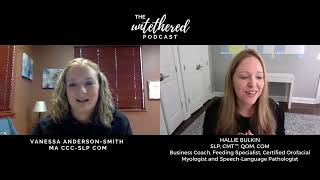
A conversational podcast episode (Untethered Podcast, Episode 81) featuring Hallie Bulkin and guest Vanessa Anderson‑Smith discussing clinical experience and best practices around tethered oral tissues (TOTs/tongue ties), orofacial myofunctional therapy, feeding therapy, speech impacts and misdiagnosis (e.g., apraxia), pre‑ and post‑operative care (active wound care vs. therapy), surgical approaches (laser vs. sutures), dental consequences, early intervention challenges, and the importance of a multidisciplinary/team approach. The hosts share clinical anecdotes, cautions about over/under‑diagnosis, and practical advice for therapists and caregivers.
Chapters
Hi and welcome to episode 81 of the Untethered Podcast. Today we have my dear friend and colleague Vanessa Anderson Smith joining us. Vanessa is a South Dakota native who attended Augustana University in Sioux Falls, South Dakota and received her Master's degree from the University of South Dakota in 2010. Vanessa began her career working in skilled nursing homes in South Dakota and then started her own private practice specializing in motor, speech and feeding disorders in 2013. Her certified trainings include Talk Tools or oral placement therapy, Level 4 certification, prompt bridging, tethered oral tissue specialty, and the SOS approach to feeding. Vanessa has also done specialized training in myofascial release, apraxia of speech, pediatric dysphasia, and orofacial myofunctional disorders. In addition to these trainings, Vanessa is a certified Orofacial Myologist through the International association of Orofacial Myology. She's a Talk Tools instructor and serves on the Board of Directors for Wonderfully Made, a Down Syndrome Family Support Organization, the Huntington's Disease Society of America South Dakota Chapter, and the South Dakota Speech, Language and Hearing Association. Quick Disclaimer all information, content and material of this podcast are the opinions of the speakers and is for the informational purpose only and not intended to serve as a substitute for the consultation, diagnosis and or medical treatment of a qualified healthcare provider. Welcome to the Untethered Podcast. I am your host, Hallie Balkan. Hi. I'm a certified orofacial myologist, feeding specialist and mentor. This podcast is all about getting your questions answered and collaborating with colleagues to bring you the most up to date information in the orofacial myofunctional therapy, tethered oral tissue and airway space. I challenge you to keep an open mind and join my mission to get this information out to the masses. Let's get started. Vanessa, thank you so much for joining me today. I'm so excited to have you, a dear friend and colleague on the podcast. Welcome, welcome.
Thank you so much for having me. I'm really excited about this.
Me too. So let's take a nosedive into a topic that I just don't think is talked about enough. You know, I know both you and I can relate to the fact that like 10 plus years ago like Tots wasn't even on our radar and it wasn't something that we were sharing with our patients because we didn't really know to even talk about this topic. So on that note, I'm going to turn that over to you and let you take it away.
Ok, well, I know I think back about My tots journey. And I specifically remember one of my friends in my kitchen. This had to have been. Yeah, I think 10 years ago. And I was in grad school, and they said, hey, our daughter, we think she might have a tongue tie. What do you think? And I was so easy to jump on. It will not impact speech. Don't worry. And I think. And I didn't even give it thought because that's what I was taught, you know, and. And I'm ashamed of that because I should have thought more, like, broadly. But, you know, in grad school, like, they'll say, this is the research and this is. It doesn't impact speech. And I was so quick to jump on that. And now, like, what I've learned as I've gone through this, like, the beauty's in the gray area, you know, and we do know that it will impact speech. You know, let's use common sense. It's one of our main articulators. It's anchored down. And. And I've talked to these friends a lot. I'm like, I feel so bad. Do you remember when you asked me about this and I said no? And I have what I call thera guilt, where it's guilt about past therapy and things. I'm like, I didn't know any better. But thankfully, my friend's little girl has amazing speech, she has amazing eating, and I haven't even assessed her or anything. So I'm glad I didn't miss the boat on that one, but I just don't want to do that again. And I think that these hard and fast rules that were taught, that is not how it works with speech and feeding, you know, and the beauty is definitely in the gray area. So I always like to tell people that, don't worry if you don't know it, because I didn't know it 10 years ago either. And then we really didn't even start looking at it until. I don't know, I think I started looking at it five or six years ago.
Yeah, no, I would agree with that. And I'm probably on a similar timeline. If I stop and think. I was like, I have to say, didn't, like, count. But no, it's so true. And honestly, we all go through that feeling of guilt of, like, how many kids have we missed that we could have helped faster, Helped get them to the root of the. Get to that root of the cause faster. Figured out that maybe that was actually part of one of the roots of what was going on. And so obviously, as therapists, we Ethically are stepping into what we do with the intention of doing no harm. Like we are stepping, stepping in with the intention of serving our patients to the best of our ability. But we can only do that with the information that we've either been taught in our grad programs or sought out post grad. And like you said, there's such a discussion, there's such a split camp on people who feel like this is a thing and people who feel like this isn't a thing, that still happens. And that's why we do get so many parents who may be sitting in front of us for the first time now, now that we do know and we have this information and we are comfortable with being in that gray area of saying, well, there really isn't a ton of research to support this one way or the other. But what we do know is clinically what we get result wise for our patients. And we know clinically where in some cases it's not always about how it looks. Right. It's about how it impacts the function. That said, we can have. I was just looking at something last night on social media and somebody had posted two pictures of children's tongues and they were both severely anteriorly tied. But of course they can stick their tongue out past their lip. Doesn't matter that it's like a split tongue snake tongue center, you know, doesn't matter that like when they, you know, hold their tongue backwards, you see that tethered tissue all the way to the tip when they retract it. And you know, we have medical professionals out there outside of SLPs who are saying, oh, it's not a problem, they can stick their tongue out, their speech sounds fine. They don't have a tongue tie. Well, we know that's not how you assess for a tongue tie. We also know that that's like part of the camp of professionals who are not so on board with even hearing what maybe new research does have to say. Because there is some new research coming out on these topics. Not a lot yet, but there is some. But I think it's one of those things where you and I both know, being that this is our specialty, that a tongue that is truly tethered to the floor of the mouth, even if the sounds are acoustically okay, we know that they're compensating and they are not functionally producing an accurate speech sound. And that is something that I think is not discussed really at all. Like, I don't hear people talking about that.
No, not at all. And something that I've always been interested in doing is they would always say in grad school and throughout continuing ed courses, oh, but it sounds right. I was like, well, I would love to get like a spectrograph going where we have these speech sounds and we can see the differences acoustically because there is a difference. And. And even though they can say it one word perfectly, on the Goldman Fristo, they totally break down in connected speech. And that's where again, it comes back down to that. It's not so black and white. I don't really care what the Goldman Fristo says too much. If they're not able to speak in conversation with good endurance. You know, I see kids that are very tight and their parents are saying, well, some days their speech is good and some days it's not. And you know, the endurance that you have to have for speech, I think we overlook a lot, you know. Yeah.
Oh yeah. Well, and I was actually having this conversation with a parent yesterday about co articulation, right. And how, you know, when we speak as adults, we don't actually stop and say every sound, like super crisp in the way that it's, you know, said if we say it individually in a single word or, you know, a sound by itself. And I just feel like these poor kiddos who really are already struggling, right then they start to put words together. And so maybe they can do it in an individual word, but when they start to put the words together, they're even that much harder to understand because of the fact that coarticulation already like muddies the waters. And typically our brain makes sense of it and we can hear everything as though it's crisp and clear. But we know as SLPs that like with coarticulation, like, that's not actually what's happening, but the brain is magical and makes it appear as such. And so now let's throw these poor kids who like can't have these. I always see that pattern of, you know, okay, we've got like two, three word phrases down pretty good. Like we can understand them in two, three word phrases. And then they go to four or five word phrases or sentences and you're like, oh boy, everything just started. It's like the longer the utterance, the harder they become to understand. Which doesn't seem like that hard of a concept to really grasp onto. But for some reason people are not paying attention to this and they're not even looking in the mouth when this is happening, which drives me up a wall.
I know, I know. And it's, you know, I'm like, they're fighting that restriction all the time. And I would get tired too, you know, especially if you're just having a date. We all have our off days where certain things are harder. And if speeches, if you have to focus so much on speech and so much on, like, fighting that restriction, then there are gonna be days where they're not gonna be speaking as well, you know, and again, it's. It's not so clear cut when you look at it that way, versus running through a golden Fritz dough, you know, which gives us great information, don't get me wrong. But it's not as functional as what I can do in an assessment. I feel like. Yeah, no.
And I think a really great story that I've had from an adult patient was, I had an adult come who basically spoke for a living, like in her profession with what she had to do. She was constantly on the phone with clients. And I remember doing her assessment. She came to me and she said, I think it was like 10am in the morning. She said, I've had one client phone call, I've had one cup of coffee, and I'm sitting here with you. It's 10:00am she's like, I'm physically exhausted. I can't speak anymore today. And I mean, her voice was fine. Her sounds sounded fine. Like, I would have had no idea had she not said that to me. But she was like, I am done talking for the day. It was 10am like, one cup of coffee and one phone call. And I was like, whoa, okay, like, let's dive into, like, let's. Let's pick this one apart. And so she ended up having. She went through myo and did her pre op and post op and had her tongue tie, release and everything. And her, like, afterwards, she was like, I had no idea that life could be like this. Like, I had no idea what I was missing. I didn't know it wasn't normal to feel tired by 10:00am Like, I, you know, all the things that I think we just get. Our bodies are so good at compensating, and we get so good at compensating, and children can't voice this to us. They can't tell us, my tongue is tired. I can't talk anymore today. They just will stop talking, you know, or they'll just get cranky and tired, like, you know, some of us grownups want to do because of it.
You know, they get behavioral and we think it's behaviors. It could be something that we wouldn't never have thought of, you know?
Yeah. And that's why when it comes to, like, behavior and behavioral interventions, and especially when it comes to, like, feeding and everything else, my first line of conversation with any parent or any caregiver is, your child is communicating something to you through this behavior. They are not trying to be lazy, difficult. Like, yes, I know there's certain types of diagnostic criteria out there where maybe some children are being oppositional, and that's very extreme. Cases like, that is not the majority of children. You know, like, these children are communicating something to us, and we need to, like, listen, like, lean in, figure out why the heck they're acting this way. It's there. There is something causing this. There's a root behind this. This is a symptom of that problem. This is not the actual problem itself. But so often our society teaches. Treats those behaviors as though they're the problem. And then it just kind of, you know, these kids. Actually, I think a lot of these kids become quieter. I feel like they, like, retreat. They'd almost rather not deal with certain things because it's exhausting. Nobody's listening to them. And so anyways, that's a whole other conversation for another day. But, you know, I just think we really need to pay greater attention to what our children are communicating to us, whether it's through behaviors or words or whatever. And we also need to look in their mouths.
Right, Absolutely. I know. It is all connected, you know, and the more that we understand that what we do as speech language pathologists, it is not standalone ever. You know, once we start understanding that and collaborating with that. Right. Team, that's when we're seeing the best results, in my opinion. Yeah.
Yeah. Well, so, I mean, are there diagnoses that you feel like you've given to children or maybe just treatment, like, ways that you went about treatment that you would have done differently 10 plus years ago?
Yeah, absolutely. I mean, when I. Before I started to understand the role that motor plays, I said in grad school, I hate articulation. I don't want to work with articulation. I want to work with language. It's more fun. And I was working with. I went from skilled nursing homes to working in a school part time and then getting my private practice up and running. And I was working with this amazing girl with down syndrome, and she's in fifth grade, and we're working on the F sound, and we're like, in front of the mirror and I'm like. And she's like, ba, ba. And I was like, what? I don't know what more to do. And then I got more training and oral motor, and I was like, now, like, it was the missing link. This is what I wanted to do. And it started to make sense. And then as I went through, you know, that oral motor journey, just. It keeps. It's kind of like, you know, my first talk tools course. I always say it was my gateway drug into oral motor. You know, from there, there was no going back. And then you start thinking about tongue ties and. And, you know, I would have these kids come into my clinic that were typically developing, like, they didn't have down syndrome, they didn't have low tone sensory issues, nothing. They just. Their speech was just horrendous. And they would come in and they would say, you know, I would be like, well, I. You know, it's kind of. It's apraxic. Like, it's kind of. It reminds me of, I have suspected apraxia and things like that. There's two little boys in the past that I had seen, I think it was five years ago, something like that, where, you know, my treatment didn't really change because I was targeting oral motor. It made all the difference in the world. I was doing all of these things. But I, you know, I did put that label on them of apraxia. And that kills me now because I know what parents do. I know what I would do. I would go and I Google it. And you see, you see the. They need therapy four to five times a week. They need. Well, looking back, those two boys in particular, they were tethered. They had tethering. And then as I started to learn about it, I'm like, I don't know if this is gonna be, you know, like, where do we go with it? And then unfortunately, I feel like parents, and I'm a mom, I would do this too. You know, once you get that diagnosis of, say, apraxia, you kind of cling to it. I think in a way it helps to be able to identify with it. But now I'm just thinking. And then these two boys, actually, we ended up getting their releases done. And one of them, it made night and day difference and the other, it helped with some things. It didn't help with everything, but that's where we go back to. You know, we don't know exactly how much it can help and, you know, really leaving it up to the parents. But it's always something that I want to leave no stone, like uncovered with these kids now. But, you know, and I had that one mom was saying, hey, well, they have apraxia so they're have it for life. Is he going to regress? And now I'm just thinking, oh, my gosh, I don't know if he ever did have apraxia, you know, and. And I'll be the first to admit that, you know, because. And I feel, I feel bad about it. But the thing is that he's made progress. The tongue tie helped. And I don't know, are we ever gonna really be able to weed that out? And does it really matter? Maybe not. But now I know better about not throwing around a diagnosis. And I don't think I ever threw around a diagnosis of apraxia. But when speech is so bad, you know, it's that whole other level. It's not a kid that can't see their arms. It is a whole other level of like the unintelligibility, you know, that we.
Have to think about.
So I agree with that, you know?
Yeah, no, I definitely agree with that. I think that there is just in general an over diagnosis of apraxia. I feel like there's a lot of people who put suspected apraxia or childhood apraxia of speech just on a child who's three and not talking yet. And their speech is very disorganized. And, you know, I do, I see that a lot, at least in my area, because sometimes I get these kids and I'm like, they don't have apraxia. Like, has anybody looked in this kid's mouth? And then all of a sudden, you know, it's not always, like you said, it's not always a magical fix, but we do some therapy. We work through, you know, what's going on. We do pre op, we get them ready for it. Maybe we do some myo, if they're like an older kiddo or we do some like modified, you know, MYO to work on the similar goals in the younger kids. And yeah, I mean, I've seen some of these kids go through tongue tie releases and literally start talking like they weren't talking at all. And then they start talking like within a month following the release, like, okay, was it going to happen anyways? Who knows? Maybe it's not the tongue tie release, but who cares? They appear to be tongue tied. It was impairing function. We were going to do this anyway. So if that means, you know, if it was that or not that. Bottom line is I started talking like that kid started talking four weeks later. And I was actually this part, like one particular case I was highly suspect of. I was like, I don't think releasing this tongue tie is going to do a thing for this kiddo. Like, he seemed pretty typically developing and like every other way, but would not make a peep, wouldn't let us near his mouth. Like we couldn't do proper pre op. So I was like, not ready. Like we are not gonna throw this kid into a release and suture him just because that's gonna like, you know, that's what the parent wants to do. And this is not like a single case like this has happened, you know, in the past more than more than once where like I just didn't feel the kid was ready and the parent went ahead and did it anyways. And anywho, because there are providers in the area who will do it without like that team sign off, you know, and in some cases it has still benefited the child. In other cases it has done absolutely nothing. So I think there's also this whole like other side of the discussion of, well, my kid had a tongue tie release and it did nothing. Like it didn't help or it made things worse. Well, what happened surrounding that release? Did the providers tell you the child was ready? Like, were they prepared? Did you go through that pre op therapy and did you do proper post op and did you do the follow up behavioral types of therapies? And when I say behavioral, I mean like either speech or myo or feeding. Like did you do those therapies that needed to be done with the proper, you know, like an SLP or whoever's working with your child or did you just send your child in for a release, do absolutely nothing before or after? Or maybe like sometimes we get parents who call and they say, well, we just want to do a couple sessions before and a couple sessions after the release. And I'm like, that is not how this works. I don't know who put that idea in your head. But you know, unfortunately, unfortunately, like not how it works. And they'll tell me, oh, the provider's office said that. And like, I know they didn't say that because I will email that provider right now and they will tell me they didn't say that because that's not how they operate. So you're getting this information somewhere else. Like, you know, unbeknownst to you, I am friends with this provider. I know they're not telling you that. So but I just think that there is. You see this a lot in like the Facebook groups. I even got into a conversation last week with somebody local who is an SLP and I think she had had her Baby released. And I don't really know enough about the case, but this was on a public Facebook group, so I'm not like sharing any like, you know, non HIPAA compliant information, but basically said the symptoms got worse after and I was like, well, what was the like pre op and post op care like? Are you doing, have you had a feeding assessment done? Are you doing any feeding therapy? Totally uninterested in having this conversation. Didn't want to say yes or no. You know, just went back to saying, well, I have, I have friends that specialize in this. And I was like, okay. But you know, I think that's, it's a dangerous topic to be attaching a profession to, to say like, I'm an SLP and I did this for my child. But then not doing the proper pre op and post op and feeding therapy or even having an assessment to get a baseline before you do all these things, you know, it's just we need to be doing that. And so until every single person can honestly say, like, I have had that initial assessment, I have done the pre op, I have done the procedure, I've done the post op. And then we went on with, you know, whatever therapy was needed after that to rehab or habilitate for the first time the tongue and the oral motor structures, you know, for a proper swallow and correct oral rest, posture and whatever the case may be, like, you have no business saying this didn't work. You know, that's, that's my soapbox for today.
Well, and it's, it. Once again, it goes like, it's never a standalone thing. It's not a standalone thing to get a release. It's not a standalone thing if there's suspected ties going on. And seeing a speech therapist, when in doubt, I'll always say, you know, I'm going to send you to one of my release providers just to get a consult because they're the ones that, that they're going to tell you for sure if it needs to be done or not. But I always say I'm like, don't run out tomorrow and do it, please. Because if you've come this far to only come this far, like, let's really set them up for success, you know, and even I had my tongue tie released. I was, I was not educated in it. I was, I was, I really, truly didn't know better, you know, and so I was like, I want to get this done. And you know, well, what would I do before and what would I do after? And you know, I still got some Great results from it. But looking back, I'm like, oh, I would have done this differently. And then my employee wanted to get released, and she did the full, like, myo before, myo after. And she. She did things differently than what I did. You know, she got. It was a laser release, but then the dentist stitched her and she was like. And I'm so glad that she did because she's like, in an adult. Like, it was great because she was waking up in the night trying to do stretches, and she. And it was painful. And she goes, it's just so neat to see these perspectives of, you know, I didn't do it the right way. So now I learned. And then my employee did do it the right way, and then she also went a little outside the box. You don't care. As many providers doing lasers and stitching, well, that's really cool. And she loved it. You know, these kids can't tell us that, you know, and it's all. It's just all these experiences, just layering and layering. And that's how we're gonna learn about it. Because there's so much we don't know still.
Yeah, no, and I think that's a great point. I. So when I did my tongue tie release, that was like, after I took autumn's course. And I definitely understood that I needed to do my pre op and I knew I needed to do active wound care. I knew that active wound care was separate from my post op stretches. Like, those are two separate things. But when I say stretches, it was more like the myo based stuff. Right. But back then I was calling it stretches. Whereas now I'm very clear to say there's active wound care and then there's your post op therapy. And those are two separate things. So that. Because I think patients just hear stretches and they just assume stretches is like all encompassing. And I think that's just the wrong term to be using. Like, yes, we might be stretching things to help it heal a certain way when you're going in and you're elevating the tongue and doing a certain type of lift or something. But I don't call it that. I will, like, attach. Like, this is active wound care and this is therapy. And so. And I think that really helps to clear it up. But for me, I was, like, afraid to do my own active wound care. And so, like my oral surgeon, he does. And actually my dentist too, that does some of our releases. They both use a laser and they both will suture. And that is the coolest thing to me, because that, in my opinion, for anybody who's afraid to go in the mouth and do that active wound care afterwards, absolutely must be sutured. And obviously, I don't make that call, but they will ask me, like, do you want this patient sutured or do you think they should be? And I'm, like, out of scope. I can't tell you yes or no, but compliance wise, that might be a good idea, if that's what you're asking me about. And so, you know, we basically have an understanding now that any toddler or young, young child. So like, not an infant, but like toddlers or preschoolers, they go to the oral surgeon, they get sutured because no parent wants to go in that child's mouth afterwards and fight their child kicking and screaming to go in and elevate their tongue to make sure it's healing the right direction and properly. But, like, okay, he can place, you know, I don't know, couple sutures. I don't know how many he places. Maybe three, four. It probably depends on, like, how big the release was, the size of the tongue, whatever. He will place those. And their tongues heal beautifully. Parent doesn't have to do the active wound care. We just have to, like, monitor it. And then we can start, you know, work we can work on. We can actually give the child a little more time to heal. And, you know, before we really get in there and start, like, moving the tongue around, like, you know, in significant ways. Like, I give them little things to do post op, but, like, I'm like, we don't have to, like, get in there and do, like, natural lifts, you know, sutures, and that's gonna really help direct the healing, which is a beautiful thing, right?
And I think it's always, you know, I want to set my patients up for success. And so that's why it's like, if that's what we think is gonna set them up for success, then, you know, I'm very lucky that I have a good team here in Sioux Falls that I work with. And I can. For instance, I had this little boy that, you know, he was. I think he was 3, and he had a lot of dental issues because he was so tight, like, severe anterior tie, lip tie, emergency extractions, around two and a half. It was. It was. It was hard on the whole family because that poor mother, she was beside herself, you know what I mean? Like, when he had to have that done, and then people think, oh, you're not brushing their teeth as much. It's like, no, he had a very bad upper lip tie. He couldn't clear food with his tongue tie. And anyways, he was seeing our therapist, and the day before the release, like, he can't. We can't get in his mouth. And, you know, you think, well, maybe he's just being three, you know, and I'm good friends with the mom, and I said, can I text the dentist and just say, hey, can we think about suturing? Because we can't even get in the mouth today. I don't know what's going on, why we can't, but let's think about it. So she said. So she's like, absolutely. And then he says. I said, hey, I'm a little. Just. I'm a little worried about compliance. And, you know, and he sends me a text back, I'll bring the sutures. Thank you. And anyways, what. She. So my friend sends me a video of him that morning before he's gonna be actually put under because he needed all this dental work done. And I said, I go, oh, my gosh, I feel like his face looks a little swollen. And she said, oh, really? I don't know. And he came out and, I mean, he had a lot of cavities and had to have essentially a baby root canal done.
Oh, my God.
And so no wonder he didn't want us in his mouth. And thank God it got sutured because we were not going to get in after all of that dental work. And, you know, there. That's just what. And he. His dentition has been perfect since his release. There hasn't been any more cavities or anything. And it wasn't that, you know, oral hygiene wasn't taken care of. I mean, it was. It was that. And I think that with a kid like that at that age, that can be a make it or break it, you know, And I'm just glad. I feel like we set him up for success by really having great open conversations between speech therapists. Mom, me, I wasn't even treating them. It was my employees, the dentist. Like, it was just. It's great having that open communication and. And it really worked out the best way it could have for him.
I mean, but imagine not having done the release for that child. You know, where would he be today? How many. How many more teeth would he have to have extracted? We'd probably be talking about, like, implants in a young child, which is horrible. Their mouth is still growing. I mean, I don't even if they do implants, but to have to do a root Canal. I mean, that's a baby root canal. Like, that's just. This is the stuff that drives me crazy because people go, oh, what's genetics? Well, no, it's obviously not genetics. If you guys were able to do this procedure and he hasn't had any more dental issues since, you know, that just speaks volumes. So, you know, I think that people don't realize that, yes, maybe the speech sounds okay, even though you and I both know they're compensating and it's not actually okay. You know, maybe they don't seem to have feeding issues in the parents eyes until they sit in front of us and we're like, whoa, baby. Like, there's definitely some, some stuff going on here, you know, but think about dentition. Like, that's definitely one that also doesn't get talked about enough. Like, I know you and I know it, but I feel like people really focus on, at least in the myo world, they focus mostly on like, speech and feeding and like, is it messy? Are there TMJ issues? Do we have allergies? Do we have this? But like, no one's saying, like, do you have cavities?
Right?
Do you have like a hard time clearing your, you know, getting your tongue into your gum area to like, clear food? Like, can you, like, I know we all look at that when we do our own assessment assessments, but like, it's just not a conversation that's really being had in the social media world. No one's really going, hey, they can't actually, you know, lateralize their tongue to clear the extra, you know, food particles or, you know, they can't even, you know, I know with my daughter, she's got an upper lip tie and a lot of people say, well, they're going to fall on their face and tear it. Well, she did bump her mouth last month on our kitchen counter and tore part of her lip tie. Well, it healed back together the same way that it was before. But I've also seen in patients where like some kids face plant and they do tear their lip tie, but then they've got this like bizarre tissue that's like healed in a very strange way. Like a flap like that can't be helpful either. So, you know, and then it's not. But she's always complained that it hurts. Like when my husband brushes her teeth, because he just goes in and brushes, brushes, brushes, and I go in and I know it's there, so I avoid it and try to brush around it and try to make sure everything is clean. But you know, there's parents aren't doing that. Nobody's saying, hey, if your kid has a lip tie, like, try and brush around it. But also make sure that nothing's getting stuck up there. Like, just not a conversation we're having.
You know, the whole, well, they're gonna fall and probably bump it and release it. It's like, well, that's not an ideal release by any means. Yeah.
It's also not an ethical thing that we should, like, hey, do no harm. Like, pediatricians and other providers should not be saying, your child's body's gonna fall on their face and, you know, tear it themselves. Like, I'm sorry, that's not an optimal treatment method.
No, it's not. You know, like, there's better ways to go about it if it's, you know, if we're just waiting for the day that a kid face plants it. And by the way, that is so bloody when that happens. That alone can be traumatizing to children. You know, like, let's. Let's do this in a little more thoughtful way, please.
Well, that and the fact that anytime I've seen a child do that, we then also, sometimes they hit their teeth and then the dentist is monitoring those upper central incisors to make sure they don't lose them. So like, we, if we have kids who are face putting that often, maybe we should be sending them to the ot why this is happening? You know, it's not an optimal treatment method by any stretch of the imagination. So do you do a lot of, like, do you work with a lot of toddlers? I think you do, like a lot, like, early intervention.
That's by far my favorite to work with. I'm so lucky that in my clinic we've got a really. We have enough staff to where and each staff wants to specialize in something. So one of my SLPs, she just got her CLC and she loves working with breastfeeding moms. And my other slp, she went to a course and now and she loves adult myo and she loves working with, you know, like the preteens, the teenagers getting expansions. I love to do is I love the early intervention, working with toddlers and feeding therapy. You know, I love that. And it's. And it is a big challenge working with releases with these kids. But it can totally be done. And we've seen it be done a lot of times. And, and you know, when kids come to us and they're choking or they only want to have soft food and I open it, I have them Open their mouths and like, you know, I'm pretty sure 90% of it's right there as to what's happening. And because, you know, these are kids that are typically developing, they don't have other sensory motor issues, they don't have syndromes, they don't have autism, so why are they not eating? And let's get in. And then of course, they're like, like their speech doesn't sound great either. So thankfully, two birds, one stone feeding is going to give us that foundation for speech clarity. And I love working with early intervention. It's still my favorite. So, yeah, it's doable. And especially with that Right. Team that we have and the providers that I have a good relationship with and we all work together, you know, it just, it makes all the difference in the world.
Yeah, no, and that's such a good point. It's basically having that team approach. And you know, also it can be done, right? I mean, I think that so many. So I hear this so often where providers are like, well, they can't do traditional myo. So let's wait till they're like four or five and I'm over here like screaming, pulling my hair out like, no, no, don't do that. Like, it's just, you know, it snowballs.
Raining all these bad motor plans, right?
Like, it just gets, makes it harder when you have to unwind even more, even at age 4 or 5. And so like, you know, I tell parents, I'm like, parents will then come to me because they hear conversations like this and they're like, is it too late for my child? No, it is never too late. We treat adults with these issues. So like, no, it's never too late. But if you figure it out earlier in life and you go to a provider and they tell you to wait, please get a second opinion. You know, find someone who does work with infants and toddlers. Not everybody does, and that's okay. But find the person who does who really enjoys getting ahead of it. Because sometimes we really can truly get ahead of things. We can get that child back on track. We can get them enjoying mealtime, we can get them trialing new foods, but we have to give them the oral motor skills to do that. It's not just like, let's play with food. It's not just a sensory based thing. And it drives me crazy because some of the programs out there are so highly sensory driven and sensory based and, oh, just smell the food, just lick the food, just take a bite, just put it on your face, put it on your. Okay, that's all important. We need to like engage in food play. Like kids need to be able to do that. But that is not how we go about teaching them to eat their food when they don't have the oral motor skills to do so. And so that's my other big PSA today is like, you need to be looking in the mouth.
And you know, I've had that before where I feel like I treat it from a motor base. There might be another SLP out there that teaches it as a sensory base. And I've said before, like, I'll have a families say, well, should we get birth to three for feeding therapy too? I'm like, it depends on who really, because there are some providers that are going to teach rubbing the foods on the arms and things like that, which again, it's important to not be scared of the food. But then we do see that breakdown. And I'll never forget that I was working with a kid, we were making some progress. He was tube fed and all of a sudden in therapy he starts to chew food and I'm waiting for him to swallow it because we've been working on that and he was doing great. He puts his hands up in the air, tips over, opens his mouth and he spits it out. And I thought, oh my gosh, they're seeing another therapist that's working exactly opposite from what I am. And this is not fair to the kid. You know, I, this is not fair because we're doing two different things. So there are points where we have to decide what are we going to focus on because that he's gonna hit. Like when he goes to one place, he does this. When he goes to the other place, we're not going to get functional skills that way, you know, and those kids love that kind of therapy because. And then they stop though, once it gets into the mouth. And you know, and there's a reason like, and there's, there's very thoughtful ways to work through that. You know, we're not force feeding or anything, but there are times you have to push these kids through that in the right way or else, I'm sorry, I don't want you to have to keep coming for years on end. You know, I want to be respectful of your child's progress. Your time, your money, your energy. And that's just not fair, I don't think.
Yeah, no, I completely agree. And that's, you make such a good point because we do have a lot of children at that age, like early intervention, birth to Three, even three to five, because a lot of them are in the preschool program through the county, you know, where they are coming to us for private therapy. And thankfully not thankfully. I don't know, this could go one way or the other. But, you know, they don't really do feeding in the preschool program. So I know that legally they should at least to be doing it to make sure they can get enough nutrition to access the curriculum. However, when it's like the three to five year old, it's much easier because I know that they're not teaching them opposite of what we're working on. But when we talked about the births of three kiddos. Oh yeah, I mean, it is. So like, the advice is just. Usually it's more parent coaching. They're not doing like one on one therapy where I am. Well, they're doing one on one, but it's parent coaching model. It's not a direct treatment model. And so, you know, it's Also, I think 1. A lot of things get lost in translation. Like they're not able to demonstrate things for the parents because that's against the rules. They're not allowed to. They basically just tell the parent what to do, which can work if you're using a approach that, you know, maybe you model on yourself and then, you know, the parent then does it on themselves and then they carry it over the child. You know, there are ways we can go about this, but I just, I feel like the actual approach behind it's not actually the parent coaching. It's more so like the approach they're using in general is completely opposite of what we work on in our private therapy. And it's just, you know, I'm like, I'm all about the support, especially because it's free where we are. But I'm like, you called us for a reason. There's a reason why you called us. It's either what you're doing there is not working, but it's free. So you don't want to give it up, you know, and that's why you called us. Or you feel like, okay, we started like, you know, making some, like inching along and it's time to like take larger strides, you know, whatever the case may be. Like, you feel restricted by like, you know, that service at the moment and you want to expand beyond that. And that's not to say that EI isn't great, because I know there are some areas in the country where EI looks very different than what it is where I am. Like, where I am, it can only be parent coaching. It is not direct therapy. A lot of the therapists, even if they're trained in what I do and what you do, they can't do that therapy in the eye. Like they just can't. It's not allowed. They're told they basically need to take more of like a sensory approach or more of a behavioral approach, not a motor approach. And so, you know, I know that we have a lot of therapists where their hands are tied, but in some sense don't work on that then.
Exactly. And that's why, that's the exact reason that my clinic stopped doing, stopped working with early intervention through the state of South Dakota, because refused to, I don't think it's ethical to do a parent coaching model. And then they were pushing us to bill insurance too. And that's not direct treatment. And how do we, you know, and then, and also the kids that like, the kids that come to see us are the kids that have a lot of needs and they need direct therapy and hearing coaching is great too. But you know, these poor parents have enough pressure on them, like that's not fair that they're the ones that have to be in charge of being the therapist. I mean we're, we're therapists to our children. We, you know, our kids, we help them learn to walk, learn to talk. But it goes beyond that where we need medical intervention. And I, you know, I left the school district because there weren't rules that I wanted to abide. By. Then I left I as an independent contractor. I'm like, oh, more rules that I don't agree with. We're done. You know, like I'm gonna control what I can control within the four walls of our clinic. And because I, I truly believe that that's what's best for the kids and that, guess what, that's a moving target. It's always gonna change, you know, but at least I can make those decisions and change can happen pretty quick versus waiting for the department of Ed, you know, within state to change something.
Yeah, I also started in the schools and when my three year contract was up, I was out of there. So yeah, I worked two years in the preschool program only with the three to five year olds in two different schools. And then I worked for an entire year doing in home, like in, they call it infant and toddler program here. But it's basically the EI program worth of three. And yeah, we actually went from being able to do like more one on one to having to do only parent coaching. And at the same time, like, therapy became bagless, and I was like, I was going into homes where families couldn't afford to buy materials and they didn't have extra pots and pants to bang on. Like, they needed that to cook their foods. And so I would. I would secretly just take toys in and leave them there. I'm like, whatever I bring in is staying here for the week, and, like, I will bring new and cycle it out for them so, like, their child can have something new and exciting to engage in. But that was also mostly language skills and, like, speech that we were working on. It wasn't, you know, so much oral, motor or feeding, because the OTs did feeding, but it was really more of a sensory parent coaching model. And. Yeah. So, but, you know, and I. It was always interesting too, because I co treated a lot of these cases and parents would ask me, they're like, well, you're an slp. Like, can't you do feeding? I'm like, not according to the county. Sorry. Like, I mean, it's just so stupid. Yeah, I got. I was. I was like, burnt out after three years working in the schools and home. And, like, I wasn't burnt out working in ei. I really enjoyed that. And I was like, screw this. I don't want to be a speech pathologist anymore. I took eight months off and then ended up working for a private practice, basically going into homes and preschools. Because I'm like, I actually love that. But I want to be able to do therapy that's within my scope of practice that my license dictates I can do. Not that I'm told I can't do by, you know, the educational department here at my. In my county. So, you know, the board of Ed does not get to tell me what I kind of can't do. So that's also. I was like, I don't like all these rules. I'm out.
But it's frustrating too, because as we learn more about tots. And I have a lot of friends that work in schools, and they're sending me videos and they're sending me pictures. And then I'm like, well, did check for this, like, a posterior tie. And they're like, pretty. You know, I had someone said, yeah, I'm pretty sure that I did. I go, okay, I'm gonna send you a video on how to do it. And you send me a video back. And she sent me a video back. I didn't even, like, play it. I just saw that the image that was up, and I'm like, oh geez, we've got. And then she goes, well what do I do now? I'm like, oh God. And I felt horrible because I'm like, well it's knowledge is power. But when you, when these speech therapists in schools feel that their hands are tied and they can't say anything, it's kind of opening up a can of worms. And that's where like we need speech language pathologists to try and stand up for the kids. And if we think that there could be something structurally wrong, then I'm sorry, it's not ethical to say, to say, well I can't tell you this.
Right, that's not ethical.
You know, it's both, it feels to.
Me, it feels both unethical and I feel like there's also probably some legalities there. Like you could probably be good if a parent down the road finds out that like you like if you as an SLP go to your principal and you say I have found X, Y and Z in this child's mouth, I have concerns. And that principal says oops, sorry, that's not in the scope of what we do. As an SLP working in the schools or like your SLB department says that and that somehow gets back to the parent, you better believe that parent is going to sue the heck out of you and you're going to be paying for private therapy. So there needs to be some kind of like middle ground where basically if it's going to come down to this, where school based SLPs are able to identify and refer out and then the county's not on the hook, the parent can then decide what they want to do one way or the other. Because yes, obviously we have certain things that covered within our scope of practice. But it's also unethical to ask an SLP to treat a child if they're not trained in treating these medical based things because they're school based and they're doing more, you know, articulations, language, you know. So I think it's like there's like this two edged sword here where we need to figure needs to be like this dance between how do we give the parents enough information to refer them out without the counties being like oh no, we're going to be sued and on the hook for prying, paying for private therapy, you know, because also school SLBs are already, they're slammed, they have all the language based stuff to do and obviously they're treating our take too. But you know, they shouldn't have to take on all these cases or have to get trained in something new. If that's not their specialty. Right. They specialize in maybe something else, but they can. They can still, within their scope of practice, understand and learn how to identify issues to then help these children, help direct children to the proper therapists outside of the school system. But schools are like, you know, they just don't want to have any part in this.
Right. And I have a friend that works in a school system, and she is. She's amazing. And she like what she told me and is. And she went to Autumn's course and she just. She loved it. She went with my clinic and she said how I view it is I am like general physician, you know, like general practice physician. And I should be able to refer out to specialties because I work in a school and I know the general things, but I can't do it all. And I'm like, that. I thought that was a great analogy because, you know, they do have to. Do they have to know a little bit about voice stuttering? You know, I mean, everything and language, aac and they. I think it's not fair for anyone to expect someone to be able to do all of those things perfectly, you know, within the restraints that they have. So. And I also think I want to know. I work with pts that have worked in the schools. I don't. If a PT thinks that there's a medical issue going on, the PT is going to refer. In my experience, they're just going to say, you need to go do this. I don't know what it is about speech language pathologists that are. They're very much like, oh, I can't say that. But if you think a child has a cleft lip or palate or like a submucosal cleft, you have to refer that out yet with tongue ties. I don't know how it's any different. It's a structural issue that we cannot fix.
Yeah, no, and it's. It's, you know, I think it's partially because, like, that whole. The whole tots topic is so, you know, like, ooh, that's a. Right now. And people are still kind of like, do I believe in this? Do I not believe in this? Like, you know.
Right.
Like Daniel. I'm forgetting his last name. The osteopath Daniel Lopez said he's like, you don't have to believe in it. It's not a religion. Like, it's there. Believe in it or not, it's still there, you know. Yeah, it's one of those things where it really comes down to. I don't understand. Well, interestingly enough, like I, because I used to sit at these IEP meetings and I used to always like over give things to parents because I was like, I have the power to do that here. You get 60 minutes a week. I don't know how I'm going to do this, but I will make it work best I can. Because I'm like, your child needs that. And if that means they need to hire another SLP to help me deliver this, then whatever. Which never actually happened, but here we are. But no, like, I would sit there in the. There was an OT who would write three names down on a piece of paper and go like, pass it across the table, the paper under her hand and go, I didn't give you this. And you know, it's got three names, like referring them out. Well, we shouldn't have to do that. Like, that shouldn't be the case, you know too, because that's also one a little bit unethical to do that. As a school based employee, you have a contract you're supposed to be following, but then it's also unethical not to make the referral based on your licensure that dictates what you can and can't do. So. Yeah, it's just, it's such a. One of those, like catch 22 is like.
It is. And that's. And you know, just saying like, here are people to talk to and you can't send a good report because you're scared to write that down.
Yeah.
So that's frustrating. You know, that's not. Again, it's always like, I always think that's not fair to the child, you know, and it's just. That's not going to set them up for success for. To have really good collaborative care.
Absolutely. I totally agree with you. Yeah. I mean, I don't know. My, my biggest thing for like the school based sleep who are trying to get into like oral motor or feeding is talk to. I always say talk to your principal, talk to the head of the speech department. I feel like the more the conversations start to happen, the more we might start inching towards making some sort of a change. Maybe we can, you know, even pull Asha in and they can do some, you know, advocacy for providing, you know, either these services in the schools or if a school can't accommodate, then that's when there's some type of guideline set that says it's okay to refer out the school's like not on the hook to. For it, you know, and I know that's like a legal based thing. So Ash, I can't necessarily say that for a school system, but maybe the school system as a whole, somewhere within the school system that needs to be a conversation being had and some kind of policy needs to be put in place. That is not a policy that says, oh, don't tell the family that their child has something structural going on that could be impacting like you know, 75 areas in their development. Like that that's not okay.
And I like, I understand how if school based speech pathologist listen to this. It sounds idealistic, you know, what we're talking about. It totally does. But also that's when I have friends in the area that are saying, oh my gosh, this is driving me crazy. I'm like, I know. And if you don't think you can change it, come work for me. Because we can. We're helping a ton of kids with it. And you know, it's hard. It's one of those things where the only way that we're going to get some traction is if we have to keep. It's a conversation that has to be made over and over and over again. And in a very respectful. And you can advocate for your patients very respectfully with administrators. You can. And I think planting the seed and planting the seed, that's going to be how we're going to make a big change overall. You know, I don't think that we can, you know, popping off right away and saying, you know, wanting, you know, I get it, you want to like scream and like stand on the table and like, what are we thinking? But that that isn't how we're gonna make change, you know, So I think that the more information that gets out, that people just keep hearing it and keep having those tough conversations. I'm really hopeful that 15, 20 years, hopefully not that long, but down the road this won't be as much of an issue.
You know, I always tell SLPs, I'm like, you never know, like, it may fall in deaf ears. And it might fall, you might hit the jackpot with one individual person who is super passionate about your cause in your district. And then they're like, holy cow, like we gotta change this. You know, and so it doesn't have to all be you, but like, like you're saying, start the conversation, start talking about it, like very respectfully, but also come from a place of concern for your students and come from a place. I know when I worked in the county, everything came back to is There an educational impact, right? Well, arguably yes. Because if that child is having any problem with their speech, any problem with their feeding either they could get made fun of for how they sound. They may be more shy because they don't want to say, speak to other children because they're embarrassed by their speech. Because this does happen. Kids tell us these things. There could be a number of things going on. They could be messy eaters, which could become embarrassing at a certain age. They may be restricted by the foods they want to eat. There could also be some, you know, some financial issues at home and maybe the parents have them on free and reduced meals, but they can't or don't or won't eat those meals. And so they're not accessing proper nutrition to even finish out their school day. I mean there's just like we could go on and talk about this for hours, right? There's just so many like further reaching issues that, where it does actually become an educational impact. And so I always tell school based SLPs and like find a couple cases on kids on your caseload where you feel like this thing is actually educationally impacting them and document that, write it down and then take it to one of your administrators, whether it's like the principal, the vice principal, the head of the speech department, whatever, and have that conversation. And that's where having these types of conversations will start to lead to change. And like, like you said, it's going to take time, it's not going to happen overnight. But the conversations need to be had. That's where it all begins.
Absolutely.
Soapbox number three. Done.
All the soapboxes today.
All the soapboxes today. I love it.
We're on them together.
This has been amazing. Is there anything we didn't talk about that you wanted to talk about?
We covered a lot today.
We covered it all. So where can they find you if they want to get in touch with you or they're interested in learning about your practice?
My Facebook page, Anderson Smith Therapy Institute. You can contact us through there. Our website is still. We went through a name change because we're doing so much more than speech therapy now. But our website is still andersonsmithspeech.com we're also on Instagram @andersonsmiththerapy. And yeah, that's where you can find us to ask any questions and you know, it's just a journey that we're all going to keep going through together and three years from now we'll probably listen to this and think about everything that we changed, you know, and what we've been doing because. But that's the beauty of it. So that's why I love it.
It's always easy. Can't wait. Well, thank you so much for joining me today.
Thank you for having me.
Thanks for listening to this podcast. If you want to hear more of these Myo Tots, Airway and Feeding related episodes, be sure to leave a review on Apple Podcast or pledge a small amount on patreon.com the untetheredpodcast if you found value, others you know in this space will too. So be sure to share this episode on your social media platforms and join us over on Facebook on my Facebook page @halliebulcanbiz, on Instagram Ali Balkan. And you can head over to theuntetheredpodcast.com to grab a copy of the Show Notes, where you can also subscribe to be kept up to date on the latest podcast episodes.
More from Hallie



What I Was Missing in Feeding Therapy: ARFID, Airway, and Myo with Samy Hernandez





