Episode 84: Bottles, Pacifiers and Their Impact On Orofacial Development
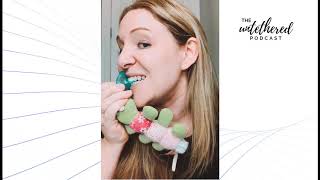
Hallie Bulkin, an orofacial myologist and feeding specialist, breaks down how pacifiers and bottles shape mouth development. Avoid flat MAM-style pacifiers that hold the tongue down; choose cylindrical soothie-style ones instead. Wean pacifiers by 6 months and bottles by 12 months to prevent lasting changes to the palate and airway.
Chapters
Quick Disclaimer all information, content and material of this podcast are the opinions of the speakers and is for the informational purpose only and not intended to serve as a substitute for the consultation, diagnosis and or medical treatment of a qualified healthcare provider. Welcome to the Untethered Podcast. I'm your host, Hallie Balkan. I'm a certified orofacial myologist, feeding specialist, SLP and mentor. This podcast is all about getting your questions answered and collaborating with colleagues to bring you the most up to date information in the orofacial myofunctional therapy, oral tissue and airway space. I challenge you to keep an open mind and join my mission to get this information out to the masses. Let's get started. Real quick. I wanted to let you guys know that this was originally recorded on Instagram and you can find it on my Instagram profile, alliebalkin On Instagram, there may be some parts that are a little confusing because I modeled with both the webanub pacifier and the Soothy pacifier. So either Google those images so you know what I'm talking about and or pop over to Instagram if you want to have a visual. Otherwise you should be able to get some really great information out of this. We wanted to share it since we had over 9,000 people view that video. It seems to be really popular one, so we wanted to pop it here on the podcast for you. Enjoy. Hello Mamas. Okay, so first let me preface this with we have had an influx of mamas following us in the past week. The post that I created on pacifiers was actually intended for professionals. So what I want to say is if you're a mama coming and reading the post that I created on pacifiers, please know that the tone of that post and the way I was presenting the information was directed towards professionals who I'm trying to educate in understanding what they should be recommending to us mamas. Like, I'm a mama too. Okay? So I'm saying that disclaimer because I want you guys to realize that the post was not initially attended for parents. I probably would have been a little bit nicer in my approach while giving you the same information. But having mamas follow me on here is new. This has mostly been like a professionally directed type of account. Okay? So I want to just give that little disclaimer so you guys understand. I'm usually a much kinder person, especially when I'm working with my patients, but when it comes to professionals, I have very little tolerance. And if you're not hearing what I'm saying, I really want to get the point across to professionals so that they can recommend the right types of tools to and for the babies that they might be serving. So what are we going to talk about today? I have a. Oh, you're so sweet. I have a wubbin up. I have a bottle, I've got no wubbin up attached to this Avent Soothy. And I have a bottle from a Lansino, a bottle nipple to show you guys as well. And I wanted to talk a little bit about them. So on that post about pacifiers, if you're not sure what I'm talking about, if you scroll down the timeline, there is a picture of a ma' am pacifier and it says like, no, like no ma' am or something. Like using a ma' am is like trying to dance with your your tongue glued to the. Or you're trying to dance like having it's trying to dance with your foot glued to the floor. My gosh, why couldn't I get that out? And so my whole point here, and the other thing I will say too, is that there's somebody who is trolling the post. And guys, I'm not going to stand for that because one, and this is what's coming up a bit, companies, especially in the US if they write something a certain way, it will pass through. They don't have to have research to back their claims. They can't say, they guarantee or they promise or like, they can't use certain language. But you better believe that a lot of what you read on packaging out there is not accurate. There's no research to back it. Nobody is doing like true research on these products. Okay? And when they say they are, you should be looking to see was the research done by an independent party or was the research done by the person who was selling me this product? Because if it was done by the person selling you the product, that company did their own research. That is biased and that is not necessarily accurate info. So I would not always believe it. I would go to the professionals, okay, that treat babies on a regular basis and ask them their opinions. When you ask somebody who's working with these babies day in and day out, they're going to have some really good insight to the products that they recommend based on the goals that they're trying to help these babies achieve. What are our goals? Well, quite often when I'm working with a pediatric feeding patient, especially infants, our goals, one, we want to make sure the baby's able to feed right and we want to make sure Baby can breathe. So those are our two basic life skills. First is breathing, right? I always say if we can't breathe, we're dead. And I know it's a little gruesome, but a little morbid, but, you know, it's true. And then feeding. We need calories to survive, right? We need to be able to eat in whatever way, shape or form those calories are coming in. So with that in mind, what I want you guys to understand also is that pacifiers are not a milestone. It's not a rite of passage. We don't need pacifiers. Now, if you have a child who has a certain medical condition, and let's say this pacifier is actually being used as a tool to help keep your baby's airway open when sleeping, that's a different situation. More rare than common, but that's different. And if your medical team has said, hey, please use a pacifier for XYZ purpose, that's also different. But there are a lot of pediatricians and dentists out there that are recommending the MAM pacifier or these flatter pacifiers. We don't want those. Those are awful. What it actually does when you have a flat pacifier is it holds the tongue down to the floor of the mouth. Again, we don't want that. We want the tongue to be able to elevate. Now, of course, anything in the mouth going over the tongue is going to force the tongue to stay down, ultimately. And yes, as soon as your baby pops out of your womb, we want that baby to have closed mouth, tongue on the top of the mouth, breathing through the nose. Okay? That should be present at birth. There are some babies who look great, right? When they come out, their mouth is closed, and within a matter of days, all of a sudden, they're sleeping with their mouth slightly open. And then that gets progressively worse and we realize their tongue is on the bottom of their mouth. The MAM pacifiers and anything, any other pacifier that is the same shape as the mammon. Yes, both types of the mams. I know one is a little bit more like circular, but still pretty flat compared to other pacifiers out there. Those are definitely not pacis we want to use because they keep the tongue glued down. And there was somebody on my post saying, well, if you look at the MAM website, it says that the tongue is free to move and yada, yada. No, if you put one of these in your mouth, well, you're an adult, so it's different. But if you put one of these in a baby's mouth compared to, you know, they have a much smaller oral cavity. You're gonna notice their tongue can't possibly move around. When there's something flat laying on top of it holding it down, it's not able to move around the mouth. So that, that advertising is faulty. And I am sorry, mamas. It's just, it's faulty and it's just awful. And I'm sorry that, like, I genuinely am sorry that we actually believe what we read on products because I don't know who's cross checking these things, but that's not a fact. That is false information. Now, when you use something like the soothing, it's still going to keep the tongue down in the front. Okay. Which is not necessarily ideal, but I get it. Some of us need to or want to use pacifiers for our children. I am guilty of, you know, using them with my kids. My first one really couldn't keep a paski in her mouth. And I chose to retry it when she was two months old. And she took it for like a couple weeks and then just stopped. And so I didn't really have to deal with it because she really wouldn't keep it in her mouth. Well, she was tongue and liptide, okay. So and had a high palate and she just couldn't hold on to it, so she popped them right out. Now, the reason why, as an orofacial myofunctional therapist and speech language pathologist and feeding specialist. I like this one. Is because we want babies to cup their tongues around the nipple. And so what that looks like is this. They can bring the tongue into a shape like this, okay. So they're able to actually cup their tongue around the nipple the same as if we put our finger in their mouth. So if anybody's familiar with suck training, you know that you can use a finger, you can use a cylindrical pacifier like this shape. And so for those of you who are asking like, oh, hey, can I use other pacifiers that are the same shape? If it is truly this shape, like the SUV pacifier, go for it. Fine. Okay. It's about the same length, same shape. Great. I think people were asking about the bib pacifier, the bibs pacifier. Now I'm looking it up as I'm telling you this. That one looks to be okay. The one thing I don't love about it is that the bulb at the end is bigger than this. So it kind of like gets like more bulbous here, which just means it's going to hold that part of the tongue down a bit more. Um, so I. I don't. And it's also a $16 pacifier, or maybe that's for two. I'm not sure. So they seem more expensive, and quite frankly, like, maybe they're cuter in pictures. But why are you paying more for something that's less functional than this? Like, this is cheaper and more functional. Better for better overall. But I could see how, like, that one might be. Okay, it's better than the mam. Okay. It's better than any of your flat pacifiers. And if you guys have questions, feel free to, you know, pop them in the comments. I'm happy to answer some questions. So if you're looking for, like, well, which one do I pick? You want something that looks like this. Okay, now, the nice thing about this, too, is that, like, you can also use this as a tool for sock training because, like, we can use it to pull it in and out of the baby's mouth as we're trying to strengthen the sock. Right? We do these. We call them paci pulls. We pull them in, and we're trying to get baby to pull and create resistance the same as they. What we want them to do on breast or bottle. So, anywho, that's my whole spiel on those passies. Okay, now. Now I'm getting questions also about why don't we like the wubba nubs? Well, they're adorable. I mean, look how cute this little thing is. Like, this was one of my kiddos, and then I passed it to my other kiddo. You know, we also had the. I mean, I have so many of these things. Like, they're freaking adorable. I get it. I get they're cute, but. And I. And, you know, if you're talking about maybe a young child, right, who is sleeping or laying there, and they can't figure out how to get this back in their mouth. And, you know, and they. But they can, like, push the legs up and bring it back up and kind of, like, find it and put it back in. Fine. Once they are mobile, you better not be giving them this pacifier. Like, when your child can roll over, I want you to stop. When your child can crawl, you better have stopped already. What you can do. Okay, this is gonna break my heart a little, because it's super cute. Even though we don't use them in my household, my kids were done with their passies way early on. Is this. You can cut it off. See that? Give your kiddo the lovey. Let them keep the lovey so they can snuggle with it. And now you have the pacifier separated that they can keep using until the magic age of 6 months. That is when I recommend you be done with the passes. No more after six months. The reason being is that there's a couple reasons. So one, well, first let me tell you, six months is when we create habits. Habits develop. So if you want to fight a kiddo on getting rid of a passy, that's pretty much guaranteed to happen after the six month mark, right? Because now they've created a habit and they're habitually going to want that got pasty and they're sucking on it. Okay? Now if you are a parent who has one of these versus one of these, you can put this in your mouth, okay? Put this in your mouth and feel that. Then put this in your mouth. It's hard. It is hard. And I like sanitize these so that tastes lovely. It is hard to hold this in my mouth. And I'm an adult with good oral function because I've gone through myofunctional therapy and like adult expansion and all that fun stuff. I'm currently like doing my next step of orthodontic work. It is hard to hold that in and I am an adult, so if it's hard for me, then it is going to be hard for your child to hold this in. So what we end up seeing kids do is fixing their jaw and actually like writing down. So when those of you who said like, what do you mean by jaw fixing? They are not sucking, they're writing and they're walking around with this between their teeth, okay? And this is creating a space. It will create both the open bite right from having it in there all the time when your teeth come in, but also it creates jaw fixing and they may that changes the orofacial development. Okay? So a number of things can happen. So we're not going to go down that rabbit hole. Just know cut it off and let them keep the passing until six months once they're mobile. So if they're like crawling around or just totally get rid of rid of it at six months or get rid of that passy and let them keep this part. Okay? So they still get to keep their lovey, but we ditched the paci part. Okay? So there's a number of options there. If you're somebody who really has trouble with this and you're kind of like, oh my gosh, like I just can't even imagine losing sleep. I get it. I'm a mom. I love My sleep too. I hear one of my kids crying so hopefully it's not going to get noisy in here in a minute. But there are weaning programs. There used to be one called the Lily system. I'm thinking that Frida Baby might have bought them out because I can't find it on the market anymore as of like past couple months. But Frida Baby now has the exact same looking system. And so look for the Frida Baby pacifier weaning system. I think it's like $12 or something at Bye Bye Baby or you know, probably have it on Amazon. Use something like that, make your life easier. It kind of weans your kiddo off of it in a very, in a much easier way that hopefully won't cause a lot of anxiety for either of you. So it is important to consider any anxiety and lack of sleep that might happen as a result. And I'm going to be honest with you, I try to be both a therapist and a mom. So my recommendations obviously will come from the therapist, the specialist, the feeding specialist and certified orofacial mylogist side of me. But at the same time I try to add my mom touch to it because I know we're all human and the last thing we want is to see any of our babies cry or lose a ton of sleep because obviously that impacts us too, right? So anywho, I hope that that is helpful advice when it comes to, you know, which pacifier to use, how to sort of maybe do some weaning, why we don't want this once they're mobile and all that fun stuff. Now I have questions coming in about what bottle is the best. The gold standard is Dr. Brown's. Okay. Both my kids use these and Lily, my first one, if you guys aren't familiar, I have an entire podcast and in the first episode you may or may not be interested because it's really geared towards professionals. But I have a lot of mamas, especially with mamas with tongue tied babies that have listened like, have binge listened to like all the episodes. What I want to share with you though is I share Lily's story in the very first episode because that's sort of what threw me. Like I was already a feeding so specialist but I was working with the tolerant up crowd and I got really thrown into working with the infant crowd after I had my own experience five years ago. I also got certified in orofacial myology. And so that's why I'm super passionate about this because I have a child who had a tongue tie release at age 2 who had expansion between the ages of 4 and 5. She just got it taken off like a month ago. She just turned five in August and my second one was born and was released. Tongue and lip day five, completely different breastfeeding journey but already with like five days into life had the same, I had the same, same same symptoms as I had with my first one and it was, I literally breastfed that baby and pumped around the clock for 13 months of my life and it was miserable and I own my own business so I was able to make that work. So like the two days when I went to work and I was gone out of my house for six and a half hours and had a nanny and my child refused to drink from the bottle. For her it wasn't the end of life because you know okay fine like I would feed her right before I left I fed her when I got home we tried to feed her a bottle. It was two days spread out during the week, you know. But for you mamas who have to go back to work and or need to be away from your baby longer than that like you don't have that same luxury. So we need to find something that works for you. Right. So my goal is always let's start with the gold standard. If the gold standard doesn't work there are other options. Right. So for example I love, love Dr. Brown's. Why do I love it? Well for our babies that, especially our babies who are tongue and lip tie that have issues with taking in too much, too much liquid or too much air. Sorry for like airophagia they tend to have issues with digestion because they're swallowing a lot of air. So you can look up that term aerophagia and this is going to help. I'm going to have to go in a minute because my 2 year old is having a meltdown in here or saying I want mama. This is gonna help with that. Okay. But if your baby absolutely cannot take this bottle. I've seen a lot of my area ibclcs recommend the Lansino mama bottles and so that's an option but I don't love the infant ones. The, I'm sorry not infant. The mam ones infant is a specialized nipple that sometimes you can get access to through a feeding specialist that looks very similar to Dr. Brown's. So anything that looks like this, okay, this is going to be an ideal nipple shape. You see how it's cylindrical. All of these companies that market breast looking bottles or say that their bottle is the closest thing to Breastfeeding. It is bs. Okay, I'm sorry again. False marketing, bs. They are selling you hard mamas. And the sad thing about that is that they're not actually doing any research to support their claims. Okay? And again, if they claim they're doing research, you should be looking at who did that research. Was it the company that is putting out this product or was it a third party? Because if it's the company who's putting out the product, that is bias. That is biased research. We need an independent third party company actually doing it. But again, there aren't companies out there. Most of the companies out there are not running research on their products. They're putting out because they don't have to. They don't have to. And they can make all kinds of claims. So you can't always believe what's on there. So that's why I say turn to your professionals who work in this space because they're going to know what's best. All right? So the reason I love this, okay? So if you look at this, the mouth is in that nice circular shape, okay? This goes right into the center, okay? And it actually. The lips can then rest on the lid of the bottle. Do you see that? It has a surface to push up against, similar to a breast. This is going to give you. There is no bottle out there, mamas. I'm sorry, but there's no bottle that's going to mimic breastfeeding, okay? No bottle will actually mimic that. However, the closest you're going to get is this bottle because the lips rest up against the white lid here, right? Simpler as they will rest up on the breast, okay? And then you only have to compress this area similar to how you would compress a breast. A lot of these nipples, even, even this one that is like this. Look at how wide your mouth would have to get to get to the base. That's impossible. The baby can't do that, right? So what happens? Baby goes here, they have nothing to push up against, okay? And then they're. They're doing like. This is just a. This creates a bizarre compression. Now, what I will say is that it might be what your baby needs initially. Your baby might need an alternative to this. Our goal is going to be feeding. So I'm not going to sit here, here and tell you, no, don't use that, ma'. Am. Right now that's the only thing your baby will take. No, don't use the lancinomoma. If that's all your baby will take. No, don't use that bottle that it, if that's the only one your baby will take, that might end up being what you use. Because the goal here is going to be getting your baby fed. Right? However, if you're willing to try, you can definitely get some of these bottles and you can try these. If you have either tried it in the past and it didn't work, or you want to give it a go. Okay. Because this is really the gold standard as far as feeding on a bottle goes. What I will say to you beyond that is if your child, okay, if your child only takes a ma' am pacifier or that shaped pacifier only takes a Ma' Am shaped bottle or similar product, you know, I'm just using them as an example because that was the topic of our post. And again, the reason why I single that out was because there was a discussion going on in the professional community on Instagram. And so I was actually responding to another discussion with that post. And that's why I singled out the ma'. Am. But it holds true for all of the companies with the bottles or nipples or pacifier shapes that are flat. Okay, but what was I saying? Oh, if your baby is having any issues with feeding from a bottle, breastfeeding, keeping a pacifier in their mouth, you know, any of the above, we want to connect you with a professional that can help, right? So you might, you're going to want to go to a feeding type of professional. So if you're breastfeeding, you might start with the lactation consultant or ibclc, which is an international board certified lactation consultant. Start there. If they can't help you, they'll probably refer you to a speech language pathologist or occupational therapist who specializes in feeding in infant feeding for this particular conversation. And they're gonna look, they should be looking at what is going on in your baby's mouth. They should be looking under the tongue, you know, flipping the lip up in here, going in here and looking. They should be testing the sock. They should be looking at your baby's palate. They should be doing a full orofacial examination. Just meaning like, not like. I know a lot of people come and they say, oh, I need orofacial myology for my baby. No, that's not what I'm talking about. MYO for babies is very different than MYO for like four years on up. Okay? What we're actually doing at this age is feeding therapy with what I like to call a MYO twist. Because our goal for your babies and if there's nothing else you Walk away from this conversation with, Let it be this. Your baby, when they come out, should have mouth closed, tongue up on the palate, nasal breathing. Now I have a colleague who is an OT who the OT Behind Tummy Time method. And she's got some great. Sorry, I'm getting messages. She's got some great exercises to test and see if your baby's tongue is on the roof of their mouth. So like if they're sleeping and you have an infant, which they sleep a lot in the early, you know, the early months, if their tongue is resting up there and you open their mouth, their tongue should stay up there until you pull their jaw open enough that it pops down. So it's going to be like, Right? And you should even hear a little baby click when their tongue falls from their palate because it should be lightly suctioned against their palate. Okay? That's what they should be teaching everybody before you ever leave the hospital, that your baby should have a closed mouth, tongue up on the palate, nasal breathing. If they're not. And your baby, let's say your baby has an open mouth. Like, if your baby is eating or talking, we're not talking about them. We're talking about every other moment of the day when they're sleeping, when they're playing and not talking, when they're just kind of hanging around, laying around. You should see a closed mouth posture. That means they're breathing through their nose, their mouth is open. I can guarantee you that they are probably either completely breathing through their mouth or they're doing a mixed like nasal mouth breathing situation. That's not ideal. We want them breathing through their nose. Okay? And so if you're a mom of mama over here going, well, my baby, my kids have been completely fine. We use ma' am and they're completely fine, or I use ma' am and my child's completely fine. Or. But, you know, but at the same time, my child needs that passive heart of sleep at night. Well, why, why does your baby need a pacifier to sleep at night? Is it that they're waking frequently? Do we think there's an airway restriction? Do we think there's a tongue tie? Maybe when the tongue is falling back and blocking them from being able to, you know, breathe. And so they're waking themselves up because all of a sudden it's like, whoa, what just happened? They're throwing themselves awake so they can breathe. It's a natural body response when we might have moments like that. You know, we have that a lot as adults. There's like a big epidemic of mouth breathers who have sleep apnea and like, all kinds of sleep, distorted breathing and all this other stuff. And that's a conversation for another day. But we can stop this early on in our babies. And so this is what you mamas should be looking at. This is what we want you educated in. We want you to know how to identify a problem like that, because it's much easier to treat when they're little. And we can def. And it's treatable. It is very treatable. And a baby who has a closed mouth posture, sleeps with their tongue up, breathes through their nose, they're going to sleep through the night, like, as age appropriate, right? As they don't need. As they get a little bit older and they can decrease night feeds or they get to the point where they don't need the night feeds anymore, they should be sleeping through the night. And if they're not, that is, that could be a red flag for, like, maybe we need to look at their airway. And so if you go to your pediatrician and you mention this to them, they're gonna brush it off. They are not. We love our pediatricians, but, like, 99% of them are not airway experts. They're also not feeding specialists. They're also not ADHD specialists. They're also. I mean, I get messages all the time, even from other therapists who are new to this space, who go, oh, my gosh, like, I watched the training and now I realize my child diagnosed with adhd, who wets the bed, who, you know, needs expansion but isn't an expansion yet, who does this and that and like a whole bunch of other things. You know, I think they're tongue tied or I think that there's an airway thing going on. Oh, I think that, you know, so they're realizing that there are other issues that are present that are connected to this. So it goes. That's why I'm very passionate about educating on this. It goes way beyond talking about the shape of a pacifier, because I know what that simple little shape could possibly do, especially to a child who already has some other things going on. And what do we want to do? We want to best support our babies, Right? I know that's what we all want as moms. So, you know, if you want to best support your baby and you're able to transition them off of a manpassy or off of a mam bottle, by all means, let's do it, right? Let's get them over to a soothie, get them over to a bottle. As far as weaning, I mentioned this earlier. Wean off of pacifiers by six months, otherwise it causes orofacial changes. It's not just the shape of the teeth. A lot of dentists will say, oh, they're fine till they're at least two. You know, when they take that pack out, the teeth will just move back together. But guess what happens when your teeth are apart? That shifts. Other things, if your teeth can't come in fully, other things can't grow appropriately. And I've seen 3 year olds with very long narrow faces who have major, major like airway issues and high palates and all kinds of things that age three. That's causing a ton of other issues. And so if we can get in there and avoid that in an infant, that is our goal. All right. Now the other thing is bottles. There was a question about when we need to eliminate a bottle. So ideally you want to stop using a bottle around 12 months of age. I have an entire post on cups on here. Again, it was geared towards professionals, but go for it. Go check it out. There's two posts actually. One has just, I think the image of the different cups that I like when you're transitioning off of a bottle and like what you can try if you're having trouble transitioning to a straw or an open cup. And then there's also a video of me explaining and demonstrating why I don't like certain cups and like how it compares to other, other cups. So for example, sippy cups, again, just like a pacifier, they are not a rite of passage. Sippy cups were something that were a convenience item to keep floors clean. Okay, so we like sippy cups for that purpose, but we don't like what they do to orofacial development. Not hard spouted sippy cups cups. So you'll want a straw cup and that will show you which straw cups I absolutely love, especially when transitioning. And anything that matches the description in the in that post will work. The other thing I will say is open cups and straw cups are great. You can do an open cup much earlier. You know, you could do it around four months, five months if you're giving. If you're having a hard time feeding your baby, you need to get with a feeding specialist and this might be a recommendation to give to you. I don't like to make recommendations like generalized recommendations on, you know, if your baby's having trouble with this, try that kind of a thing because they probably need More individualized attention. And also it's out of. It's just not professionally appropriate for me to do that because I'm licensed in only a few states, not licensed everywhere. So I can't really give free medical advice. So these are all generalities that I'm giving you. But there are still gold standards, as we've talked about, and. Six months done. Twelve months done. If you guys have questions, you know, feel free. Free to. Okay, so there's a question about the Avent bottles. Well, I think there's a bunch of Avent bottles, right. So. And I have to hop off in like 1 minute to go get my kiddos and make their dinner. Let me see. So the Avent bottles are what I'm seeing. It's more of a wide neck. I really also, I like the narrow neck because of how it allows the lips to, to rest here and gives them good support. And I also love how the aeration system in here reduces the amount of air that they swallow personally. So, but again, if you find that there are certain, like your baby will only take one type of bottle, then that's what you use for right now. And then if you want to get assistance from a medical professional like a speech language pathologist or occupational therapist or an ibclc, usually if you're, you know, you're bottle feeding and you're not breastfeeding at all, you're going to go straight, straight to like an SLP or an OT who specializes in infant feeding. But if you're also breastfeeding, you know, I would start with the IBCLC and then they can probably, they can probably help you. All right, guys, so I hope that that's helpful. If you have other questions, definitely post them below this video. I think we can, yeah, this will go into a post so you guys can definitely ask your questions. We can continue the convo there. I love chatting about this stuff. I'm super happy to educate mamas. So whatever I can do to make your life easier because I, I know there's so much misinformation out there, let me know. All right, guys, have a great day. Talk to you later. Thanks for listening to this podcast. If you want to hear more of these myo tots, Airway and feeding related episodes, be sure to leave a review on Apple Podcasts or pledge a small amount on patreon.com the Untethered podcast. If you found value, others you know in this space will too. So be sure to share this episode on your social media platforms and join us over on Facebook my Facebook page @hallebulkin biz on Instagram at Hallebulcken, and you can head over to theuntetheredpodcast.com to grab a copy of the Show Notes, where you can also subscribe to be kept up to date on the latest podcast episodes.
More from Hallie



What I Was Missing in Feeding Therapy: ARFID, Airway, and Myo with Samy Hernandez





