Episode 91: ENTs Role in Tongue Ties with Dr. Dale Tylor
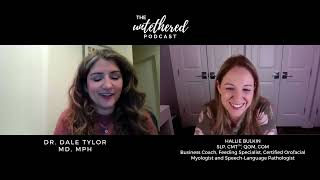
Pediatric ENT Dr. Dale Tyler discusses tongue and lip ties, how to diagnose them by function rather than appearance, and why early treatment can prevent feeding problems and maternal postpartum depression. She covers different surgical techniques and why a team approach with lactation consultants and therapists matters.
Chapters
Hi and welcome to episode 91 of the Untethered Podcast. Today we have Dale Tyler joining us. Dr. Tyler was born and raised in Montreal, Quebec, Canada and graduated from McGill University Medical School. She completed her otolaryngology, head and neck surgery residency at the University of Florida in Gainesville, Florida and a complex pediatric otolaryngology fellowship at Rady Children's Hospital in San Diego. It was in San Diego where she really developed an interest in inklogia and she then went on to be faculty at Vanderbilt University in Nashville, Tennessee. She relocated to California for her husband to complete his radiology training in the Bay area and in 2017 they settled in Santa Barbara where she is a co owner of Riviera ent. She has started three tongue tie programs and completed a Master of Public Health thesis on the topic of the impacts of phrenomy on feeding and speech at the University of Liverpool in the uk. She's an advocate for mother infant dyads and the appropriate management of tethered oral tissue within the field of otolaryngology. Quick disclaimer all information, content and material of this podcast are the opinions of the speakers and is for the informational purpose only and not intended to serve as a substitute for the consultation, diagnosis and or medical treatment of a qualified healthcare provider. Welcome to the Untethered podcast. I am your host, Hallie Balkan. I'm a certified orofacial myologist, feeding specialist and mentor. This podcast is all about getting your questions answered and collaborating with colleagues to bring you the most up to date information in the orofacial myofunctional therapy, tethered oral tissue and airway space. I challenge you to keep an open mind and join my mission to get this information out to the masses. Let's get started. Well, Dale, thank you so much for joining me today. You are the first ENT we've had on the podcast and I'm really honored and excited to have this conversation with you.
Thanks. I think it's good to get our voices out there, especially voices that are sympathetic to the cause.
Absolutely, absolutely. So let's just jump right on in and talk about, like, how did you get interested in the topic of tongue ties and tetradural tissues?
Yeah, I sort of fell into it during my fellowship training. So when I was a resident, you know, I had performed probably a couple dozen of frenatomy or frenuloplasty procedures, but there was not a whole lot of thought given to it. I wasn't taught. You know, you cut until you see certain structures or it's just sort of like you cut the band and then. And then that's it. You know, you put some pressure on it and it's done, but there was never any sort of functional part of it. And so it was sort of more of a chore or you just really didn't think about it that much. That was five years of training and there was nothing. And then when I started my fellowship in San Diego, I was actually really shocked. I had this moment where I was flabbergasted because I saw a baby who was tongue tied. And the IBCLC accompanied the family to the visit. And after I did the procedure, she felt, and she said, well, you didn't cut enough. You need to cut more. As a surgeon, that was pretty flabbergasting for a non surgeon to say that I had to do more when I sort of just did what I always did and felt like everything was fine. And you know, one of my mentors at the time said, no, you need to listen to them and you need to look at that and you need to know that they're right and you're wrong. And I think that was some sort of like, revelation moment for me where I came to realize, well, okay, maybe I am, you know, a board certified ent, but, you know, I don't know anything about this. And so through that and through my, you know, couple of years in training there, I saw, you know, you know, hundreds of patients that, you know, I started to get a better understanding of what the problem was and, you know, how needed it was to find providers to treat this, you know, all over the country. Because it seemed to me that more of the people out there were the ME of residency when I didn't know what was going on, versus the ME of fellowship when I became more enlightened. And so during my fellowship, I actually started a Master of Public Health and decided to do, you know, that maybe tongue tie would be a good topic to look at in that regard. And then I went on faculty at Vanderbilt University and I started a program there and I decided to, you know, get my thesis or, you know, do the research around the thesis of the tongue tie and just sort of, it started building and building and it just seemed like every year I was learning different techniques and just modifying and honing the technique, you know. You know, in my fellowship, I barely did a single lip and that started to become a thing. And I had to sort of move myself forward in terms of my thinking and opening my mind that yet this is another thing even Though I've been doing hundreds of tongue ties now there's this lip that maybe I've been missing all along. And so it's just sort of been honing the process and that sort of was what started me on this path.
That's amazing. So, I mean, it sounds like you've really evolved since the beginning, but it's really cool to hear you say that because is it's so hard locally for us to find an ENT who is in this space. And even those who say, you know, they're really learning about it, they've entered this space. I still, I just don't get the same type of feedback as I do from like my dental providers locally. And you know, so it's been, it's a really interesting conversation. But I really love hearing, you know, your journey and your evolution into this because, you know, you were able to keep your mind open and that has really led to, I'm sure, a lot of amazing treatment for your patients. And, you know.
Yeah, I mean, I definitely have been surprised and disappointed that my specialty, as the knowledge of this topic evolves, has elected to take a stance that is very either confrontational or disbelieving or attempting to disprove this as an actual problem. And that's been very sad to me and it's actually pushed me to speak out more because I just feel like we're doing a disservice and it would be great if all of our trainees came out with an understanding, you know, in a problem that affects everything that we do in ent from, you know, breathing and feeding and speaking and, you know, it's just, it's an, it's an easy problem if you know how to treat it. So it just seems quite remarkable that we're taking a stand that it doesn't exist.
Yeah, no. And there, there's quite a divide in my profession as well among speech pathologists. And I can't speak as much to the RDHs and the OTs and everything that I also, I work a lot with a lot of them in our programs but, and online. But, you know, I just know there's such a divide in the speech pathology world and a lot of it stems from again, just not being taught any of this information in our graduate programs and, or if anything is taught, it's very anti this topic or they, they defer to calling everything do in the mouth, non speech, oral motor exercises and end zones are, you know, there's this whole, you know, slew of research against end zones and we're like, we are. We're not doing that. That's not what this is. So it's. There's quite a divide and it can get pretty ugly. But that's also what prompted me initially, actually when I created this podcast, I went to find the podcast. I was like, I need a podcast on tethered oral tissues and myo and, you know, related to airway related topics. And it just wasn't there. And I was like, oh, man, now I gotta create this.
Great resource that, you know, I definitely think needs to get out there more, that people need to know that this wealth of knowledge is already out there. So that's great.
Well, thank you. And you know, and part of it I know, and you can relate to this is I was the mom. I wasn't just the practitioner, but I was the mom and the patient and the practitioner. It was like, you know, the triple whammy, the trifecta of all things hots and airway and myo. And so can you share with us a little bit about your journey firsthand with that?
Yeah, I mean, I do think a lot of ents that come to be advocates in managing tongue tie appropriately have come to it in a different route where their own children were impacted. And only after they saw the benefit, when their own kids were treated, did they really come to realize that they've been missing the boat. I was the opposite. I'd already done my mph. And when I had my first child, first latch, I knew instantly. I kind of like cringed and just said, of course I knew it. I knew I didn't even have to look. I just knew it was the most painful thing ever. And I have a pretty high tolerance and it was awful. And I knew what it was from the first latch. And I literally gave my son a pacifier in the first hour or two of life because it was just so not sustainable in spite of everything that I knew. And I just had to get out of the hospital and get this treated. He lost 13% of his body weight and then he got jaundiced and it was impossible to get the blood for the jaundice because he was dehydrated. And I was trying so hard to pump and feed him. And I ended up needing to give formula, which I felt bad about at the time. And ultimately where I was living at the time, while it was the Bay Area and there's tons of people, I was sort of the medical person and I sort of didn't have as much knowledge of all the dental people. So I decided I Had to do it myself because I really didn't trust anybody else to do it. And it wasn't like a. An ego thing in that way, but it was truly. I sort of was the person that they came to when incomplete cuts were done, you know, on the academic side, or they were, you know, pushed aside there. And so it was a strange, you know, thing for me to be the, you know, proceduralist on my own child, but it literally put him on a trajectory of being, you know, of really flailing and doing terrible, to literally going off of the growth curve, and he's never come back on it again. He's, you know, over the 99th percentile. And height and weight. That was a huge thing. And then when I had my second child, it was the same thing. And I knew what happened the first time, and I literally. Same idea. I gave the pacifier, and I gave her formula within two or three hours of life because I didn't want her to be dehydrated. I just needed to get out of the hospital. At the time, I knew Dr. Shervin Yazdi, who has an amazing center in Castro Valley in the Bay Area, and I had kind of reached out to him before, saying, look, I don't want to cut my own kid again if this happens. Can you do it? He said, yeah, no problem. Of course, the day you get out, just come on over kind of thing. But then she ended up being born the Saturday of Labor Day, so I had to wait three whole days to have it done. During that time, the first day, even in spite of me giving formula and pacifiers and trying my hardest, I was already bleeding. So it was. It was sort of like those really severe cases. And I was really lucky in that it was the sort of thing where when the cuts were done within a day, it was, you know, the miraculous story. So I was, you know, I was lucky. But it just. It just brought home, you know, how much of a difference it made, and it reaffirmed everything. And it actually made me, you know, it gave me more fire to fight for these, you know, women that were having their needs ignored and babies that needed to feed for something that was so easy to fix early on.
Yeah, no. And I can 100% relate to that. My first one, I didn't really fall into this space until my first one had just turned 2. And when I went to my Mayo course, I was like, what is this myo thing? Like, nobody taught me about this. What is this? And I started to find out more about it, and I went and I decided to get certified. But the day I came home from my course, I was sitting with my 2 year old in the rocking chair in her room, and she flipped her head back and her tongue went up and I went, oh, my gosh. This is why. I had 13 months of painful breastfeeding. Like, I was that mom who struggled, and thankfully I was able to keep her at the first percentile, but she never got above the fifth and was all. She was that kid who also dropped 9% in, you know, in the hospital, and they wanted us coming every single day for weight checks. And I was in pain. And the lactation consultant said, she's fine. There's no tongue tie, there's no issues, you know, and then, you know, it's like you take your car to the shop and they reposition or they do something and everything's fine. That's how she was in front of the lactation consultant. I got home and I'm like, why can't I replicate this? Why is this not working? But I was so stubborn because again, I knew. I was like, I'm going to breastfeed my baby. I don't want to do formula. Not that there's anything wrong with it, but it was just in my mind that was my ideal experience that I wanted to have. And I'm stubborn and nobody helped me. So it was 13 months of very painful, all the symptoms, type of breastfeeding. And she was the kid who was kind of constipated and straining and uncomfortable and air aphasia and like, all the things lip and tongue. So we got her released when she was two years old, and she did have a lot of improvement in symptoms, but now she's also a kiddo who's gone into early expansion and myo and all that. Second child was born, and I was like, I am not looking in her mouth for the first 24 hours because I'm not gonna let them release in the hospital, so it doesn't matter. And the second she lashed, I was like, oh, man, there it is. Like, I don't even need to look. And it was just so funny because our hospitals, I don't know if they are like this where you are, but there's gag orders they can't diagnose. So as soon as I showed them, I said, can I have lactation come in so I can at least find out, like, some compensations in the meantime? And they came in and I said, look, she's got a tongue and a lip tie. And they were like, mm, maybe. Yeah, okay. And then, you know, didn't really. Didn't really say anything. And then the pediatrician, my pediatrician from outside came through and I showed her. And they're like, oh, yeah, there it is. And so then the hospital was like, oh, yeah, now we see it. Do you want our hospital surgeon to release that for you? And I was like, don't touch my baby. I was like, we just went from no diagnosis. You wouldn't even look in her mouth till you went to billet through the hospital with your surgeon, who I don't know. I'm good. I will take her to my oral surgeon who releases a lot of my patients who I fully trust. And we had her released on day five, and it was night and day, and I was very thankful and lucky because she's also that kiddo who then just didn't struggle with weight or anything else. Very different experience than my first. And so I think it's really helpful as a mom to have been through that, because I can really relate to a lot of my patients.
I see that again and again is in some of the families who may have been either late to the diagnosis or reluctant to consider it, and then sort of get it performed on a baby who's older, four months, five months, and then just even see the remarkable differences at that late point. Then I warn them, I say, well, listen, or I tell them going into it, you know, I'm not going to be surprised if a year and a half from now or two years from now or, you know, whatever. I get a phone call from dad in the hospital saying, okay, the next one's here and we're going home tomorrow. When can we come? Like, cut my baby? And that happens a lot when they've been through so much suffering and they just sort of see, like, this little thing fixed everything. It's just, you know, the hesitation they have for a procedure on their newborn, it vanishes because they understand that there's a point to this and that this is, you know, an anatomic problem that has a quick fix that, you know, if it's done early enough. So that's a huge number of the patients that I see are the siblings of ones that I've helped in the past. And certainly it's very unusual when someone's had it done the first time, that if this problem happens again, that they wouldn't want it again.
Definitely not those newborns. I mean, when we get in there with the newborns and get it done, we really don't have to see them much. We just Give them a little post op and some, a little plan and they're well on their way. It's those kiddos that come to us when they're already three, four, five months and we're like, well, you should still do it, but we need to prep a little bit differently and we need to. There's probably going to be some feeding therapy post op because we need to now train the tongue to function differently. And occasionally, you know, they get by without having like needing all the post op work. But I always tell parents, I'm like, I'm hopeful those parents that are listening to this don't give up. There's never, I always get like, messages like, is it too late? Like, it is never too late. It just might look a little different.
Yeah, I mean, I definitely, whenever I see the ones that come in that are four and five and six months, I sort of feel a little sadder because I know it's just going to be a more difficult procedure and the baby's more alert and there's more chances of going on strike, nursing strike, after just the recovery just looks different. Whereas on some of the newborns, just on walking back from the procedure room to the parents, they were already sleeping and happy. It looks different. But I think that is why we have to do what we do to get the word out. Because, you know, treating something before it's become a real problem is much more helpful than having someone struggle for months and months and, you know, be at risk of significant postpartum depression. You know, I am constantly struck by, you know, some data that was published that said that the number one predictor of postpartum depression, apart from going into it with a depression, you know, problem depression, is the desire to breastfeed and inability to do so. And the number one protector against this depression is the ability to successfully breastfeed when that was your goal. And so, you know, when you look at these mothers who are trying so hard to just take care of their baby and it's, you know, it's nature and, you know, essentially they're being made to feel that they're the problem, that their milk supply is poor because of something on their side, not because the baby's not stimulating it because they have an inappropriate suck. You know, I just think it really is shocking to me, you know, how many moms have been told that this is their fault and they just need to try harder or they just need to suck it up and, you know, deal with it and the pain's not that bad and they're Exaggerating, and it's. None of that's true and it's all counterproductive. So, yeah, it's really an important problem.
Yeah, I mean, I can agree. That's part of why I became so passionate. Obviously, the babies, but the moms, you know, these moms sitting there and going, I've been there. I was you. Even the relationship between my now five year old and my, you know, almost three year old, it's different. And it ties back to our first year experience with feeding. And, you know, I love both my children equally, but we struggled a lot in the first year, and I've talked about that. And I never really considered my health. Even a mom who had postpartum depression, I was always happy, but it was hard and it was painful. And no mom should have to experience that or be told that this is normal, because that's what I was told. And that really infuriates me when you just said that fact. I got chills from head to toe over how highly related postpartum depression can be to the inability to feed your child and breastfeed your child. If that was your goal. I mean, that's just absolutely incredible. But it makes sense. Yeah.
And I think part of it, you know, on the surgeon side, and we could delve more into this after. But, you know, earlier on, you know, seven or eight years ago, you know, the best predictor we had of success of the procedure was maternal nipple pain. So when I started the program at Vanderbilt, I was one of six PZNTs. I was the only female. I was the only one that really had the interest in this. But I told my partners, look, if you're seeing these patients, you have to ask the mother about, you know, are they having nipple pain? And they're like, we are not gonna ask the mother about that. You know, I'm an ent and it's like, I mean, you're a physician and, you know, you should ask about that. There's nothing inappropriate about that when they're coming to you with this problem, but it's just. I just think we do such a disservice to mothers for, you know, people's own weird, uncomfortable, you know, uncomfortableness around breasts. I don't know, I'm not exactly sure what it. What it comes down to, but, you know, it's certainly hindered the care of the babies.
Yeah, no, that's definitely, I think, something that a lot of. I've seen a lot of Instagram accounts trying to normalize breastfeeding and normalize, you know, Mothers breastfeeding, as this is a primary means of feeding their children, this is not a sexualized thing. And there's a lot of, I think, discomfort amongst certain male professionals out there that don't want to ask the questions. But, you know, when they end up in our office, we are asking that mom has asked as many questions about her as we are about the baby. And we're not my team, we're not. We're not lactation consultants. We're not treating the mom. But we still need to know this information. And that way we can refer out if they're not already working with lactation. So, yeah, no, you make a very, very valid point. And mom is equally as important as the child, especially in a breastfeeding relationship. It's a dyad. So, yeah, absolutely. So let's talk a little bit about. Everyone says it's not about the tool, it's about the provider skill set. But I know that you've had a switch, I think, in the tool that you're using. So can we chat scissors vs lasers for that?
I mean, at the end of the day, I entirely agree that it's certainly more about the technique short of the tool in terms of completely treating the problem, making sure that the release has been complete and not inappropriately deep, not haphazard, dedicated, addressing the tethered fascia over the geniogloss muscle. And, you know, if you need to, creating sort of cuts laterally in the diamond to make sure that you can get that full lift, the full vertical, you know, healing to allow the tongue to elevate. But for the longest time, you know, for my entire career, so from when I started my residency in 2002 until literally this year, all I'd ever done was scissors, you know, and then possibly if it's in the clinic, you know, with silver nitrate, if there's bleeding, versus in the operating room with, like a, you know, electric cautery. And my results are pretty good. You know, I was pretty happy with them. You know, people. People were happy. Admittedly, I thought that the wound was pretty yucky. Looking after. I mean, my own son, I used silver nitrate for him, and it looked, you know, green. And, you know, it was a big scab. And, I mean, it looked ugly, but it's sort of like it did the trick. You know, he had less pain than my daughter, who had it done, you know, not by me, by a different technique. And I, you know, I thought it was okay. But what really troubled me and why I switched to at least, or why I purchased A laser was, you know, I could, I felt like I could do it with scissors in the clinic up to a certain age, maybe about five months or six months. But after that I felt like they're too awake, they're starting to get teeth. And the scissors was just, it was more difficult to be precise. So, you know, in speaking to others that did this, it seemed as though using the laser in that case would allow me to not take these kids to the operating room. And I, so I got it for the older kids, really. But then when I was, you know, I got the laser and it's a huge purchase, right? In the ENT world, we don't necessarily use it for a ton of other things. I mean, there are some applications, but unlike the dental world where a laser can be used for a lot of things, so it makes sense to have it in the press practice. It's a huge purchase for something that you don't get paid more for. And, you know, scissors are almost free, you know, essentially. And so, you know, I started an ENT practice this year actually, and that's, that's why I was able to do this finally on my own. But my partner was kind of saying, do you really need this? I mean, this is a really big expense for we're just starting up. And I was sort of adamant, like, if I'm going to start my own practice, I need this. I really want this. This is sort of my thing. And when I was getting the on site training of just how to use the specific laser and I saw the patients back in a week, it was like they had less pain, they healed better, the wound looked better, everything was better. And I sort of became an instant convert because it was just shockingly better. So I admit that in my mind, in my hands, that I just think I can get a better, cleaner wound. The pain does seem to be better. And I think part of it was I was using silver nitrate more. If there was bleeding, I sort of liked it totally clean. And that I think was probably burning them, I don't really know. But there are times that parents have a preference to not use a laser, which is whatever they want is fine. But, you know, given the option, in my mind the laser is optimal for the clinic. In the operating room, I still use scissors, but I put stitches. So if we're going to go to the or, I put stitches. And I think stitches are so nice in a lot of ways because it does take away a little bit of the problems with scarring and it does let you, to get you know, more lift immediately. Although I do think that they have a rough go for several days with swelling with the stitches that, you know, I do warn the families that it can be rough, but I have a harder time with stitches in the clinic. You know, on the young, I certainly don't do it on the babies and whatnot. With the COVID pandemic, I sort of stopped doing some of the things that needed stitches on semi cooperative, you know, toddlers and whatnot. But I think that the laser is nicer. I'm very happy with it. I have the light scalpel, which I think is just a fantastic tool. And I think there's only three Ents, myself and Dr. Gahiri and Dr. Sagi that have it. There may be some more and I hope more get it still. But it's been totally worth it for me. It's certainly made it faster and a better result. I think in my mind that's where I stand on it, that first and foremost just do it. Right. But when you're talking about the more finesse side of things, if you get really into this type of field enough, then it certainly makes a lot of sense to look at the laser.
Yeah, no, and I appreciate that. Me and both of my kiddos had ours released with the light scalpel and I was surprised actually. As an adult, I expected to be uncomfortable in pain. And that night I was fine and I was like, why am I not like in more pain? Like why? I just thought like tissue has been cut into. Why am I not uncomfortable? So that was really interesting. And then I feel like with the baby, 5 days old, she was fine. My 2 year old did go on a little eating strike, but she already was a super picky eater, so that was not surprising. But anyways. But she didn't seem to be in pain really. And it's an interesting conversation, especially locally because, you know, families like to go to ENTS because they're a network and they can get it covered. But we have that struggle, like you mentioned of, well, if they're under five months or six months or so, oftentimes the ENT will do it in office with scissors, but past that point they want to send them to the or. And then parents get very nervous about anesthetics and you know, if it's not a local anesthetic or, you know, sedative, whatever. And so, you know, I think that sometimes dictates like which way parents will go, insurance and anesthesia. But you know, it's. I always say, look, as long as the provider knows what they're doing. I'm good with whatever decision you make. But, you know, there are also a lot of providers who shouldn't be doing the procedure because oftentimes these kids end up going to one of my other providers in the area.
I think that was one of the issues that I had early on with the laser for me was when I was at Vanderbilt and I was seeing some kids coming in from the outside, they would have had inappropriate procedures with a laser and developed scarring. And some of the worst things I saw were essentially burns in the mouth from a laser strength that was off or the cutting into muscle and other things. And so, I mean, I had to do some kind of repairs in the operating room to try to get tongues to move that were fixed down from lasers. So I had a perception that the lasers were bad in that regard. But yeah, no, I think that the appropriate laser in a trained person is fantastic. And it's sad because ents know how to use lasers, so that wasn't hard. I think the training of me from the light scalper side was pretty quick because I sort of, you know, I did a lot of tongue ties anyways and I've used lasers before, so that. And you know, that was not a problem. But I think that the laser also is something that has poisoned the well on the ENT side because they see it as some sort of money grab. They don't really understand that the dentists aren't just buying it for tongue ties. I mean, they're using it for all kinds of other things. And it's one of their tools that are standard for them. And it's not, you know, it's not a money grab to do that. You know, it's.
I know like from speaking with my local team that they're like, we're not making money off of doing these tongue and lip tie releases. Like, the money is made in other procedures. And in fact, the amount of time that we spend speaking with a patient for a consult and that, you know, they're like, it could be two, three hours for a five minute procedure. They're like, it's actually probably costing us money more than it's making us money. But everybody perceives it as this quick money making thing. And I'm sure there are people out there who are not spending the time doing this and they are just, let's release a tissue, send you on your way. And in that case, that's a very different story. But I want to change that perception because I think that for the teams that really are sitting with the patients and asking mom about her symptoms and the baby symptoms, or finding out about the toddler or the older child or adult symptoms and really spending the time with them. They're investing their time and money. They're not making big dollars off of these procedures.
Yeah, I mean, as a general rule, I schedule the appointments for the babies with tongue at least 45 minutes. And in a surgical office, like, that's a. That's a long time. And then I see them all back. I mean, a lot of the ents don't even see them back, you know, and I see them all back for another long appointment because, you know, I see them back at a week, actually, when they're usually at their worst. And I do it on purpose. I tell them that before I say, look, I'm gonna see you in a week. It's more of a psychology appointment where I'm gonna tell you to keep going and we're gonna look through everything. You know, if I wanted the nice, you know, pat on the back and thank you so much and the hug, then I'd see you in a month. But I'm not going to do that. I'm going to see it a week when you're kind of like, kind of hate me a little bit or not sure and second guessing what you did, and that's why we're going to do this. And they all forget that I say that, you know, but that's true. And I just think that, you know, if you don't see them back and you don't do those things, then I think it can be a little bit easy for them to just give up because they kind of feel like I've done everything and it's a week later and we're not better or we're worse or a little bit better. But I really don't. I didn't see what I wanted to see. And I think that's part of our role in, you know, on the surgical side is to still be there and to still say this is normal and this is what to expect with the recovery and that it's not necessarily going to be better quickly. And so it takes a long time. And I'm constantly have these big models that I use and analogies. I think the analogies really help the dad kind of, to be honest, as much as anything, but because I think they just don't. They just don't see it. They don't see how bad the breastfeeding is and how painful and how when you're feeding for 65 minutes at a time, and then the baby's hungry 45 minutes later. That. That's not sustainable for anybody. That's like worse than the torture that prisoners are given in, you know, war times. And so, you know, I think the analogies are helpful. I think Dr. Gahiri has a lot of great ones. He uses a really good analogy. I think that helps me and helps the families to understand, which is, you know, it's like you're training for a marathon with your shoelaces tied together. So I get up and I kind of mimic like, you know, look, you can do it, you can run, but, you know, you're going to be kind of pacing. Your knees may hurt, your hips may hurt, you're not going to win, but you can do it. You can muddle through and sort of do it slowly. But if on the day of the race, you then separate your shoelaces, you know, separate the shoes, you don't have the quad strength to kind of do big runs and all, you know, is sort of kind of back forth, back forth. So if you're now released, you're of like, you could be worse and more, you know, get a slower time than when you started. But at the end of the day, the only way to win the race is going to be to, you know, get the shoelaces untied. And so I think that analogy is really helpful. I mean, there are other ones too, but. But I think that by relating it to non breast anything and non baby anything does help to get the point across us.
Absolutely. No, I, and I love that. I don't think I've actually heard that one, you know, before. And I. But I think that that's brilliant. It really speaks to the compensations without calling them compensations and without talking about the medical side of things. And, you know, and like you said, I think the fathers are sometimes our biggest obstacle because these moms are experiencing it firsthand. And, you know, the dads are supportive, but they still don't fully get.
You don't get it.
You don't really truly know it unless you're living it, right? And so, so it's getting through to the dads because they're like, oh, this is expensive, or, oh, this is, you know, why would I cut my baby's mouth? You know, and there's all the objections. And so, you know, I love analogies and I love being able to relate to both sides of the. Both partners in a dyad or in the relationship here. So that's fantastic. So in Talking about team, who do you have on your team, or who do you feel is an important part of your team?
I mean, I think one of the difficult things about teams in general is it's very dependent on where you live and what services are available. So, I mean, I'll start with that. There's an optimal team, there's dream team, but then there's like, the reality team of what you could piece together in your own community. Because for everything, you know, like, you can be the best sleep apnea surgeon and have the best pulmonologist and whatever else, but, like, if you can't get a sleep study for six months, like, you're in trouble. Right. And so, in the same way, you know, it sort of depends on what the problem is. But some communities have much less resources than others when it comes to the lactation side or the speech side or the bodywork side or the proceduralist side. And so you can piece together certain things virtually and you can drive for certain things and whatnot, but it's hard. So I guess what I'll say is I work with what I can work with. And I've had communities where I didn't have access to some of the pieces, and I didn't think it was ethical to, you know, if I had a family that just couldn't get to lactation and they didn't have this, and, you know, I would work with them extra long and try to give them things, but I wouldn't deny them a procedure because they couldn't see lactation. Yes, it's ideal. Yes, I wanted them to see lactation. Yes, I went through all of that stuff. But, you know, if I have a baby who's, you know, 12 days old and they haven't gained weight, then I'm not gonna wait for them to get a consult and then come back. It just. And people will disagree with me on that, but I just don't think that's practical. And I just think we have to at least try something, given certain community.
What'S available. Yeah.
But with that said, you know, I think when you're dealing with, you know, breastfeeding issues and babies, lactation obviously is a huge seat at the table, perhaps the biggest seat, making sure that there's not other things going on. I have great lactation in my community. There's lactation in the hospital. There's a program in which there are nurses. They're not IBCLCs, but they can actually visit all the families of all the babies that are born in my county. So they can kind of serve as, you know, at least identifiers of if there's problems. I have a really special, special relationship with an amazing resource in my community. Her name is Dr. Katrina Mitchell, and she's a physician and a breast surgeon, but she's also an ibclc. So working with her is so amazing because she can diagnose and treat, you know, postpartum anxiety and depression issues. And so she can treat the dyad in ways that, you know, typical lactation just can't. It's just not part of their scope. But she has that. So I think I have a wonderful team here. We have, you know, individuals that are craniosacral therapists. We have, you know, on the chiropractic side and on massage side. So, I mean, I think that bringing in these pieces, you know, speech, if it's necessary, especially on some of the children that maybe not be, you know, neurotypical or, you know, that may have some other medical things going on, there's wonderful pediatric OTs that can play a role too. So it's sort of everyone, you know, I try to find the team that is the most interested in the problem, you know, and I have a goal of this year kind of creating a consortium of people that we, I know that are all sympathetic to the cause so that we can preferentially get people in a system where they're going to get the best care. So, you know, that's sort of my team for the babies. For the older kids, speech certainly plays a much larger role, I would say. And I do get a lot of referrals and work a lot with individuals who are myofunctional therapists. And I think that, you know, those types of individuals, when the compensations are so long, you know, etched in stone, basically, to try to break some of that, it is not, you know, me just doing a cut is not gonna. It's not gonna get the optimal result, you know, so. So I think that the teams are sort of different depending on what age it is and what the problem is. And, you know, of course, there's other reasons, you know, that the tongue. I'm always looking at it. You know, if I see a kid with sleep apnea or if I see a kid with whatever, I just sort of all the screen and then I ask, you know, how was it with breastfeeding? They're like, oh, it's terrible. You know, it's like inevitable that that's what they say. But, you know, I sort of look at it in the whole picture of everything these days. And so depending on what problem we're treating, I will loop in whoever, you know, would be most ideal to come into the team.
Awesome. Thank you. I know it's always a big discussion amongst our MYO groups and you know, we say sometimes really just have to build your team in your area. And you know, Autumn has a course on that and she's really now plot the tot and everything. And I'm like, go talk to Autumn. She got a course for you? No, it's one of those topics where you have to work with the resources that you have and then you really need to focus on trying to find those providers sometimes who have interest in learning with you if you don't have it. But I love how you also separated out who is maybe more ideal for the infants, the breastfeeding dyad versus the older children on up. But again, it's sometimes going to be just depend on your resources and just depend on what you can do. So I appreciate that. Now let's talk about the big elephant in the room. The American Academy of Otolaryngology. I know that they had published recently the clinical consensus guidelines on Angloglossia in children. And I know that Dr. Gihari and Dr. Zaghi and that you have published the rebuttal on it and you disputed some of the consensus statements. So can you talk about that? Where are we with that?
I mean, it was. Dr. Gahiri and myself have been giving a course for the last few years at the American Academy of Otolaryngology meeting. So it's been an interesting evolution where the course that we give is a breastfeeding specific one, largely to keep it as vanilla and free of some of the subtleties which in the ENT world would hurt us. I mean, I've always wanted to throw in other things, but we just, it's just, it's too fraught with, you know, minds and, you know, dynamite to kind of delve into all of it right now. So we're trying to start with what the science is best supporting and whatnot. But it's been interesting, the evolution as we've been doing that. We initially had very few attendees versus the group that largely published this, which consists of individuals in the academic world on the pediatric ent. And they always seem to have more. And it was always kind of like our side was being scoffed at, you know, and then the following year we sort of had equal and, you know, or more. And actually, yeah, the second year, I think, was when they had announced what some of the guidelines were going to be, but they hadn't published them yet. And Dr. Gaheria tried to get on to the panel to make the, you know, the recommendations. I didn't even know it existed. And he was not allowed on. And so when it came to this consensus, he was not allowed on. I was not asked to be on there. And you know, yes, there are some individuals that are looking at tongue tied to express some kind of interest in it, you know, albeit in ways that I don't necessarily agree with. But it seemed like a very select group of people that they claim, you know, were chosen across the field for pediatric ENT and different representatives. But it was quite a non heterogeneous group. I mean everyone sort of had similar feelings. So when it came to these consensus statements, so they didn't have enough evidence to put out clinical practice guidelines, they couldn't do that. So they published this clinical consensus statement which is almost worse in some ways because it sort of is being taken by the pediatricians and the other ents to be a clinical practice guideline, which it's not. It was never designed to be that, but it looks like that. So the PR on it is painful. And so as soon as we heard what some of the recommendations were going to be, we were super angry and we started thinking about how we were going to rebut it once it came out. We couldn't like preemptively rebut it, unfortunately. And then it became a whole process where, you know, some of, I mean, a lot of the statements were not ideal and were not helpful in the care of the babies and were harmful in many ways. And we then started on this odyssey of trying to get a rebuttal to this published to at least indicate that this was not a consensus in, you know, in the people who treated this a lot in our field. And everything got rejected, it just kept getting rejected. So we had a longer one that was rejected and they said, no, you have to do a shorter 400 word one. And that was rejected. And it was sort of like that was that. And it was like they were suppressing us. And it was actually through social media. I'm kind of an administrator of one of a physician moment group that I was kind of bemoaning this because they're always like, well, show us the evidence. You know, there are skeptics on there, but there are people that listen to me and whatnot. And so then I kind of explained what was going on and one of the women on there gave me the email of the editor in chief, and I wrote to him directly from the journal because we couldn't, you know, we didn't know who's rejecting our stuff. But, you know, they're probably more connected to the academic side than to us. And through kind of, you know, explaining the case to the editor in chief, where I said, you know, you're suppressing science too, by doing this. And I just don't think that's a good look for our academy, which I happen to be on the board of governors for. But I think through my contacts within the academy and through some of that, they allowed it. But then it took seven months for them to publish our rebuttal, during which time they continued unabated with the original guidelines. And they also published a rebuttal to our rebuttal, which. Which basically referred to me or us as zealous. Not overzealous, but zealous anyways, in terms of the management. And so I don't have a desire to become a profiteer over this. I just want appropriate care of the patients. So anyways, for what it's worth now, in the published literature, there is a rebuttal to that. But these guidelines, there's a. I mean, not guidelines, these consensus statements. There's a host of them. Many of them don't make much sense at all. You know, like, they specifically have one that's. They reached consensus on don't numb babies for the procedure. And so why would you not. Why would you not consider that? I mean, would you want to be numbed if you were done? I mean, why would you not offer, you know, a topical, you know, gel of something? You know, there have been some studies looking at a medication, benzocaine, that could have problems, but that was sort of. You don't have to use benzocaine. You can use other things that are safer and that can be applied easily and that don't result in some of these other problems. So it's just kind of very picky guidelines that, you know, basically reject most of, you know, what we know to be true, you know, clinically, what we know to be true and anecdotally and. And what increasingly literature actually says. It just. It was excluded, you know, data on, you know, all kinds of things. They. One of the things that infuriated me more than anything was they made a really big point of calling the mother infant dyad, you know, a vulnerable population and one that needed to be protected essentially from vultures, you know, swooping in and doing procedures on them, versus the reality, which is their vulnerable population, that have been suppressed in their ability to get care by, you know, this paternalistic, no, you don't need it because it's not a problem, you know, attitude. And so I definitely think they twist a lot of what we know to be true to try to make it that the procedure is unnecessary or is excessive or, you know, it just. It just didn't. It just didn't sit right. And it continues to be a disappointment to me, you know, when we don't require an ent, the level of evidence that they're wanting to require for tongue ties, for things like doing tonsils and doing ear tubes and septoplasties and, you know, managing congenital cysts of the neck or thyroids or whatever it would be. But we have this high lofty threshold that we have to reach to get the evidence for this one problem, and we don't have it for any of the other problems. And so if this is the hill that they want to die on, I just don't agree with it, and I think it's sad.
Yeah, yeah. No, and there is definitely that divide in our profession, like I mentioned before, and it does tend to be a lot of the academics versus the clinicians. Right.
And.
And it's, you know, you're not treating these patients. You're not sitting across from this mother who is giving you a laundry list of symptoms for her and her baby. And, you know, if we can do something to help them that is minimal, it's really a minimal procedure to really set them up for such a high level of success. You know, in so many cases, it's. Why not. Why wouldn't you do it? And exactly. Like, why is this the hill you want to die on? Like, you don't. It just. Yeah, it's. And that's really.
You know, we're not saying everyone with a frenulum needs a frenulum coat. We don't. I mean, a frenulum is a normal anatomic structure. That's fine. It's when there's restriction, when, you know, so many are still thinking that, like, protruding the tongue is the important thing with feeding. They don't understand the elevation bit of it. And it's. It's. It's shocking. You know, all we're saying is if there's a problem, treat a problem. We're not saying, oh, just check everybody and just cut anyone that has any sort of evidence of restriction. You know, it's just keep keeping an idea that this problem, this failure of these cells to die off has led to these problems with feeding That's a fixable, you know, scenario. And so, yeah, we, we have a.
Long, long way to go.
But, you know, I just think that history is going to be on our side. And, you know, my personal opinion is the only reason why this appears to be fad, like, and growing in the numbers that are done is related to social media. So having been, you know, doing this since, I mean, at least to some fashion, since 2002, the thing that I've noticed that's different is, yes, there's always kind of naysayers in the medical community and, and that's not changing. There's always controversy to some degree, but the numbers are going up because you have these entire groups of tongue tie and lip tie support groups and self advocacy. And that's a good thing. That's not that there's a fad. It's literally there are finally enough numbers where the mothers can feel confident in being able to approach a doctor and say, look, I've looked at this. This is what tens of thousands of people are saying online. And it's something to consider, something not to brush aside.
Unfortunately, a lot of our doctors don't like that. And they say, Dr. Google and Dr. Facebook don't know more than I do. And we do have a lot of moms who come to us and they go, well, I tried. And I was shut down. And I tried, I went to this person and I was shut down. I was like, well, unfortunately just didn't land in front of the right people in our area. So let's help you out with that. And so I'm glad you're here kind of a thing. But yeah, it's. And I get it. You know, I get it because doctors go through a lot of schooling and you don't necessarily want to be told by somebody who doesn't always have the education you do how to treat them or their child. But at the same time, like you're saying, I think it's phenomenal that moms can self advocate and that they have this information to become their own advocates for them and their children. Otherwise they would be like me for the first two years of life where I really didn't. I didn't connect with those mom groups at that point. Until Tongue Ties, I had no idea that that's what was going on with my own child. And now this is like what I specialize in, you know, and so I've come, you know, 360 from where I was as a practitioner and as a mom. And, you know, and I'm grateful For those groups. I really don't love when people diagnose just based on a picture because really it should be driven by function. And I can understand where there's some upset over that. But you know, I think that moms supporting moms and getting information out there, like we need to shout this from the rooftops. And like you said, it's not that there's an increase in. Maybe there is epigenetically, there probably is an aspect there, but I think, I think there is.
I mean, I agree, I think that there is a huge epigenetic thing. I definitely would say that when I had done my mph, one of the things I realized was when you look at the subset of parents coming through the clinic for these types of procedures, they're off the charts more educated than the ones in the general population by, you know, orders of magnitude. And it's not that smart people or, you know, which is, you know, basically like a proxy for having a higher socioeconomic status. It's not that they're more likely to have kids who have tongue ties. It's just they're more likely to be able to tell their doctor you're wrong. And I'm going to get a second opinion and I'm going to pay out of pocket for that second opinion. And I'm going to drive two hours because I have the money to pay for the gas and I'm going to get it. I'm going to keep doing this because the standing that they have versus the physician is different than so many of our lower socioeconomic patients that they are just struggling with this and no one's helping them and they don't have the ability to challenge the clinician that this is a real problem. And so, I mean, I would say a huge number of my patients actually come from a population of families that are not well off at all. And that's because at least those doctors, their pediatricians, sort of, we all have an understanding that the goal here is to, is to treat these babies. But by and large, when you look at who's coming through the clinic, I don't see a lot of teen moms. You know, I see a lot of 38 year old moms and 42 year old moms and ones that are just not going to listen to the pediatrician telling them that they don't have a problem. And I think that's, I think there are epigenetics that older moms maybe have more chance. I will say that I think there's something to that. There's something to maybe gestational diabetes or. You know, I myself was an older mom and had gestational diabetes with my first. And I mean, I think it played a role, who knows, with mthfr, with whatever else that there was. It's hard. I mean, it's hard to tease out, but I do think that it's most important for me to address the babies that are in the lower socioeconomic stratus because they are the ones that if they get shifted to formula, are more likely to have obesity and diabetes and that can shorten their lives. Addressing the problem in the early weeks of life may give them decades more. And not having blindness or diabetes or renal failure or. Or whatever else it may be, it may give them enough health to have them thrive more at school. And so I just think no matter what, all the babies should be treated. But I actually firmly think that we need to be targeting these at risk populations to make sure that they're getting the care that they need.
Yeah, I love that. I had an episode where I had an OT who was a mom who went through this and she spoke about her story and, and the title of that podcast was like be a Fierce Unapologetic Advocate. And I was like that. That's always stuck with me because I'm like, if there's one thing that moms. We do have parents who listen to this podcast as well. And I'm like, if there's one thing you take away from any episode on here, it's advocate, advocate, advocate for yourself, for your child, for your family, and don't take no for an answer. If you know and your mama gut that something is wrong, don't give up until you find out what the root cause of that issue is, whether it's tongue tie or something related or something else. So. So I'm a big proponent of that. And I think that everybody deserves equal access to getting health, getting yourself and your child healthy. So thank you for that. So will you share with us any interesting recent cases or anything that stuck with you? Maybe even if not recent, that were you releasing some fabulous outcomes from?
Yeah, I mean, I think that we all, you know, a lot of times it goes down to the mom and the baby and breastfeeding and things like that. But there are so many different problems that can come from having untreated tethered oral tissue, for example, lip ties, it sort of gets brushed aside and it's pooh poohed a lot more than even the tongue ties are, even though it's a great contributor to things and So I recently saw a child, he's two and a half, and he was coming to me because he wouldn't let his mom brush his upper teeth. And he would let him, you know, he would let her brush the lower teeth. And when he showed up in my clinic, the frenulum didn't even look that bad, to be honest. But he actually had a literal dental abscess, you know, above his left, you know, central incisors, left front tooth. And so I did the procedure to address that. But, you know, I could see why someone would. Would poo. Poo that. But you have to listen to the functional problem that, you know, this is a child who' lower teeth are fine and the upper teeth are all decayed. And why not address the frenulum? It just, it's. It's flabbergasting. And I can send you that picture, you know, if, you know, to put it up, if that would help. But it's just, you know, things like that that it's so easy and they just. It was ignored. You know, I had a dyad in which the mom was a celebrity and the baby was an older baby, you know, almost six months. And they came in and the mom was. Was not doing well, was crying and was upset and the baby was malnourished. And this mom had been sort of brushed aside by a host of medical professionals. And she had said that she was sad and she is saying the words and her own obstetrician and the pediatrician of the baby, none of it, sort of, none of it helped her. She was not getting help. And so they came to me and they saw Dr. Mitchell and it sort of like all the pieces fit together. And over the course of a weekend in which I did a procedure and some donor breast milk was procured and just sort of like everything was settled out. The mama started on some medicine. Seeing them back a week later, it was like a new child. The child actually had gained weight and looked better and the mom was happy and. And it preserved a relationship. And this is a celebrity. You would think that, you know, if anything, they would be treated, you know, with a greater level of care. I mean, not that it should be that way, but just the way the world works, you know, and this person was ignored and it really did a number on them and for a reason. I mean, the baby was not doing well. So, I mean, I think that brought hit home, you know, that these. It doesn't matter who you are, you can still be mistreated and under treated. I would say another One that really has stuck with me recently was a three and a half year old that actually breastfed fine. And when she weaned before a year of age, she stopped taking all food by mouth. She wouldn't take anything, no liquids, no solids, nothing, even though she breastfed fine. So the mom at that point, you know, wasn't making milk anymore. And it got to the point where the baby got a G tube. And over the course of over two and a half years of feeding, therapy and everything, they had gotten her to a place where she could take about 30% of her diet by mouth and the rest was by tube. And after doing the procedure, which I did actually jointly with a pediatric gastroenterologist just to make sure there's nothing else that's contributing to this problem. And actually she had like moderate sized tonsils that I was strongly considering addressing just as a cofactor. But a swallow study had sort of showed that they didn't seem to play a role in what the problem was. So I thought, you know, just because of her aversions, I'm going to not address this problem up front. But literally, after doing the procedure, tongue and lip tie, within three weeks she was 100%. And you know, that was almost three years of feeding therapy that got her to 30%. And you know, just doing the procedure got her to 100%. And the first week was, was not easy. She went back to refusing everything. The family was freaking out, calling constantly because they had finally got her to 30%. And now she was just sitting there and refusing anything. And so I was thankful she had a G tube at least, but I was a little nervous, but you know that they're elated and it just shouldn't get to that point. You know, these babies that come in with feeding tubes, something should have been done long before they needed that. And so, I mean, I just think that those are some things, you know, I see a lot of stuff on the speech side. I've seen a four year old with a stutter who, you know, it was really affecting his mental health. You could see he was sort of inside of himself and nervous and you know, we did the procedure on him. Actually, I think I did the procedure on him my day. I was sort of like, you know, learning how to do the procedure and he instantly stopped stuttering, you know, that day. And that's in spite of years of speech therapy, you know, and it's just, it's a lot. You know, there are other examples. There was a child that for years the mom had been Asking about, you know, the pediatrician, could this be a tie? He didn't breastfeed properly. And his speech, it was sort of a bilingual family where, you know, the mom was speaking to him in English and the dad is Spanish. Only speaker doesn't speak English. And the baby and the child who's five, he didn't speak to his dad in Spanish. He only responded in English because he couldn't pronounce the words properly. So he just simply didn't try. So he literally couldn't communicate with his dad at 5 years of age. And, you know, he needed a lot of therapy. He kind of was working with one of the myofunctional people here. I hooked him up for that. But after doing the procedure, he could talk to his dad for the first time in five years. And the dad then called us because he has a tongue tie that he just sort of. Now he wants it fixed.
Sounds familiar.
So there's just, there's so much, you know, there's so many different things. That's not just the simple tongue tie issue. But I just, I'd like, you know, the ents to understand that, and I'd like, you know, other people to understand that it's certainly not. Fixing a tongue tie is not gonna fix the world, you know, but it's certainly so many quality of life issues and, you know, family issues. Like to have a child who's G tube fed for over three years when a procedure probably could have fixed it and prevented all of that and all those years of therapy. I mean, it's, it's, it's sickening, you know, So I just, I would like to continue advocating for that and for the families to know that they're. There may be something else at play.
Yeah. And thank you for that because we get a lot of those babies. We get parents calling frantic with infants who are 10 days away from getting a tube placed, and they're like, can you help us? And we're like, there's no pressure with that at all. Okay, come on, let me squeeze you in. Even though we have a three week wait list, we always try to get our babies in asap, like within days. But we have had cases where we've been able to prevent a tube being placed in an infant because they initially, you know, we go, we do the eval and we learn about the case history and the birth history and everything. We go, oh, holy cow. You've got all the symptoms of tethered oral tissues. Like, let's go, let's send you on to One of our providers who we know can help you with this immediately, let's put a plan in place immediately, like let's get going, let's go to work. And you know, and I've never, you know, to this day had to. A child in that situation has never had to go on a tube because we've been able to, to catch it. And I've had providers who are open to alternative solutions like releasing tethered oral tissues and you know, maybe going for a, you know, a feeding program pretty intensely with the family right at that. So it's, you know, and those are not always easy cases. A lot of these kids end up in feeding therapy still ongoing for months. It's not like we fix it in 10 days, but we're able to prevent that feeding tube. And that's such a different, you know, a lot of these parents are afraid of it. That's the last resort, that's the last thing they want is for their child to be tube fed. And that's why they're calling us. So, you know, it's just, you know, on the other side of the coin, that's a lot of what we get. And yeah, there's so many functional issues and quality of life issues and health issues that can be treated by looking holistically at the child and figuring out, you know, are there tissues that do need to be released. So I appreciate that. Thank you. It's so refreshing and nice to hear. And I knew that about you already, but I, I love hearing it. Anyways, so are there any other thoughts, like anything else we haven't chatted about today? I know we've talked about a lot of different topics.
Yeah, I mean, I think most is just rehashing all of the things that we talked about that this is a team sport, you know, And I think that it's crucial to identify the people in your community that are sympathetic to the cause and that are willing to work as a team to look at, at the holistic situation, not just with the patient, but the dynamics with the family. And to have it as a team sport, I mean it unfortunately is a team sport to address this, but addressing the problem, it's never too late, but it's always better. Earlier I would say that I hadn't mentioned, but when I had done my thesis, what I found was I divided up all the kids who had had a frenontomy procedure for any reason by any surgeon over a five year period. And then I contacted all of the families and I sort of asked them a huge Inventory of how breastfeeding went and how speech has been and dental issues and other types of feeding issues. And then I sort of divided them up into a group who had done by three months of age. So I call that the early group. And then anybody else. And you know, the kids that had it done at the early group, they, you know, when you looked at the six month were they still breastfeeding? Over 60% of them were, which is actually huge because in Tennessee, 60% was actually a huge number, like way more than what the average population was, you know, versus like 25% for the ones that had it done after three months of age. And when you look at 12 months results, it was like 25% versus 7.5%. So, you know, it's over three times as many babies were breastfeeding past a year who had it done early. And there's huge bias in that, obviously, because the ones who are having it done early, the parents were seeking out this problem and they had motivation to breastfeed. But the things that I learned were we had a point where we're asking the families they could just kind of freeform talk. And, and they were kind of like, well, wait a second, are you saying that when we did this for at age 4 because of speech issues, that could be that same problem stopped me from breastfeeding? And then they start crying and they're upset and they're like, I don't know why you look for 10 fingers and 10 toes. Why don't you look at the tongue? And we also asked, would you do it again? Would you do this procedure again to all comers? And to all comers, 97% said yes. And so, I mean, there's not a lot of 97% in medicine. And so, so I think you have to look at that. Nobody felt like they were, they shouldn't have done it, apart from, you know, a very minor number for extraneous reasons. And so, you know, I think that there is science to this, that we need to do a better job.
Yeah, no, and thank you. And you know, it's again, you had mentioned earlier that the research is everybody holds the neural tissues to a much higher standard. We want that level one research. And we're like, not else as that standard of research required for it. Not even in the speech language field. But it's the same thing. Yeah, you show them the research and they go, oh, that's not, that's not what I'm talking about. Like, I want like level one research. And we're like, you're dreaming.
Come on. There have been studies done with sham procedures in the ENT or in the tongue tie world, but I just ethically don't see how you can condemn someone to wait now when you know that addressing it earlier is so beneficial, even seven days earlier on, you know, in terms of the rates of breastfeeding. So I ethically don't know how you can do that research unless you have. You don't care about that, you know, and I don't see an IRB can allow that to happen. It's just. It does, you know, but in some cases. But denying care does not seem like a possible route anymore, you know, when you know what the problem can do.
Yeah, yeah. And that's also been our stance. Just I don't see how ethically this is something that we could deny care, postpone certain types of treatment when you have an infant who is having struggles with feeding, you know, and obviously, like you said, it does happen, but it's not because of a study where care was denied. So, yeah, you know, hopefully the rest of the world will come around soon. But for those who are here, yay. At least we got you.
You've come a long way in 18 years. So I'm sort of hoping that we will come a longer way in the next five or 10. But it is better, I will say on my side, it is much better. The fact that we could have a couple hundred people come to Dr. Gahiri in my talk at the American Academy of Otolaryngology, that never would have happened five years ago. So there is hope. When Dr. Giheri at the talk said he wanted to be on the panel but was not allowed, there was audible gasping in the audience. And so, I mean, I think it was just very clear that he's got the evidence, he's got amazing research that he's been doing that is indisputable. And the fact that he was forbidden to be on that panel, you know, for whatever reason, largely because I think he would alter the findings that they predetermined. It seems to me that they wanted to find. I mean, I think there's still a big uphill battle, but, you know, at this point, the dentists are at least covering the gap, you know, and I would love for the ents to be, you know, the torchbearers for all of this because we really do manage the whole, you know, head and neck and all of those structures more than anybody else. But, you know, I am happy to work alongside dentists if they're going to do the right thing. I think they as a whole are doing a better thing than we are. And that's sad and I aim to change it. But, but it's, it's, you know, I think the future is going to be bright. We just got to get through these next several years.
Well, this has been so amazing, Dale. Thank you so, so much for joining me today.
I appreciate it. This has been awesome.
Thanks for listening to this podcast. If you want to hear more of these Myotots, Airway and Feeding related episodes, be sure to leave a review on Apple Podcasts or pledge a small amount on patreon.com the Untethered podcast. If you found value, others you know in this space will too. So be sure to share this episode on your social media platforms and join us over on Facebook on my Facebook page at halliebulcan, biz on Instagram @hallebulcan. And you can head over to theuntetheredpodcast.com to grab a copy of the Show Notes, where you can also subscribe to be kept up to date on the latest podcast episodes.
More from Hallie



What I Was Missing in Feeding Therapy: ARFID, Airway, and Myo with Samy Hernandez





