Episode 99: Hygienists Make Great Airway Advocates with Brittny Sciarra, RDH, BS, COM ®, QOM
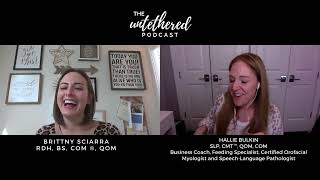
Episode 99 of the Untethered Podcast (interview-style) features Brittny (Brittny/Brittany) Sciarra, an RDH and certified orofacial myologist, discussing the hygienist's role as an airway advocate, orofacial myology/myofunctional therapy, pediatric airway screening and parent advocacy, clinical referrals, transitioning from clinical hygiene to private practice, mindset/entrepreneurship, and the new International Association of Airway Hygienists (IAAH). The episode emphasizes nasal breathing, early screening (Mallampati, sleep questionnaires), interdisciplinary referrals, and empowering parents to advocate for children.
Questions this video answers
Episode 99
Brittny Sciarra (spelled BRITTNY in the transcript), RDH, COM (certified orofacial myologist); Buteyko breathing educator
Cheshire, Connecticut
brittny@myctom.com (spelled B R I T T N Y @myctom.com in transcript)
www.myiaah.org
Chapters
Hi and welcome to episode 99 of the Untethered Podcast. Today we have Brittany Siara joining us. Brittany is a certified orofacial myologist and buteyko breathing educator. Brittany received her degree from the Forsyth School of Dental Hygiene at MCPHS in 2011 and post grad training in myofunctional therapy through the AOMT and IAOM. Brittany takes a passionate and optimistic approach in preventing and treating the causes of orofacial myofunctional disorders, getting to the root of the problem instead of merely treating the symptoms. Her private practice is based in Cheshire, Connecticut where she offers in office appointments and teletherapy. Brittany spends her time not doing Maya with her boyfriend and two dogs, Kobe and Bo. Quick disclaimer. All information, content and material of this podcast are the opinions of the speakers and is for the informational purpose only and not intended to serve as a substitute for the consultation, diagnosis and or medical treatment of a qualified healthcare provider. Welcome to the Untethered podcast. I am your host, Hallie Balkan. I'm.
Hi.
I'm a certified orofacial myologist, feeding specialist and mentor. This podcast is all about getting your questions answered and collaborating with colleagues to bring you the most up to date information in the orofacial myofunctional therapy, tethered oral tissue and airway space. I challenge you to keep an open mind and join my mission to get this information out to the masses. Let's get started. Brittany, I am so excited to have another fellow podcaster joining me on the POD today. Welcome.
Thank you. Thank you so much for having me. And I've told you this before. You were my inspiration to start my podcast. There wasn't one for hygienist out there, so I was like, oh my gosh, I'm obsessed with Halle's podcast. I'm going to have to do this now.
I love it. I love that you're basically filling that same void that I wanted to fill for, you know, myofunctional therapists and talking about all things myo taught airway. And so I love that you were like, oh man, this doesn't exist.
I have to do it.
I totally get that.
I love it.
So let's jump right into talking more about the hygienist role and why hygienists are actually great airway advocates.
Yes. So you know, when you know this, we know that the mouth is the gateway, you know, to overall health and we spend a lot of time in patients mouths. Right. As hygienists, whether it's a child Prophy, adult prophy. So we're seeing it all. And you know, we don't learn this in hygiene school like you don't learn in your graduate program as an slp. It's something that we learn through furthering our education, but it's literally in front of us for 30 minutes, 45 minutes, an hour, however long you're with that patient. So just being able to connect those dots, I mean, we know sleep disordered breathing, how often it goes undiagnosed, and looking, you know, past obstructive sleep apnea and thinking more that broader term of sleep disorder breathing, and just really, you know, not only wanting to improve our patients quality of life, but also the impact that, you know, we can make in the operatory and outside of the operatory. So I had the opportunity to write an article for one of our hygiene magazines. It's called Dimensions of Dental Hygiene I think is the proper term. And I wanted to get the awareness out there for hiatus because I know for me, like, I get upset when people just consider us tooth cleaners because we're so much more than that. And we can get into that monotonous routine. You go in at 7:30, you leave at 5:30, we're cleaning teeth, right? Okay. So I wanted to spread this awareness to hygienists, but I also wanted to be able to catch their attention. So I actually made the article. I linked it to Kobe Bryant. And the time that I wrote the article, it was with the passing of Kobe Bryant. And I think everybody can agree. Huge fan of Kobe Bryant. The amazing work he did on the court, off the court, and his whole mamba mentality. And I just, it really resonated with me. My boyfriend's a huge basketball fan, so we talked a lot about Kobe Bryant. And he had got the book. And I read some of it and I'm like, wow. I'm like, Kobe Bryant was way cool. Like, I didn't know how cool he was. And I love that passion, right? We kind of just talked about that. Like, we get so excited about this stuff because it doesn't seem like work. We always want to learn more. So I had tried to pull in everybody's attention by saying to use that mamba mentality in the dental hygiene career and furthering yourself, you know, not only for yourself, but for our patients and making that impact outside of the dental operatory. And you know, if, you know, you want to be a dental hygienist and you want to stick working in your dental office, kudos. That's awesome. You can still make a huge impact if you want to take that route and work outside of the operatory and become a myofunctional therapist. Kudos to. There are so many options in the field of airway and just being able to be advocates for our patients and you know, getting to the root of the problem instead of just treating the symptoms. I think that dental professionals are really at the forefront and there's definitely more moving parts now than there ever were between. You know, in 2017 that ADA policy came out stating that all dental professionals should screen their patients. There's awesome stuff right now with children. So the ADA just released, I want to say it was in December, a brochure for children and sleep disordered breathing. And as you know, that's amazing because it's that education that's missing. It's that awareness that it needs to start in the home and parents knowing like what exactly to look for. I always say to everybody, I wish there was a class. I don't have kids yet. Someday I hope to. I wish there was a class that was like mandatory for moms to take before they have their children. Right.
We had that class because these babies show up in our lives and we're like, okay, I hope I don't break it. Like what do I do with this little thing? And like, I've always loved children, but still you just, first of all, you forget everything, you know, when you have kids. I will say that like the SLP feeding therapist, all of that, I forgot about all of it with my own child, like in my arms and I was like, help, help colleagues, like what do I do? Like. And I had a child who did not feed well. And I also wasn't in the tongue tied space yet. I was doing ped feeding, but mostly from like the 12 month up crowd. So you know, even though I had education, you know, I didn't have that education in grad school, in peed feeding, in myo, in airway, none of that. And so this for me was all posts, you know, all post grad. And it was a snowball effect as I went through this own experience myself. So. Oh yeah, I mean if we could have that manual that just said, hey, when this goes wrong, like this is the route you take and when that goes wrong, go this direction. I mean someone create that, that would be great.
Yeah. And I just, you know, as a Hygienist we see patients 3, 4, 2 3, 4 times a year, you know, for their profi. So we see them quite often versus like you go Once a year, you know, to your doctor, as long as you don't have any issues. So being able to get those proper referrals out there, like, so a hygienist understanding the link between airway and speech and being able to make that referral to you guys instead of, you know, it having to be caught in the school or maybe the pediatrician or wherever it's going to get caught. Like, how awesome would it be if all of these referrals were getting made, as we know, at the earliest, earliest time? And I think that if hygienists just dive in a little bit deeper and educate themselves on all of this, they're going to want more information. I don't know anybody in this field who has gone into it and was like, oh, yeah, you know what? That doesn't really interest me. Like, no, we're all like, gonna know, like, more, more, more, more. We all want more. And again, it could be so simple as to add it into their existing intra extraoral exam that we already do. Just looking at things a little bit differently, you know, we're. We see the back of the throat the entire time that we're doing our profiba. Why is that soft palate red and irritated? Why is the tongue scalloped? Oh, those nostrils are a little asymmetric. Like, what's going on there? Is their septum deviated? Like, we have such a clear view of this and just learning to really connect all of those dots. I want like every hygienist to become an airway advocate.
Well, and I love that. And we actually had this presentation last night in our MYO membership with a. An RDH is a comm. And she said, you know, she said a lot of what you said too, with like screening when they're in the chair, you know, and the other thing she said was, but also just take a look at them when you go to get them from the waiting room. Like, is their mouth open at rest? That is your first window of opportunity into knowing what might be going on with the airway. And that should tip you off as to whether or not you want to look further. And I was like, I mean, that's so smart. But like, what a great tip that, you know. And you guys, you're saying, you guys have this mouth right there in front of you that you're looking at the whole time. But you know, it's like we tend to look at things like in silos, right? And that's even when I go back and I'm doing a feeding Eval or even my, my. And I watch them eat something. I like to video record it because I will go back and watch that video five times. I will look at what the tongue is doing, what the jaw is doing, what the lips are doing with the whole face, the shoulders. Like, I watch everything individually and then look at it together, because we know there are so many compensations going on when there's an issue. And like, how else do you see them unless you really pay attention to each individual part of the orofacial structure and surrounding supporting structures like the neck and the shoulders. Exactly. I'm like, okay, everybody sit up straight.
It's so true. Like, we have. I mean, obviously with COVID everything's a little bit different now. Waiting rooms aren't always open and people are coming in with masks. So being able to observe their lips isn't the easiest right now. But I'm. I have a position right now where I'm able to educate hygienists on the importance of all of this. And you know the biggest thing, because as hygienists, and I'm sure you know in your field too, like, you only have a limit amount of time. So. So when you get told you now have to add in another assessment, I'm going to put that, like, in air quotes, because it's not another assessment. Right. You're just. You're already doing it, you know, so. And I love. I always tell hygienists to read Angie's article about the eyes because that's another gateway into what you're going to find into the mouth. And, you know, we dot. We've been, as a hygienist, we learn in school, documented the occlusion, all of that. But it wasn't until I became a myofunctional therapist that I truly understood why it's important. Like, okay, they don't have straight teeth. They need to go see the orthodontist. Like, no. Why. Why aren't those teeth straight? What went on here? Something's not right.
Or why are they in their second round of braces? That should tip you off right away, right? Like, something is not right. So, I mean, so for you, with your personal experience, at what point in your hygiene career did you fall into mayo and, like, did you immediately just go, okay, hold up? Everything is different. I'm totally. I mean, I know your podcast title is, you know, the myo eyes, right? And so we know that once your myo eyes are on, we say, you just don't. You can't Take them off. You just see it everywhere. But, like, what was that like for you as a hygienist?
Well, I remember sitting in that. My first introductory course. And I'm sure everybody feels this. And you're like, oh, boy, how many patients went through where I did not catch any of this on? And you're like, holy cow. Now when they come in, I'm going to have to. I have to tell them all this stuff that I now know, and they're going to ask me, why didn't you tell me this before? And I will be honest with them that I took this course and now, you know, list everything off to them. But my mind was just so blown, and I had gotten into it. I read one of Joy Mueller's articles in rdh, and I always wanted to go back to school to get my master's, but, you know, it's expensive, obviously. And I knew I didn't want to get out of clinical hygiene, so, like, having my masters wouldn't really have done that much for me. So when I heard about this, well, the first thing I was like, okay, I never heard about myofunctional therapy. Did I skip class that day? Because this is not resonating with me. And it should be.
It's in one of my magazines.
And I looked up the course, and it was coming to New York. Like, I think I saw it in February, and that April, it was coming to nyu, which then a lot of the courses were, like, international, or I definitely would have had to hop on a plane. So the fact that I'm in Connecticut, it was coming to nyu, so I feel like it was meant to be. And I was like, you know what? I'm doing this. And I don't want to say I didn't have the support of my dentist, because he's very supportive of me as a person. But he never heard of Mayo, so he had his doubts. And I just was like, no. Like, I have to do this. I don't care if nothing comes out of it. Like, I have to know what this is. I need to learn about it, and I just have to. So I did, and I went and I sat there for those four days, and I just was like, oh, my gosh. This is what I've been missing. This is what I need. And now here we are, right? Five years later, and I'm still a student. I'm still learning. And it was literally the best decision I made in my career.
That's awesome. And so did you completely disengage from that position? And go right into your private practice, because I know you have your own private practice now. So how did you transition? What was that like?
So I didn't at first. I love being a hygienist. I wanted to be hygienist since I was 7. And I was really lucky. I started working at this office right out of hygiene school. I was 21 when I graduated hygiene school. It was in my hometown, so, like, generations of families. And I, of course, fell in love with my patients. I was so sad. So at first I was like, there weren't a lot of airway providers in my area, so it wasn't something where I could, like, just go right into, you know, being a myofunctional therapist as much as I wanted, be. It just. It wouldn't have been there for me. So I did the whole, you know, basically still worked as a hygienist, came home, saw patients on my, like, day off, I put patients in there, slowly, slowly cut back on my hygiene hours. I was so sad when I had to leave my office. They're like my family. I had to write this is where my heart is. And technically consider that particular practice and airway practice. So it just wasn't really in line with my beliefs anymore. So I love them. I love them dearly. I miss them. But I wanted to get where I am with my career. So, yeah, that's. That's. I did hygiene for a while with mayo, and then now I'm Mayo.
I love it. I love it when I think that that's really cool that you were able to make that shift. And that's. I encourage a lot of business owners, even in my space are people who wanting. Want to go into business for themselves. You know, you don't have to cut the cord day one. I mean, obviously read your contracts, know what legal things might be in play, but you can often provide a service that is not offered through your current practice or school system that you're working for. That's different on your own, on the side, and slowly beef up your hours, cut back, if you can, at the other place and then go for, you know, or once you feel like you have enough of a caseload that's growing, you know, then disconnect. But, you know, it's. It's. It's definitely a shift too, from going from employee to business owner. So. And you know me, I love all the subconscious reprogramming, identity, you know, mindset stuff. So was there a big mindset shift for you? Like, how did you do that?
Oh, gosh yeah. And I think, I don't know if maybe I would have been a little bit more successful earlier if I shifted my mindset sooner than I did. I'm not really sure. But yeah, because I feel like, you know, as a hygienist, like, okay, I'm the hygienist and the doctors here, so it becomes ingrained in us. And I don't think that that hierarchy is like, it wasn't pushed on to me by my boss. Like I said, my boss was super supportive, super, you know, valued my opinion. Like, I don't want to say that he pushed that on me. It was myself. And that's the thing, right? We do this to ourselves. We can be our own worst enemies with these self limiting beliefs. So when I decided to go off, I was a little bit nervous. I'm like, okay, how am I going to talk to these doctors? Like, you know, I'm not that hygienist working under this doctor anymore. Like, I'm Brittany. I'm myofunctional therapist. I'm CT orofacial. Myology. It's me. I wear all the hats. So, yeah, I think that that was a huge shift for me. And I always, always tell people that. I feel like when you become a myofunctional therapist, you obviously expect all of this growth in your career. But the growth I experienced as an individual and becoming an entrepreneur, like, surpassed anything I ever even thought that it could be. And I'll never forget my first, like, big dinner that I had with multiple doctors. So I had gone to dinner with, it was an oral surgeon, an orthodontist, and three general docs. And before that it's been like maybe lunch with one, coffee with another. And this was like, huge. And I was like, oh my God. I was like freaking out. I'm like, what am I going to do if I don't know the answer? What? What, what if I don't know what they.
What they.
I can't tell them what they want to hear. And I'm like, wait, Brett, okay, stop for a second. Gather your thoughts. They want to meet with you. They want to know about your specialty. You have this specialty that you can provide to them that nobody else can. And I literally think it was that dinner where like, my mind, my mindset just shifted. And I was like, all right, I got this. Like, I'm confident. And you know what? We don't have to know the answers to everything. I can politely say, you know, I'm not really sure, but I'm going to get that answer for you. Bing, bang, boom. That's fine. Nobody's, you know, hate you for that or think that you don't know what you're talking about. Everybody loves honesty. And I always tell people, you know, when we talk about mindset, it's something that you have to work on forever. It's like exercising your body. It's not like you work on it for a week and you're set for the rest of your life. Like, no, life happens. Things happen. We have days where, you know, we can still. I still have days where I'm like, ugh, am I? Is this really where I should be? And then I'm like, oh yeah, you should be. You're killing it, girl.
I love that. I mean, you said so many key things in there that I think are so important to highlight. One being okay, one. As business owners, we all have those days. And like, I don't know, I'm, I've gotten, I work with an energetic healer. I'm like way woo now. And so people probably, you know, if you're listening, you don't like this, you can hit pause now. Not going to go too crazy. But I will tell you, like, the energy in the beginning of January was so crap. It was just like heavy af and I was like, I don't feel like working. I don't feel like owning a business. I don't feel like dealing with my private practice. I don't feel like, I mean, and that's just the honest truth. And that happens. We go through seasons and like, I'm back at it. It's, you know, it was, it took me like a week or two and I got back in it and I'm like, okay, I'm good now. I don't know what that was all about. And when I say like the energy on the planet, I'm not talking about like what was going on with political stuff, what was going on in the news. Like, I'm not talking about that. I'm talking about like more, more like, like legit, like energy out in like the ethers and like, you know, outside of our 3D reality that a lot of us know on a day to day basis. But yeah, for me it hit me hard. And so I go through the same type of things. And I think it's so important that we highlight that because people think you get into business for yourself. You're your own boss. Yes, you're going to have some bumps in the road, but it's going to be all good because you get to make the decisions. And, like, yes, it is, but there's also. There's the struggle, right? We all get on the struggle bus sometimes. And the people who are successful are the ones who basically go, like, okay, I recognize this, and I'm just, you know, I need to snap out of it, shift my attention and keep going. And, you know, things are going to look up again. And so. And it's not always tied to money. It's not tied to how many people are on your schedule. Like, it could just be energy. And so I think it was. I think that was really cool that you said that, because I think people need to know. Like, it's not all, you know, butterflies, rainbows, roses all the time. Like, it's just not. You make it look that way out in the beautiful world of Instagram. But, like, I also try to be very real and be like, hey, guys, my house is a mess, but my kids are healthy, our bellies are full, and, like, everyone's happy, so don't.
There's always something to be thankful for, right? And you have to be. You know, I think it's important that you. Well, I think it's important that you can balance, right, your work life, your family life, seeing your friends do exercise and take care of yourself, all of that. But I also truly believe that as much as you should be able to rely on your support system and your family, like, I know for me, I have to be in control of, like, bringing myself back to normal and, you know, bring. I don't want to say bring myself back down to normal, but, like, leveling with myself and just saying, you know what, Brit? Like, I talk to myself. I don't care who knows that I talk to myself every day. You should.
It's good.
Yeah. Like, this is okay. Like, you're having a bad day. It's all good. You're feeling like you're not getting where you need to be, but you just accomplished five things on your to do list. So you check those off, you feel great about that, and you move on to the next day, and you wake up with a better attitude. And sometimes you don't, you know, you could be great one day, and the next day you wake up and like you said, you're just like, oh, like, I don't want to do this, you know, and it's going to happen, and it's totally okay. It's just what's most important is how you push through that and continue to push through it. And I'm all about positive, positive affirmations and reminding Myself, you know, how far I've come and who I am. And, you know, totally only surrounding yourself with people who support your goals. Because that could be, you know, very. Nobody wants that negativity in their life. Nobody wants to hear, you know, you shouldn't be doing this, or you. Is that really going to work out? Are you wasting your money? Like, okay, that's fine. You think that, but. Bye. See you later. I'm going to just do what I want to do because this is how.
It'S going to work. Yeah. No, and I. You know, the other thing that you said too, before, and you've said it a couple times now, is you made a decision. You decided. And there are so many people who are kind of like, floundering all around, like, do I do this? Do I not? They're really. They're not. They haven't made a decision. Right. They're still kind of in this, like, in between place. And that's why it feels so heavy and it feels overwhelming and it's. You have a hard time. You feel stuck. Right. So it's making that decision. And I coach on this a lot, too, that you have to decide. Like, I had a conversation with my husband yesterday. He'll kill me for sharing this, but, like, I won't say what we were talking about, but he was. He was talking about something and I was like, do you want to know why this has been a conversation for the past three years? Because you have not actually decided what you want. And when you actually figure out what that is, and you put on paper and you say, I will have X by this date. I want this, or I will have this. You know, that's when you are committing it into your brain that this is what's going to appear in your life. And I know for some people, they're like, okay, Hallie, whatever. That sounds crazy, but it happens. It works. That's so true.
You can manifest what you want a thousand percent. Yeah.
And this is also why I just created the Elevation movement recently. Because I realized that interwoven through just everything that I do, I'm constantly just. I'm so sick of the narrative. I'm sick of the narrative in the SLP world. I'm sick of the narrative in the Mayo world. I'm sick of people saying things like, mayo is not X, or, you shouldn't be doing this because of X, Y, and Z, or, who are you to judge somebody else? You are only responsible for. You stay in your lane. We will take care of ourselves. Look, I get it. If somebody's doing something out of scope, okay. And you have an issue with that, fine, whatever. I actually will. I don't want to get involved in any of that because that's not my problem. That's not me. I worry about myself. I make sure that I do what I'm licensed to do and what I'm qualified to do. But really, the whole purpose behind the elevation movement is one that we are so strong in our identity and who we are that when you hear all this external noise, you just go, that's noise. And you shove it out of your field and it is gone. And then it is like. Then you also have to address the skill set, which is the second part, and gain the skill set that you need. And then the third part is mentorship from people who elevate you and want to see you succeed. And, you know, when I teach people, I teach them because I want them to gain the knowledge so that they can feel really good about themselves, step into their true identity, take that skill set that they have earned, go out, help their patients. And if you become more successful than me or you go out there and teach more people than I do or whatever, like, we've raised you up on that pedestal, by all means. Like, you go girl, like. Or guy, whatever. You know, it's like, I feel like we're such a profession, but that's. The whole idea is, like, I want to elevate colleagues and I want to shift the narrative in our industry because it's just. I'm just over it. I'm like, I'm not here for any of that negativity that we've.
And it weighs you down. All the Be involved in this. Like, we all have the same end, right? And I help patients. We want to get them to the correct providers. I. So I totally agree with. And so I. I love to go to. And I tell people that your mindset is like your garden. And hygienists will get this if they're listening. This is going to be really weird. But we love removing tartar from. Okay, especially lower anteriors when there's a wall of tartar. Flicking that off, it's so gratifying. And I get that same gratification when I pull weeds out of a garden. I know this is all. I'm letting people now know how weird I am. I love it. Like, I love that. And throwing to the. Throwing it. I tell people all the time, you do that with those negative thoughts. People, any of it. Feed your garden and feed it can flourish. End of story. Anything else does not serve you.
Yeah, absolutely. I love that. I love that. So let's shift back to our convo a little bit about, you know, hygiene, hygienist and all that fun stuff, because I know that you guys also have created a new organization or I think maybe you're part of that. I don't actually know, like, who the masterminds were behind, you know, putting this all together. But what is the I.A.
Yes. So it is the International association of Airway Hygienists. It's amazing. I'm super excited for it because it's the first and only professional association hygienists who are interested in or actively participate practicing myo really anything related. And, you know, there's power in numbers, so this can go, you know, it's only the beginning. And I think that all the benefits that being a member, there's going to be mentorship involved, all different kinds of perks. I don't want to release too much because it's still the beginning. And I just totally suggest all, Dennis, you're interested in this, you know, go and become a member. It's so awesome to have an organization that believes in you and stands behind you. So I. I'm super excited for it. So, yeah, it's International association of Hygienists like we just talked about. We're structured to be employees and we don't really have that business. So we really want to be able to support those people who want to grow their own successful business and grow themselves in the field way. So it's going to be really, really great. That's awesome.
I'm excited for you guys. I'll be watching to see what you do. So if we have a hygienist who's listening and they are getting into this space, do you have any tips, like three different ways or something that hygienists could begin incorporating airway into their practice if they're not already doing it?
Definitely. I always tell hygienists it takes literally a second to take that Mallampati. Grade that Mallampati score before you lay the patient's back. Shine that light. Ask them to open their mouth. Don't have them say ah. Have them just stick their tongue out and. And see what structures you can see. Are they a three? Are they a four? We need to probably get a sleep study. Do a sleep questionnaire. If you don't already have a sleep questionnaire that you're giving to your patients. If you're seeing malocclusion if you're seeing crowding, something went wrong. Right. And it's not just, let's slap them in braces, but let's get to the root cause, right. The underdevelopment of those jaws. I love listening to Dr. Ben Moralia speak because he will say that the. How does he say the maxilla is the criminal and the mandible is the victim? Because in every occlusion, except for Class 3, our mandible falls behind our maxilla. So our maxilla traps our mandible. If our maxilla is underdeveloped, our mandible is never going to have the chance to grow. And that, I think, will make hygienists look at their patients. So just in such a different light. You know, we're used to, like, okay, we're going to document this canine occlusion, this molar occlusion. We're going to write it down. Okay, cool. It's part of our clinical notes. But, like, really look at that. Look at that patient and connect. Connect all of the dots.
I love that. And it was just last night that Cheryl Schaefer said that the teeth are the victim of the problem. And I was like, yes. And so when you just talked about, like, you know, the relationship between the jaws, I was like, amazing. I feel like I'm just hearing lots of this conversation all of a sudden, but it's so true, and it's such a great way to highlight it. So thank you. That's awesome. Let's talk about parents for a second. You know, I know we talked about parents a little bit earlier on and how we all wish we had that manual that just told us all the things, but why is it important for parents to educate themselves so they can advocate for their children in this space?
Yeah, I mean, I think too often we hear, I knew something wasn't right. And I always tell parents, go with your gut instinct. You know, for me, I get. And I don't know how it is, you know, for you might be a little different from hygiene to slp. A lot of the referrals that I get say that come from an orthodontist for a tongue thrust. And they think that they're just going to come in and I'm just going to make their tongue thrust disappear, and we're just going to do some swelling exercises, and we're going to be good to go. And then I start asking them about how their kids sleep, and they're, like, looking at me, they're like, why do you want to know this? And then Obviously, we get into the conversation, we educate, and I'll always tell them, you know, film them. Film your child sleeping. Literally. Take your phone, go in there so that you have that evidence. So when you go see the ENT and they tell you that the tonsils and adenoids are enlarged, but we're just going to watch them. You literally can show them. Like, no, I can't just watch it. I mean. And we both interviewed Dr. McIntosh on our podcasts, and his analogy, if it doesn't hit home, I don't know what else does. And it's a little abrupt, but I love it. You know which one I'm talking about?
Oh, yeah, yeah.
Like, how does he say it? If you knew that somebody was basically, like, strangling your child in their bedroom, how would you handle that? And when he said that, I was like, wow. But we know that that's what happened is happening. If we know that these children with narrow palates, with sleep, disordered breathing are literally starving for oxygen. It's the same exact thing. So why are we just going to wait and see? Advocate for your child. I always just tell your parents, go with your gut instinct. Don't wait for a professional to tell you you're right. Keep going until you get the answer that you know in your heart is right.
Right, right. And I love that, because as parents, you know, we know that something is off. We might not know what is off, and we might. But if you have to go to a Facebook group to ask a question and say, is this normal? That should be your first tipping point, that maybe it's not, and maybe it's okay to seek. You know, and I think it's great that you're going to the Facebook group and you're asking because maybe you're going to be connected with the right professional, or at least it'll start you on your journey. But that's, you know, if you're. If some alarm is going off in your head or some. You've got some inkling in your gut that is like, something just doesn't seem right, you are probably correct. And it's not meant to be alarmist, but it's meant to be. You know, turn on that advocating, become that mama bear who does not stop until you get the answers that make sense for you and your child. And, no, we don't want to go searching for answers that we're seeking with, like, you know, trying to diagnose something that isn't actually there. I'm not saying that, but, you know, I just think that There are so many, if parents are listening because we do have parents listening to the podcast. So many providers even still in my area, but I know just globally don't know this information. They are not trained in this. And they're so there are specialists who are trained in this. Those are the myofunctional therapists, you know, and that's why I call them like airway centric providers. People who have taken lots of courses on airway. And so people say, well, isn't that the ent? And I'm like, no, there's like a handful of them in the US that really know what they're doing. Literally. Literally. I mean, and it's not to downplay what they do, it's not to downplay what they do in their practice because they are ear, you know, ear, nose, throat doctors. They, they do understand airway to a degree. We are looking at it from a different lens and we are looking at it in the fact that the tongue, the mouth drives health. And holistically, if something is going awry in the mouth, chances are that your attention, your sleep, your behavior, your feeding, your speech, your language development, there could be such a snowball effect all because of some little problem that starts in your mouth. And so I'm like, if that, if we can get that word out, people start looking in the mouth more. I'm like, my job here is done.
Yeah, literally. And you know, you hear like I just heard the other day, well, I don't know, he has the typical energy of 11 of an 11 year old boy. And I'm like, I know, I don't.
Feel like, but I hear that too from providers. Like I've heard even SLPs in some of our groups. And you know, they just say, well, I don't know if it's because they're a nine year old boy or because they're not sleeping well at night. And I'm going, well, if you have to question that, like nine year old boys should be able to sit at their desk and do their work without being redirected constantly. Nine year old boys, like, yes, they need to get up and move, but they shouldn't be an energizer bunny who's hyperactive. You know, that's not quote unquote normal. Like yes, we want children moving, but no, they shouldn't have to move every waking second of the day. So you know, that's, it's an interesting conversation, but yeah, it comes back to, I always go, can you tell, can you define normal for me? Can you tell Me what you're seeing so that we're on the same page here.
During quarantine, I had a bunch of friends or friends of friends, like, all have babies. So I'm 30. So, like, everybody I know is having a baby. And obviously, we see pictures of babies, and what do our eyes see? Right? We use our. My eyes. And we're like, oh, man, that baby's tied. Like, that baby's adorable, beautiful, but they're tied. And some of the babies that I saw during that time weren't super close friends of mine, where I felt comfortable enough to go out and be like, hey, can you send me a picture of your babies? Let me see the inside of their mouth. But I kind of had a way I was able to go about it because I was interviewing Michelle Emanuel at that time for my podcast. So I reached out to these new mamas, and I asked them how everything was going, and if you have any questions, like, I'm going to be interviewing this really, really great pediatric ot. And then all of a sudden, it started, and it was the painful breastfeeding. Well, I was just told it was normal. Like, just use a nipple. A nipple shield and the thrush and all of this. And I'm like, oh, my gosh, no, that's not normal. And the fact that you're getting told it's normal, like, it just breaks my heart, you know, but there. And then they'll. They'll just say, like, again, all these moms are like, this should be a class.
And I'm like, I know. That's what I keep saying. Somehow, someday, I mean, it's one of those things that I was told was normal. And I took my daughter, my first child, who's now five and a half. I took her to the pediatrician's office, to their IBCLC in office. So I was like, I feel like I can trust this woman. She works for the pediatrician. You know, because everybody puts. And look, I love our pediatricians, but everybody puts 100% confidence in their pediatricians and will shut off what they hear from other providers. And we need to stop doing that. Because pediatricians, while they're wonderful and we need them and we love them, and our children thrive because of them. They also are not generally specialists. They're usually generalists and, you know, and they. But they specialize in pediatrics to a certain degree, and some of them do specialize in other things, too. So I'm not speaking, you know, not speaking to a hole, but they are not, like, sticking your tongue out or not being able to is not an indicator of whether or not you have a tie. Painful breastfeeding, that drive me bonkers.
I'm like, what? No, I don't care that they can stick their tongue out.
You're like, so can most tied people. That's not, not everybody has like a tongue tip tie, you know. Oh my gosh, that heart shaped tie.
No.
So, but then, you know, I was told, well, it's normal, you're a new mom. It's uncomfortable. You have to get used to it. Really. Thirteen months in, like I stopped at 13 months and I went 13 months with painful, horrible breastfeeding because I was just stubborn and I was like, nope, we are going to do this. I will pump, I will feed all the things. Yeah, it was just one thing after the next. But nobody told me that the fact that she wouldn't take a bottle or that she had leakage out of the side was abnormal or that painful breastfeeding was abnormal. Or I took her to the ivclc. She fed beautifully. They were like, oh, you're just holding her wrong. Okay, well it's my fault now, right? I'm holding her wrong. So I reposition her, I hold her and then what do you know? She feeds beautifully. Do the weighted feed that we're going in like for all the time. Hello. That should also be a red flag. Something is going on here. Weighted feeds needed regularly. And then we go home and it doesn't work. It's like taking your car to the shop, right? I've like used this analogy three times.
This past week where I'm like, it's.
Like, you take your car to the shop, it stops making the noise, you drive it off the lot and it starts making it again. And you're like, what gives? I was like, come on, kid. So I was. But I felt like I was at a loss. I'm like, well, I went to the professionals and I'm supposed to seek out specifically for this problem and they're telling me my child's fine and basically saying it's me. So here I am as this new mom, like, you know, all hormonal and everything. Like, well, I'm clearly the problem. So I guess I'm just going to have to suck it up and push forward if this is my goal for myself and my child. And that's where, that's why I threw myself into treating infants. Because I was like, I want no other mom to go through what I went through. Like I was already doing feeding with 12 months plus, but infants were not my specialty. And that's where I was like, okay, here we go, down the rabbit hole of all things infants. And so I started doing that and then took the myo course. She was 24 months old at that time. Came home, looked under her tongue, and I was like, God dang it. You know, like, if someone would have just released that time, we done some bodywork, some pre op, some post op, like, we could have had a very different experience. And like, to this day, she's a five and a half year old who just got out of an ALF that she was in for a year. So we've grown her palate, which now her airway looks beautiful. She, you know, her tonsils have gone down a lot. We're doing a lot of things to help her, but. And she's thriving. But it took a lot of work, a lot of money, a lot of energy, a lot of education on my part. Other parents don't know this. They don't know to do these things early. And so, you know, and she's still kind of a picky eater. She still got some sensory things. You know, it's not severe. And she eats pretty healthy generally, but also doesn't like meat and poultry or fish. So there's that, That's a lot of the discussion that people who've been listening to the podcast have heard me talk plenty about. But yeah, it's, you know, it's like, that's why I feel for these parents, because I'm like, I was you, I've been there. And it's just, it's sad that the narrative is still happening and that we're being told that, oh, that's normal. I just heard last week from a clinic that's local. This, to me, that does infant releases, has a chiro, has a lactation consultant, all in house. The parent messaged me and said, well, I was told that I'm going to, that I'm just going to have to feed my baby with a nipple shield for my entire breastfeeding journey. And I went, wait, what, what, what, what, what? I was like coming out of a clinic where they're supposed to understand, like, how to address this, like, why didn't they refer you to a pediatric feeding specialist if lactation couldn't help you? And so there's still even that going on even within these clinics where they should know better. And, you know, and I, it drives me up a wall because I'm like, now these parents are like, okay, great. I'm in the place where they should know everything. Like, I'm with the right people.
All these providers are all on the same four walls. That's great.
No, apparently not. So. So that's where I say to parents, like, I feel like we need rather than, this is what it should be like. Like, this is what it shouldn't be. Like, you should not have a supplemental nursing system or a nipple shield or, you know, finger feeding or cup feeding or any of those things with your infant. If you've gone through treatments, like, if you're still struggling, you shouldn't be told, oh, I'm sorry, this is just what it's going to be for your entire breastfeeding journey. Like, you have to triple pump and use a nipple shield. No mom wants to be told that. And that's where I go, where is the feeding therapist on this journey? Why are we not talking to them? So you know. But the same thing can be said for our airway advocates and for myo. Why are people, kids, teens, adults going into second rounds of orthodontia? Why has nobody looked at or figured out or even asked the question as to why that happened? Usually they go, oh, it's because you didn't wear your retainer. Well, if your tongue is in the right place, it should be a natural retainer to hold that orthodontic work in place. So we shouldn't even need the retainer technically. So, yeah, it's, you know, that's where I just tell parents, I'm like, ask the questions, ask all the questions. And, you know, just don't stop asking until you figure out what makes sense.
Exactly. Don't stop. You have the right to ask. I feel like sometimes parents are like, well, I don't want to, you know, when we talk about, you know, and I'm sure you've come across this where you have a patient that wants to go to a provider outside of who you recommended for tethered oral tissue release and you tell them how you strongly urge them to go with one of yours. But, okay, let's have this conversation with this provider. We're going to ask him X, Y and Z. And by X, Y and Z, it's more like a 10 question list. But they're like, I, I feel bad asking him this. And I'm like, no, you shouldn't feel bad asking them this. You are putting your child's care in him. Absolutely. You ask these questions so that you know when you get it done right. The first time.
Right, right.
If you don't want to ask, I will.
Right, exactly. I'm happy to pick up the phone and call their office if you need me to. That's no problem. And you say, too, because I think that there is kind of like you were talking about initially in your journey of switching over from where you were to where you are now, that, you know, not that somebody basically put you in that position of like, here's the dentist, here's the hygienist, you know, but more so just society kind of dictates that there is this order, right? And, like, how dare you, without that same degree as this person, question what they're doing? Well, guess what, guys? I have letters after my name, and it's Alphabet soup. All of my experience dictates, like, how good I am as a provider. That is what makes me who I am. It's not the research that's out there. Sorry, folks, it's not the letters after my name. Yes, that gave me an education, and, yes, that started me somewhere. But if we don't go out and work with patients and collaborate with other providers, we don't hone our skillset and become specialized. And so, arguably, the people who are specialized, even once you get there, you need to keep learning. You still need to learn from your colleagues and be open to hearing things that sound different than what you're used to hearing. And also maybe be open to adding in new ways of doing things, because things evolve and things change. And so, you know, when people call me and I've had people request to be on the podcast that haven't been on the podcast, quite frankly, I follow energy. And if someone comes to me and they're like, holier than thou, I'm like, heart stop. I want to give everyone access to everyone.
Right?
But at the same time, like, if you can come to me and you're like, I have this, and it's better than everything else out there because I've been doing it for this many years, and, like, you know, nobody else has what I have, I'm like, I mean, by all means, like, go promote yourself out there and have fun with it. But, like, just that attitude alone, I'm.
Like, not in line with where I'm at now.
This is not in alignment with what we do here at the Untethered Podcast.
Sorry.
Yeah, exactly. Exactly. But, yeah, no, I think that, like, to kind of, you know, pull it all back together. Advocate for your kiddos, advocate for yourself. Because a lot of our parents, it's either one way or the other, they bring their kid and realize they have the issue too, or they come for themselves and they go, I think my child has this problem and it becomes that journey. And so advocate, advocate, advocate. Because at the end of the day, like we've said so many times today, it's all about not just surviving but actually thriving. Right. Having optimal health. And I think that the biggest thing that we can end with is that so many patients don't even realize what they're missing out on until they graduate from a myofunctional therapy program or maybe they've had their palate expanded or grown, you know, in all dimensions or they've, you know, had that lingual release or what, you know, whatever their care plan is, they go, holy cow, I had no clue what I was missing and like how much more I am now thriving every day, like on a day to day basis. And it's just that for me is what's life changing and why I love the work that we do. So, you know, I'll, I'll turn it back over to you in case you want to add any last thoughts. But you know, I just think that.
So important 1000% and to like you said, kind of circle back to what we started off with, you know, talking about why, you know, I think hygienists are such at the forefront for this. I just am going to strongly urge and I would appreciate if every hygienist listening take one, just one. It could be an hour ceu that has to do with airway. Just one. And then I want you to tell me if you're going to take more.
Once your eyes are open, you're like, oh no, I can't stop. Like down the rabbit hole we go.
Yeah. Because we are so much more than tooth cleaners. And listen, I love being a tooth cleaner, I love being a dental hygienist, I love everything about it. But just having this extra skill set to offer to your patients. And like I said, if you want to stay in your work in the operatory, work with your dentist. The increase in value you can bring to your current dental practice is amazing. Ask your doctor to take a course, bring everybody on board, go to a, take an expansive technique. The opportunities are just endless for everybody in this field. And again, it's life changing. You're treating the patient in the chair, out of the chair, their whole body. It's just so important and there's so much more awareness. Oh, that's one thing that I wanted to actually, which we can end with that. I had printed Dr. Steve Carson who I talked about. He is doing a lot of work with the ADA right now, like I said, for children and sleep disordered breathing. But I read a quote from him in an article a couple weeks ago and I just loved it. So I'm going to read that if that's okay with you.
Yeah, please.
He says two important medical themes are coming together. The realization across all of medicine that proper breathing 247 is a critical foundation of health and children must be observed carefully and taught or treated as early in life as possible in order for them to grow to their maximum potential. So again, that awareness, nasal breathing is everything. It's literally everything.
Yeah, no, it is. I mean, and I'm a very morbid person. I am. Like, if you can't breathe, you're dead. So I don't understand why this is like, still not understood by other people, but really.
Right. Three. What? Three weeks without food, three days without water. Like barely three minutes without air. Like, no, we can't. We need air. We need to be able to breathe. Or you're. I mean, yeah, it sounds morbid, but it's true. Like, you don't breathe, you're dead. So. Yeah.
And on that note, you know, we'll wrap it up.
I know.
So, Brittany, where can they find you if they want to connect with you? Because I know you offer things too.
Yes. So my email address, if you want to contact me, is Brittany. I spell my name weird. B, R I, T T N Y. @myctom.com you can find me on Facebook, Instagram, CT Oral Facial Myology. I lecture for dental sleep toolbox and airway health solutions. And again, if you are interested in becoming an airway hygienist and want to join the IAAH, that website is www.myiaah.org.
Awesome. Well, thank you so much. It's been so much fun chatting with you.
Yes, thanks Hallie so much for having me on. I really appreciate it. This was fun.
Thanks for listening to this podcast. If you want to hear more of these Myo Tots, Airway and feeding related episodes, be sure to leave a review on Apple podcasts or pledge a small amount on patreon.com the Untethered podcast. If you found value, others you know in this space will too. So be sure to share this episode on your social media platforms and join us over on Facebook on my Facebook page at Halle Balkan Biz on Instagram at hallebulcken. And you can head over to theuntetheredpodcast.com to grab a copy of the show Notes where you can also subscribe to be kept up to date on the latest podcast episodes.
More from Hallie



What I Was Missing in Feeding Therapy: ARFID, Airway, and Myo with Samy Hernandez





