How My Son’s Down Syndrome Diagnosis Changed Me as a Feeding Therapist
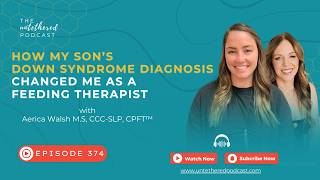
In this Untethered Podcast episode, host Hallie Bulkin interviews ASHA‑certified speech‑language pathologist and feeding specialist Erica Walsh about how becoming a mother to a child with Down syndrome reshaped her clinical practice and personal outlook. Erica recounts her career trajectory from nine years of school‑based SLP work to focusing on pediatric feeding after taking the Feed the Peeds course and the Certified Pediatric Feeding Therapist (CPFT) program. She describes the emotional impact of receiving a prenatal Down‑syndrome screening, the NICU experience where she advocated against an automatic NG‑tube placement, and how the diagnosis deepened her empathy for families and altered her expectations of homework compliance. Erica shares concrete clinical strategies for children with Down syndrome, emphasizing low‑tone considerations, the importance of pre‑feeding skill work using tools such as Chewy Tubes and Nook Brushes, and an adapted baby‑led weaning approach. She discusses interdisciplinary collaboration with PT and lactation consultants, the need to “presume competence” and individualize assessments, and the necessity of vetting information sources on social media. The conversation also covers her journey launching Thrive Therapy Solutions, confronting imposter syndrome, the realities of administrative work in private practice, and advice for clinicians and parents navigating feeding challenges. Throughout, Erica balances grief and gratitude, stresses self‑compassion, and highlights the value of mentorship and community in the feeding therapy field.
Chapters
Right off the bat, like halfway through my pregnancy, I felt very prepared with things that I thought would be helpful for me to know and for me to get for him to set him up for success. But it's overwhelming for sure. It fundamentally changed me as a human being, as a mom, and also as a therapist.
Welcome to the Untethered Podcast. I am your host, Hallie Bulkin. I'm a certified myofunctional therapist, feeding specialist, podcaster, business owner, and mentor. This podcast is all about getting your questions answered and collaborating with colleagues to bring you the most up-to-date information in the orofacial myofunctional therapy, airway, tethered oral tissue, and pediatric feeding therapy space. If you're new here, I challenge you to keep an open mind and join my mission to spread this message far and wide. If you've been around since June 2019, thanks for being a loyal listener. As we jump into today's episode, remember to listen with correct oral rest posture— tongue up, Lips closed, teeth apart, breathe through your nose. Let's get started. Hi, and welcome back to the Untethered Podcast. Today we have Erica Walsh rejoining us. Erica is an ASHA-certified speech-language pathologist and a CPFT graduate, a mother of two, and founder of Thrive Therapy Solutions. Over the last 10 years, she's worked across public schools, outpatient rehab, and private practice, but it was motherhood that truly shaped her as a therapist. Her daughter was born with tongue and lip ties that impacted their early breastfeeding, and her son was born with Down syndrome and feeding difficulties tied to his diagnosis. Both kids pulled her deeper into feeding therapy, and she's made it her mission to provide compassionate, holistic, family-centered care that helps children and their parents thrive. If you're a clinician who's ever wondered whether the timing is right to dive deeper into feeding, this is the conversation. Welcome back, Erica.
Thank you. Thanks for having me.
Of course. I would love to, you know, talk about CPFT first. Take me back to even before CPFT. What was your clinical world like and what made you decide to go all in on feeding?
Yeah, so prior to having my daughter in January of 2024, most of my experience was in schools. So for about 9 years I was school-based. I did a little bit of per diem work in an outpatient rehab center, and then I also did some part-time work at a private practice, but I was primarily in the schools. And when I had her, it was partially childcare, partially I just don't wanna be away from my baby that much, so. I decided to step away from the schools and just do part-time at a private practice through telehealth. And she actually had tongue and lip ties that we had revised when she was about a week old. And I went into the appointment thinking like, I know a little bit about this, but I don't know enough where I feel super comfortable having this procedure done on my own child. I feel like I need to know more. So I literally Googled like how to be a feeding specialist or how to be a feeding therapist. So I found Feed the Peeds. I took that in the spring of 2024, and then as I was wrapping that up, you had, you were launching CPFT and I was like, yes, this is it. I, I want to do this. I want to shift my career and my focus to this. It's so interesting to me. I like how crucial, right? You're helping someone feed their child. That's one of the, one of the rights that everybody should have and they should be able to feel comfortable doing that. So yeah, I, after CPFT, I've been able to really focus my niche and refine my lens. I'm still working very part-time right now at a private practice. I'm just a telehealth therapist, but I've been able to take on more feeding clients. I've been able to revamp some of my treatment plans for previous feeding clients that I had and use like new strategies and things that I learned. But I've also been really grateful to be able to provide some in-service trainings and some mentorship to some of the SLPs I work with, especially for infant feeding evaluations and treatment and things like that. So it's definitely taken a turn for for sure from where I started in the schools, but I'm really grateful that I found this.
That's amazing. And it sounds like there's things you're literally using every week now that you took away from your experience in CPFT and even just going through Feed the Peeds prior to that, which I love to hear. And it's so cool because I, speaking with CPFT grads here, many of you share, oh, I'm mentoring other therapists now, I'm doing in-services, oh, I'm educating other parents in my community, like all these really cool things that when we set out to help you all become Certified, we were like, we want you to feel really confident and know how to treatment plan, know how to treat. And all of a sudden it was like, we're creating like mentors, we're creating— you guys are the next-gen mentors here, like out there helping all the other therapists. And like, it makes my heart so happy because like, just think about like where you were just a couple years ago to where you are now. Like what, like how, like the condensed timeline from where you were to like now being the mentor. That's— and even revamping patient treatment plans and being able to go back and work with these kiddos. Just so cool. So cool. It's so cool. So cool. And I'm guessing you didn't, and maybe I'm wrong, but I'm guessing you didn't have pediatric feeding training in grad school. Is that true?
No.
No.
So I had a dysphagia class, but it was mostly adult. And yeah, I remember I had one feeding client that was a kid in grad school in my clinical, and he only ate red foods. And I was like, what do I do with this? I have no idea. And so I had a supervisor that kind of guided me in the right direction, but I feel like even that I did not, I did not walk out of those sessions feeling confident in what I was doing. I, I was like, we're playing with food, but how do I do this effectively? And so yeah, it's, I've come full circle with that for sure. And this is like all of the information. Yeah. Was super helpful. And I have since gone back to a lot of it personally and professionally.
Yeah, yeah. And that's one of the reasons why I'm like, I love giving the ongoing access because I know how important it is to access that as new patients come through, whether it's your own child or it's the patients you're working with. To have access to this information is critical, and it's one of the things I always felt like I was missing after I left a course. I was like, I just want to go back and hear her talk about that again. Can I rehear that section for this patient? So anyways, all super, super cool. Now All right, I want to slow down for a second. Not a second, we'll spend a little time here because this part, this next part of your story is huge. You were working through CPFT when your other child was born and received a Down syndrome diagnosis. I would— I'm going to turn it over to you and let you kind of walk us through that.
Yeah, so I— we received— wait, let me back up a little bit. We got genetic blood work done when I was— I had about a month or so left in the program, and that came back saying it's pretty certain that he's going to be born with Down syndrome. It's not guaranteed because it's just a screening, but that just stopped me in my tracks.
Whoa.
As I'm sure any parent that receives an abnormal result does. I was like, wait a minute, what? This can't— no, this isn't right. I work with kids with Down syndrome, but no, this isn't it. So yeah, that shifted things to begin with. And then fast forward a little bit after I graduated the program in April of last year, which I can't even believe it's been a year now. Towards the end of April, we got confirmation. We did an amniocentesis and we got confirmation that he would have Down syndrome. So right off the bat, like halfway through my pregnancy, I was like, okay, I need to order this. I need to order that. I felt very prepared with things that I thought would be helpful for me to know and for me to get for him to set him up for success. But it's overwhelming for sure. For sure. And it just, it fundamentally changed me as a human being, as a mom, and also as a therapist. To be on both sides of the coin is something that I never anticipated experiencing for sure. And I'm really grateful though, because now I look at the families and the kids that I work with a lot differently. And I know how hard it can be, not only just to be a parent is hard enough, but to have a baby with additional needs, that needs more support, that needs other professionals to, to come in and use their eyes and see it through their lens and offer their information. It's a lot and it's hard to keep up with everything. It's hard. I'm like, oh, we need this pre-feeding program and we need to do this regimen. And then I'm like, wait a minute, it's— I haven't done it in 2 days. How did I forget to do that? And so it's a lot and it gives me a lot more respect for and a different perspective of the parents that we work with, for sure.
Yeah, I think it's— we always say children are very humbling, right? Regardless of whether there's a diagnosis or not, but especially in, like, in your experience where you're just like, oh wow, okay, I have this new appreciation you shared for these families that are living with this prior to you having this experience. And it was one of those things that I kind of joke but I'm very serious about, like, when I was working with families before I was even a mom, I was like, yeah, we give homework. Yes, we give them things to do. But I also was very realistic cuz it just felt like this is a lot and I'm not a parent, but I'm gonna give them max 1 or 2 things to do and I'm gonna try to teach them how to work this into their everyday life. Cuz I just, 2 working parents, I don't see how they're gonna find time to do this unless we make this super easy for them. And after having children, I was like, I'm so grateful I did that. And I'm so grateful I never judged any family. And also I'm like the worst parent when it comes to doing my own kids' exercises, whether it was like feeding, myo, whatever. I was like, okay, it's like when they say doctors make the worst patients. It was like the same thing where I was just like, oh my gosh. And that was just with kids, not just, but a child who was not feeding well 'cause of lip and tongue ties and airway issues. And so let's add on all these other things where it becomes overwhelming, right? Like you mentioned that it becomes very overwhelming. And so were there moments where you're just like, yep, nope, we're just not doing this? Or you're like, or we'll get back to this next week and then time just kind of goes by and you're like, just gonna show myself some grace.
Yeah, yeah. And that's that. I feel like that is a huge overarching theme of my life now, is I need to give myself grace. I'm very much— I could be a perfectionist. I feel like, okay, I have this knowledge, I should be able to do this. And even my son is breastfeeding, but it's mostly bottle. He does best with that. I met with a few lactation consultants and getting home. He was in the NICU for a week, which I'll touch on a little bit. But yeah, even just getting home and then being home all day with him. And then also my 2-year-old who wanted my attention. I'm like, we're just gonna do some bottles because it's a lot to try to support him where he needs support. And thinking back, I guilted myself for a long time. I know I should try harder to nurse him and get him to latch, but I'm like, you know what? I'm doing my best. I'm gonna give myself grace. But even to your point, of being the parent with that knowledge. He had some trouble in the beginning too with positioning for— with bottles. I had to buy a couple different brands to see what brand and flow would be best for him. And there were even times after that where I'm like, this should be working. I checked all the boxes that I think I need to check and that my courses and my training have told me to check, but you can't see it from the outside. That you can't watch yourself unless I recorded myself feeding him, which in hindsight that would have been a good idea, but you can't see it from the outside looking in. So no No matter how much training and experience and knowledge you have, when you're the one doing it, it's still hard.
I think, like, we need our therapists too, right? We can't be a therapist. It's— I think they say doctors can't do surgery on their own family members. Doctor— it's one thing to be the doctor to a family member, but once you get to a certain point where— I don't want to say your judgment is clouded, but it's almost like this is your child, you have so much love for them, but you're also exhausted. Your brain is recovering from pregnancy delivery. You had a baby who was in the NICU for a week. You, you're going through a lot in the fourth trimester, right? And so it's to try and assess and treatment plan your own child. I felt like I knew nothing. Like when I, I had my kid the second time around, I was like, I got this, I know everything. And I was like, I know nothing. Help, somebody help me. And honestly, it was like everything I knew went out the window when it came to my own kid. And but if it was someone else's kid, I could have told you exactly what to do and I could have helped you do it.
Exactly, exactly. I'm like, I know if I were to watch myself right now, I would be like, he needs to be more upright, he needs to be positioned better on this side, he needs support here, you're not supporting his feet enough, something, anything like that. But just to be on both sides of it, right? To be the one doing it and also the one, I should know how to do this, I should be doing this better, I should be more efficient at this. Yeah, it's just, it's hard. It's really hard. So, but he's, he's functional. He's a functional feeder. If you were to look at him, he does not miss many meals. But I knew based on some of the information back to CPFT, thinking about how we were going to transition him to solids, I was like, okay, I need to get Jill Raven's book. I took a course from Lori Overland on sensory motor feeding specific for Down syndrome, and shout out to Jill Raven really quick. We're meeting with her on Zoom because she found me on Instagram, one of my posts that I made of him when we started our adapted baby-led weaning journey. And she reached out and said, oh my gosh, I would love to help. I would love to give you some pointers. And so we're meeting with her soon on Zoom and I'm really excited about that. So that to meet with Jill Raven in, in any capacity is wonderful, but for her to want to help me and my own child, I'm so grateful. I'm so grateful for this.
Yeah, it was she, and she's been on the podcast. She's a wealth of knowledge, so brilliant. And she was really the one who made me stop questioning the whole baby-led weaning thing where it's like, can we do a modified approach? And yes, purees have a time and a place, and yes, we need, but also let's figure out what's best for this kid. And that's what I really— her whole adapted approach is, in my opinion, just so refreshing to see because it almost marries together so much of the advice that's out there in a way that I really didn't see anybody else doing it. I was like, I so appreciate this because I took a more modified approach with my own kiddo and it just confirmed, yes, I'm not crazy. I'm not against the grain, but everyone's so one camp or the other. I'm like, can we meet somewhere in the middle? So anyway, so that's really— that's so cool. I love that. So you'll have to report back on that. But I want to bring it back to the clinical side now for a minute because a lot of therapists feel, I think, very unprepared to support kids with Down syndrome and feeding challenges that you've experienced or that you've even seen if working with other kiddos with Down syndrome? And maybe what's the most misunderstood about, about them?
Yeah, so the biggest— I would say the biggest thing globally is when you think Down syndrome, almost immediately for most people, I would say they think low tone. Low tone, they have low tone. But what does that mean? What does that look like? How are they presenting? So just for example, My son's tone is low, but it's not super low. And we're working on building his strength and endurance to compensate for that. He gets PT once a week. So that's been really helpful to, to help build up some of that stamina and endurance to compensate for the low tone. Looking, just to just look at his face, everyone comments on his cheeks. They're like, oh my gosh, look at his cheeks. I want to squeeze them. I want to squeeze them. I'm like, that's because they have low tone. His muscles aren't responding the way our muscles typically do. So yes, he's got the chunkiest, most squeezable cheeks in the world. But we're working on building up some ways to compensate for that with massage and things like that. But I think that's one of the biggest bellringer words or phrases with Down syndrome. And it's okay, but what does that really mean? And how do we work on that? That is impacting him, the low tone and also a lower sensory awareness. So with the adapted baby-led weaning that we're doing, it never fails. Every time I feed him, I have to check in his mouth because he'll, sometimes he'll have some stuff pocketed in his cheeks that he doesn't even know is there. Earlier today he had a tiny little piece of scrambled egg stuck on his palate. I'm like, all right, buddy, let's do some applesauce or something to get the rest of that down. So we're working in a feeding program that I have set up for him and that we're working through to, to compensate and build some skills around that. But yeah, I think the low tone is probably the most misunderstood maybe from the SLP lens.
Yeah. And I like that you highlighted working with PT as well, because we also, also say a lot of times on the hips, on the lips, right? So it's like that whole body component. But then also, if we can work on stamina and building strength and everything to support a low tone kiddo, then that really benefits them. And it's interesting because I was low tone, or I am low tone, and no one would look at me and go, oh, you look low tone. But I, as a baby, was like late to do everything. My aunt is an SLP, and she was like, told my mom, that is the lowest tone baby I've ever seen. I was a kid who literally would not roll over, did not sit up, did not do all these things. And my mom would take me to appointment. And in the waiting room, I would do the skill. It was— she was like, it was as if you knew that I was taking to complain that you were not doing the thing. And then you would just do the thing. She also looked over and said hi to somebody in a waiting room for the first time. So waiting rooms were like where you did all your firsts. And I was like, amazing. Love that for me. But it is something today that like throughout my body, like even when I build strength and stuff for me, like I don't always look stronger. I'm not someone who's gonna build a six pack or like things like that because of my tonicity. And that just— I don't care. It is what it is. But I can see like how certain things on me look different than the person to the left and the right of me because I'm low tone and they're not. Does that mean that I don't function in life? No. I've obviously built up strength and I've overcome it with other ways, but it's— yes, I've had to work a little harder to compensate or build up certain things to make up for what my tone is not doing. Right. And so anyway, so I love that you highlight that because I think people just, like you said, I just think there's especially SLPs, there's such a misconception over that term, like low tone, tonicity, so hypo, hypotonic, all those, all the interchangeable words there. So thank you for sharing that. Is there anything like that you wish, aside from that, that like a feeding therapist knew about working with a baby or child with Down syndrome that you just feel like is not, I don't know, maybe not common knowledge, or you're just like, oh, I just wish they all realized this going into it?
Say And this goes along with probably, it's more global than just specific to Down syndrome, but look at the individual child. Look at, yeah, look at one child, the one patient that you're working with. I, my son is 6 months, he's 8 months. He turned 8 months old on the 6th. That's where I was going with the 6. And we've been doing baby, active baby-led weaning for about 6 or so weeks now. And in no way, shape, or form did I think he would be bringing spoons to his mouth. They're preloaded. I hand them to him. He's not perfect. Sometimes it ends up in his eyebrows, but he's able to get that spoon eventually to his mouth. I, that's not just not something I expected to see. And he's been doing that almost since the beginning. It really didn't take him too long to learn. He granted, he was very interested in the food. Just look at the one child that you're seeing. Another thing too that I would say specific for SLPs in feeding with Down syndrome is it's so crucial to make sure that they're practicing the pre-feeding skills that you want them to have without food before you get to the food. That is— that's gonna be key and wasn't really something that I thought about with my daughter because we had lip and tongue ties in the very beginning, but after the revisions, she breastfed fine, she transitioned beautifully to solids. But with my son, I'm like, wait a minute, this it isn't safe for me to give him— it's not safe for me to give him a puff right now. It's not safe for me to do these progressive foods that I was using at 8 months with my daughter because he doesn't have the skills to do that yet, and he doesn't have— his low tone and that, that lower sensory awareness are really impacting him, and it's just not safe for that. So looking at each child— I sound like I'm a broken record, but each child that you're working with, assess where they're at And then where you want to go, work on those skills without the food using Chewy Tubes, Scentsy, Nook Brushes, all of those things before you introduce it with the food.
Not me over here having an entire clapping ceremony about everything that you said. I'm like, yes, more, yes, please and thank you. You said so many good things there. Two things to highlight. So one, presume competence, right? I think we need to assume that the child can do certain things, and if they can't, then we can task analyze and back it up to figure out like where they are and how we bring them up to that skill that we're trying to help them with. And I love that because there are some courses and some really big names in the field that presume incompetence. They don't— they look at these children and they just assume, nope, they're not going to have those abilities, so this is what we're going to do with them. How do you know? How do you know? Every single child, regardless of diagnosis, could present differently, and we don't know that until we do an individualized assessment and figure out where that child is functioning. And how. And so I just, I love, love, love that you highlighted that. I think that is so important. And I just want people to hear that again so we can drill it in. Assess the child in front of you and see what they are able to do. And from there, right, then you can work on the next steps. And then the other thing you said too, which shouldn't be controversial in our field, but it is, are like developing those pre-feeding skills and not having the foods present yet, right? Developing those pre-feeding skills first, which Listen, you can do this for every child, right? But especially for children where you're concerned that there may be some feeding challenges when you go to introduce solids. Yes, more of that, please. I don't know why there is so much hate towards Chewy Tubes and the Sensie and like all these other things you mentioned where these are helpful tools that build functional skills when used in the way that you're describing. And to give the child— it's the same reason why we do pre-op therapy and post-op therapy with a frenectomy. To get the child ready. Why would we not want to build these skills, especially if we're noticing the kid doesn't have the skills necessary to introduce solids yet? We're not just going to go load a spoon and hand it to them for day one. Let's try and see if we can develop this skill. That's not safe. They're, for one, for swallowing, but two, for their nervous systems. It's as if we're working with puppets. I don't know, but we are not working with puppets. These are real-life humans, so we should be respectful to the central nervous system, sympathetic, parasympathetic, all the things. So I just, I love that you highlighted that because it's critical. It's really critical. And it sounds like it's actually given him a lot of success, your son, from the approach that you learned how to take and implemented with him. And so I love that you're only 6 weeks into solids and that, yeah, okay, you're loading the spoon for him, but he's just bringing it to his mouth and he's having the whole experience. And I love that it's going all over his face sometimes because it sounds like he might need that too to figure out, oh, hey buddy, there's something up here. Like He's not always feeling it in his mouth. He might always be feeling it on his face either. So it's, it's a great experience. And so I just, I love this for you guys. This is so good. Yeah.
It's been, it's gone a lot better than I anticipated, I think I would say. And just to really hit the nail on the head here and drive this point home, there was one story that I wanted to share about this, about looking at the individual. And this is where I've always heard that. You always hear that in this field, right? Treat the individual, not the diagnosis. This, look at the patient in front of you, not what's on their paperwork. And yes, I've always heard that. I've always had that in the back of my mind, but I feel like I never really understood it until I was in it and light bulbs went off in this moment. So when my son was still in the NICU, he was there for about a week for just some respiratory support. But while we were there, about day 3, We met with one of the doctors on call and she said, I'm not really happy with the volume that he's taking. I would really like to place an NG tube. And I was like, I want to give him more time. I— give me a day. Whatever you think it, in your medical opinion, is safe enough to do. I'm just not comfortable with that yet. And she said, okay, we'll revisit in 24 hours. And that was in the afternoon one day. Night shift nurse came in. He fed beautifully overnight. My husband and I actually stayed in an extended hotel room in the hospital. They had an open room down the hall from the NICU and I was like, can we stay And they said yes. So that was wonderful. But we were there around the clock unless we couldn't be when they were doing sterile changes and things like that. So he fed beautiful overnight. And then I was there at 7 AM shift change from night shift to day shift. And I was sitting behind a curtain. We were trying to work on some nursing and I heard the night shift nurse giving her report about my son to the day shift nurse. And she told her about the NG tube that the doctor recommended it. Mom wants to hold out, hold off for now, see how he does on his own, if he can increase increase his intake and volume to where they want him to be or expect him to be. And the day shift nurse said, "I've never seen a trisomy 21 baby walk out of here without an NG tube placed." And I just, my claws came out. Not only my professional lens was off, it was all mama bear. And I just, after I had time to digest that and sit with it a little bit, I was like, you haven't even seen my kid. You don't know what he looks like. He's behind this curtain. All you're seeing is his diagnosis. You saw trisomy 21. You know from your professional experience that the babies that you've worked with have had NG tubes placed, but you don't know this baby. You haven't seen him. You don't know what he's doing now. So that, that is something that I will share until I'm blue in the face, just because I've never experienced anything like that. And I've never had an example to show or to tell it is so important to look at the baby before you talk about their diagnosis or their abilities and also know who's around. You're speaking.
Who's behind the curtain? I don't know. Maybe. No, I think that's a phenomenal share. Thank you for sharing that. One of the things that I've become really lit up about is actually going into hospital settings and medical centers and trying to educate in there on that side the curtain now because we see the craziest thing happening. And sometimes because of a diagnosis, right, they have a treatment protocol and that every single baby gets the same thing. Did every single one of those children need an NG tube, or did we not know how to properly assess them to determine whether or not an NG tube should be placed? Were other parents educated in the way that you were to know that it would be safe to ask for a 24-hour extension to see if the baby could potentially take in more? So many questions, right? And listen, and that's the majority of people that's the reality. They don't have this knowledge. They don't have the advocacy. They just birthed a baby that is now in the NICU that's days old that they're being told is struggling to feed. They're seeing the struggle. They're having their fourth trimester emotions and all the things, rightly. And you're just like, I just want my baby to be okay, right? And so who's going to question that? In most cases, that's not going to happen. First of all, kudos to you for being like, my mama gut Plus my first, it was like my clinical gut says, hey, can we hold out? Doctor says, okay. And then that mama bear came right out. As you were saying that, I was like having all the feels for you. I was like, oh no, I would have been like, after they were done, would have been like, hi, I'm behind the curtain.
3 days postpartum is not when you want to mess with me.
My gosh, that's incredible though. And so how did he do? Did he get to leave without the NG tube?
He did.
Amazing. I love that for you.
Yeah.
Look at you. And it's hard to trust your own gut as the mom with your own child and be like, am I making the right decision? Am I asking the right questions? To be able to even stand up for yourself in that situation, that's huge. That's really huge.
Yeah, that's— and I wouldn't have had I not felt confident enough in— I did some more research after CPFT, of course, knowing what was potentially coming, but without that starting ground, I was like, let me go back to the NICU course. Let me go back to all of these things just in case so I can refresh myself and have in the back of my brain while I'm coming down off of all those post-birth hormones and everything like that. And I'm so glad that I did because you're right, for the large majority of people, it's okay, they're the doctor, they're the professional. I'm gonna do whatever they say. And that is not a knock on doctors. We need them. They are the professionals and they do know what they're talking about, but in In this case, having some of that specialized training on my end, I felt comfortable enough to say he's— he hasn't lost a ton of weight, he's not completely falling off his growth curve, he's only 3 days old, let's give him a— let's give him a shot and see how he does.
Yeah, I love that because my child who did not have a diagnosis lost more than 10% of her weight in 24 hours and they were like, oh, you just need to go home and take her to the pediatrician. That was the answer. And the pediatrician was like, oh, you just need to put her on formula because your milk hasn't come in, which was also not true. And then she had a whole reaction to— so anyways, it's just, it's so fascinating because I really feel like— and I respect doctors and the nurses and everything— but I really feel like there needs to be better education in working with babies, period. Even if you already are like specialized in a NICU or PICU or OB-GYN, you're in maternal fetal medicine, you're delivering babies, whatever, wherever you are, there needs to be more standardized understanding of how to actually assess these babies and then determine if a certain intervention is appropriate based on certain factors and not just a diagnosis, right?
So absolutely.
Yeah. Well, I was going to ask you how becoming a mom of a baby with additional needs changed you, but it sounds like full-on mama bear came right on out. I do think that this is going to land really amazingly, like maybe even the hardest for some of our listeners, because I think we've got so many moms who listen to the podcast asked. Some are moms with kids that have different levels of needs as well. Yeah, I guess my other question for you would be like, has anything else shifted for you personally since becoming mama to a baby with additional needs?
Yeah, I think one of the biggest things for me, and it took me a little bit to get comfortable with this thought and this feeling, like two, two feelings can coexist at the same time. For me, it's grief and gratitude. I sometimes still feel like I'm grieving what I thought my pregnancy would've been because I spent so much of it so anxious and worried and nervous and what will this scan show? What is this gonna, what's this test gonna reveal? I'm still working through some of that and grief for how much harder he has to work at some things than some of his typical peers, but also so much gratitude for how healthy he is despite everything, and just gratitude for having a baby when there are so many people who struggle and, and things like that. So two things can coexist at the same time, and that is not something that I ever, I think, allowed myself to believe or to feel prior to this. And then the other thing is, back to what we talked about in the beginning, just give yourself grace. It's hard. Being a mom is hard. Being a mom to a baby with additional needs is another layer. Not that it's better or worse or harder or easier, but it's just a different, it's a different experience. It's another layer to add to your mama plate that's already probably overflowing. So give yourself grace. You're doing, everyone's doing the best that they can though.
That's such beautiful advice. I can't obviously understand the experience that you've had because I haven't been in your shoes with your, with this experience, but are there certain things, and I know you've spoken to this a little bit, but like certain things that you see in other parents now that you didn't see before, whether their kids, you know, have a seemingly easier diagnosis or a harder diagnosis, they're more medically complex or less, maybe that's the better way to say it, like more medically complex versus less medically complex kiddos. Are there certain things that like you just see in parents differently?
Yeah, I think I just, it's a level of another level of respect, right? I know what you're going through. I know what you've probably gone through to get your child to where they are now. And it's a lot of work. It is, it's a lot of work. It's a lot of hours. It's a labor of love, just like it is with any baby. But yeah, it's being able to experience it from this side of things to also to have a baby that's the patient and not just being the therapist that's working with the babies that are the patients. It definitely has shifted my perspective for sure. We hit on to following the regimens and the homework to a T. It's just not possible. It's not possible all the time. I think it's helped me become more realistic to, especially not so much now, but when I was a younger therapist, why aren't they getting their exercises done? Why aren't they getting their homework done? Why haven't you practiced all week? It's been a week since I've seen you. But now I'm like, oh, sometimes I'm like, yeah, we have PT on Fridays and it's Thursday and we haven't worked on that one skill except for on Monday. So it's, it's a lot. It's, it changes things for sure. Yeah.
Yeah. I think it's reality and I heard a really interesting thing recently. I was attending this thing for a school my girls may be going to in the fall, and this billionaire was standing up there talking to us, and he said— and I was like, this is just gonna stay with me forever— he's, if a child is failing, that is the educator's fault, not the child's. And I was like, oh, okay. I was like, I actually agree with that, but I'm having a full-body reaction right now. And I was like, okay. Yes, if the kid is not succeeding, and it's not to point fingers or say somebody's at fault, right? But it's really a reflection to be like, what can we do? The kid can't help themself. That's our responsibility. If the family is struggling, what can we do to make this more functional for them? What can we do to shift something so that they feel like they're having success? Maybe it is just our session once a week right now. That's what they can handle, and this is actually helping the kid. And they may move slower than the next family, but they're still making progress, and the family's happy with the outcomes right now. Maybe that's the reality. And like, when I, you know, when he was talking about this, I was like, I feel like I've always said this, but he just put it in such a like succinct statement. And I was like, yes, it's our— and I'm like, it feels like a lot. It's like, it puts a lot of weight on your shoulders, right? But also I'm like, it's our responsibility to ensure that they succeed. And if they're not, that does fall back on us. Why? I know we just— in education these days, I just see so often like teachers blaming children and for all various kinds of things. And I'm like, it's not the child. Children inherently want to do good and they want to please, and especially when they're like really little, little guys, you know. And so I'm like, what can we do to support that and support their family unit? So anyways, I just, I felt like I had to share that because it just feels like it's my job to make sure you feel successful. And yeah, different in every single family that we work with.
Absolutely, absolutely.
So, okay, another question. What do you think parents of kids with feeding challenges need from us that like maybe we as a profession, right, SLPs, OTs, feeding therapists, um, maybe something we're still getting wrong? Like, is there anything that you're like, yeah, we should be doing that instead?
Oh, that's a good one, that's a good question.
Maybe it's nothing, maybe we've already touched on it, I don't know.
But yeah, I don't really know if there's anything that we're doing super super wrong, but I do think, I mean, this is just something that I've noticed with social media and things like that. It's like there are, there's a lot of people out there who've taken a lot of courses and, you know, read a lot of research and, and things like that. And I, I respect that, but vet your sources, I guess, when you're listening and, and learning from people, especially people on Instagram. There's a lot of people who are feeding therapists and specialists and, and things like that. So just vet, vet your, your resources and your information and do a little bit of your own research. And yeah, I think I'll just leave it, leave it at that.
Yes, I love it. I'm here for it. No, and I think like to add to that, right, there's some people who are very, very stuck on like what the research papers say. And I think what we have to remember too is like, yes, research is important. It's oftentimes behind reality and what we're seeing clinically already. And that's why we're researching it because we've already seen these patterns clinically, right? We want to determine like, is this something that holds up across popular, you know, the population? Part of the EBP, the evidence-based triangle, is like the research, the clinical experience, and the patients. What they want their experience and their results to be. And I think we have to keep that in mind because so often a lot of these accounts are discounting left and right other clinical experience and the patient's outcomes. And when we are discounting two-thirds of that EBP triangle and only depending on what a piece of paper says from research, like that, that's not evidence-based practice, it's not good therapy. And I think, you know, that's why, like when you brought up the whole thing about like use tools before you introduce, you know, foods to help with those pre-feeding skills. Yes, yes. And even a kid who maybe should be eating solids already but they're not, just because they're of the right age, just because they're sitting up on their own, just because you think that they're ready for solids, if they're not accepting them, we can still address this, those feeding skills without the food. We can use the tools and it's going to help their nervous system, kind of calm down and be ready to accept like the therapy that you want to do. Anyways, this— we could go on and on and on, but it's so wild to me, the things that show up on social media, because I sit there and I kind of scratch my head and I go, do you not actually want your patients to improve? Like, we have so much evidence that these things do help. Why are we against something that's— it's not harmful. It's helpful, kids are making progress. Why are we so anti-this? Because our own ego is getting in the way? I don't, I don't get it. I don't know, just as a piece of paper doesn't say check the box, like, yes, this is the way to do it. Anyways, and this is true across like all areas of medicine, but people fail to realize this. It's not just in the SLP world. But yeah, there seems to be such a divide on social media, so we'll leave it at that. But, but yeah, it's a can of worms. I love it, I love it. It's, it's just wild. It's wild out there, y'all. So yeah, like, like, you know, Erica vet your people and understand, you know, what education they have and experience. And, you know, ask them if they believe in using tools. That could be a good way to vet them without food, uh, you know, to introduce and teach skills. It's probably a good way to know if this is somebody you want to work with or not, that right there. You know, ask them if they believe in tongue ties. That might be another thing that helps you vet your people, um, because it's not— I love it. It was, um, an osteopath, Daniel Lopez, who was He was like, you don't have to believe in tongue ties. It's not a religion. It's, it's connective tissue. And I was just like, that has stuck with me too, always. Because I'm like, yes, like it's, it's not something you need to believe in. It's a physical thing happening in the body, whether you believe it or not, it's actually there. So whether you want to struggle or succeed, that's up to you. Anyways. Okay. So let's talk about the business side. Let's pivot because you've also been building because like you don't have enough things to work on. You've also been building Thrive Therapy Solutions through all of this, and I love the name Thrive. I'm always like, we are helping children thrive, not survive. So that word is just so beautiful and powerful. What made you take the leap into private practice?
It's always— I can't say always, but I would say for probably like 4 or 5 years now, it's just been something that's been in the back of my mind, um, when I knew that I wanted to start a family, I was thinking about the school schedule and while that's great and you have summers off, I'm like, what about if my kid has a doctor's appointment in the middle of the day? Or what if, or what if I just want to spend more time with them and not be out of the house for 10 hours a day? And so that, that was always in the back of my head. And I think like a lot of people maybe, or maybe not, I don't know, but at least for me, I had a serious case of imposter syndrome. I was like, who would want to work? What makes me worthy of these people? Bringing their children to me. What, you know, and I just was never confident enough to do it. And in hindsight, I don't know why, but I think I sort of felt like I was being a school-based therapist. I always felt, and I, I have always said, I feel like I know a little bit about a lot of things. I want to know a lot about, um, maybe two areas in the field. And I think that was what pushed me to really take the leap is that I finally narrowed my niche. I narrowed my scope and my focus and having the extended training with Feed the Peeds and then CPFT, like now I feel like I have enough information for even for people to just ask me a question and to be able to answer it confidently versus saying something about, you know, what kind of bottle do you think I should use? And being like, oh, I don't know. I don't really know anything about that, or I haven't done enough research. And now I feel like I can say, well, let's look at your baby and see what are they doing? How are they presenting? What do you think that they need? How are you holding them when you're feeding them? And, and things like that. So I, I think that's what held me back for so long. And then I started to build during CPFT. And when we got my son's diagnosis, I felt like a lot of things in my life just like came to a halt. And in hindsight, I don't know why. I think I was just very— I know I was very overwhelmed, and I kind of wanted to just take all of my time and soak it up with my first baby before the second baby came, not knowing how much she was gonna need and how much time I would be able to, to really give her. So yeah, things were put on pause for a bit, but back in the fall, um, I got the gears going again. He was born in September, and like November, December, I really started going again with like the paperwork and getting things organized. It's been a slow start, but like, if I can help one family with a baby with Down syndrome or not, you know, if I can help one person and just make a difference, seeing what his PT has done for us and for me to feel confident in his physical skills, if I can take that and transfer it to the feeding or the speech and language skills, that's worth it to And you can, 100%.
So I love this for you. So, okay, you mentioned you're like slowly building this, right? And you're kind of explaining like what that's looked like in real life. I think that's really important because I think a lot of therapists feel like, oh my gosh, I gotta launch this tomorrow and then I gotta have a full caseload like 3 weeks from now. And that's just not the reality for most people. Like whether you're choosing to build it slow or not, like you want to move fast just because you want to move fast doesn't mean it moves fast. So, you know, I always give like advice to people based on their scenario and like kind of guide them financially based on where they're at as to like what's a good plan and everything. But I love that you highlighted like the slow build, right? Because I actually think what you said, like my goal was basically to make this work for me so that I can be present when I want to be present. And I can do like— you're like, I have goals, there's— and I want to go out and help the families as well, right? So I get to do what I want in my personal life, I get to do what I want in my professional life, and at the end of the day, I'm happy at home and I'm I'm doing because I'm making a difference. And I think that if we can all just bottle up what Erica just said and keep that near and dear to your heart, if you're in it for the right reasons, it will build. The clients will come, right? And it's going to happen on your terms and the way that it's meant to happen. And so I love that you got over the imposter syndrome and decided to actually launch the thing. That's so exciting. Thank you. Yeah, you're welcome. Has there been anything that's surprised you so far as a private practice? Disowning.
Just the amount of back-end work that goes into it. It's not, it's not easy. It's not quick and simple. No matter how much, you know, how much help you have— I've taken like courses and, um, you know, purchased packages and things like that to help with marketing and, um, and whatnot— but no matter how much help you have, you still have to put in a lot of work on your and in the long run, of course, that's gonna be worth it. You know, you put in all this work on the backend to, to make it happen, but it's definitely more work admin-wise than I expected it to be. But, you know, I think once things get going a little bit more and I can streamline and slow things down in, in that area, and I think it'll be more smooth sailing. But yeah, I was definitely, I kind of just felt like, oh, let me just check these couple boxes and and we're off and that's it. And it's, it's a lot, but it's, it'll be worth it.
Yes, it is. And when it's a lot of those things too, like the admin side is like once you get things set up and things are in place, then you can like reuse a lot of those things. But it can be a lot like to start. So yeah. And, and listen, I'm not gonna lie, there are always admin things that are gonna pop up and you're gonna be like, what now? Like everyone thinks like being a business owner is this like really, you know, fun rainbows and butterflies all the time. And it's like you are constantly putting out fires. As a business owner. And that's not in a bad way, but it's like, oh, I used the wrong credit card. Can you reverse that and charge me on this one instead? And you're like, well, that costs me more money, but sure, no problem. It's like all these little things that pop up that you just could have never imagined that you're like, okay, what's today going to bring? At the end of the day, I've owned multiple businesses. I love it. And there's never been anything, even legal things with people trying to take my stuff and steal my names, that will slow me down or stop me from doing what I'm doing because my mission is so much greater. And it, like yours, you know, like what you've shared, kind of like as your— I don't know if it's actually your mission or not, but like what you shared, there's just so much more meaning in what— in the work that you want to do and the work that you're doing that it constantly just drives you. And it honestly makes so much of that like admin and like nuanced stuff just feel like, all right, we gotta get this done, it's more than I anticipated, but like it'll, it'll be fine, we'll get there. You know, at the end of the day, like you're doing the work that you love and it's so meaningful. And so I love, I love that share because I think a lot of people just think like it's like business in a box. You just buy this thing and then you get started and then people come in and they're like, what, what do you mean I have to do? What do you mean it's going to take me 25 hours now?
Yeah, that would be amazing if it was a little business in a box. That's an idea, right?
There you go.
Yeah, there you go.
This is the box. Um, okay, what's one thing that maybe you would tell a feeding therapist who's thinking about going out on their own? Like, is there any piece of advice you would give them if they're on the fence or having imposter syndrome?
For For me, honestly, it was beefing up my knowledge. That is, it's, that's what gave me the push. Feeling I needed to feel more confident and having more of that information and then being able to transfer it to my current clients that I wasn't, I didn't have my own company or my own private practice yet, but transferring it and using that with some of the patients that I was seeing and seeing some success and seeing changes and seeing that, oh my gosh, okay, yeah, this stuff is working and I'm making a difference and wow, The parents are really happy with this progress and I'm so proud of how far this baby's coming. That's, that's what drove me and that's what, what really helped me. So find your niche, whether it's feeding or not, and kind of dive in and learn as much as, as you can. Not to say, you know, you have to go get a million certifications or anything like that, but for me, having that extra knowledge and saying like, yes, I did this certification program. I, I had training in these different types of classes in all of these different areas and, and these topics. And, um, that, that's what really helped for me, just beefing up my knowledge so I felt more, more confident.
Yeah. Amazing. I love that. And I, you know, we kind of talked about how like your confidence, right? And your scope and everything has changed since basically finishing CPFT and like basically deciding to go all in on like that being the one thing you wanted to go deeper on. So I really, I really love that. I love that because you can be a jack of all trades and kind of be that generalized clinician like you were saying, you kind of felt like you were in the schools, or you can choose to be like, nope, I want to go deep into this. And so for me, that was like feed feeding and Mayo, right? And kind of everything that comes along with that. And it totally changed everything for me as well in ways that you're sharing where I just felt so super confident in what I was doing. Now, there wasn't a feeding certification at the time, but I got my Mayo cert. And then between the feed feeding experience and courses and then the Mayo stuff, I was like, yeah, this is where I want to be. This is my specialty. And honestly, once I did that and I hung my hat on the wall and told people that's what I was doing, it was like you couldn't— the flow of patients was just nonstop. It was like I didn't have a place to put all of them. And then I was like, I need to build a team. We need to bring on more people to help because it's a good problem to have. But it was just overwhelming in a good way. Right? I was like, oh my gosh, there's so many people who need our help. So anyways, if you Okay, so if you were sitting across from somebody right now and they were like on the fence about CPFT, not that it's even open for enrollment at the moment, um, like what would you say to them?
I would say take a good hard look at if this is really the area that you want to specialize in, because if not, that's going to be a long 8 months of content and treatment plans and things like that. But if feeding is where you want to go, I feel like that was invaluable. For me. I knew after Feed the Peeds, I felt like I needed more and I wanted more information and I wanted— this is just a personal thing, but I wanted that certification. I wanted the— to be able to present that to, to parents because I know as now on this side of the fence, knowing that my son's therapists have extended training in these certain areas that I want to work on, that's going to make me feel more comfortable and more confident in him working with them and them working with him. So yeah, if this is where you want to go. There's a wealth of knowledge from the courses and also the mentors and being able to have 8 months worth of being able to talk through cases with them and your cohort and things like that. It just, that was invaluable for me. I, if I had just done Feed the Peds, I honestly don't know that I would have felt that drive and that push to move forward in wanting to serve patients locally and in person and start my own practice and do my own thing. So yeah, if feeding is for you and that's what you want to deep dive into, plunge away. Love it. I love that.
It's so funny because I always joke whenever I'm having the phone calls with people to like, we had a call to basically, and I'm not trying to sell anybody in, I'm just like, I literally want you to know this is what it this is what you're up for in the next 8 months, like, and help you figure out, like, is this right for you or not? And then we shared, like, other details about, like, what are the call times and how often are the calls and what is— what, you know, all the things like that. But I love doing those calls because I'm like, I obviously am super passionate about it, but I, I joke I'm the worst, like, salesperson because I'm always like, well, no, you don't need to be certified. I mean, that said, now that we are in year 3 and we've had 2 graduated cohorts cohorts and seeing like who is coming out of each cohort and what y'all are doing, I'm like, everybody that wants to be specialized in pediatric feeding needs to go through CPFT, like period, end of story, because of the exact reasons and things that you've shared today. Like, you are opening up your own business, you are helping families in your community, you are the mentor to other therapists. Like, you are honed in on those skills in such a way that, listen, at the end of the Hey, we're all lifelong learners. We're gonna go learn from a variety of different people, which is why we brought different like subject matter experts into CPFT as well. And it's not Hallie teaching all the courses, right? It's, I'm Hallie's teaching the business course and we brought other people in to teach all the other courses, you know, because I just was like, I want you all hearing from different people. And then obviously there's the different mentors as well. It, I couldn't have imagined how amazing it would be to see you all come out on the other side. Like I knew we were creating like creating critical thinkers and, and feed the needs. But I was like, for those people who are like, hey, what's next? I was like, I don't know, you guys want intermediate to advanced coursework? Okay. And then that turned into, wait, there's not really a certification in feed feeding. We need that. Like, we need that. And to your point, when I go to like find somebody for myself, right, like I have a tailbone injury, I needed to work on that. I was talking to a colleague— this happened 4 years ago, by the way— and the conversation was like, in the last couple months. She was like, Hallie, just get a pelvic floor PT. They can probably help you with your tailbone. I was like, okay, that makes sense. Why have I not addressed this in 4 years? Because that's— we've already talked about this anyways. But to that point, it was like she was like, look for a Herman and Wallace trained PT. And it was very specific. And I went right to the website and I was able to pull up names and see who was trained in certain things. Things. Then I just so happened to be sitting across from somebody playing mahjong at this first mahjong class that I went to. And she was a pelvic floor PT and she had all this extensive training and she was the PT of the person who was hosting. And I was like, "Okay, great. Can we work together? I need your help." But it was also, again, because someone had just opened my eyes to this extensive training that I even, one, knew about it and two, was like, "Yeah, that's what I want. That sounds like somebody who can help me because I can go to a website and I can read about about like their skills and the courses they've taken. And I know that like I'm spending my time and money with somebody who I feel like can actually help me. And so that's where I feel like CPFT comes into play, right? It's like, these people can actually help you. And I stand by that. I stand by that because every single one of you are like incredible, incredible therapists. And yeah, it just— it really makes me so very happy. It's like a little selfish, but I'm so very happy that we're like putting therapists out into the world that like y'all are just— you're out there mentoring now. You've gone like full 180, like from therapist to therapist and expert and mentor. So kudos to you.
Thank you, thank you. Yeah, it's— that's always something that personally I knew I wanted to do too. Like I wanted to be a CF supervisor in— when I was in grad school. I'm like, I would love to do that, I would love to, to mentor, I would love to do this. And you you know, be, be a teacher in some capacity. So yeah, having the ability to do that now with this focused, specialized knowledge has been really cool.
I love this. Well, thank you so much again, Erica, for rejoining me and for sharing your story and your son's story and your experience and journey so far. Um, I think it'll be fun. We'll bring you back on at some point. We'll talk about how things are going and, you We'll give you some time to kind of at least get through the first year, year and a half before we come back and talk more. But, but it's, it's just, it's invaluable to have these conversations too, because I think that as a therapist and the mama, like, you have such a different perspective, but such a cool perspective that you can share. And I think it's very helpful for others to hear. So thank you for sharing.
Of course. I hope it's helpful. I hope it resonates. And thank you for having me back so I could share.
Of course, anytime. Quick disclaimer: all information, content, and material of this podcast are the opinions of the speakers and serves as informational purposes only and not intended to serve as a substitute for the consultation, diagnosis, and/or medical treatment of a qualified healthcare provider. Thanks for listening to this podcast. If you found value in this episode and want to hear more of these Myotots airway and feeding related episodes, be sure to leave a review on Apple Podcasts and share this episode episode on your social media platforms. You can access free resources and all I offer at halliebulkin.com, or pop over to @halliebulkin on Instagram to get all the latest updates.
More from Hallie



What I Was Missing in Feeding Therapy: ARFID, Airway, and Myo with Samy Hernandez





