The Q&A Deep-Dive: Tongue Ties, Airway & Hidden Pediatric Feeding Concerns
In this extended Q&A podcast episode, a clinician (Speaker A) walks listeners through a nuanced decision‑making framework for tongue‑tie release, emphasizing functional impact over visual appearance. The discussion covers how tongue‑tie can affect feeding, airway mechanics, speech, sleep, bruxism, and drooling, and why compensatory patterns should be addressed before and after any procedure. The clinician shares concrete case examples—including a newborn named Lily whose constipation and overall tension resolved after release, and an adolescent whose severe tongue restriction was the hidden cause of speech delays—illustrating the real‑world outcomes of proper case selection. The episode also explores the relationship between jaw posture, sleeping position, and airway obstruction, clarifies when palatal expansion may be preferable to ENT surgery, and highlights the importance of multidisciplinary collaboration (SLPs, ENT, orthodontists). The host, Hallie Bulkin, closes with a disclaimer and a call for clinicians and parents to apply clinical reasoning to underlying systems rather than surface symptoms.
Chapters
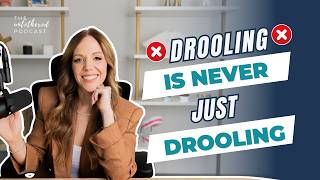
I go back and forth whether I'm pro or con for tongue-tie release depending on what PD or podcast I'm listening to. What made you ultimately decide to clip Lily's tie? Does teeth grinding and toddler sleep have anything to do with jaw, tongue, or airway issues? Just wanted to hear more about the sleeping position related to tongue and lip tie. Didn't know that was a thing. Oh yeah. Loaded question. Where do we start with a child with xyluria? I refer many of my kiddos to ENT for chronic congestion, impossible sleep. Sleep apnea, and the usual recommendation is surgery. What would warrant an expander versus surgery? I go back and forth whether I'm pro or con for tongue tie release depending on what PD or podcast I'm listening to. What made you ultimately decide to clip Lily's tie? Totally valid because there There's so much information out there. How do you know what to listen to? And the conversation is loud and it's very polarized. And then the reality is that the truth is much more nuanced. So I'm gonna answer you straight. First, we have to ground this. There is no pro or anti-tongue-tie camp, no matter what some people say on social media. There's only, is this restriction functionally impacting this human enough to justify intervention? That's it. So what actually drives a decision to release is not how it looks. I mean, yes, we look at that, but that's not truly how it looks. It's not what a provider believes. It's not what's trending on Instagram or a podcast, because there was a very loud person out there who's very anti-tongue tie beyond babies. And listen, if you needed hip surgery, would you be like, well, this podcast said I don't need it, so I'm good? Or would you kind of go like, well, what is the functional impact? Am I in pain? Is it restricting my mobility? It's wild to me how something as silly as And it's not silly, but the tissue under the tongue is so highly debated. It's just tissue, but we have to look at things like patterns. Like there's gotta be a clear functional breakdown across systems. Okay? So feeding dysfunction on either breast, bottle, or solids. Maybe there's poor tongue mobility that impacts how they're chewing or swallowing. Airway compensation, like mouth breathing, poor rest posture, tongue is down and forward, mouth is open. There could be some speech issues that happens in some cases, not all. Sleep disruption, inability to progress despite skill therapy. The real decision— I have a filter for decision-making. Is there a restriction? Yes or no? Is it impacting function? Not just like it's a little off, but like meaningfully impacting function. And has skilled therapy been attempted? Because if function improves without a release, you just avoided the unnecessary procedure. But if the body's compensating and we're not— let me say this nicely— there are SLPs out there who treat compensations, and it drives me up a wall because compensations cause further issues down the road. We should not be treating compensations with a caveat. If you're talking about a child with a severe medical diagnosis that may not make the kind of progress that maybe their same typically developing peer might make, that's a different conversation. Release makes sense when you've got structure limiting function. The person cannot access normal movement even with support. The compensation patterns are entrenched or they're getting worse. And we absolutely need to have team support before and after the pre and post-op. And here's the part most people won't say. A release is not the magic. It's an access point. If you don't change the function before and after that pre and post-op, the body's going right back to old patterns. Why so many people feel conflicted over this? You hear on one side, tongue ties are overdiagnosed, don't cut them. And you hear on the other side, releases fix everything. It fixes airway, it fixes feeding, it fixes speech. Both are incomplete ways of thinking about this. The real issue is poor case selection and lack of functional integration. What made me ultimately decide to release her her tie and she had a functional impact. I will tell you the next day her constipation went away. Was not expecting that, but that was cool. Never came back. Had it for her entire life up until that point. So much tension through her body. She was a baby who could hold her head and neck up at birth. She was so tense. I thought it was so cool. She was so advanced. No, she was just tense. She struggled to feed. She couldn't drink well from an open cup. There were all these functional impacts. And once I knew what I knew, I couldn't unsee it. And I saw her symptoms and went, this is a no-brainer. Let's prep her. Let's do it. We'll do the fruit post-op, and there you have it. Does teeth grinding and toddler sleep have anything to do with jaw, tongue, or airway issues? Ding, ding, ding. Yes, they do. Long story short, grinding is basically another way that we open the airway. Bruxism is what it's called. It is a regulating compensatory type of pattern. It's a big airway sign, most overlooked, but super important. Grinding is body's way of positioning that jaw forward, kind of like those other oral habits we talked about, creating more airway space, responding to maybe their micro arousals are happening. They're waking up slightly, but not enough to know they're awake or wake you. But it's like body's kind of coming out of the deep sleep state, going back in, coming out, going back in, coming out, going back in. So this is like, I can't breathe the way I should, let me try and fix this. The body is gonna try to do what it needs to do to create stability and breathe. It's also a jaw stability thing. If the jaw lacks stability, we might see this tongue posture. If it's not resting on the palate and sitting low in the mouth, airway space is reduced. We're gonna see this. Interested to hear more about the sleeping position related to tongue and lip tie. Didn't know that was a thing. Oh yeah. Where do we begin? We're gonna talk a bit more about airway with the symptoms tomorrow. And what ends up happening is if the jaw is a little recessed, the jaw's sitting a little further backwards. The jaws should match. The jaw is slightly back. You see how it's not completely lined up? Guess what happens? It pushes into the airway, which is back here, your naso-oropharynx, the nasal region to the throat region. What ends up happening is we can't breathe this well, and so the child will do things to try and advance the jaw forward. So if we put a baby on their back, guess what happens? If they already have a recessed jaw and then the mouth is open, they're mouth breathing, and the jaw falls further back, we have an airway issue. If we don't have that issue and our tongue is suctioned up in our mouth lightly and our lips are closed, we're breathing through our nose, oftentimes the jaw will hold. And so sleeping on the back is not an issue, but in our airway kiddos, it is an issue. And so a lot of them will flip to their bellies earlier than you expect them to, number one. Number two, they will also position themselves in a tripod. With their hands on their head and then they'll have their booties because that naturally opens up the airway more. Thumb sucking, nail biting, sucking on clothing. There could be a sensory component, but it could be airway as the etiology. So some food for thought. Loaded question. Where do we start with a child with xyluria? So saliva problem, if it's being tri— treated as that, like drooling is never just drooling. It's typically always a control coordination and posture issue, not necessarily production. Now I have seen a kid who had this who whose tongue tie was inserted into the floor of the mouth right next to the salivary gland. And that was actually causing, whenever they moved the tongue, it was actually causing the salivary gland to produce extra saliva and it led to drooling. Fascinating. Not super common, but fascinating. Posture is gonna be really important. So before you look in the mouth, maybe look at like head positioning. Is the trunk stable? I mentioned earlier this week, what you see on the hips, you see on the lips. Is there an open mouth at rest? If the head is forward and down, saliva is literally gonna pool and just spill out, and we can't like out-exercise that posture. So focus on posture. Then I would look at lip seal and jaw stability, and then I would look at tongue position at rest. I'd see how frequently the kiddo is swallowing. Maybe they're not swallowing enough to manage the saliva in their mouth. And then sensory awareness. Are they aware? Do they even notice it? Is there a delayed response to having like wetness on the face? I'd be tracking airway, breathing, any concerns there. I refer many of my kiddos to ENT for chronic congestion and possible sleep apnea, and the usual recommendation is surgery. What would warrant an expander versus surgery? I'm going to answer this from a mama perspective and patient perspective and clinician, but with the caveat that I am not an ENT, I am not a dentist, I am not an ortho. I don't move bone for a living. I I cannot recommend one appliance over another. I can only tell you about my experience. Most ENTs are solving for, let's remove that obstruction quickly. Expanders solve for like why the obstruction exists in the first place. So if you go and you actually remove tonsils and adenoids or you reduce them, guess what happens? They can grow back and oftentimes they will if we don't figure out the root cause. So the surgery removes tissue obstruction. That works best when the tissue is the primary driver. Like you're like, this kid's been expanded, or their palate is wide enough— and that's coming from an airway-centric provider, not a traditional orthodontist or dentist— but we know their airway is adequate and still happening, that's a different conversation to get fast symptom relief. It doesn't fix narrow palate or poor tongue posture or low oral rest posture or mouth breathing patterns. That's why we look at palatal expansion. So with Lily, her tonsil went from like big to non-existent, basically. Size 3 plus, almost 4, to size 1, and 1 is normal. Palatal expansion increases your skeletal airway space, and that's what helps to improve the nasal airflow, the tongue space, the oral posture. We're basically looking at form as it influences function. If a kid is like the 3-year-old who was at risk of dying in her sleep, that was snoring louder than an overweight middle-aged man, had more apneic moments in a short period of time than those overweight middle-aged men, which was what they were comparing her to, that was emergent. And like, yes, please, let's reduce those. Even if they grow back later, we need it out now. 'cause she's at risk of dying in her sleep. That's rare. Now the other thing is Christian Guilleminault, who created the sleep apnea diagnosis, like mild, moderate, severe, never intended for the pediatric one to be treated as mild being normal. One apneic episode is not normal in a child. We should have zero. And he said that before he passed, he regretted having created that because of how Western medicine is misusing it to basically say, oh, insurance doesn't need to cover this because they're mild. It's mild. It's fine. They're mild. No, mild is a huge problem. So if they have any form of sleep apnea, any moments of sleep apnea, that's sleep disorder breathing. And any form of sleep disorder breathing, even just breathing loudly, not snoring, is concerning, especially in a child, but really across the lifespan. This kiddo came to me. I opened the Little Bee Speech app and literally looks at me and says, does every speech pathologist use same app and I was like, oh, okay. And I was just kind of screening some speech. He was actually there for a Mayo eval and I was like, oh, okay. Well, we're gonna put that away because that's not how I wanna kick this off. What was interesting was he had been to, it was at least 7 other speech pathologists. He was about to go into high school, so I think he was about 12, 13 maybe. He was in 8th grade. Mom comes to me and she's like, hey, listen, I want him to be able to say his Rs by the time he starts high school. And I was like, oh. Okay. When I did his Goldman-Bristow test of articulation, the GIFTA-3, which is very R-heavy, he scored at a 2-year-old level and he was 12 and he had been in speech therapy for 10 years of his life. Did the myo eval and I was like, holy cow, this kid has got like webbing under his tongue. Like his tongue tie is so different than anything I've ever seen. Sent him to the oral surgeon. The oral surgeon's like, I've never seen anything like this. So again, really severe case, but as soon as we did the pre-op, he had that tongue tie release. Post-op was done. Guess who mastered all of his speech sounds? And when I tell you he had a list of them and mom actually hired like a tutor to drill him every day in between our sessions to make this go faster and make sure he did his homework. And it was just like 15 minutes a day or 10 minutes a day. It wasn't anything like totally crazy. Kid actually doing their homework. 6 months. 6 months and he mastered it. And he sent me, by accident, he sent me a video message to my text. Cuz he used to like message me and be like, did my homework, did my homework, to check in and everything. That was like how we kept him accountable. He probably was mortified, but he was so confident and he sounded so good. And it was his fall of high school year and he totally meant to send that to some girl. Do you see the impact that not looking at— 7 other speech therapists and nobody had looked under his tongue. Mom's like, we've never had an eval. We've done oral motor evals, but no one's ever actually looked under his tongue. So I share this because we need to be doing that and we need to understand that sometimes there is restrictive tissue that happens. And why are we so against addressing it? Why are we so against giving the tongue the full range of motion that it needs and giving this kid full function so they can thrive?
Quick disclaimer: all information, content, and material of this podcast are the opinions of the speakers and serves as informational purposes only and not intended to serve as a substitute for the consultation, diagnosis, and/or medical treatment of a qualified healthcare provider. That wraps up today's special compilation. My goal with these episodes is to bring together the conversations and the insights that are truly moving the needle in our field right now. Nick, whether you're a parent looking for answers or a clinician looking to sharpen your skills, remember that the most important tool you have is your own clinical reasoning. Don't just look at the surface-level symptoms, look at the underlying systems. If today's episode shifted your perspective or gave you a new aha moment, I would love to hear about it. Take a screenshot of you listening, post it to your stories, and tag me at Hallie Bulkin. You can always find more resources and past episodes over at untetheredpodcast.com. Thanks for tuning in, and I'll see you back here next week on the Untethered Podcast.
More from Hallie



What I Was Missing in Feeding Therapy: ARFID, Airway, and Myo with Samy Hernandez





