2023 Protocols Introduction
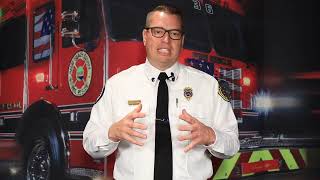
Peter Antevy walks through Palm Beach County Fire Rescue's 2023 medical protocols, adding TXA, Droperidol, IV nitroglycerin, and Suboxone, plus pediatric needles and pelvic binders. The Hand Tevy app replaces printed protocol books with live updates, checklists, and CPR timers. Training starts with physician-led sessions and short videos, with old and new protocols running in parallel during the transition.
Chapters
Foreign.
Hello, everybody. Today we're going to talk about the new 2023 protocols that we've been working on over the last several months. And I'm happy to say they are finally ready to come out in a draft version. Our medical directors have already put eyes on this. They've already made their suggested edits. Our EMS captains have them in their hand, and they've had a chance to review those as well. So we're going to be pushing these out to the entire department for you to review over the next couple weeks. We've always attempted to make sure that anything that we do, we're doing it as cutting edge as possible. We're trying to make sure that we bring you the latest science, the latest changes, and that we train you on how to do what you're supposed to do to the best of your ability. So that's our goal. It's always been our goal. So I'm very thankful for the opportunity to participate in this protocol process. And I also would like to thank all of the people that had so much to do with this. I could not do this alone. And. And we have not done this alone. As a matter of fact, we've had so many people that have participated in this, and I'd like to thank each and every one of them. There's going to be some new drugs that are going to come out. First off, txa, transoxemic acid. This is not a new drug to fire rescue. It's not a new drug to pre hospital, but it is a new drug to Palm beach county fire rescue. And I think we all understand its role in the battlefield, that it's played overseas with a lot of our soldiers. And the science has come back and it's overwhelming. We should be carrying this drug for patients that are bleeding. So TXA is going to be added to our drug box. The EMS captains will be carrying this Droperidol. This is a drug that is an antipsychotic and it's actually going to be a bridge device for those patients that maybe they don't qualify for Ketamine. We don't want to give them a shot of IM Ketamine and completely knock them out. But maybe we need to sedate them and calm them so that we can treat and transport on the way to the hospital. And we're going to outline that in some videos later on. And the protocol will tell you exactly how you're supposed to use that. That's not going to be a controlled substance, and this is going to be on every ALS unit in the county. Another drug is going to be Nitroglycerin iv. We are getting rid of the nitro paste. We are going to be giving nitroglycerin via iv, no IV pumps. I know that's the first question that comes out of everybody's mouth when they hear Nitroglycerin iv. We are going to be doing an infusion very similar to what we do in other medications through a 50cc bag, 60 drop set, run it wide open and we're going to have some very specific parameters on this, on how we do this, because this is a drug that if we do this incorrectly it can have some very adverse effects. So we want to make sure that the training is on point, that our assessment's on point and that the administration of this drug is on point. The last drug that we're adding to this is Suboxone. This is something that is going to be really, really cutting edge. There's only a handful of agencies in the entire country that are going to be administering Suboxone. And this is for the patient that is going through acute withdrawals that they need to get some help. And we're going to bring in some of our physicians to talk about all of these drugs, but especially this one to help us gain some understanding of on the role of this drug in the pre hospital setting and how we believe it's going to help a lot of our people that are trying to get into recovery, that are suffering from addictions. There is some new equipment that's going to be on the truck. So we actually are. We already have vanish point needles that we use for adults. We're going to be purchasing pediatric sized vanish point needles which would be a 23 gauge 1 inch needle. And as you know, you depress the plunger and the needle automatically retracts. This will be beneficial for those, how those droperidol administrations that we're going to be using. Also another new piece of equipment that we're adding to the truck are pelvic binders. This is going to be an incredibly simple piece of equipment that we're going to have available to us in the event that we have a patient who has an unstable pelvic fracture from a high mechanism of injury. For patients that we believe that might have some internal bleeding in their pelvis. This is not going to be used for your standard slip and fall. That's not the indication for the pelvic binder. The pelvic binder is going to be indicated for that patient who's got maybe they were hit by a car at a high speed. And that pelvic ring is fractured, really, in two or more places. Obviously, you know, we can't tell. We don't have X rays in the field. We have no idea how many times it's broken. But I think all of us have been around long enough to know that when we see something that's definitely broken, and this patient would definitely benefit from closing the size of the pelvis so that we can reduce the bleeding. 90% of pelvic bleeds are venous bleeds. So if we can close the side of that, the size of that, we can actually save a lot of lives. So we're looking forward to that as well. As far as protocol changes, there's a lot of protocol changes, and there's a lot of little stuff. A lot of stuff got cleaned up, a lot of stuff made more clear. A lot of stuff got simplified, and there have been some new protocols that were also added to this. So there's some give and take in this process as well. I think you're going to be pleasantly surprised with the. Some of the simplifications. And there's some other things that we're doing as far as expanding the role of whole blood into medical patients. So patients that have GI bleeds, patients that have esophageal variceae ruptures, patients that are obstetrical patients that have, you know, massive exsanguination, we're going to be administering whole blood to those patients as well. So we've written the protocol for that. Obviously, you know, because of the new drugs that we're adding. There's also some protocols that have to be updated for that as well. So cardiac arrest is changing slightly, but it's going to be simplifications. No massive wholesale sweeps, and then, you know, congestive heart failure with the nitroglycerin iv. Obviously, there's going to be some changes there, but overall, I think it's going to be a simplification of a lot of stuff that already exists, and I think it's going to be helpful. The way that this is going to show up, though, is going to be on the Hand Tevy app. The Hand Tevy app has really expanded its. Its role here for our department over the last update that we've had, and it's been all for the better. So if you look at what the Hand Tevy app does right now is it just tells you what a pediatric dose is, and it just really has some basic stuff. Well, all that stuff has been updated and I think we're all going to be amazed at the technology that this app is going to be adding to us. So, first off, whenever you look at the Hand Tevy app, you'll be able to look at all of our protocols on that app and that's how we're going to implement this protocol. Push really is. We will. The medical services division will not be printing any more protocol books. That's not going to happen because if anything changes, your book now becomes outdated. We're happy to say that we are going to embrace the technology and we're going to make sure that the Hand Tevy app is going to be the main vehicle in which we push out our protocol updates. So when you log into that app, you will have the most current version of the PBCFR protocols at all times. And that's the goal, that's the standard that we're trying to achieve. So the protocols will be on there, as a matter of fact, with the updates. And once you get your hands on this new version, you're going to see that it's really, really user friendly. It's got the ability to isolate the medications to just that protocol. If you're working, let's say allergic reaction, it'll just pull up the allergic reaction drugs. If you're working on multiple protocols, well, you can pull both of those up. It's got an active checklist. You can check off things as they get done. It also has the ability to access the actual protocol while you're in there. When you open up the app, in the top right hand corner, there's a CPR section. When you open up that CPR section, it'll start a timer. It'll tell you how soon, how long you've been working the cardiac arrest, when was your last shock? And you're just going to press that button. And what it's going to do is it'll timestamp everything. So on completion of the cardiac arrest, you can select your unit and you can import those directly into your epcr. You won't have to toggle back and forth between programs. It'll transfer right in just as if you were getting, you know, vitals sent from either a lifepak or from another unit. So I'm really excited about the app. No more printed books. That's going to be great. So let's talk about the rollout and how we plan on doing this. We're going to bring our physicians in to talk about the protocol, to tell us the why, to tell us about the the science behind it. We're going to bring our EMS captains in to give us the how to so that we can take those two different things and marry them together. And we'll be able to implement this on a call. So that's. That's what you can expect for a rollout. I'm gonna go ahead and apologize now. There's going to be a lot of videos that are coming out. I will do my best to keep them short and concise and digestible. There'll be a quick test at the end so that it can ensure that we know we've learned something from this. And all this stuff is going to be something that you'll be able to refer back to. If you ever have a question on a medication or a procedure later on, you should be able to refer back to that, and it'll help you bring some clarity to that. Last but not least, how do we bridge the gap? How do we go from an old protocol to a new protocol? What does that look like? So this is what we're trying to do here, is we're not just basically going to take our old protocol book and toss it in the trash just yet. There's going to be a period of time where we're going to be operating out of two protocol books. And I know that as confusing as that may sound, it's actually going to be a much simpler process than a wholesale change on a certain date. So that'll give us time to digest, it'll give us time to understand. It'll give us time to make sure all the medications are in place on the right trucks and that we understand how to use that before we go live with those medications. However, if you feel trained, you feel like you have an understanding of this, your EMS captain has come to the station and trained you on this, and they say, I'm encouraging you to go ahead and use this new protocol. Put the old protocol to bed. I'm encouraging you to do that. The sooner you feel comfortable with the new protocols, the sooner we can get rid of the old and we can embrace the new. We can start beginning to make that transition. So it's going to be a fairly slow transition, but be patient with us. And if you have any questions as you go through this book, please read them. Read it carefully. Please understand the changes. And then if there's anything that comes up, reach out to your EMS captains, reach out to myself at the Medical Services division or anybody, and we'll be happy to listen to your suggestions. Anything that needs to be clarified we always appreciate that feedback. It helps, helps make this product better. So thank you so much for your time. We appreciate all the work that you do. Have a great day.
More from Peter




Melissa Olen MSN, FPN-C, CCRN: Sudden Cardiac Arrest Training in Schools (Project ADAM) 4/25/25



Pediatric Hospital Readiness: How Teamwork & CPR Metrics Drive Better Outcomes



Chelsea Kadish, MD & Kyle Goodknight, EMT-P, RT: Pediatric CPAP in EMS (3/14/25)