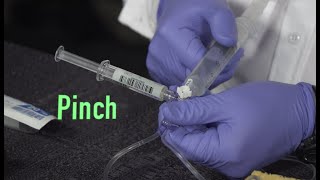
Peter Antevy shows how to use new IV tubing with a needle adapter for adenosine delivery. Attach a three-way stopcock to the Y-port, pinch the line and close the roller clamp to keep medication out of the bag, then flush with 20 ml for adults or 10 ml for kids.
Questions this video answers
15 drop set
A needle adapter (uses a needleless adapter in practice), replacing the prior dual Luer-lock adapters.
20 ml flush
Only for pediatric patients.
Chapters
Today we're going to talk about a new piece of equipment that's going to be showing up on the trucks in a few weeks. As you know, with the supply chain issues that we've had recently, we've had to change some of our delivery methods and some of the medications that we're accustomed to giving and looking at certain vials, knowing what they look like, we've had to become very adaptive. And I want to go ahead and thank everybody for this. The biggest goal for all of us here is to make sure that you have, as an end user, you have everything you need to run the call. In an effort to make sure that we're still running calls, the 15 drop sets is the next issue. And we do have 15 drop sets. We definitely don't want to change this. We want to make sure that our delivery method is as consistent as possible. However, there is one small subtle difference on this new IV tubing that is different from the old IV tubing and that is basically going to be the Luer lock adapter. So as you know, with our old IV tubing we had two Luer lock adapters at these Y sites. Unfortunately, this new piece of equipment that we have to use because we can't get the other ones has a needle adapter. It's not really that big of a deal for the most part, but it is a new piece of equipment and it's going to require a little bit of education on this. And for the most part, most of our medications are going to be single use medications, single push medications. It's not going to affect the delivery of 99% of our medications. The one drug that I can see an issue with is adenosine. A lot of us are used to giving adenosine in several different ways. And so today I want to go over a standard approach towards giving adenosine so that we all get on the same page with this and so that there's no issues with this particular piece of equipment in the future. So. So let's go ahead and go over the delivery methods for adenosine. With this single Luer lock Y side port, you're going to need a three way stopcock. Obviously your adenosine, you're going to need a 20ml flush. I already have that drawn up. I have my sponge over here, ready to go to demonstrate. And obviously we have the new IV tubing. As you can see, I'm going to use the needleless adapter. I'm not using the one that you can put a needle in. So let's go ahead and set this up.
Now that we have our medication attached and ready to go, let's go ahead and walk through this process so that everybody can see what we're doing.
So I've got my three way stopcock attached to the Luer lock adapter on this new 15 drop set. And as you can see, my three way stopcock has this shut off for my flush and it's open for my adenosine. Remember, you have to pinch this IV tubing because if you do not pinch this IV tubing, all of this medication will go straight up the IV tubing into the bag. You don't want that. I would recommend going ahead and closing that roller clamp as well and, and still pinching this off. So as you can see, I've got this pinched off. Let's go ahead and show you the administration methods. I'm going to. Once I've obviously confirmed that the patient needs this medication, we're going to give the adenosine, switch this off and follow this with a 20ml flush. The only time you'll use a 10ml flush is if this is a pediatric, every adult 20ml flush. And that's going to ensure that this medication gets delivered to the patient. As always, we want to thank you for your patience in this process. We know how difficult it is to run calls when you're constantly having new equipment showing up on the trucks. So I want to make sure that you have as much information as possible. We are sending information out through our EMS captains and through our lieutenants as well, so that you have a constant flow of information to keep these updates flowing. If you do have any questions though, please reach out to the Medical Services division. If you have any recommendations, we would love to hear from you. And as always, stay safe.