Avive AED - CEO, Sameer Jafri (1/31/2023)
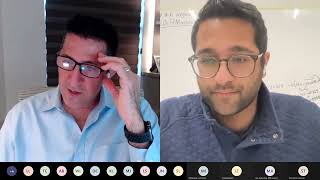
Sameer Jafri, CEO of Avive Solutions, presents the Evive Connect AED, a rechargeable device with an 8-year battery warranty and integrated cellular connectivity. The device delivers 150 J shocks, has a pediatric mode that reduces power to 50 J, and costs $349 per year on a lease or $1,395 to buy. It connects to RapidSOS to alert nearby AEDs and hospitals during cardiac emergencies.
Questions this video answers
150 Joule biphasic shock.
Pediatric button attenuates energy to 50 Joules; no separate pediatric pads required (same universal pads).
Cellular, Wi‑Fi, GPS, and Bluetooth (all included in every SKU).
Nearly eight months between recharges in normal standby/nominal conditions.
Warranty is eight years; battery designed with ~300 charge cycles and intended not to require replacement during device ownership/warranty period.
Chapters
The Dan who knew too much, right? It was good. And you started the transcription.
Says here.
All right, we are good. All right, ladies and gentlemen, welcome to Tuesday Afternoon, which, by the way, Paul, I'm really liking because I, I got so much stuff done today that, yeah, I feel like this is a nice, nice end to me. And I think. Samir, you're in California, right?
Yes, sir.
So I said it's better for you that you're not waking up really early in the morning. So without any further ado, many of us were at the NEMSP conference in Tampa. And one of my favorite parts, obviously, besides the research and the networking, is to see all the great stuff that's coming. We've happened to have an insider's look, if you will, at what was coming on the AED market, because we've known Samir for a while and I've been in contact with him for several years now. And just last week, their product, which they were on our webinar, Samir, probably. Was it 2021? I think it was about a year and a half ago.
2021. And now you have some big news for us. And also I'm noticing you're officially now the CEO of the company.
That's right, Dr. Antebe.
Yes, congrats. So we have the CEO of the company that's going to be making huge waves. And we have people like Dr. Pepe, who was really, you know, let's call it like it is. He was the first person to actually, you know, put the AEDs out there in public places in an airport in Chicago to show that the survival is about what, 90 something percent? Paul, is that what you showed in that initial study?
The first year we got back, everybody.
The second year, there were three people that were obese diabetics that we couldn't get back on the scene. Okay, but the. Which was an interesting signal and it was itself. But overall you're right, it was over 75% of the people had we gotten back. So.
Yeah, right. So, so here we are. We have, we have, we have history on this, on this webinar. But Samir, you guys have done so much work. If you want to come on, give us an update. And I know you have some slides to show us you have the device, but first of all, congrats on the FDA approval. I can't even imagine how many colonoscopies that felt like, but take it away and give us the update. Thanks for coming on.
Yeah, thanks, Dr. Anteby and everyone for giving me the opportunity to share more and come back and give you all an update means a lot. I call it a labor of love. Dr. Antebe.
It was.
It's fun. It's not a fun but necessary process to get through the fda and we're really fortunate to have done it and now be getting ready to ship product. And so, just for those of you that I have not met before, a brief introduction. My name is Samir. I'm one of the co founders at Avive Solutions and serve as the CEO of the company. I got involved in this space because of personal connection to cardiac arrest. It's touched my family through multiple generations, from my great grandfather all the way down to an uncle recently. And so it's something that I deeply and personally care about and am driven to make an impact in any way I can. Since college when I was at UCLA for my undergraduate degree. I founded a nonprofit while I was there that was more focused, I'd say, on the preventative side of cardiac arrest. We did ECG screenings and echocardiogram screenings for youth and then also helped deploy AEDs in underserved parts of the LA community. It was through that that I met my co founders who are two brilliant engineers from MIT that had built the first version of this product at MIT as part of a senior year capstone design course there. I call them annoyingly smart because they figured out how to build this thing, a preferred first prototype in eight weeks. It's been taken us five and a half years from then to get to the point where we are today, but we founded the company in middle of 2017 as we were graduating from our respective colleges and then really fast forwarding today, we just crossed the 53 mark from a headcount standpoint. We've been quietly working in the Bay Area in California on this, have an incredibly talented team that I'm proud to be a part of. We've raised capital and are really well funded from groups like Laerdal and other groups in the space and venture capital firms received our FDA approval and are now just kicked off production. I. I was joking. At naemsp, I signed a PO that week to green light production. So there's no going back anymore. We're building this thing and it's getting out there in communities. In the next couple months here we'll start shipping to which we're really excited to do. So can you guys hear me okay? I just want to make sure.
I'm not.
Yeah, we hear you perfectly.
Perfect. Okay, great, Great. I switched to my headphones and So I wanted to make sure. Okay, so what are we doing? Well, at Avive, we have built a next generation aed. You can see it right here. This is the Evive Connect aed. Hopefully in my screen here you're seeing me hold it up. But alongside the aed, we've built software solutions to one, better maintain devices, but also really try to integrate the AED into the public safety ecosystem more broadly. But let's start with the AED for a second here. We wanted to really think about and solve for a few things. One is portability. So for scale, this is my iPhone, so it's about the size of my iPhone. I call it a little fat. IPad is what our AED might look like.
But clinically from a hardware standpoint, we're really not doing anything different than other AEDs out there. We're not trying to reinvent defibrillation here. We deliver 150 Joule biphasic shock. Incredibly similar waveform to what's out there today. We're not really trying to reinvent the wheel there at all. We have a child button here. Hopefully you can see that if you press that, attenuate the energy down to 50 joules, you can use the same set of universal pads versus needing a, you do not need a separate pediatric pad set. And then also a Spanish button here where if you press that Spanish button, it'll change the audio and visual instructions for the AED to Spanish. A key difference from a hardware standpoint that we really wanted to focus on was reducing total cost of ownership of the devices. And one of those ways was through a rechargeable battery. So right here is just a USB C charging port. This device, in just normal standby mode and nominal conditions will last nearly eight months between recharges, which is a huge something we're really proud of. And then it'll take a few hours to recharge and then again last another eight plus months between charges. You will not need to replace the battery and it's not intended for you to replace the battery during the life of owning the device. Our warranty is eight years. What we're most excited about though, aside from portability, making it look user friendly and like what we'd use every day of our life, is the full connectivity suite that we have. So that's cellular, WI Fi, GPS and Bluetooth all built into the device. You can see some of those in the top right hand there, indicating that they're being functional in this device. What does that do? Well, from the most basic standpoint, from maintenance standpoint, I think we all can appreciate that maintaining a fleet of AEDs, particularly PAD programs, police vehicles, AEDs that are mobile in, let's say BLS units is a challenge today because you have to physically go check devices to make sure the pads and batteries and green light etc are all flashing, self test, etc. Service company points, engine level improvement points and engine service equipment points determine the 5.5.
Can someone mute Jermaine? Thanks, Joseph.
What we've done is with the full suite of connectivity and I'm hoping you guys can see this. We can automate pretty much everything related to maintenance for a customer. This is our Real Connect platform and this is actually a live dashboard. So I'm in San Francisco right now. I've got Mike Whitman, one of our account executives is in Nebraska, Carly is in New York and then mayor, one of my colleagues is in, sorry, she's in Canada and he's in New York. I'm in San Francisco right now and here's my unit and my colleague Micah's unit at our office where I am actually based currently. And what this dashboard is is it's a real time spot where every day, daily, you're getting status updates about exactly what's happening within your fleet of AEDs. You can start with this basic dashboard here where we've got five healthy AEDs. If I was to use a device, you would get alerted here. If my path were to expire, you would be alerted in advance. But you'd also know here if my battery was low, if my device was outside operating temperature range, I could dive into the AED level specifically and have all the settings related to my AED here. If my device was, I thought, lost or I needed to check out where it was, I could refresh the GPS or put it in lost stolen mode, which would then send an alert to the device so you could know where. So the device would actually have an alert that says return this AED to the to this customer or to this owner. You have all your incidents from the device automatically uploaded to the cloud. So no more special cable and special software and special computer to download data, which we all know is a pain point. Today, all of that is automatically uploaded wirelessly to the cloud here for owners and then also to get to downstream patients or to downstream physicians and providers. Think of this as just like, honestly, people think it looks cool, but really it's just 2023. It's an asset tracking platform for your hardware. It's an IoT connected device. You know what's going on with your AEDs at all times. And that's what the intent is here. The second piece of connectivity for us is really trying to get data to the right stakeholders in the public safety system or the chain of survival, and also helping get AEDs to patients when and where they're needed. So we have partnered and we have an exclusive partnership actually with Rapid sos, which is, if you guys aren't familiar, they have about coverage in about 90 plus percent of 911 call centers in the country. And they're essentially the data pipes between connected devices and telecommunicators. So it's a portal that's open on a web browser or can be open on a web browser in 911. And essentially they're getting data when a call comes in. One of their advantages is that they're getting data from the cell phone.
Like the Google Map and apple map. That show up in your phone is what's being translated from a location standpoint here on the call. So instead of triangulating between cell towers and thinking someone is in this area, it's giving you within a few meters that person's pinpoint location. Uber also partners with them. Other home security companies partner with them where when you press the Call911 button in Uber, it shares the data from the ride to the telecommunicator so they have more situational awareness to what's actually happening on scene. We are their partner for this space in cardiac arrest. And essentially what happens is when a call comes in, they can, if they suspect that this patient is in a cardiac arrest, this dispatch AED button up here is what they would press. You press this current lat long, request an AED and then that contacts us. And when that happens, all of the AED's nearby start alerting like you hopefully see on the screen here. So you'll get this alert, cardiac arrest nearby. Take this aed. It'll give you walking and driving time on the actual aed. And then if I accept the emergency you're getting, hopefully you guys can see this a Google Maps on your device taking you from where you are to the location of the arrest. Now, what's happening on the Rapid SOS end is that we're now starting to share data back with the telecommunicator. So they'll see which AEDs as well as, by the way, app users, we have an app that can be deployed in communities for free that would also get alerted. Similarly, they'll see which AEDs and app users have accepted the alert and which Ones that are nearby but haven't accepted. So maybe there might be an AED in this building that hasn't accepted. But you could tell the caller, hey, there's an AED somewhere in your building. Go listen for the sound or have someone bring it. Regardless, as this device is en route to the patient, what happens is you start to see the AED moving. So think of like your Uber app. You'll see the AED track in rapid SOS, and then when I actually activate the AED, this timestamp starts to. It's a timer every 10 seconds that'll start updating and you'll see what step you're on as well. So if it's been powered on, this will say on if pads have been removed? Yes. Pads placed. Yes, all the way to the most recent analysis. Shockable. Non shockable. This data is updating about every 10 seconds or so in the call. And so this gives the telecommunicator more situational awareness, hopefully. So you could think of if this timer is on a minute 30. We've powered it on, remove the pads. But we haven't placed the pads on the patient. It might be an indicator where we could say, hey, there's a blue and red pad. Make sure you're placing the pads on the patient. Or we could at least intervene to provide more situationally contextual information versus maybe a script. Today, without that data and awareness, I'm going to quickly power this on just so you guys can see. Powered on one second.
Make sure 911 has been contacted. If the patient powering off when EMS.
Arrives on scene and they power off the device.
Yes.
Can you, can you stop sharing your screen so we could see you in full view?
Sorry.
Yes.
Thank you.
How about that? Okay, when EMS arrives on scene, you and you guys power off the device. What you'll see here is our incident id. So when you click more details down there, you'll get a quick time stamp. Hey, there was a shock delivered. Any analyses that occurred would show up here. We didn't have any analyses right now, so there's nothing to show, but you would get a unique incident ID and a QR code. When you scan that QR code, you can immediately access the data off of the device. So the full incident report, every time stamp from 911 all the way downstream to shocks delivered, heart rhythm analysis, et cetera, all that's available to you. And you can also, we have a incident report portal called Vive Life IncidentReport. And so you could think of the radio comms person Potentially at the ed, having that up and available so that the enroute transport group could say, hey, incident ID 16SL7, they could type that in. And then all of the data could be pulled down at the ED or the hospital before the patient even arrives through the doors. And so the goal again of the connectivity is not only to automate maintenance and make that seamless, but it's also to try to connect the device into the key aspects of the public safety ecosystem so that we can get valuable data to telecommunicators, EMS and then downstream providers. That's really tough to get today or challenging or just frankly never gets to those stakeholders in the first place. And so there's much more to share, but I'll stop talking and happy to answer any questions that you guys might have.
Well, I guess I'll start. Samir, it's nice to see that.
For the first time the AED is connected. In the past, obviously it's always been just tell the people, the layperson where those devices are and expect them to go get it and then do the right thing. So, you know, this is really kind of thinking about it from the actual device itself. The question I had as far as connectivity, if I have this thing sitting in my car, right? Yeah. And it's not hooked up to a cable.
Is it always connected or does it have to. Does it have its own cell service? Does it have to be in WI fi? How does that look?
So there's cellular and there's WI fi built into every unit. It's not separate SKUs, just like Spanish language is in every SKU. It's not a separate SKU, that's more expensive. So everything I just described is available in every unit. There's not separate devices or SKUs that you might need to buy if your device is in your car. At the minimum.
We are providing and updating the location in your maintenance platform on a daily basis. Except if you want to update the location in your maintenance platform in real time, you can. Plus that refresh GPS and it'll give you the current location at that moment of the device. If you're plugged in, we're always sending data about location and status at all times. For the 911 alerting piece, we will ping every device within the jurisdiction of that911 center to confirm its location at the time of the call. And so you won't need to. We won't exclude devices because we don't have its location in the moment. We'll check in, get everyone's current location and then anyone within a mile of that specific call will actually send the alert to. Does that make sense?
Yeah, it does make sense. Great answer. So we have a few more minutes and I want to ask a question that's on everyone's mind. And again, I mean, I'm not sure if you're disclosing this or not, but what does this thing cost to buy and then what is it? So if I'm going to purchase one today, what's it cost me? And then is there like a, like a yearly fee? Can you describe the financials behind it?
Yep.
So every community we're partnering with today on a pad program or a broad deployment, the pricing structure is really simple. You actually could go on our website, Avive Life, and you would see this as well. The first one is, and this is what most groups are choosing is a lease model. We call it the lifesaver plan. And that's 349 per device per year for a five year program. And that includes everything from the hardware, the software, services, so the maintenance platform, the integration to 911, all of the cellular, wi fi, et cetera, connectivity, your pad replacements, all of that is built into this kind of white glove service model of 349 per year per device. So 30ish bucks a month is what that comes out to. There's nothing else, no extra cost aside from that. The second model is a buyout, right, where if you want to buy the unit, it's $1,395. And that includes your first year of everything I just described, the connectivity, services, et cetera. And then to continue the connectivity and services and your pad replacements, it's 150 per year per device. And so that's the two models at the end of the day. And so ultimately most people have chosen the lifesaver model because lower barrier to entry, it can just be an operating line item on a budget versus a capital expense. But obviously it's dependent on each community.
Dr. Pepe, you had a question? Go ahead.
So a couple things backing up, which is this great, of course, but now when you said for the five years, does that mean then you do it all over again at five years, the 349 or whatever it's going to be.
At that time, or you could buy out the unit at that point for $250.
So that's your other choice.
All right, then the second question I have is that what's the sensitivity and specificity of the device? For example, let's say compared to a What, what's the Stryker device called? Or the Phillips device, whatever they are called. How's your sensitivity and specificity? Because that's important for you to know. Because I want to know.
This works for the ECG algorithm specifically.
Yeah. If someone is in vfib, how often do you miss them? Or you know, or we are, we.
Are higher or we actually have a publication that I can share with you guys that's about to come out in the journal. I think it's the AHA Journal and so I can share that with you guys. But our sensitivity and specificity is the same or higher than every other device for all rhythm types that are measured.
Now, is that what the FDA did? The FDA kind of put you through those levers and all that kind of stuff?
Six months of conversation on the ECG algorithm alone. And so that was actually the most scrutinized piece because our waveform is incredibly similar to other waveforms out there. So there was. In our first shock, success rate was above 90% within three shocks. It was 100% for adult and pediatric. Really. It was the ECG algorithm that we did, I don't know, probably 20,000 rhythms through the algorithm at the end of the day. And we just got published or about to get published in a journal on it. But, but sensitivity and specificity is as high or higher for all rhythm types.
I'd love to see that paper, but go ahead. Yeah, Paul, go ahead.
Yeah, the pads, how often did they be have to be changed out? How good are they for how long are they?
Two years. And, but again, in the lease model that's built in to your lease plan is your pad replacements. And if you are doing the 150 per year after, when you buy it outright, it's built in by the end of this year. I expect that to be actually three years. So we just completed testing for three years and passed and so we're submitting that right now. And so I expect by the end of this year we'll be at three years.
Terry, Dr. Cohen, go ahead Terry from Boca Raton and I'll come back to you.
Paul.
Yeah, well, I did my own assessment of the device and it was equal to two Coke cans and in size. So that's another dimension.
But I want to ask you.
Is.
Your time to analyze and deliver shock very. Is it any faster than anybody else?
It's the same. Yeah. Okay, so we're not any faster or better on that front. One thing I will mention, guys, that's worth noting is because we're fully connected the beauty of a lot of the things that you guys are talking about or probably would have interest in is their software updates. Think of your AED with our device as kind of a. We're not touching the clinical function, but from a feature and capability standpoint, we can update devices remotely. So you could have your AEDs deployed in a community and then we could decide we want to improve something with you guys in your community and we can push out a software update. So think of, you know, you could go from the Model 3 Tesla to the Model S and just continue to have additional features and capabilities added without needing to swap hardware necessarily.
Paul, you wanted to have a follow.
Up on that, bringing this up, because the real difficulties, I mean, that's what's really. I think you make a good point there about the software being the real value added. So on what I was going to say is the real issues we have out in the real world is people are not checking the batteries or when they're beeping off, people will take them off. You know, those kinds of issues and, you know, keeping. Because before you know it, two years has passed or three. But tell me about the batteries. How long are they supposed to be good for, number one. And then number two, that I assume that comes along with the package when you do the renewal through the 349 per year. And the third question would be along those lines is that how does it signal you that the battery is dying?
Yep. So if I quickly share my screen one more time and I know I have limited time here. Doctor, Antibiotics. I'll be quick.
So to answer your last question, Dr. Pepe, one second.
How do I get out of this?
And while Samir is working on that, just so everyone knows. Oh, go ahead. Perfect time.
Go ahead, I'll Finish up. So, Dr. Pepe, this is your main. You brought up the perfect point, which is maintenance is one of the biggest challenges and this really automates it for you. So this is where you're getting both on your desktop but also on your mobile app. If you're an owner of the device, not only the owner of the device, but you can assign each AED to a specific person. So you could have X County or X City as the owner of a device and then you can assign specific people and each, you can have assigned users to each specific aed who also get alerted on their phone, email, email, and through this platform as well, related to pad, battery temperature, devices being used. Right now. Here's the incident data. Everything related to the device and its data is available Here from a centralized dashboard that's updated at the minimum daily, but real time for a lot of cases and specific alerts. I forgot your second question, Dr. Pepe. I'm sorry, how long does the battery last? Battery last? Yes.
So the battery has 300 charge cycles built in and each charge cycle is about eight months. So you can multiply 300 times eight and it's a lot of months. And so the intent is over the life and warranty of the device. You don't need to replace the battery at any point. At the end of the five year lease, Dr. Pepe, we would swap your hardware and give you a new set of hardware with the latest and greatest features if you chose to re up the lease. But if you, if you bought the unit outright for 250, you would keep the same set of hardware. So that's downstream and that's important because.
If I have, if I'm putting in every one of my school systems like you know, the school district here in our large city like Dallas, and I've got about 100, 200 of those to keep track of all those and have someone do it. So because you can't rely on the people in the schools that do it. So that I think that's a great feature. That's why I wanted to bring that out. So. Hey Samir, just a quick question because I've got to go in about 30 seconds. Would you be able to switch on to another meeting and do a presentation on this? About a half an hour?
Sure.
Okay, got it. Okay. I have another group of people that I work with and they may be interested in this. Okay, so thanks.
Awesome, thanks. Thanks Paul. Appreciate that. Sameer, last question. When are you shipping your first product, do you think?
Second quarter. So right now we have.
Frankly a few thousand units in backlog from committed customers and so those will get start to get shipped out in the second quarter. If someone was to place an order today, we would likely start ship, you know, ship them units this summer, in the third quarter or so. So July, August, September.
But yeah, that's where we're at today.
Gotcha. Awesome. Okay, awesome.
Would you send the link? I guess we should put them on about a half an hour about that.
Yes, yes, Samir, I'll send you the link. It'll be in your inbox in a second. Thanks so much for coming on. We'll definitely be in touch as far as keeping us updated and just for everyone else, so everyone else knows as Angus is switching us over to Paul's webinar over the next coming weeks. I've asked a couple other folks to come on who we saw at the NMSP who have data behind what they're doing and they're going to be coming and presenting on this webinar as well. So Sameer, thank you so much for your time today. Amazing presentation.
Thank you, guys. I appreciate it. And I put my email and phone number if anyone's interested in chatting further. I'd be happy to. But thank you guys for the opportunity.
You got it. Awesome. And the email's in your inbox. And I will see you on the other side of the Zoom webinar. And Angus, are you able to do this today or should we ask Joseph Zalkin to do it?
Bye, everybody. Thank you.
Thanks, Samir.
Yeah, I just wanted to know what kind of roosters and chickens they were in Leanne's yard. That's what it looked like, right? Did you see those?
The chickens were coming home to roost. I think that's what she was telling the other the other.
More from Peter




Melissa Olen MSN, FPN-C, CCRN: Sudden Cardiac Arrest Training in Schools (Project ADAM) 4/25/25



Pediatric Hospital Readiness: How Teamwork & CPR Metrics Drive Better Outcomes



Chelsea Kadish, MD & Kyle Goodknight, EMT-P, RT: Pediatric CPAP in EMS (3/14/25)