Brandon Means, RN, BSN: Incident Management using Pulsara (2/28/2023)
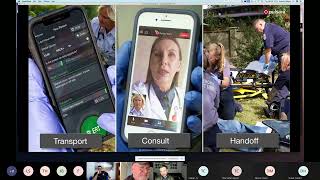
Brandon Means demonstrates Pulsara, a platform that creates patient-specific communication channels during mass-casualty events. It uses GPS pinning, barcode scanning, and wristbands to track patients through triage and transport. The Air Force Academy and Texas statewide initiatives have tested the system.
Chapters
So if you can say that. Perfect. Thank you so much, David. All right.
So more people are going to be showing up as we go along, but I want to. I want to give Brendan as much time as possible. So we'll get started here.
You know, we're still in the month of February, and this entire month we've really tried to address.
Some of the things that we've seen out in the conferences, and we've been very fortunate to have these entities who are creating things, and we've been able to have some insight into what they're doing. Pulsera habits have been around for quite a long time now, done amazing things. But once I saw their new feature, I knew that we have a lot of people in our state who are kind of MCI freaks. And, you know, given the fact that many of us have been through these.
This is a topic that very interesting to me because it's always like in Parkland. We had all these patients and then they just scattered. Right. Nobody knew at the end of the day. And I don't know if Chief Cardona is on the line today or not. Comments afterwards, but we physically went to the hospital with a pen and paper trying to find where everybody went. And. And many of us have tried for a long time to figure this puzzle out. And so what I wanted to do is bring on Brandon Means. Brandon is a flight medic and he's just, you know, he's a nurse, he's a paramedic, critical care medic. He's done it all. And he's now been with Paul Serra as the Vice President of Medical Operations for quite some time. And I've asked him to come on and talk about what are they seeing out there and what are they doing specifically within Pulsera to help people like us in these situations. So, Brandon, without any further ado, if you want to make any further introductions and take it away, and I know you have a slideshow. Thank you for coming today.
Yeah, sure. Thanks for having me. It's always good to hang out with you whenever I can. I usually only get to see you a few times a year, so. So thanks again.
Yeah.
So I'm Brandon. I'm as, as Dr. Antebe said, paramedic and a nurse practicing for about 20 years in pre hospital and have participated in a fair share of surge events, mass casualties, and taking care of sick patients one at a time for a number of years, too. And as he mentioned, one of the struggles that I've always seen in my practice and in my role at Ulcera is scaling communication logistics, patient tracking, doing things that we've. That we like to do really well, one patient at a time. How do we scale that to when we have 40 sick patients or 80 or 200? Not only just communication, but patient logistics, you know, tracking those patients and making sure that the right resources are available wherever we're going. And how do we do that? Simply without having to learn new software or a new workflow. Just because I have more patients than I anticipated. I think that's. I think that's where we're seeking to make a difference, is scaling communication. And Dr. Antebe, you've kind of preached this gospel for many years on cognitive offloading. And, you know, you make many references to some of my favorite authors and some philosophies that I'm sure everyone's familiar with. But in a surge event, whether that's an active shooter or a wildfire evacuation or hurricane evacuation or school bus rollover, the last thing we need to be doing is trying to figure out how to use the tools that we're using, whether that's for communication or patient tracking or clinically. And so we really try to make.
Communication scalable. And we saw how scalable communication was in Covid. Right? Everything broke down. Everything broke down. We had. I know probably many of you on this call were making 20, 30, 40 phone calls to try to place it, to try to move a single patient when everyone was full. And it just. This just doesn't. It doesn't work. So we had to. We really set off on this route to find a better way to communicate during a surge event at the height of COVID But it has really transitioned well to acute surge events and even planned surge events like football games or marathons or music festivals. So anytime that you have the potential to have a lot of patients, we've really tried to get the communication scalability down.
All right, I have also. My text messages are going off. They don't come across during Zoom, but they're coming up on teams for some reason, because I don't know how to work a computer. So, yeah, I've got a couple slides. I don't know how familiar you guys are with the company. I work with Pulsera, and what we do. And this is definitely not a pitch for Sarah. This is just kind of to, I think, laying a little bit of foundation so that you can know, you know, what we do on a daily basis and how we're attempting to scale that for. For surge events. So I've got a few slides. It will not be death by PowerPoint. But if I can get back to the share button, I'll share that with you.
Brendan, you're on mute.
And I don't see your share just yet.
Okay, it says that I'm sharing, but it doesn't show that I'm sharing. So let me, let me try that again. I'm seeing your shared screen. Oh, you. Oh.
Can you still see my shared screen?
Yeah, I can see it as well.
Okay, perfect.
All right, Doctor, can you see it as well?
No, but that's okay.
All right, no worries. As long as everyone else can see it. That's what's important.
As I mentioned a minute ago, I.
Don'T see it either.
Oh, well.
That'S interesting. I don't see it either. Okay, I'm going to stop sharing and we'll try a different route.
Yeah, a lot of us are seeing it, so I don't know what the issue is.
Well, only I can mess it something up that in that way where only half the people see it.
Hey, Peter, while he's doing that, you want to tell everybody the CME code for today?
Oh, yes.
SEP 17331.
Okay, got it. Oh, and I see the screen now. Look at that. I just put it in the chat. Paul, thank you for sending that.
I'll just do that. I'll just do it the old fashioned way. I'll just, just share my whole screen so you guys can see that, that.
That'S actually a good thing for us to help out for the future. Go to your whole screen and then just go down. Because I think everybody has that same problem. It's not just you. Okay.
Oh, good.
Well, thanks for the heads up, Pete. I appreciate that.
All right, so as I mentioned a minute ago.
What we are trying to build are systems of care that scale from a communication and patient logistics standpoint. So using the same system daily, that can scale easily for local, regional, national stress events or emergencies.
So I always like to start with a problem when I, you know, when we explain what we do exactly. And when you think about a single patient event, the stimulus, stroke, a traumatic event, and this patient, whether they generate in the field or they're an ed, walk in, or they're already in the hospital as an inpatient and they need a team of responders to respond to them. You guys know the drill, right? It's usually a radio or phone call to the ed, report to the charge nurse. They're writing it down on a piece of paper, sending it downstream via pager or blast notification, and each of These red lines, what those represent is a communication channel, a separate communication channel for, for this patient. So during a single event, for a single patient, we might see five, six, seven different ways that we communicate, depending on the teams and the organizations involved. And so that's the problem that we kind of set out to.
Solve years ago. And we tried to simplify communication by, you know, for every patient, regardless of their, of their chief complaint or mode of arrival, we create a dedicated patient channel using smartphones or smart devices. We build a team and then are able to communicate and track. And so that is, in a nutshell, how we started out.
In the industry. And then things like ET3 and community paramedicine came along and we realized, well, it's not so simple as just EMS to ED communication or downstream communication. What about when we need to consult via telehealth to programs like a physician group or like Tele911 or some sort of a mental health provider? What if we need to do a telehealth consult? What if we need to. What if we're just first responders? We need to hand off this patient to a transport unit or to air medical? So we tried to be as flexible as we could, but then Covid came along and everyone.
Was in need of better communication. And so we really kind of recentered and focused on logistics. We're still focused on communication, but whenever you read the Webster's dictionary definition of logistics, it says the process of planning and organizing to make sure that resources are in place where and when they're needed, so that, you know, an activity or a process can happen effectively. And so when I think of that, I think of companies like FedEx or UPS and they, you know, deliver literally 25, 30 plus million packages a day. And I think their loss rate, they lose less than 0.1% of packages. And they just came up with a really easy way to do it. They track by scan. They scan a barcode on a package and it goes to the next stop and they scan it again. And my wife can order a pair of shoes on Amazon with their app and then watch it delivered to our doorstep every leg of the race. And so we wondered, can we do that for patient tracking? Whether that is for a single patient or for load balancing during a pandemic or for another type of surge event. And so by leveraging, scanning, and kind of overlaying that over effective training and process, don't want to take away from, you know, training and solid protocols and a solid system in place, but being able to scan barcodes or IDs, whether that's a driver's license or a QR code or a 2 or 3D barcode, we can do that with, you know, with any. With any cell phone. And there. This is not. Just. There are, you know, lots of. Of technologies out there that can. That can scan codes. And so kind of took that page out of the logistic company's playbooks and said, okay, how do you guys effectively track such a high volume of patients under a stressful. Especially around Christmas time, it's so stressful, right? And they just. They seem to get it right almost all the time. So we said, what if we can take the communication platform we're using daily, whether, you know, whatever you're using daily, what if that would hold up to the needs of a team that's in the field or in the hospital or at a regional or state level during an mci? And so, you know, we created the ability to create an incident within the app, within the platform, and quickly, within 10, 15 seconds, we can create that incident, pinpoint that by GPS location, decide if that. If these patients need triage or not. In the example of a wildfire evacuation or hurricane evacuation, maybe we don't need a triage patients, right? We just need to move patients. We need to move 800 patients out of three hospitals and track them. And so we can, you know, and we need to know where they're going in real time to have that situational awareness for reunification repatriation. So.
I'm stuck in a loop here. There we go. So after an incident is created, you know, and that's the most important piece of an mci, as you guys know, it's assess and triage. We need to identify sick or not sick. So whether we're using it doesn't matter. And we won't get into the debate today unless you guys want to, because I have my opinions on, you know, which triage method or assessment method is the most beneficial for any type of event, whether that's, you know, start or salt or ramp. And I know I listened to one a few weeks ago that you guys did about ramp triage. I really enjoyed that. So regardless of what you're using, if you can quickly and effectively triage and assess your patients and get them ready for transport, that's most of the battle, right? But then we. Pete, as you said earlier, when you struggle in the aftermath, when you're going around to hospitals with a pen and paper trying to find these patients, the patient tracking can be very important as well. So to have the ability to use a single platform to not only triage and transport, but also track your patients for unification and for data reporting and all those things, that's super important too. So you know, the ability to scan a barcode, to create a patient channel and move on. There's the ability to scan a patient and take ownership of that patient, just like we're delivering a package. So if I get on scene and instead of me having to spend 30, 30, 40 seconds getting report from the triage officer, if I can scan a barcode and I can get everything that's been entered on that patient or assessed on that patient, including images, and I can move on down the road. And Incident Command can still see exactly what's going on and where I'm going. Logistically, that starts to ease the burden on Incident Command and on those involved. So at a high level, at a summary level or an incident command level, I'm able to see how many patients do I have, how many greens, yellows, reds, blacks, how many are on scene or en route or at destination. And so that can help me do things like load balance and ensure that I'm spreading the love a little bit too, and make sure I'm not overloading any of our local resources. And you know, what we've looked at so far has been a mobile app, but we, you know, you can access things like this from the web as well. So if you're Incident Command or if you're at a hospital, can view these things in real time from just a website. And so, you know, again, you can see exactly at a glance how many patients we have and what their condition is. These are actually some screen grabs that, that we did from a drill we did a few months ago with the U.S. air Force. They did an active shooter training at the Air Force Academy and we had 20 plus patients and we were able to, they do this drill every year and the biggest thing they struggle with is tracking the patients. And so we were able to really test this out. And a lot of these patients were unconscious or they didn't have IDs on them. And so we had no way to identify the patients except we have a HIPAA compliant way to capture a picture and attach that to the patient record. And so a lot of these patients, the only ID we have is a picture of their face along with pictures of their injuries, injury patterns or whatnot. And so throughout a couple of these full scale exercises, we realized that taking a picture of a patient's face for purposes of identification, at least until we figure out who that patient is, can really help not only track that patient, but later on with reunification, I think immediately about school shootings, like the parkland shooting. And you know, when, when you have a mom or a dad arrive in the ER looking for their, their son or daughter. And we don't have names because we're transporting people that are unconscious, but we can have a picture and you can show them, hey, is this your son? Is this your daughter? Okay, they're over here in room three. And again, we saw that in some of these full scale exercises we did. We simulated a 737 plane crash, and FBI shows up on scene, and they were looking for two gentlemen in their 40s that didn't have IDs that they believed were the hijackers for the simulated crash. And we were able to find them, pull up their pictures, and said, yeah, they're at University Medical Center. And so they went there and found them. So different value propositions depending on what your challenge is. Me, personally, and probably for many of you, the challenge, it's always challenging to triage and communicate during a stress event, but the tracking, tracking the patients is something that I think as an industry, we're still struggling to crack the code on or figure out.
Brenda, can I ask you a quick question on this simulation that you did here for the Navy? Yeah. So the barcodes or the triage tags, is that something that they had to apply? Like you, you apply it because you have it in your, you have a bunch in your pocket, and then you scan it and then you start the incident, or like, how does that, how does that all go down? Can you explain that real quick?
Yeah, that's, that's a good question. And, you know, everyone, whoever the salesperson was for the triage tags that like 99 of, of us have used for the last few years, they did a really good job because it seems like everywhere has, you know, a very similar looking triage tag that's got the colors, it's got, you know, the injury patterns, and it's got a barcode on there. And so for this drill, we used their standard triage tags that they used every day. So they threw a triage tag on the patient, they scanned the barcode, and that created a patient channel. Then they were onto the next one. They triaged that patient scan, the barcode, created a patient channel onto the next one, and so on and so forth. And then as the ambulances arrived, you know, incident command says, hey, grab this guy over here. Gunshot to the chest. They scan the Barcode, it immediately grabs that patient information, adds them to the patient channel, so they can see everything about that patient. They can select the destination and start communicating. And then incident command can see, oh, Air Force first responders created this patient channel, but AMR or Colorado Springs fire department got on scene and they're now transporting to UC Health. And so the scanning, whether that's a, though for that instance, it was a 2D barcode on the, on the triage tag. What the state of Texas has done is they've purchased, and you guys may do this in Florida, they purchase statewide wristbands. And wristbands in my experience so far tend to be a little more scalable than paper tags because they're like a vinyl wristband. I've got one right here. I don't know if you guys can see it, but Texas bought millions of these. And every patient that's transported gets a tag or gets a wristband. So they throw the wristband on there. And this is for the toothache at three in the morning or the stimmy that's coming in by ambulance. But they do it every day. And so when they have 30 patients, their muscle memory says, oh, I just applied the wristband, I scan it and boom, I've already created a patient channel, now I'm on to the next one. And so it's a really.
You're telling me that it goes on. Every patient in the state of Texas gets a wristband? Every single one. No matter if it's a stubbed toe or what?
Well, right now they've rolled it out with trauma patients and this is led by, as a lot of our efforts are here in Texas. It started out down in Strack, down in San Antonio, but some of the other racks are doing this now. And it's a multi year. This is not a pulsar thing. This is a Texas Department of Emergency Management initiative. So yeah, they provided millions of these wristbands. And the goal is to be able to effectively capture data and track these patients. Not even talking about an mci. But one thing I learned is you've got a trauma patient falls in the nursing home, you start a record there and then they go by ambulance, there's another record. They go to the hospital, there's another record. Sometimes these patients can show up on the state data repository as three separate patients because there's three separate records. And so one initiative for the wristbands, at least in Texas, was to just get accurate data and then kind of a byproduct of that is effective. Tracking and triage patients.
Interesting. Let me, let me bring in Dr. Kim Landry from the Panhandle. Kim, go ahead.
Hey, yeah, this is great. So the wristbands, for example, in Texas, is it cross platform? In other words, the hospital uses a scanning system now, bar code system to track equipment, blah, et cetera. Is the barcode kind of standard where Pulsera communicates with the hospital system, or does the hospital have to have a Pulsera system to use that barcode?
So the wristbands are independent of any other software. They can be scanned by anything with the scanner. And so what we did is we programmed, we built the ability to scan these specific wristbands. And so they go into Pulsera. And so when they get to the hospital, if the hospital uses Pulsara, they can scan it and it shows that they got to the destination. If they want to use any other software that hospitals use to, that they use for scanning, which, as you guys know, they use it for all kind of things. Right. Whether that's scanning a wristband for medication administration or whatever it is, I don't know what the, what the limitations are to this specific wristband. Arkansas is another example of a statewide wristband. We've got a few other states that have done this on a regional state level, and they're all a little bit different. So I really can't answer the question as far as compatibility.
Goes for each hospital system.
That's a great, Kim, great question. And I think, you know, once you start, this is why I love these presentations, because it starts to, I think all of our minds are going as to, you know, it seems like the state now says they figured out that there should be one wristband for everybody. But now the next question is, well, what do we do with that wristband? If you're the hospital, or you're an EMS system, or you're a SNF or whatever, or you're a hotel. And Paul, Dr. Pepe knows this very well since he was here to help me with this. But with the reunification and your kids going to the local hotel where they're telling parents to go to, the parents are driving to hospitals. It was a disaster. Right. So if the kid was going to go to a hotel, what is the, what do the people at the hotel do with a wristband if they don't have a scanner or so it's interesting to see that the state of Texas rolled out wristbands, but it doesn't sound like they rolled out a mechanism to handle the wristbands as well. Am I hearing that correctly.
Texas is an example of. They did a statewide initiative with full SARA and so any EMS agency and hospital in Texas can use.
Oh, oh, okay. So in other words, they rolled out posterity statewide and they said, and by the way, these are wristbands. And is it hospital and EMS that can use it?
Yes.
And.
And they roll up years ago in Texas to my. To my understanding. And the Pulsar initiative is a fairly new one in the states as at a statewide level.
Okay, all right, that's very interesting. All right, excellent. Let's see. Dr. Pepe, I know you got to go to the other webinar in a second. You want to. And make. You've been to a bazillion disasters. So what are your thoughts?
You know, bazillion is a bizillion means I've been to two zillion. I just want you to know. Hey, no, but there's a couple of things. One is I did get my name tag. I got my wristband this morning like we do here in Texas, everybody. I'm just kidding. But I'll try to be serious for three seconds. Hey, no, but I think it's really important because of the location. Locating the patient later is kind of a cool idea. In the past, triage has not been that big a deal, quite frankly, in terms of multiple casualty incidents. It's only 5 or 10% of the people in any. Either people are killed outright or only 5 or 10% are really kind of critical, you know, and really have to be rerouted quickly. However, that has changed, you know, so. Well, first of all, even if you look at the World Trade center, that was still only 50 to 100 people ended up in monitored beds, you know, later that day. But it's still a large number. That's the key thing. But I'm gonna tell you, Las Vegas for me, changed the. Changed the equation because not only were. There's a lot of people who just had a scatter, right. Because you couldn't even get access to it. But there were so many people that did get. It was almost like 35 to 45% now who were now critical. And it changed the. And they were spread out. They took Ubers or they went to different places. So tracking people has become a lot harder. So there may have to be actually a secondary triage at hospitals as well. And that's. So it's not just applies to EMS and just start. I go on all day. You got the general idea though, right? And. But those are the kind of things that it brings to mind that we're areas for us to work on here. And I think that's what's kind of cool about it, especially because it's a changing environment. So unfortunately.
Well, I think the Vegas shooting is probably the best example of how little control we have during something like that. Because they had so many self presenters, right? They had what, over a thousand Uber and Lyft drivers throughout the city, kind of saying, hey, let's go get these patients to the hospital. So most of them showed up at self presenters. So they didn't even maybe get triaged about ems. And. And so that. I think your point is well made. And any approach you do to this needs to be a regional approach.
So I'm going to take it a further. Further. We just wrote a textbook. Mick Malloy, who will probably be on the call with us next, and several of the others. We just put out a textbook on mass gathering. We haven't put it out yet. We just finished a textbook on mass gathering medicine. And we talked about tracking people. And what we might do in the future actually is track people from the minute, make it part of their ticket, their wristband that they get when they come in to the stadium, and that we track them because we know we can even know where they are in case we're calling for help or we lost a child or whatever it might be. But then what happens is that people may feel like, oh, they're tracking me. But, well, you just. You surrender it or it's turned off after the event. However, if a major disaster happens at event where many people are accumulated, such as the Las Vegas Strip thing, the harvest 91, then you can actually find them that way. So I'm just saying I'm thinking ahead that there may be even more to it and get more sophisticated as we go on. And for us, that would be fantastic for people who run mass gatherings and whether it's a concert or a papal, people, you know, people mass or something like that, it could be really useful in a lot of respects. So we're already way ahead of. Yeah, not. Not ahead of you. So we're just really ahead of the concept of developing things like this. So I'm. I'm excited about the potential here.
Yeah, this is. This is really cool. Like, once you start thinking, Paul, as you're talking about, of like pre. Pre planning the event like you're talking about, and then having states pre. Planned, like, as I'm sitting here, I'm thinking, you know, I have. I have a band on my arm here, you know, you know, is it possible that people just walk around with a band that could be used in case of an event, you know, anytime that's more kind of on a larger scale, state level scale, what have you, but.
Lots to think about. Anybody else have any other thoughts or questions? You have a lot of smart people on this call. A lot of people have been through some stuff. Any thoughts from any other my brilliant co moderators?
All right, well, that being said, it looks like we're finished right on time. So, Brandon, I'm going to give you the last word. Thank you so much for coming by. You guys have been working at this for a long time, and I think you've developed a brilliant mechanism to handle this. And I didn't realize that the whole state of Texas adopted Pulsera. That's incredible. And maybe we can hear more about this from. From Miramantes, even Eagles. I would like to hear about his thoughts.
Why don't you bring that question up? You know, and they maybe have Brandon slip into it. Won't have a presentation by him this time, but got a lot of stuff to cover, but we can at least kind of bring it up or talk about bringing it up next week. Okay.
Awesome.
Yeah, awesome. Okay, Brandon, give you the last word, buddy. Take it away.
Oh, before Brandon. No, no, I'll give him the last word. I just want to. Brandon, where are you located? I'm sorry, I didn't hear that.
I'm in East Texas. I'm a couple. I'm an hour and a half east of Dallas, so. Where?
Where? There.
Tyler.
Oh, you're in Tyler. Okay.
Wow.
Got it. Okay, thank you. Then I'm gonna develop my deep text up. You know, deep, deep Texas up, up east accent for you. So I'll see you later. All right, thanks a lot. I'm gonna sign off. Go the other one. Go ahead, give them the last.
Okay, we'll be right there, Paul. All right, Brandon, take it away. Take us away. What's your. What's your final thoughts on this?
No, I appreciate it. Again, again, I think that we're all trying to figure this out together. What's the. What's the best way to scale both communication and logistics, I guess, and. And tracking and whether that's, you know, for a planned event, a surge event, pandemic, you name it, I think there's a better way to do it. And I think, you know, there are a lot of people that are slowly figuring that out, so it'll. It'll take a lot of us and you, you know, kudos. To you guys in Broward County. I know in our early days you guys taught us the importance of working as a region and working with your Dr. Mehta. And just some of the people that we met early on showed us the importance of working alongside your hospital systems. And if you don't do it as a region, then you're not going to. You're not going to catch all you're going to. You're going to be short sighted a little bit. So. So that was a lesson.
Yeah.
I think as a region and even with assistance from the state.
Which I'm fascinated about now that you mentioned the Texas thing, because I think rather than working in silos and every own little agency does their own little agency thing that just doesn't work. It has never worked.
We've all been to umpteen MCI drills and.
In the hot wash afterwards we always bring up this tracking thing and where did the patients go? And it's nice to hear that people are thinking of it from a bigger perspective. So hopefully David Miramantis can talk to us about that at Eagle Creek this year. Maybe like Dr. Pepe said, maybe he'll come on next week as well.
So.
Awesome. Well, I appreciate it. We're going to jump over to Dr. Pepe's webinar and appreciate your time today, man. Thank you so much.
Thanks guys.
Got it. All right, now the question is, is how to, how to restream this thing.
So let's see. So I see Joseph is still on the call. Joseph, I'm going to start to restream because I don't. I don't think you can do it today. Correct.
And I know David Hudak. David, you're not able to do that either, right? The restreaming.
David. David.
David.
I'm here. I've not tried it before. It would be new for me.
Okay, so hold on a second. Let me only because I'm. I'm gonna have to jump off that call.
More from Peter




Melissa Olen MSN, FPN-C, CCRN: Sudden Cardiac Arrest Training in Schools (Project ADAM) 4/25/25



Pediatric Hospital Readiness: How Teamwork & CPR Metrics Drive Better Outcomes



Chelsea Kadish, MD & Kyle Goodknight, EMT-P, RT: Pediatric CPAP in EMS (3/14/25)