Brett Cross MPA, NRP, FP-C: Haiti Relief Mission (3/28/2023)
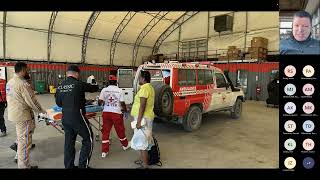
Brett Cross describes volunteering with Haiti Air Ambulance, a nonprofit that flies free helicopter transfers to remote areas where ground travel takes hours or days. Haiti spends $13 per capita on health care and lacks basic equipment like CT scanners and ventilators. Cross shares cases he treated: a child with seizures, a patient needing an emergency chest tube, respiratory failure requiring a ventilator.
Questions this video answers
March 28, 2023.
Episode number 107.
About 80%.
Approximately $2.50 per day (as cited).
About $13 per capita.
Chapters
Meeting with this guy named Mike Levy, who likes to talk a lot.
I start the recording and I'm gonna go finish.
Okay?
Okay, Peter?
Okay, thanks.
All right, awesome. So we are recording. Welcome, Everybody. It's Tuesday, March 28th, another three o' clock webinar where this will be episode number 107. And we're very grateful to have today. Oh, wait, Charlie, I'm going to mute you. Actually, I cannot mute you. Can you mute yourself? Go to mine. We can hear your background. Thank you. So I've had the pleasure of knowing Brett Cross now for a number of years. He is. If there's anybody you want on that helicopter in the snow, in the sand, in the water, on a snowmobile.
You want Brett there. Brett has done a ton of work in the state of Utah. He's out of Salt Lake City. He works for the federal government, obviously gets deployed. And after he came back from. From Haiti, I said, hey, Brett, would you mind coming in? Just giving us some insight because of the stuff that you saw is stuff that we don't typically see here. So, Brett, without any further ado, if you want to make any further introduction and then take it away, thanks for coming on today.
All right. Thank you, Peter, for having me. And that was a great introduction. Like I said, my name's Brett. I'm just gonna talk to you about an experience I had where I had an opportunity to volunteer for Haiti Air Ambulance for a couple of weeks down in Haiti. And to get this started, I know the South Florida people probably don't need a whole lot of geography lessons on the Caribbean islands and where Haiti is. But. But when I give this presentation some other times, it is a little bit different for some folks. So this is one map here on the left shows the Haiti and all of its provinces. And where Port au Prince is, you can kind of see down here. And that's where Haiti Air Ambulance is based out of. And so as we give you some reference of locations and where things are, it is. Here's some. Some views of Haiti that I appreciated from the air that I took. So some of these pictures aren't great quality because they're through the plastic of the helicopter. But Haiti is very diverse as a Caribbean island. It has really rural areas that you see there on the. On the left, some farm country, some mountainous terrain, and it's very rural. There are a number of small islands.
Hey, Brett, can I interrupt you? I'm not seeing anything else. Maybe it's the way the street screen is showing up. Is anybody else seeing his screen? Or showing the. The map.
Yeah, we see. We see it. Yeah, yeah, we see it, Paul.
Then it's a problem on my end. I apologize.
Then, hey, maybe if you exit out and come back in. Yeah, that. It's in the chat. The numbers are in the chat. Okay, good.
Thank you. Sorry for interrupting, Brett. Okay, thanks.
All right, thanks.
In the middle there is the, like I said, some of the islands. And then on that far right side is just the urban dent center and you can see the housing units that, that are basically stacked on top of each other. You know, as I was flying along, one of the observations I made was, wow, there's not a lot of room, like there's not many roads between some of this high density housing and stuff for cars. And so they reminded me that very, very few people actually have cars in Haiti. A lot of times their mode of transportation is motorcycle or on foot. And so they've got some vehicles they use as taxicabs, which I'll show you here later. But.
But it is very diverse. Just in that small island of space, the terrain and the population centers.
Some stats just about Haiti really fast for you. Haiti is the poorest country in the western hemisphere, and it also at one point was the wealthiest colonies in the Americas. So it went from one of the wealthiest colonies to the poorest. And 80% of Haitians live below poverty level. Some statistics have their daily living somewhere around $2.50.
And Haiti spends one of the lowest of even the poor nations on country Health, about $13 per capita funds health, whether that's hospitals or preventative health. That's all of it included. Movement between hospitals can take hours and sometimes is impossible. So, you know, like some of those spots we talked about, in those rural remote villages, access to health care is almost non existent, even in some of the more urban cent moving since the president's assassination, the earthquake in 2010. There's a lot of instability with the government in Haiti on the whole. And so gangs have kind of taken over a lot of the ruling authority of Haiti. And so along some of the more traveled routes, they've set up checkpoints. And those gangs require taxes or tariffs or some form of payment to cross, making it impossible for ambulances to often get patients from one place to another.
There are always kidnappings that are being reported. And so the risk of being kidnapped on some of those roads and traveling between places is really difficult. And so there is definitely a need for patient movement. And given the terrain and the current political climate, oftentimes by ground ambulance is just not Possible. So, talking about some of the hospitals, here's a couple of pictures. I know there's a lot of patient photos in this one. I didn't take these two pictures per se. These are. These are what. These are what the inpatient units at the hospitals look like. You can tell it's very different than us here in the US I just want to point out right here, there is a. This oxygen canister. If you can see this. This patient has oxygen on. When we would bring patients into the hospitals, if they were on oxygen, they would have to bring these big bottles next to the bed. There was no infrastructure for oxygen in the walls of any of the hospitals, so they would just bring this big bottle next to your bed. When you are brought to the hospital, either by Haiti or ambulance or whatever, you are required to bring somebody with you who will help you with your daily care's needs. Linens are not provided. Hospital gowns are not provided. Your meals are often not provided. And so when you go to the hospital, you're getting specific medical care treatment, but you're not getting any of those other ancillary hospital wraparound services that we're used to here in the US I flew with a physician who worked at one of the busier, larger hospitals, and she said that, you know, if a patient would present at the emergency room, they don't have the medications inside the emergency room to take care of that. They would send that person to a pharmacy to go get the medications on the open market at one of the dispensaries. If they. If the pharmacy had it, hopefully they had it. And if the family had money to pay for it, then they would bring that medication back and the hospital administer it. There are just some things that they didn't even have inside the hospitals to provide care for folks. This is where Hadia Ambulance comes in Haiti Air Ambulance is a nonprofit that's actually based out of New York, and they provide helicopter service to Haiti free of charge to all Haitian nationals. And similar to the US Transfers are arranged physician to physician, depending on the level of care. You know, there's one CT scanner that was operable when I was there in Haiti. And so you'd have to get a physician to accept that patient to come to the hospital to get the CT scan so that they could either have the surgery there, or if that, you know, let's say it was a urology issue, they might have to go to the hospital, the CT scanner, get their CTs, and then be moved again to the hospital where the urologist was to be able to have the surgery that they needed to have done, done. And so they work together, all the hospitals and their systems, to try to, you know, go where the specialty of the doctor that might be there is to see those patients, whether it's pediatrics or, like we said, urology or some of the others. And so the, the. The Hatier ambulance, while it's critical care, while we provide lots of things, on average, though, most of our patients are just helping them move between places. So we can provide them medical care. We can get them from one hospital to another hospital, often saving them hours, if not days, of commuting.
And so I'm just gonna take you through some of the pictures here. This kid here is a pediatric patient that we picked up who was having some seizure issues.
And, you know, without the proper diagnostics, he had never had a head ct, he had never had any imaging done of his head, but was diagnosed with essentially epilepsy. And so they were trying to figure out his condition and getting him to where he needs to be. And so, you know, we flew in, grabbed this kid. We'll take him to the hospital that can do some of the imaging and things that he might need. We'll talk about some of the other stuff that Hadier Amos does here a little bit later, about some of the procedures and things we can do in the aircraft to. To help them once they get on the ground. But everybody's. Yeah.
So, okay, so the kid like this, you took him to the imaging, where the imaging's at, and then what does he do? You take him back, or do you take him to another place like you mentioned earlier?
Yeah, we don't necessarily take him back per se, like, unless that's arranged, but oftentimes they will. They can either get back to their village or the ground ambulances. And we're gonna talk about the Red Cross and things that some of the ambulance services they have. But all these patients are brought to. Like, this is a helipad at one of the hospitals. This patient's brought to us.
And then we'll fly this patient back. We flew this kid back to Port au Prince to our base, and then a Red Cross ambulance transported him. And I've got a picture of that here in just a second. And so Port au Prince is where their pediatric stuff is. That's where this kid was going to get some of their care.
This is an airport that we land at. That's a. A safe place in. This is Jamal, Haiti. And this car that's right here in the corner this is how the patient arrived. So her family had to get her to us. She was having some abdominal issues.
I think they were kind of postpartum, but it wasn't a great story. And she was probably a month and a half postpartum, but without any care. There was no. There was no treatments or plans for her. And so this is just an example of another spot that we'd go to, how the patients would arrive to us and they would have, you know, disjointed stories and things like that and trying to get information out of them. So the lady that's here, kneeled down next to her, she's actually a physician in Haiti. So we always fly with one Haitian EMT who operates basically at the paramedic level, and then two ALS providers. So a Haitian physician or a American or Canadian or some other healthcare provider, flight nurse, flight paramedic is also one of their attendants. So this patient was lucky to have one of the Haitian EMTs, one of the Haitian physicians, and myself to be able to help take care of her and get her back to where she was going. That kid from the first picture you saw, this is their ambulance inside of our hangar. This is a Red Cross nonprofit ambulance, again, that came and picked up this kid in Port au Prince. I'll show you another picture of another ambulance in a minute. But you think about this ambulance being a Land Cruiser. There is literally nothing in this ambulance except a stretcher, maybe a bottle of oxygen and about six people. There's no medical equipment. There's no cardiac monitors. There's no IV fluids. It's just bare bones. Transport service to get you to a hospital with no equipment. And that's for a couple of reasons. One, equipment's expensive. It will often be stolen. So if they were to stock these ambulances, if they went through one of the checkpoints, people would steal it or ransack it or would. Would want the stuff that's in it, so they just leave them empty.
This is one of the islands that we landed on a beach on the island and picked up another kid. This kid fell from some distance, unknown distance, but had a hemo pneumo on the right side that had a chest X ray done but needed a chest tube placed. And so they weren't gonna do that there. And so we flew this kid to the other physician. You see the white cap up there, close to it? She's another one of the physicians, Dr. Flora. So she was actually gonna place the chest tube at her hospital. Once we got this patient and he was stable, Enough for the flight, so we could have done it there, but he was stable. So we were just going to wait till we got to the operating room there at their other hospital to do that.
Another example of another location. This is actually at a school. You can see in the background there's a bunch of kids lined up against the fence back here watching us load this patient. But they brought this patient from the community hospital out to this school where we have this landing zone pre identified. And so we were able to pick up this patient and move them as well. Again, this kind of show you some of the different images that we have. This one is one of those most rural, remote communities that I flew into to pick up this patient. She if you can see this little dirt track here where this motorcycle was, that's how all the roads in the community were. They were just single track motorcycle tracks, not even roads wide enough for cars. And.
She arrived on this motorcycle carrying her own backpack and her own IV fluids in her hand from the transporter, from the hospital.
A couple of things that we can do. I talked about some of the things that we try to do in the air that we know that the patients may or may not get. One of those is that we operate an epoch. So this is probably the most comprehensive labs that this patient, patient will likely receive from the hospitals that they go to. And so we provide two of these copies of the paper. We give one to the patient's family that comes so they can have one, and then we attach one to the chart that we give to the hospital when we hand them off. And so we can get some basic labs, some basic chemistries.
Excuse me. And be able to.
Help these patients out to some degree with a cpoc. The ZPAC is really nice because it operates at higher temperatures than normal. And you just need this little card. It gives you a reading pretty fast. So a lot of our patients that we fly will draw some blood on them and we'll run some labs. Like we said, not. Not a standard practice in Haiti. And some of the hospitals don't even have labs at all. And so this is incredibly helpful. The other thing that we do, like I said, this is the kid with that hemopneumo. And so we were ultrasounding his lungs here to provide some of these images as well to the hospital. And we ultrasound several of our patients. I just happened to get pictures of this one. So between ultrasound and the epoch, obviously our ability to 12 leads and those kinds of things, we can, we can influence this patient's care to a Great degree.
And so that leads me to this story of this guy here. So this. This guy here in the country, there are very few ventilators. And so if you are going to take up a ventilator in the country, you have to arrange that there has to be a bed, and you have to hope that when you get there that no one gave away the bed of the ventilator. So this guy, respiratory failure at one of the hospitals, was intubated at the hospital. They needed to find a ventilator for him. They found one of the hospitals that would provide a ventilator bed for him. We flew down to get him in the back of this ambulance that you'll see here. It looks almost like a. Like a handicapped transport van. And it does have the wheelchair lift on that side door and in the back. The only thing that I don't know if you can see in the picture of all of us in there, but he. He's got a stretcher pad on the ground. There's no actual stretcher in this ambulance. It's just a pad on the ground. And he was being ventilated with a BVM and just the oxygen bottle hanging on that's tied to that wall there. That's it. That's all they had when they got there. He was not sedated.
And we did the Epoch labs, and he was incredibly acidotic, and.
We were able to get him on our ventilator. This patient had some pulmonary edema that we ended up starting and some hypertension. So we started Nitro at 50 mics and we actually has blood pressure down. He was doing really well when he got there, and there was definitely some barriers to being able to continue that care. So one of the lessons that we learn often when we're there is that a lot of the things that we would do or start, we have to make sure that someone is able to sustain them. So if there's nothing, if they're not going to a hospital that can't sustain those resources or doesn't have that ability, then we would leave, you know, for this guy. We left the rest of that nitro. We told them what it was running at. We also left the rest of his ketamine for sedation, because coming by narcotics is often hard for them as well. And so, you know, we bought him a few hours, but whether or not that will be continued or not is, you know, yet to be determined. But hopefully we're able to help him turn the corner on his way in there. This is just some pictures of the Haitian EMTs that we fly with, all these guys are international EMTs. A couple of them have gone ahead and gotten their national registry emt. And this is doc Flora, she's one of the physicians. You saw one of the pictures. They train all the time. They're training on intubations. They train on. We did a PHTLS class while we were there for them. They are very advanced clinicians for the resources that they have. They are paid full time employees of Haiti air ambulance. They fly with all the patients because they provide the translation services for us so that we can communicate. But they do a significant portion of the heavy lifting, not only translating, but also doing.
A good majority of the patient care.
A couple things on logistics of the country and how we got around. These two vehicles right here are up armored vehicles. They have bulletproof glass windows. They have really, really heavy doors. The floors are. You sit elevated a little bit because underneath the vehicles is up armored as well. And everywhere we go in the country, we go with the security detail of two to four security guards as well as all of us in these vehicles.
For movement between the housing that we have and the hangar where the aircraft is. Because Port au Prince is so dangerous, it requires security and upper vehicles to move around. A few images of the streets of Port au Prince as we drove through. You can see it's very busy, very congested. This picture down here in the lower right is an intersection with multiple lanes of cars and people turning. There's no traffic signals. There's no. There's nobody that has any right away. It's just everybody's kind of a free for all. Lots of motorcycles. We would count. Sometimes we're driving back. How many people or things were on there? Six people and three chickens was the most that I think I saw on a single motorcycle as we drove around.
But this was. This is, you know, getting between the base and the housing. We had to go down the streets of Port au Prince every day, twice a day. Only operate during the day. We don't fly at night for a couple of reasons. The air traffic controllers there in Haiti aren't available at night. Flying under night vision is not something that's looked at highly with the country and the security risks and things that they have. So we only fly patients during the day. And then lastly, just to talk a little about Haiti or ambulance, I can't say enough good things about them and the services that they do.
If anybody's interested in volunteering, it is a very different way that you provide care. It is a Very. You know, often we think outside the boxes as paramedics, but there's the box that you're outside of, and then you're even outside of that box when you're. When you're in an underdeveloped country like Haiti. Everybody that I met, though, was incredibly gracious and very grateful for the services that we provided. Thanked us personally profusely for all that we did. And I can say that, you know, I will definitely, number one, go back and do another two weeks there. But also, if anybody's interested, they do have a volunteer program. You can. If you're. If you have flight experience, you need two years of flight experience, and then you can volunteer and go down to Haiti, and they'll list you and fly you as one of their ALS providers. And. And I can say that it's humbling. It's rewarding, and a lot of the disease processes and things that you see, you just don't get to see in the US and so it is an incredible learning experience from start to finish. So with that, Peter, I will turn it back over to you. If there's any questions I can answer some.
Wow. I'm totally blown away. I see that Dr. Landry has his hand raised. Before we get to you, Kim, Dr. Cohen. Terry, can you mind. Do you mind turning your mic off? If you wouldn't mind getting a little bit of background noise? You answered Chief Dibernardo's question about who the provider is. Thanks, Terry. And go ahead, Dr. Landry. Take it away.
Kim, you want to unmute yourself?
Still don't hear you. Is everyone hearing him? Just not me.
Okay, here we go.
There you go. Okay, go ahead.
Yeah.
Are any of the ground ambulances subject to paying the taxes at these checkpoints? That's a good question. I don't. I don't know. I don't consider myself an expert in that realm. I mean, I knew from asking questions that's not one that I. That I asked. That's a really good question. I could probably go get Peter an answer to that and get back to you. I know that a lot of them won't go to certain places as a result of the checkpoints and things, but I don't know if they're expected to pay anything if they're traveling along the.
Same lines as Kim's question. Brett, did you feel unsafe there? What type of protection besides that? You had that armored vehicle there, but, like, where you stay, did they know that you were there?
Yeah. So I. I never felt like my life was in danger. We went everywhere with lots of security. So there were, you know, the. In Port au Prince itself, we never left whatever compound that we were at because of the safety issues. But once we got like the rural communities, there was a few times that we'd get in the back of the ambulance, drive over to the hospital to deliver a patient, or we could leave the aircraft in that improved area. We were. But they know those security risks and they know what they are. You know, one night while we were there, there was a lot of gunfire near our housing district. And so we were all later joking about this. We were like a bunch of midwesterners that when you hear the tornado alarms go off, you go outside to see where the tornado is instead of going to your basement. So we heard a bunch of gunfire. So we all went outside to see if we could see where it was coming from. Realized that was probably not the best idea that we had the whole time we were there. So, you know, we went to the supermarket. The supermarket was heavily secured with, with guards as well. Our. The compound that we had was really close to the airport and had a private security firm that, that let people in and out. Everybody had assault rifle like AK47s at all the gates and checkpoints that we went through for security. So I never felt like I was ever in danger. But they have a very strict security protocol and they. And they do everything they can do to take care of what they call expats or the folks that are not from Haiti and even our Haitians.
One of the nights there was a lot of gang activity where one of the dispatchers for Haiti Ambulance lives and she feared for her family and their safety. So our security team was able to get her out. She came to the compound where our apartments are and they stayed at the. At the housing with us that we have to keep that not only the folks that are visiting, the visiting out of country folks, but the people that work for Haiti are ambulance. They do everything they can do to keep them safe as well.
Wow, this is just incredible stuff. Brett, question. Who, who funds Haiti air ambulance? Is it all folks in the US That's a.
That's a great question. There is one major philanthropist and I'm not going to remember his name, he's from New York. He has a love passion for Haiti air ambulance and it's essentially his foundation that, that provides the majority of the funding. And then recently to expand services, they're buying a second helicopter and things. They've also undertaken another donation route to get people to. To fund it. But it is. It is mainly funded by the one philanthropist from New York. And again, I'm going to. I should have. I should have looked up his name before I started this, because I had it until I needed it, and then I'll. I'll send it to you.
Yeah. And Dr. Kramer says to Kim, at least several years ago, they did have to pay at the checkpoint. So John obviously works. You know, worked with the feds for many, many years.
Wow.
Wow. So any other final thoughts for Brett? This has been incredible, really. It puts things. Puts things into perspective, doesn't it?
And you did this out of all volunteer, I presume, right?
Yeah, it's volunteer. So, like a little bit of like the vendoring. So the helicopter itself is owned by the nonprofit.
The pilots and the Mechanics and the FAA, Part 135, they fly under, is vended by the company that I work for as a flight permit at Classic Air Medical. Um, but I went as a. As a volunteer, unpaid volunteer to fly. But. But the company that I work for does have a relationship with them.
Okay, let's go over to rocky shores. Dr. Pepe, I know we're going to move over to your webinar right now.
I think one of the things that this is incredible, and thank you for your service, Brett. It just. It's unbelievable because one thing I understand is that when a country. The point that he made that it being a poor country, it's really critical and pivotal to the whole discussion in that recovery from things are really dependent upon your underlying, you know, let's say infrastructure. And so places like Japan recover really quickly, like from Fukushima. He will never recover from what's going on. It's going to be there, and it compromises the political situation as well. And so working under the circumstances.
Is unbelievable because it's also very frustrating. There's not the kind of usual things that you have to help make things better. And so a lot of times you're, you know, a lot of people wanting to go there. You're. You're acting more like almost at a nursing capacity sometimes. And so it just has a lot of. I just want to say there's a lot of heroism here, quite frankly.
Okay.
So thank you so much for the work. And it's also very sad for the people of Haiti as well.
Wonderful comments, Paul. Thank you so much, Dr. Pepe. So, Brett, thank you so much. We're going to move over to Dr. Pepys, but give us your final words. What do you have to say to all of us folks who have it Bright and shiny here in the States. What are your thoughts of what we can do or just thoughts in general as we close?
Yeah. Thank you. I think that oftentimes for me, when I'm in the middle of these experiences, you know, I'm reminded of how great of a country we actually live in. Regardless of our differences and things that we have, we do live in a great country, and we do have unbelievable resources. And I just am reminded often of how lucky we are.
And because of that luck, how we often have to be the ones that are going in and helping because we are just the most fortunate. And I'm grateful that I get an opportunity to go in and help. And I know that lots of people on this call, including yourself and all the physicians included, have done a lot of work abroad. And I think that we owe it to our humanity to do that. And I'm grateful that I get that little piece, and I'm thankful for what I have here in the US When I come back, for sure.
Well, you're an example to us all, Brett, and I'm proud to call you a friend. Thank you so much for doing this. And I think people get a lot of value when it gets up on YouTube. So thanks so much. Feel free to stick around. We're going to. Angus is going to pop us over to Dr. Pepe's webinar, but thanks again so much. Thank you.
And by the way, as Angus is moving us over, I got an incredible lineup. I mean, the people who are saying yes to the webinar are just. It's just. It's just been incredible. So we have just a phenomenal lineup coming up over the next. I think the next three months filled up. So stay tuned and thank you all for joining every week in and out. Appreciate that.
Let's see if Angus is still talking to Mike Levy or not. If not, I can do the honors. Oh, there's Angus.
Okay.
I guess I'm gonna do it. So just. Then stay tuned. Here, let me join the Eagles. First.
She went as a trauma arrest, and then a little boy had a chest wound, but he had a pulse. He was agonal. And we started ventilating him and ably I thought he might make it.
Yeah.
So sorry.
Yeah.
It's just really sad and embarrassing that it's still going on in our country, like at this rate that we're seeing things almost daily. We just had a couple here in Dallas last week alone. I think the Dallas area. I should say not in Dallas, but in the Dallas area. So there's one coming to your town, wherever you are sometimes.
We've had so many of these, what we call code 9000X.
More from Peter




Melissa Olen MSN, FPN-C, CCRN: Sudden Cardiac Arrest Training in Schools (Project ADAM) 4/25/25



Pediatric Hospital Readiness: How Teamwork & CPR Metrics Drive Better Outcomes



Chelsea Kadish, MD & Kyle Goodknight, EMT-P, RT: Pediatric CPAP in EMS (3/14/25)