BVM Ambu Spur 2
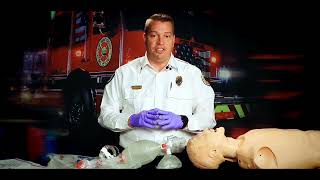
EMS training on the Ambu Spur 2 BVM after field trials. Adult, pediatric, and infant variants with specific stroke volumes. Integrated pressure manometer reads 5–60 with danger zone at 40–60, HEPA filter goes on exhalation port, pop-off valve activates above 40 cm H2O.
Questions this video answers
1475 mls
1650 mls
2600 mls
~600 mls
~1000 mls
Chapters
Today we're going to introduce a new piece of equipment that's not necessarily new, but it's going to be an upgrade to what we already have. Our old BVMs have been in service probably since I've been here, if not longer. And there's a lot of upgrades, a lot of things that we can do to obviously improve the service delivery to our patients. So what we did was we hosted a trial, we demoed these products in the field and we brought in a bunch of personnel to review. At the end of the day, this is where we landed is the Ambu Spur 2. So today we're going to go over some of the features of this new BVM so that you have some confidence whenever you take this out of the bag and you go to use this on a patient. Let's talk about what this is. First off, there's three different BVMs just like what we have right now. There's the adult pediatric and the infant as well. When it comes out of the bag, this is what you're going to see. This is exactly how it's going to be packaged. As you can see, there is a oxygen cord that's attached. There is a reservoir on the end. The mask will be covered and shrouded in plastic. There's a manometer attached to it, and the HEPA filter is already attached to this on the exhaust. Now, in addition to this, there is going to be a peak valve that is also going to be in the bag, but it's not going to come attached to the bvm. And we're going to talk about that a little bit later about when that might be indicated. So the bvm. So this is the adult BVM right here. This holds a total of 1475 mls of air. Our previous BVMS held 1650 mls of air. Reservoir here holds 2600. Now, if you were to squeeze this with one hand, it should deliver roughly 600mls of air. If you were to squeeze this with two hands, it's said to deliver about a thousand ML of air.
This is something that we need to be aware of. Obviously, anytime you're ventilating the adult patient, you want to try to ensure that you're not over pressurizing the chest and delivering too much volume. So to aid us in determining whether or not we're giving sufficient amount of air to our patient, there's also now an incorporated manometer. And I'm just going to show you how we can detach this and, and what this basically looks like. So if you look on, on this manometer, you'll see a pressure reading. It starts at 5, 10, 15, 20 and is also color code. It's also color coded from green to yellow to red. Now it goes from obviously 5 to 60 is the range on here. And once you get past 20 we go into that warning area saying okay, we're putting a lot of pressure in the lungs. We should really consider not ventilating anymore with this, with that breath, give the rest of the air on the next breath. Once we get to the red, that gets to that danger zone where we could be causing more harm than we are good. And that's between 40 and 60. And that comes pre attached to the bag makes it very easy as you're ventilating to look at that little pressure gauge to determine whether or not you're delivering the sufficient amount of volume. So let me just explain something briefly so that we're all on the same page. Obviously we have no idea how much air we're actually delivering to our patient. We, we don't have a way of measuring that with our bvm, but we do know that if I fill the lungs with a submission a sufficient amount of volume that it will increase the pressure. And so that's what we're measuring here. So once there's a sufficient volume in the lungs, the pressure will go up. At that point you don't want to ventilate any further. The HEPA filter. So previously on our, on our BVMs the HEPA filter went here in line and we, we and it went on that stack. We, we're removing that. This is going to go on the exhalation valve which is really the most important part. We don't need to be filtering the air going into the patient. We need to be filtering the exhaust coming out of the patient. And there's also a diverter on here, but again it's passing through the HEPA filter. So whatever comes through there should be safe for everybody else around. The mask itself will come attached and it's going to be shrouded in plastic. One of the cool things about this particular mask is, is that there's a one way valve that can allow you to take a 10cc syringe and you can inflate it in the event you need to adjust to make that seal a little bit tighter. And there's really no recommendation on how much air should go in there. You just got to make sure that if you're not getting a good face seal with the mask that you have. If you take this 10cc syringe out, you attach it to that one way valve. That should help get a better face seal. So all of the BVMs will also have a pop off valve. In the event that the pressure does go above 40, this is going to activate this pop off valve. And what that's going to do is that's going to allow that excess pressure to be diverted not into the patient's lungs, but outside. And in the event, for some reason, which is going to be very few and far between, if ever you needed to override that to generate a higher pressure than 40, this does have the ability to lock off so that you can bypass that pop off valve. Now this port right here, this is actually a medication port. We don't necessarily give medications down the ET tube, so this is really nothing for us to be concerned with. So to review, the adult bag holds 1475 mls and stroke volume with one hand is going to be 600 mls. Stroke volume with two hands is going to be 1000 mls. The pediatric bag has a volume of 635 mls and one handed stroke volume is going to deliver 450 mls. Now as we know, pediatrics vary in size obviously, and so you're never really going to be able to just say squeeze the bag with one hand. On all pediatrics you really should be watching that pressure manometer because trust me, when you put the sufficient volume into the lungs, the pressure will go up. So that's going to be the safest indicator to determine whether or not we're getting the sufficient amount of volume into the patient. Patient. So we have to watch the pressure. Now we also have an infant bag that holds 220 mls. And that infant bag in addition to this has a 150ml stroke volume. So when you squeeze that bag, it should be delivering about 150mls of air. The reservoirs, the reservoirs, like I said, Hold 2,600 MLS. With the exception of the infant, the infant reservoir only holds 300mls of air. Now this is going to hook right up to the oxygen tree in the back of the truck, just the same as the other one. There's really no changes with that. Whenever you take the adult ambu bag out of the bag, it's going to be set up exactly the same as the pediatric, exactly the same as the infant. There should be no change. The peep valve will come in the bag but not attached to the bvm.
So in the event you decide to use the peep valve.
The diverter comes off the peep valve attaches just to the outside of this HEPA filter. And this is similar to what we see already on our CPAP devices, where you just unscrew and screw this down to the desired centimeters of water pressure that you. That you think that the patient requires. Obviously, 5 is going to be the lowest setting and 20 is going to be the max. Really, there's no reason for us to go above 10 for most of our patients that we're going to ventilate. So. So while we're here, let's go ahead and talk about the peep valve and just some of the contraindications. Obviously, you're not going to ever use this in cardiac arrest. We're not going to use this in any type of trauma, and we're not going to use this if the blood pressure is less than 90, or with a pediatric if they're considered hypotensive. So hypotension is a hard contraindication. And in the event this patient starts to experience any side effects, you just remove this and that's all you have to do. So it's no different than what we have already with the CPAP when it comes to patients not tolerating that. So you can look forward to seeing these showing up at the station in the next few weeks. The EMS captains will be making rounds, and they're going to allow you the opportunity to put your hands on this piece of equipment and do some training in the station before you have to use us on a call. We are anticipating this is going to be happening very soon. From this point forward. We are speaking with the company right now to make sure we have everything that we need to get you operational as soon as possible. If you do have any questions, please do not hesitate to reach out to the Medical Services division, and we'll do everything we can to address those. Thank you so much, and stay safe.
More from Peter




Melissa Olen MSN, FPN-C, CCRN: Sudden Cardiac Arrest Training in Schools (Project ADAM) 4/25/25



Pediatric Hospital Readiness: How Teamwork & CPR Metrics Drive Better Outcomes



Chelsea Kadish, MD & Kyle Goodknight, EMT-P, RT: Pediatric CPAP in EMS (3/14/25)