Daniel J. Pederson - Kobe Verdict Discussion (10/4/22)
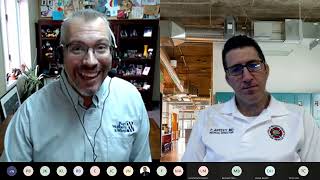
Attorney Daniel J. Pederson discusses the $30 million verdict in the Kobe Bryant case, where a jury found first responders liable for sharing graphic crash-scene photos. The lawsuit was a privacy tort claim, not HIPAA. California then passed a law criminalizing photo-sharing by first responders, and Pederson outlines what EMS agencies need: clear policies, training, device controls, and discipline.
Chapters
I just sent it out via the WhatsApp.
Okay.
Coming on here. Oh, good. We have good, good number of people. Let me. Let me get my headset on here.
Dan, can you hear me okay?
Yes, I can.
So I'm getting a message from Paul that he can see the screen, but the audio is in and out.
He's 34,000ft over Colorado. Okay. All right. So, Paul, we know that you're there with us, and we appreciate you doing that, even though you're coming back from asap. And I know we all can't wait to hear how that went. So we have definitely a quorum here, and I see a lot of great people coming on the call. So let's get started. So Happy Tuesday, everybody. October 4th. This is the Florida EMS webinar where we try to bring just incredible people from across the country, sometimes even across the world, with information that I think can benefit all of us in ems. And I happen to have run across an article written by Dan Peterson, who's joining us today. Dan is an attorney with Paige Wolfberg and Worth, who all of us know very well. I happen to know Doug and Steve very well because we see them on the conferences all the time. And Dan's part of that incredible team. And if you didn't read Dan's article, I wanted to bring him on here so he can discuss it personally himself. But the name of the article is what EMS Providers Can Learn from the Kobe Bryant Crash Photos Jury Verdict. And I'll put the link in, in the, in the chat in a minute, but. And you can read it later on your own time. But Dan, thank you so much for joining us. You have people from across the state of Florida, so you have some national people on the call, people from other states. Thanks for joining us and we appreciate your time today. Take it away.
Thanks. Thanks, Peter. Great to be here. Thank you for having me. Thank you for finding the article. Thank you for thinking of me. Thank you for inviting me first and foremost. Of course, you know, our thoughts are with you guys in Florida and what you guys have just gone through. And for those of you right there in the direct hit area, Lee county and Cape Coral area, I mean, you know, my thoughts are with you. I know several of our PWW attorneys live down there and were directly impacted. But I mean, for what you guys have gone through over the past week or so and will continue to go through, you know, thoughts are with you guys. And thank you for everything that you do and helping those folks too, that were so impact by this.
So to get into the reason that I was invited here. And I guess as Peter said, you know, you guys are familiar with pww. I won't get into a bunch of the background of pww. Just a little bit quick about myself. I've been with PWW now for October will be 18 years. So I've been doing this for quite a long time. Of course we focus on ambulance, EMS issues. I personally deal with a lot of Medicare compliance issues, reimbursement issues, dabble a little bit with hipaa. And when we first heard about the jury verdict in this case, you know, we kind of all thought, you know, this is something that's probably a hot topic that we should, you know, think about doing an article on, you know, maybe a webinar, maybe whatever. Just because it was just somewhat interesting and unique and we wanted. And I just kind of, kind of took control. Sure, I'll. I'll write this article and just, you know, it. It happened. It just kind of organically came together and you know, just stream consciousness with some thoughts as just thinking about this case, thinking about other HIPAA issues, privacy issues, and it just again, stream of consciousness, organic compilation of it. So just kind of quick, let's jump in our time machine for a second just to put things in perspective. You know, January 26, 2020, you know, the world hears about the helicopter crash, you know, outside of la, and we hear rumblings of who was on board. Oh my gosh, it was Kobe and his daughter Gianna. And then, you know, as time goes on, shortly thereafter, yes, the rumors are confirmed, but I think as often happens with noteworthy news events, you know, we kind of forget about it over time. And especially this timing, you know, January 2020, when the world fell apart, you know, what, three months after that with COVID And then now we're dealing with Ukraine, we're dealing with politics, we're dealing with FBI investigations of former president. You know, there's so much going on right now, and I think, honestly, I think I even forgot about the Kobe thing. But of course, what was going on behind the scenes was a litigation dealing with the aftermath of the crash. And it wasn't until then, August 25th, about a month ago, 2022, there was a jury decision with a staggering $30 million award being awarded to the family of the victims. Now, what was then so interesting about this is that, you know, it's not about the liability of the crash. It's not about, oh, there was fog in the area. This pilot should never have been flying in the first place and who's ultimately liable for this and wrongful death and anything like that. It had to do with the pictures that were taken of the victims on the ground. And, you know, stories are that, you know, people had to hike down ravines and to get to the crash area and, you know, people taking out their personal cell phones and taking pictures of the victims bodies strewn about. And not so much then the fact that those pictures were taken, I think it was the fact that those pictures were then shared with others.
And unfortunately it was not shared with others. From the perspective of, okay, I hiked down the ravine, this is what the crash site looks like. How are we going to figure out to extricate these bodies? It was two, three, four days later at a dinner party, hey, I was on the site, hey, do you want to see pictures of the bodies here from that crash or, you know, sharing it with friends, family back at the station after they had, hey, I got pictures of Kobe. And that's what the problem was. And I think that's where we all kind of lose sight of several different things, you know, and I'll perhaps getting ahead of myself here. Got some of my notes, but I'm getting so excited about this, I'm jumping all over the place. So where I'll go next is, you know, obviously pww. As a law firm consulting to EMS and ambulance services, I think all too often we start to immediately gravitate towards federal law stuff. And me personally, you know what I'm so honed in on Medicare compliance, reimbursement, stuff like that, starting to lose sight of other things. Hipaa, of course, when we think about patient privacy, patient pictures, patient images, confidentiality, we right away gravitate towards hipaa. Right, because that's what we're taught, that's what we're trained, that's what we think about. You know, the second we hear patient privacy, so many of our brains just jump to, oh, it's a HIPAA thing. So in this case, this $30 million penalty or $30 million jury verdict had absolutely zero to do with HIPAA. HIPAA was not even uttered in any of the pleadings, in any of the court cases, in any of the testimony. This was not at all a HIPAA case. This was inappropriate, really inappropriate release of these crash scene photos. And what was also interesting then, you know, it's not like people put these photos out on Facebook and TikTok and social media platforms and things. It was, generally speaking, from what I understand, shared with relatively few people. So, you know, this is not some huge thing of, you know, hey, because this was shown to the masses, the penalty becomes steeper. This was. Very few people ultimately saw this. I mean, this is a huge slap on the wrist for these, you know, LA County Sheriff Department and LA County Fire Rescue. And I think part of the problem was, and this even came out during some of the testimony was lack of training and lack of education on the part of these folks. And perhaps part of the problem then is bustressed by the fact that this is not and was not a HIPAA thing. Remember, HIPAA is going to apply to those who are the covered entities, right? And so, yes, our medical directors, our hospital personnel, skilled nursing facilities, EMS providers are all covered entities. They are all the ones that should be receiving this HIPAA training and should know better about releasing information, whether it's pictures, whether it's verbal, whether it's written documents, whatever the case may be. Perhaps part of the problem here was that, you know, it's sheriff's departments, likely not covered entities, fire rescue, first responders, potentially not covered entities. If they're just running the first responder, fire truck stuff, they're not at all involved in running EMS calls, they might not be considered covered entities. So they do they receive that HIPAA training? Do they get any of that privacy, confidentiality, typ type training? No. And even if they should have received it, they didn't. And that was another big fault that the court and the jury even saw and kind of again, that led to this slap on the wrist to the defendants here, you know, the city itself and the fire department and the sheriff's department, you fail to have appropriate safeguards in place to allow something like this to even happen. You know, what were you thinking to not talk about this? And there was even an admission in some of the testimony, you know, and they basically said we really didn't have the steps in place, the protocols, the policies on how to handle something like this, which is, you know, somewhat shocking in the first place. You know, the area that they're in, you know, there's bound to have, you know, high profile cases, there's bound to be accidents, there's bound to be helicopter crashes in that area of the valley that they were in. So, you know, how do you not prepare for anything like this in advance? How do you not have appropriate protocols and whatnot. So HIPAA aside then? I mean, I think the bigger thing then, and one of the big lessons to be learned from this then is that it's not just hipaa. Sure, HIPAA is out there. Yes, we, as covered entities, need to be and must be aware of hipaa. HIPAA has some significant teeth, but since this case had nothing to do with hipaa, look at the significant teeth that are out there in other state and federal laws that we need to think about and cannot simply dismiss. And we can't put our tunnel vision on hipaa. Oh, we're a covered entity. We need to worry about hipaa. Oh, what's the HIPAA fine for this? And yeah, there might be a HIPAA fine or HIPAA violation, but what about some of the private right of action? And that's what ultimately came to light with this case. This was an invasion of privacy of the surviving family members because of their inability to control the images of their loved ones. I mean, it's one thing when a celebrity is there and they're out in public and someone walks, hey, you know, celebrity, can I get your picture? Yes. The celebrity consents to that picture, wherever that picture might go, by allowing that picture to be taken. They're somewhat consenting to it. You know, even if they're not necessary. They're out in the public profile here, though, this, something of, this is a little bit more sensitive. You know, this is dead bodies strewn about on the side of the canyon. This is not anyone consenting to having their picture being taken or being disseminated to others. So this is a very unusual cause of action for this kind of tort case like this. But that's really the brunt of this and this, this surviving family members, the inability to control the images of their loved ones now that they are deceased. So it's, it's interesting then that it got to be 30. It's interesting that, you know, this is kind of the first case like this, you know, that I'm aware of now. You know, we don't practice, you know, civil liability cases, tort cases like this. And of course, I think again, so many people gravitate towards hipaa, the fact that this was outside of the HIPAA box. Maybe this is what threw everybody for a loop. Maybe this was genius on the part of the plaintiffs to go with, you know, this is not inside the HIPAA box. This is something completely different. This is something that needs to be thought about and not just from the perspective of decedents and controlling images of loved ones and a case like this. But I recently read an article, kind of an op ed piece by several attorneys that deal with plaintiffs who have been affected by photos, nude photos, inappropriate photos, things that get released on the Internet. And using this Kobe Case almost as a springboard for the work that they do. And being advocates of patients and or plaintiffs, I should say, who have, you know, their images being used and put out there and disseminated on the Internet without their approval, you know, sexually explicit photos, you know, social media stuff. And you know, this article that I read, you know, and it came out shortly after the article that I had posted and it was, you know, kind of a different spin on it, but I really was intrigued by it because it talked about things like then, you know, all too often some of these complaints are ignored because it's all, you know, boys will be boys, you know, all sexually explicit videos. It's what they do. You know, why is that ever deemed proper or appropriate or never seen any kind of penalty going with it. Another potential problem is that there is this federal law called the Communications Decency act where unfortunately websites are immunized from any degree of liability for user generated content. So sometimes it gets difficult to even hold anybody responsible because how do we know who actually posted that? You know, you go after the website, oh, they've got immunity. So part of this article then, this other article that I had read was kind of, you know, put a push for Congress to modify this Communications Decency act when it comes to cyberbullying, when it comes to the boys will be boys kind of mentality and attitude. And they are almost hoping that a notorious type case like this with a significant penalty of the $30 million jury award in the Kobe Bryant crash scene videos will kind of maybe bring a little bit more into the forefront, you know, because the big piece of this article was that, you know, this was disturbing. Not the dollar amount, not that it was a celebrity, not that it happened, not that it took two years, but it was disturbing that this was the first of its kind. And there, you know, every day there is cyberbullying, you know, inappropriate pictures showing up on social media, sharing of things, people creating, you know, false accounts and using pictures, you know, against someone's will. And there's never any ramification for it, never any penalties, rarely civil liability, rarely criminal liability. So it's interesting that just the way this case then has even blossomed, you know, yes, we look at it from the EMS perspective, from the medical perspective, from the privacy and confidentiality perspective, but the way people have even bootstrapped onto this to use it as a tool to be an advocate for making sure that things like this, you know, will toned down and that people will become smarter in the way they use things and that laws can be corrected to make things, you know, better for everybody. In fact, in this, in the wake of what happened with the Kobe crash itself, and before the jury verdict even came out, there was a new law enacted in California called the Kobe Bryant act. And it made it a misdemeanor for first responders to share photos of deceased persons for reasons other than law enforcement purposes. And I mean, you know, the first question is, why is something not out there to begin with? But why should we even have to create a law like this in the first place? I mean, it's almost one of those common sense things, right? Like, you know, the, the warning on your coffee. You know, coffee will be hot. Well, I hope it's hot. I ordered a hot coffee. Why do you need to remind me of this? But even this, you know, why should you have to remind people that it's inappropriate to share photos of dead people without their consent, without the family's consent? This is not just some show that we're able to do and use these things to our, our benefit for whatever purpose, our, our kicks or whatever. So, you know, yes, this should have been and was for the most part, widely known as something that health care providers, covered entities should not do. They know better because of hipaa. So I called, I call this, you know, Kobe Bryant act kind of plugging the HIPAA hole. Because of course, you know, sheriff's departments, police officers, fire departments, first responders that are not covered entities, maybe they can say, we didn't know any better. HIPAA doesn't apply to us now having this act there, at least in California, and hopefully other states will follow. You know, hey, don't be stupid. Don't be sharing inappropriate information. Don't be sharing patient information. Just because you're not a covered entity, just because you're not covered by HIPAA doesn't mean you're allowed to do whatever the heck you want to do. So I think, you know, where we get to is kind of some, some takeaways from this. And I think we have to start thinking about, you know, how do we prevent something like this from happening and if something like this happens, how do we respond? So, I mean, first of all, we've got to have policies and training, right? I mean, that was one of the big defects here with, you know, the city and the county of LA and that they basically admitted, you know, we didn't have protocols for this. And it's like, you know, why should you even be allowing people to be taking pictures of patients, of victims of things like that? It's one thing when you're going to take it again for, you know, extrication purposes, for training purposes, for this is what we've got. So we can send this back to the folks at the top of the canyon so they know what resources they need to send down to get these bodies out. But to be sharing this stuff at a dinner party, to be sharing this with friends, to be even not just saying, hey, I heard you were on the scene. Did you happen to get any pictures? But no, rumor has it people were actually going around saying, hey, I got pictures of the victims. Do you want to see that? And that's just. That should never ever happen. And again, it's just lack of training, lack of policies, lack of appropriate, just common sense at times. Again with. Yeah, sure, go ahead.
So I have a quick question. So let's say that LA county did have a policy in place. Does that protect them from the actions of their hired personnel?
I think it certainly could. And I think we would have a much different case at hand if there was clear evidence that we had a policy in place. That policy said no personal use of cell phones, no taking of pictures, no sharing of pictures, no inappropriate use of stuff like this. And now you had some of the employees that now the county maybe could have proven they were trained. They sat in a session, we've got their signature here that said they sat through this. They knew the rules of the road, they knew what they were allowed and not allowed to do. They went rogue and chose to violate things. Now, I think we probably would have a very different situation because I think any argument by the plaintiffs here against the defendants of the deeper pockets of the county, the city of la, well, we had policies, you know, we can't babysit each and every one of our employees all the time. We need to train them, we need to hope they follow the rules. We had good policies in place, we had good training. And these guys were just trained weeks, months ago. They should have known better. And now to hold the city, the county, at fault, I think it's a much more difficult road to hoe. I think now you're potentially looking at personal liability of individuals because you were trained and now you violated exactly what you were trained. I see. That's where that could potentially go.
So Larry's asking if a civilian, a non EMS or non police did the same thing, the same stupid thing, could they be just as liable?
I think again, it becomes much harder because.
You know, we're not so much in a HIPAA bucket. You know, are we potentially Outside of even the new California Kobe Bryant act of, you know, being a misdemeanor of first responders. You know, it's. It's shoehorning. It's not just saying any member of the public.
I mean, it's still. It's probably more of an ethical type thing. It's an inappropriate thing. Do you have as much of a cause of action? Perhaps not. I think it does become much more difficult when it is purely a civilian. But again, you know, you never know. I mean, especially in California, you never know. They've been somewhat progressive with some of their things and all their different propositions, all their different laws and regulations and the way they react and respond.
I do think, though, you know, if this were some civilian who was hiking and found things and took pictures and shared, I don't think we'd be looking at a $30 million jury verdict. Heck, we might not have even had a civil trial at all.
Okay, excellent. Thank you for that answer.
Another thing to keep in mind, and I alluded to this before, you know, the appropriateness, it's. And because please keep in mind, you know, I am not saying that, you know, just never, ever take pictures and then you're never going to get into this. This problem. You know, that's. That's not what I'm saying. Because there can be an appropriate reason to be taking pictures, you know, even, you know, out in the field. Hey, I need to get a picture. You know, a picture's worth a thousand words. I need to figure out what my medical director wants me to do when I'm here in the field. I'm a paramedic. It's easier for me to snap a picture and say, what should we do, doc? And use it for treatment purposes that can be acceptable, that can be covered by policies and procedures that can be allowed. The problem here is just that, you know, appropriateness of it. You know, it's not being shared for QA QI purposes. It's not being shared for further patient treatment purposes. It was party tricks of, hey, you want to see pictures of Kobe? And again, the complete inappropriate use of that. Another thing to think about, and I know this one gets sticky.
And it's something that I think people should seriously contemplate. And I've heard several organizations have tried this with varying degrees of success. But unfortunately, now everyone's personal cell phones are these necessary appendages, right? And no one is within more than a few feet of their cell phone, and they can't seem to shake getting rid of it. You know, they Use it as their lifeblood for everything. But I mean, do we need to, especially as healthcare providers, do we need to kind of disengage ourselves from that and not be tempted? Because that's what it is. It's, you know, hey, here's a funny thing. Take a picture of it, post it on social media. Hey, this is what just happened. Post it on social media. And when you're right there with your camera, it's so easy to do it with your cell phone right away, no matter where you are. So some folks should maybe consider banning using those personal devices when they're on duty. You know, maybe it could help prevent some of this stuff. Maybe it could return people to some degree of common sense and not this immediate knee jerk reaction of oh, I need to post that, oh, I need to get a picture of this. Oh, this was funny. I need to tell the world, you know, if you don't have that temptation there, you're not going to do something stupid. So maybe think about getting rid of some of those personal devices while on duty. Now. Yes, I understand. We need to have lines of communication. Yes. There's still radios. Yes. Maybe you have company owned devices that you can give to crew members to at least keep those lines of communication. Those company issued ones might have far fewer capabilities, Internet, whatever.
So yeah, it's just something to think about. One other thing is, you know, it's more than just hipaa. I think as I said before, all too often we gravitate towards hipaa. Well, does HIPAA allow it? Okay, so we're good. It's not just hipaa. There's so much more than that. Finally, I think, you know, from training perspective, it's not, again, it's not just hipaa. And I don't know that we need to necessarily say, keep in mind this particular federal law, this particular state law, the potential ramifications of violating this, that or the other thing. But let's just look at general right from wrong training. I mean, I think at times people just get in a fog about things and they fail to recognize right from wrong clinicians. You know, we get training all the time. You know, the constant CEUs, constant reminders, constant training of how to do something and thinking about things in the field. How do we do this? What do we have to do to innovate this patient, what do we have to do? What medication do we give? And that snap decisions that they're able to make in pressure situations. But something like this, you know, why in the world would anybody think, oh, let's take a picture of these bodies and now let's share it with other people. That's just general right from wrong that we need to think about and remind folks.
So, Dan, you know, I think as many of us are listening to this, we all know full well that that this is happening. And it's very common.
Beyond the policies and procedures that we all have to kind of forge up and make sure that we have at our agencies. If we are presented with a photo for a medical thing, but now that person has it on their device, what instruction do we give that person? Do we tell them to, hey, delete that from your phone? Or how do we help them not go to the family dinner and say, hey, guys, look at what I did today at work.
Yeah, I think we do need to get it deleted from the phone. I think we need to talk to them and figure out where else might that image have gone? You know, where's even the metadata? You know, even if it might just be deleted, does it still exist somewhere in cyberspace? And this even became something that was investigated. Here is following the trail, you know, all right, so you showed it to this person and you texted it to that person, this person, and where did it go? And down the line and figure out. So this becomes part of the whole investigative process. You know, it's not just, well, I heard that you took a picture, but, okay, and now you showed me on your phone, but did you text it to someone else? Did you show it to someone else? Who else has knowledge of this? That's all part of the investigative stage. And then also then, of course, the training stage, you know, now, okay, you need to be perhaps disciplined. You know, what kind of progressive discipline do we have for violating policies? What do we need to do? Do we need to even kind of hold their phone ransom for a little bit, so to speak, and be able to scrutinize that phone, scrub that phone, even have a forensic analysis done on that phone to see, did you send this image to other places? And now where has it gone? And now how do we have to trace wherever that was gone? Oh, it went to person A. And now, okay, person A went to person B, person B went to person C and keep tracing it to make sure that we can scrub of all of these different images, I think is a starting point we have.
Dr. Landry. Go ahead, unmute yourself. Yeah.
Hey, Dan, thank you very much. Great presentation. Do we have any due diligence or responsibility to keep the general public from coming onto a scene like this and taking pictures and Kind of along the same line, you know, to prevent them from being able to go now and distribute these pictures. I mean, they're entering sort of a crime scene. I wouldn't call it a crime scene, but an EMS scene that are we responsible to kind of keep these people out to prevent this from happening?
Responsible is probably a difficult word. And again, I don't know. I can't think of any at least federal law perspective. You know, responsibility. I'm not aware of any Florida state law kind of, quote, responsibility.
I don't know that you can get in trouble for failing to secure a scene like that, but I think it is somewhat of just a common sense of, hey, how do we keep some of these folks at bay? Of course, you know, we see the TV shows where they put the yellow police tape around and they secure that. That scene. And of course, you guys don't always have the luxury of being able to do that in ems. So I don't know that I would call it a responsibility, but I think it's certainly, again, getting to this common sense. We want to kind of keep the folks at bay to the best that we can by keeping ourselves safe. But also, you know, our primary responsibility is to that patient and to the patient care. Right. So, I mean, you know, we can't be holding back the masses of people trying to see and not providing that patient care. You know, do we have to call for backup, call for the police? Perhaps, but, you know, I wouldn't Recommend it being EMS's responsibility to keep the public at bay and fail to treat the patient. I think patient care is preeminent and first responsibility. But then do you have to think in the back of your mind, well, you know, patient privacy is part of our responsibility or duty, too. So how do we do that and how do we mix that? And it's difficult. I know I kind of rambled on there. I didn't give a clear answer, but I think there is no clear answer because it's going to be different for every scene. Perhaps, you know, do we have a violent scene going on with lots and lots of people? Is it just one person we're trying to keep at bay? Is it a celebrity case? Is it just a regular old guy on the street? There's so many different variables. You know, maybe the immediate thing is to call for backup.
Right. Dan, I know I have so many questions, but unfortunately we have to sneak over to the main webinar. If you wouldn't mind joining us for that. That would be wonderful. Let me see. Is.
Angus on or David, are you able to restream to the other side or do you need me to do that?
Joseph, can you do that potentially?
I see you unmute on the microphone.
I can try.
Only because I have to run that other webinar and I want to make sure that.
I can do two things at once.
Let me dig up the link. I'll try to do it.
I'll send it to you right now. I'll send it to you right now.
So.
See Joseph Salkin, wake EMS or wake up Wake ems dot com. Okay, Yeah, I just sent you that. So I'm gonna. I'm scooting the other side. And Dan, I'll see you on the other side as well. And thank you so much. That was incredible. And if I have any other questions, other folks have questions, I'll definitely forward them to you. Thank you so much.
Great. Thank you.
Okay, so hang tight, everybody.
Recording in progress. It's October 4th and I know this day because it's the birthday of my oldest grandchild. So we are, we're here on 104.
Celebrating that birthday. Corey. We in multiple dimensions. We're the only EMS medical director group in many different dates at the same time.
You are right. Sometimes, sometimes many different decades.
There are.
More from Peter




Melissa Olen MSN, FPN-C, CCRN: Sudden Cardiac Arrest Training in Schools (Project ADAM) 4/25/25



Pediatric Hospital Readiness: How Teamwork & CPR Metrics Drive Better Outcomes



Chelsea Kadish, MD & Kyle Goodknight, EMT-P, RT: Pediatric CPAP in EMS (3/14/25)