Dr. Casey Patrick: Adventures in Video Laryngoscopy
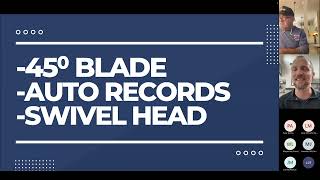
Dr. Casey Patrick discusses Harris County ESD 11's adoption of the UE Scope video laryngoscope with auto-recording capability. The system's 45-degree hyperangulated blade and recorded cases revealed airway technique details previously hidden, enabling quality improvement and education. Recorded cases included choking with foreign body, difficult bougie passage, and epiglottitis requiring surgical airway.
Questions this video answers
17358
January 2021
25 ambulances
177 square miles; about three quarters of a million people
Paralytic-assisted delayed sequence intubation (ketamine for sedation) with hard stops: O2 saturation ≥94% for 3 minutes and systolic BP ≥90 before paralytics
Chapters
We heard you interviewed on that podcast, and they contacted me through that. So a big thanks for what you're doing.
And also thanks for coming on today. Last week, we had Brian Miller from Fort Worth who talked about VL and kind of purposely got you guys here at the same time, because I don't think it's ever enough for us to learn from folks like you who are not just doing it, but, you know, wrapping it with a really robust CQI program. So without any further ado, Casey, thanks for coming back on the program and take it away.
Yeah, thanks for having me, Peter. You know, super honor. And next time, my only request is that Brian has to follow me, because following Brian is tough. I was lucky enough to see his presentation at NAMSP talking about QI and vo, and honestly, when I saw the topic, I thought, hey, I want to do that. And then I saw his. His presentation, and I said, nah, he did it pretty well. I think. I think I'm good. But, you know, hopefully for, you know, the attendees out there, this isn't too redundant. There's a bit of a story here, some lessons learned, and we'll get to the cool pictures. So let's just roll right on in. Let me share my screen, and we'll talk about our experience. Hey, in the M.E. in meantime, Peter, make sure everybody knows it's 17358 for today. Okay? Can you put that?
Yeah, yeah, I did. I put in the chat. It should be there. And.
Okay, good.
If everyone could put their stuff on mute. I see. Jeff Panazo, do you mind muting yourself? You wouldn't mind? I think your. Your. Your mic is hot.
Casey, your slides are up. It looks.
Yeah.
Good. Looks good, guys. All right.
Yep. So take it away.
So, as Peter said, I am the medical director, one of the medical directors at Montgomery County Hospital District ems. This data and this experience comes from my other hat. So I'm going to take off my MCHD hat for a second and put out, put on my Harris County ESD11 mobile healthcare hat. We are neighboring services in the north side of Greater Houston, and to me, the fitting title of this was Opening the black box VL with recording capability in EMS. And so talk a little bit about ESD 11 and who we are and kind of how this program and how this idea came about. The conflict of interest slide here probably carries a little bit more weight than usual. I've not been able to watch Brian's presentation for y' all yet. I did listen to his talk, like I said at namsp, and Brian And I are both IU emergency medicine alum. So go Hoosiers. I got to get that in there. But he was very device neutral during his NMSP talk and was really talking about VL with recording capabilities from a quality standpoint. I'm going to be a little more specific when I talk about the devices that we use and we've trialed and some of our good and bad just out of necessity. I don't have any ownership stake or any conflict of interest with any of these devices. So just get that out of the way quickly.
Hey, Casey, it looks like at least for me, your slides didn't advance.
They didn't. They're advancing for me. Shoot.
Yeah, that happens sometimes. What you got to do is share. You share your entire screen and that fixes the problem usually. Way to go.
Microsoft Teams share entire screen here.
You guys see title page?
Yeah. Not just do swap. You got to swap it because we see your speaker notes thing.
I mean, all right, hold on.
On the top left. Did it say swap or something like that? There you go.
See.
You start show.
Take preventer use slideshow.
Yeah, right there, right there.
Got it. Okay, excellent. So there's the conflict side. We hit that one. Really have to tell you a little bit about the history of EST11. I don't want to bore you too much, but it plays a role into why this was such a big deal to me.
In Texas. For the non Texans, ESDs are emergency services districts and they're basically taxing entities that non like non city based municipalities can form. And they can either fund ems, they can fund fire, or they can fund boats. And ESD 11 through September, really of 2021 operated under a model where they subcontracted EMS in late 2020, they decided they were going to self operate. And I was lucky, I guess, or unlucky enough, depending on how you look at it. A lot of. A lot of pain initially to be the first medical director. And so I was hired on in January of 2021. And at that point, from January to September, really, we had zero. Zero medics, zero ambulances, zero QI QA foundations, no training program. We didn't have a training location. Everything was being remodeled. We went from nothing to 25ambulances on the street serving 177 square miles of dense urban population. Three quarters of a million people sick, penetrating trauma in about nine months. So not only do we have zero of all those things, we had zero institutional knowledge of our medics. And if you think about your services and you know, I juxtapose with my MCHD experience, We have, you know, literally decades of quality experience and education and skill. Safari and simulation and cadaver labs. We had none of those things. Our medics came from all over America, literally all over the world. And we onboarded those folks in July of 2021, but they didn't work on an ESD11 truck with ESD11 supplies and an ESD11 jump bag and an ESD11 airway kit until their very first shift. They came from working other jobs with other services from other places. And we made the decision really early on in the process. And reasonable people could argue whether this was the right decision. It was the decision that we made nonetheless, to be a paralytic assisted intubation service. So rock uranium for paralysis for delayed sequence intubation with ketamine as our sedative. So there were many, you know, literally thousands of decisions that were made during that nine months. And a lot of those were operational, they were logistical, they were financial. And if you remember back to early in 2021, as we were still waxing and waning with the COVID pandemic, that was the height really of the supply chain crisis. So we were struggling to get just basic stuff. So there weren't very many spots where me as a clinician, EMS medical director, clinically oriented, not an operationally, especially myself, not really an operationally knowledgeable person. There weren't a lot of spots for me to dig my heels in and say, this is a deal breaker. But with the lack of institutional knowledge, the lack of my knowledge of the medics, no.
We were hiring in charges and supervisors.
Off interviews, not off of a scenario, not from field experience, but from a resume, an interview, and their report of their past experience. That was pretty scary for me. So there was a black box that we had to open. And that was video laryngoscopy. I had to see what the medics were doing in the airway. And classically, we have the chart, we have the ZOL monitor data in tidal capnography, we have O2 plaque. And then we sit down in a run review and we talk with the patients after the intubation, good or bad, and they tell us what they saw. But I wanted to open that box further and be able to see exactly what they saw. And that was probably the hardest. I put my foot down during that nine months and it led us to the UE scope. And that's the device that we purchased. That's also Dr. Miller's device at MedStar. And there were a couple reasons why that was our choice first and foremost. We had some good, good reviews and positive comments from, from Medstar and Brian's group. I like the way it felt in my hand. It was, it was solid, it was a, a sturdy device and honestly the other option at the time, and this is expanding every day. So at the time we really had not much choice between the UE Scope that recorded and the air track device and really some ergonomical issues with that device that led us to the UE Scope. Just a little bit of specs on the device. It's a 45 degree hyper angulated blade. It auto records, which was huge for me. I knew that the medics were going to have a thousand new hurdles with every call because their bag was new, the way the truck was stocked was new for a lot of the medics, the streets were new, the receiving hospitals were new. Everything was an added hurdle. So the last thing I wanted to do was take a process that's high risk, low frequency and add another step in there when they were already brand new to the service. So no one was used to recording their airways. So I didn't want to add some recording step in there where even something as little as pressing a button, that seemed like a big, big deal to me. So the fact that when you turn the uescope on it records was definitely a plus. The swivel head is one that I didn't expect to enjoy. And I really like the, the fact that the head swivels 270 degrees or so. So if you're on scene and the supervisor wants to get a look or medical director wants to get a look, you're not crouching and bunching over someone's shoulder. You can just swivel the head and not move the actual blade. So pretty nice. But it wasn't 100% smooth. And like anything startup, anything new, there were definite road bumps, things that didn't go as we planned. So we did learn some lessons. So if you're out there and you're thinking about moving to video laryngoscopy, you've got a plan to add recording in to your service and you're thinking about one of these devices. These are fairly specific to the UE scope, but probably apply to other, you know, airway changes as well. And the big one with the UE scope to start with, is that anecdotal? I don't have data for this, but definite gut feeling after looking at these for almost two years is for the medics it was harder for them to learn if they're past experience had been primarily with channel blades. And I juxtapose this because at MCHD we have King vision and we require the use of the channel blade. So I'm very used to discussing and teaching channel blade mechanics with medics. And the ones that came from channel blade backgrounds really struggled, which is common sense because the mechanics are different, the fine motor skills are quite a bit different when you're relying on the channel to make the turn for you as opposed to your own wrist and fingers to make the turn through the chords. With the UE Scope, much more of a DL type feel, as opposed to the channel King vision that I was used to coming from MCHD and the folks that came from McGrath Services, for example, that had used the McGrath in the past, really seemed to catch on to the UE scope a little bit quicker. None of this is a deal breaker by any means. Just something to anticipate if you're, if you're considering this. I know Dr. Jarvis is not on today. I spoke with him earlier this morning and have talked with him a lot about this since he arrived at MedStar. I. It's not ready for prime time yet, but there may be hopefully channel blade options in the future for the UE Scope. So that's something worth keeping our eyes and ears open for.
I'm a bougie believer. I'm a bougie believer in my own practice. I believe the data is there and intuitively it makes sense to use your crash device more often than just in crash situations. So when you have to use it, it's something that you're facile with. So I use bougie with all my intubations in the emergency department. I'm used to requiring the bougie. We required the bougie for the last probably decade in Montgomery County. So my initial take at ESC 11 with the UE scope was you have to have.
Endotracheal tube preloaded with the bougie for intubation. And we'll show some examples in a second. But after watching six months of videos that really puzzled me.
I learned a lot through this process myself. As a clinician, that rigid stylet probably was a reasonable option. So about six months through, we said bougie or rigid stylet at your. At your kind of dealer's choice. And this is where the obligatory factoid of, you know, my training has to come into play and our own experiences factor into how we, how we function as medical directors. I finished training in 2007. I trained with VL, there was no VL really at that time. And so all. And I didn't go into academics. I'm a community emergency doc, so I wasn't in a situation where I had to be forced to teach video laryngoscopy. All my VL experiences come from on the job training, you know, airway courses, cme, those sort of things. So teaching hyper angulated video laryngoscopy as opposed to channeled King Vision, for example, definitely was more different than I expected. So the rigid stylet definitely was something that I added reluctantly. I'm not a huge fan of the blunt metal. I just, I guess I've got a deep rooted, maybe unnecessary fear of perforation. So thankfully we found what I hope to be an in between the bougie and the rigid style that what happens with the with the classic blue bougie that we all know and love and use is that it does not hold the hyper angulated shape long enough to make the turn. With the hyper angulated blade. On the screen is a intersurgical device that we're ordering and hopefully rolling out by the end of the summer. That will solve a couple of problems for us. If you look at how it's packaged there on the left, it's folded as opposed to the long straight packaging that the blue bougie comes in. We use a bend system at ESD 11 and we've had not.
A few more than a few complaints about the bougie being scrunched, making it difficult to utilize because of packaging. So hopefully the folded nature of this will help us package it a little bit easier. But the bigger piece is that if you can see where my thumb is, that's about 20 cm proximal from the tip and there's a copper insert that runs the distal 20cm of this bougie, allowing you to mold it. It's malleable and holds its shape better than the blue bougie that we're used to. So in my mind this takes out the the steel metal nature of the rigid stylet, but also solves the problem of the blue bougie losing its hyper angulated shape. So we'll see. It probably will take some learning just like anything else, but hopefully have some something to report back to y' all with our experience there. Lastly and most importantly, and I know Brian talked about this and that is really breaking the medics of the idea that 100% got it opening view is is ideal and really I had to break myself with this. I spent 15 years with a Mac 4 trying to get 100% Pogo and that's great. And we saw some beautiful videos of cords from top to bottom and watched bougie's and tubes just bang and bang and crash and bump into the retinoids posteriorly into the esophagus over and over again. You know, solid medics smooth operators not be able to make the turn. And part of the key to that is a the bougie couldn't hold its curvature that should match the blade. The hyper angulated blade should have a hyper angulated bougie curvature to match. But the other piece is that the hyperingulated VL is not meant to be in the vallecular. And I tried to find the vellecula for my entire career and it took learning on my part to realize and talking with Brian and talking with folks who had used these devices to really teach a which is what I looked for my entire life is not where you want to be. You can get there but then you have to back out to be where the star is. Which to me is less than ideal. But when you're making the hyper angulated turn, that's your best shot for passing the boozy, passing the tube through the cords.
Couple other frequently asked questions that I get over and over again from folks and this one is probably number one for medical directors is do the airway files go in the chart? And as of now the answer is no. I'm not necessarily opposed to that. It was more of a. A logistics problem for us. The UE scope and our tablets did not communicate so we kept it to a Qiqa piece and did not put it in the medical record. I'd be interested to hear yalls thoughts offline or maybe if we have time when we finish about whether or not that's a deal breaker or not. We just really couldn't get the file to cross over so we kept it in Qiqa. So the answer for now those video files are not in our charts at EST 11. Who wrangles the files? Who's the, who's the cowboy or cowgirl out there with the rope lassoing these things? And I would bet that Brian talked a little bit about how they do it in MedStar. I know they have a couple computers at their two main deployment centers and when the medics come off shift they download the files themselves. Again on the theme of not adding hurdles for my medics, I didn't want them to have to do one extra step even downloading the file. So we sacrifice time to viewing for what we think was better compliance. So our logistics teams and our quality team partners to lasso those. Those video files. They're. They're timestamped and date stamped, which has led to a little bit of confusion at times trying to figure out where the video goes with what chart. But we intubate.
With the UE scope somewhere in the neighborhood of 5 to 10 times per month. So usually when those UE scopes come off the truck dirty and they're dropped in the bucket in the logistics deployment center, we can go out and capture those files. We keep them on a master data set in the quality office. And it's worked out pretty well. We've lost what I believe is only one file thus far, and we're approaching two years. So let's get to the good stuff. Let's get to the show and tell. This is. This is what. What y' all want to see. This is. This is the cool part. We're going to walk through some videos, and some of these are just. I've watched them 100 times, and even in 101, I'm amazed at some of the stunts and the troubleshooting and just a smooth operation some of our medics have used. So here we roll into the first one. This was a call to a nursing home. This was a nursing home arrest. And the patient was in her room. They couldn't get in Tidal. The IGEL would not bag. It felt like they were bagging a concrete block. And the nursing home staff said, hey. She was actually in the dining hall when she went down. We brought her back to her room. Not surprisingly, she choked on a pork chop. So we got some suction, dislodge the pork chop.
Get a pretty decent 50, 50 view of the cords there. Pass the tube. Now. If you read that in a chart, you might be like, I don't know. The igel really wouldn't. Wouldn't. No igel. No compliance. No end title. Come on, you can see why now. Big port shock. So just a window into that black box, that. That one. I mean, I was just like, that's awesome. Here's a second one kind of similar. This is the one. If you saw our recently published short piece and JSEP open, this is the one that Peter put up on Twitter. Our medics responded to a known choking episode. This time they knew what they were getting into. Got some suction, leading, and then we found our nice orange friend here. I'll let y' all guess what type of fruit it is. I was told it was a certain Type of fruit. I'm not sure that I agree, but we'll talk about that when it finishes. There's the McGill's. And I saw the McGills come into the screen here when I watched it the first time. And I said, oh, yeah, he's got it. Grabs it so close and it falls back in. So now I'm starting to sweat. When I'm watching, I'm like, what are we doing here? We're trying to grab it. We're trying to grab it. And you can almost feel the medics tactic change right here. When he sees the chords, what's he do? He says, wait a minute. I'm cramming it in the esophagus. Taking a plan B here. So now you can see the chords partially. Here comes the bougie. Now I'm really sweating. Like, man, how's he gonna get the bougie over? The fruit Chart said melon. It looks like an orange to me. Go ahead and give you the answer to the question. We're a little left sweating, sweating, sweating. Now we're right on the fruit. I'm cheering him on at this point and get it through the cords and just. I mean, I. I don't. I was just jaw on the floor. I have to give a shout out the. The operator on this case was Slate Ace. Slate is Ace. Just a stellar paramedic and deserves all the credit for this one. I mean, just troubleshooting at its finest. I don't think I would have thought to do that. Absolutely amazing case. Got ROSC as well. So really, really just excellent care.
Here's a 5050 example. And as you can see, we've got a really excellent 100% Pogo view of the cords. And like protocol stated, here comes the bougie. And we just watched videos like this over and over again where they'd be in really good position.
And where's the bougie end up? The bougie ends up. You don't see it right now because it's banging around down south. You'll see it at the bottom of your screen here in just a second. It rolls in. You see it poking around at the arytenoids down in the esophagus. This was really. It was tough for me, me to watch and understand.
Play with the device, the mannequins, with patience.
And realize that it's. It's that curvature. And this one, I started to sweat on this one too, and thought, man, they got to back out. They got to back out. They got to back out. And again, 100, 120% Pogo. Luckily, they were able to slide the bougie through and successfully intubate the patient. But that's a pretty decent example of why 100% Pogo in this situation isn't what we want. And as someone who's learning a lot of hyper angulated Vl along with the medics, that took us a few months to work through.
You know, it's. See here, this is a good one. I've skipped a, skipped a lot ahead. Let's see here. Here we go. This is a great one.
As you can see, we got a good view and we got this same problem again. Bougie and arachnoids. Bougie and arachnoids.
Thinking, man, I want that go through and watch what happens right here. You'll see the screen change the goddess dropped. And that one I love. I'm going to play this back one more time so y' all can see it. In case you didn't catch it the first time, this was a really excellent learning case. And we've used this one educationally a lot and we'll continue to use it. Bam. External laryngeal manipulation at its finest. That was just a stellar move by the medic. And this is the point where I want to maybe quote Warren Buffett. I know that when you use Internet quotes, who knows if Warren really said that? But my two cents is not only is it good to learn from your mistakes, it's better to learn from other people's mistakes, but it's good to learn from your successes and from other people's successes. And so what we've done with our airway files, and you see examples here is our team has cut these down into manageable snippets in that 60 to 90 second range. Because these files are often seven or eight minutes of workspace while the team's working on.
You know, prepping and pre oxygenating and managing blood pressure and the like. So this is a really just a solid educational tool because I know that the baby's kind of gotten thrown out with the bathwater in a sense with external laryngeal manipulation, you know, we called it sellecks and burp and cricoid pressure. And we know that it doesn't reduce aspiration and we know that it's not a tool for, you know, compressing the esophagus. But the idea of using, if you're a right handed person, using your right hand to change your angle is to me, a number one, you know, troubleshooting. Method. And so to be able to show this to all of our medics and say, hey, this is external manipulation. This is how it looks. You're posterior with the bougie. You can't get it to pass. Use your right hand, drop the angle of the goddess externally and look how easy it passes. Just from a data standpoint. How are we doing? Our first pass? Success in adult intubations is between 75 and 80%. I'd like to be a little higher, but I'm pretty proud of that. All things being equal, we're just a toddler at less than two years old. Our service is 100% delayed sequence intubation, resuscitation before intubation, you know, foundation based. We require an oxygen saturation of 94% for three minutes and a blood pressure of 90 or higher systolic before we push paralytics. If we don't reach those hard stops, we don't perform paralytic assisted intubation. We opt for an eye gel. So.
That'S where we're coming from from a overall, you know, intubation paradigm standpoint. And for the last six months, we've met those hard stops for every intubation that we've attempted. So our blood pressure and our oxygenation drop about 10% of the time. We have a definitive airway sans hypoxia and hypotension rate of about 90%. So we feel like we're in a pretty good spot. I think the, the Malibu bougie will help. Experience will obviously help. We need to move into a better simulation and cadaver training situation. And that's going to come with more space. Here's the best one for last. This one's awesome because this one scared the bejesus out of me. You see pus.
Plaque, white, nasty. Now, I was always taught, and I know y' all were to look for bubbles. I think that big swollen thing is the epiglottis. I'm fairly confident it is. There's some bubbles. I might have tried to pass the bougie through those bubbles had it been me operating the medic and when we reviewed the call the next day, said I couldn't see a thing. I'm not sure it was the epigonus. So as you see, there's no bougie, there's no tube. What do you all think happened next? The medic made the astute decision to skip plan B, which for us is an eye gel, and move straight to a surgical airway. The patient was successfully cracked, confirmed with end tidal and we later got the diagnosis of strep epiglottitis. So just you know, you think about what you would do without this video. You would have read the case, medic would have said swollen epiglottis, distorted anatomy, pus filled airway and in our minds, my mind I would have said yeah right, sure, okay, I could have intubated it or maybe, I don't know, that sounds, that sounds debatable. And then you watch the video and you see that nasty epigotus and it's pretty obvious moving to a surgical airway there, whether or not we would have tried to squeeze a bougie through there. That was not a bad decision by that medic and really gave us again an insight into that black box. Where are we going to go in the future? This is a paper from some of our Australian HIMSS colleagues and they described pre hospital video RSI with Mac video, laryngoscope recordings and they have a really excellent table in this paper. This came out of PDM a year or so ago that we've actually just are indeed at ESD 11 and we're keeping the same data so we'd like to try to maybe 2024 when we are in value increases enough to really try to model this and give a similar report but not for helicopter EMS from a 911 ground standpoint. So lastly I will wrap up and hopefully time for a couple questions. Here's my contact, my chief of quality's contact, Javier De la Rosa would not have been possible without him and his support the administration at ESD 11 our CEO Jamie Chebra, my clinical practice manager and professional development manager Jordan Anderson, Dustin Yates. Those two guys have done heavy lifting organizing this stuff, helping me put the slideshow together. So huge shout out to the folks at ES11. Last but not least the medics, AMTs, EMTs out there doing the work every day wouldn't be possible without them. So hopefully this was useful for y'. All. Thank you for the time, thank you for the invite and if there's any time for questions I'd be happy to take them.
Matt Casey that was amazing. I love the presentation from the very beginning and those videos, boy they were heart pounding videos. Especially that.
Yeah. Holy.
David asked a question. Does this video scope transfer via cloud, Bluetooth or just usb?
I they transfer USD. I don't know if I think they'll probably go Bluetooth too. I am a certified Luddite So I'm not 100% sure. The fact that I could get on here and share my Screens. A minor miracle. I can get, I can get you the answer though, if you just. If David wants to put his email in the chat, I'll cut and paste it and I'll get you the exact answer. So I know I'm right.
Casey, want to just. You want to unshare your screen? I'm looking at myself.
Oh, sorry. See here.
Let's see. Okay, Davidson, I'll email you. Yeah, I know, I know that there are a number of people on this call who had some questions, so. Angus, Go ahead. Angus. Jameson Pinellas.
Hey, thanks for, for the presentation. The bougie you were using, was it the standard classic straight packaged one or one of the pocket bougie round packaged ones that maintains a more hyper angulated shape when you unwrap it?
Standard, standard straight.
Are you familiar with the, the pocket ones that are packaged, coiled up?
No, I'm sure that would probably be a better option for sure.
They're, they're, yeah, they're easier to keep in your gear and stuff. You might want to take a look as, as you look at changing your bougie.
Absolutely. Thank you.
Awesome. Great comment. And again, I don't have the ability to pull the audience here, but I'm always curious as to who's doing what out there. But it just, it seems that, and again, I know it just so happened to be that it's a UV scope twice, you know, twice in a row. But it'd be interesting to see. Maybe we can do it through the eagles, what people are using. But the, the fact that you are can see the video, you can review the call with your folks, that's, that's priceless. So yeah, we've had, we've had some.
Other ones that ended up with, you know, a chart that described a relatively non eventful airway. And then you watch and you're. Oh, we've definitely had a couple of those that were a little longer. We were in the airway for way too long and it really made an excellent tool for when you have the, the run review and you're looking at the chart and the chart says, hey, this was no big deal and we're in the airway for four minutes and you can let the medic watch that. Not hammer them, but just you watching your clock. Because we all get tunnel vision and the chart may not have even been nefarious or deceitful. It was just, it didn't seem bad to them. Super solid learning tool beyond, beyond just Qiqa. The educational component of it I think is invaluable right?
Yeah. I think this ought to be the standard, what you're doing, what Brian's doing. I think we're all moving in that direction. So, once again, Casey, thanks so much for coming on. Again. Appreciate you doing that for us. And tell Rob we said hello.
Will do. Thanks, Peter.
Thank you.
Y' all have a good afternoon.
You got it. Thank you. And now we're gonna head over to Dr. Pepe's show. And, Angus, can you take us over?
More from Peter




Melissa Olen MSN, FPN-C, CCRN: Sudden Cardiac Arrest Training in Schools (Project ADAM) 4/25/25



Pediatric Hospital Readiness: How Teamwork & CPR Metrics Drive Better Outcomes



Chelsea Kadish, MD & Kyle Goodknight, EMT-P, RT: Pediatric CPAP in EMS (3/14/25)