Dr Jacobsen - Prone CPR (5/10/2022)
Transcript of a webinar (May 2022) where Dr. Ryan Jacobsen presents on dispatcher-directed prone CPR for out-of-hospital cardiac arrest, illustrated by two prehospital cases and supporting (mostly ICU/manikin) literature. The talk emphasizes dispatcher importance, pragmatic principle-based decision-making when victims cannot be turned supine, and the need for scripted dispatcher guidance; a live Q&A follows with EMS leaders discussing implementation barriers and training.
Chapters
There you go.
What do you see now?
Yeah, I see the PowerPoint, but there you go. Actually, it just. It got a little smaller. If you want to just press play and play from beginning and see if that opens it up to the full screen.
Hey, Peter.
Yeah, hey, Angus.
Hey, I'm sorry, I got another meeting.
I've got the recording going and. Yeah, see you hopefully by the 11:30 hour.
Okay. If not, I can do the restream.
Perfect. Thanks, man.
Thanks, Angus.
Do you see that? You see it now?
Yeah, I see it, but we. Again, it's not. It's not on play mode yet.
If you click on play from beginning, let's see what happens there.
Nope, we lost. You lost it.
I got it. I'm still here. I'm just moving windows between my two screens, which is apparently exhausting.
Do you still see. What do you see?
No, nothing. Yeah, it's not sharing any longer. You got to reshare.
Not normally this bad. I hate teams more than you have any idea.
Oh, we all do too.
Every time.
Okay, There you go. Okay. Yeah, just. Yeah, just press play and I think we're gonna be good.
You good? You see it?
We see it, but press play so we could. So we could see it as a full screen up.
I think. I think what probably happens there, it probably goes to another screen or. Because now all we see is your desktop.
And now we see the Microsoft Teams.
Are you able to share or are you able to bring up the PowerPoint in that window?
Yes, and that's what I'm doing. But it's. Let me do.
What you may have to do is tell the power. Yeah, but we. Not now we're not seeing a full screen, but I think that's just fine. If you want to just leave it this way. And you can just click along the left. We see the left sided bar with all the other slides.
I had it originally though, right?
Yeah, like a few minutes ago. You did, yeah. And now it just goes away.
Yeah. What?
You may want to do.
That.
There you go.
Perfect. All right. I'm not touching anything.
Yeah, yeah.
Okay.
All right, let me. Let me. Let me get started then. I appreciate it. All right, so welcome everybody. It's 1103 and I want to get started here. Before we get started, just a reminder that we have. The NAMSP election is open. Currently we have 41 people have voted of 67. So that gives us 61%. None of us can see the results until. Until all the ballots or until the end, which is the 16th of the month at 5pm.
Oh, hey Paul, can you put yourself on mute? Yeah.
Thanks.
So if you haven't voted or if you are a member of the Florida NMSP or of NMSP in general and you want to vote and you haven't gotten a ballot, it means I don't have you on the roster. But without any further ado, let's introduce our guest for this week. We're always very privileged to have just incredible people coming on this webinar this week we have Dr. Ryan Jacobson, who will be presenting his recently published article in PEC titled Prone dispatch directed CPR and out of hospital cardiac arrest, two successful cases. Dr. Jacobson is an emergency medicine physician who also has an expertise in the practice of out of hospital medicine. He is currently the medical director for Johnson County EMS system, the Johnson County 911 dispatch center and other multiple police agencies. He's a medical team manager for the Kansas Search and Rescue Task Force for the Kansas City Region. And he serves as the chair of the Medical Advisory Council for the Kansas Board of EMS and the vice president of the Kansas Chapter for the national association of EMS Physicians. So without any further ado, Ryan, thank you so much for coming on and for educating us and I'll give you the floor.
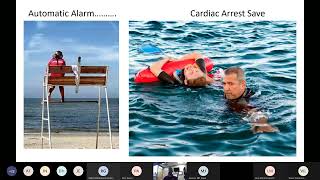
Yeah, thanks for having me. I appreciate it. It's great to be here. This is a presentation that I gave to the International Academies of Emergency Dispatch Navigator Conference back in a couple weeks ago in Nashville. So I'm going to hit the high points here and blow through this just, just to kind of get to the crux of what we're talking about, which is what does a dispatcher do when we can't do traditional cpr? So this is going to be drinking from a fire hose, if you will. But nonetheless, hopefully we hit the high points and I think the importance of dispatcher cpr, you know, can't be overstated. So you know, when I talk to my in hospital colleagues, when I talk to our interventionalists, when I talk to physicians, no one has any idea what dispatchers do. Nobody has any idea the importance of 911 or telephone or bystander CPR. And my, my shtick to them is always, well, you don't get to do this caf if we don't successfully resuscitate people. And so it's really important, I think, as EMS physicians and EMS community to really advocate for the important role of emergency medical dispatching because we know that it does this. I always tell them this is what they do, this is what the dispatchers do. And they basically double the triple survival for out of hospital cardiac arrest. We know bystander cpr, we know dispatch assisted CPR that facilitates bystander CPR does a tremendous job in increasing our opportunities for ROSC and good outcomes. So we know this, and so this is how the message we should be sharing with folks when we're talking about dispatching. The importance of CPR is in bystander cpr. And we see that with our Epstein data, we see that with our cares reports, the importance of bystander cpr. So ideally, this is a picture of my dispatch center on the upper left. On the lower right, you'll see this is the ideal position, right? A big parking lot lane, supine, plenty of 360 access to the patient. And it's absolutely the ideal position. It's the position we've all been taught. This is what you do. And this is ideal. If this happens in a cardiac arrest in the dispatch center, they dispatch somebody, they're working on getting the vision to do cpr. And this is pretty straightforward. We have good procedures and protocols for this. The problem is what happens when you can't do that. And that's really what we're going to talk about briefly. So, you know, I talk about the list of protocols we have. You know, in example, this is using pro QA with the International Academies. But nonetheless, you know, this is a list of protocols. Just like an ems. This has to be principle based. You know, when someone falls down from a hypoglycemic episode, hits their head and vomits, you know, what protocol is that? Is that a trauma? Is that a head injury? Is it a fall? Is it a diabetic? Is it vomiting? You know, we have to use clinical judgment. So this is a principle based discussion. The reason they call this specifically for pro QA is the principles of emergency medical dispatch is that it's principle based. Our protocols are principles, they're guidelines. And this is an example of one of our dispatchers thinking outside the box, using principles of understanding the importance of bystander CPR but not having any guidance. There's no protocol for this. And so this was one of those things where we have to use clinical judgment and our dispatchers use clinical judgment as well. So this is a principle based talk. There's no real guidance for this in the literature, but we know it's important to maintain the principle, the bystander cpr, you know, at least double survival. And that's how important it is. So why does this matter? Well, at the end of the day, you know, when dispatchers and this talk was given to a navigator to a room full of dispatchers, you know, I view out of hospital cardiac arrest as the reason we all come to work. This is the reason we put our boots on, and this is the reason we get out and run calls. This is the reason that you sign up to be a 911 dispatcher. It's not to answer the automatic alarm. Right. The equivalent in the lifeguard world is, you know, an automatic alarm is on the left. You're sitting there baking the heat all day. No one signs up to be a lifeguard, to sit and stare at the water. And that's what dispatchers do a lot. You know, it's that a lot of routine. It's, you know, lift assists, automatic alarms, water flow. No one gets riled about that. But what you really do the job for is the safe. So dispatch CPR is that thing. That's what we have to have for that. The rest of is why we all do our work.
So the first case I'm going to play here is an example of dispatch cpr. And we'll. We'll see what you guys think. And hopefully you guys can hear this. Let me know if you can.
And when you say fell out, what do you mean? He just got up and he just fell over after.
You don't.
Okay, I understand. We're getting a lot of help started that direction. If there's. Oh, there you go, ma'. Am.
If there's a deficit available, send someone to get it now and tell me when you have it.
Okay, I understand. We are sending the paramedics to help you now. Stay on the line. I'll tell you exactly what to do next. Are you right now.
Are you right by him now? Yes, I am. Listen carefully.
Ma'. Am.
I need you to listen to me. Lay him flat on his back on the floor and remove any pillows, okay? Okay. I gotta put a pillow now. That's fine. Put me on speakerphone if you need to. Oh, God. Dang, dang. I can't move you. Dang. Okay, is he still in bed? I can't move him. Is he still on the bed?
No, he's on the floor.
Okay. He's kissed him on the floor. Okay. Is there anyone else in the home that can help you move him? No, there's nobody here. Okay, I understand. And we're just going to continue and do the best thing that we can for him. I'm going to tell you, chest compressions, you're going to apply them to his back Place the heel of your hand on his back, right where his nipples would be, and then put your other hand on top of that hand. Pump his back and sacks at least twice per second and two inches deep. Let the fish come all the way up between pumps. We're going to do this 600 times or until help can take over. Count out loud so I can count with you. 1, 2, 3, 3, 4. Compress. Yes, ma'.
Am.
Keep going at that rate. 1, 2, 3, 4.
Okay, so what you heard there was our dispatcher thinking outside the box. He tried to get somebody to help move. Is there anybody else there to help you move? He's face down. He's too heavy is what she's saying. True statement. She's by herself. He's too heavy. He was on cpap, the breathing machine she was talking about. And basically he said, we're going to do the best we can. And so this was an opportunity for them to deploy prone cpr. I never taught them this. I never talked about this. This was not a lecture I had given to my dispatchers. So this is something that was truly kind of on the fly, but using the principles that, well, we know CPR works, we know it saves lives, and he can't do it, but he's on his face. What are you supposed to do? This is a lone rescuer. And so again, this was prone cpr. And we heard a lot about this in the physician community in the coronavirus. You know, this has been proning for, you know, awake proning and proning in the ICU for lung injury and better oxygenation and ventilation. So proning really kind of got talked about in the medical literature recently. And so we talk about. When did this first start? When we first start talking about proning, and it was this, right? It's in the operating room when you have this picture of someone with their back fillet open. The anesthesiologists, you know, what are you supposed to. You can't flip someone over. You know, what are you going to do? I mean, there's really nothing to do if you're face down in an operating room and you've got your face in a pillow with an ET tube, so you can't flip somebody. So that's when we first started seeing the prone CPR literature in the 80s and 90s. The idea is the same, right? Flip this picture over in your mind, and you're pushing on the back and you're squishing the sternum and the rib cage, and it's still compressing the thorax. I mean that's the, that's the concept anyway. So nonetheless, you know, this is, this is kind of intuitive in the sense that we can do this in the healthcare setting. Some we'll talk about different positions that people advocate for this. You see a hand underneath the sternum, but bottom line is this is reverse cpr. It really is kind of a dispatch specific issue. This is what it would look like potentially in a hospital environment. There are some demonstrations you can find on YouTube of people talking through this in the operating room. There's really nothing in the pre hospital literature at all about this. So what's the evidence does this work? And we have the classic mannequin studies. We have case reports like our small case series. We have Covid studies where people have cardiac arrest when they're intubated in the ICU and they have to do CPR briefly before they can get help to roll them. So Covid has made the opportunity to have some prone CPR literature. We have operating room studies and we have ICU studies. Again, very small numbers. And most of this is mannequin based and case series in the icu and it's theoretical. But at the same time this is going to be hard, hard to get any definitive evidence on the pre hospital world through the dispatch environment. So we don't have any EMS literature on this. Like zero. We have no dispatch literature on this at all. We don't know if it's the right thing to be doing at all in ems, but we'll talk about that in a second. So a couple of these, this first one, this is a mannequin series. All this is, is basically reperforming their CPR checkoffs. They flipped the mannequin over and looked at what kind of metrics were met, doing it when the mannequins face down. So these are the SIM mannequins that measure the recoil and the rate and monitor depth. Well, you can see the highlight there that, you know, a fair amount of them were reasonable depth, reasonable rate. And you know, this was a mannequin. So he's saying that it was basically 41% of the time. You know, they had adequate CPR from with the mannequin measuring the metrics. Okay, fair enough. Probably better than no, no flow or no compressions. This was a letter to the editor and resuscitation. This just basically showed you can put a Lucas device, an automatic CPR device on the recessioni and look at the metrics and the machine. You know, all the, all the mannequins Measuring is the metrics, as you would guess that of course, the they would meet depth criteria because you're pushing with a piston routinely. And this just showed that it was feasible. Again, in the mannequin study, nothing exciting. This is where we start getting interesting. This was fascinating in the sense that now we've got some ICU data. They basically took. This was people in the ICU who were intubated. You see the demographics here. These are older population. They have a huge amount of comorbidities. They were all intubated and they all had art lines in. They consented the families and they worked the cardiac arrest. When they had a cardiac arrest event, they did traditional CPR and they looked at the arterial waveforms, maybe.
Sorry, the art line. And they looked at tidal volumes and they looked at the EKG rhythm, et cetera, and blood pressure. And this is what they found. On the left you see supine, this supine column here. And you'll see the mean blood pressure here with the art line, 55, right, you see 80, 60, 90, 55, 40s, you know, CPR type, blood pressures. And over here you'll see the prone. On the right column, you'll see much higher blood pressures with the mean, you know, 30 points higher almost. And this was fresh cardiac arrest, where they stopped the cardiac arrest. They called the time of death and they flipped them over and did CPR and measured the metrics. Fascinating. Same study. This is the supine up here in the top. This is EKG tracing. Ignore that. But you'll see the art line at the bottom and you'll see the art line supine. You know, this is 2468 here, the measurements on the Y axis, you'll see mild prone CPR they measured. And you'll see down at the bottom, forceful cpr. You'll see good arterial waveform with that abg. With that arterial waveform. They also took healthy volunteers and had them wear a spirometer, plug their nose and stop breathing, and then do prone compressions and measure tidal volumes. You'll see here, tidal volumes were pretty high with healthy volunteers measuring spirometry and seeing what kind of ventilation that they could get with prone CPR. Also fascinating with a mean tidal volume of 400. Another study which was ICU patients. This is absolutely fantastic as well. They put a standoff pad in front of the sternum. Don't know if that helps or not, but nonetheless, they did. ICU patients, same thing. They had six patients. They did prone CPR with an ART line and an intubation. They did prone cpr. So supine and prone cpr. On the left you'll see the blood pressure, the systolic with standard cpr right here on the left column you'll see reverse CPR blood pressures. On the right you'll see they trend upward generally. On the right graph you'll see the map. Standard CPR is on the left, reverse CPRS on the right you'll see again a trend upwards with this ICU study. So fascinating stuff. The aha. What does that. What do they say? They have a statement. The HA makes a statement. But at the end of the day they say if you can't do it supine, you could try it prone. But we have an advanced airway in place is what they recommend. Because what do you do with the airway? Well, that's a challenge. We're not going to listen to case two just for time. Very similar thing where CPR was deployed. We've talked about some challenges with the prone environment. What does a dispatcher do about AED pad placement? They watch, they walk people through that. There are CPR boards now being made that have a prone cutout. Now if you can make somebody get on a prone CPR board, lift them up and put that under them, that's not the kind of patient we're talking about because that means you can roll them over and do traditional cpr. So this is kind of experimental stuff right here. And we also don't know what the compression should look like. Should they be on the spine in the center or should they be two hands? And there's some posit that this is actually more comfortable and doable for an elderly population potentially. What do we do about the airway? That's the other big thing in ems. Super challenging is that if we have an airway we can flip people over and they're still ventilating and oxygenated. We don't have that in the pre hospital or dispatch environment. So there has been multiple proposals again that you can do prone CPR in the position you see on the left where you put this arm underneath their forehead. All I see is bad cervical spine stenosis here. And you know the guy who falls and tips his chin and becomes a quad. This seems rough on old folks to try to have this really stenotic spine being hyperextended. But this is the fluoro picture of the same position. And you can see that really does have the jaw fall forward when you put your head like that, the jaw naturally falls forward. It makes the airway open. So this is just Some posits this is purely experimental. This is all unknown territory. So this is the academic high grade tower talking right now. Not recommending this necessarily as far as positioning, it's just the discussion that's occurring. So what do you do? You've got somebody who's found in this position on the left, your responder here is on the right, who's elderly. This is going to be a challenging environment. What should we do? And that's the challenge that we have to figure out. So right now we're at the expert opinion stage, right? EMS physicians, medical directors of dispatch centers, looking at the literature and going, if you can't do traditional cpr, should we just do supines? Prone cpr, what's next? We're really at the observation question phase, right. We've kind of got some, you know, potential ways to look at this. I know the international Academies of emergency dispatch are interested in pursuing some looking at this research wise in the lab to see what kind of instructions, how people follow prone directions. So I don't really know where we go from here other than expert opinion saying it's a reasonable thing. Outcomes of our two patients. These patients both had Ross in the field. One was shocked multiple times when we arrived, was transported, ended up dying multiple months later as a complication of the cardiac arrest, had a bad neurologic outcome. The other patient was an overdose, ended up being resuscitated and died of sepsis a day later in the icu. But both successful pre hospital Ross patients. So takeaways, CPR saves lives. You know, how much time do we waste with no flow? Do we risk spending the 4, 5, 6, 8, 10 minutes of response with them trying to move the patient in the right position? Or do we just say that we know no flow is bad, some flow is better. So let's just start pushing on their back and hopefully with more rigorous instructions and guidance.
Oh, I think we may have just lost Dr. Jacobson. We'll wait for him to come back on. Let's see. Ryan, are you there? I don't see him here.
All right, a quick question. Were you able to see. They were showing the relative blood pressures. Were able to see the absolute blood they're being generated. Was it a radial artery? Radial artery line. I don't know if you got to see that part.
I don't know. Yeah, that's. That's not from his paper. That was from other. So we'll have to ask him. I'm sure he'll come back on, but Chief D. Bernardo, Go ahead.
So you know, I'm super excited about this. Yeah, I've done five centers. I'm going over to Pinellas and Highlands next, using the CPR links program. So this has certainly been. It is our number one issue with barriers. And if I. If I don't see Roach on here, but I'm going to use his line in priority dispatch. It has the dispatcher, like, in this constant pursuit to remove the barrier instead of do something else. So in discussions with priority dispatch, they're going to try to re. Clarify, like try three times and then go to something else. You can't be a broken record, you know, so, you know, the takeaway there is that it's okay to have the dispatchers through their priority dispatch and their systems keep trying, but they have to have an endpoint. They have to be able to move on. So this, this lecture is perfect. I know we went out to Santa Rosa. Dr. Landry's on here, and he supported all these, you know, these concepts of you just can't be stuck in this loop where you don't do anything. You have to do something. Roach has same kind of case story. I see your speaker's back. But his case story was eight minutes, and then the last, before the rescue unit walks in, the dispatcher says, well, then just the person was supine but on the sofa, and they couldn't get him on the floor. Finally, in the last minute, the dispatchers will just pump on the sofa. And the caller even says, well, why didn't you tell me to do that eight minutes ago? It's on the recording. She goes, why do you tell me to do that earlier?
So.
So this topic is great, and it has to do with all the barriers and themselves. The dispatchers have to be trained to get out of the broken record loop and do something after an effort's made. And I'll let you have your speaker back now.
Yeah, Chief, that's amazing. Ryan, I know we dropped you for a second, but Chief DiBernardo has kind of done it all, and now he's at the state level, and he actually goes from dispatch center to dispatch center. So he's like prime person for this topic. That was really great comment, Dr. Schepke. Come on in. I know you have some comments here for sure.
Yeah, Chief Tibianaro is absolutely correct and so is Dr. Roche. He's been obviously a leader in this topic. We do the exact same thing. Some CPR is better than no CPR. You get 30 seconds or two attempts to move the patient to the right position. Whichever comes first. And then you do CPR wherever they are sitting in a corner, in the toilet, upside room, whatever. So I think that's absolutely. The point is that you can't let perfect be the enemy of good. And no, CPR is not nearly as good as some CPR that's ineffective. So our 911 hands to chest time right now in Palm Beach county is 2 minutes and 11 seconds. So we're getting close. And that's. And in fact, our next quarter, we're going to be under two minutes. It looks like we're trending it below two minutes because we're putting in things like this because Chieftain. Absolutely right. You listen to these tapes and so much time is wasted on trying to get the ideal when really what you want just. You gotta get them started.
Awesome. Ken, great comment. Dr. Cohen, go ahead.
Yeah, I was wondering, you showed one.
Slide where they did compressions on awake patients and were checking tidal volumes from just the compressions. And it looked like you were getting fairly decent tidal volumes with that. Was that.
Did I.
Did I understand it correctly? Yeah, it was true. So they put. They did spirometry, they had healthy volunteers, five, five females, five males, put the sprouter mouth, they nose plugged and they had them hold their breath and then they did compressions and they measured tidal volume in and out. So again, you know, not exactly our patient population we're working on. But yeah, that's what the study did show. And it was the same in the ICU study. They published those results together.
You know, this sort of speaks to whether or not it's essential that we give the early ventilations.
We may be ventilating them adequately or quasi adequately with just the performance of chest compression. Yeah, and I think the model has to become just like with the enhanced 911 stuff with the next gen is, you know, call if you can, text if you can't. I think it's supine if you can, prone if you can't. I mean, it's just got to be a change in paradigm.
Ryan, how do you explain the significant blood pressure improvement with prone.
Well, that's why we don't know. I mean, most of the stuff's all operating room literature with ART lines or ICUs that are ventilated with art lines. It looks good. I mean, again, these are really tiny case series and these are not prehospital cardiac arrests. These are not bystander or dispatcher CPR folks. And again, remember the people in the field, we're doing prone on folks that are not Strong enough to turn somebody. They may be morbidly obese. We don't know what kind of compression quality we're getting with the morbidly obese and someone who can't be moved supine. We don't know how good their supine compressions are in the field. So no one's really measured bystander CPR in the real world, metric wise. So we're kind of, again, this is at the expert opinion phase. This is just basically making. Taking what we've got, knowing what works, and saying, what else are we supposed to do? I mean, we're kind of in a conundrum.
And speaking of experts who have an opinion, doctor, Wrinkle shirts. Come on.
Yeah, hi. This wrinkle. I am here. So. Hey. So the question I had, Ryan, was those were, I would assume, radial artery lines. Okay. I would guess. And then number two, do you know what were the absolute pressures? I saw the relative changes. I couldn't read what the pressures were. What kind of pressures were they generating?
The pressures they generated in that one study were pretty good. They. All right, I got it right here.
Yeah.
The systolics were 110 over 20, 70 over 20, 90 over 20, 110 over 40, 78 over 10, 90 over 10. So, I mean, reasonable compared to the 30s and 40s and 50s from the. From the right.
Yeah. So part of it is the mechanism is that, you know, when we're pressing on the chest, you know, it's, you know, it's a thoracic pump model. And the irony is that by doing it from the other side, you have more of a compression of the entire chest under that period of time, you know, when you're doing it from the back. So, you know, so it just helps to generate the better. Here's the downside is that because you are getting a better compression in a way, you're also having more loss of lung volume, etc. And then you can't transport blood through the lungs very well during that period of time. But that'll eventually occur. So you probably. I don't know what to do at the dispatch office, but in general, if we're going to do it elsewhere, it will require making sure that there's a good lung inflation somewhere.
So.
But it's better than nothing like you put out. It's fantastic. So thank you. Great presentation, by the way, and really thoughtfully done. So really.
Thank you. Well, Brett Patterson with International Academy has made a comment in Nashville that really struck me. It's like, this is truly a dispatch Problem. This isn't our crews, our fire crews. We got people. We can always roll people over. We're not going to be purposely putting them outside of a study of proning them because we need to get their airway established. This is really exclusively a dispatch bystander problem. And so outside of studying in that environment, why would the ICU or ER anybody else flip people over on purpose unless they had an airway? It was a part of the study. This is truly no airways bystander. This is truly a dispatch problem. And so it's unique that we've got a problem that's only unique to the dispatch world in EMS around cardiac arrest. That can only be solved at the dispatch level.
Yeah.
All right. Awesome. And before we end, let's go. Chief DiBernardo, last question before we move to Dr. Pepe's webinar.
We're still strangling with.
Sorry. With Priority Dispatch on seizures.
Have you moved in that direction for if it's. Is it a real seizure or not? And having them do chest compressions. That's a tough call because Priority Dispatch had some pretty strict rules on that.
Yeah, I mean, we do seizure, agonal overdose. Agonal. There's. Yes. So there are. There are agonal breathing and seizures. One of our calls that ends up being cardiac arrests because of the agonal breathing. Gasping, the irregular neurologic breathing patterns. So we do have people getting compressions who have seizures, and then, you know, we show up. But it looks like clearly the literature shows we're not harming people by doing compressions unnecessarily.
Ken, that's an important topic, and the way we solved it is for adults with a history of seizure, we assume it's probably a recurrent seizure. For adults, you have no history of seizure. We assume it's cardiac arrest. We start pushing on the chest. Very difficult until we have a telemedicine link for our dispatchers, which is coming in the future. It's hard to tell over the phone with the difference between the two. So erring on the side of doing compression, especially for a first seizure, has been a winning model for us.
Awesome. All right. Wow. I knew this topic would generate a lot of interest, and it sure has. We had a lot of people on the call, so. Ryan, thank you so much. I'll give you the last word. What are some. What's kind of like the last thing you'll tell us from the state of Florida about what to expect for this in the future?
I hope that the emergency medical dispatching folks, the APCOs the International Academies come up with some scripted language that the dispatchers can be trained on so that it's very fluent, just like we do with regular cardiac arrest. You could hear our person saying, let the chest come up. It's like, no, let the back come up. You know the language they're using, they have no muscle memory for it. So I'm hoping this is expert opinion. I think this is some flows better than no flow. So I think we should see this catch on is my guess because we had no other options in the dispatch world.
Awesome. Incredible. Thank you so much for joining us. I'm going to send you the recording of this and this will also go on our, on our page of all the recordings we've had. This blew my mind. I love this topic and thank you so much for agreeing to come on the show and you're more than welcome to stick on. And for everyone else on the call, we're going to be restreaming over to the Eagles, so stay tuned. Ryan, thanks again.
Yeah, thanks for having me.
Okay.
And Angus, let's see. Angus, are you there or do I need to restream? Let's see. Let me.
Not hearing Angus. I'm going to go ahead and restream.
So give me one second and a minute or two.
It took about a minute and a half or two and I, Julian, I had to put in a meeting code and then a passcode and that has never happened before. So something technically must, must have changed.
Yeah, that's unusual. I'll look into it.
Okay, here I go. I'm going to see if I can connect now that route. Okay.
Can you guys hear me?
Doubling. You are muted now. Good, I'm glad I'm muted. I'm going to turn it off over here.
See? Can you guys hear this in the Florida call?
Yes.
Not hearing any audio. Yeah, we could, but I can't.
Let me see if I get rid of this.
Paul, you're on mute. Paul.
Sure. Okay. Hey, how are you, Peter? Can you hear me okay?
Yep. Gotcha.
Doing that, doing that.
Maybe disconnect from the Florida meeting.
You can't have both open at the same time.
Yeah, Paul, I'm gonna, I'm gonna remove you from the other meeting.
Okay, I did it.
Thank you, Dr. Antifi.
My pleasure.
Yeah, I didn't send out of your meeting. That's what happened because I was quickly moving over here and then I had these things. All right, let's get going here, everybody. It's 11:36 and recording in progress around PST Pepe Standard Time. Okay, we're a few minutes into this, but we're always transitioning over from where Peter is doing a great talk today. We'll probably have that brought up in a subsequent discussion, either there or in Florida, even so when we all gather together in June. So the CME code for today, for those of you who follow this, is going to be 15234. If someone can put that in the chat, 15234. And for the Seagulls meeting, for those of you who are on the Seagles, the Florida meeting, that was 15233. 15233. All right, sue, let's see what's in the chat. You got that, Pete? Did you handle that, Peter? Thank you very much.
I got it. I got it, Peter.
Okay, got it. Thanks. So, Peter put it in a race, which is nice. Thank you so much, Peter. Hey, we're getting a good quorum now. That's what I was looking at here. Okay, so which is good. So who has time constraints today? Anybody have to be off, besides me, at about 11 o'. Clock. Anyone else? Or 11 o', clock, that's 11 o' clock central, 12 o' clock eastern. Anybody else?
Paul? I'm going to take off at about that time. It's Jim.
I'll turn it over to Peter at that time, et cetera. I didn't have a whole lot on the discussion here to go through. I didn't have any particular agenda today except for the fact that I wanted to discuss maybe some of the topics that I want to prepare as I put together a schedule for Eagle Creek. Classically, we go around the room when we all arrive, as we're doing introductions and we're saying, here's the biggest issue on the CMI system, or here's the thing I want to learn more about today if you guys can help me with this. And so what I might do is, at least towards the end of this show today, maybe Peter can handle, is take such an inventory. And then later when we get there, we'll say, here's the current inventory. Do you guys still agree with that? How many want to hear this? And we'll kind of rank them at that time. I think that'll be a cool way of doing it. Peter, do you agree? And can you help me with that? Yes. Okay, good.
Yeah.
Anybody else, any other. Other suggestions or any other topics they'd like to bring up today, et cetera, besides some of the usual reports that we get? All right, so first of all, let me start with a Couple people that we haven't heard from for a while or people I know that may have to get pulled off for a while very quickly, etc. And also some of our overseas folks that I think that might be on today. So first, let's start off with Sandy Schneider. Do you have any. You have to be off at 11, Sandy, or what's your situation?
I thought I saw Sandy Schneider there. Maybe she's not there. Okay. Or how to get off as he was worried about. Okay. Hearing none at that point in time from her then. Let's go ahead and move over to Fiona. Fiona, haven't seen you for a couple days. How are you doing? Okay.
Yeah, Well, I got back quite safely, thank you, Paul. I hope you did too. Yeah, it was a really great conference. I'm glad you could. And several colleagues from across the pond were able to attend and so. Really good.
Yeah. One that. One of the things I really. I think I got back safely. We'll see. But what was kind of cool is that you're familiar with British Airways, right. And right. So we were sitting there and first of all, the security lines were so long there in Glasgow, you probably saw the same thing that they actually decided to hold the airplane for about an hour, you know, to let other people on that hadn't got to the security line. They were short on that. So I actually sat in a seat next to a person who was coughing and across from a person who was coughing for one hour. It was most exciting to see all that. And along those lines, the reason why I'm bringing that up is that we have begin to see a lot of people with the unmasking, seeing a lot more cases now. They're not sick, they're not going to hospital. But we're getting. I'm seeing a lot of colleagues, you know, ill with this, I think. Have you seen that in the uk, number one. And number two, I'll ask people like Jim Augustine, because you've. You run, you know, various emergency departments around the country are responsible. So what are you seeing there, Fiona?
So our numbers are going down, Paul.
Okay.
Right across the country, we've still got quite a lot around and of course there's much, much less testing, so we can't necessarily be scientific about it. But the numbers going into hospital are smaller. The numbers of patients in ITU has gone right down. Our average bed occupancy on my patch is 93%, but going up to 95% in some areas. So we've still got real problems with hospital handover days. Covid is not a major issue. And for many of the patients in hospital, they test positive with COVID but they're coming with something else.
Right, okay. So it's really probably out there and floating around, but not having as much of it impact that I guess, in our healthcare system as we had in the past. Are there any other things floating around there from the NHS that they think? Are there other viruses like adenovirus or like other things that might be coming back or influenza? Are we seeing any of that with people unmatched out?
Yeah, so we've got quite a few nasty chest infections going around, some of which have been shown to be adenovirus. The other thing that we've got is a significant number of cases of hepatitis in children under the age of 10. I think we're up to somewhere in the region of 170 now, and that's involved a significant number of transplants.
More from Peter




Melissa Olen MSN, FPN-C, CCRN: Sudden Cardiac Arrest Training in Schools (Project ADAM) 4/25/25



Pediatric Hospital Readiness: How Teamwork & CPR Metrics Drive Better Outcomes



Chelsea Kadish, MD & Kyle Goodknight, EMT-P, RT: Pediatric CPAP in EMS (3/14/25)