Dr. Keith Lafferty & E/PM Laura Whelan: POCUS in OHCA (11/10/23)
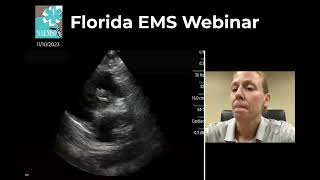
Dr. Keith Lafferty and Laura Whelan present a pilot program training paramedics to use ultrasound during cardiac arrest. In 20 cases, 9 showed cardiac movement on ultrasound, which prior studies link to better survival and hospital discharge rates. They discuss training challenges and plans for larger outcome studies.
Questions this video answers
REASON trial (2018) — nearly 800 patients across ~20 hospitals in the US and Canada (multicenter prospective observational).
Cardiac activity was associated with higher survival to hospital admission (about 29% with activity vs ~7.2% without) and higher survival to hospital discharge (about 3.8% with activity vs ~0.6% without).
The local pilot ran for one year and captured 20 OHCA cases.
Of 20 cases, 9 had cardiac wall motion. Final rhythms: 5 PEA (all 5 had movement; 4 transported, 1 not), 14 asystole (3 of 13 asystole cases had movement; none of those were transported), and 1 converted to sinus with pulse. Overall, 5 of the 9 movement cases were transported and 4 were not.
2022 paramedic trial reported adequate scans in 86% of cases, accurate identification of chambers and movement in 88%, compression pauses <10 seconds in 95% using the described technique, and POCUS altered care in 29% of cases.
Chapters
At the Eagles, when they asked me to do ems, this is just a. By the way, I initially said no because I didn't have any EMS training and I didn't really know anything about it. So it's been a learning curve for me. But it's always been amazing the amount of medicine I've learned. Ems, as far as especially resuscitive medicine and coronary perfusion pressure and everything. We're not taught in residency, really. And now I notice the bad CPR going on around me, which I used to do, and it's amazing how much critical care is actually happens and can happen before the hospital. So it's been a. A pretty awesome journey and the. It's been fun going to the Eagles, especially a lot of the. The animal studies when it gets in a cerebral perfusion pressure and all that kind of awesome stuff, which is a lot of fun. So I appreciate that this study, just a real quick introduction. We're going to try to fly through the slides because I have a couple studies I want to mention that aren't in the slides. Laura was the workhorse for this. Just like in my life, I take all the credit and do not much. But Laura, we noticed that.
You know, in medicine in general, we're using less of the stethoscope and more of the ultrasound. I always say, you know, if your car is making some noises, you would take a look at the engine. Now put your ear on the hood and, you know, certainly sonography, especially pocus, with a binary answer. Yes, no, not the detailed sonographer reports is something we're interested in. You know, there's been a lot in EMS that has spilled over into emergency medicine and in critical care arena, iOS and other things. So I think this is something that has spilled over from emergency into EMS and it's about to spill more. But anyway, this is a feasibility study, so there's many questions about cardiac arrest and pocus, but this was really a basic. Can a paramedic learn and then utilize and then have the skill set to actually have the acquisition to get cardiac pictures or cardiac video and make a, you know, can see if the. The four chambers of the heart and can they see if they're moving or not? Not to mention some pathology. So with that being said, as a reminder, it's a feasibility study and observational. I'm going to let Laurel take it away.
Did you want to talk about the reason trial and kind of how. Why you brought.
Yeah, yeah, yep, yep. I forgot. Can you go to the.
Is it pulled up slide? Do You. Can you guys see the slides or no?
Yeah.
Okay.
Keep.
Can.
Yeah.
You see your slides?
Yeah, yeah, I have the slides. Can you. Laura, are you controlling it or am I.
Yes, I've got it.
Okay, can you go up to the heart picture? Just real fast? Yeah. Okay. So. So this is the. This is the. The easiest. What the literature thinks too. The easiest view. It's a sub xiphoid. So it takes place below the xiphoid out of the chest area where CPR and other things can be happening. And this is the first thing that we want to teach the paramedics is just. Just pick out the four chambers. The left side's thicker. God made it further away from the chest wall. So when bad guys do bullets and knives, it's further away, which is a good thing. And it's thicker than the rv. So this is the kind of teaching that kind of went and happened. You can go to the next slide. I'm going to mention just a couple studies. I'm going to really run through these in light of time. This reason trial, it was 2018, was the largest multi center prospective observational trial to date. One interesting thing in this trial, you can see there was almost about 800 patients, 20 hospitals, US and Canada. And basically was saying that the heart's moving versus not moving despite the rhythm. Do you get a better outcome? And you can see when there's cardiac activity. Again, this is just highlighting the reason trial. Again, the biggest one so far. It was associated with an increased survival to hospital admission. So that's kind of written poorly, but it's associated with the increased hospital admission at 29% compared to 72% if the heart's not. I'm sorry, 7.2% if the heart's not moving. So about a third of the patients, if they have heart movement at all, despite whatever rhythm it is, they're going to get about a third to a Ross. No, no cardiac activity. About 7.2. And then survival to hospital discharge. 3.8% of the heart's moving down to 0.6%. If it's not. Other things you can pick up. The reason trial is pulmonary embolism. They picked up 15 of those and 34 fusions.
Let me see. Blah, blah, blah.
Other things about the reason, I wanted to just mention one specific thing. They actually had 4% of the cases they found to have a tamponade, which was interesting because they wouldn't have found this out without using an ultrasound. They had a 25% chance. Roscoe, there's. And they had a 15.4% hospital discharge of those patients. So it was used also as a peri resuscitive tool as well as you can go to the next slide.
Sure.
As far as the background, just in general a couple of things. What do we know about cardiac arrest pocus? We know that pooled studies, all the studies together has been meta analysis. 50% greater chance of ROSC with cardiac movement just right off the start. 50% of pea cases actually are not pea. What we term pseudo pa means the heart's moving. So there's a two good 50%. How did we do this with our paramedics? We did lectures and hand on training. We did a national course initially. Super users, mandatory reading material, ongoing lectures and myself acted as a super user as well as Laura. One more thing about the general background too. Other studies have demonstrated that patients with a PEA and cardiac activity pseudo PEA were 4.35 times more likely to experience a ROSC, which is very interesting. Pooled studies also showed about asystole patients. 10 to 35% had cardiac activity asystole. Research is shifting from chronological endpoints to physiological endpoints using pocus and end tidal CO2 and kind of in a binary way. Is it less than 10 ensuite? Is it greater than 20? Is there heart movement, yes or no?
We're also looking at prognostic factors anymore to determine which patients are an increased likelihood of achieving ROSCOMM from those that may justify early termination of resuscitation and a waste of resources, so to speak pre hospital and hospital.
The other thing just want to mention there's been a couple studies that show that there was a delay in the pulse checks and this has been sort of conquered over the years by a technique of just putting the probe on the chest before the, you know, clock ends for the pulse check and kind of getting your depth and your gain ready. So it's kind of a little way to cheat and get ready to respect the less than 10 second pulse check to respect coronary perfusion pressure. The best views in the literature. Sub xiphoid 95% chances of getting a good view, parasternal 85% and the apical four chamber 50%.
There's lots of data showing that the POCUS can show you who has an increased chance of Ross. There's no survival benefit overall as of yet and that has to be looked at so forth. So with that being said as a large background. Go ahead Laura.
Thank you. So when Dr. Lafferty brought this to us, you know, we had to sit down and kind of figure out how we were going to roll this out. How are we going to bring training in? So we started with. We found a company that actually offered like a super user class. So we chose four personnel from our department and four personnel from a neighboring department that Dr. Lafferty oversees as well. And they came in and it was first they sent us a lot of online education and training where we were doing a lot of videos, PowerPoints, quizzes, and then they came down and actually did two full days of hands on. We learned all types of ultrasounds, not just cardiac. We decided to do this. That way we had those super users that could continue to train. So as we hired more people, we could continue to train our crews here. Once we got that training, we then decided to train all of our crew members. We actually taught paramedics and EMTs how to use it. And Dr. Lafferty came in multiple times to work with us. As Dr. Cantabi said, we utilized his book a lot too. We send out those, like online trainings.
Here's just some pictures of us training, training, like on duty. We try to tell the crews to just keep. Keep working on it, keep getting our hands on it.
The actual pilot study, as Dr. Lafferty said, was just to see could paramedics utilize ultrasound pre hospital and yes or no cardiac movement? No movement. We decided that we were not changing any guidelines. They were to run the call exactly how they normally would. And we told them once they could during pulse checks to try to ultrasound. That was a little bit difficult at the beginning. Those 10 seconds is not a lot. And like Dr. Lafferty said, you know, we really had to work on kind of getting pre ready before the pulse check. And then we really hit on when we were getting to the point of terminating the arrest, to take your time and to look at the heart then. So we ran the study for a year and got 20 cases.
Initially, we started with two ultrasounds on two of our units. But then within, I would say about two to three months, we quickly purchased more and put them on every single unit. And again, we never changed our guideline. We did not interrupt CPR at all. And once crews were done with the calls, they would email these scans to myself and Dr. Lafferty for us to review so we could critique for training purposes. I'm going to see if this will play. I don't know if this is going to play on here.
Unfortunately, it's not going to play. So I had two scans that I was going to show of, ones that Cruise brought to Us one was.
Well, I think that's the first one. I don't think that plays. The second one that should play.
Oh, is the second. No, they both should play. And I cannot get it to play.
Yeah, I think it's because it's still inside Dropbox and you got to download it as a PowerPoint. If you click that down arrow at the top there.
It'Ll download it.
Okay.
They just say. You just say, yeah, it should download to your computer, Laura, and then you can just open it that way. Give that a try.
It is not letting me do that.
Maybe because you're not logged in.
Maybe that's okay. Okay. But these were both great scans. One was no movement, one was movement. So that's why I'm going to show the results next. So out of the 20 cases, we broke it down into what was the initial rhythm the patient was found in to the final rhythm the patient was in either prior to terminating the arrest or transporting. Then we did movement or no movement. And so we put all the ones that had movement in yellow and then transported versus non transported because again, we told them to run the arrest like they would normally without utilizing the ultrasound.
So out of the 20 cases, the final rhythms we had five that were in pea, 14 that were in asystole, and one that we actually converted had pulses with. So we said sinus rhythm with a pulse.
Out of the PEA cases, the five of them. All five of them had cardiac movement. Four of these patients were transported, one was not.
Out of asystole. Out of the 13 cases, we had three that had cardiac movement. None of those ones were transported.
Out of the VFIB initial cases, obviously, I think one converted after a shock. And the other ones, I think that one was transported, the other ones eventually went into an asystole.
So total, we had nine out of the 20 had movement. And out of those nine, five were transported and four were not.
So 20% of the cases had cardiac movement and were not transported based on just following the current guideline.
Doctor Lafferty, did you want to talk about the.
Yeah. So I'm going to finish this in two minutes. In respect of the time, I want to mention one other trial, and I should have mentioned it earlier, was another paramedic trial. It was in pocus used by EMS providers and out of hospital cardiac arrest. In pre hospital and disaster medicine in 2022, they had a similar training. Four hours of didactic hands on. They were shown to have adequate scans to paramedics 86% of the time and 88% of the time they're shown to have accurate identification of chambers and heart movement and so forth. 95% of the time they had compression pauses less than 10 seconds using the method we just described. And the pocus altered their care in 29%. I wanted to go into a little more about a Dutch trial, but I'm not going to do that in light of time. But just in a nutshell, it was a physician based helicopter trial in the Netherlands. It was another large study in 2017. And it basically just.
I'll clean and then we'll get this, we'll get Carlito.
This is your guy.
Yeah.
What's that?
I think somebody was just talking.
Oh, okay.
I know. I'm, I'm trying to find who that. Whose mic is hot. I found them. Okay, go ahead.
That's okay. But the focus in that helicopter trial, it load it led to treatment changes. And 25 of the trauma patient was a trauma study. Trauma and medical so and 45% in medical cases. And the biggest finding was that 88% of the time pocus guided the resuscitation, termination or continuation or IV fluids, not to mention the peri resuscitive procedures, pneumothorax, tamponade, identifying peritoneal blood esophageal intubation by an absence of sliding lung sliding and other things. But anyway, getting back here and finishing up in 30 seconds, our conclusions that paramedics can learn and implement cardiac pocus and the cardiac arrest patients in concordance. It may be time to abandon chronological endpoints in a cardiac arrest patient. I know this has been talked about in the Eagles, such as using physiological parameters, end tidal heart activity and so just almost like wake up strokes. We used to assume the worst. And then when you start looking at physiological like perfusion studies and so forth ago, there's spring, you know, parenchyma there, that's alive. Further studies, obviously we're going to have to look at hospital discharges, neurological outcomes, and kind of a comparative with an end tidal CO2, which I think would be cool. And that's it in a nutshell.
All right, awesome. Thank you. Thank you guys so much. I know there's maybe a lot of questions here because what I find interesting is that ultrasound is the one item where EMS has lagged behind the hospital. Right. And so, you know, my first question to you after going through this process is why do you think adoption has been so slow when in general EMS is a, is a faster adopter? Is it because of the difficulty in training? Is it because the CQI and the continuous training is, is somewhat of a burden. Right. Is it because you have to follow up at every scan? Is it because people are afraid of their paramedics making the wrong call? Right. Either a false positive or a false negative. So I'd love to hear your, your both of your thoughts on why the slow adoption in ems.
Yeah, Laura, you can go.
I, I think those are really good questions. I think there's a lot of different things that play a role into it. Like you said, training and continuous training because we're, we're a non transport, als, fire department. So it is a little bit harder because we're not with patients a long time where we could be scanning more patients or with the patients longer. You know, that's why we've done a lot of continuing training. You know, monthly doc. Recently a few of us went to the hospital with Dr. Lafferty because again, it's, it's a tool that if you don't put your hands on it often enough, you're not going to be as good. I think cost also is a factor. You know, they're, they're becoming more affordable, but initially, you know, the cost value and then depending on how big your department is, again, making sure that everybody is trained and trained well, you know, so I know some departments have looked at just training a few and having them put like on their battalion vehicles and those battalion vehicles run to those department, you know, to those specific calls.
Yeah. And then Peter, you, you actually, you actually asked a question and answered it with all the answers, which is kind of interesting. But we call it nobology. If you go to an airplane, you look at all the buttons and gadgets, you're like, holy. That's like, you know, I'm not touching that. So it's literally, we have a chapter in our book Nobology because I sort of get over the fear. But now the interesting thing is these mobile, whether it's an iPhone, iPad or alike, the nobology is actually quite less. So they're becoming less scary, so to speak. The money's definitely a cost, but I think that's less of an issue because the crystals have been replaced by these silicone computer chips. So that's. The cost has come way down to a couple thousand dollars, if not less. Also, change is hard, no doubt. And then, you know, I find something very interesting in the hospital, most of my colleagues, unless they just got out of residency or recently, so do not use the ultrasound as well for all the reasons just mentioned. And then the Last thing on the flip side, why would you not do it? I find personally, and I think Laura's found the same thing, that when these paramedics start learning this, they have another tool in their bat belt, so to speak, and it makes work fun and increases longevity. And really, at the end of the day, it's just a review of basic anatomy. And once they know that basic anatomy and then kind of flip it around on the screen, they got it. And once you get it. Clicks.
All right, awesome. Great. Great answers. Let me bring in Dr. Pepe.
Paul, go ahead.
Yeah. Can you lower my hand for me or. I got to figure out how to do it, but. Nice. Hey, thank you very much. It was great. Laura and Dr. Lafferty, just fantastic. Really glad you guys are doing this. And we're really impressed. And one of. I have four things for you. The first one is a question or suggestion maybe. Is that one of the places I think this is going to be invaluable. So you may. This may help us get this thing pushed forward, is in the arena of bad trauma. So one of the things we're seeing a signal on is that we want to give blood to these patients, but we want to not waste it either. In one of the things we found is that so far, for the majority of cases, the pulseless patients aren't going to make it when we. If we arrive on scene, they're pulseless. Okay, Now, I always distinguish cardiac arrest from circulatory arrest. And you guys are working on that right now, right? And I always say that, yeah, circulatory arrest will lead to a cardiac arrest where you have a standstill of the heart within a few minutes with trauma cases, but are they salvageable? So I think this would be a really good utilization where we say, hey, there is a beating heart. We got to get it blood. And whereas nothing's happening here, he's probably dead already. You know, he's flatlined, he's asystole, and there's no movement whatsoever. Right. One suggestion where we can help maybe move that along, because it'll be helpful in terms of financial.
You know, resources, you know, sparing resources. The second thing I was going to say is that. Have you guys thought about using this, or can you. I don't know how good it is. Besides just seeing cardiac movement, can you actually see blood flow outside? I don't know if there's a way of doing that, you know, to see how. Well, like, if the hand of what I'm getting at, like we do with Tee, if We move hand positioning around. We could see an optimal hand positioning where we get best blood flow out of the heart during. Or is this just not ready for prime time yet? And you can't see with the focus tools you're using.
So I'm going to answer your second question first, because I had to write it down. The TEE is definitely a better. And there's studies going on with that now in emergency focus of just throwing a probe down the esophagus. Because a lot of times, Paul, just like you said, it's interesting when we're doing chest compressions, even great compressions, we're pressing on the ascending aorta, the aortic root, the aortic outflow tract, and we're actually causing harm. It seems like it's much harder when you're doing a transthoracic echo.
As opposed to a tee. But there's research looking at that. I think it's personally, at this point in time, a little maybe too complex.
Right.
To make TE prime time. So I think others are starting to look at, you know, how do we make the TTE transthoracic? To look at what you just said on the first thing you said on the trauma, I couldn't agree with you more. Looking at IVCs. So looking at someone when the intravascular volume is adequate, obviously with blood and, you know, people forget on a hemorrhagic shock, when you're already hypotensive, you're in stage three or 30, 40% blood volume gone, they need blood. But then the blood is so valuable. It would be a great endpoint using the ultrasound for, again, left ventricular end, diastolic volume, IVC measurement and so forth. But this was, you know, to be honest, at the end of the day, before James Augustine came on board, this is not meant derogatory. It was a challenge just to get it in our area on the truck. So the pocus for cardiac arrest was really, at the end of the day, a sneaky good way just to get it on the trucks. And once we get on a truck, I think it's going to open up to everything you just mentioned.
Yeah. Trying to give more impetus or rationale or, you know, budgetary rationale or whatever, you know, for this. Right. Then the last two things, because I got to go myself and I don't want to take away from other people's time, is that one is, I don't know if you know, that I started off as an ICU doctor and they asked me to go into the streets of Seattle. And so that's my background in critical care. And by chance, are you going to the Society Critical Care Medicine meeting in Phoenix?
No, no.
Okay.
I, I've been to that course and it's phenomenal a bunch of times.
Yeah, yeah. Well the, yeah, it's because I was going to be, I'm going to be actually in the opening session of the, of the meeting on that January 21st. So it's going to say I hope to see you there. That was it.
Well, maybe you never know.
Yeah. All right, awesome, great, great commentary.
Okay.
No, go ahead, Paul. Okay.
Awesome, we appreciate that. And so I want to bring in Dr. Panazzo. Jeff, you had some comments.
Also. Hey, one more thing, Peter. Thank you to Jim as usual, by the way.
Yes, yes, yes, yes, thank you, Jim, for sure.
All right, Dr. Pronaza. Jeff, come on in.
Your comments everyone. Hello, Keith and Laura, fantastic job. Good to see you this morning. So Peter, put out the hypothetical of why are we, you know, usually we're way ahead with things in the pre hospital sector. As we all know, end tidal CO2 is like a perfect example of it. But all the other things. But the, the thing, the equipment that we carry and you look at the kind of gear that our crews have to go in and with a cardiac arrest and now an eliguard and a Lucas device and their boxes and everything else, I mean it's daunting the amount of equipment and quite frankly the equipment for ultrasound, it's just not there yet. It needs to match our pre hospital needs and we I think somehow need to pressure elbow to Peter and Paul here to, to look at the manufacturers of this equipment and integrate a quality ultrasound.
Yes.
Yeah, that's there. You know, that is quality. And Tempest Pro has one. But quite honestly it's a snow cone, old crystal. If you drop it, it's broken. Well, we'll just give you new ones. But it's very poor quality. And I think, you know, when the medics field are trying to look at a heart, if they, all they see is fuzz on the screen, it's going to be a low gain on their part. So this is one of the big things that I think we need to do is bring the equipment to match the need.
I completely agree with. And that was we, we played around with two or three different ones, you know and we, you know, we originally we bought one butterfly because we like the versatility of it. But then we played with the Philips Lumify and we found the picture quality was a lot better and that was Important to us because like you said, you know, we want to make sure that the guys and the crews can, can clearly see what they're. What they need to see.
But there's pros and cons. You know, the cords pop off easily. The recording time, you know, we would like longer recording time. And so we definitely. Unfortunately, these devices are made for hospital and hopefully they're getting better, but I really do hope they improve them for pre hospital.
Great comments. I want to focus on one more thing, which I think is a huge point that you guys mentioned throughout your talk. And then I'm going to show you a picture. But this whole thing of pseudo PEA is huge, right? It's huge. If you look at, there's a homework paper from 2019 in resuscitation that talked about giving children who are in brady cardiac, who are in PEA, cardiac arrest EPI, or who are in symptomatic bradycardia. It turns out that when these patients do have heart wall motion, we just can't detect it because we can't feel it with our fingers. You end up killing these children. Here you are presenting a 50% rate of cardiac wall motion with pea. That means one out of every two kids is getting the wrong medication because they don't have the right tools. I want to share the screen because I want to give credit to my folks in Palm Beach County.
Fire.
On the right is Ada Rayburn. She's an EMS captain. We have, we have ultrasounds and that little boy who had drowned in the pool, she came up, the kid was in pea she threw the probe on sub xiphoid heartwell motion. And she says, I'm not going to give cardiac arrest epi. She gave push pressure instead. The kid is perfectly fine. He's perfectly normal today.
That's awesome.
Yeah. I just think that for that singular reason alone, if the prices are coming down, and I would agree with you, Keith and Laura, that like, let's just start off with like one view, with one thing, cardiac arrest, and then we can kind of open other doors. So with that message, I would love to hear your comments and you guys can take us away. So Keith will actually, Laura will start with you and then we'll end with Keith. So give us your final comments and thank you guys so much. This is incredible.
No, thank you so much for this opportunity. This has been a great experience. I'm so happy Dr. Lafferty brought this to us. It's been exciting. Eager to see where it can go. You know, we've already been able to work with Our county, because we have a countywide guideline that we all follow here over in Lee county. And we've been able to get it added into our current guideline to utilize it for terminating any arrest. And like you just said, you know, it's. It's going to bring new things to medicine to help improve care on these patients. So we're not just pushing more and more EPI and potentially killing the patients. Let's now utilize a tool that can help us determine what is the best care for this patient so we can get them to the hospital and get them out of the hospital. So I'm very excited utilizing it, and I'm hoping more departments utilize it. And, you know, we just got to get the word out there. And thank you so much again.
Thank you. And Keith, take it away. Take us away.
Yeah. One, if you can send me that paper, I'd appreciate it. And two.
For a system to thrive on us, you need someone like Laura because she, you know, someone who's going to own it, marry it, love it, be passionate about it, and then, then, you know, you guys know this more than I do. Then it goes away. I will say the paramedics love it. When they come in, their. Their pupils dilate. They really enjoy it. It's a good review of the anatomy and it's a lot of fun. And, and then the. Lastly, at the end of the day, we kind of have to do it. It's more accurate and we should do things that are more accurate.
I completely agree. I think, you know, the fact that you guys did the work. Yeah, I love that, Laura, how you kind of spearheaded it. We need, we need more people like you in EMS to not only do the work, but then present the data in an effective way. So thank you guys for what you've done, for being a tip of the spear. I am going to invite everyone over to the Eagles webinar next. And the link is in the chat. Click on that. Come on over. So I'll stick around, but Keith and Laura, thank you guys so much. I will put this up on our YouTube channel. It'll be. The recording will be there and we can, we can share it with the rest of the world. So thanks everybody and have a great Friday.
Thank you. Bye Bye.
And Jim, thank you for bringing, bringing them to our attention.
For everybody left, if you wouldn't mind just clicking on the link so we can. I can pop over as well myself.
Wayne, Kim, Austin, Ben, Wayne.
You guys there?
Where's the link? I don't see it.
It's in the chat.
Oh, I see it now.
Okay, never mind. Okay.
Okay, I see you over there.
I'm clicking.
Ben and Kim, you still there?
I'm gonna close up the room here. In five, four, three, two, one.
More from Peter




Melissa Olen MSN, FPN-C, CCRN: Sudden Cardiac Arrest Training in Schools (Project ADAM) 4/25/25



Pediatric Hospital Readiness: How Teamwork & CPR Metrics Drive Better Outcomes



Chelsea Kadish, MD & Kyle Goodknight, EMT-P, RT: Pediatric CPAP in EMS (3/14/25)