Dr Levy - TQ Removal (4/19/2022)
Dr. Matthew Levy from Johns Hopkins explains when and how to safely remove a tourniquet in trauma care. He covers critical time thresholds: 90 minutes and 120 minutes matter for deciding whether removal is safe, and walks through the equipment and steps needed for controlled removal and conversion to pressure dressing.
Questions this video answers
2020
Around 2017
90 minutes (line-in-the-sand); ≥120 minutes flagged as higher risk category
2016
Around 2014 (published 2015)
Chapters
Hey, Peter, did you get the CME out?
Yeah, I put it in the chat, Paul. It is. Yeah, It's. I had 1-5221.
That's correct.
Okay.
You are correct, sir.
All right, awesome. Thanks, Paul. Good to see you.
Well, you don't see me yet. I just, I just got off the scientific presentation. Oh, here we go. He's got it. Good job.
Is that okay? Good morning, Paul. Hey, is that. Is. Is that okay, Peter and Paul?
Yeah, if you just want to be like, make it a little, like, if you want to zoom it in a little, a little bit more so we can. So people. But yeah, that's good. Yeah, there you go.
All right, great. So the only downside to this is I can't see you guys, so. But we'll go with it.
Yeah, you know what? As soon as you start, I'm going to take myself off video so we can. Better for the recording, but I think we're good. So. All right, so we're 1105. So let's get started. I want to welcome everybody to another Tuesday session. We're very fortunate today to have Dr. Matthew Levy, who is an EMS physician from Johns Hopkins University, and he had an amazing article that I thought was.
Very important.
For us in EMS because it relates to tourniquet use. And we always get the questions of.
How should we use that tourniquet? Should we remove it or not? I texted Matt and he quickly responded right away. So I appreciate that, Matt. Dr. Levy completed his residency in EM at Hopkins, where he's also served as a Chief resident. He is an Associate professor of Emergency Medicine and the Associate Medical Director of the Johns Hopkins Lifeline, the medical Director of Howard County Department of Fire and Rescue Services, and a deputy commander with Maryland One Disaster Medical Assistance, so DMAT. So we're very privileged to have another phenomenal EMS physician in the ER doc. So, Dr. Levy, thank you. And take it away.
Thanks so much, Peter. Thank you so much for the opportunity to chat with everybody. It's great to connect. You know, we. We have such a, such a cohesive, it's small and, you know, wide reaching group of EMS positions in the country. I'm just thrilled for the opportunity. So thank you. So before I dive into the article, which I promise we're going to talk about in a few minutes, what I'd like to do for everybody is just tell the story for just a few minutes about how and why this article came to be and stop the bleed in general. And then I hope for this to be interactive. Please feel free if you have questions or comments, come off mute. And I know we have. Peter, we have until 11:30. Is that right? We have about 30 minutes or what's the timeline?
Yep, yep, 11:30, we have a hard stop for Paul's meeting.
Yep, got it, got it. Okay, so as we talk about the backstory, the background for how this article came to being, I think the first thing we should really talk about is stop the bleed in general and where stop the bleed came from. And if you remember the NASA report that I guess was 2015, probably written in 14 to 15, published in 16, towards zero preventable deaths and trauma, and the call to action for a single nationwide trauma system from point of injury all the way through rehab. We know that systems save lives. As we're all systems folks on this call, we know that systems of care is where it's at. We build comprehensive systems that ensure seamless patient handoffs. We can improve outcomes and minimize mortality, morbidity along the way. Certainly it's in that background, I think, that stop the bleed came to being a thing. There's lots of, there's lots of tangential topics about stop the bleed. There's mass shootings, which we understand are one certain subset of the population that we want to have countermeasures for. There's everyday trauma, there's military lessons learned from the battlefield. And when we look at zero preventable deaths, we know that towards this vision, this goal is this notion that despite everything we've done in the past 50 years of EMS medicine, hemorrhage, particularly uncontrolled hemorrhage, now that's all hemorrhage of all comers, internal and external, in various locations throughout the body, is still the single biggest preventable source of death. And so it's within that context of stop the bleed really came to be. And I think if our good friend and mentor and you know, and colleague Rick Hunt was on this call, Rick would say stop the bleed is about much more than that. Stop the bleed is about resilience. It's about enabling and empowering people to take action and to do something when they see something. And, you know, I keep moving my hand as a reminder that it's about use your hands, do something. It doesn't have to be a tourniquet. It doesn't have to be hemostatic losses. Do something. Take some action. Hold pressure. Now, as the story of stop the bleed has gained traction through a number of tragic and horrible events of everyday trauma and then high visibility injuries and situations, I think that the notion of empowering people to do something is really where it's at. My personal vision is that if every single person knew how to Stop the Bleed, knew how to do hands only cpr, knew how to give Narcan and maybe one or two other things, we could really foster a much more resilient society. So that's kind of my hat tip to Rick Hunt and to others and where and how this came to. Now, as. And Peter, you and the team in South Florida deserve a lot of credit along the way here too, with the work that the city of Davie has done as one of the first Stop to Bleed enabled communities really was a model. When did you guys go live with the Public Accessibility Control program in Davis? 15 or 16.
Yeah, it was. I think we actually kind of got it out, I think in 2014. I think we published on it in 2015, if I remember correctly.
And it was long before the Hartford Consensus. Right? They were just way right, way, way ahead.
Yeah, I'm sorry, Paul, go ahead. I cut you off. Say it again. I'm sorry.
No, I'm just saying thank you for pointing that out because it really is great to hear, you know, thank you for, you know, just making it and Asa. Hi Asa, how are you? So, go ahead, go ahead, go ahead, go ahead, Matt.
Yeah, no, totally. So, so, so there's an, in typical fashion with an ems and around the country we know there's pockets of thought leaders and pockets of excellence. And now we, we struggle, not struggle, but our challenge is to share best practice and share knowledge. So as the story of Stop the Bleed continues to evolve and we continue to do a better job of training and spreading the word and getting, getting resources and knowledge out there. We know that along the way there's going to be certain other things to have to deal with and to have to work with. And recently, if you follow any of the literature on pre hospital hemorrhage control, you know that there's quite a back and forth in the literature right now about the efficacy of tourniquets. And let me be very clear, efficacy is the wrong word. No one disputes that tourniquets work in life threatening hemorrhage, particularly on the extremities. I don't think there's any, you'll find any expert about that who will contradict one another about that. The concern that we have is there's a, there is a small but growing body of literature about the inappropriate use of tourniquets for non life threatening hemorrhage. So said another way, the Challenge in my mind, if there was a stop to bleed 2.0 is really to say, okay, we really, really have to zero in and focus in on teaching people what life threatening hemorrhage is and isn't. And in this, in this notion, many of us are medical directors for law enforcement tactical programs. We know that, you know, in the, in the area of direct threat or the hot zone or whatever you call it locally turning it up and solve the problem. And then we go back and readdress it. But the fact is that people aren't going back and readdressing it. And so what's happening is we, we are seeing an overzealous use of tourniquets in patients who I think if any of us were on scene we'd be like, no, no, that doesn't need a tourniquet. So we have some work cut out for us. But let's get to the meat of what we're here to talk about, which is this manuscript that I wrote with Asa, Asa Margolis is on the call. Dr. Tang, Dr. Goolsbee, some others.
Who represent the trauma surgery community are on the call as well. And really what we really set forth to write, and this manuscript was published in 2020, but ASA will be my witness. We will attest it. We started working less thing in 2017 and it just went round and round and we finally got to a space where in a true collaborative fashion, it didn't take three years to write. I'd say it took three years from start to finish for the project to really get it to a place where we thought it was meaningful.
And the notion is this, if any of us have ever worked in a community, for the physicians on the call, in a community EM shop, not a trauma center, you know that when someone comes in who's critically ill.
Things don't always go as smoothly as we would like. Our community eds, particularly our lower to mid volume community eds really aren't set up for true trauma resuscitation. Working in a level one trauma center now I, you know, where we are set up for that. Even there, it's still, it's herculean at times to make all of the pieces come together. So this has been weighing very heavily on me for some time, this notion of, of, you know, having work shifts and community eds and thought to myself, you know, someone's going to come rolling in here one day with a tourniquet on their arm and I kind of know what to do because I'm in this space and I spent a lot of time thinking about this, but I don't know that my other colleagues, who, by the way, for the record, are probably much smarter than me, would know exactly what to do. And even in the trauma centers, we would see someone, right? Who? Those of you guys who work in trauma centers, someone comes in with a tourniquet, and before you could say, don't touch that, someone's ripping the tourniquet off. And now we have two. Now we've made another problem. So really.
This manuscript is about the timing and strategic approach towards the management of the injured casualty. Who comes with a tourniquet? That's the backstory. That's how we got to there since ASA and some of our colleagues from Baltimore able to join the call. Asa, did you want to add anything about the story behind how this article came to being?
Nope, you covered it all. Keep going.
Thanks.
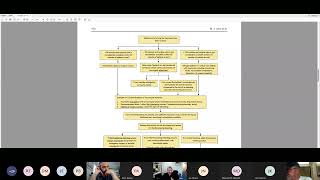
All right, so I'm not going to spend too much more time on the front matter on the intro for why we got here, but the thought was, let's convene a group of people who don't always agree, right? Because if we get a bunch of people around the table who always agree on everything, you're going to get the, yeah, yeah, yeah, sounds good. Looks good to me. Let me know how I can help. You know, all this stuff we all say to each other all day long when we're trying to keep the ball moving. But we wanted to get a group together of people who are sometimes contrarians or people who would sometimes maybe not see eye to eye in the same thing or have a different perspective. And what better group than those who are going to actually help us manage the sickest of these sick patients, which are our trauma surgery colleagues? And to say, hey, listen, we own these patients together. Our initial resuscitations are oftentimes done jointly, but sometimes we have differences of opinion about how we're going to go about doing stuff. So let's come up with a best practices approach to how to handle this. Suffice it to say, that was an iterative process. And we went through this thing about what could we agree on, what could we agree to disagree on? Not in a confrontational manner, in a collegial manner about how do we get this thing to a point where it's really going to be useful for the clinicians on the front lines. And, and, you know, whether you're staffing a critical access hospital or you're in a level one trauma center, someone comes rolling in with a tourniquet on what are you going to do? How are you going to do it? And then this awkward thing which in my mind weighs very heavily on me, just someone walks in the front door with a tourniquet on. Now I'm not talking about during a mass casualty situation. I'm talking about during, you know, situations of everyday trauma. Right. We, we're teaching our law enforcement to Jeremy Cannon and the guys up at pen. They would talk, they talk about the work they've done in Philly with the police. Rapid transport for trauma, right? Tourniquet on, throw them in the car and go to the hospital. And so that work is actually there's some interesting data about their outcomes for that showing that what we already know, which is time is our biggest enemy in trauma. So we have that cohort of folks of patient populations, we have those who are going to invest in and probably get themselves a subtle bleeding type trauma kit at home and, or in their workplace and they may show up at our front doors and our eds. And we want things to go smoothly when these things go on get, you know, when someone presents this way. And the last thing I want is someone to rip that tourniquet off without thinking through what we're going to do next and to not make this over complicated. You know, we all approach airway problem and we all probably teach airway in a similar manner, which is be prepared, be ready, don't be surprised. And if you're prepared and ready, you won't be surprised. You'll just navigate whatever you have to. I think that's that same metaphoric approach that, that we really use for this. What I'm going to do. And Peter, I don't know if you shared the link to the article, but I feel free to share it. It's open access now and all this stuff. And I really think it's probably best that we focus on the key diagram in the article and then we can go from there. Now.
My goal, our goal, when we created this, There were probably 20 iterations of this, of this drawing before we got to this version is to make this as simple as possible. Now anytime you have three parallel shoots here, that's kind of my way of trying to unpack a complicated situation. But we got to figure out which shoot this patient is in. And that's really the first step in all this. And determining how long that tourniquet has been in place is going to be the most key thing in my opinion.
I will say that it's determining how long the tourniquet has been in place is either super easy or super impossible. We're either going to know right away or we're not going to know. Right. We're going to know what? Yep, they put it on. They came right to the hospital, they put it on. When they called 911, we know, or the medics put it on, or whatever the case may have been, we know when it is, or we can't zero in on it. What's not really fully represented here, because it was outside of the scope of this article, is this notion of when someone comes in who's critically ill and injured, and we're resuscitating them in that trauma bay. You guys know how quickly time goes by. And so it's one thing that we look at from their tourniquet onset time, but we also have to think about their tourniquet duration time and their ischemic time once they're in our trauma bay, too. And I've seen this go really well and go really not well in my career, but the line in the sand that we kind of really used in this first delineation is 90 minutes, right? So if this person has had a tourniquet placed and it's less than 90 minutes. And by the way, these weren't just numbers that we dreamed up in our basement late at night, right? This comes from data. It comes from military lessons on the battlefield. Some of the work that Stacy, Stacy Shackelford and her team did and some of the committee on TC3 folks have done, and they look at bad outcomes related to tourniquet place. And there really aren't a whole lot when we talk about primary consequences from incorrect tourniquet use or from tourniquet use if you're under that 120 minutes. But again, we know that 90 minutes quickly becomes 120 once. Once that patient's in house. So we looked at the 90 minute mark and we said, okay, if 90 minutes. If we're at this 90 minute mark or less, for less than 90 minutes, do we have surgical backup in house or not? Or can we get surgical backup in house or not? Now, if you're in a trauma center, that's probably part of your automatic alerting process. But if you're not, you got to ask yourself the question, okay, the. The clock is ticking literally and figuratively here. What can I do within those first 30 minutes? And can I. If I have, if I have, if I have surgery in house, I should at least let them know I got someone down here with a tourniquet. Make your way down here so we can assess this together. I'm curious as to the experiences of others, but I while sometimes we get pushback from our surgical colleagues who are just super busy and super task saturated, I haven't really got much pushback when I call them, say, hey, I got someone just rolled in here with a tourniquet on that tends to appropriately such get a higher level of triage because we understand and we know the consequences of not having that tourniquet address quickly. So if they're in house and you can get surgery on board to collaboratively address this, I think that makes a lot of sense because if it goes great, they're going to turn around and walk out of the room. If it doesn't go great, they're going to have to deal with our next steps. But many places, many shops around the country and around the world don't have a surgeon in house.
Right.
And so that's what do you do when you're in that boat? And that's really, I think, the meat of the article. But before I jump down to that middle kind of shoot there that 90 minutes and surgical care is not available.
Let'S pause for a second and let's talk about this other unique cohort which may some of our colleagues, particularly in rural or critical access scenarios may have, which is when that tourniquet's been up more than 120 minutes and you do not have surgical capabilities in house. We would agree that we're going to have to do something pretty quickly here to minimize mortality morbidity from that tourniquet. So just that get that kind of that 120 minute or greater category addressed for a second. Now going back to the middle of the manuscript, middle of this document here. So if we are within 30 minutes of arrival and tourniquet's been on less than 90 minutes and we're still at that 120 minute mark, we probably should think about ways to get this person emergently transferred to a trauma center. Now to be clear though, am I articulating that every person with a tourniquet who rolls in who might not have signs of life threatening hemorrhage should go to a trauma center? I'm not sure I'm saying that. I don't want my words to get mixed. What we are saying is we are contextualizing this person as someone who had the appropriate use of a tourniquet applied in the appropriate clinical situation. The inappropriate stuff, that's a different lecture for a different day. But, but it's another piece of this complicated puzzle. I hope that makes sense. What I'M trying to say once we address this timing, I think the next big question here is, okay, so if they're within 90 minutes, we're going to and we can get surgery on board, that's great. If we can't, can we transfer them in a reasonable amount of time quickly? Great. If we can, if we can't now we're finding ourselves with like we have to deal with oftentimes in emergency medicine the situation of okay, well the easy stuff. If it was easy, we would have handled it already. Right? That's the world we live in. It ain't easy. So what are we, what are we going to do next year? And that's where the first thing in my mind, in our mind was to say, okay, let's, let's, let's take a look at those patients who despite everything else, we do not want to remove this tourniquet on, we want to leave it in place. Right. What are our absolute contraindications to tourniquet removal? Well, okay, the first thing is if there is no more distal tissue that we're worried about perfusing, so if they've been amputated or they have a phenomenally complicated, maybe, maybe almost completely amputated extremity, that's one. If we are actively resuscitating this person, if they're in decompensated shock or they're peri arrest or there's other life threatening priorities, that's another one. We should probably have asterisk that one to say that we do need to get back to that tourniquet as soon as possible. And then the last one, which is more of a resource issue during times of disaster, during times of critical surge, would be if we lack the ability. Now ability is the wrong word. If we lack the bandwidth and resources, sources to closely monitor this person for signs of re bleeding.
Right.
Because what's going to happen next is if there's no contraindications, we're going to take this tourniquet down and one of two things is going to happen. You guys know what those two things are. But we have to have the resources to closely monitor them for signs of re bleeding. And those are really your contraindications for tourniquet removal in the E.D. you know, I would say, you know, for early and prompt tourniquet removal. Removal. Now let's move down. Let's assume that there are no contraindications and we do have the ability to monitor this patient and that we're going to proceed very quickly and by the way, to Be clear, this first top of the diagram should take you about 42 and a half seconds to get through, right? So it shouldn't take you very long. After you do your primary survey, you're assessing for other signs of life threatening hemorrhage, getting the airway and breathing taken care of. All the stuff we, we do all day long, every day in our, in our trauma resuscitation. And now we find ourselves okay, we've addressed all the ABCs, we have no other massive hemorrhage. We have them as stable as we're going to get them. Now we're going to move towards removing this tourniquet. And what do we do? Well, first things first, and it's in the actual text of the manuscript. In the interest of time, I'll let you guys read it if you haven't read it. But, but as we look at probably preparing for tourniquet removal, actually we want to make sure that we have the necessary backup equipment there ready to go. So when we take that tourniquet down, we are again ready for what's next. And in my mind that's a couple things. Number one, it's an extra tourniquet because these things do fail, they do break. The windlass could break. You've probably seen, particularly if you're using one of the, one of the windlass tourniquets with Velcro on them to stay brand agnostic. I would say that the Velcro, if you've got lots of congealed blood, you can lose the friction coefficient on that Velcro. But things do happen so you want to have, for the non Velcro ones, you know, once stuff gets soaked with blood, you can lose, it can sometimes be harder to work with. So bottom line, have a backup tourniquet ready for me. I also want to have some type of pressure dressing, preferably hemostatic gauze ready that I could potentially pack into this wound and something I can use to fabricate a pressure dressing after, afterwards. You know, for our in, in the military and in the Thames and operational medicine community, a lot of the high speed pressure bandages have an elastic wrap on them. I will tell you every time I try to use an ace wrap for this in the department working clinically in house, it never goes well. The ace wraps are not meant to be pressure dressings. They stretch out, they get all this, they get all elastified and they don't, they don't really hold up very well to their pressure. So if you're going to use an ace wrap, just Assume you're using just a piece of, a piece of fabric and just pressure wrap it really tight so you have your equipment ready. Now we're going to take this tourniquet down. One of three things is going to happen, right? The first thing, and many of us have seen this is take it down. And, and sometimes we're surprised. We're like, oh, that doesn't look like it'll be like running. You take it down, you're like, oh, crap, it really is life threatening. Turn it back up. And, and now, and now we're going to collaborate very closely with our surgical colleagues on a strategic approach, approach towards their ongoing resuscitation. Right. Either that means transfer them to a trauma center or engage and collaborate with our trauma colleagues or our surgical colleagues there to help us solve their patient's problem.
On rare occasions, and we do see this happening, particularly with larger folks, men, muscular men who've got high thigh wounds, you may find yourself needing to get that second tourniquet on. That's the only time my experience has been more so that people really haven't pulled that, that ratchet, pulled the tourniquet tail down as tight as possible before actuating the windlass. And that's why they need to use a second tourniquet. But having that second tourniquet ready is important. And again, we'd apply it more proximally to the first one.
So that's kind of our immediate action drill. If we take that tourniquet down and we have a problem in this kind of middle ground group packaging here, middle group of the paper of the page, we talk about, okay, we don't have any life threatening bleeding. When we take this tourniquet down, we're going to potentially pack that wound with some type of hemostatic gauze and then, you know, wrap it with a pressure dressing.
Monitoring very closely for signs of ongoing life threatening hemorrhage, soaking through the wound, worsening of hemodynamic performance on the person and vital signs, and then get ready for what's next. Just a word to a word of caution here. Even if initial life threatening bleeding is not present, what's going to. And we, we convert this, by the way, the nomenclature is we, the military folks would say we're going to convert the tourniquet to a pressure dressing. That's what they're talking about. It's that middle, that middle box in the lower portion of the screen there. When we have non life threatening bleeding is present, we're going to take that tourniquet down. We're going to convert to pressure dressing. We're going to hold pressure and, and then of course, monitoring them for ongoing re bleeding, especially as we resuscitate them and their pressure comes up. Lastly, of course, if there is no active bleeding, then we're going to just manage just a per routine practice. At the end of this, it's really about serial reassessments, looking for re bleeding, making sure that we are not missing any other secondary injuries and doing what's best for this patient as a whole. So I know we're short on time. I'm going to pause there. Peter, I'll turn it back to you, Paul, and anyone else for any questions you guys may have. Awesome.
Matt, that was incredible. It's funny because I had a patient like this and before we could say boo, the guy had punched his hand through a window, pulled back and of course we ripped off this guy's tourniquet. Arterial bleeds are squirting everywhere. He goes pale. It was a disaster. So that's why when I read your article, I was like, oh my God, this is like great. So there are many people on this call who are in rural areas. So I would love to hear Paul's reaction if he's still on. ASA would love to hear your any comments from you as well. Thanks for coming on the call, by the way. Great to see you.
And you know, anybody else want to make any comments? I can tell you that we do an MCI drill every Monday night and this is the first question that comes up is which, which is how long can we leave the tourniquet on for? So this, you guys have thought about this.
Very deeply. So Paul, you want to make any comments on this before you got to go to the other side?
No, because I'm actually on the other call right now. But I do want to say that, hey, asa, if you get a chance, give me a call later this afternoon whenever you're free. Okay, so good. But it'll be after like one o' clock Eastern. No, but this is great because that's actually a great. Just glad you did this work, et cetera. And it really helps us out a lot. Thank you for putting that in context, Peter, because in Maryland, in the system, they do have areas where they have to eventually bring people in and so on and to the main center. So that's why this has really stuck out for them really well. But it applies to all of us. And it's just a fantastic thing to bring up because we tell everybody, put tourniquets on yet but we're. What do you take? Well, this is a great question, so thank you very much for doing the work, guys. Okay, awesome.
By the way, love, love your name today. Paul able to assist.
Gotta love that you got it this time. What was that last year? Last week I was Rocky Shores, I think. Something like that. Okay, good. Thanks a lot. I'll take care.
Bye. Bye.
Okay, we'll see you on the other side in a minute. Anybody else have any other thoughts or any other questions? I thought this was fantastic. It was a topic I was waiting to hear and appreciate you guys contributing to the evidence space as usual. You're more than welcome to stay on the line. We're gonna scoot over to Paul's call on the other side, so feel free to do that here. And you guys can come back any week, every Tuesday, same link. Another great guest. Hopefully we in the coming week. So thanks you guys for joining us, Matt and asap. And team.
Thanks, Peter. Thanks for having us. Thanks for having us.
More from Peter




Melissa Olen MSN, FPN-C, CCRN: Sudden Cardiac Arrest Training in Schools (Project ADAM) 4/25/25



Pediatric Hospital Readiness: How Teamwork & CPR Metrics Drive Better Outcomes



Chelsea Kadish, MD & Kyle Goodknight, EMT-P, RT: Pediatric CPAP in EMS (3/14/25)