Dr. Mark Liao: Insulin MCI at a High School (4/18/2023)
Dr. Mark Liao describes how Indianapolis EMS responded when high school students were accidentally injected with insulin instead of PPD. One student had severe hypoglycemia below 20 mg/dL. EMS adapted triage protocols using blood glucose and symptoms, declared a level-1 mass casualty incident, and consulted poison control, which recommended six hours of observation.
Chapters
All right.
There we go.
Thank you. All right, Angus, for that. All right, so welcome, Everybody. It's Tuesday, April 18, 3pm and we have another incredible guest today on our webinar. We're now, I think, at number 110 since the start of COVID And, you know, Mark and I were just talking about how he became the medical director in Indianapolis right around right before COVID started in 2019. So it seems like eons ago I actually saw and read Mark's paper and that's how I found him. And I just thought that we talk about MCIs all the time, but we don't really talk about medical MCIs. And so Mark Lau is a physician and medical director at Indianapolis ems, trained out on the west coast, and was kind enough to join us on the Florida EMS webinar. So, Mark, you have a bunch of medical directors and EMS leaders from around the state, and we have people joining from around the country. So if you want to make any further introduction and if you can get started, I really appreciate you coming on today.
I appreciate the introduction. Thank you so much for having me. I think the one thing, the one little disclaimer that I have here is that I really don't think that us as an agency did this better than anyone else. I think if this happened at any other major agency, you would have been able to handle it. This is certainly our approach to it, and I think we have definitely learned some lessons since then about needing to be flexible and not necessarily thinking about just trauma. But this was definitely a more unusual type of mass casualty event that we responded to. If you ever come to Indianapolis, just so you know a little bit about us, we are about 800,000 people, particularly during the daylight hours. And the EMS agency that I'm the medical director for responds to about 120,000 responses a year. With the fire department responding to both fire and medical, we are a tiered response with both fire and EMS simultaneously dispatch for our higher security calls. Things that we're pretty well known for is probably the Indy 500, which is just around the corner. And I can't believe it is coming, allegedly during our electronic dance music festival that happens during the Indy 500. Shaquille O' Neal is going to be one of the DJs, so I don't know what that really means, but we are bracing ourselves. We do have operational medical directors that are available for field response. We are fortunate enough to have two fellows currently and has been for the last couple of years to have two fellows with us. They do have Take home response vehicles, and they help augment our ability to respond out to the field for unusual situations. The background here is the pagoda at the Indy 500 at the Indianapolis Motor Speedway.
We do have a major page group that the medical directors are on in the event of a major incident. As it turns out, what also helps is that the OMDs are also. Two of the OMDs, including myself, are medical directors for the local PSAP. And so when we need to make adjustments to our response string, it certainly helps. Major pages are announced for things like a fire with entrapment, fire with injury, particularly if there's like a firefighter injury, active shooters, and mass casualties. The example on the right was an active shooter that we had two years ago at one of our FedEx distribution hubs. We do classify mass casualty incidents into three levels. The first level is when we anticipate 10 to 15 transports, which by far is our most common type of mci. Really most commonly it's like a bus accident, motor vehicle accident, and generally very, very low level trauma. Level two suggests that we have 16 to 25 transports in level three is greater than 25.
So I'm going to go a little bit about the incident, what this was about, and maybe if you want to play in your mind what you might have to do if you responded to this situation. But it was honestly like a standard day, standard workday here in Indianapolis. And the initial dispatch went out as a standard sick person code, what we call an alpha code or a code, which is the highest level code, which sent an initial ALS response that included both the fire department and ems. This was at a local high school, which is not uncommon for us to see during the day for medical guns. But more information kept being added into the mobile data terminal, which is what really piqued people's attention. So the PSAP ended up sending, hey, actually there's multiple sick people involved. And they started dispatching EMS units. And in the background, when we start hearing multiple ambulance being sent to one location, it really does sound odd on the radio. And so people start paying attention. The MBT was updated stating that the patients were actually injected with insulin. And one of our fire department EMS duty officers ended up attaching himself to the run, was somewhat fortunate that he has a military background. And so he's a flight medic with the Air National Guard. And so he actually routinely responds to mass casualties drills on mass casualties on a routine basis in his military career.
At the same time, two of the docs were on the radio and noticed the increased ambulance transports. To one destination. And so both started moving towards location. I will say that one of those people was me, along with one of our fellows and the EMS duty officer ended up arriving and interfacing with school staff.
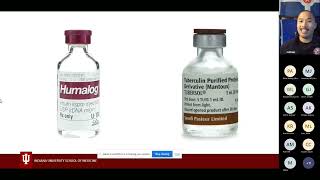
What it turned out that we discovered was that this was a, this, this, this high school was actually a career exploration program high school. The intent is that the students come with an interest in some specific field and the school caters to that. And this was the screening day for those who were going into the health career exploration. And so as part of the day they were being tested with intradermal PPDs for tuberculosis evaluation or screening when we actually had tuberculin. And ultimately what they had happened is that the PPD solution, the tuberculin solution, was kept in a.
Medication refrigerator that housed other medications. And we need to be very clear, this is not a pyxis, this is a standard refrigerator. And so this is what was supposed to be given and ultimately this is what was drawn up from the vial. So classically we Hear from the FDA and MedWatch about lookalike sound alike medications, but in this particular case it's a medication that both involved multi use vials, both are refrigerated, and as it turns out, maybe similar colors as well.
On the vials itself. The EMS duty officer at this point determined that more than one dozen students may have been part of this error. And so he ended up declaring a level one mass casualty incident. And as consequence established on scene command. This was the initial page that went out to the major page group which included the EMS duty officers, district lieutenants, which are like basically service transport officers. It pulls a bunch of people, but it also lets the docs know. So, so a quick one liner of what was happening for situational awareness.
So what exactly does a level one activation do? Does it really just send, send ambulances? Actually there's a couple of things that it does and I would say that this sequence of events is what helps us most in an mci. One is getting us off the standard radio channel and dedicating a operations channel for us to do.
Our needs on. And our radio bank automatically dedicates two channels. So let's say an example. If it's OP1, OP2 is automatically reserved so that you have two channels back to back that can be utilized as part of the response in case you need to make one like operations and the second one medical. The level one declaration also automatically dispatches four ambulances that could be ALS or bls. It just needs to be some sort of transport asset. Additional Fire assets like a battalion chief as well as a EMS supervisor which, which will be serving as a transport officer. We also are fortunate enough to have a disaster coalition called MESH in in Indianapolis. How the organization works is that the hospital systems throughout the city pay into this support. This one disaster coalition. And their responsibility during an MCI is to immediately start bed polling the different hospitals in the area so that within about 10, 15 minutes after the declaration, the transport officer will have a sense of how many red, yellows and greens each hospital can get. And that is, this is actually the polling is done fairly routinely, probably several times a month, just because of level one activations.
Quickly though, we discovered that our triage criteria didn't quite make sense for this type of patient situation. They were all folks that were exposed to something and really were designed and our protocol is still start triage. And so 32 cando really didn't apply to this situation. And really all of them at this point were still awake. And so the question is, how can you really differentiate folks if they're all technically walking wounded, are we going to wait for them to pass out before we start categorizing them as red, yellow and greens?
And you know, when we talk about life saving interventions in start triage or salt triage, in this particular case, it wasn't going to be the tourniquets and the decompression that we are, as we are typically used to. Really it was just two things, which is glucometers and a glucose source. Those are the LSIs that needed to be prioritized and focused on. So the school at this point started recognized that there was a medication error that was done by their staff. They began obtaining snacks from the cafeteria. They started notifying parents. But at this time we also recognized that there was going to be a strong need to figure out what we were going to do with these students. The EMS duty officer established a casualty collection point near the administration area of the school so that he could look at and see all the individuals in one location. He began a patient tracking sheet and sourced glucometers as more EMS and fire assets arrived. So all of our fire EMS assets, they do have glucometers. Our EMTs are permitted to use glucometers here in the state of Indiana. At this point, the school determined that three students had already left following their test and we did not know what their situation was. The recommendation was made to send police to their homes to do welfare checks and then to advise them for further medical attention at that Point.
At this point, Dr. Fulks, which was the other EMS fellow, and myself arrived and our initial impression quickly was that we had close to more than a dozen individuals. They were older teens. So fortunately, they were basically adults. They were looking older. They didn't look like they had any major medical issues from a comorbid factors. We looked at the glucose values that were being reported and we were like, yeah, there really is some cases of hypoglycemia here. They really were exposed to insulin like they thought they were. We did notice several students that were significantly emotionally distressed or upset. And it was really hard to tell if they were just scared or if it was actually hypoglycemia that was inducing some of the mood changes that we would associate with low blood sugar. At this point, after a little bit of a quick investigation, given that you Normally use about 0.1 mls of PPD for the intradermal injection for tuberculin screening, we determined at this point that no student would have received more than 10 units of Lispro insulin based on what you would have gotten on TB test. And really the first questions that was going through our mind that the school was thinking, that the EBOs were thinking, the fire chief was thinking is, do we need to go, do we need to send all of these students to the hospital? I think that at that point that's a big decision to make. When you have 16 students that technically some of them are pediatric patients, do we send them to the pediatric receiving facility?
Where best would they go to? And so this is the question that I asked you. If you're the doc that shows up, do you know offhand immediately, like, hey, what is the duration of action for insulin lispro? Can you tell us how long the patient should be observed for? That's the questions that are running through our mind here. And does the intradermal route change anything in terms of whether or not we need to watch them shorter or longer? Presumably, I think I would have thought shorter, but I'll be honest, I wasn't 100% sure.
And at that point we realized that, hey, we probably need some experts here. And what we ended up doing was we have a very close relationship with our poison center. And so we consulted them and got an immediate call back from one of the on call toxicologists. And their recommendation was 6 hour OBS, intermittent blood glucose checks. And they actually said that, hey, if you wanted to put them in a cafeteria or something and watch them for six hours, that's not an unreasonable plan. So it gave us the flexibility of having choices here. Ultimately, though, the time of day is what impacted our decision. This happened around noon and a six hour period would have meant that students would have been excused, that we would have had to hold on to people. Parents may have been extremely concerned about maintaining people at the school instead of just going to the hospital. So.
Balancing the clinical aspect and what do as well as the reality sort of came together and we made the decision.
At that point. This is the lowest glucose values that we had documented in terms of the 16 individuals that were there, three of which had left prior to EMS survival, but one actually did experience significant hypoglycemia based on a glucometer. It just read low, which per the manufacturer's instructions, suggested that the blood sugar is less than 20 milligrams per deciliter.
@ this point. Given that we had a number of ambulances and we wanted to figure out who goes first, we did need to establish some sort of triage criteria. I think most folks would be able to figure this out intuitively in terms of what they wanted to do, but we needed to come up with a sense of what we wanted to do. Again, salt triage does not help you here. Salt triage does not help you here. And so what we really did was to lend a page from military medicine. And if you take a look at CBRN management, NBC management through the military, we really have to look at how triage is done with toxidromes. And so in this book, which is available on the army website, they have a specific chapter on triage of chemical casualties. And it really is based on symptoms in terms of determining if patients are immediate, delayed or minimal in terms of your evacuation precedents. And we basically took a page out of that and cobbled together what our criteria would be, would be, hey, if you are below 70 and you have some signs and symptoms of hypoglycemia, we're going to categorize you as red. If you're yellow, you, you had signs and symptoms where your blood Sugar was above 70 and then the minimal folks were folks that were above 70 and didn't have any signs or symptoms. So sort of created on the fly, but inconsistent with a toxidrome based triage criteria.
At this point. We did recommend to the incident commander that, hey, you know what? Given the time of day, given that we have had patients that are significantly hyperglycemic, we recommend transport for all patients. And we did get a bed count from our disaster coalition on who could accept what. The interesting thing about this was that the school, that nurse that was administering the injections was part of a health system that sponsored the school's school nurse program. And they recognized that there was a degree of responsibility that they had to take on their end. So they ended up accepting all of the patients. They said, hey, you know what? We will take as many patients as we need to take within our health system, which actually helps simplify our destination significantly.
Ultimately, we had three folks fall under the immediate category, four folks that were in the delayed yellow category, and then six in the green minimal category. We were able to take some use the ambulances to carry multiple patients.
To the hospital instead of doing one person on one ambulance. So moving into a true MCI activation model.
One of the interesting things is doing all of this. Carbohydrates were obtained pretty rapidly from the cafeteria snacks. They were basically throwing snacks at these kids in the casualty collection point. And my one caution to you all is if you ever see this happen, do make sure whether or not the product products contain nuts or peanuts, you know, legumes and stuff like that. Because it turns out one of the students was allergic to nuts and they did not consume anything that contained peanuts or anything like that. So we were pretty lucky on that. But it was sort of an interesting thing that could have resulted if we had not been more careful. The transports were otherwise uneventful. We did not use triage tags in this situation. And looking back, I'm not really certain that triage tags would have likely benefited this situation. I have to say that one of the things that has surprised me over the last 10 years of being at EMS are just how expensive these tags are for something that we very rarely use and have not been particularly helpful for most of the mass casualty situations that we have been involved with.
Sort of like, you know, wrapping this overview up, I think, you know, what was helpful first off is, and I think first and foremost with any mci, it is communications. And the fact that you get a dedicated communications channel is incredibly helpful. In fact, before all of this for an active shooter protocol, we actually did not have a dedicated radio channel established as part of protocol. But we decided that given that it's so important, yes, if we have an active shooter, we're going to make a dedicated OP channel. Make it very clear, because we know that communications is so important in this type of situation, it was really helpful that we had a very clear incident command structure. And I will say that the one thing that I thought was always interesting is for the OMDs, the docs here is that we understand that showing up is really not to try to take command but to provide technical expertise.
And help in that sense. I always liked the idea of being in FEMA search and rescue. And we're like, we're from the government and we're here to help. And I know my role in this particular situation is I'm not going to try to take command. I'm really just there to try to help take care of patients, provide technical expertise to the incident commander. The casualty collection point was incredibly helpful too. And I think pre planning with your schools or your large areas of where you would gather large patients and is incredibly helpful. And it's probably more helpful than again, trying to create triage tags and stuff simply because if you have a great casualty collection point, if you just stand in one spot and just spin around 360, you can see all your patients in one go and rapidly evaluate them. And that would be one of the most helpful things I think, in this MCI is that at a glance we could just see how many patients we have left, how many, how they were looking, and we didn't have to just keep going to different rooms. And then that bed polling that's done automatically without it having to be asked is really critical in reducing the time frame in terms of being able to figure out where we can send folks.
The Poison center is probably a very underutilized resource in these events. And I would, you know, if you do not drill a practice with the poison Center, I would your state's Poison Center, I would suggest that you might consider utilizing them. We actually have discovered that the Poison center could be an extremely useful resource if there was a CBRN event and you need to have a phone bank for the worried. Well, the poison center usually has a capacity to flex up so that they can give guidance to individuals that may just be worried. Well, you know, advise people, hey, go take a shower, monitor for these symptoms instead of having to go to the hospital. I mean, we really want to avoid another Tokyo sarin event where like literally thousands of people showed up to the, to the hospitals that were not even involved just because they were worried.
Some unexpected questions that I think was interesting that came up subsequent to this and also after the publication to pec. One is people asked us, hey, do you guys, as the EMS agency, do you have any responsibility to investigate this medication error? Do you have to notify the police or anything like that? And we like really racked our brains here. And as far as we could tell, this was an internal issue to the school EMS did Not have a responsibility to report a medical error. We do not have the responsibility of determining medical negligence or anything like that. And so we ended up deferring this to the school system themselves on what they wanted to do. But it was an interesting question that was posed. And then the second thing I would say is, if any of you guys end up publishing in a journal about some sort of medication or drug, be prepared for the manufacturer to, like, slightly panic and reach out to you to make sure that their drug didn't cause a bad outcome. I think our article was fairly clear that this was an unintentional administration. They had nothing to do with the quality of the drug or the drug itself. But the manufacturer of the insulin, like, reached out to us, like, wanting us to give us. Give them all the demographics of the students, their comorbid factors, their outcomes. And then not only that, there was like, one manufacturer, then the other manufacturer of the drug that wasn't given also reached out to us, wanting to get more information, sort of like unexpectedly, that this is what happens. There's actual divisions within these drug companies that actively do surveillance of the literature to see if any of their drugs are showing up as case reports. So I thought that was. That was an interesting lesson learned for us.
I think at the end of the day, looking at your triage criteria and figuring out how you can adapt things, it's going to be helpful. And also figuring out how you could leverage response stocks, if that's what's available in your system. This just happened in April of this. Really, just this month. It was an irritant, what we called an irritant smoke event of 22 students and staff at a local high school. Initially, it came out as a hazard response. They wanted to know if we needed to send every single person to the hospital. And when we looked at the toxicromes, we were like, this doesn't match anything that I would be concerned about. There's no evidence here of a chlorine exposure. There was negative readings on gas meters. Subsequently, after a couple of days, and they had done some disciplinary stuff with people, they actually discovered it was pepper spray. And so no one really needed to go. And having the docs there just to clear people was really the more helpful thing. And again, docs are providing technical expertise, not trying to take command.
The other thing I would say is if your school systems do not have a great procedure on school reunification.
I had the good fortune of listening to a speaker from this organization called the I love you guys foundation, which really came after Sandy Hook And I would encourage you to show them this reunification system. It's free, it's on their website and it's a very logical protocol for school administrators to utilize. And it just, it makes sense to have this in the, in the back pocket of any school. And I think as folks that are at the forefront of mass casualties, being able to provide schools good resources is important.
I'm going to go a little bit off topic to wrap this up completely. I wanted to choose three things that I think from a medical director's disaster preparedness mindset that people may not know about, that I think we probably need to talk a little bit more about is really, you know, these three things. One is, let's say there is an organophosphate or nerve agent mass casualty and we run out of duodotine. This document is published on the health HHS website and it's sort of tucked away in a sort of obscure link. But it's fascinating and I think people, hospitals need to think about this. If we do have a, a nerve agent attack is what could we use instead of code atropine or your duodotes. And the paper suggests that you could use ophthalmic atropine, the drop bottles that the ophthalmologists use and use it sublingually as well as some of the other agents like cyclopentylate and glycopyrulate and then also using bronchodilators to this was really out of the box thinking and I was just have been really surprised that this document hasn't gained more interest out in the community simply because given world situation and military interests and the drug shortages, what would we need to utilize? I think this is a fascinating thing. That little QR code in the corner there is in case you want to link it later, that links you to the document from the HHS site. The second thing is probably the emerging role of so called dry decontamination. This is the Aspire PRISM document that has come out through Barda and.
It'S so new that really even the EMS textbooks have not kept up to date with this. But basically it asks the question, do we really need to get everybody wet and do wet decontamination every single time we have some sort of hazmat event. And when you're in the Midwest like myself where it gets very cold in the winter, having to avoid water decontamination when possible would be a huge benefit. And just to give you like a highlight of this, let's say that you have an incident you're Going to of course evacuate folks, disrobe them, but then use something as simple as abdominal pads or blue absorbent paper to do initial dry decontamination if the contaminant is not overly caustic, and then determining using a computer formula of whether or not for the decontamination is needed. You might actually be able to defer some folks from even needing for the decontamination. And a classic example is someone who gets exposed to like gaseous ammonia once there's a certain time and they've completely off gassed the website that you use to help evaluate that. If you know what the agent is and they show up 60 minutes later, they probably do not need wet decontamination. That's going to save you time in terms of hypothermia concerns and reluctance to take off clothes and do stuff like.
That. Mark, let me just interrupt because I know Dr. Pepe is on the call. He's going to be moving over to his webinar in a minute, but I know he wants to say a couple of words and say hello. So Dr. Pepe, are you there real quick before let Mark.
Finish. Yeah, I'm, I'm here but I'm on the other call now. This is went way over, so there's not much to say. But I'll. If you don't mind, I'll talk to you. Peter, give him my contact information. I'll be in Indianapolis next week and so I'll see you then if you have some time for me. Okay. So we look forward to FDIC and gems. Thank.
You. Bye.
Paul, as our resident mass gathering expert. Okay, awesome. So yeah, so sorry about that, Mark. Go ahead, finish.
Up. That'd be great. This is really my last slide. I think there's some exciting data to suggest that the military is looking right now about dry decontamination using HEPA filters, particularly with radiation event with external radiation contamination. This is was done in Alaska. You can imagine they do not want to do wet decontamination. Possible. Could we use HEPA filter filters. HEPA vacuum filters to. To vacuum off radionuclides from your skin so that you don't have to worry about getting everyone wet in cold environments. You know, that's all really that what I have. You know, if you come to Indianapolis, please let me know. We have a disturbing number of Canada geese here, which I do not think you have in Florida. So. So you know, we would love to see you though, particularly if you're coming to FDIC or.
Gems. Wow, Mark, that was an Incredible presentation. I'm sure that everyone on the call And I see Dr. Landry has his hand raised, but everyone on the call is just thinking that maybe we aren't really even prepared for everything here. I'm thinking back to the East Palestine incident in Ohio with the toxic fumes, I think to a chlorine chemical spill that happened at like a, you know, one of those water theme parks. You have the insulin one, you talked about the other types of episodes that you just talked about here at the end. So.
I don't think a lot of us really practice these types of incidents. So just a really well done overview and summary. So thank you for that Dr. Kim Landry from the panhandle of Florida. Kim, go.
Ahead.
Yeah, great Mark, excellent presentation. Hey, just curious though, did the parents have any say in this? In other words, did any of them say, nah, I'll just take my kid home and watch him. His sugar was fine and.
We know what to do to watch for symptoms. Any input from the.
Parents? Yes, parents who reached out and I would say by far, given that something was injected into their kids, most of them did want transport as it turns.
Out. Interesting. You know it's interesting as a father of a type 1 diabetic, my 14 year old's been diabetic for three years now and we know how sensitive.
He can be and how he can dip. And you always have that panic and fear. It's not surprising that families whose kids were not diabetic who have no idea, I can only imagine how nervous or worried they would be when a their kid got injected with some foreign substance and then turns out to be insulin.
But you know, just looking at the data in your paper, seeing that. Interesting. Only one of those patients at a low, true low had you fed all the other ones that you just give everyone food and say hey, we're just going to.
Eat. Yeah, I mean there was a holding, there was a holding period to, for transport and so yes, everyone was encouraged to eat. I can tell you that when kids are under stress and trying to like really push them to eat, some of them are, that does not make them any.
Happier.
Awesome. Well, let me see. Anyone else? I know we have a lot of great people on this call. Any, anyone in the crowd have a question for Dr. Lau? I know he just gave such a great overview. I'm looking to see if anyone hands, raises.
I can guarantee you Dr. Lau, that many of us on our next tabletops or our next kind of MCI training, we probably ought to throw in one of these Right. And just to evaluate how well we do and evaluate our triage process, which is obviously very different, as you mentioned. So wonderful presentation. Before we go over to Dr. Pepe's talk, I'll give you the last word. What are some of the, you know, what's the last word from you as what we can do to help improve our.
System? You know, I appreciate, again being invited. You know, the one thought that we have, I think, in terms of triage is that maybe moving away from salt or start triage to clinician Gestalt may be one of the strategies of the future. And, you know, I think what we have learned in the past about triage tags and stuff probably needs to be looked at, as many of you guys already know.
So. Yeah. And in the past, we've had people talk about ramp, and we just moved into that in Palm beach county and other people are doing it across the country. So this is just another reason to consider doing that. So again, Dr. Lau, thank you so much. And I know some of us will be there in Indianapolis next week. So see you.
Then. See you.
Then. Okay. All right. And everyone hang on for. I'll get on. I'll get us on to the next Dr. Pepe show. So I'll do the restreaming today and you guys will let me know if you see the stuff here in a second. Let me just organize my desktop here.
Enjoy the.
Meeting.
Recording in progress the three days of the main.
Conference. And Josh, it's Corey. When is Meet the Eagles going to.
Be? Oh.
Great. Corey, hold.
On. I will tell you right.
Now. Hold on one.
Second. You guys can continue talking and I will interject Cory, or I'll message.
You. And Josh, by any chance, do you go to that FDIC meeting that I've been asked to go talk at next.
Year? I'm going this.
Year.
Yes. I'm going for one day this year to see what's going on. I went last year and I'm going to.
More from Peter




Melissa Olen MSN, FPN-C, CCRN: Sudden Cardiac Arrest Training in Schools (Project ADAM) 4/25/25



Pediatric Hospital Readiness: How Teamwork & CPR Metrics Drive Better Outcomes



Chelsea Kadish, MD & Kyle Goodknight, EMT-P, RT: Pediatric CPAP in EMS (3/14/25)