Dr. Michael Berkenbush: Prehospital Airway Publication (6/20/2023)
Transcript of a Florida EMS webinar (June 20, 2023) featuring Dr. Michael Berkenbush (Atlantic Health System) presenting on their high-performance prehospital airway management program and associated publication. The talk covers the program history (move to video laryngoscopy starting 2010), training/education, equipment choices (GlideScope, SALAD suction technique, i-gel backup), proficiency efforts, and outcomes from their 2020–2021 review showing high first-pass and overall success rates. The presentation includes discussion and Q&A with other physicians about implementation trade-offs (intubation vs supraglottic airway) and system-level considerations.
Chapters
Still no, no, yeah, totally get it. Totally get it. Okay, the recording has started. Welcome everybody. It is Tuesday, June 20th and we are here for another Florida EMS webinar which is part of the Florida chapter of the nansp. And today we have an amazing guest who is very kind to quickly respond on Twitter that he'll come on and talk about the paper that he just recently published with his team. So Dr. Mike Birkenbush is from New Jersey with the Atlantic Health System. He's one of the associate medical directors there which is a hospital based EMS system. And he'll kind of describe to us Florida folk what that means, what that looks like. Great paper which I'm really looking forward to the discussion on this. So let me pass it over to you. Dr. Birkenbush, thank you so much for joining us and take it away.
Great. Thank you so much. Dr. Antebe. Appreciate the opportunity again. So basically to talk about our airway management program. And really this has been a kind of a process over years even spanning before my Atlantic Health, which I'll kind of talk about kind of the history of how we got to where we are then the genesis so forth, I guess the brief version of who I am. I started out as a paramedic which I still work, still practice the field as a medic once a month, just keeping my street credit there, working 2ers, academic and community setting and associate medical director with health and then also help out with the EMS Fellowship program and then my side gig, I work as a flight doc out in UW in Wisconsin. So that's my background.
So paper we published in General reports is entitled High Performance Prehospital Airway Management and basically talk about some of the general components of our.
Airway management, I guess program that we have at our, at our ambulance company that's we think has really overall kind of improved our airways management success over time. And we'll show a little bit of the history. The main focus of the study is kind of looking back at the last two years, 2010 to 2021. But there's a lot that came before going to get us that point and I'll kind of go through that a little bit. But I think kind of our highest level success just shown those two years is we're aiming to especially kind of this comes with interesting timing. I mean with nasp, the recent airway position statements and I think some of these components probably will look familiar as anyone who's kind of reviewed those positions. Most of the, a lot of I think some of the things we're doing kind of fairly congruent which what you may find in those position statements. Again we're focusing on 2021. Some of the background on this just kind of give you a little history really kind of our initial Genesis Research. Unfortunately Dr. Alredder mentioned there his omnications. Otherwise I was going to hope I'm going to try to come on here. But he was really. He's been the medical director. We moved to video laryngoscopy in 2010 which I think were one of the earlier doing it at the time anyway. But he kind of a form of analysis trying to determine what can we do to improve airway management success. At that time they were probably just kind of in the.
Realm of airway management using direct laryngoscopy and has really been a focus since he started being mouse director just prior to 2010 I believe. And he decided at that point hyper angulated video laryngoscopy was going to be his technical choice. And he kind of evaluated all the current devices at that time and that's kind of where we ended up going. Felt it was less traumatic in the airway and airway vesselation success rates. So end up starting with class and kind of the results of this study is all the combination of his efforts over time along with our clinical team really focusing on one of their big focus over really the last 13 years. Ever since they started out with using video laryngoscopy and some of the other components that along the way which we'll talk about kind of our education around has changed over time. Obviously using salad as you'll see and then a little bit on skills proficiency as well making sure we're kind of getting aggregate exposure to the skill and maintaining that. So really in the end this is more. I feel like it's more like a quality improvement kind of discussion of kind of steps we took over time to get where we are.
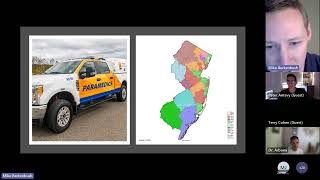
This is just really brief about but I mean like all AMs is unique as one might say. So we're at Atlantic Health. We're kind of the Orange. Let's see if I'm going to Orange here and then this kind of usual Orange district spanning a couple counties up north is kind of primary area recently.
Center states we cover an area kind of in the central part of the state as well.
It's idea like so you can probably see pieces of different counties. It's kind of a disjointed system based on certificate of need that the hospitals were granted. I believe like 3040 years ago that just kind of ingrained. So each hospital has an area that they cover. So this is all hospital based section of the state, kind of throughout different counties around. Generally it sounds your made possible. Flagship hops will be in Marstown. So we cover kind of the area around there, some of the outlying ones as well. MIT Health has like six hospitals now. It's a dual paramedic system. We're all kind of in fly car system. So BLS is, it's really completely two tiered BLS almost all separate. Now we do have our own BLS division where we're covering a lot of towns during the day and some 247 but very much at least for this map. This is kind of the ALS map. We're basically 100% coverage ALS throughout the state with all the different programs. It's kind of where we fall in there.
Mike, just as a quick question, just a reference for us.
Sure.
You guys are in a fly car, you have a BLS response that's not connected to your system and then they get there and they're depending on if it's a Delta Echo. Let's say are you automatically dispatched out as well at the same time and then what is your typical drive time to get to the scene in your.
Yeah, yeah, that's a great question. So yes, it's almost all the county towns were auto dispatched and we have kind of state guy cars most people use like as you mentioned kind of the Charlie Delta Pro QA system. So yeah, all auto dispatch we have actually have our own center just focused on our medics. So they all the calls will go directly to our dispatch center that we dispatch out from ours.
And then the drive times they've. I mean in certain.
From 10 minutes to a half hour is probably the range, probably max, we're going half hour, 40 minutes at the max. But yeah.
How many total paramedics does the Atlantic.
Health employee believe we're at? 170.
Paramedic level practitioners. That includes like medics and SCTU nurses.
Our critical care nurses are the way New Jersey works. Don't really have doing ALS transports. We have critical care nurses who do transports but they all occasionally work in the field impaired with our paramedics.
Okay, got it. Thank you.
Yeah, so I think rough. So we have like 10, well now I think 12 paramedic if you will kind of covering this area. 14,000 ALS contacts per year roughly. So patients that we contact. There's a lot of cancels with our BLS tiered system. There's a lot cancel 14,000 patients that we see and I think the municipalities is over 100 and we cover over a million population. With all these zip codes it was a little hard to get that exact number.
So this is kind of just a little bit of the background. RSI was introduced in New Jersey in 2007. Like I mentioned briefly before we started doing video laryngoscopy in 2010 using LightScope Ranger device and then kind of throughout kind of focused on our efforts to figure out where our first pass failures were and things we could either improve. So 2018 started using Ducan suction catheters focusing on the saddle technique and that with the use of a kind of home built mannequin to practice on and gain proficiency with. And then with the update from the glidescope we changed the glidescope go. I guess I should add one of the initial policy changes and you can imagine some of this is not easy to do especially back in 2010 that was I think right before I became a medic. Everyone some very direct. There was a lot of resistance and hesitation to the initial change and it was made a policy that video laryngoscopy would be the exclusive device in our system which Dr. Ritterfrew is here would say getting buy in from staff was a huge component of this kind of early on to kind of get people on board with what we're doing and showing that we're really going to make things better over time. And now the fruits of all that are shown years later over time. But you can imagine this was not a politically.
Time was a rough issue.
So just and this is again going back some back. So I've looked at this data now I've been kind of analyzing for several for multiple years backwards to when I was a resident as well and started as a paramedic with them. So just interesting. This is just kind of interesting side note just to see what happened when we first introduced video things did not go as well as one might hope right off the bat. So this is just comparing direct versus video. There's still people even though we said like how to use video. There are people who are just like I've always done this way. I'm good at doing this way actually we're good at doing this way. The numbers show that.
And so we were able to compare a little bit to the people who really kind of and interestingly the video after we introduced video loudspeakers 2010 looking at 10, 11, 2012 our rates really did not get any better. I mean we're still looking right. 75% rates video. Right. Starting off. And that's really where we were before. So this is where we kind of refocused our education again. Dr. Ritter was there, kind of really had some meetings with the staff. This is. But really getting better doing this and really focusing education. This technique is any. I think there's some. I may mention in the paper there is some data I think even for anesthesia changing when someone's kind of muscle memory and motor skill is set on doing direct fluidoscopy video to them. There is a learning curve there and it's just different. Especially hyper angulate of course in this case. So we kind of really. There's a lot of focus on more the getting I guess too into the weeds but more looking at just basic things like so not only kind of separating the airway out into different parts. Right. Visualization of the clotic opening separating out passage of the tube. So not going too deep with the endoscopes that you're impeding your own efforts. Different things like that. We talked and then later on of course we'll talk more about and other issues that we came across. So just kind of interesting. Back in time things really took time to get better. And this is the graph that goes over that. So again RSI in 2007, you know, last week in 2010s kind of really seemed almost stagnant for a few years there. As we increased our education they were focusing on what were the issues. So some of the issues were contaminated areas running all over the place. Something would get on your screen, you couldn't see, you backed but you end up switching or going to back to direct or something like that. That was one. So home on south and New Canto I think want to address that talk again briefly. Sometimes we have equipment issues so we end up actually now. So each unit has two paramedics, we have two airwave complete identical set of airway bags. So we actually have a backup glide scope for every single call. So if you have an airways issue, you have a glide scope. We have some sort of issue initially but had no other recourse but to go back to the old direct.
So just kind of give a rough idea. Focusing now. Last two year, two years of data I had 2020 to 2021 did roughly almost a thousand intubations over two years. Large majority of that in cardiac arrest. 68%, 30% in RSI, 30% RSI. Then pretty much any patient not cardiac arrest. We really were preferring that RSI be used and that of course with optimization if there was hemodynamic instability. Kind of one other more recent thing that we're really trying to focus on using dosepi liyafedc since we're using that fairly commonly focused on a shock index using half dose of ketamine for one per kilo if they had the patients have an elevated shock index to try to hypotension arrest wise. I know obviously everyone's probably aware of the pragmatic trial given our success weren't sure that that data was general generalizable to us. So we have continued using intubation in cardiac arrest. Some controversy and unfortunately we aren't part of CARES yet. Hopefully New Jersey is on board with that and working on details. I don't. I can't really compare our cardiac arrest data which would be interesting to know if down the line they're actually changes along that. But unfortunately I don't have that info as of yet. And generally for RSI so you can see some opposite here. And then generally we're using Kenamine 6 and being our primary agents.
This is just kind of a table showing really graph by year. So just getting a sense of what we're using. So generally now at this point again this has taken change over time. Almost almost 100% use of the video laryngoscopes for intubation. Just a couple rare episodes of direct laryngoscopy.
And igel pretty rare since given our high success rates favor doing intubation again during cardiographs. Some of these may.
Specific airway conditions. I don't remember all the details on each one but generally so our first assess rate is going to look at the overall here 93% for first pass assess with a total intubation success of 98% and if you include success including you putting in an airway there's kind of only a few cases that fall out that patients that didn't get advanced airways and there's like five cases of those. Either an air crew arrived and took over or the patient arrived ER going into the ER Generally the outcome there gel use was our backup. There's a. You can kind of see there or so even though we say failed the I'm not sure that it really classifies a fairly airway so I would still say advanced airway airway management success for those patients and then just breaking the RSI patients which congruent with the rest of the data there.
So going into.
Again a little bit more of the details how we got there. We kind of said the five Components education using RSI video laryngoscopy skills proficiency. So initial education obviously it took a greater form when everything was initially rolled out. But even for so any paramedic entering the system there's about it. We spent about eight hours on airway measurement for the didactic for hands on using solid technique using salad airway mannequin. Any new paramedic or mobile intensive care nurse. That's starting prior to 10 iterations. Prior includes IGL placements. We review a lot of the kind of common errors with video environment. Kind of what we talked about before colotic visualization attaching to the tube using the rigid stylet kind of getting the down the hall view, not getting too close maintain the view until the stylite is out obviously. Then of course confirmation techniques. We do an annual psychomotor composite SIM session for automatics as well. So kind of first in one sense doing just the skill itself and that is doing pediatric and then putting everything together in a sim scenario. And most of the time we end up doing scenario.
Basis. And then like I said 2011 we did a much more extensive training when this was all first getting educated.
We use R4RSI. We use an app that one of our supervisors basically designed off of Microsoft PowerApps. So kind of going through preparation techniques. And again we mentioned before using our dosing you input the vitals do shock index dosing as needed for.
Put in the selects. The PA kind of goes through some of the things to assess for difficult error reversible causes. In our system we call medical command for these optimizing the patient which I think is also going to be key because that goes into our success. Right. Using non rebreather nasal cannula targeting SVO2 is higher than 90% prior to starting optimizing hemodynamics whether it be push S B or start LeoFit Infusion 2 and then positioning and then kind of doing a timeout before we go and have both medics before we start.
And just generally we feel like there's less breakthrough awareness traverse and anything appropriately afterwards.
For solid airway manikin. Like we said before, most of the most common reasons for first pass failure were air risk aversion, blood and oropharynx. So we're doing the salad technique Dukensos in 2018 and this is kind of our airway mannequin that we have. It's kind of a blue windshield wipe on the wiper fluid solution here that kind of goes always teaching suction first for all patients and left park technique as Needed to help prevent issues with airway contamination. I think having the airway mannequin was really a great way to improve confidence and confidence using the suction first thing the left part maneuver which has definitely helped.
So like we said generally we introduced laryngoscopy 10 years from the start of the study. Initially there's a little change but equipment failure was one initial issue when we first started. So having the second one.
Of that issues we always have a backup, always the batteries are charged, always have an extra set if needed. The only issue I think currently every once in a while we have a slight horror connection issue which holding the glidescope can prevent. So that's one thing that we're working on addressing. But otherwise currently the glidescope though I think that the evidences of that are really minimal.
Skills proficiency. I think some of this goes to our cover this two tiered dual system. I feel like we got a generally fairly high exposure rate to critical care skills for our paramedics.
For full time medics just defined it as an average year the annual attempt rates for 5.8 interventions attempted per year. I guess just because there is a. It's a dual medic system that if they're 5.8 themselves are involved in 11, roughly 11 or 12 here with their partner. And for part time medics the rates are obviously quite a bit lower. This doesn't for second jobs of course which most fortunately most have. So that their actual rates are annual rates are actually a little bit higher. But these success rates did not really change between our part timers or full time medics for first class success were pretty close.
Per attempt success was fairly similar and included in the part time realm the SCTU nurses who work as mobile intensive care nurses with our paramedics. So they have plastics here so I consider them the part time category but you can see the rates are still fairly similar.
Last discussion points. Now we're getting close time here. So again we continue to use intubation and cardiac arrest as we felt that the data there generalizable to our system. I mean I think the airway intubation success rates were somewhere near the 50% realm for the paramedic trial COVID 19 was included during this our range of dates starting in 2020 and we actually felt initially rates improved during COVID as people were kind of slowing down time with airway doing airway management. Number of attempts Just one question people may have. We're currently capped three attempts between our two providers. That's kind of what we've set as our Maximum so not going more than that. This is based on retrospective chart review. We don't unfortunately as of yet have the recordings of the intubations vehicle iscopes to review and assess. I mean that's something we're definitely hoping to get to we said we use as backup. So kind of in summary, overall success rates of 98% with a small percentage of the intubations properly managed with supraglottic. So bring our overall airway management near 100%. So hopefully some of the things we've learned over time can help. Minimize the risk is an important skill improve patient outcomes over time. I think that's pretty much all I have. I guess the sidebar note is that we do doesn't really focus too much, but we use our ventilators for all intubated patients as well. Hopefully more on that. Thank you very much.
Awesome. I know Marv is about to come in here, but I want to just.
Make a couple of comments.
I'm looking at the graph. That slide that you sent, I think it was slide number seven, if you can track back to that one Mike, real quick because I'm curious that in the years 14, you know, 12, 13, 14, 15, 16, you were flat and then suddenly in 17 and then 18 from 17 on you started making the jump. What do you think it was? Because you hadn't had the glidescope go yet, you didn't have the salad yet.
True.
So what do you think it was? Was it just. And then there was a point you said where you didn't permit direct. Can you kind of help us figure out like what was that differentiator right there that made the difference?
Yeah, that's a great question. Unfortunately I wish we were here to know exactly the timing because actually the policy where we really weren't permitting it was really started right off the bat, I think 2011. So even having the policy really change anything. One thing I did find, and there's evidence to show this in one of the studies we cite that the time or the use of the success shown with velocity really improves over time as people are more comfortable. So I don't know if that's a factor of time people being comfortable with the skill over time because I'm not sure that there was any direct prevention in that year that made the difference. I'm not sure if the culmination of efforts at this time after six years of doing it any medics were more fast, more older experienced measures who initially were now been bought over and comfortable with the skill and just that's a combination of the efforts. That was initially my thought on that, but I don't actually know for a fact if there's anything right in that year that made the difference.
Right. Awesome. Okay, let me go to Marv Wayne from the northwest corner of this country. Dr. Wayne.
Yeah, I'm just a country doc. So in any case, first of all, you need to be very much commended, one, for instituting it and two, for doing it. So let me think about this or suggest this or think about it in a reverse way. We do something a little different. First of all, we've been doing about 18 years of video. We began with the Ranger, for which glidesco built a box for us to record. We do record all the intubations. They're reviewed at three levels and they're reviewed by the intubator and then attached to the medical record. So that may sound gutsy, but it's really a super educational tool. And medical legally, I think it's sound. Second, I would say we do the opposite. Our BLS providers all insert an eye gel. They have about a 93% success rate under cardiac arrest. We do 100, 110 a year. The advantage there is there's not a lot of time futzing around up with the airway in patients that need everything and anything but an intubation, to be honest with you. And we've got about 3,000 videos, just as if you ever want something, we probably got it. In any case, I would suggest the following. One, you need to download the videos. You need to review them. With the intubator. Your success rate is so good that maybe won't add, but maybe it will add. Two, continue what you're doing and doing well. The device is incidental as compared to the success. We use Apples and you use Granny Smith and we use Red Delicious. It doesn't matter. It's what it accomplishes. So again, commend think about Igel and your BLS providers. While it may take away a few innovations, it speeds the arrest process a lot. Thank you, Peter and Mike.
Before you. Thank you, Marv. Before you answer Marv's question or comment on it, you know, we have. This has been a huge debate, right? We have agencies here locally who have just removed the skill of intubation completely. There's entire states, like in California, which have done pretty much the same thing. And so the reason that I wanted to kind of bring you on is to show the other end of that spectrum. You know, I see Jonathan, Dr. Applebaum from Denver. We have, you Know we have people from all over the country on today and I'm just curious as to, you know, what, you know, what the other folks on this call would say to this kind of age old question of should we intubate when you're seeing numbers that are this spectacular.
And so Dr. Lee, come on, you're up next.
Hi Peter. And thank you very much for the presentation. Very good.
You know, I'm looking at this, it looks like you had a five year window where you know, rates were about the same basically. 2 Comments. My question in looking at that would be like there's a lot of background noise. My question looking at my comment would be that looks pretty painful that five years, you know. And so I would have to ask, you know, what was the price you paid for putting this in place? Number one, during that five years? Number two is you made the statement that you have you allow for three attempts. And you know, there was some discussion I think at the Eagles about the question of first attempt. You know, make sure we're not focusing too much on first attempt, et cetera. But it basically had to do with how hypoxemia and so my question now would be, you know, do we really want to wait and go through three attempts where in fact and of course Dr. Katz, Stephen Katz is a big fan of this and maybe others. Why not just go ahead and do a crike sooner and perhaps save ourselves some hypoxia.
Yeah, that's an excellent point. We've kind of had the debate back and forth whether or not how many do we have the second provider do it? That's and that's an excellent. I kind of had this debate the years and we that second attempts and third attempts you're again like you said, you're higher risk of hypoxia and your level of success goes down each time. I'm not really. It's kind of, I guess kind of tradition is where I don't know exactly what the answer is where do we stop or when do you move to crike when you move to using it placing the instead I think right now given that we have a second since we have second mechanic out there sometimes changing it to the second medic and it seems to be acceptable. I mean our overall having even just despite the risk of hypoxia which I guess that's one thing I don't really have measured out a little bit issues getting our plea monitor data set to bear with is how many people are actually and what I love to really focus on forward is how Many people are. Is there an episode hypoxia associated with. Is there an episode of hypertension? Not being addressed and really laying those out. So that's kind of something we really want to focus on going forward, which I think we teach do with the preparation part piece.
I'm sorry. Yeah, just a follow up comment. You know, I think that if we were to try to put this in place and we gave ourselves five years or 10 years that I am sure that we can train on and get to the point that our rate, success rate goes up, you know, whatever, however you want to define that. But my concern is what price am I willing to pay during that time? And particularly it looks like you have a very large volume, so that's to your advantage with a smaller volume system. That's a major problem.
Yeah, that's a great comment. Let me, let me bring in Dr. Pepe before. Unless he left already. Let's see. Dr. Pepe, are you there? If not, let me ring in Dr. Applebaum from Denver metro area. Dr. Applebaum, come on in. Welcome.
Hey, thank you so much and thanks for the invite. Greatly appreciate it.
As we're going through within our system trying to implement an RSI program, I'm looking at studies like this and others more in terms of what we can do to maximize the success rate on first pass. I appreciate the Igel, but it's not I think in my opinion as good as intubation. So I'd much rather have the tube.
Partnered with this.
We're also using a cadaver lab so people are getting a lot more hands on experience with tissue. So we're actually seeing a large jump in our Craig rate in the meantime while we work on getting RSI on board. So I greatly appreciate you doing the study and bringing it here. So it's incredibly invaluable.
Awesome, awesome. Thanks, Jonathan. And then last question, just via the text, Larry wants to know about the.
The RSI checklist dosing app that you showed on the screen. Is that something that's, that you've created or what is that?
Yes, I'm just trying to pull it up here, which I put the wrong way. Yeah. So our clinical team basically created this along with one of their supervisors and kind of built it from scratch ground up. So yeah, so something that we're, I think we get compliance with that which actually people using that the other, I think started hard to track to make sure it's actually getting used appropriately. We monitor, make sure people are using the shock convex dosing and including further in the app it's like using the proper afterwards and getting ideal body weight. But I think that's a great tool to kind of standardize.
Yeah, yeah. Checklists need to be used. I completely agree with that. So. All right, well, Mike, thank you so much. I'm gonna give you the last word. So you have people on this call who are on one end of the spectrum and then there you are on the other end of the spectrum. So what would you say to people out there after, after your data and based on what the comments you've heard today, what's the final word you want to leave us with before we go over to Dr. Pepe?
I mean, I think it's all education program and focusing on this and I think that's really what got us to where we are throughout. And again, I know you can see the time that it took years to get there, but really this has been a continual focus of our clinical team, really making sure that we're doing everything possible, the right training, focusing on every failed first pass. We're always reviewing any of those cases and seeing what can we do. Bringing people in from any case where there's a fail first test, figure out what was the issue. Addressing the issues over time and really maximizing that success.
I define the unmute button. Awesome. Well, that's great. Words to live by and we appreciate it. This video will be recorded, has been recorded. We'll put it on our YouTube channel and if everyone sticks around, we'll head over to Dr. Pepe's side. But Mike, thank you so much for joining us and thanks for contributing to the evidence based literature. We really appreciate that.
Got it. Thank you very much for having me.
Yeah, you got it.
More from Peter




Melissa Olen MSN, FPN-C, CCRN: Sudden Cardiac Arrest Training in Schools (Project ADAM) 4/25/25



Pediatric Hospital Readiness: How Teamwork & CPR Metrics Drive Better Outcomes



Chelsea Kadish, MD & Kyle Goodknight, EMT-P, RT: Pediatric CPAP in EMS (3/14/25)