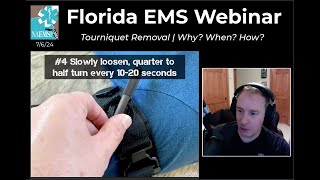
Dr. Michael Lauria walks through tourniquet conversion and when to remove them in civilian EMS. He covers benefits, complications, and a specific protocol informed by military evidence since 2008, drawing on his background as a flight paramedic and Air Force PJ.
Chapters
All right, welcome, Everybody. It is July 5th. Hopefully you had a great July 4th holiday. This is Peter Ampevi. Along with Kendra Smeha. We are hosting the Florida EMS webinar. And today we have an amazing guest. Many of you probably know Mike Lauria. He's a renowned speaker. He goes across the country. We see him at many of the meetings. He's a great, great speaker. And what caught my attention was a paper that he recently wrote on tourniquet conversion in civilian ems, something that many of us should know about. He wrote a paper on a case report, plus just some of the guidelines that we all need to be aware of. So without any further ado, Mike, thank you for joining us, and welcome to the show. Take it away, my friend.
Hey, no problem. Peter Tanner. Thank you guys so much for having me stoked to be here and talk about a topic that is near and dear to my heart, which is trauma management in the field, and specifically this. And we say it's a newer concept, but really if you look back, we've been talking about it since, like, 2008. I think it's really just kind of coming to the forefront at this point, but without further ado. So by way of background, I actually started out in the fire service myself. And then actually, because I had some baseline chemical imbalance, like most of us, I actually finished my undergrad and then enlisted in the military. So I was a PJ in the Air Force. I did combat search and rescue and direct action support for various special operations teams around the world, which was pretty cool and fun. And then got out and started working as a flight paramedic. And like many of you, like flight paramedic, ground paramedic, teacher, trainer, like five jobs to make ends meet in the EMS world. And then as evidence that I had really hit my head way too hard on a number of occasions, I decided to go back to medical school, did residency here at UNM and then fellowships in EMS and critical care, which has been a blast. But what I wanted to talk to you guys about today was really the tourniquet stuff. And specifically, I'm sure anybody who's working in the field at this point understands most of the benefits of tourniquets and how they work. But what I really want to do is go over a couple highlights and then, number two, touch on some of the complications that we don't talk about too often, but I think are actually really, really important to recognize. And then the whole tourniquet conversion protocol. And that should bring us to about 20 minutes or so, and then we can have some really fun discussion on stuff. So let's start out with, number one, the benefits of tourniquet, some other data on. On tourniquets. So before we get into tourniquet conversion, I think it's actually really important to talk about some of the pitfalls that we've identified with tourniquets and some of the really important highlights that I continually see in a lot of Q and A stuff and questions I get asked at conferences and whatnot. So, as you guys are well aware, one of the most important things of trauma is early intervention. And it was Nicholas Sen, who was actually an American surgeon, who essentially had said, the fate of the wounded lies in the hand of the one who applied the first dressing, in this case, the first tourniquet, or in this case, who gets hemostasis, I think is really like the important take home there. And tourniquets have been an important part of those. I mean, unless you've been asleep or anesthetized for the past, like decade in ems, it is definitely something that has come to the forefront mainly as a result of some unfortunate situations around the world. But as it sort of come over into the civilian world, I think we're noticing some significant benefit. Now, the tourniquet data from the military, we could spend like an hour reviewing the various meta analyses and all the data that's come from the joint trauma system. However.