Dr Miramontes and Dr. Frank: The Role of EMS in Peripartum Hypertension (6/21/24)
Dr. Miramontes and Dr. Frank discuss how EMS can recognize and treat peripartum hypertension and preeclampsia, which can strike up to 8 weeks after delivery. Key moves: screen postpartum women for severe headache or vision changes, give magnesium to prevent seizures, and measure blood pressure accurately. Florida is building protocols around when to treat, debating whether to start at 160/110 or 140/90.
Questions this video answers
June 21, 2024.
Load 4–6 grams IV over ~20 minutes, then 2 grams per hour infusion thereafter.
Begin seizure prophylaxis at systolic ≈140 mmHg; begin blood-pressure control at systolic ≈160 mmHg (Miramontes stated start seizure control at 140 and BP control at 160).
IV labetalol given as 20 mg, then 40 mg, then 40 mg (vial available as 100 mg).
FPQC initially considered 160 systolic or 110 diastolic, though discussion noted possible shift toward treating at ≥140/90.
Chapters
Welcome, Everybody. This is June 21st. It's a Friday, 11:00am we have another great lineup for you today. Just so everybody knows. I had mentioned it before, but we have. I've added Tanner Smita onto the roster here to help me out with moderating these sessions. For those of you who don't know, Tanner is an MD, PhD student in West Virginia. He's written a number of papers using the ESO database. He's really, I think, the future of EMS and.
The future of our profession. So I've asked him to help me out. So after I open the webinar, Hannah will moderate the rest of the webinar and you'll see him in coming weeks. So let's get to our lineup today. This is a big topic. Dave Miramonte, Many of you know Dave. He's the EMS medical director for San Antonio Fire. He's got a number of medical directors underneath him. It's a big, big system. They probably do things better than most other agencies in this country. Dave gave a great talk about pregnancy induced hypertension in the peripartum region, and he will talk about that today. I've also asked Marshall Frank, who is the medical director in Sarasota Fire, to come after him since the state of Florida, and he's now the new president of the association, is now helping us create a protocol regarding that. So without any further ado, Dave, if you want to share your screen, my friend, take it away.
Chuck, you can hear me.
We can hear you.
All right, good. Hi. Good morning, Paul, you have to go on mute.
Good morning, everyone. I'm Dave Mermaid from San Antonio. This was a recap of the presentation we gave it at the Eagles last week with Ben Weston, who has a couple articles and gems for this topic. So why are we talking about this today? Well, number one, the United States is our maternal death rate is on the rise, which is exactly the opposite direction from some of the more developed regions, especially in Europe, New Zealand and Australia. And it's more problematic in the United States, especially of people of color. Black and brown and yellow folks have a really dramatically different experience during pregnancy. And the US Black population is almost double the maternal mortality compared to white Caucasian moms. And so this is something that came up when I was researching this topic is that it is something I either was never taught in medical school or I forgot. But preeclampsia and eclampsia can happen up to six weeks postpartum and even longer in some cases. And so we really have to make sure that our medics are aware of this fact. And if you don't know this, then you won't look for it. Give you a case example. I had a 38 year old female, happened to be black, from our community, and they arrived for a headache. That was what the call type was from dispatch. And they get there and they're, there's no baby, there's no crib, there's no nothing in the apartment. And so the pregnancy part wasn't even on the radar. And she had headache, she had hypertension, her blood pressure was 200 over 110. And they said, all right, let's go get in the truck, let's just take you. Because we don't treat asymptomatic hypertension in most patients without an organ disease. And when we get to the er, the first thing you know, the nurse is doing the triage stuff and she says, when was last menstrual period? Oh, I had a baby four weeks ago. And everyone went, ah, right. And so she had the treatment path for her dramatically changed with that one key element. And now she had to be, she was aggressively treated for pregnancy use, hypertension. She was transferred to a level four maternity hospital and things went very well for her. But we could have got started on her care and gone to the right place the first time if we would have known about her pregnancy or they would have asked.
So granted, most of our pregnancy dues, hypertension issues and eclampsia starts right before delivery or just after in the first couple weeks. But again, it can go out to six, eight weeks. And just show this video. I'm not going to show the video in the interest of time, but the risk factors for preeclampsia, duh. If you had preeclampsia before, you're eight times the risk. And what I call the San Antonio triple right diabetes, obesity, chronic hypertension, that is a huge risk factor for preeclampsia and eclampsia and breaks use hypertension. And of course, if you have autoimmune or vascular disorders in the first place, sickle cell, lupus, etc. Then we're upper Creek.
So a little refresher on the anatomy. So on the left is the normal uterus and on the right is the pregnant uterus with a wonderfully engineered.
Placenta. Then look at the difference in the vasculature between the two states and the uterine arteries. The basal arteries are just providing this huge amount of wait for it, wait for it. Womb service. That's right, the little parasites getting womb service or room Service from the mom. And that's where they're getting all the nutrients, oxygen and CO2. And the uniqueness of the splacental unit is we have maternal blood that comes in close proximity to, but does not mix with the fetal blood in this intervillous space. And you can see this is all about the vasculature, right? So if we have a vascular compromise on the mom's side or on the baby side, then we have a problem. Right? And this transfer is the most important part of the maturation of the fetus, as it's basically a parasite to the mom getting all the nutrients. Carbon dioxide's being expressed, oxygen coming in.
So what's the deal with preeclampsia and eclampsia? It is a disorder of widespread endothelial malfunction and vasospasm. So if the baby's not getting blood, it's releasing all these endothelial factors that cause a widespread malfunction and vasospasm. This is the fetus's attempt to get more blood from the placental interchange. And that has a dramatic effect on all the body systems of the mom, including brain, liver, splenic aneurysms, kidney dysfunction. And again, it's a widespread endothelial malfunction. So all the vasculature is affected in mom.
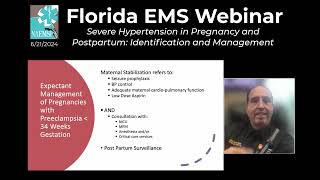
So the big thing is get the right blood pressure. So if you're just using whatever cuff you get out of your bag of the life pack or your soul, you're maybe underestimating their blood pressure by 10, 20%. So you have to have the right size cup. And when in doubt, take a manual one, because sometimes, remember our Zola and light pack, they use a algorithm where it calculates the map, or I'm sorry, it measures the map and calculates the systolic and diastolic from that map value. So you could have weirdly weird diastolic blood pressures that are way underestimated. And again, in pregnancy, we expect the vascular relaxation of the vasculature space as the volume increases in anticipation of the big bleed after the 40 weeks. And so the blood pressures are lower in the pregnant state. We. I mean, a 90 or 100 blood pressure is a normal pressure for a pregnant female. I personally would be passed out and you'd be resuscitating me with a blood pressure of 90. So that's not going to work out too well for me. So here's a case. Anywhere hospital, patient comes in, she's four weeks gestation, G3P2, and she comes in with this Blood pressure, so they dork around the triage, they dork around in a room, blood pressure, blood blood pressure. They're not getting her upstairs. So finally, hours later, she goes upstairs and this delay is rather dramatic. And this happens in your er, anywhere near you, if they don't clue into the fact that normal adults, we don't care about asymptomatic hypertension in the ER so much, but in the pregnant female, it's a big deal and she is ringing the bells and no one's listening. So finally she gets upstairs to L and D, where they're accustomed to this process, and starts active treatment with labellol. More about that later on. Remember, the blood pressure is 140 over 90. Anything close or above that should be ringing bells in the pregnant lady. So you can have different kinds of hypertension during pregnancy. You can have gestational hypertension, where it just happens during their pregnant state and goes away after delivery. You can have chronic hypertension, as a lot of our patients do here in San Antonio, and that gets worse during pregnancy. Or you can have acute onset preeclampsia, eclampsia, or the HELP syndrome, which we're going to talk about, or you can have that on top of pre existing hypertension. So the whole goal is figure out what you got at baseline during prenatal care, and when things change, then we need to act. And that's a big problem here in San Antonio because a lot of our moms are not getting prenatal care. We do not have expanded Medicaid here, AKA Obamacare. So a lot of our prenatal care is delayed or absent. Also, a lot of our migrant moms are not eligible for Medicaid initially. And because they don't, they're undocumented and so they don't get prenatal care like they should. So what are the criteria for eclampsia and preeclampsia is right out up to date, if you note of it. Most of it is lab stuff, stuff you do in the er, stuff from the cbc, stuff from your comprehensive metabolic profile, your liver enzymes and your proteinur and urine. But the two big ones that we can pick up in the field are from history, and that's onset headache and visual disturbances along with hypertension that should ring the bell for aggressive treatment by ems. So I grew up right here in the San Joaquin Valley, in the Livermore Valley, in the San Joaquin Valley, and I worked the Ms. Up here in the mountains of the Sierras. And this study was done by the Department of Public Health in California. And they had a whole bunch of migrant healthcare camps in the San Joaquin Valley. As you can imagine, that's the breadbasket and the fruit bowl for the United States. And what they found was by doing aggressive services to these migrant pregnant moms that they found something rather shocking. So, yes, 80% of the patients with preeclampsia, eclampsia had headache and visual and 45% had visual disturbances. But hold on, 20% of the women who reported with seizure as the only symptom of eclampsia had no neurological symptoms or whatsoever before seizure started. That is something that I was taught. It was a progression. But in reality, 20% of the moms will present with seizure only if you don't know about the pregnancy, you don't know about the blood pressure triggers. You may just treat them like a regular seizure and not treat the other parts of the equation. What do we do for management in the er? We get a whole bunch of labs and we figure it out. But. And then once we get them, risk stratified seizure control, seizure prophylaxis with magnesium, blood pressure control. We're going to talk about make sure you've got adequate maternal cardiopulmonary function. So do they have cardiomyopathy or they have good renal function? Starting low dose aspirin because it's a widespread endothelial dysfunction and we know that aspirin helps us with that. And then get all the king's horses and all the king's men together to make the mom better again. And that's nicu, maternal internal field medicine, anesthesia. We may put in that epidural earlier than we normally would. So that if we have to go to C section or do induction, it's already in, ready to go and you just have to dose them. And critical care services. These moms have cardiomyopathy, they have pulmonary edema, they have hypertension crisis, they may need an art line. So they're going to need to be in the maternal ICU and then postpartum surveillance. These days we can do that with Bluetooth scale, Bluetooth blood pressure, Bluetooth pulp socks. So we can do a lot of remote medicine. They really watch these moms after delivery. Most of the time they say, oh, see, in six weeks, right? Not these valves. We need to see them a couple days afterwards and every week in the clinic to make sure they're okay and make sure that blood pressure control. So what are we going to do? Prevention of seizures.
Mag.
Cheap, generic, easy to give. There isn't Enough mag in anybody's ambulance to harm anybody. So we just need to giddy up, giddy o. And we're going to give 4 to 6 grams load over 20 minutes IV. You don't need a pump that you don't. We just shove 4 grams in a 100cc bag, run it in, and then 2 grams an hour thereafter in the ER. Again, you're not going to hurt anyone with 4, 6, 8 grams of magnesium. It's, it's just not going to happen. You need to be loaded and on a drip for hours and hours and hours before you lose your patellar reflexes and have any problems with respiratory depression.
How are you going to treat the hypertension? Well, there's three main ways according to the ACOG guidelines. One is oral nifedipine. So a lot of the OB GYNs or family practice folks that are doing OB, they'll have this in our office and you can start with 10 milligrams and then every 20 minutes up it. We recommend a bite and swallow from the old guys in the room. You remember we used to use nipetipine for blood pressure control in the yard where we pop it with a needle and have them squish it in their mouth and swallow it. Same thing applies now in pregnancy. So that's a cheap and easy way to do it. And perhaps even EMTs could have that in their scope. Hydralazine's old and easy. We chose labetalol. And the reason why? Because we use it for the pregnancy due hypertension. We use it for hypertensive emergencies and for blood pressure control during stroke. So for us, the labetalol was an easy switch.
We actually took metoprolol off and replaced it with labetalol. It's 20, 40, 80. You can just give it push and use normal blood pressure management. And this has been a very easy thing for us to do in our organization. So we start seizure control at a blood pressure 140 and blood pressure control at a blood pressure of 160.
The big thing we need to do is be aware of preeclampsia. So if they've been discharged, we need to make sure the moms and EMTs and paramedics and ER are listening to our patients. I've got a terrible headache. You need to listen to that. My vision's different. A lot of times we poo poo these simple, seemingly insignificant symptoms, but it's a big deal in the pregnant patient or the postpartum patient. And so we gotta make sure that they're aware and that they're taking care of business. So just control the damn blood pressure. That's the bottom line. Remember, it's a widespr spread endothelial vascular disease and the big thing is stroke. So those blood vessels in the brain are fragile. We've got a blood pressure that the mom's not used to and they haven't done any kind of brain autoregulation and they have these horrible subarachnoid hemorrhages and die. Our friends in the UK with their midwife program have been aggressive in monitoring during the process, the prenatal period and afterwards, and they've demonstrated a huge reduction in deaths in that population.
So final words, beware of the high risk groups for pregnancy induced hypertension and preeclampsia. Blood pressure over 140 is not normal. Be aggressive. In my paramedics, I go, be aggressive. Be, be aggressive. Right. I would say that for about all the stuff we do here in San Antonio, but in this case, you really got to step up your game and you've got to recognize, recognize and start that seizure prophylaxis. And we tell them if they seize, it's the ABCs arrive, get an airway, bag the patient and just give the damn med, give them the benzos to stop the seizure, Hang the mag, control the blood pressure. That's the big thing. If you have a seizing preeclamptic patient and just get that blood pressure down. With the medications we've used, this is a time matters issue. These moms, unfortunately, they have horrible strokes. And then we have not one patient, we have two. Because now we have the mom that's dying from a horrible stroke and the fetus. We're trying to keep her alive until we can do a C section or deliver at 37 weeks. And with that, turn it over.
We have a question from the peanut gallery here in the room from Paul Bepe.
So the main thing is also if you're in that postpartum period and you come upon someone, you're called for procedure. If they don't look pregnant, they don't look. There's no play pen like you said, et cetera. Keep in mind that in a woman of childbearing age, if they're having a seizure, make sure that's in your area.
Exactly. So if you arrive for a seizure of a woman of childbearing age, make sure that this is in your differential diagnosis because magnesium will help prevent the seizure. You're going to treat them with benzos, you're going to add the Magnesium on top, the 4 grams load, just to make sure they're not coming into status and then treat the damn blood pressure pressure.
All right, thank you very much. I think next we'll go to Dr. Marshall Frank, see if he has any commercial.
Okay. Excellent presentation. Thanks. So Peter asked me to discuss what we're doing in Florida sort of on a grand sort of state level. And we have a. A great organization called the Florida Perinatal Quality Collaborative, which Paul has been involved with and I've been involved with. And we're working with MFM physicians and leaders in the area to, you know, basically incorporate into our protocols a severe hypertension and pregnancy protocol. And what we've done so far is develop the protocol. And we've. I just want to talk about a few issues that we've sort of run into, which David, doesn't sound like you ran into, but.
Number one is, well, so our protocol reads. It is. It's. I guess it's less aggressive than yours. And maybe I'll consider changing this, but the MFM docs wanted us to consider the blood pressure, 160 systolic or 110 diastolic. But, you know, hearing what you just said, maybe we should be changing that to 140 over 90, over 140 over 90. And we're going with labetalol also. Number one, it's easy, and it can be incorporated into a couple of protocols. We currently don't have a hypertension management protocol. We leave that up to the hospitals to manage that whether there's an ischemic stroke or what have you. But the one concern is that at this moment in time, it would be used only for one protocol. So we have one drug that we're using for one protocol, and we don't really know how often we're seeing this. We use image trend for our ehr, and it's not something that we, that we code or that we can really find. And, you know, how often are we seeing severe hypertension in pregnancy or the postpartum state? But anyhow, it's. It's labetalol and it's given as 20 milligrams, then 40, then 40. And the labetol comes in 100 milligram vial. So that sort of makes it easy.
During our talks with fpqc, a lot of the times what comes up too is.
Sort of bringing eclampsia into the discussion. And our discussions are primarily severe hypertension in pregnancy. So I don't know as a group we can discuss whether other agencies are giving magnesium or carrying magnesium. Right now, we don't carry magnesium.
Again because we weren't incorporating into very many protocols. We can easily do that, and I know it's not an expensive situation, but really what we focus on in our working group is severe hypertension in pregnancy. And we haven't really been discussing magnesium. One thing we have been discussing, though, is recognition of these patients, especially ones who are postpartum. Our MFM doctors wanted us to go out a full year postpartum and manage these patients with hypertension attention that, you know, that are a full year, a full year out. I thought that was a little bit of a reach. So we, we just go with. We're going to go with six weeks. I'm not sure we'll catch any of these people that are 11 months out. So I think that's, I think that's a little far out. But what we were discussing recently is whether we want to incorporate this into dispatch. And I don't know, David, if you have any insight or if you guys do that, if we can incorporate into Pro QA A, you know, if it can. If a woman of childbearing age, we can have a drop down that says, you know, are you pregnant or have you been pregnant in six weeks, you know, or have you given birth in the last six weeks? Can we incorporate that into dispatch and, you know, let our crews know on their way, you know, that the patient was pregnant or gave birth six weeks ago and then they understand why that question's asked and, you know, maybe that can lead them to treating the blood pressure faster rather than maybe forgetting to ask or not recognizing that the patient patients, you know, six weeks postpartum. So I think that's a great way to find these people and to be able to manage them faster. That's really all I have from the FPQC initiative. It's great to have an organization like that that we can work with.
One other thing I will say, I said at the beginning, I think most people were not on. We recently had our state EMS meetings. I think most of you who are on the line were there. And I polled in two different meetings. One is our medical care committee, which I chair, and then the FAM SMD meeting. And I polled the medical directors and the practitioners who were there whether they have protocols for severe hypertension of pregnancy and whether they have severe protocols for management of hypertension. And one medical director raised his hand and I have to be honest, I don't remember who it was. If anybody is on the line that Remembers who that was, just maybe speak up.
But Wayne, from what you said, none of the protocols that are on mobilize incorporate hypertension management or severe hypertension in pregnancy. So maybe I'll put out a mobilized poll and see who's doing that and get a better catchment of the medical directors. But anyhow, that's all I have to say from the FPQC deep part of it. And I open the discussion up to the rest of the group or questions that.
Come up.
It looks like we have one in the chat from Larry McCarter. So he's asking for a pregnant patient with hypertension, but no seizures.
Would you administer magnesium preemptively to ward off a potential seizure procedure?
Not only hell yes, yes.
If anyone else has any questions, if you, if you raise your hand, I can unmute you and let you, let you ask it.
One kind of, kind of question or comment that I have. At least in our practice environment in West Virginia, a common complaint that I've heard from paramedics is that, is that medical command physicians are extremely reluctant, at least kind of in our practice areas area to give orders for field treatment of hypertension, especially when there's neurologic symptoms involved, of course, like the blurry vision. I mean, even things that are common with hypertensive crisis because of kind of an overriding concern that there's kind of an underlying stroke and that the hypertension is a protective reflex to overcome intracranial pressure. I was reading a little bit about eclampsia and preeclampsia, and it looks like one of the leading causes of death in patients with, with preeclampsia and eclampsia after kind of prolonged seizure that leads to apnea and cardiac arrest is stroke. So, so for like, you know, the medical command physicians that would be hesitant to kind of aggressively manage hypertension in these patients because of a risk of, you know, one of these patients having a stroke and then kind of taking away that neuroprotective hypertensive reflex. I was just wondering what you'd say to, to those individuals.
I would say, knock it off. Just give the med, because most of these patients are going to have a bleed, a subarachnoid hemorrhage, and after that, that vasospasm that occurs. And now, as we know, we have a bivalent pathway. They're a bleed. Your goal is to get that blood pressure below 140 with the calcium channel blockers and prevent that secondary vasospasm that happens. So you don't get watershed ischemia make it worse. Right. And you're also trying to cut down on the infarct size and the bleed s by lowering that pressure. And if they have an embolic stroke, for some reason, you got to get that blood pressure below 180 anyway to give TPA or TNK. So I would say, you know, the goal is to get it down in the 180s and in the pregnant folk below 160.
Okay, fantastic. Thank you.
Peter, if you're still on, thanks for having me. And thanks for. Thanks for asking me to talk.
Talk.
Yeah. Thank you both very much for your presentations and commentary. Appreciate it.
Danner, the CME for Seagulls is 19405, right?
Yes. It's in the chat here.
Yeah.
19405 is for sequels.
Thank you.
More from Peter




Melissa Olen MSN, FPN-C, CCRN: Sudden Cardiac Arrest Training in Schools (Project ADAM) 4/25/25



Pediatric Hospital Readiness: How Teamwork & CPR Metrics Drive Better Outcomes



Chelsea Kadish, MD & Kyle Goodknight, EMT-P, RT: Pediatric CPAP in EMS (3/14/25)