EMS Week 2021 - Save-A-Life Webinar
Peter Antevy, George Gonzalez, and Daniel Moran discuss how to save more cardiac arrest patients. They cover dispatcher-assisted CPR, pit crew techniques, and why pediatric arrests need different approaches. Davie Fire Rescue uses CARES registry data to track outcomes and improve performance.
Chapters
Welcome, everybody. EMS week has been going off really well. It's Thursday, so it's save a life day. And we thought there'd be no better way to kick off the day with talking about, you know, some amazing people who I've been had the opportunity to work with over the years. Assistant Chief George Gonzalez from Davey Fire Rescue and Battalion Chief Dan Moran from Davey Fire Rescue. I had the privilege of working with these two gentlemen for many, many years here in Davie Fire Rescue. And we're gonna get started here in a moment. Dan and George, can I ask you, because I'm not seeing the zoom screen anymore. Can you admit to people if they're in the waiting room?
Absolutely.
Awesome. Okay, let's get to the agenda. But actually, first let's do some introduction. So, Chief Gonzalez, why don't you say hello to everybody? And then followed by Chief Moran. Okay.
George Gonzales, assistant Fire Chief with Davie Fire Rescue.
Welcome. And Daniel Moran, Davey Fire Rescue Battalion Chief.
Welcome.
Happy to be here.
Awesome. All right, so let's get started with the agenda. So what we want to do here today is kind of maybe do something a little different than you. You've seen in the past. But we wanted to really kind of go into some of the details that a lot of people really maybe miss on the cardiac arrest phase, meaning early in the arrest prior to EMS arriving. And then we'll go into briefly what we do on scene. But then I really wanted to go into the Florida RA and I wanted George and Dan to really talk about how we actually went to Seattle, brought back some of their ideas, and then were able to utilize those here, first at our agency in Davey Fire Rescue with great success, and then how we ended up kind of making some of these items actually become actionable. And I could not have done this without Chief Gonzalez and Chief Moran. These two gentlemen have really made a huge difference. So we'll talk about some overall statistics, bystander cpr. We'll kind of graze through that. I'm really going to take a deep dive into telephone CPR and really explore some areas that all of us can get better in there. And we'll kind of move back on afterwards to the Florida RA and then we'll wrap it up with some final closing comments.
So let's talk about adults, and we'll talk about kids, of course, but many of you know that in America, we have about 350,000 out of hospital cardiac arrests every year. And unfortunately, many of those people die even before reaching the hospital.
And depending on where you're living. So if you're in Washington State, Oregon, Florida, if you're, if you live in Detroit, Seattle, obviously things are very variable. And I always get the question, why? Why is it that Seattle has the best numbers? Why are some other agencies, even though they have great procedures and policies and everything seems to be going well? It's not. And I think you'll get a little hint of that here with our conversation today.
I wanted to point out this gentleman and I'm not sure if he's on the call today, but Mike Helbach is really a world class educator with the Resuscitation Academy. If you haven't heard this webinar that he gave the other day, it's really important to really, if you want to learn the why and how of high performance cpr, please, please, please watch Mike. And if you ever get to hear him speak in person, it's really a joy to watch. He's really a great educator and I know that George and Dan have had the privilege of being educated by him up in Seattle. With respect to the kids, we have 20,000 kids who go into arrest every year. 7,000 of those are out of hospital. But look at the survival to discharge. And that term has to be clarified. That's kids who actually are alive when they get to discharge. However, that doesn't mean that they're neurologically normal. So what percentage are. We'll go back to the left. It's only 5% of children leave the hospital and maintain a neurological CPC, one or two. And that's just again, very low. Many people know that I always show this curve that there we are, 5%. And that number hasn't changed for many, many years. How do we fix that? And what I wanted to do is talk about what I call a tale of two children. And you'll hear some audio in today's presentation. And it's, you know, it's audio that we shouldn't be embarrassed about providing because I think this is how we've learned a lot of what we've learned. But you're going to hear a case from Florida, from one of my agencies, and you're going to hear a case from Oregon, from Bend Fire. And you're going to hear and feel and see the difference between how people's lives can be saved based on programs and actions that are taken by all of you who are listening today who are in ems. I created this slide a few years ago which really for me shows the big impact in why adults and kids get different care. And here it is there's your adult in cardiac arrest. He gets great bystander cpr, hopefully gets good telephone cpr. EMS is high performing. They know what to do before they get there. They know what to do on scene. They get ROSC and then they transport beautiful. This guy, if he's in a shockable rhythm, should have a very high chance of coming back to life in kids. What we found out, and part of what I'll talk about today, is that there's very little bystanders, or I should say much fewer folks who are willing to do bystander CPR for whatever reason. The telephone cpr, as you'll hear today, is very different. EMS doesn't preplan. We find the kid on the curb, they throw us the kid, and then we end up in the ambulance screaming down the street to the emergency department in full arrest. I'm not going to get into this today, but for the folks who know me, know that this is kind of part of my mission in life is to make these two things happen exactly the same. And you'll hear more about that later from George and Dan. So, you know, the question is, would you prefer no CPR or any cpr, and do we have to reconsider how we train the lay public to intervene? So let's talk a little bit about that. We know from this study from Korea from 2018 that even before EMS gets there, you know, lives can be saved. And so when not going to talk much about bystander cpr, except to show you this one study here, and you can see from this graphic that the survival with no bystander versus bystander with calling 911. So this is telephone CPR. The DA is dispatcher assisted versus bystander CPR without dispatcher assistance. That person just knew that this person was in cardiac arrest and they needed CPR. If you look at the arbitrage here between 13 and 3.5, you can, in your system, in your community, make a difference just by getting people to where the Seattle folks are, which is up here, where a lot of people have been primed since the age of 9, 10 years old to do the proper thing for people in cardiac arrest. So you have to start first with where is your community? And then you'll know, you know, how much work you have to do. But starting at the bystander level and going and doing these community fairs, in my opinion, that's not the way to do it. Too many people, right? Because if you have 100,000 people in a city, you have 100 cardiac arrests. A year, only 50 of which you'll work, right? Should you train up 100,000 people to save those 50 or should you go somewhere else to do it? And today we'll talk about this somewhere else. And so, you know, I always like to play this video because it's, you know, people laugh at it. But in the United States, we talk about calling 91 1, but what if we have it all wrong? What if we're teaching people the wrong thing? So watch this video and see what they do. This is in Bangkok and how they get this kid back to life.
Are you guys hearing the audio? I am so good.
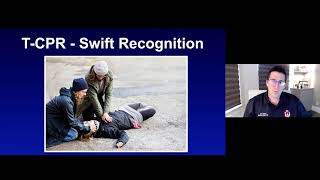
So I, I cut the clip down on purpose here. But these people, they, they were, they took this kid and they ran them around. They did two laps, you know, around, and they ended up after a couple of minutes getting this kid back to life. Literally not one chest compression was done. They just did something. And so maybe we need to retrain how we perform or how we teach the bystander. That's for another day. But kind of jokingly I say that, you know, In America it's 15 compressions in two breaths. Maybe we should start doing 50 compressions in two laps. But you know, all joking aside, we, we have to fix the bystander piece of this. But again, that's not the focus for today. I wanted to focus on telephone CPR because I think the telecommunications center is where it's at. That's where the money's at. And I was very privileged to spend time with a team of people that was led by Ben Bravo from NHTSA. We went to Washington D.C. we put together something called CPR lifelinks, which talked about telephone CPR and high performance CPR. So I want to go through some of the items that you may or may not have heard of with respect to telephone cpr, which has three stages Number one is, is the person who's just called you or are they in front of someone who is in cardiac arrest? How do you make that identification? That's not an easy step, but that's stage number one. Then stage number two is actually giving CPR instructions and making actually them quality CPR instructions. And then phase three is once you start, how do you continue? These three bullet points may seem very simple, but I will tell you that if you simply go and listen to the calls from your agency, you will recognize that bullet point number one is the hardest bullet point number 2 may seem easy, but it's not. And then three is the big pediatric dilemma where people will Start, but they will immediately stop. So I'm going to go through these things and give you some examples of where the problems are and then what you can do to go listen to these. What you're going to hear when you go into the. To your comm center, and you're going to say, hey, we want to fix telephone cpr. They're going to say, we don't have enough staff to listen to all these calls. We don't have the time. We don't have a medical director. Are we exposing ourselves to liability? You know, I got to hire more people. That's going to cost me too much money. And is this really in the scope of my practice? So you. You should know immediately that if you're going to take what we're going to give you today, and we'll give you everything we have, and you're going to go into your communication center, be prepared for a little bit of pushback, unless you can actually demonstrate the problem and that they can actually fix the problem. Let's go to stage one, which is identification. Very, very simple. But this process that we call no, no go, believe it or not, doesn't take place around the country. Let's go through what no, no go means. First question is, and this is again, after you ask the patient their name, their telephone number, the address, all that. Now you have to get into determining, is this patient in cardiac arrest? Question 1. Is a patient awake? Can you wake them up? No. Are they breathing normally? No. And go start cpr. So if you can get. If questions number one and two, sorry, are nos, then you have a go. This is recognition. Now, you may say to me, pete, this is simple. I can do that in 10 seconds. But you can't, and it's very hard to do. And you'll hear some reasons why in a minute. So here is a great audio. And I stole this from Mike Levy in Alaska. A guy who calls up and his mother is in cardiac arrest. And take a listen of how this goes really well.
New the house or apartment?
The house.
Yes. And what's the emergency? My mother's not responding at all right now. Are you with her? She. Yes. Is she awake? No. Can you wake her up? No. Is she breathing normally? No. I need you to get her on the ground. We're going to start cpr. Okay? Okay. Let me know when she's flying her back on the ground. That was done beautifully. Right. But they all don't go that way. And so we're gonna go through what the American heart Association in 2015. Put this together and let me just kind of simplify it. Recognition, which is the. No, no part should happen in 1 minute, 60 seconds. Then you get another 60 seconds to actually start CPR.
I can tell you that in Broward County. And I gotta give a lot of credit to Jim Roach. He's a medical director here for the largest agencies here in Broward County. Our average time in Broward county, when we actually went to measure this was five minutes to hands on chest, five minutes. And there's a lot of reasons why. Let's go through some of those reasons. Some of the challenges is that there's a lot of unnecessary questions. These questions are found nowhere on a computer screen, nowhere on a card. They just questions. And so take a listen to some of these issues.
Hello?
911.
Hello?
Hello? Can you hear me?
Yes, I can hear you.
Okay, 911, what are you reporting?
My grandfather is on the floor.
He's conscious. He's not responding.
Okay, what's. How old is your grandfather?
82.
Okay, and are his eyes open?
His eyes are open, barely.
Okay, and he's not responding to you at all?
He's not responding at all.
Okay, houses, color.
Look, it's.
Normal.
Okay, how is he breathing? Can you see his chest going up and down?
He's breathing. His mouth is opening up, and he's slowly breathing.
Okay.
Does it seem like it's normal breathing?
No, it's shallow. Yeah, I'm gonna. I'm gonna stop there because then I can see that my chiefs are squirming because we've heard hundreds of these calls, and I get an email saying, listen to this call. I'm like, oh, God, am I gonna have to listen to this call? And we hear these types of things over and over again.
What about how it's done correctly?
Emergency police may have been with the medical chair. Caller, start with your location. Okay, get him out of the car.
What?
Is he conscious? No, he's not conscious. Is he breathing normally? Well, maybe Ted Daxton's early. Is he breathing normally? No, not really. Okay, then you need to get out of the vehicle and lay him flat on his back because it sounds like we need to start cpr.
Boom. Perfect. That's the way it's supposed to be done. Okay, so now that's recognition. Believe me, you could spend a year in your dispatch center talking about recognition alone. Go collect your data and please email us and let us know how things are going. We would love to help you. If you need help, please reach out to us now. I just wanted to go into stage two. So CPR instructions, believe it or not, you have an option. If you use priority dispatch, which we use here in Broward county, they give you three options. You can say, the medical director could say, I want 30 to 2 for everyone. I want 600 compressions and 32. Or I want hands only indefinitely. You, the medical director of dispatch, have to go and tell them what we have chosen. Sorry, we have chosen hands only indefinitely for eight years and older. So once you get the hands only indefinitely, which I presume most people would pick, you have to then pick which age group you would like to do. So know that and go check what your agency, what your communication center is doing today. Now, would you be surprised to know that no matter what you pick, there are ventilation first protocols that. That are there that you have no choice over? So if it's pediatrics, allergic reaction, drowning, and the like hanging, you will end up getting ventilations first. And so just understand that how these systems are set up is sometimes you have control over it, but oftentimes you don't have control over it. So know what you're dealing with when you're. When you're dealing with some of these systems that are out there to help us get these people back to life. Okay. A lot of times the caller will have problems. Can't get the patient flat. I don't want to do ventilations. We have a big problem. We found where the patient is prone. They're on their stomach. What do you do? The lady can't get the husband over. We're not talking about doing CPR through the back. Right.
That was a big push. It's still hard to kind of convince people, but if we have no choice, we have to get them to do something. Do CPR while they're sitting in a chair. If you can't get them out of the chair.
How many chances do we give people before we say, you know what? Let's just do it sitting up. Let's just do it on their stomach? These are all things that you have to go into your communication center and discuss, because, believe it or not, these are not obvious, and the objections or the issues are the ones that you'll get. You'll have to kind of do a lot of QA on. Let me take you to the pediatric side of the house here. I won't listen to the whole thing because it's long, but take a listen and how and why pediatrics, which you've already heard a couple of good adult ones, but in pediatrics, you could See on the right hand side, that red, is the emotional state of the call taker, the telecommunicator. They just don't want to jump into the. Let's do CPR for several reasons which we'll get into. But this mother, in this call for a little two year old boy, said the word unconscious, said the word breathing.
Said the word breathing. Not normally, right away in the first 13 seconds. But we never ever got to starting CPR because our telecommunicator was anchored on the word seizure. So take a listen to a little bit of this and understand that when you listen for the pediatric stuff, there's two big issues that they have to overcome, which we'll talk about on the next slide.
Fire rescue. Oh, my God. Your emergency.
Yes, I have a child that's having a seizure. Okay. He's two and a half. He's like having a hard time breathing. What address are you at? He's unconscious.
What address are you at?
What's the address here? Okay. Right. We're just here visiting. While we're talking, how old is that child? Two and a half. Two and a half. Two and a half? Yes. Does the baby have a fever? Wyatt? Huh? Does the baby have a fever?
No, no, no, no, no, no. He was just. He was on the potty and. And he was mad because I told him he had to go and he just started having a seizure. Wyatt, Wyatt, breathe. Okay. And is he still shaking right now? No, no, he's like unconscious and he's not breathing. Okay, is he breathing at all?
Please hurry.
No, I'm not feeling anything coming out. Okay, what I need you to do is get him flat on his back on the floor. We're going to try to do CPR until they get there. Can you get him on the floor? Are you. Yes. Okay, are you still in the bathroom? No, we're on carpet. I'm sorry, you're outside or you're on the carpet? No, we're on the carpet. I said carpet. Okay. It's just kind of hard to hear you with the background noise. Is your door unlocked?
Yes. Okay. Wyatt, come on. Come here. Wyatt. Is that crying or. No, he's not moving. Well, that's another baby.
Okay, so I'm going to stop there. So you saw all those check marks. Basically, you know, she thought about going into cpr. Then she started asking all these other questions and then ended up never, never getting to even one hand on the chest. We ended up getting there and doing 45 seconds of CPR. When we did our first slope, when the Monitor was charged, he was in V fib, and we got him right back to life. But unfortunately, he developed cerebral edema from the prolonged hypoxemic event to his brain, and he ended up passing away 36 hours later. So look at the importance of, you know, why lay CPR is important. Telephone CPR is very, very important. And then, you know, it doesn't matter how good your EMS CPR is, because if you're. If. If what comes before you isn't working, you're not going to have a good outcome. So that's important. So now we're going to go into stage three, which is CPR coaching, and then I'm going to throw in a little plug for the metronome that we just built. But, you know, getting to start CPR and actually continuing CPR is not simple. And when you listen to the calls, you recognize that it's very difficult for them to continue the CPR because it's a tough skill. So take a listen.
So actually, I thought I had an audio here, but you'll hear some of this at the very end. I have an audio at the very end. But how they're trained is, good job, Keep going. And then they have them count to one, two, three, four. One, two, three, four. And this is the way that they're being trained. So I would love to see in the chat, if anyone can put in the chat, just because I'd love to hear it. How many people here have a metronome in the. In the 911 center that as soon as the 911 call taker is actually, you know, doing this, they can say, follow the tone. I know that Tom Boothelet and Hilton Head, they actually just put it up to the phone, But I'm actually looking at the chat to see if anyone else does that. Surprisingly, Marin County. Thanks. Carrie has a metronome. You'll find that it's not a common thing to do. So I'll throw in a little plug and I'm gonna start this audio. And you're gonna see here that a metronome is key to actually having to actually getting this going. So here's. Here's a quick, easy metronome.
And if you're on the phone and you're listening to this, or if you're on scene doing this, you can see here that.
Ventilate, ventilate.
You can go 15 to 2, 30 to 2. I know many of us do continuous. And so what I want people to know. And you can use the QR code to Get a demo of that, but make sure that you have some kind of metronome in dispatch. I think that should be the future. Unfortunately, we don't have those things today. Okay, let's talk about the pediatric issue, which we talked about. There's two hurdles that the call taker needs to get over. Number one is starting cpr, and then number two is continuing it. You guys may know Bode Miller. He is a olympic skier. His 19 month old daughter fell into a pool. Take a listen to the audio where they actually start cpr. But then he comes in and says, I feel a pulse. And listen to what happens.
Keep breathing. Here, hold on.
Is this encoded across that? Yes. Hurry, hurry.
All right, paramedics, what's the address of the emergency? What city?
Dakota De Casa.
Okay, what's the emergency there?
Morgan, Morgan.
What is the emergency there?
Get him.
What is the emergency?
The baby fell in the pool. No, don't stop him.
Okay, paramedics are on their way. What's the phone number if they need.
To call you back?
Baby out of the water?
Yes. Okay.
How old?
19 months.
Okay.
Is he breathing?
No.
A little girl.
Okay, do you. Is somebody there that knows how to do cpr?
Knows how to do rescue breathing?
Okay.
Does she have a pulse? She's put.
Come on, keep going.
Okay.
Does she have a pulse? Okay, are you doing cpr?
Do you need me to coach you through it?
Coach me through it, please.
Okay, get the baby on a firm, flat surface.
I have a small pulse.
I have a small pulse.
Okay, she's got a pulse. Do not do cpr.
Okay.
Okay. That was the problem right there. Remember? I told you they don't want to start. And when they start, they end up stopping prematurely almost every single time. I've heard enough of these calls to understand that we had to go into dispatch and say, not if the patient's not conscious and not breathing normally, you start cpr, no questions asked, even if it's tough mentally. And when you start cpr, I don't care what they say, you're going to continue. Right? If you do these two things, just these two things, you can get more kids back to life tomorrow. That simple. Right? Instead of going and trying to teach the whole community, go to the 911 center and do it. So when you want to look at the differences between adult and kids, it is drastic. And I'll take all of you to dinner. I'll promise you that My community is not any different than your community. That in the adults, they get it right when they're Trained up. But in the kids, you have to get that little additional training of kind of that emotional thing to say, let's get to the green, get to starting CPR and then don't stop. So if they're unconscious and breathing and not breathing normally, start cpr, period. And then point number two is once you start cpr, don't stop cpr. It's just as simple as that. This is the slide here that'll fix all the things in dispatch, but it takes time. You have to go do the work, show up, do the work. All right, there's openly available QA tools that you can actually go and start to evaluate with pen and paper, have, have the audio, get the calls into a folder and start to listen. This is Palm Beach County. What we did, we started very rudimentary. We just created a spreadsheet and we said, you know, how fast are we getting to this point? And we start to get a total. This is how we did it. Rudimentary. Now we're in cares, which I know Dan will talk about in a little bit. But with cares, if you're on cares, there's a dispatch module, and basically you go in, there's five questions, three of them have times related to them. Start to plug in the times to recognition, to instruction, to hands on chest. And next thing you know, you can get this, a quarterly report from your system, from your community, from your state. And then you can compare yourself to Mike Raquest and you can compare yourself to Tom Boothelet and, you know, all these people in different places to say, how are we really doing and can we get better? What is our true bystander CPR rate, which is really determined by can the telephone communicator actually get CPR to start? It has nothing to do with what happens before the phone call. It's all about after the phone call. So just going back to CPR lifelinks, you know, there's. There's a CPR cqi. There's the data, there's the reporting, there's the feedback. Then there's a training and the retraining. Just like high performance cpr. Think of it like a whole separate arm of your cardiac arrest pathway. That cannot be just, you know, oh, we have a 911 center. It doesn't work that way. If you really need help with this, you know, Julie Buckingham and I know now, Tom Boothelet, I believe, is joining, that Tom will have to get off mute in a minute and tell us if he's. I believe, Tom, you're doing this. Now you want to unmute yourself, Tom, if you're there?
Yep.
Hi, Peter. Thank you.
Are you. Are you part of this section now?
Yeah, I don't start until July 1st, so I don't fully understand what my role is going to be yet, Peter, but I'm going to be working with the pre hospital team at rqi and I'm hoping to get the word out about rqit. We've had a really good experience with it here at Hilton Head. I just spoke with our dispatchers today because it's EMS week and they said it's some of the best training they've ever had.
Perfect. All right, so I'm going to make sure that people know how to get in contact with you as well. But I mean, this is very, very important. I'll keep moving on. But, Tom, thank you for jumping in for that. And maybe you can put your information in the. To everyone in the chat. All right, Before I switch it over to my amazing colleagues, I'm going to talk. I want you to listen to her. How it's done correctly, when you have people who know what they're doing and spent the time, this is what happens. So this is an 8 year old who goes into cardiac arrest. Take a listen.
911.
Oh, I just screwed that up.
911 was the address the emergency. We need you to come. Our daughter is not breathing. Where's the address?
That's deleted.
Okay, what's the phone number you're calling from?
Okay, now take a listen here.
Exactly what happened?
We.
She's been sick. She was downstairs taking a nap. She threw up and we went down to check on her and she's not breathing now. Okay, I'm going to tell you how to do cpr. Are you with her now? No, my husband. Yes, me and my husband are with her and my husband's trying to do cpr. Okay. So I'm going to tell you how to do it. Okay, Get. Get her. Lay her flat on her back on the floor and remove any pillows. Listen, listen to. Are you hearing me?
I'm hearing you.
Okay. If there's a defibrillator available, send someone to get it now in case we need it later. Okay?
Okay, so.
Lay her flat on her back on the floor and remove any pillows.
Okay. She's on her back.
Okay, so place the heel of your hand on the breastbone in the center of the chest, right between the nipples. Put your other hand on top of that hand and pump the chest hard and fast at least twice per second and two inches Deep.
Okay, I've got it.
Good. Just keep going. I'm going to count out loud or count out loud so I can count with you.
Okay.
Let the chest come all the way up between pumps. And we're going to do this 600 times or until help can take. Take over.
Get someone here.
They're already on the way. This isn't delaying help. We're going to keep her going until they get there.
Okay.
1, 2, 3, 4. 1, 2, 3, four. 1, 2, 3.
Okay. So for the sake of time, I'm going to show you what the outcome was here.
This was an amazing story in that this girl ended up getting not just CPR by telephone, but she ended up getting 40 minutes of CPR in the house from Ben Fire. So you saw, you heard the amazing CPR on the phone, and then the father wrote on Facebook, to the first responders, go. My family's undying thanks for never giving up on my daughter. And so, kudos to Ben Fire, but also kudos to that telecommunicator. My God, the way she did it. And you see that they went to a local hospital, then flew her to a children's hospital. She got seven counter shocks until they got her out of her. I believe she ended up having Brugada syndrome. So a channelopathy. But there are people in EMS who went into dispatch and said, we are going to make this better. And this is why, Peter Hocek, kudos to you and your entire team in the communication center. Telecommunicators save lives along with EMS and, of course, the hospital after that. Thank you, Peter Hossak. I am now going to switch this on over to my amazing colleagues, Dan Moran. So, Dan, I'm going to stop sharing. We'll get back to that QR code in a little bit. That way you guys can get. You guys can get some CEUs for today, but let me pitch it over now to Chief Damaran and Chief George Gonzalez, who are people I've worked with for many, many years now. 11 years. And go ahead, guys, take it away. And let's hear about the great work that you guys have done.
You're on mute. Can't hear you, Chief.
Chief.
Okay, how's that?
We gotcha.
I'll start over again. Thank you so much for having us. And it's easy being an assistant chief working under you, that's for sure. It makes life a lot easier. We're going to talk a little bit about the Florida Resuscitation Academy, but really, we're going to divert a little from there and Then just talk a little bit about what we did here in Davie Fire Rescue, and this is what came out of what we originally started and how we were able to.
Change our outcomes in this whole process. So the conversation is always these questions, why does this training matter? Why are you even here on this call? And.
What is your why? Why do you do what you do in pre hospital.
Medicine?
This always happens. This is my why.
So that's my dad in.
1982, he suffered a sudden cardiac arrest at home.
And that's stitched in my memory for many years. I was just out of high school.
And.
We did CPR on him and city of Miami showed up. But I guess what came out of that is, at the end of the day is the responsibility that we all have. The paramedics showed up.
Started doing cpr, transported him to the hospital.
Worked what appeared to be as hard as possible, and unfortunately he passed away that day.
I never forgotten. In 1988, I became a paramedic. And.
Now I find myself in this predicament. I became a paramedic for what those paramedics did that day and the feelings that I got. And about four years ago.
Something as simple as I ended up getting promoted to the position I'm in now. And the fire chief whose position I filled with.
Basically said to me, hey, I'm going to challenge you. There's a grant coming up and I want you to come up with something that is going to have a significant impact. So that's where our story starts. So I'll talk a little bit about how we got to where we're at, but.
Really the things are some of the core elements of success. And.
This is a presentation that's the 10 steps to improve survival and cardiac arrest. And I'm sort of not looking at the whole picture here, and I'm talking about the core elements of success. When we start discussing this, and it's the four corners of this box, I almost look at it as looking outside the box, because we're all familiar with the chain of survival and it gets beat over our heads and we all get it. You talk to somebody about it and say, yeah, yeah, yeah, I get it, I get it, I get it, I get it. And the reality is that we don't get it. And there's so much that's involved in each one of these links, but the areas outside the box are the key components here. I mean, it really starts off with leadership and the acceptance that we want to change something and improve something in our system. And if we're not high performing. We're missing out on what we chose to do as our calling, as our career or whatever, which is saving lives. We have incredible opportunity to do that day in and day out. And do we want to improve the system? And somebody's got to take the lead and do that. We have to find champions in this whole process. Thank God this all started because Chief Moran and Dr. Anteve and I sat down after that meeting with the chief and said, what are we going to do? And cardiac arrest came up. And Dr. Anteve had just been to South Carolina and had been at the South Carolina Resuscitation Academy with Tom Boothelet. And he came back and he says, george, we can do this down here. Let's do this. And we're going to recruit people. And I'm telling you, just looking at the names on here, the number of champions that are on these lists that are always willing to help whenever necessary, is where you find these. So leadership has to be willing to accept and want to improve. And if you can get that. And what fire chief doesn't want to know that they have great survival stories. So I guess that's part of it. The training. Go, go ask any training division or any chief or any department, hey, we want to increase our training and we want to do something. And we know that there's so many other things that we have to do that are required, but we have to be willing to do some of the work and some of the training necessary to make these things and have that buy in quality improvement.
You know, are we measuring when. When we sit here? You know, one of the things was we had no idea what we were doing. We were randomly getting some numbers and trying to figure out what our survival rates were. So if one of the mantras of the resuscitation academy, if you don't, you. You gotta measure and improve. If we are not measuring and we don't know where we're at, how do we know how we're doing? And if you're doing great, then obviously we want, you know, you want everybody to know. But the problem are who's not doing so well. And sometimes that doesn't happen. But what are the numbers in your system? And some of these programs, we. That's the question that's always asked, can you tell me what your survival rates are for your system? And everybody has a blank look on their face because nobody's monitoring those things. So we need to make sure we. We look at that. And then a culture of excellence. You have to establish the buy in from personnel from, you know, top to bottom.
In addition to creating that culture of excellence is, you know, celebrating the survivors, celebrating and acknowledging your people, following up and showing them the benefits of their success and then sort of establishing this is the new way of doing things and having that move forward. So what are some of the things, the 10 steps to improve survival?
These are it. So there's high hanging fruit they talk about, there's low hanging fruit that is referred to. And some of these are items that we look at. And some of the high hanging fruit is measurement of professional resuscitation. So getting your data, the first responder defibrillation or police.
Defibrillation, having smart technologies, we all know about pulse point, a variety of different things possibly or alerting the community, training the community in schools, accountability to the community, standing in front of your.
Administrators and council members and saying this is what we're doing. And now that becoming the expectation.
And then like I said, the culture of excellence. But these things are not easy to do. You have to establish the foundation to grow into some of these things. Then you can get into some of the lower hanging fruit. So you know, I'm a little lazy sometimes, so I'm going to reach up and grab that strawberry that's right there instead of having to get a ladder and go get something higher. But let's get on the things that are simple. So the cardiac arrest registry we were involved in Telecommunicator CPR that Dr. Anteve spoke to. High performance CPR. That was our first step in all of this. We said how can that be a big deal? We're just doing cpr, right? And then the rapid dispatch process that we went. So here was our timeline. We started this in late 2016 for the funding on what we were planning on doing and we not that we had to do this, unfortunately we went overboard because this was planning on training 300 people in high performance CPR.
In.
A three day period on a shift schedule and rotating through. But this sort of started our process. So we started realizing we did not have data, organizing and getting some data collection and this is before we got into CARES registry. So we started getting our information and really realized how poor performing we were doing. So then we instituted a pit crew CPR concept and just organization. So we had not attended a resuscitation academy and really seen how to implement the variety of these things. We got lucky enough to attend the Seattle Resuscitation Academy and that really just sparked us and motivated us to move forward we came back from that and we realized what high performance is. I like using the theory is everybody can ride a bicycle, but everybody can't do a stage of the Tour de France. Well, the cpr, cpr, but high performance cpr, that's a different story. And we didn't have a clue. And I bet you you can challenge anybody out there that doesn't understand the difference of high performance CPR and your crews. And they say, come on cpr, we know what we're doing. This isn't inventing something new. No, it's not inventing something new, but it's learning how to do things differently. And that high performance definitely makes a difference. So we implemented this as part of the acls as we included. We had that coming up. So we said we're going to institute this process. And now the expectation changed to pit crew cpr, high performance CPR and feedback on this. And we'll talk a little bit about that later on. We instituted. So it was steps at a time. We instituted CQI and code stat reviews. So we started reviewing our cardiac arrest. We joined CARES in early 2018. As Dr. Antebe said, we're lucky enough to have another champion in this area that was motivated to move forward with this. And the dispatch improvements we had in early 2018, along with training our police department with high performance CPR and train the trainers for them. And then we started having our first survivor reunions and we implemented a red Heart of Survivor recognition bar. And at award ceremonies, we brought the whole chain of survival together. We had the dispatchers, police officers, we had everybody together to show and this is where we really are, showed our administrators, our council members and everybody else. Check this out. And how crazy that was. So that was our timeline. This isn't something that is easy.
I'm not making it seem like it's easy. It takes time, does not happen overnight. But every little change you make, you will see a difference. And that is what matters. Here is one step at a time. You incorporate that, you put that into the process. It will make a huge, huge difference. And that is what we just kept building on. The momentum just kept on going.
At this point. We joke about it sometimes is our people think they can resuscitate dead people that really cannot be resuscitated. They say we can do it. So you change the culture in this whole process. As we go through this.
Again, one question was asked to me from my fire chief and we're here and we'll talk a little bit about what else we've done. But I'll let Chief Moran here that's been sitting there that, thank God I have him as well, makes life easier to talk a little bit about how we implemented some of these things.
Definitely doesn't matter how many times we do these webinars or these presentations, you still hear that passion in your voice. Chief, I love doing these presentations with you and I hope everybody else that's watching this can hear that passion. I think passionate people armed with data can change the world. So CARES really has a big impact on that. So we joined CARES. Like Chief mentioned 2018. We started importing all of our data to really identify where our strengths, where are our weaknesses, where do we need to concentrate on so that we can keep improving our system. The bottom of the line from this entire webinar is we all need to improve our system of care. And that helps you do that, having that data. So with the data lookup, we found out that PD typically very often will beat us to these cardiac arrest calls. Well, what are police officers doing when they're on scene waiting for fire rescue to arrive? Well, they're probably going to be doing cpr, but unfortunately we've seen some video of officers getting on scene of these medical emergencies and they're screaming the radio for us to step up and get to that scene quicker. They don't feel empowered to treat these patients to the best of their ability. So how do we get them to that level? We teach them high performance cpr. So as Chief Gonzalez mentioned in our timeline, we went over to PD to their training unit and said, hey, what do you guys have for training? What are your PowerPoints? What are your presentations? What are your mannequins? And we found out that they needed help. So Chief Gonzalez actually purchased them high performance mannequins, feedback mannequins from Laerdal that actually showed them the real statistics of how they're doing for their compressions. And they found out that probably like many of you have already found out, we push way too fast. And when we start pushing on the chest that fast, we know we're decreasing cardiac output and we know we're going to start not doing everything to the quality it should be. We're not allowing full recoil, we're not pushing down deep enough. All those key dynamics of high performance CPR are going to start to be broken. So we taught our cops not only how to do high performance CPR prior to us getting there, but we actually taught them our pick for approach to cardiac arrest management, which we'll talk about in a minute. And we actually now incorporate them into it. So when we arrive on scene, we're not pushing police out of the way. We're working with them so that we can keep concentrating on good, high quality BLS while we start to integrate the advanced life support quality that we need to as well.
So the next point, I think Dr. And Tevi covered really well. How important is that telecommunicator cpr? Well, if you look at the screen right now, you're going to see the average response time and really it keys in on when is that first shock happening? If you have a patient who's in V fib. And I love Seattle. I love the resuscitation Academy, the South Carolina Resusc Academy. Again, Tom Boothelet, thank you for being on here too. You know, we start to look at these numbers and say, wow, if nobody's doing anything for up to 13 minutes before that first defibrillation occurs, how likely is it that we're going to get a neuro intact survivor out of cardiac arrest? It's pretty low. So getting telecommunicator CPR involved, making bystanders become involved and do CPR prior to arrival is so key. And to go back to Dr. Antebe's point, giving them again that empowerment also and that training of how important it is for them to start CPR and then control that compressions with a metronome is definitely going to be a key takeaway that we have to work with dispatch on.
So this brings us really to that measure and approved that you've heard us say a few times today. Again, again, I can't thank Dr. Kunanchuk and Dahl, everybody up in Seattle, Dr. Sayre, everybody that really mentored us to learn what does measure and improve mean. And let's take it one step further and say when should you measure so that you know where to improve on. And I'm going to break this down into three parts. We have the pre cardiac arrest period, which you've already heard a lot of those elements. You have the actual during cardiac arrest where we actually have our scene response. And then you have the post cardiac arrest where we're going to talk about CQI quite a bit.
So let's talk about the pre cardiac arrest. So what are we doing today? Well, you're attending a webinar. This is education. This is a part of the training to get better, to improve our system of care. And what should we be looking at? Well, let's break it down into training first. We definitely are believers in the use of feedback mannequins. So as you see up there, we have a lot of our personnel holding up their score of 100%. What does that mean? That means that they completed their CPR evolution, being evaluated for rate, compression, depth and recoil as well as ventilation pauses, defibrillation pauses. And what is their final score? We want everybody's goal to be 100% and many of my personnel were able to do that. That training is not a one and done. That is a continuous training model that needs to happen again. RQI was mentioned. That's a great model. The bottom line is you have to continuously train with that. Protocols need to be adjusted. Don't let ALS ever become the priority. CPR is a cornerstone. It's the foundation. It is the base that we have to have in place of letter perfect CPR before anything else is going to lead to a cardiac arrest. Survivor education. We love the science of CPR video. We play it every ACLS class. Every BLS class we played at the Resuscitation Academy. Again, huge kudos to Seattle to Dr. Kunchuk. That science to CPR video to us is the foundation that needs to be played in every educational course that you offer to really emphasize how important CPR is. The 10 steps for improving cardiac arrest survival. You heard Chief Gonzalez mentioned earlier. We encourage everybody to go to the Resuscitation Academy's website and download that ebook.
Now we actually get to a seat. So now we're arriving on scene of the cardiac arrest patient. And what do we want to concentrate on? Well, we want to make sure that we focus on high quality compressions. We want to make sure that the metronome is mandatory. You saw a product from Dr. Antevi earlier, the CPR assist. Great feature. I think all defibrillators pretty much have a metronome on them and we encourage that to be used. Its metronome is mandatory. We're all guilty of probably going too fast. So making sure that metronome is going is a major step in the right direction. We're going to make sure we have minimal compression interruptions and we're going to make sure that we're measuring those. So anytime our hands are off the chest, somebody should be counting out loud on that scene to make everybody aware of how long that interruption was. And it's a reminder of how quick we should get back onto the chest. We're going to make sure we have the predefined roles and responsibilities. You see our pit crew schematic on the screen. This is how Davie fire Rescue responds to all cardiac arrest. And it's not numbered by the position on the truck, it's simply numbered by the priority for that patient. And each of those numbers has responsibilities that we make sure our personnel are doing to deliver the best choreographed care possible to these patients. Everybody concentrates on bls. We like to tell our personnel that you are all now CPR coaches. That will be what you concentrate on. That is the emphasis of care. Why? Well, a three to four second pause will take 20 seconds of reduced perfusion away from that patient. That's going to be a big point that we have CQI as well. So as we move into the post cardiac arrest care, this is an example of a cardiac arrest. This is a real call. Obviously we redacted a lot of information from it. That way we can't see any dates, times of this call. But looking at this, it gives you a lot more data than I think some people realize. So the first thing is you have to do these code stat reviews. If you use a physio control monitor, it should be required. You owe it to your patients and your future patients for their survival. What can we look at on this code stat? Well, I can see every interruption which each of those red lines looking from left to right are compression. So anytime you see a gap that means no compressions were occurring. I'm going to look at the overall compression fraction, I'm going to look at the rate of the manual compressions that are performed and then I'm going to look at the mechanical cpr. Some people definitely advocate for mechanical cpr, some don't. We won't speak on that, but we will say if you do use it, you have to make sure that you train on it regularly and you very closely monitor the effectiveness of the transition to a mechanical device. So on this code stat, the transition to the mechanical device occurred about 10 minutes. And looking at it, it took about 12 seconds to transition over to it. Each of the defibrillations, you'll see the corresponding pause and compressions to identify the rhythm and to perform the defibrillation. So there's a lot of data that we can get on these code stats. And the important thing is making sure we send immediate feedback or as close to immediate as possible back to the providers. I like to tell my providers that I'm not critiquing your call. I wasn't on the call, but I am going to critique your data and then what I expect them to do is to take that data, take, take the critique and then sit down with the entire crew that responded to that call and then review their call. That is cqi. Let's look at the data and let's see if there's anything that we can do better.
All right?
And just going back to Chief Moran's CQI there, one of the most important things that we did is it's not punitive. It's a feedback from him back to the crew directly.
I don't see those. I'll look at some, but I just want to know how they're doing from arrest to arrest. I can tell you this much just from that feedback where they were extremely hesitant initially of having those things done. They have come around, and now they look forward to that feedback and. And they want to have one of those hearts on their chest. So now the question is, can I make a difference? And the reality is, I think we all can make a difference. One step, one at a time. We can all make this done. This is where our numbers ended up. After our first year, and comparing ourselves with the initial data gathering we did with the Broward Resuscitation Council, we implemented changes that they had not implemented yet. And American Heart association numbers in Utstein template. And we increased her survival, which was not 33% prior to this. It was. We probably brought that graph down some. We had survival rates of 60%. And now after three years, using our CARES registry, we can track all our.
Numbers, and you're going to have ups and downs. But our new numbers on CARES with our Utstein survival, even post Covid, and that's going from 2018 to 2021. We're at 54% with the Otstein bystander CPR that we managed to sustain.
That.
It is really a tribute to our crews, our personnel, on how they have accepted these changes. They take this seriously. You cannot show up and try to change something that they have done or that they are doing without explaining to them and having justified. And let me tell you, my hat's off. Every time we see a daily report that says another Ross, another osk, and we're checking our numbers at the hospitals to see how they're going to do with CPC ones and twos, we are super, super happy. So.
I steal this little picture from Tom Bootholet. Not the specific picture, but a little bit of this story that I sort of converted. And let me tell you, you take things from brilliant people all the time, and this is a great picture. This is if we all remember Miracle on the Hudson, Captain Sully, you know, the hero, right?
150 people seating capacity in that plane. He ended up saving 154 because it was 150 passengers and four crew members and himself. So I mean, I guess he'd saved 155 and he was a hero. So when we start looking at these things, the reality is can we make a difference? And it doesn't take much to make a huge difference and be a hero on some of this. The way I see it is if we can save six people's lives in a population that Dr. Antebe was talking a little bit about, for every 100,000 population there's about 100 cardiac arrests and you're going to work 50 of those. And the average is about one neuro intact survivor a year to one and a half a year. If we can increase that number and we can just say by making some of these changes, you save six per 100,000 a year instead of just one. By implementing these changes at the end of a 25 year career.
We'Re all Captain Sully in a certain way. So can we make that difference? There's no question. And this is what really matters.
Yep. We talk a lot about data, we talk a lot about rates and ROSC rates. I look at. Let's actually talk about what matters. It isn't about rosc, it's about hugs. Tell me how many people you have hugged post cardiac arrest. Somebody that you were doing CPR on that later came back to the station. We have our speaker and the first picture cardiac arrest survivor. The next picture to the top right there is the full chain of survival. That's bystanders, pd, the patient, all of our team that resuscitated that gentleman, obviously we have the hug. We have even a hospital visit where we are able to meet a survivor. And that red heart you see in the bottom left, Chief Gonzalez mentioned earlier, that's what every provider gets when they have a survivor. So every time that they produce a survivor, they get one of those red hearts for their uniform bragging rights. Again, we are so proud of them and we want to recognize everything that they did. I think this is a perfect way of doing it. You know, EMS week, Save a life day. Thank you everybody on here for what you do every day for ems, for all of your community, for all the patients that we deliver care to. This is what it's all about. This is what this webinar has been about and this is our why.
Yes, thank you so much. I just want to put a little plug in. We had the floor resuscitation academy coming up as a pre conference to the Eagles first, their first care conference that is held down here at the Seminole hard rock on June 14th from 8 to 5.
So if you can make it down here, it's a great event. It is really a lot of fun, a great day, a lot of fun. And then the Florida Resuscitation Academy. What what us starting something simple turned into is. Remember I mentioned about champions? We were able to get buy in from the EMS for Children group, from the Department of Health, the state Medical Director, the Medical Directors association, the Fire Chiefs association in Florida and in Broward county and all these other different areas that are all motivated to get this done and to change the landscape in Florida. So these events are outstanding. It's grown beyond our belief. We're actually flying up to Pensacola on Sunday over in Fort Walton beach area to do another recess academy that the Department of Health has taken. So if you're in Florida, you can touch base with Tom DiBernardo who is sort of managing a lot of these things and we can get one of these brought to your area so we can do some of this training and help save some more lives. Thank you so much for listening. I really appreciate it. And Dr. Antavi, thank you so much. And all of you that are here that are making a huge difference in saving lives every day, that's, that's what it should be about.
Well, the chief and Chief Gonzalez and Chief Moran, I mean I just put in the chat. Everyone knows why I have the best job in the world because I work with the best people. And you know, I could say that your father's memory is a blessing. I love to hear the story, what you've done to our community and the lives you've saved. He surely is looking up from above and he's so proud of his son. So, you know, on Save a Life Day, we hope everyone, you know, goes out there and just does a little bit. Just like you know, we're saying. I love the. It's not about rosc, it's about hugs. So just greatly appreciate everything. Tom, I'm going to pick on you only because you kicked us off, man. You did it here. So thank you big time. Thank you for what you've done for us and I'll give you an opportunity to say a couple of words.
Oh, thanks, Peter. You know, I was just paying it forward, you know, because we went out to Seattle, King county and that's where we learned high performance cpr. We were already doing rapid dispatch, but we underwent their system assessment and we found out. We had some challenges in our psap, and those challenges were not the fault of any individual employee. I love our telecommunicators, and we can tell just from listening to those recordings they have an extremely difficult job. No one calls and says, there's someone here that has suffered a sudden cardiac arrest. They say everything, but I think my uncle's having a stroke. A guy here fell and hit his head. They say everything, and our telecommunicators aren't there.
So that started our journey. And I'm going to go ahead and say for the record, because.
More from Peter




Melissa Olen MSN, FPN-C, CCRN: Sudden Cardiac Arrest Training in Schools (Project ADAM) 4/25/25



Pediatric Hospital Readiness: How Teamwork & CPR Metrics Drive Better Outcomes



Chelsea Kadish, MD & Kyle Goodknight, EMT-P, RT: Pediatric CPAP in EMS (3/14/25)