Handtevy MA Webinar
Patrick Bavaro presents Handtevy, an age-based medication and equipment system for pediatric emergencies that replaces length-based tapes. Studies show it reduces dosing errors and increases survival rates, with Denver Health and Polk County reporting higher ROSC and neurologically-intact outcomes after implementation.
Chapters
What we are going to discuss today is first let me give you some background about myself. My name is Patrick Bavaro. I'm a firefighter paramedic down here in South Florida. My department has been using the Hands Heavy system now for about three years and I've been working here with a hands heavy company for about two of those years. So we're going to go through today is we're going to go through about a 25 to 30 minute presentation on the psychology on pediatric emergencies and how EMS relates to them.
What the hands heavy system is, and a demonstration of our mobile application at the very, very end here. So without further ado, let's go ahead and kick it off.
So for those of you that have seen our system before, whether it's been online, word of mouth at a conference, whatever the case might be, we do offer the organization of equipment that comes with our Pelican 1550 boxes or our soft sided reinforced bags. At the end of the day, organization of equipment is very important and great, but there are a hundred different ways to do it. So what I mean by that is that if you have a means of doing organizational equipment at your department that's working for you and you do not find the need to switch to another type of organizational equipment, that's completely fine.
The main benefit of our system is that we actually create a system that's customized 100% to a specific department's protocols and medical direction. So the left side of your screen there you will see the COVID page for our Denver Paramedic book that we made for Denver Health. This, this system is created unique to Denver Health. So we will go through some demonstrations and some.
Some presentations of what those customized medication guides look like. But we also have now incorporated our electronic version of those customized medication guides, otherwise known as our Hands Heavy mobile. And what this mobile is is it allows for electronic means of having available on your iPhones, Androids, it's compatible with iOS, Android, Windows 7, 8, 9 and 10. And at the end here we will go through again the demonstration of that. And this does have the means of actually integrating directly into your EPCRs and flowcharts once we get integrated with the software that you are utilizing.
So what our goal here at Hands Heavy is to really change the way that we look at pediatrics. Over the last 30 years or so, emergency medicine in general has really taken leaps and bounds and progressing. But when we really get down into it and take a look at pediatrics, we really haven't changed the way that we, that we really approach those types of patients. And what I mean by that is that when we get called out to the scene, we really just haven't progressed. And the reason being is that when we get called out to the scene, en route to the scene, we really can't do anything prior to arriving. You get on scene, you pull out the tape in front of mom and dad, and then from there the paramedic is expected to convert milligrams to milliliters. And really there's two choices to make. Either the paramedic is going to stay on scene and treat that patient, or option two being that the paramedic is going to throw the kid in the back of the truck and burn diesel fuel at the hospital. And more frequent than not, option two is the, is the option that is taken. And you know, myself and I'm sure the majority of you as well have been through ACLs and pals. So why is it that when we look at a adult cardiac arrest, for instance, the national average on scene time is anywhere between 20 to 25 minutes. When we look at a pediatric cardiac arrest, the average on scene time is only five to seven minutes. To me, the two courses are for the most part identical. Small changes in algorithms of bradycardia, things like that. However, when you look at cardiac arrest, it's for the most part exactly the same. So why is that? Why aren't we staying on scene with these pediatric patients? And it simply comes down to the confidence within the providers. They don't feel confident enough treating that patient. It's their once in a while type of call, low frequency, high acuity, don't do much training on it, et cetera. So what we do is that we build the confidence within our providers to actually stay on scene now and treat that patient just like they would with any other patient. And the way that we do that is through our customization. So all of our customizations being managed through our online portal, or as we call it, our medication management software. So through that portal, what ends up happening is that you will be assigned a member of our med team who's comprised of pediatric ER docs, pharmacists and clinical coordinators. And what will end up happening is that you actually work with that person in creating a system that's again, unique 100% to what you guys are actually utilizing and doing at your service. So that includes all your medications, concentrations, backup drugs, shortage drugs, your equipment, your electrical, etc. And through that we also offer department specific training. So with any level of implementation of our system, whether it's the bags, the boxes, the books, the tapes only, the mobile only, etc. You will get access to our online education and training portal. So through that portal you're going to find how to successfully implement the system through a narrative and notated video as well as supplemental info on pediatric resuscitation, psychology, on pediatric emergencies, pediatric pain, med administration. So you'll have tests, pre tests, post test, quizzes, PowerPoints on all those different types of topics. And more recently, what we just came out with is going to be our hands heavy course. So back in November we launched our hands heavy course. And what that is is basically going to serve as a replacement or an alternative to the PALS program. So it is CAPSI approved, which means that it is recognized by the national registry and at the state level. And essentially there's going to be two versions of that course. You're going to have the hand heavy instructor course, which is going to be an eight hour course. So whether you come out to us or come out to you, you go through an eight hour course, you become a certified hand heavy instructor, you get awarded eight hours worth of CEUs for $295. It's good for a period of two years. And then from there what you're able to do is go back to your department and area and teach the hands heavy provider course. So the hand heavy provider course is going to be a four hour course that awards four hours worth of CEUs and it's only going to be $15 per provider to get awarded those four hours. So it's something we're very, very excited about. It's an EMS specific course. It's not a hospital course that was adopte because there again really wasn't anything else out there. The nice thing about the course is that it's relative to your department and what you're actually utilizing and using in the field. So it's, it's not the medica, it's all the medications, it's all the concentrations that you guys have. It comes, you know, it's molded to fit what you, what you're actively doing. So again we're very excited about that and if you would like some more information on that, I'd be more than happy to provide that for you. So all this here leads to a culture change which will inevitably lead to better patient outcomes. So to give you an idea about where we're at here in the country over the last four and a half years we've been actively on the market and within those last four and a half years we've been implementing over 240 EMS agencies and hospital systems across the country. So those include regional services, countywide services, the individual municipalities themselves, volunteer departments and many others. And some of the more notable ones to adopt our system last year are going to be New Orleans EMS, D.C. fire and Rescue, St. Louis, Memphis, Anchorage, PHI Air Methods actually just sent in their PO for purchase of the hands heavy system across their entire fleet last month. So we're very, very excited about that. And more recently AMR has now been approved nationally to procure the hands heavy system at their individual services within amr. So very, very excited about that and we look forward to working with you all. So kind of backtrack a little bit and discuss how we kind of came about. Dr. Peter Antevi is our founder and CMO. He's an ER doc down here at Joe DiMaggios Children's Hospital. And he fills a unique role in that. He's a pediatric doc, but also fills the role of being a ALS medical director for numerous departments down here in South Florida. So once he started filling that role of medical director, he quickly realized that his paramedics were not as confident as, as they should be when going on a pediatric call. And obviously being a pediatric doc, he wanted to change that. So after reading a book called Thinking Fast and slow by Dr. Daniel Kahneman, Dr. Kahneman explained that there are two parts in the way that two parts of our brain in the way that we think. So there's going to be the system one or fast part of how we think and the system two or slow part in how we think. So system one is very arrogant, it's cocky, it's your more everyday type of operations. And an example of that, if I said not to answer this question and I asked you what is two plus two, it's probably already too late. The majority of you have probably already thought about the answer being four, even though I said don't answer it. And that's just how system one works. So that's where the adult treatment spectrum falls into. It's your everyday type of call. It's, you know, it's all pre dose, pre sized, you know what you're going into for the most part, whereas system two is going to be very slow, very effortful. I like to think of it as a gas tank that after so much use of it, you simply tap out and don't want to be there anymore. And that's really where the pediatric realm of treatment falls into. So to relate this into ems, if I Ask you, what are the three doses for these three types of medication for a six year old patient, you're going to tell me that's very simple. It's going to be a full amp. A full amp. And then depending on protocols, either 25 or 50 of Benadryl. So again, system one. Now, if I ask you for the same exact three medications for the same exact three scenarios for a five year old patient, you're gonna have to ask me, okay, what colors it could fall into, how much do they weigh? Now I have to look at my protocols. Do I carry D10 or D25? Is it pre mixed? If not, how much D50 do I need to push out, how much saline do I need to withdraw and then how much actual volume do I need to administer? Same thing with epi, same thing with Benadryl. And then we start getting to some of our more complex medications that will be packaged this way, one part of the year, the other way, the other part of the year. So again, just numerous variables involved. And what we've done now is taken that system two thought process out of pediatrics and made it into a system one thought process. And we'll explain how that is towards the middle part of our presentation here. So to discuss some of the issues that EMS face across the country, all medications require math. You can only start treatment after arrival and measurement of that patient with any length based system out there. The Brazo tape is not customized. It's a standard tape that's used across the country. And we'll actually go into some of the discordance rates here in just a moment. Poor documentation, Accuracy and documentation is not in real time. So those last two bullet points will actually be addressed here at the end of our presentation and, and cover both pediatrics and adults. And we'll again discuss that during the mobile demonstration. So please remember them.
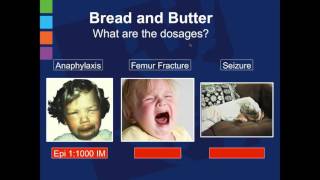
So this presentation isn't really to harp on the Brazos system. When it first came out 30 years ago, it was revolutionary, it was ingenious. But at the end of the day, we're not going on those pediatric cardiac arrests that frequently. However, we are going to go on our bread and butter calls, as we call it a little bit more often. And those calls include calls like anaphylaxis, femur fractures, or pain management and seizures. So I know that when I went through paramedic school, I was taught that when you hear or think of pediatric, you think of Brazil being your tool to utilize. However, we quickly realize once we get into the field that this is not 100% accurate. And unfortunately, since we don't do that much training on pediatrics and don't utilize the Brazil tape and other systems out there that often, we're not too aware of what's actually on that tape. So you'll notice that all these three types of medications that are required for these types of scenarios or patients are going to be found on Labraso. However, they're going to be found for different purposes. So what I mean by that is that, and unfortunately we've seen this in trainings and unfortunately in real life scenarios as well. So I do challenge you to go back to some of your paramedics and test them on this to see if they fall into this trap. But whether you're treating a severe anaphylaxis case, and let's say the paramedic needed to give FE1 1, they pull out the Brazil tape. They don't recognize that the EPI one to one dose on the Brazil tape is going to be the ET tube dose of resuscitation. They end up giving a tenfold overdose. Same thing with fentanyl or morphine.
There is no morphine dose listed at all on the Brazdo and I know that morphine's been getting phased out for the most part, but the fentanyl dose listed on the Brazdo is going to be for rsi. So again there is no pain management dose on there. That'll be a three to six time overdose depending on concentration. And then same thing with seizures, there is no midazolam dose. The Brazos system, there is one there for RSI though and depending on concentration, again, three to six times overdose. So this just kind of highlights how easy and quick it is to make those mistakes. I know here, down here in South Florida and Broward county, anyways, the majority of departments, I think there's only one actually that still does RSI or is allowed to do RSI rather. And the reason that we don't do RSI for the most part is that we have short transport times. And on top of that, the number of errors that we were experiencing when we did have RSI approved was just enormous. So we, these medications listed here on this tape mean absolutely nothing to me now. And at the end of the day they just lead. They just add to the confusion and error prone medication dosing that we have with pediatrics inherently. So discuss some of those discordance rates. Myself and Dr. Entebbe were actually at the NEMSP conference in San Diego back in 2016. We were actually just there and met your group there in New Orleans a few weeks ago. So it was very nice to meet all them. However, back in 2016 we did a poster abstract comparing a, comparing 38 EMS agencies protocols to the Brazel system. And what we found was that 10% of EMS meds found on Lambazzo at the incorrect dose and at 39% of EMS meds were not even listed at all Nebraslo, which led to a 49% average discordant. So that's a very, very high number, especially when we're looked at in the public eye as being.
Superman, Superwoman and there to save the day.
And save that loved one. When we're utilizing a tool that doesn't allow for us to properly reference it in terms of dosing and getting medications on board and interventions done. All that, that's what ends up leading to paramedics going back to the station and thinking could I have different to, to save that kid or if I had done this instead, would that have, you know, saved them or brought them back? And you know, no paramedic wants to go back to the station feeling that way because that's what ends up leading to those, those, those ghosts that, that haunt those, these types of, or these, these people for, for so long that unfortunately that ends up leading to, you know, suicide and other things like that. So we, we want to, we want to alleviate that stress that, that comes along with those types of calls. So these are some of those medications listed there for you. This is the actual poster abstract. It is going to be found on our website. I am more than happy to send it to you as well. Just please ask me for a copy if you would like and I'll be more than happy to send it, but it's going to be found on our website.
The state of Maryland actually runs a statewide protocol. So it just so happened that I was in Howard county, which is right next to Baltimore county and Prince George's county and a little bit north of D.C. back in July. And it just so happened that July 1st they came out with their new statewide protocol. So what we ended up doing was doing a comparison of the state of Maryland's protocols to the Brazo system. And what we found was that they had a 55% discordance. So Howard county now does, does now use our system. It's been very successful for them. And we're seeing Prince George and all the other surrounding counties starting to take an interest in evaluating now that Howard county has really piloted the system there. So very excited about that.
A group of very well known docs out of the Phoenix and Denver area did a study comparing the seven evidence based guidelines that are put out by organizations like AHA, MSP, groups like that, and compare the 26 medication recommendations that they make and found that only 15% of the medications listed on the Brazil were correct, 54% were not listed at all, and that 31% were listed incorrectly. So again, this isn't just coming from us now, this is coming from a much more broader scale and people are starting to realize that again, the Brazil does serve a purpose and you are able to treat some pediatric patients with it. But it does leave a lot of room for error and it's not a full solution to an inherent problem that we have when it comes to pediatric dosing. So there are numerous studies out there that show that, that about half the time that a paramedic is giving a pediatric any sort of medication, they're either overdosing or underdosing that pediatric and again, that's about half the time. So very staggering numbers. Denver Health, a large hospital system out of the Denver area, obviously.
Wanted to do a peer review prior to implementing the hands heavy system. So what they did was they took 80 of their paramedics, gave them two very common scenarios using dextrose and EPI. They had been using the Brazo system now for many, many years. That's what they've been trained on. That's all they knew. They got a quick 2 minute overview of what the hand tevy system is, how to utilize it, and you can see that their error rate was significantly higher while using the Brazo system compared to the Hands heavy system. At the very end of that peer review, they asked their paramedics what they thought of the two systems. 98% of them found it to be easier, 91% of them found it to be faster, and 88% of them found it to be more accurate. So Denver Health now utilizes our system. They've been using it for about the last year or so. So this peer review definitely helped them out a lot and helped us out a lot as well. So now that we've gone through all the psychology and back ends of what our system actually is, now we're getting into now the back ends of our pediatrics. Now we're getting to what our system actually is. So really there's going to be two main differences between our system compared to really anyone else out there. And the first one is going to be that we're going to be an age based hybrid system. So what that means is that with our system you're going to learn that a 3 year old for instance, weighs ideally 15 kilos. So what that allows you to do is that let's say you call that dispatch to a three year old drowning, anaphylaxis, femur fracture, whatever the case might be, prior to arriving on scene, you're able to start determining what size, equipment you might need, what medications you might need to administer, how much medication based on the nature of the call. And you start that pre planning process just like you do with your adult patients. That way there's more confidence, less anxiety, you get off the truck and your paramedics know what they need to be doing and they're not fumbling around looking for a tape or measuring the kid and converting milligrams to milliliters and having that scramble mentality. Now, we do have a backup color coded length based tape that's going to be used when a kid is too tall, too short for their age. You don't know the kids age, you'll pull off the tape, measure the kid, they fall into a color category, and then from there you refer back to your customized medication guides or mobile for treatment. There are no actual concentrations, medications or equipment on our actual tape itself. It's just simply used as a backup means to determine the child's weight. So one of the questions we get asked is, is age an appropriate means of identifying the ideal body weight of a child? Simple answer to that is going to be yes. So Tim Young, out of the Loma Linda area, did a study comparing a finger counting method or an age based approach to a length based approach. And what he found was that they were actually statistically equivalent. So the AHA does recognize a finger counting or a finger counting or age based approach to determining the ideal weight of a child. Or I do recommend having a link based tape in any pediatric system for again, when the kid is too tall, too short for their age. And we do check that box as well and make that same recommendation.
What we did here was that we actually took Tim Young's study and recreated it using real patient data. You can see from the two plot diagrams that they're for the most part identical. At the end of the day, if you're off by one or two kilos when estimating that child's weight, it's not going to be a detrimental effect to that patient. You're trying to work within that therapeutic range of treatment and avoid that 3, 6, 10 fold overdose that we're seeing again all the time. With medication administration for pediatrics. So, you know, one of the questions we typically get asked as well is, you know, in today's day and age, especially here in America, kids seem to either be overweight or sometimes even obese. So how do we treat those kids? The simple answer to that is going to be that 95% of the medications that we administer are going to work off the ideal body weight of that child and their water content. So, you know, we're not 70% water. So those medications that we're administering aren't gonna take into account the actual fat content within that kid. However, there are gonna be some medications that do take into account that fat, that fat content and those are gonna be like sucks and amiodaron. So let's say you're administering, let's say you're treating a five year old patient who weighs, who's supposed to weigh 20 kilos and he still measures out as a five year old ranger, a blue, but in reality he actually weighs 30 kilos. And let's say your onboarding sucks, for instance. And you notice that, hey, this kid's not fully paralyzed yet. Again, there might be a little bit of paramedic judgment involved. They're saying that, hey, I need to up my dose a little bit. And that's just simply knowing pharmacology and what meds, you know, take into account that fat content. However, again, what we're trying to avoid is gonna be that 3, 6, 10 fold overdose of medication dosing that we're commonly seeing.
So and just to kind of reiterate just a make one other point, if we take a look at something like the EpiPen Jr. For instance, that is going to cover a wide range of age groups and weights. So again, you're just trying to work within that therapeutic window and get actual interventions on board as opposed to having the mentality of getting to the hospital as quickly as possible.
So the second part of how our system is different is that again, we are fully customized 100% to a specific department's protocols and medical direction. So these are actually pages out of the customized medication guide that we did for North Memorial Ambulance service in Minnesota. They are a large hospital base EMS service. If we take a look at the six month old patient here or six month old page here, you're gonna see that they have every single medication, concentration, backup drug shortage drug that they want to have on here listed for them alphabetically A to Z. They've color coded some of their medications to be different colors. So I've seen some Departments for their cardiac drugs in red, RSI in blue, Narciss in blue. It's completely up to what you want to actually do at your department. You'll actually, you will also have mixing instruct, you can also put mixing instructions. That's a certain medications, you can put side notes next to them saying it's the first dose, second dose, etc. Again, completely up to how you guys want to customize that. But more importantly, in the highlighted light blue section you're going to have all the volume forms of medication. So again, so leaving all that converting milligrams to milliliters, there's more confidence in the air now and the paramedic is actually staying on scene and treating that patient. Now our system is going to cover a preemie 2 kilo patient all the way up to a 13 year old 60 kilo patient. I was also going to cover a 75 kilo and a 100 kilo adult patient customized the exact same way. So it does cover both pediatrics and adults, making it more of an everyday type of use as opposed to a once in a while type of use. The very bottom of those pages you're going to have your electrical settings. So you'll have, if you guys use LifePak Zols, another type of monitor, you have your first, second, third and fourth round of cardioversion and defibrillation listed there for you. Same thing with your airway. So Seminole county here in Florida, they just wanted to put ETs and King Tubes on there. New Orleans EMS, they put ETs, King Tubes, iGels and LMAs. Again up to whatever you guys want to include. At the very, very bottom you will have the vital signs of what the parameters of a healthy patient in that weight range or age group should be within. So the top you'll notice that you'll the weight and the age all associated with this, with this patient here, the very back of the book. Hopefully you never have to use it, but you will have your Hazmat toxicology pages. So you have all your poisons, all your antidotes, how to mix them, how to apply them. Same thing with Cyanokit instructions for you there as well. And then from there you get a little bit more customized. So some departments put in pediatric glass, glaucoma and burn charts. I've seen St. Louis Fire Rescue, they put in EKG, salt, mass casualty, a pain scale. Some of our critical care services will put in ventilator settings. Hospitals, they transport to criteria levels. Again, it's completely up to what you want to include on there and what would benefit your paramedics the most.
So the last two or three slides here before we go into our mobile presentation is going to be on our pre deployment versus post deployment data. So Polk County Fire Rescue serves a population of about 600,000. Their medical director, Dr. Paul Banerjee, actually went ahead and submitted this information to us and is in the process right now of actually publishing a paper on it. So we're hoping to see that paper in the next few months here. We're very, very excited about it. And before we discuss this information, this data here, I want to say that this is all of their pediatric cardiac arrest data for these four years. These are kids that were EMS related, trauma related, those that got bystander cpr, those that didn't, those that had stay in play mentality applied, those that had load and go applied. So this is again all their pediatric cardiac arrest data. So 2012, 2013, they were utilizing the Brazos system. You can see that they had 38 pediatric cardiac arrests between those two years. Their Ross return percentage in 2012 was 0%. In 2013, it was 11%. So pretty low. And then if you take a look at the survival discharge 100% neurologically intact from the hospital, based on these Ross return percentages, it's going to be zero percent for both years. So there were kids that did make it out of the hospital. However, there was some form of neurological deficit. And obviously, as providers, we want to see a fully successful outcome. So 2014, they implemented the hand tevy system. You can see their pediatric arrest data went up a little bit higher for those two years. However, their Ross return percentages went up to 33% and 29%. And their survival of discharge 100% neurologic intact from the hospital went up to 71% and 78%. So a total of 12 kids made it out of the hospital. Or based on these roster trim percentages. So a total of 12 kids made it out of the hospital 100% neurologically intact. And you know, we asked Dr. Banerjee, you know, why are these numbers so completely different from what you guys were doing before? And he said that since implementing our system, he would. Their paramedics now are staying on scene for about 15 to 17 minutes on average with any pediatric cardiac arrest, whereas before they were only on scene for five to six minutes. So this is the only difference in change that they've made in terms of pediatric treatment. And we're actually still collecting the final data for 2016. But we're told that it looks just like the previous two years. So very, very excited about that. We hope it happens everywhere and we're starting to see that change occurring in different places. So.
Continue on. So Denver Health again, very large hospital based EMS service, they see about 100,000 calls a year after implementing our system. They saw a 116% increase in fentanyl ion administration and almost a 200% increase in versed in administration. And at the end of the day, the reason being is because now their paramedics again are staying on scene. They know exactly how much medication to be giving. They're not worried about their math being wrong. They're doing something more detrimental to that kid. Their job being on the line, getting sued and they're actually administering medications like they're supposed to, which obviously leads to improved patient care. So real quick, when I go into our mobile demonstration.
So let me. So right now I'm on the web based browser version of our system. So the only. So again, this is compatible with iOS, Android, Windows 7, 8, 9 and 10 and right. The only one that's going to require a web based browser version or a constant connection to wi, FI or cellular, it's going to be found on our Windows 7 platform. The reason that Windows 7 requires this constant connection is that it's going to be an older software. It didn't allow for third party connections like that. However, all the other platforms are going to work as an app. And what that means is that once you make that initial connection and download of it, everything that we're about to do here can be done through the app, through it itself. It lives internally within the app itself. The only other time you'll need a WI FI or cellular connection will be to either make updates to the mobile or to actually submit your reports. So right now we're in New Orleans account. So this is specific to them. So now we're going to start new patient. You'll see here you have all your age groups preemie all the way down to your adults down here at the bottom. So let's say we select our 2 year old. Select our 2 year old. That customized page for that 2 year old now comes live right there on your screen. Let's say that we select Benadryl. We want to get BOB 0.2 MLS. We select it, we have our different routes, administration IV IOIM. Let's see that. We give it IV though. We hit given. It's going to timestamp it, turn it green. Let's say we want to get some EPI 1 to 1. Now click EPI 1 to 1.1 MLS. Hit. Given timestamps, it turns it green. We go down to our left side of our screen here and go to our airway because we're ready to do some airway. Try doing an ET tube 3.5 cuffed. We'll say that it was unsuccessful. We'll do an igel size 2. Now say that that was successful. And we'll say that our patient crashed and we're ready to do some defibrillation. So we click defibrillation, go to our first round of 20 Joules. We hit successful, and now we've saved our kit and we're ready to submit our actual report. So what ends up happening is that you'll go to review and Submit chart. You'll type in your name, saying that Patrick was the one who charted it. You'll type in your record number saying it's 1, 2, 3. We'll type in again 1, 2, 3. Put any additional notes in here about the call if you'd like to. It's completely up to you. But from there, if you want to make any sort of changes or modifications to anything that was administered, let's say we select Benadryl. You can change the route, dose, time, concentration, any side effects with that drug in there if you'd like to. And then from there we simply back out of it or hit update. If you make any sort of change, you'll select if everything looks good, you'll select this check mark box. You'll hit submit. And what ends up happening from there is that through submitting it, once we're integrated with your software, this report will go up to the cloud. That cloud will be connected to your toughbook software. And from there on your toughbook, you'll. Or on your software, you'll get a notification saying that there is a new report to import. And from there you'll go into that report, into that section, you'll find that report. You hit import, and from there it'll build directly into the actual flowchart and patient care record that you're working on. So we're very, very excited about that. One of the other functions that you will have the option of utilizing, whether you're integrated or not, will be our fax and email capability. So simply all you would do is go to chart archive. You'll type in, you'll go to the report that you want to send off. So we'll go to the one that we just did, which is the second one Right here we'll select it. And from here you're going to have a predetermined list of email and fax locations that are put in by your administration. So these are all predetermined by your administration. I've seen some departments put in hospitals that transport to ems, chiefs, medical directors, administration. Again, it's up to what you want to have on there and all you do is you select who you want to send it to. You hit send. I'm not actually going to send it though, so I'll back out. And the other nice feature about the mobile is that the mobile allows for near to real time updates. So what I mean by that is that when you have a concentration change or shortage of medication or protocol update, all you would do is you would log into your medication management software, we would take out the old one, put the new one in, and now you have an up to date system of what you're actually utilizing in the field. So you can do that as many times as you want throughout the year. There's no, there's no number to how many times you can do that. So it's a very exciting feature that we have. And just real quick I want to show you what those email and fax reports look like. So as they come through, you'll have your department logo on there. Who was charted by the record number, the date where it came from, what rescue unit or what unit it came from. First intervention, last intervention, all the actual interventions here when it was completed and then just summary of key points, last slide with Hentavi versus Brazo with Hentavi. No math is required, you initiate care prior to arrival, it's customized 100% to your agency, documentation is now streamlined and continuing education.
So with that.
More from Peter




Melissa Olen MSN, FPN-C, CCRN: Sudden Cardiac Arrest Training in Schools (Project ADAM) 4/25/25



Pediatric Hospital Readiness: How Teamwork & CPR Metrics Drive Better Outcomes



Chelsea Kadish, MD & Kyle Goodknight, EMT-P, RT: Pediatric CPAP in EMS (3/14/25)