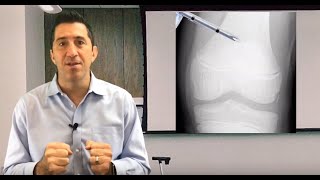
This content was created by Peter Antevy. This content was uploaded by Peter Antevy. This is a YouTube video titled "Handtevy Minute: It's Time to Squash the Tibial IO" created on October 29, 2019, featuring Dr. Peter Antevy discussing intraosseous (IO) access in cardiac arrest situations, particularly focusing on the use of distal femur IO in pediatric patients.
Chapters
Hey, everyone, this is Dr. Entebbe with another edition of the HENT Heavy Minute. Today I want to talk about the IO. What about IV access in a cardiac arrest? Well, oftentimes you can't get an iv and we actually would want you to go right to an IO. Now, in the adult, what do we do? Most of us do the proximal humerus for the IO in the adult patient, it's a direct shot to the heart. It's nice, it's relatively simple to do, but in pediatrics under the age of 10, that cartilage up there is not solid bone. If you look at an MRI image, you can see that that bone is not fully solid calcium. So what have we done? For many years, we've taught the proximal tibia and the proximal tibia. We found that it hasn't been the best. Why? Because you have to either use a short needle, the pink one, or the blue one. And either it's too short, or you puncture all the way through the bone and you end up filling up the whole calf with fluid. As a matter of fact, this study was just published in Resuscitation last month looking at intraosseous needle placement in pediatric cadavers, both children under 1 and children over 1 year of age. They had 212 consecutive pediatric cadavers that underwent post mortem CT. 38 of those cadavers actually had a visible I O needle in them. Look at these images here and you can see that many of these needles are either not through the bone or they puncture through the bone altogether, like we had just mentioned. First, let's take a look at table two. These are infant cadavers, children under the age of one year. And you can see that of the total 34 I.O. needles placed, 16 or 47% of those were malpositioned. Now here in table three, child cadavers over the age of one with 23 total I.O. needles, nine of which, or 39% of which, were malpositioned. So what do we recommend now? What do we convert it to is the distal femur IO. The distal femur is a beautiful bone because it's really large. And where you're going to be going, which is 2cm above that tuberosity on the medial aspect of the femur. We'll show you that here in an image. You could see that that bone is fully calcified. It's big, and once you get into it, it's solid. You almost don't even have to anchor it down. And so the femoral IO gives you faster rates, easier flow, and it's really an easy place to put that IO. The one caveat here is very important is that that femoral tissue, you're going through some skin and some muscle and so forth. So that needle, that plastic of the needle as it's spinning, if the child is conscious, it's going to hurt. So we would not advise ephemeral IO in a conscious child. We would advise you to go to the proximal tibia in a conscious child. For example, if the child was septic and needed fluids and you couldn't get an iv, or hypoglycemic and needed dextrose and you couldn't get an iv, the distal femoral IO should be for the unconscious child, cardiac arrest. And it's very successful. And we were advised for you to use that. So thank you very much. This has been another episode of the Hantevi Minute with Dr. Peter Anteve.