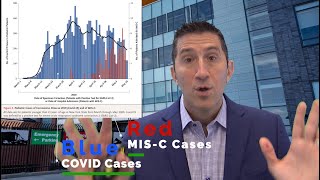
Dr. Peter Antevy explains MIS-C, a serious inflammatory condition in children after COVID-19 infection. It requires fever, lab signs of inflammation, multisystem involvement, and no other diagnosis. Watch for rash, conjunctival injection, hypotension, myocarditis, and GI symptoms. Early recognition and transport to a pediatric ICU is critical.
Questions this video answers
Under 21 years of age.
Fever, laboratory evidence of inflammation, severe illness with multisystem organ involvement, and no alternative diagnosis.
Positive COVID-19 by PCR or serology (antibodies), or exposure to someone with COVID within the last 4 weeks.
Chapters
Hey everyone, this is Dr. Peter Rantivi. Welcome to another edition of the HENT Heavy Minute. In this particular HENT Heavy Minute, I want to focus on Covid, specifically with pediatrics. As you heard, MIS C. What is MIS C? Well, let's take a look. Here's your case. This is the call you're going to get. 2 o' clock in the morning and you have a child who, who has a rash, doesn't look well. You can see the blood pressure is low. You can see the child's tachycardic, tachypneic and overall does not look well. Right, so this is the PAT. So you're noticing the rash, you're noticing red eyes, you're noticing the child has a fever. And immediately what may come to mind here is that this could be some type of infection. Now what is MIS C? Well, we've known this to be something else for many years in pediatrics, something called Kawasaki disease. Now you're looking at the screen here and you can see that with Kawasaki you have red eyes. But remember, those eyes do not have any discharge. Red cracked lips, a red tongue, swollen hands. But the foremost features are fever and a rash without a fever and a rash. We're not calling this Kawasaki disease. So first the definition of mis c. You have to be under 21 years of age. You have to have a fever. There has to be laboratory evidence of inflammation. These children are severely ill and they have to have multi system organ involvement. So they have cardiac issues, renal GI and so forth. And they have to have no alternative diagnosis, which is commonly what we found in Kawasaki. We looked for everything else and couldn't find it. And they have to have COVID positive, either by pcr, by serology, which is antibodies, or they had to have had an exposure to somebody with COVID within the last four weeks.
Now let's look at the common signs and symptoms of MIS C. We talked about Kawasaki, it looks like that. But it also has features of toxic shock where those children become hypotensive, they look severely ill, there's hyper inflammatory features. The inflammatory system just goes haywire. You'll hear the word cytokine storm. They have altered cardiac function, oftentimes myocarditis, leading to hypotension and needing things like pressors. They have abnormal clotting where their entire clotting cascade goes haywire. And they oftentimes become thrombotic and then oftentimes they'll have GI symptoms. Now this is really important to actually learn this now because we're in the midst of COVID we're in the midst of MIS C cases. And in the next six to eight months, hopefully this will all be gone. But learn about what these kids will present with so that you don't miss it. Now, it's important to understand these children may have never had symptoms of COVID You can ask the family, they'll say, no, the child was never sick. That doesn't matter. These children could have been asymptomatic and still get Covid and get really sick. So if there's a history of the parent having Covid, you should know that. If there is a history of the child being exposed to somebody with COVID you should know that because that qualifies them now for being a candidate for MIS C. Another important thing is make sure we're assessing vital signs. Make sure you're making a full assessment head to toe on the child. Don't miss the skin, don't miss the eyes, don't miss the temperature, and more importantly, don't miss the tachycardia, the hypotension, and even do an end tidal. Right? If they're septic and their end tidal is now below 25, well, that just gave you a clue that this child has a lactic acidosis and they're just trying to breathe off that CO2 and therefore they're breathing faster. So there's a lot that we can do in the field. We can alert the hospital to a potential MIS C number one. But more importantly, the these children need to go to a specialty hospital, a children's hospital that has all the subspecialists there, from the emergency physician who's pediatric trained to infectious disease to hematology to ICU gi, even renal. Because again, this is a multi system issue and oftentimes they will end up in an icu. So if you have the ability to get these kids to the right location. The first time, I would do that. So that's been an overview of MIS C. We'll be living with this for the next six to eight months, more than likely. So please train on it. Send this video out to others who you think may find it useful. And again, thank you for your attention. This has been Dr. Peter Hantevi for another edition of the Hantevi Minute.