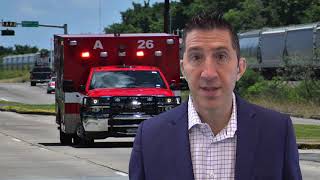
Dr. Peter Antevy outlines a joint NAEMSP/Handtevy position statement endorsing ketamine for EMS use in pain control, sedation, and seizures. Ketamine preserves breathing and blood pressure better than opioids. Key caution: give IV slowly over 60 seconds to reduce laryngospasm risk.
Questions this video answers
1) Children under 3 months of age; 2) allergy to ketamine; 3) patients who cannot tolerate elevations in heart rate or blood pressure.
100 milligrams per milliliter (100 mg/mL) for IM administration.
Dilute the 100 mg/mL vial (or use pre-diluted 10 in 1) and give slowly—over about 60 seconds.
Patients with alcohol intoxication, patients using cocaine, and patients on benzodiazepines (or who have already received a benzo).
The position statement recommends decreasing the ketamine dose for elderly patients.
Chapters
Hey, everyone, this is Dr. Peter Entebbe for another edition of the Hentevi Minute. It's not often that we see a joint position statement being released by a number of entities. And recently we have one on ketamine. One of my favorite topics. Ketamine, as you know, is a medication that we use for many different things. For trauma patients, for medical patients. We use it for pain control, sedation, excited delirium, dsi, seizures in adults and children like we described recently. And if you're an EMS leader and you do not yet have ketamine in your protocols, it's time to look at this position statement and really understand the benefit and the utility of ketamine. Okay, so the first thing the position paper talks about is ketamine for pain. Now we know that we use opioids. Sure. Now we have ketamine. What's the benefit of the trauma patient number one is that ketamine does not suppress the respiratory drive and it will not create hypotension. Think of that blunt trauma victim who's got internal injuries and is at risk of becoming hypotensive. Well, that patient will benefit from ketamine over an opioid. What about that trauma patient who you've given fentanyl to? They're still in a 10 out of 10 pain. Well, that's a perfect patient to give a follow on dose of ketamine for. And here's one you may not have thought of a trauma patient who's taking suboxone. That person doesn't need an opioid. They need a medication that uses a completely different mechanism for pain control. Lo and behold, that's ketamine. So we need to start thinking of ketamine for the trauma patient. Whereas for years we were told not to give ketamine to the trauma patient, mainly for ICP issues. But that myth has been debunked. So the other indications in this joint statement talk about procedural sedation, talk about RSI or DSI and excited delirium. And the main reason that they're recommending ketamine in these situations is all because of the hemodynamic stability that ketamine provides for you in the type of trauma patient that you may be seeing. So we've heard about excited delirium quite a bit. Well, excited delirium, those patients are severely acidotic and they have to blow off their CO2 just to normalize. Ketamine is a perfect sedative in that situation because if you put a stranglehold or hog tie them or in any way limit their hyperventilation. That patient will go into cardiac arrest not because of the ketamine, but because of the physical restraint that people are putting on those victims. Okay? Now, although ketamine is a great drug, we think it's a wonder drug in many instances. There are three important contraindications. Number one, children under the age of three months are at high risk of laryngospasm. Number two, anyone who may have an allergy to ketamine. And thirdly, because we know ketamine leads to elevated blood pressure and heart rate, if there's anyone who may have an issue with an elevation of heart rate or blood pressure, you need to withhold ketamine in that situation.
Okay. Another important topic that I'm personally very passionate about is the dosing of ketamine. We know that ketamine comes as three different concentrations based on the etiology of the disease. You're going to be giving different dosing strategies, right? Pain, rsi, excited delirium. But I think that the most overlooked item is how ketamine is administered. So the most basic principle to understand is if you're going to give it intramuscular, you can use a highly concentrated 100 milligrams per milliliter. But if you're going to give Ketamine IV for pain or RSI, you want to give it slowly and therefore you have to dilute it down. Either use the 10 in one pre diluted ketamine or take the 100mg per ML vial and dilute it down on your own prior to administration to the patient. We know that ketamine has a very large therapeutic window. There have been case reports of children receiving 100 times the dose of ketamine without any side effects. So I think ketamine is a very safe drug when used in the right hands, when monitored effectively. And remember, it's important, you have to let the patient's physiology work. If you hamper their respiratory rate whatsoever, you're going to cause problems and that patient may indeed go into cardiac arrest. Okay, Some final thoughts about ketamine. The most common side effect to be cautious of with ketamine is laryngospasm. That transient apnea that is caused when you rapidly give ketamine through the IV can be avoided using the diluted form of ketamine and given over 60 seconds. What about ketamine in head injured patients? It turns out it's okay to give it to the head injured patient, even though for years we thought it wasn't even ICP issues or intraocular issues are no longer a consideration. Thirdly, there are three types of patients you have to be worried about when giving ketamine. Number one, a patient who has alcohol intoxication, Number two, someone who's on cocaine and number three, someone who's on a benzo or someone you've already given a benzo to. Those are three patient populations that you have to be careful about. And then finally, the geriatric population really hasn't been studied with ketamine. And so this position statement recommends decreasing the ketamine dose for the elderly. So hopefully that was a good wrap up of this joint position statement. Please download it at the link below, read it and consider ketamine strongly at your agency. This has been Dr. Peter Hantevi for another edition of the Hantevi Minute.