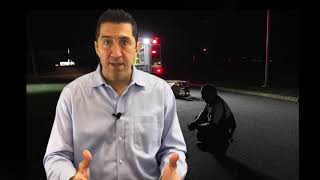
Dr. Peter Antevy explains how clinicians can reduce harm to bereaved families after a child dies. Families want to be embraced, not abandoned. Simple changes like calling within days and attending funerals make a difference.
Questions this video answers
Within a couple of days.
South Florida.
"When Children A Parent's Perspective" (author contribution to EMS World).
Chapters
Hey, everyone, this is Dr. Peter Entebbe with another edition of the HENT Heavy Minute today is a topic that's near and dear to my heart because this is a very important concept for us in the field as we're treating children in cardiac arrest, or for that matter, any child who's critically ill. We get to the scene and the first people who are going to be looking at us are the family members. The family members want to know, number one, that we're there and we know what we're doing. They also want to be informed as things are happening. But it's a tendency, not just of ER doctors, but it's a tendency of all of us in the field as well, to not engage with the family. Right, for fear of they think we're doing something wrong or they're going to get upset with us. But it turns out that the further you push the family away from you, either on scene or even in the emergency room later on, the worse it is. Not just for you, but for the family member as well. There was an amazing paper published recently in Critical Care Medicine where they interviewed families who lost children in the icu. And the number one sentiment from them was that they wanted to be embraced. They wanted people to bring them closer rather than just kind of shun them. Now, for many years in the emergency department, I can tell you that I did it wrong and I didn't walk up to people like I should have. I would say for the last five or so years, I really learned how to engage the family, good or bad. When you're on the scene, engage the family, look into their eyes when you're talking to them, tell them exactly what's going on as you're going through it. And then in the emergency department, when you see them afterwards, get closure, go.
Up to them, tell them what you.
Did, tell them of the high quality care you gave their child so that they understand, weeks and months later that you were there for them, that you did do everything that you were supposed to do, give them that confidence that their child did not die in vain. It's such an important point. Now, another big point that I want to hit on here is that families wanted to be followed up with afterwards. So they said that within a couple of days a phone call would be amazing. So we've actually implemented that here in South Florida, where within a couple of days, someone from the fire department calls mom and dad, we go to the funeral. It turns out they want us there, they want us to be with them, they want to be embraced.
For this month's edition of EMS World magazine, I was privileged to write a story on this exact topic titled When Children A Parent's Perspective. I hope that this can start a conversation about how we can engage families both in the field, in the emergency department and beyond.
We really have to learn and practice this. If you come to the Gentavi course, we will learn and we will practice this so you can take it back to your agency and teach others. Again. Thank you very much. This has been Dr. Peter Hentevi for another edition of the Gentevi Minute.