Ketamine
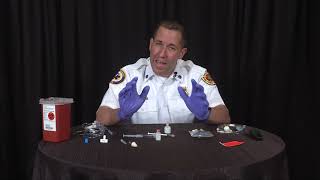
Peter Antevy walks through updated EMS protocols for ketamine: always dilute it for IV/IO to cut side effects, use it for pain and chemical restraint, and reach for it first for airway sedation in hypotension, bronchospasm, or head injury. The talk covers exact steps: dilute into a 50 cc bag, run wide open over about 2 minutes.
Questions this video answers
500 mg in 5 mL (100 mg/mL).
25 mg (0.25 mL) into a 50 mL bag, infused via 60-drop set (run wide open, ~2 minutes).
Standard 400 mg IM and a lower 200 mg IM option for special populations (head trauma, elderly, small stature).
100 mg IV (1 mL), transferred into 50 mL bag and infused (give full infusion even if seizure stops).
200 mg IV (2 mL), diluted into 50 mL bag and infused (60-drop set, run wide open).
Am.
Alright, so now we're going to go into our ketamine update in the protocol. So you'll see we use ketamine for a whole lot of things now and we give it IM for some things and we give it IV IO for others. So the first thing I want to go over is whenever you give the ketamine for whatever the indication, when you give it IV or IO, you've got to remember to dilute this down. So whether it's for pain, whether it's for sedation, etc. Make sure if it goes IV or IO, you dilute it down. We're going to go over how you go about the dilution, but here's what I want you to remember, that it's not just the dose of the medication or the milligrams of the medication, it's the concentration. So if you want to understand why we want to dilute this, just think about side effects. So let's say you're out drinking and you have a shot of whiskey and you have a beer. You take the shot of whiskey and it goes down and it burns, right? It's like good stuff, right? You take the beer and it goes down nice and smooth. It's the same amount of alcohol. Identical, identical effects with those two scenarios. What's the difference? It's the dilution. Same thing with ketamine. So it's not the milligram, it's the dilution. So if you give the milligrams of ketamine in a highly concentrated form like it comes in the vial, you'll still get your clinical effects, but your side effect profile gets much, much worse. So it's really important that we dilute this medication down. So we have all the positive benefits without all the negative benefits of giving ketamine IV IO when without proper dilution. So you'll see that there's an indication for ketamine for seizures now. So let's talk about why we're using ketamine for seizures now. It's a second line drug for our seizures. We're really still gonna be sticking to our Versed for seizures. But for people who have status epilepticus, what we find is that there's two receptors in the brain that we're trying to hit when we're trying to get seizures to stop. There's the typical GABA receptor and that's the receptor that alcohol works on. Versed and other benzodiazepines work on. When you have somebody who's seizing for a long time, the number of GABA receptors decreases. Now, at the same time, the number of GABA receptors are decreasing, which, of course, if you have less receptors, it makes your Versed less effective. At that same time, your number of what we call NMDA receptors goes up. Ketamine works on NMDA receptors. So when you've got somebody who's got status epilepticus, obviously Versed and drugs like that work less well because the number of receptors in the brain that that medication can work on is down, regulated. At the same time, it would make ketamine the perfect choice because the number of receptors that that drug will work on goes up. So, so far our track record is we've had four episodes of status epileps that I'm aware of. Where we gave Versed, nothing happened. And we gave 100 milligrams of ketamine intravenously, worked like a charm, stopped every single one of them. There's not a ton in the literature on this, but we know ketamine is a relatively safe medication and so far we've got a decent track record here. Now, I am going to caution you, though, in this scenario, you will be given ketamine after another sedative. Ketamine alone is quite good in terms of not decreasing respiratory drive. But when you combine ketamine and Versed, be prepared to take over the patient's airway. It may just be briefly with bag valve mask, or you may need a supraglottic airway. Or if they're really out for a long time, then you'll need to actually go to endotracheal tube. But be prepared for that step. Once you combine ketamine and other sedatives, alcohol, averset, etcetera, the risk of respiratory depression goes down. You've always had the option of using either etomidate or ketamine for sedation, for respiratory control in the protocol. And you'll see in this year's protocol, we've actually given you a list of indications for each to kind of give you a better idea of when is it better to use one drug over the other. So on the etomidate side, you'll see pregnant patients are listed there. And that's not that ketamine is unsafe in pregnancy, it's just that we don't know, we have no idea what ketamine does to pregnancy and it's not classified at all by the fda. So since it's completely unknown, we would rather just completely avoid the use of ketamine in pregnant patients. So as an indication where Etominate would really be the best choice. On the ketamine side, there's a number of indications that it's really good for certainly anybody that you're intubating because they've got bronchoconstriction. Ketamine raises the endogenous epinephrine level. Epinephrine, we already know from our push dose EPI stuff is a bronchodilator. So ketamine will, in addition to sedating those folks, will give you some added bronchodilator effects. So it's perfect for those people also because it raises the epi again, like push dose epi, it's perfect for patients who are hypotensive, such as your septic shock cases. And that's a case where you would not want to use etomidate because etomidate has some negative effects on the septic shock folks. I won't get into the details on it, but it suppresses cortisol effects and it's theorized that it's not great for septic shock. So septic shock goes on the ketamine side. And another one is for head injury patients. Well, there's two things that causes an increase, major increase in head injury patients. Number one is you let the patient become hypoxic. Well, when you give ketamine they still breathe. So you keep giving them their pre oxygenation, so decreases your risk of pre intubation hypoxia. And number two is if the patient gets hypotensive. Well, if ketamine, if anything, raises the blood pressure, so you help to minimize the risk of hypotension during the intubation. So ketamine is probably the perfect drug for head injury patients. So you see that on that side. So I won't go for every one of the indications. They're in the protocol. But you see some of the rationale of when you use etaminate versus when you use ketamine and that's some of the explanation on why it is. So now, ketamine for folks, for chemical restraint, you're going to be giving it intramuscularly. Now remember that you are limited to 4ccs, regardless of how many milligrams you're limited to 4ccs. You'll see in the protocol that we have now two doses of ketamine. There's your standard 400 milligram dose and now there's a 200 milligram IM dose. So this lower dose of ketamine is going to be used for those that you have to use chemical restraint on either excited delirium or violent patient for other cause for these what we call special population. And the reason why we're using the lower dose ketamine in these folks is because we want these people to wake up a little bit faster or because ketamine is metabolized slower in these people. So number one, our head trauma patients, our head trauma patients, we want the patient to wake up in the trauma bay a little sooner to allow our colleagues at the trauma centers to be able to assess these folks injuries a little bit sooner. So we notice that when we give 400 milligrams to these people, they sleep a little too long for our hospital colleagues. So they would rather have to redose these folks than have them sleep excessively long. So that's the first one. Anybody you're giving it for head trauma, the lower dose. The second is our elderly patients. The older you get, the less efficient your liver and your kidneys are at metabolizing drugs. So we find these people sleep for longer than we need. So same thing, lower the dose down to 200 milligrams for our older folks. Next one is our small stature people. In general, ketamine is a milligram per kilogram drug, but obviously we don't carry scale, so we just kind of pick a number. But if you have somebody that's obviously of small stature, you should consider using the 200 milligram dose, same reason, so that they're not sleeping excessively long and it gives our hospital colleagues a chance to evaluate them without waiting for them to wake up so long. Now, this does not mean that you cannot repeat dose these folks. If the 200 milligram for whatever reason is ineffective, you're still going to have the same cap at 800 milligram dose. So you can give multiple doses all the way up as necessary from a clinical standpoint. But you want to try to get away with the lowest dose possible to make it for a safe transport to the hospital.
So now let's review some of the ketamine administration techniques. First off, I want to show you the two different vials of ketamine that we currently have in our system. One is the Ketlar, which is the same thing. Ketamine is 500mg in 5mls, so each ML equals 100mg. And then we actually have the ketamine vial, which is the same thing for 500mg and 5mls each ML equals 100mg. So we're going to start with the adult pain management protocol. And you'll see that we have. It's a very liberal protocol. And what I mean by that is you can integrate either ketamine with fentanyl you can give. If the patient is in severe pain, you could give ketamine alone, or you can always start with fentanyl and then go to ketamine and give them together if needed, combined. And if the patient's in severe pain. So let's focus on ketamine for this particular protocol for the adult, we're going to be giving 25 milligrams. So that's only 0.25 ML. So if you're using ketamine for pain management and you have to draw it out of the vial to put it into the 50cc bag for the administration, which the protocol clearly states that you always want to use a 1cc syringe, never should you be in the habit of grabbing a 3 ML syringe to. To pull out 0.25 for pain management. So just think of this. If you're treating an adult for pain management with ketamine, use a 1cc syringe, okay? You'll be pulling up 0.25 mls of ketamine, which equals 25 mg of ketamine. And then you're going to transfer this into a 50cc bag, okay? So you're going to go ahead and you could use your mini spike, you could use your needle. However you decide to transfer it from here into here into the 50cc bag. At that time, you're always going to use your medication label and clearly identify that you have 25 milligrams of ketamine in the bag. And then the next part is you're going to get the appropriate drip set. Now, we carry two drip sets currently at Palm Beach County Fire Rescue. You have a 15 drop set and you have a 60 drop set. Anytime we're giving an IV infusion of ketamine, when you're going to heavily see this in our protocols, now you're going to be using the same 60 drop set. And I know when you look at the package, they're very similar. You would actually have to find the 60 or the 15 written on the outside of the package. Or you could always look at the administration set itself. The 60 drop set is going to be a much smaller amount. And you'll see it has the needle in the actual drip chamber. So now that you've transferred your 25mg into your 50cc bag, you're going to go ahead and connect your 60 drop set and you're going to go ahead and run it wide open. So you're going to administer this wide open. The infusion time is roughly right around two minutes, but the protocol doesn't state that. It just says run it wide open. And after you administer about half of your bag, probably about roughly one minute time, you're going to go ahead and shut it down. And you're going to shut it down and you're going to reevaluate the pain scale of your patient. If your patient's pain free at that time, well, great. Stop the infusion. There's no need to give anymore. If your patient's still experiencing pain, go ahead and open it back up and administer the rest of the ketamine. Now, you could repeat this entire process two times. Now, if you made the decision to go with the ketamine, that doesn't mean that you can't give the fentanyl. As a matter of fact, some of the reports that we've looked at, when given ketamine combined with fentanyl synergistically, it has lowered the pain scale greater than ketamine alone or fentanyl alone. So don't be afraid to go back and forth in between your pain medications during the treatment of your patients. Just be clear that you've identified the contraindications of both drugs before administering either one of those. One thing I want to add for the adult pain management protocol is you'll now see that we're able to give ketamine with the MAD device if unable to quickly establish an IV or an IO. So you can go in, or you could go im. But one of the things that I want to talk about real quick when treating the adult patient in with ketamine is our actual dose is the same as it is for the IV IO, so it's only 25mg, which is 0.25 ML. The MAD actually holds 0.1 MLS in the actual hub itself. So just think about this. If you're treating an adult internasal with ketamine, I would Suggest pulling up 0.35 mls because we know that 0.1 mls is going to stay in the actual hub of the MAD device. Don't worry about that when doing the pediatric drug dosing, because we've already added that in for you. Okay, so let's talk about ketamine administration for your seizure patient that is not responding to Versed. So your patient has already received 10 milligrams of Versed, and it could have been either IV, IO in, or IM of Versed. But let's talk about if we have a patent IV or an IO line, and you've already administered the Versed and it's not working well. Now, the protocol allows you to give 100 milligrams of ketamine. Okay? And this is something that we want to make sure that you notify the EMS captain of during the process. So you would grab your ketamine. Again, you're giving 100 milligrams, so your dose is actually going to be 1 milliliter. So it's 100 milligrams. Remember, the concentration again here is 100 milligrams per milliliter. So you can use the 1cc syringe to take you out of that overdose range by using a 3ml syringe. So just grab the 1cc syringe, just like you would do for pain management. Go ahead and draw up your 1 milliliter. And then you're going to transfer again into a 50cc bag. So you take the ketamine, 1 milliliter, 100 milligrams, put it in the 50cc bag, and once again, you're going to be using the infusion set of a 60 drop set. 60 drop set. And you're going to go ahead and run this in wide open. Now, some of the questions that we field it with this is if the seizure stops, do you stop the infusion? And the answer to that is no, give the entire infusion. We want to completely saturate the receptor site. And remember, this is a different receptor site than the actual benzodiazepine. So we want to go ahead and give the whole hundred milligrams infusion to make sure the seizure subsides. Make sure you document this appropriately. Make sure you notify your EMS captain. And again, be prepared for airway management of this patient. It is imperative that you measure and monitor end tidal CO2 during your transport. And remember the basics. Position your patient, get the head flexed up relative to the ear to the sternal notch, and make sure they're in the good sniffing position to make sure they are able to oxygenate themselves during your transport. For the advanced airway protocol, you'll see that we've split out the protocol into an algorithm to where you have an opportunity to go to etomidate or ketamine. And you'll see largely in a bunch of the different situations, that ketamine would probably be preferred over the actual etomidate. But you can check in the protocol and go ahead and see which are the indications and control contraindications. But I want to talk about the administration. And the administration for advanced airway procedures on the adult patient is going to be 200 milligrams. So we already know that each milliliter contains 100 milligrams. So we're going to need greater than the 1cc syringe to get the appropriate amount. So you could use your 3mL syringe or your 10mL syringe, and you're going to draw off 2mls of your ketamine. After you do that, you're going to go ahead and transfer it again into your 50cc bag. And, and after you do that, we're going to use the 60 drop set, just like we have with every other case so far that we've talked about with the ketamine. So you're going to attach your 60 drop set, make sure you put your medication label on, and then you're going to run the infusion in wide open for your patient. So some of the questions that we fielded so far is we need to get an airway, we need to intubate the patient right away. Why are we delaying giving the ketamine over two minutes? Well, it's really simple. The literature is pretty clear now that the rapid sequence innovation is kind of really fallen out of context. That's not really the statement anymore. Now it's more of something called delayed sequence innovation. So the focus is to actually get your patient's oxygen saturation up, with the nasal cannula flowing high at 15 to 25 liters per minute, positioning your patient, suctioning your patient, and assisting their ventilations in the process of premedicating your patient. So the mortality rate increases greatly if you do not get your patient's saturation up prior to the intubation. So after this runs in over two minutes, then you could make your next decision whether the patient needs to be paralyzed or is this alone enough to actually, is it enough to sedate your patient for you to be able to perform the actual intubation? Now, after you have your patient successfully intubated, if you go down to the post management section, you'll see you're allowed to give another dose of ketamine. And again, the dose is exactly the same. It's 200 milligrams, 200 milligrams, which equals 2 MLS. It's administered the same exact way. You put it in the 50cc bag, and then you attach your 60 drop set. And again, you run this wide open for your entire infusion, just like every other time we give the ketamine. Make sure you're monitoring all your vital signs, your blood pressure, your entitled CO2 and, and your ECG monitoring throughout the transport. So now let's talk about ketamine administration for pain management when treating pediatrics. Now, when you review the new protocol, you're going to see that we added for the ages three and above that you're now allowed to administer ketamine if the patient has severe pain. And the way that we define severe pain in the protocol is 7 and above on the pain scale, but it's a little bit different than the adult. And what I mean by that is we're not giving this IV or IO so you'll only be giving this intramuscular or you'll be giving it internasal. Okay. And that's something new that we've also added into the protocols for 2019. So no iv IO usage in or im use only. Some things I want you to take into consideration though are if you decided to treat the patient with fentanyl first, remember that if you've given one or two doses of fentanyl internasal, you might have already saturated the nasal cavity and, and ketamine might not work the best internasal, you might want to switch your routes at that time. And what I mean by that is if you've given fentanyl in, maybe you decide to go im. Let's review seizure controls for your pediatric population while using ketamine. So what we did was that 3 and older inclusion criteria that we spoke about for pain management. It's really just the same for the seizures. So if your patient is three or older and and they're suffering from seizures, that is not being able to be controlled by Versed. With your two doses of Versed, you now have the opportunity, with the EMS captain's approval, to administer ketamine. But just like the pain management protocol, we'll only be giving this intranasal or intermuscular. So make sure that you utilize the protocol and verify it on your hand tevy app as well as your hand heavy books that will be on the trucks and in the next couple months and you'll see that it reflects the pain management protocol exactly. Three and older, you could go ahead and administer the ketamine, but IM and in use only ketamine for advanced airway procedures. In the pediatric population, we use the same criteria for H. So if the child is three or older, you can now Use ketamine, which you could use before. You can now use ketamine to control the patient's airway for advanced airway procedures. One of the changes you'll notice in the new protocol, though, is we change the dose from 1 milligram per kilogram to 2 milligrams per kilogram. Now, the hand Tevy app already reflects that change in the books. When they're delivered, they will reflect that change as well. So let's talk a little bit about the administration. So you would go right to your infusion. So that's going to be the trick. There is you got to look in the infusion section of the hand heavy app. It's not under medications, it's under infusions for your advanced airway. And the reason being is because we're going to be giving it as an infusion. So you would pick the desired volume from the Hand Tevy app, you would draw it up with your 1cc or 3cc syringe, depending on the actual volume itself, and then you're going to transfer it, just like the adult population, into the 50cc bag. So you're going to take your dose, your desired dose, you're going to put it into the 50cc bag, you're going to put your medication label on it, label it as ketamine, and then once again, just like every other ketamine infusion in the protocol book, you're going to be using the 60 drop set and you're going to go ahead and administer it wide open and it'll roughly run it in at about a two minute rate. Now, after you have your patient successfully intubated, if you go down to the post management section, you'll see you're allowed to give another dose of ketamine. And same procedure, same volume, it's 2 milligrams per kilogram. You would put it into the 50cc bag, you would go ahead and use another drug label, you would use the 60 drop set and you go ahead and run it wide open.
More from Peter




Melissa Olen MSN, FPN-C, CCRN: Sudden Cardiac Arrest Training in Schools (Project ADAM) 4/25/25



Pediatric Hospital Readiness: How Teamwork & CPR Metrics Drive Better Outcomes



Chelsea Kadish, MD & Kyle Goodknight, EMT-P, RT: Pediatric CPAP in EMS (3/14/25)