Lt Ryan Woodward - Autism for First Responders (5/31/2022)
Lt. Ryan Woodward, an Oklahoma County reserve deputy and tactical medic, covers how first responders should recognize and handle autistic people in crisis. He explains stimming, sensory overload, elopement risks like drowning and traffic, and why standard restraint and sedation can backfire. De-escalation, using caregivers, and knowing local resources make the difference.
Chapters
I guess we'll get started. Let's see how we unrecord.
I'm just starting it, so it should be good.
Okay, there it is.
Perfect.
Awesome. And then, Ryan, you want to go full screen and I'll do the intro. So welcome everybody. This is really very important topic to me and you'll, you'll hear how important it is to Lieutenant Woodard. He'll start in a minute. Because I have some relatives who have autism. And so when I first connected with Ryan, he's from Oklahoma City. He's got an extremely impressive history of being at the Oklahoma City bombing, being at one of the worst tornado.
Strikes in his area. I think that was, I think he said 2013.
And really, when you hear Ryan's story, you'll see the passion that he has behind this topic. And for those of you who are thinking about putting an education at your agency, I think once you hear Ryan's talk, you'll probably say to yourself, he's the guy. So without any further ado, Ryan, thank you so much for taking your time to create this presentation. I know you'll be giving a longer version of this at EMS World Expo in Orlando this year. But without any further ado, sir, thank you for coming and take it away.
Thank you for having me. I'm super excited about this. Like Dr. Ann Tivi said, I became a hand tivi instructor in 2018. He came to Oklahoma City and taught us. I've been passionate about education for a lot of years. I was an EMS training officer for Oklahoma City. I've been teaching AHA classes since 2006 and I have two autistic nephews. And.
I'm also, as you can see by this first slide, I'm an Oklahoma county deputy as a reserve. I'm a tactical medic for Oklahoma County Sheriff's Office. And by happy accident, I went through some training there given by a gentleman from who works for the state now who was an OUPD officer who has two special needs daughters. And he created an eight hour cleat class of autism training for the cops. And the funny thing is you can find a lot of this training out there for police officers and it's very law heavy. But there is almost nothing out there for EMS and fire. And.
What we need to do going forward, all of us, is just really kind of push this from the bottom up. There's, there's so much of this out there, so many people involved. There's probably people on this call besides Dr. Antevi and myself that have family members that are affected by this. This is my why. These are my buddies right here. One has graduated from OU and one is currently going to ou. Both of them have struggled significantly with this, but both of them are doing better because of years of therapy and they're able to function well because of all the help that is out there. But I can tell you that it's scary for family members who have autistic family when they have things like simple things like traffic stops and things like that. And I'll get more into it as we go, but.
Some of the things we're going to talk about, Autism 101, personal and family experiences and then positive interactions.
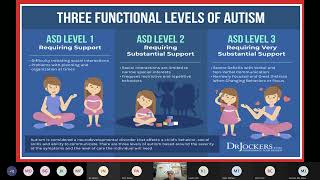
So what is it? It is a neurodevelopmental difference. It's a natural variation. It is not a learning disability, an illness or disease, bad behavior, willful defiance, bad parenting. And it doesn't just affect children. There's a lot of.
Falsehoods and things out there that we need to, as caregivers and advocates going forward, try to do the best to take care of these at risk people as much as possible. So this means more to you in the ER setting than it does to us in the pre hospital setting. Because I believe this goes to diagnosis and treatment. But all this stuff is readily available. And I am very thankful for the help that I've received from the Autism foundation of Oklahoma. They've partnered with with me on this. I'm on a committee with a whole bunch of really brilliant people that have helped me a lot. So.
How much support they need, whether or not they're verbal or nonverbal, so many different things that go into this. What is stimming and why are we talking about it? Well, we all do this. Humming, whistling, making sounds, hair twirling, biting pencils. But there's some more of this stimming that goes on with autistic people. And what we have to understand when we see this is we don't necessarily need to stop it. And we sure don't need to stop them from doing it to interact with them. Because if we do that, we're interfering with their ability to process things. So if they're flapping their hands, walking back and forth, or repeating words over and over and over again, please don't interrupt them. And that's something that we as first responders are real bad about, is to stop someone and make them look you in the eye and talk to you. That does not work with autistic people.
You are interrupting their processing system. That processing system is linked directly to the physical activity that you see on this, on this slide. And this is just a small snapshot of some of the things that autistic people will do.
In order to process what's going on, especially if they're stressed. The head banging and things like that may be harmful, but ask the caregiver.
Caregivers are about the biggest resource you can possibly imagine in all this. And it's just such amazing stuff that if you just take the chance and look at it and learn how much better these calls go.
Walking on tiptoe. So if you walk up to a patient that is flapping their hands and walking around and walking on their tiptoe, I would bet you dollars of donuts that that patient is autistic. Toe walking is something that is incredibly common and that's not just anecdotally, that has been proven out by science. So make sure that if your guys and gals are walking up to somebody and they see that, that they realize, man, we're probably dealing with an autistic person and not necessarily a psych patient. And how we approach them is completely different. These are two really good examples of stimming and allowing them to do that is something we need to continue to do.
There's lots and lots of other stuff out there. I can't even tell you how much I've had to take out of this presentation to meet the 20 minute time limit. But I want you guys to understand that this is really important and there's just so much stuff out there. So the autism spectrum is not linear. Everybody has different abilities and disabilities and some of their abilities are absolutely astounding. And some of them have significant issues in what you would think are normal and everyday things. My nephew that has graduated is working on his master's in library science from ou. Brilliant guy. Can tell you everything about Marvel comics from the day they started until now. And has taught himself Japanese but cannot get to work without Google Maps on a daily basis. Those are the types of things that you run into with people on the autism spectrum. So obviously he's brilliant and gifted, but struggles in normal everyday things. And those are not things we normally talk about and think about.
One thing about communication with autistic people is they are incredibly literal. They do not understand your emotions. You know, the word autism comes from auto, which means self, which means they can only see inside themselves. They can only understand what they want, what they think and how they feel. They absolutely look at you and do not understand your emotions, which is really hard for the rest of us to understand. So imagine communicating with the world in text message or not being able to tell the difference between these two conversations. Call you back.
Is this my car?
State Farm knows that for every one of those moments.
This is ridiculous.
There's one of these.
Is this my car?
What?
This is ridiculous.
This can't be happening.
This can't be happening.
Oh, it's happening, sweetheart. Oh, it's happening, sweetheart. Shut up. Shut up.
That's why State Farm is the with car insurance for when things go wrong, but also here with car.
So as you can see, I mean, just, just imagine not being able to tell the difference between those two conversations. That is a very, very common thing with autistic people. They are unable to read your emotions, read your voice inflection, or understand what you mean when you put emotion behind the words. So you have to be very specific, very literal. And humor is something that all of us in emergency medicine use as a protective mechanism and to diffuse situations. And unfortunately, in situations like this, when interacting with an autistic person, making jokes can sometimes complicate things. So learn to read the room and learn to read your patient and interact with the caregiver. And I'm call you back before this is over with. So autistic people.
What does it feel like? And this next slide is a very graphic example of what it's like for autistic people that struggle with hearing difficulties because it's not that they don't hear you, they're overwhelmed with noise, they don't learn the filter that the rest of us do when they're young, and so they hear everything all at once. So if you encounter someone who is autistic and they're wearing headphones or earplugs or something, do not force them to take them out. Noise canceling headphones are a godsend for many, many autistic people. And.
Just this next slide will, will bear.
It.
1, 2, 3, 4, 5, 6, 7, 8, 9.
Take my hand.
I'm not naughty. I'm autistic. And I just get too much information.
I really like that video because that's how it's described by many of your autistic people that don't have verbal difficulties. They can describe to you what things are like for them when they're not stressed. And that's one of the things we have to understand is as autistic people live and die by a routine, and we are never in their routine, unfortunately, in this business. So.
However, whatever normal levels they function at, they will probably not function that well when interacting with us.
Some real sobering statistics. Life expectancy.
Unemployment rate, how many of them will interact with police before the age of 21. Elopement in and of itself is an entire presentation because of how often we deal with this type of thing here in Oklahoma we've had very recently we had a four year old that got out and drowned.
I believe on in the last two weeks and it was brought up in your.
Webinar that there was a child in Kansas that was saved by a neighbor, fell into the pool, was pulled out, did cpr. Autistic people are drawn to water and drowning kills many, many of them. Suicide rate nine times higher than the general population. What is important about that is these are your higher functioning, more aware autistic people because they know they're different, they know they struggle with interactions, they get bullied horribly and that is really difficult to deal with. The average life span is half.
And that a lot of that has to do with suicide in older higher functioning autistic people. Which is really, really sad to me now that I have two 20something autistic nephews.
This study by the American Academy of Pediatric. Half of them reported to engage in elopement and then 26 were missing long enough to generate concern. 65% were close call with traffic. Ladies and gentlemen, these kids and adults do not understand danger. They have a bubble that they can trip, they can process and it's a small bubble around them. They do not understand the dangers of traffic. If you do run these calls, if you do run an accident involving an autistic person, leave them in the car. If it's not on fire or getting caught on or they're not in danger, please leave them in the car. Because if you pull them out and you put them on the side of the road and they become stressed, they will bolt down into traffic.
So many of these things that we just don't talk about on a daily basis basis with pneumatics and that type of thing, but just something as simple as that could save a life. Drowning again, this is what I was talking about. 71% of these patients will die by drowning because they are attracted to water. They love water. They love the sound of water. It's very soothing to them. Getting hit by train. See how high, Oops, I apologize. See how high that number is.
The fact that they love the sound of trains going by, but don't understand.
Staying away long enough or far enough. They are not the least bit scared of walking into the path of a train or walking into the side of a train. So, again, we have to understand the fact that they don't identify.
The issues in their surroundings. Struck by a vehicle, walking out into traffic because they don't understand. And hypohyperthermia that goes with the elopement. They may leave in the middle of winter in a diaper or in their underwear because a lot of autistic people do not like to wear clothes, because that sensory issue that they have on their skin, it may feel bad. So you may see this person in their house in the middle of the winter all the time, naked, because they don't like clothes. Well, that's how they leave the house, is because they're. They don't like clothes, or they may take them off when they get out. It's just unfortunately a part of it. And it's one of those things we have to think about when dealing with them.
What causes these kids to elope? Some of them just, like, going and exploring stress is a huge part of it. Or they saw something, they wanted to have it, and they can't stop wanting it. Perseverance of thought.
Where they can't let a thought go or let a subject go is extremely common in autistic people. And it's one of those things that can cause this type of thing. It causes a lot of stress for the patient and the family as well. So it's unfortunate. Trying to redirect them is very difficult at times. So.
That may cause elopement as well.
Real fast, I know everybody's got their phone on their hand because I'm not silly enough to think you don't.
Google autistic body cam footage. And you want to know my second why I did this is because I googled that. And what you will find is insanely sobering.
And it's really easy for me to sit here and judge the cops, but I truly believe that if we had body cam footage on a lot of medics and firemen, there'd be a lot of really bad.
Headlines up there too. And a lot of it has to do with lack of training.
But hopefully we're here to fix that. There's just some really disturbing stuff that comes up when you Google that and you see it goes on for people, pages and pages.
Again, I'm not picking on cops. Lack of training is the biggest part of it. De escalation is a hot button term. But when was the last time anybody in EMS was taught de escalation? Well, that's a whole other presentation and a whole big subject to work on. But de escalating these situations, you really need to interact with the caregiver and find out what that patient likes. If it's Harry Potter, if it's anime, if they need an iPad, that, as long as they're not using it as a weapon, if they need a weighted blanket, if they need a particular piece of clothing or a stuffed animal, whatever you need to do to allow this patient to calm themselves, please do so.
And man, those, those issues can go on and on and on. I've. I personally interacted with an autistic patient that had been stressed at school, came home, took it out on his mom, really hurt his mom, and mom is home by herself, and he's a large teenage boy. She called for help, we get there and we have to restrain him. Well, what's the difference in restraining autistic people and restraining your typical psych patient? Well, your typical psych patient, we can lay them flat, we can sedate them, we can do whatever we need to do to restrain them. If you took an autistic person and laid them flat and strapped them down and did, didn't let them move, they're going to fight themselves into rhabdo. So do everything that you possibly can to sit this patient up and interact with them and give them what they need to to de escalate this situation. In my case, luckily, this boy did like Harry Potter. And everything I learned about Harry Potter I learned against my will because I have three daughters and.
But I connected with him and he was able to walk this back and talk to me and tell me what's going on. And he never did quite get to what stressed him or why he was beating on his mom. But he was very much able to de escalate and talk to me just from getting in his world and finding out what he likes. Talking about sedation really quickly, I'm running out of time and I realized that.
Sedation is. There's not a lot of evidence based on stuff out here. I do know some anecdotal.
Stuff about reciprocal effects from both Benadryl Valium Versed. Each patient is different. Talk to the caregiver, figure out what works. One of the guys I work with raising his niece, she can have exactly 5 milligrams of Valium when she has dental work. No more, no less. If you give her more, she gets worse, you give her less, it doesn't work. So again, talking about that patient specifically and dealing with those things is all we can do. But their needs are going to be different and they're not going to react to Haldol or things like that, as another psych patient would.
50% of individuals with autism are nonverbal throughout their lifespan and some of them may regress to where they're nonverbal. Verbal while we're there. There was an autistic valedictorian and you can google this very recently this year that gave the commencement speech using, excuse me, using a text to talk program that this, this subject said set them free. They went from being non verbal to being able to interact with everybody around them normally and to be able to give this valedictorian speech at their high school graduation, which I think is spectacular. So all those new technology is helping so many of these kids and adults. 40% of them have seizures. So now you're dealing with an autistic person who is postictal.
That is just again, involving the caregiver and dealing with those types of things is all we can do. Making the decision whether or not you're going to go to the hospital. If the caregiver is not there, do the best you can to make contact with caregiver. Involve your medical director if you have to to figure out what to do with the patient. Don't think you can identify an autism person by appearance because it's very difficult and when restraint is necessary. Be aware. Many individuals with autism have a poorly developed upper trunk area. You will run into issues of position asphyxiat with autistic people. And this is well known, well documented. That's why laying them flat and strapping them down can actually cause them significant injury or death.
They do not feel the normal range of sensation. I talked about a lot of this stuff. You may have to force entry. Adults with autism are just as likely to hide like children in a fire situation. Guys and gals in the fire fire service look for them like you do kids in closets, under beds, under, under clothes. Whereas normal neurotypical adults will be headed towards the exit. Stressed autistic patients won't. They do climb and then they can't get back down. Rescuing from heights. Use a bucket truck if you've got one. Getting this person to crawl down a ladder is hugely hard. And then they are a bolt risk after rescue. So you do get them out of the house. The September 26th project is something you can Google as well. Normally it's in the presentation, but there was a lady that was a national advocate for autism that in 2020, her son, she and her son perished in a house fire. After they got out, her son went back in because that's his safe space. And he knew where that was. And that was all he knew. And he went back in and she went back in after him and they both died in the fire. So september26.org is that website. On that website.
It has a lot of helpful stuff for first responders. And I'll get to that here in a minute. When we're interacting with these people, one person at a time, use the caregivers as resource. Simple, direct questions, step by step. Instructions, instructions, one task at a time. They may not respond to you. Again, do not force them to do anything. We have to get in their world and live in it.
Be alert for abuse. Autistic individuals are vulnerable. These are all national stats that are very sobering, very big issues. But also when you're interacting with these people, you may see things that you're not normal, you don't normally see. So you have a kid that has a bedwetting issue and every day they strip the bed. Well, you walk in there and there's no sheets on the bed. Don't automatically assume that they make them sleep without sheets. If you see bars on the inside of the windows or you see Plexiglas, or you see doors in the house with deadbolts on them, understand that that may be an issue where that child may get into something or that adult may get into things that may hurt them. That's why they're locked out of those rooms. So we have to be intelligent when assessing these scenes. All these things can happen, you know, you know, unfortunately, you know, they may not have anything on the walls because they can be used as weapons or they may eat them. Pica is a huge, huge deal with some autistic people. And so families have to be very, very careful. So just ask, if you, if you have a question, ask the family member. They get defensive. That's when you need to worry. But if you just ask them why they have something a certain way, I think that's a great, great way to start that conversation.
And this, the resources for you, the community. A lot of this stuff came off of that september26.org website.
All these things are really amazing resources that are out there that I'm pretty sure that 95% of us have not tapped into. I do have to admit that when I started this whole thing, I reached out to my pub ed department here in Oklahoma City, which we have about a dozen guys that work in there. And they deal with a lot, obviously with public education, dealing with schools, dealing with organizations, and they go out and teach this type of thing. And I reached out to my pub Ed department and I asked them, what kind of resources do we have for special needs and autistic families?
And it was embarrassing for all of them to say, oh, we don't have anything at all. So since then, at my department, we have developed.
Resources for the community and we've also developed resources for in house. So we've discovered a number of our firefighters have autistic kids and quite a few of them are willing to be a part of groups that support other firefighters and they also support this education in the community and they have a voice for this education, both on the EMS training side, but also on the pub ed side. So, so.
We developed a task force of field personnel, pub Ed personnel, EMS training personnel, and we've really gotten this going and it's gotten over into the peer support as far as family support, because now you have spouses that are at home with an autistic person and their spouse is at the fire station for 24 hours. Well, that spouse probably needs some support from other families, families that are going through the same thing. And we're an incredibly young department. We have a thousand people right now, and almost 75% of our department has 10 years or less on. So.
Having the older group to mentor our younger group, especially in issues like this has tremendously helped our new guys and just let them know that both they and their families have the support that they need for this type of thing.
These sensory kits, they're fantastic. It's www.autismfoundationok.org has an example of what a sensory kit is. If you want to buy one, if you want to buy a hundred, it's entirely up to you. It has a list of all the things that our ladies put in it. We have a committee that has a whole lot of highly intelligent people way more qualified than me. Most of them are mental health professionals, occupational therapists, and those type of things that are on this committee for the Autism foundation of Oklahoma. And every single one of them is either a parent or a caregiver for an autistic person. So it's. This has been vetted, tested, tried and true. And I completely stand by everything that these ladies put together. So if you're interested in that, please look that up. And I believe that is it.
Perfect timing. Look at you.
Incredible.
Awesome. Lt Amazing. If you feel the emotion, the passion, you clearly have.
Really brought to our attention. I mean, I learned so much from that presentation just in the little nuances of. And again, I have, I have a nephew who has autism. And I see him every week and I often, you know, I make jokes and I realize now that he doesn't get any of my jokes, which is why he looks at me and like, like, like, you know, with these eyes of like, why are you saying that to me? But before we move on, I would like to see, does anyone have any quick reactions or comments.
For Lieutenant Woodard before we move over to Dr. Pepe's webinar? Any.
Oh, you go, Mitch. Mitch Mulford, Dr. Mulford, go ahead.
I was just going to say that was probably the best 25 minutes of real world clinical information I've ever heard.
Thank you.
Appreciate that document. Appreciate that a lot. This is, this is.
That, that's a wonderful comment. Thank you so much. Oh, Chief Benham with me and Davey fire, who's starting this up. Go ahead, Chief.
Yeah, so that, thank you. That was great. As just mentioned, it was a great way to describe it in, in a different angle, especially for us in the EMS side and fire, fire rescue side. And it's helping me because I'm starting sensory kids. I already started them here, but I'm going to be doing it at the county level now. So thank you for the resources.
Thank you for doing it. Thank you for doing it. Those kids absolutely need it.
Awesome. Jim? Jim Fogarty, go ahead. You're on.
Yes, good morning. Do you have any suggestions for someone with autism that might be dialing 911 in the conversations between the call taker and the patient, the autism patient, on how that communication should occur? Has there been any study or research done on that? Because the querying of questions are very much scripted towards someone who does not have that as a feature.
Absolutely. And unfortunately there isn't. I have not been able to find, I've been asked that question before, unfortunately. If you don't have a dispatcher that is savvy enough to figure that out from the beginning, unfortunately, those types of things, unless they have some sort of text to talk, they're going to have a very difficult time because they may call up and they're so stressed that they start doing echolalia where they repeat a phrase they've heard and it has nothing to do with what's going on. Someone's going to think it's a prank phone call when in actuality it's an autistic person trying to communicate that's having difficulty. So that was a long way to say no. I, as of right now, I don't know of any type of training other than we have developed a program in Oklahoma. It started at Norman PD and more Oklahoma pd And we're adopting it in Oklahoma City where they actually. Our CAD system allows us to flag addresses. So you can flag an address and say there is an autistic person there. And you can even create. The easiest thing to do is to create a voluntary registry for families to say, hey, this person lives here. These are the things they do if they need help, because they may live by themselves. So if they need help, they can call 911 and they may say, you know, I'd like a pizza. Well, or.
My nephew. One of his favorite echolalia things to say is what seems to be the problem, Officer? He says that to people when he. So if they know that this address is flagged, they call 911. Oh, okay. Well, this person. We know that there's an autistic person there and we know they have communication difficulties. That is the only way that I know of to deal with that type of thing. James.woodardkc.gov is my email address. I'm sure we can get it stuck somewhere where people can find me if you guys have a lot of questions like that. We are still developing this in Oklahoma City and Norman and Moore, Oklahoma. We're actually working with those other departments. We're working with the mental health department at the state level because the guy that started this autistic training at OUPD is now working for the state mental health department. So he and I are working together on this. And it's really great that I have partners at the state level for this. So I'm sorry I took so long to answer.
No, no, I tell you what, I get the feeling that people would love to hear you talk for another 25 minutes and so. But that gives us a reason to see you at EMS World Expo. I will be there at your talk. I will make sure that this video gets out to the entire group and further. So, Lieutenant Woodard, thank you so much for all you've done in ems and now all you're doing for. For children who really are kind of invisible to many people, you're bringing attention to them. You're giving. You're helping us give them the dignity that they. That they deserve in their worst time. So thank you so much for everything you've done.
Thank you.
Feel free to stick around. We're going to pop over now to Dr. Pepe's call with the Eagles and Dr. Jamison will take us away. Angus, thank you so much. Thanks, everyone.
More from Peter




Melissa Olen MSN, FPN-C, CCRN: Sudden Cardiac Arrest Training in Schools (Project ADAM) 4/25/25



Pediatric Hospital Readiness: How Teamwork & CPR Metrics Drive Better Outcomes



Chelsea Kadish, MD & Kyle Goodknight, EMT-P, RT: Pediatric CPAP in EMS (3/14/25)