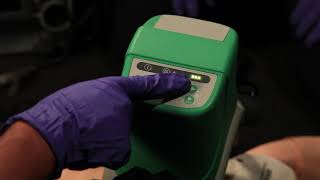
Two rescuers demonstrate how to deploy the Lucas II mechanical chest compression device during CPR. Slide the backboard under the patient while compressions continue, position the device, and press PLAY. Pause every two minutes to check the monitor and defibrillate if needed.
Questions this video answers
LifePak 15
Open the case and turn it on.
The PLAY button (not the 30:2 button).
Pauses every 30 compressions to allow for two ventilations.
Every two minutes.
Chapters
Today we're going to show the proper way of putting the Lucas device on, utilizing a two person rescue. So as you can see, the person on the right that's doing chest compressions is immediately going to come in and start manual chest compressions. The person on the left side is going to bring the Lucas in along with the LifePak 15. The first step always when applying the Lucas is to open the case and one turn, turn it on. The second step is to undo the Velcro, get the backboard and slide it under the patient's head. Remember, all steps are going to be performed while chest compressions are in progress. So after that part is done, both of the rescuers now got to coordinate to lift up the patient and slide the backboard underneath the shoulder blades. You'll see as soon as this is done, the person doing chest compressions resumes chest compressions while the person working the Lucas device is actually going to go ahead and start the application process. Now you want to make sure that the person doing chest compressions does not stop and the person operating the Lucas puts it on right through the arms of the person doing chest compressions. The goal here is to minimize the hands off the chest time. So now the person doing chest compressions will stop. The person working the Lucas will slide it down, and then the person that was doing chest compressions will hit the play button. So a couple additional things when using the Lucas device. Number one, always make sure that you hit the play button, not the 32 button. So the 30 to 2 button is going to pause every 30 compressions to allow for two ventilations. All of the times that we would utilize the Lucas here at Palm Beach County Fire Rescue is continuous chest compressions. Another thing to take into consideration is the pause button. Every two minutes, we need to pause the Lucas device and look at the monitor to find out if the patient's in a ventricle dysrhythmia. The there's no way for us knowing while the Lucas device is going. So every two minutes, whether you time it by the monitor, you time it by the safety pad, or you time it by somebody's watch, you need to make sure that you pause the Lucas device, look at the monitor, determine what rhythm the patient's in. If they're in a ventricular dysrhythmia, go ahead and hit the play button again. While that's going, you could go ahead and charge the monitor and defibrillate the patient while the Lucas device is going. Just remember, in two minutes from then you've got to go ahead and pause it again. Another thing to take into consideration when using the Lucas II device is it's universal. What I mean by universal is it doesn't always have to go on the way that we have it shown here. As you can see, my partner demonstrate here. He could turn it this way and put it on. He could do it the other way. As well as the backboard. The backboard is universal, so it doesn't necessarily always have to have the Lucas facing to the patient's legs. The Lucas emblem down here could also be facing towards the head. So it doesn't matter which way you take it out of the bag and put it on the patient, it's going to work either.