Maia Dorsett, MD: Awareness of EMS administered medications (9/26/23)
This webinar (Florida EMS series) features Dr. Maia Dorsett presenting a regional quality improvement project titled “Improving awareness of prehospital administered medications in emergency medicine.” She selected dexamethasone as an objective marker (long half‑life; given for asthma/COPD/allergic reactions) to measure medication redosing in the ED. Initial data (~30 patients/month) showed variation with ~10–30% of patients receiving a duplicate steroid dose (median ≈20%, described as about one in five). Interventions included a pocket written handoff (failed), direct observation of triage workflow, and an Epic triage smartlink that pulled prehospital meds from a prehospital flow sheet into the triage note. The smartlink raised triage-note documentation to >90% (process measure) but did not meaningfully reduce the outcome of redosing (outcome remained ~9% or higher). Panelists (Wayne Lee, Peter Antevy) discussed broader implications (need for integrated bidirectional electronic transfer—EMS medication data into MAR) and system-design solutions.
Questions this video answers
Dexamethasone (given prehospital for asthma/COPD/allergic reaction; long half‑life ~72 hours).
About 30 patients per month.
Approximately 10% to over 30% (median ≈20% — characterized as about one in five patients).
An Epic triage 'smartlink' that auto-inserts prehospital flow-sheet entries into the triage note.
Chapters
Pete, you want to check on the restreaming?
Angus, are you able to restream it? Should be able to. Okay, thank you. Joe wants to do it. Happy life. He can't. He can't. I'll make it happen though. All right, thank you. And then you and I have to figure out where. Where these files are going because, like, I have to put up the other. Other ones on the YouTube channel. Yeah, okay, I'll get to it.
Alrighty, so I'm gonna just get the codes for the day and I will put them in the chat and then we'll get started here right at the top of the hour.
Okay.
There they are. See any codes?
That's weird. I cannot see my chat. Here it is. Okay, it's coming up.
Alrighty. We are going to get started. So welcome everybody. It's three o' clock on the East Coast. This is another Florida EMS webinar. We're on number, I think almost 130. Maya. Wow. We started this during COVID and we've had this incredible guest and today will not disappoint. Maya is one of my favorite people. Ever since I met her at a conference, at an NMAP conference one time. I just thought she was like the smartest person I'd ever met. I still feel that way. Maya is trained out at WashU, then she moved over to Rochester. She is an EM doc. She's an EMS medical director. She's the EMS medical director for Prodigy EMS, which we all know and love. And she's a researcher and a scientist. And when I read her paper, I got my mind going because I said, it's not only one drug we're probably missing, it's probably like every drug. So I'm not going to give away the tagline here, but I'm going to pass it over to you. Maya, thank you so much for joining our webinar and take it away.
And thank you so much for having me. So what I'm going to be talking about today is our attempts. I titled this. Sorry, gotta get the clicker to work. Improving awareness of prehospital administered medications and emergency medicine. And saying really? Or trying to. And really what this is was the publication of a quality improvement project that we did regionally, which, for those who are interested, PEC now accepts improvement science rather than straight research. And so this was something that I thought was sort of important to share in the big picture. And so I always like to sort of step back and think about where we are in the bigger picture. And I think when we're practicing medicine, we tend to think about our individual silos and what part of the phase of care we're working on. But from both the patient and the system perspective, right? It's a journey. They're going through the continuum of care. And so all those different pieces that determine their outcome and sort of the thresholds of each one of these transitions of care, there is a handoff where we feel like we're giving some other component of the piece of the puzzle that's important for the patient care. And then the reality, the idea is that all these pieces of the puzzle are going to come together for a coherent story that lets us put things together to get the right diagnosis and the right treatment and the right pathway for the patient. And the reality sort of looks more like this, right? Where it's a bad game of telephone, that pieces of information are lost all along the way. And sometimes those are really important, sometimes they're less important. But every single one of these is essentially a form of error. And the question is how much of these errors are actually reaching the patient. And if we think about the issue of patient handoff, overall, I think about it, we tend to think like patient handoff, like it's one component. But if you think about it, it's a really big issue that has lots of different components. There's the electronic transfer of information, there's verbal handoff, there's written handoff. And so very often when you're trying to improve something, you can't improve every aspect of everything all at once. You have to say, how am I going to eat this eleph? What is the first thing that I'm going to tackle? And, you know, the, the words of advice are one bite at a time. And so I knew, just working as not just an EMS medical director, but as an emergency physician in our emergency departments, that there was so much missing information, right? Like, I get patients in the emergency department and want to know what had happened pre hospital, what meds were administered, because there was this entire phase of care. And, and I couldn't figure out, like, what had happened, what they had gotten, where to find that information. And realistically, like, those charts weren't getting uploaded. We have a huge amount of missing information. Our region had worked a lot to improve verbal handoff using the missed report and did a large quality initiative around that. And there's a lot of literature about the improvement of verbal handoffs. But I don't know about your emergency department, but our emergency departments are all like, full of admitted patients. And while I would love to have a verbal handoff for every patient. The reality is in the structure of our EDs, really critical patients.
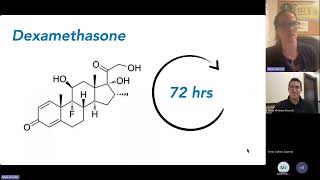
Have verbal handoffs. And a lot of this other handoff is happening at the point of triage and the patient's going the waiting room or a hallway bed or somewhere else. And we're not having that verbal handoff. And so decide like where we were going to start to try and improve our system around this. We actually just surveyed people. This is going to show so that the app and physician side that we also surveyed the nurses and while consistently right, this was a survey sent out to our apps and our physicians who worked at one of our community sites as well as our tertiary care hospital. You know, there's the 9% who only think it sometimes affects their care. But people. There was lots of components of the survey, but people felt like medications was something that people could rally around as something that was really important to know what your head patients received prior to getting to you. And then when we asked like, do you know what medications and what dose were given to your patients by EMS in total? If we take often and always, like top box, only 20% said that they often are always no. And I don't know who these always people were because I try really hard. I probably get more bedside report than the average doc because I love seeing my crews, but I would never like I did not always know. Right. Like always was unlikely. And so we felt like we had enough information there to say, like saying how do we improve the fidelity of information transfer specifically around medication use is really important. And I think that this was also enlightening the direction that we went because this was when we asked how often are they getting verbal, direct verbal handoff from EMS for their patients? And it was right. Maybe that always was the 4% is the 1% who somehow meets them every single time when they're in the emergency department. But overall, for our perceived lower acuity patients, this was not happening as often as we needed. So I can't fix the entire healthcare system or the boarding problem right now. There's lots of downstream problems like offload times, et cetera that we're trying to fix in the context of a dysfunctional functional overall system. And I think this is one of them. But I think it's also important that we have good written handoff like regardless, because no matter what the hospitalist, the ICU physician is not going to be there at bedside. Right. So they need to be able to have a reference about what happened pre hospital. So we Needed a framework for how to improve this problem. So this is like my, you know, like if somebody's like put up the image of like what you believe in. Right. The model for improvement is what I believe in. It's a really important framework for how do you start to actually build improvement in your system and how do you think about it? And it's the IHI model. And the reason I like it is that it's simple sort of how I apply everything to every component of my life. Right. The first thing is like, what are we trying to accomplish? And for us, that actually took some work to say what part of this problem about handoff are we going to focus on? The second was how will we know that change is an improvement? Right. So this is test challenge you to actually measure your performance so that you know when you do something, are you actually making it better or worse? And then the last component we'll talk about is change. So we talked about what we're trying to accomplish and I think that was what was challenging here was how would we actually measure the failure of information transfer around medications from pre hospital hospital? Because I think surveys is the way that a lot of this work has been done. But I wanted to drill down and say how objectively am I going to have a way to measure medication error due to poor transfer of information? Not like what's documented, but what actually reaches a patient. And this is where we get into this, I think an important concept in qi, which is really subjective versus objective measurement. When I fill out a survey and we'll talk about what sort of happened over the course of this project. When I fill out a survey, right. Somebody, 4% said they always knew. Right. Patients were administered to their patient. That is my perception of how well I think I'm doing and. Right. We all know that sometimes people think they're doing really well and they're not. And sometimes it's the exact opposite. But I wanted something that was objective, right. That I could specifically measure. And so we have to think about is there a medication that we give pre hospital that if it gets readministered in the emergency department, that that's a medication error. So that's right. Not true of things like analgesia. Because if I give fentanyl pre hospital, I would hope that somebody continues a pain management plan in the hospital so they might get additional doses. If I give an antiemetic pre hospital, they may get some other antiemetics because that's sort of the normal course of their disease. But in our region we give Dexamethasone and we give it for the main indications of reactive airway disease, so asthma or COPD exacerbations, as well as for allergic reaction. And dexamethasone is a great med because it has a 72 hour half life. So it does not need to be repeated in the emergency department for the indications that it is given for pre hospital. So that allows us to say, can I pull all the patients who are brought to our emergency departments who receive dexamethasone and then review in the emergency department if they received another dose? And that's, you know, I care less about the dexamethasone itself. But what we're using, this is a marker for somebody being unaware of what the patient at pre hospital. Because if I was aware, cognizant, integrated into my decision making and let it affect my ordering, then I would not redose the steroid.
So this is, when we talk about quality measures we get really specific, right? Like how do you, like how do you define exactly what you're pulling? So this was our quality measure which was, and we call this an outcome measure because really this is the outcome measure of a medication error that reaches the patient. So we pulled patients that were transported to one of our hospitals so I could look at their ED chart and were evaluated. So if they left the waiting room, which happens actually sometimes EMS fixes them because they get the dexamethasone and the three duodebs and they feel great and then they leave when they go to emergency department. And then the percent that had an additional dose ordered and that was documented actually administered to the patient during the ED course of stay. And that's really any steroids. And then we review these monthly. And I'm going to say that I had an amazing team. I had a pharmacy resident who initiated this project, EM residents and med students who helped do this data collection, which is this is not ideal as quality measures go because it requires a lot of manual review. But just like lots of things in quality improvement, if you're waiting to the thing that you can measure and make a nice dashboard right at the beginning, you're not going to get started. So it's going to be sort of sometimes ugly and cumbersome before you get going. So this was our data for the first year. So this is a run chart which looks at percent redosing. So this is about 30 patients per month who received dexamethasone were transported to our hospital. And you can see that the normal variation is that anywhere between 10 and over 30% of patients got another dose of a steroid. So the first lesson here was it was really good to have data to say here is our right, this is our median. If you're saying one in every five patients has a medication error due to lack of pre hospital awareness of medications. And I can objectively say that regardless of whether or not somebody thinks they know or doesn't know. And it corresponded really with the subjective assessment of people saying like I don't really know what somebody got.
And in particular there were times I was like did this patient get dexamethasone or not? And I couldn't, I couldn't figure it out.
So that's how that was the second. It's like we wanted to find a way to objectively measure it and then we had to come up with changes. And you know, this paper like is like my paper of like this group of failures that we had. But I think it's important to sometimes publish your failures because people often have the same ideas. If you read position statements on written handoff, everybody says that you should have some like written handoff sheet that gets dropped off. So I did all this, all this work. We developed this written handoff to people wanted to have a bunch of stuff on it. People piloted that you could fit in your pocket, that they would bring it in the house, that they would take it off. It was printed on a post it like I have the leftovers right here. These like giant post it pads so that it could stick in the patient chart because we have these like folders. And then we did that pilot with a small group of people and then we released it to two agencies and we gave education and said let us know how it goes. And how it goes was it didn't go. Everybody universally hated it. They were like can you make it a post it with a carbon copy? And then it's. And it made sense. It was duplicating their work. And in the end the interesting thing is this definitely would have failed to change our objective measure despite we had all that work. But this is the most commonly cited as some form of a written handoff. Left at the hospital is the most commonly thought of way to actually improve our handoff form. But I, I don't think it's going to be answer one because it's annoying to do. If you make something annoying to do, people aren't going to do it. But the second component is that we'll talk about it. Even if you put the information available, that doesn't mean it automatically gets integrated into the system and how you use it. So in improvement, right? Like, you learn a lot from those failures. So. And sometimes you have a hunch, you have an idea and you have to go back to the drawing board and say, how are we going to achieve it? And the next step that we did is where we should have started at the very first place, which was to directly observe the process. And so one of our residents actually just like spent some time just shadowing like the nurse and triage and being like, how is it? And I said like, you know, we thought I was like, how is it that this information is not there? And then the, you know, paramedics and EMTs were like, I tell them, why do I need to write it down? I tell them at triage I see them typing, right? Like what meant the patient got administered, right? That's part of this verbal handoff report. Like, where does that information go? And so she watched where it went. And it went in this thing that was all the way at the bottom. I don't know how many of you used EPIC called the pre hospital flow sheet, which was a nursing flow sheet that you could get through the triage tab, but you had to scroll all the way down and was nowhere in the normal workflow. Right. And I'm one of the EMS physicians. I had no idea this existed. But this is where the information was going. And all that effort of doing good verbal handoff was going somewhere where the people ordering medications were completely unaware of where it was.
And Right. So normally, like everybody has a different workflow, but we often look at the triage note that the nurse writes for initial information.
So what we ended up, we ended up looking at this and we said, well, can we look? We take a sample of charts and say, right, this is sort of another pdsa, like a knowledge building pdsa and said, if we put the information somewhere else, might we expect a difference? And so this is, if it was documented, the triage note, it was still 9%. If it was in the flow sheet, it was 20%. If it was only in the flow sheet, we had a 32% redosing. Right? And so this is actually, and you can see there's a huge amount of variability over time and it doesn't fix everything. But this was the first idea, like maybe we can get somewhere by at least putting the information where somebody ordering the medication might actually see it. And so this is.
So, and this is when we looked overall, this is the median time that the triage note had any information about pre hospital meds. So the nurses were duplicating their efforts. They were putting in the prehospital flow sheet and then sometimes writing it in the triage note as well. And so we ended up meeting with hospital leadership and nursing. And this is, I think the first lesson is I think if we went to them and we said, we want to put this information in the triage note, can you help us redo your make some changes in your nursing triage nurse line and can you invest some resources in changing this? They would have said no, right? Like the answer would have been no. But instead we came to them and showed them the graph and said one out of every five patients in our emergency department, like that we can estimate is having a medication error because we're unaware of what meds are given pre hospital. And people are telling us that they don't know this. And so that was a common language of an objective finding, right. It wasn't like, oh, I feel that this is true. And they said the nurses were like, that's insane. And so what we challenge them is I didn't know the solution, right? Like, I don't work as a nurse in triage. So I We asked them, the last thing we want to do is make the triage process any longer than it is, right? Like, it's already, there's already a line out the door. We don't want to duplicate work for you, but you're doing all this work and this information is not being used. Can we come up with a solution that capitalizes on the work that you're already doing that puts this information where we can find it so that we can maximize the value of what you're doing and potentially decrease error. And so that's why this smart link was created. So they changed their triage process where you enter the prehospital meds first in the flow sheet and then when you open your triage note, it automatically puts anything in your triage flow sheet directly in the triage note, which we'll talk about most of us review.
So we looked. This is the process measure of saying is the medication, Is it documented that the medication is given within the triage note? And we had significant improvement. We're now like. And when we continue to track this out, like north of 90, greater than 90% of the time, the medications that a patient was administered are showing up in the triage note, which means they're following the nurses are following that particular process. The thing that was really disappointing is that we didn't change the outcome of medication redosing.
So I mean, you want to talk about like sad moments when you graph stuff out. Like I thought, like, here it is, we're going to fix it. And I didn't expect that we were going to get much below 9%, right, because I knew even if it was documented in the triage now, but we didn't change it. And so then we did what people usually try and do and we, we like had meetings with the faculty and the residents and talked to them and we'd been talking to them about this project.
And you know, like their responses were things like, well, if the EMS chart would get uploaded sooner. And I'm like, I'm not telling you, like the information is in the triage now, like, you don't need the EMS chart. But there was, I think, a lot of like one not necessarily thinking about what was happening in the pre hospital phase of care or not sort of automatically using that information within their clinical decisions. Decision making for patients was definitely a barrier that we had. But also I think the bigger thing was that people didn't intend to make the error. It's just that they were working really fast and doing a lot of things in the ED and they're like, oh, reactive airway disease, let me give, you know, the steroids and the nebs, et cetera, without sort of thinking where in this patient's continuum of care am I? Has EMS shifted everything forward? And because for me, right, like if I go to see somebody and they've received nothing and they're working really hard, I'm like, steroids, duode plus or minus mag. I'll come check you out and see how you do. And then we're gonna decide if somebody's already received steroids, three duonebs mag from EMS and they're still looking crappy, right? Like my disposition, like that patient is staying already because that's the course of events. But that's not sort of necessarily sort of how.
Like everybody was sort of thinking about that in the context. And so I think it's worthwhile sort of thinking about reactions to this, to this paper, because I think that the reason I thought it was important to publish is one we're going to talk about sort of subjective. I really do think that for my own practice, this triage note change has made, right? Like I say, like, what did they get? I open up the triage and the meds are there. So I think that is a worthwhile change to make. But the fact that it didn't change the outcome I think is like an important consideration. Of how are we actually going to fix this problem? So when I tweeted about this because I was very excited that I finally got accepted, the first response I got was, I'm a little bit more worried about the high percentage of clinicians that don't participate in the handoff and can't just read the nursing notes necessitating a copy and paste. And I think this is the normal reaction, right? Like, our normal reaction when we see errors is to say, well, there's something wrong with the people, right? Like, everybody's just too lazy to do the right thing. And like, I think that's right. Fundamentally, like, not true. And I even surveyed people subsequently say, do you review the triage note? And like, most people say, like, I always review the triage note. And I do. Like, that's the normal workflow, right? Like, I. I don't think that they're making that up. And they say when they don't know, right? Like when, in the absence of verbal handoff, where are they looking? They're saying, I'm looking the triage note. So they're saying they're looking there, but the information isn't there. And we know that there's system factors that make it that the verbal handoff isn't taken. And when I ask people, do you feel like things have gotten better? It's now, right? Like, 50% of the people say, often or always, okay. And this does not include me. So I didn't answer any of the surveys. So subjectively, things, right? Subjectively, things have gotten better. I certainly feel that way. But I think that objective measurement actually reveals the pitfalls of the system, right? Which is when I enter a medication, if somebody, if my colleague, right, the resident puts an order for a steroid and I don't see it, and then I put in another order for a steroid, there's a pharmacist that approves our orders and says, right, there's an approval process. Or it says, hey, there's an alert. Says, hey, you are duplicating an order. Do you really want to order that? And I'm like, oh, no, I didn't want to order that. That was an error. But when the information is not integrated, then people who are doing a million things in the emergency department, right, I can read the note really fast. That doesn't mean I've integrated the information process that the patient got a steroid, realize that the normal click boxes that I'm going to click through for somebody with an asthma exacerbation are not what kind of order. I have to modify and deviate from that pathway. You're expecting a lot for people to be perfect in a complex system instead of designing a system that's automatically going to catch those errors for them. Right. Because it should just be caught. This patient already got a steroid. I tried to get it. So the flow sheets were integrated into the mar because when we have a cardiac arrest in the hospital, those meds are administered and put it in a flow sheet that's then integrated into the mar, but they were unable to actually make that happen. I think that's a potential solution, but really to me that this is an argument that it has to be a whole continuum of the transfer of electronic information. It should just be bidirectional flow. What EMS should just end up in my mar, like timed and everything. And I think as you expand the number of medications you give, if you're giving pre hospital antibiotics for sepsis. Right. It's important that people know like the time of administration, what did they get without having to rifle through that the pharmacist knows. It's like essential for patient care. Does anybody know why I put this picture up? I love this photo.
I love this photo. I know exactly what it means. I'll let other people attempt to answer it.
Yeah, but this is basically, you know, showing you that the path that they built is obviously incorrect and the people have built their own path to the location. So who's at fault here is really the question or what's the right answer?
Exactly. These are called desire paths, and there are sort of urban planning groups that have now used desire paths as a way of actually redoing how they do parks and stuff. So instead of building where things are and trying to put like a bazillion signs and block people from creating that. Right. Like people have found the right solution of the fastest, most efficient, nicest way to get from one spot to the other. But you have to create the system that makes it easy to do the right thing. Right. And so I think when it comes to all this work that we've done on handoffs, very often we're trying to do like written handoffs and putting the information here and all this stuff. But really we need to create a system that makes it easy for people to avoid medication errors instead of asking them to do like 10 more things on top of everything else. Right. I would love. Right. Like I would love to have it so that every emergency physician cognitively thought about the prehospital phase of care and how it affects every single component of their decision. But that's not. But it would be a lot easier if the system just made it that way. Right? Like that it showed the pre hospital phase of care. Just like it shows that the hospital sees my emergency department phase of care. They have no question that I play a role in that continuum of care. It needs to be integrated. Because I don't have to say it is, it just is. Right? Like I'm not arguing for it.
So the central law of improvement science is every system is perfectly designed to get the results it gets. And I think our current very siloed system with regard to information transfer, right. Is designed to get medication errors. I think that there are some small innovations you can do that are band aids. Right. Like, I love this little triage note thing. I think people should adopt. Makes my life easier and makes it so that when I voluntarily and deliberately want to get the information, I can find it, but I shouldn't have to want to get the information for the information to be input into, into patient care. And so I think it's really right. Rather than sort of pieces of the puzzle. It's just continual information throw that is integrated and really sort of recognizes what EMS does. So I need to say thank you. I think that one of the funnest things about this project is the number of individuals who did this. So Jeff was a pharmacy resident who our pharmacy residents do an EMS rotation and they always do a pharmacy related project.
A bunch of these. So Andrew Lee's a med student. Brian, he's now doing anesthesia residency. Brian Fragoso, Catherine, Liz Cato, Chris Walker were all EM residents that did assist their residency QI project. Ben and Kate are both.
Paramedics in our system. Andrew and Jessica were charge nurses who headed our triage stuff and came up with the innovation. And I have some IT folks and EMS physicians. So I think that the big lessons from quality improvement is, I think this is. I'm talking about handoffs, but I think it's about always think about how you might objectively be able to measure something. And I think objective measurements of harm are very powerful ways to get people who are often not interested in other investments to start actually changing what they do. Right. Like in my life as an emergency physician now, I'm working on expanding access to pelvic ultrasound. Right. Like, this is the least EMS related thing, but I have limited access to it in this community site. And I'm like, people are like, yeah, I feel like we're overusing CT in women. I was like, I feel that too. I can demonstrate that with data and. Right. And once I got the data, now they're hiring for a new position. Right. To get expanded ultrasound. Because it's not like I feel about something. I can demonstrate, I can demonstrate the harm.
And that's all I.
Incredible. Wow. That's my incredible presentation. And I think that, as you know, I think all of us are looking at this data as EMS physicians, EMS leaders in our communities, and we're wondering, what about, like you said, the antibiotics, what about the txa, what about all these other things, the steroids, et cetera, that are being redosed. And interestingly, you had mentioned in the middle of your talk that you had tried to get EPIC to integrate the medications into the mar. As someone. I had the black and blue because EPIC would not let us get into the MAR with what we're doing with our medications. And this is exactly the reason why they need to do that is because that's the fix, right. If there was a shadow mar, not the actual mar, but the shadow MAR that just referenced the shadow mar, the EMS mar, if you will, then that note will come up and say, you cannot give or you should not give that medication. I mean, the only other thing to do is to actually put like a big whiteboard on the patient from EMS to say, I received these medications. When the nurse comes to give the patient the medication, they say, oh, maybe I shouldn't do that again. I mean, it's insane that the software that's built today does not integrate with its. I mean that. That's insane. I'm sorry to tell you. And we should all kind of rage against the machine, in my opinion, against the Judy Faulkner's of the world and those people. Because here you are trying to fix a problem that shouldn't even be a problem. Right. And I didn't recognize how deep that was where you had to go and go from one flow sheet to the triage note. I'm sure no one else has even done that. Right?
Yeah.
So I think, I think many of us are in that situation and I.
Think pro is like there's so many. Right. Why can't we come up with a solution just like, you know, like with hand chatter, Right. Like I, I put the thing as it goes to the cloud, like, why can't I have it so that medications I get pre hospital are just like downloadable automatically downloaded from the cloud into the. We tried that with time. Yeah.
They would not allow that. And by the way, I'm not sure if people have seen this and you know, we're going to hop over to Dr. Pepe's in a minute. But I just put into the chat because as you were talking, I said I got to post this thing.
There'S a big conference, all these kind of business people and one of the most legendary venture capitalists in the world gave like a 10 minute takedown of Judy Faulkner with Epic and he exposed what they've done. And if you listen to that, you start to recognize that at the end of the day the patients and the people taking care of the patients, we're at the very, very bottom of that totem pole. And unfortunately, patients are getting redosed medications, errors are happening. But I would love to bring in some other folks. I don't do all the talking. You got some very smart people on this call. Dr. Wayne Lee, you've been on both sides of the coin for many years. Wayne, what are your thoughts? He had his hand raised. Look at that.
Yeah, am I there? You know, I was trying to avoid, you know, doing a question every time you call, but I can't help myself. First of all, Dr. Dorset, Maya, I agree with Peter. I just, I'm, I just, I was so intrigued with your brightness and your analysis and the way you approach this and the questions you ask. And so my compliments. Very impressive. And I have to say when I saw the title, frankly, I thought it was a little bit of a snoozer. But. And so, but it wasn't. It wasn't. I learned some stuff out of it. But I wanted to tell you something that happened to me very quickly. I was at a trauma system meeting the other day and in the course of conversation, I think Dr. Peppy was there. In the course of conversation, we have three trauma surgeons and they're all from, you know, different hospitals. And I asked them and I'm trying to get the trauma surgeons to agree on different items. We were talking about txa, but that led me to ask them about how they felt about antibiotics in open fractures in the pre hospital arena. And the response to me was I don't care, I'm going to give it anyway.
And I've been thinking about that and I thought, well, that just doesn't sound right to me. But, but I was thinking about this in the context as you were talking and I thought that, you know, I was, so what's at play there? And I know you have a, your, your talk is about a bigger way we approach these things, but you know, I was wondering about that and I thought there's a couple things going on with that one is it's very hectic for they. They're moving quickly. They feel like they don't have the time to address it. Number one, okay, that's one thing. Two is that they may not believe that it's harmful, that it's particularly a big problem, so why not? More has got to be better and so on. And so I was just really thinking about, God, how would you ever undo that? And I only think we could undo it if you have something that you're shooting for, aiming for where it's systematic, it takes it out of their control because either they don't care, perhaps they don't believe it's dangerous and. Or they feel like they don't have enough time to review it. But I. And the only way I think is to do what you suggested is to get, you know, a system that actually, you know, takes it away from them and probably others think, you know, and behave the same way. Those are my comments. It wasn't a question.
Maya, you want to respond to that? Yeah. Wayne has been there, done that. So.
Yeah. And I think that's totally because I was thinking right when I first we were going and talking to a bunch of other people about this and I realized sort of how little people were thinking about the pre hospital phase of care. Right. Like, I'm always thinking about it, but I'm like the small minority of it.
And then sometimes I think about it when sometimes we're trying to make culture change and we think we have to somehow convince these people to change. And then instead I think it's actually easier to just like change what is normal. And then they come along, you know, like, it just is so. And like, what I mean by that is they're going to be the outlier if they don't care because it's just part of the. Part of the system. And I think that, I really think that if you just get everything integrated that you show up and it's like prehospital phase of care every single time, eventually your mind is going to change how you think about it. I don't need to go educate. The number of priorities are like, EMS gives dick some methazone. I don't need to one by one go tell everybody EMS gives dexamethasone. Why are they giving dexamethasone?
It's just there, it's part of it. And clearly they give dexamethasone because I see it all the time. And the patients that come in by EMS versus the fresh ones look so much better. And are doing so much better because they got the steroid two hours ago, and now they're looking better, you know, so it's just. I feel like I don't need to. We do a lot of convincing people, and I think we just say, like, oh, no, this is what the bar is. This is the way it is. And design the system. That. That's the implication.
You know, it's funny you say that and. Peter, do I have 130 seconds or more?
Yeah, go ahead.
Yeah, it's funny you say that. You know, I dealt with a number of hospitals, physicians, and we got into patient satisfaction. And I will tell you, I've been at this for a long time. And so, you know, I was trying to train for a long time. I was approaching it as a. I was trying to take the docs that weren't doing well and teaching them how to be nice, for lack of a better term. And it took me maybe 30 or 40 years perhaps, to realize that that just wasn't working, you know, and so, so then. And it was late in my career, so I didn't have much of a. I don't have a real success story, but I began to work at it from a different angle. And just what you said, where if you do something different than this, that's a problem, you know, and this is the standard, you know, and. But teaching each one of them, you know, I had the really nice folks that everybody was happy. They were usually slow, but at the same time, then I had the other folks that were very fast, but everybody wasn't happy with their treatment. But at any rate, I began to articulate what I thought the standards were for how we approached our patients, and that if, in fact, you were outside of that, then you're an outlier, as you say, comment. That's all. Thanks, Peter.
Perfect. Awesome. That was. That was amazing. I mean, it's a topic near and dear to my heart, and I love to see other people trying to address it. And then it also brings a light to show that this is not easy to fix. Right? Everyone just. Everyone doesn't recognize and doesn't understand the complexity of medication errors. It's psychology, it's human factors, it's design, it's user interface. It's everything. It's not just, I give you a tool and everything's going to get fixed.
It's not.
So I'm really happy to see what you've done. And again, Maya, thank you so much for joining us. This will go up on YouTube. Is that okay with you? If we publish it?
Absolutely. Yeah.
Awesome.
More from Peter




Melissa Olen MSN, FPN-C, CCRN: Sudden Cardiac Arrest Training in Schools (Project ADAM) 4/25/25



Pediatric Hospital Readiness: How Teamwork & CPR Metrics Drive Better Outcomes



Chelsea Kadish, MD & Kyle Goodknight, EMT-P, RT: Pediatric CPAP in EMS (3/14/25)