Mark Wilson, MD: GoodSAM App (8/15/23)
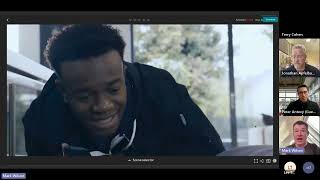
Dr. Mark Wilson, a UK neurosurgeon, presents GoodSAM, an app that alerts nearby trained responders and AEDs to cardiac arrests and lets dispatchers see callers' phone cameras for remote guidance. The platform has increased survival rates and works across the UK, Australia, and New Zealand.
Chapters
We can get started. So welcome everybody. It's another Tuesday if you want your cme. Thanks to Memorial Healthcare System and Kansas Pineda. You can see the codes on the screen. 17406. And then for Paul's show at the bottom of the hour, 1-7407. Just a couple of announcements real quick. On September 7th, I'm going to have another webinar and I actually got. I found two companies that are really exciting with respect to whole blood. Archer First Response Systems is out of Orlando. They are. They're using drones to get AEDs to the scene and Whole Blood. And I'm sure Mark probably knows more about this than we do, but this is a local company. And then there's another company where the guys are actually synthetically making whole blood. It's probably years into the future, but it'll be kind of an innovative showcase on whole blood. And then I wanted to really inspire everyone to watch this movie that I just watched a couple days ago about the whole opioid crisis is called Painkiller.
This will probably upset a lot of people, but it's really a very interesting disclosure of what happened behind the walls of Purdue Pharma. So please take a look at that. And last but not least, I know Mark's going to talk about this, but, you know, we have an amazing presenter today. He is a neurosurgeon out of the UK who does just incredible things beyond his real job. And that's really why I asked him to come and speak to us today. He came to Eagles. He gave a brilliant talk there and I sat with him for a little while and he caught me up on all the things Good Sam is doing around the globe. And. And really I just thought that we all had to hear that aspect which he didn't talk about at Eagles here today. So, Mark, let me stop sharing my screen so you can share yours.
Hey, Peter, can I just do two.
Quick announcements before we go?
Yeah, sure, go ahead, Andy.
Okay.
Thursday afternoon, this Thursday, two days from now at 2pm is a Zoom meeting with Dr. Peter Pappas, chair of the Florida Committee on Trauma Reviewing the New Florida or the new national ACS triage guidelines. Anybody here who's a member of the Florida organizations needs to pay attention to that because we're going to need a recommendation as to whether to move the state to those national ACS triage stuff. So 2pm the link is on Mobilize. I'll try to get it in the chat here as well. And also state meetings in October and Destin the hotel block has been released. Please try to attend.
All right, so thanks. Thank you, Peter. Paul, thank you for inviting me. Just before we. Jose. My name is Mark Wilson, I'm a neurosurgeon here in the uk. I'm also an air ambulance doctor, been doing that for about 20 years. Trauma has been my thing, brain injury is my kind of thing. Hypoxic brain injury was my original sort of PhD stuff looking at effects of altitude and various other things. And I can very happy to talk about another time, but it's what's led to what you're about I'm about to sort of discuss for you. I appreciate I talk very fast, so I'm sorry about that. And I also sound like a bit of a sales pitch. Not supposed to be a sales pitch, but what I want to do is kind of show how a combination of really clever use of community and a clever use of technology can change many areas within medicine. And about 10 years ago, it's 10 years ago this year we set up something called Good Sam, which you may or may not have heard of. It's a platform they used across Australia, uk, New Zealand for lots of different things, but they can broadly be divided into two main things, one of which is a. It's a volunteer network that originally started responding to cardiac arrests, start cpr, ambulance service on route. And it's also an app list system which for example can Open up any 911 calls, mobile phone cameras, locate them, see what's going on and do clever stuff with that video, such as forwarding. And if I have time at the end, I'll give you a quick demonstration of that as well. I think I've got about 20 minutes, actually. Five minutes, is that right, Peter? I think you said about that long. I'll talk. So someone tells me to stop. Anyway.
How long, Peter?
I said you have, you have it to the bottom of the hour. 3:30.
Yeah, okay, half an hour. Okay, cool. Yeah, so look, so I'll run through it fairly quick. It's a platform, there's lots of other things as well. All those things, they're locating video stuff that's quite advanced. Now the system, the app based system is a device system, knows where you are. It can geolocate those in need and those who can help and it's basically marrying those two up in a, in an advanced kind of way. It's got lots of other functionality. You can video from it, you can video to the dispatch center or to colleagues and get senior advice. But where it came from Was our work on London's air ambulance just here, I'm in London at the moment, opposite is the helipad. And about 12, 13 years ago, we started noticing we're going to quite a lot of people who would get there, would incubate them from their head injury and basically when you scan them, they'd have had a hypoxic brain injury. Now, whether that's impact brain apnea phenomenon, which you can talk about, or whether it's loss of airway from loss of consciousness, I don't know. But either way, it didn't matter what we did at that point, because their brain was hypoxic and they got a hypoxic injury. So what we wanted to do was set up a system that would allow off duty paramedics, doctors, nurses, police department to go and hold airway open following trauma. That's what we wanted to originally create. But it rapidly became easily visible that it was a much more useful thing in cardiac arrests. And so if you have a cardiac arrest on the streets of London, probably most streets in Florida as well, your chances of survival are around 9%. If you have a cardiac arrest in Heathrow Airport, similar with Miami Airport, your chances are around 80%. Much, much higher survival rates in airports. And that's because there's an AD defibrillator. Every other gate on. All air crew are trained in basic life support. So what we want to do is use the system we were developing to try and recreate or nudge numbers towards the air crew level by getting someone starting CPR really quickly. So it's very simple how it works. If you dial 911 and say certain words like not conscious, not breathing, certain determinants that are likely to be or become cardiac arrest, then the system automatically triggers, it will send a notification on an algorithm that's very much controlled by the EMS service for that region. So it might just alert, it might alert staff police, it might start police for fire and it might alert, for example, first aiders within 100 meters radius. You can create bigger radius and small radius for different groups of people. Highly, highly governed. You know who everyone is on this system, so there's no lunatics going there. It's very highly governed and you know what time they arrive, what time they leave. And this is deployed across Australia and many other parts of the world now. And the idea being they'd start a cpr, use an ad, so when the ambulance gets there, the patient is more likely to survive. And we hear of a sort pretty much every day through the system in one of those. And it's a platform that lots of organizations use. So, for example, fire services are on it, police service on it, family services, hospitals are on it, Red Cross and John, they're all on it. And it gives the EMS service for that region the choice as to who they want to alert to those kind of. So they can really highly govern it. And they put in, for example, we have different responses in central Miami versus in a rural part of Florida. You can change those, the parameters, but with KML maps for different areas. As I say, we get a survivor pretty much every day throughout it. And for those organizations that are on the platform, they can also use it. We don't charge them for it, they can use it for alerting for major incidents. For example, they can see where their staff are at 2:00 in the morning. They can wake up people with overarching, over, sorry, overriding silent on people's mobile phones. So it's got a useful function for major incident type management as well. But in terms of evidence of benefit, if you look at the survival of people who get a good sound response, it's triple odds ratio, three times higher if you get a good sound response than if you don't get a good sound response. So this is definitely having an impact on survival. That's the UK data from about three or four years ago. Similarly, if you look at data from Australia and New Zealand, it's about 20, 30% increase in survival through the system. So it's making a bit of an impact. And where we're going now, we're making this even more exciting is that we've teamed up with places like the Resuscitation Council in the uk, but other organizations who have created really immersive training packages that anyone can do. So if you come to go to, you can, you can go through this. We don't do the training they do.
And basically you go through these four scenarios that are very immersive. So for example, this guy here, a young lad, has a cardiac arrest in a minute, I'm not doing all the sound. And basically it talks you through, what would you do next? So it asks you questions and you have to answer those questions. What would you do within a certain time frame? And as long as you're answering them quick enough and getting them correct you your scoring points. And similarly, when it comes to doing cpr, you know, it's asking you, where do you put your hands, how hard you press what, all this kind of thing. So it's, it's a Very interactive way of learning cpr and it's creating a world of. Of very much lay response. This largely came around because of COVID and getting. Making it difficult to actually get people trained. But basically, now there's no barriers. Anyone could. Rather than watching TV tonight, you can spend half an hour doing this and you're on the system as a responder. You have to upload your passport or your driving license so the system knows who you are. It's still highly governed, but it means that we can now get that sort of airport tile type thing where someone very close by will start CPR quickly. There's no reason why a neighbour can't start CPR very quickly in a highly controlled government way. And the police services here are on this as well. One police service, Cambridge here last year, got 42 survivors, just themselves, 30 good survivors, 42 ROSCs, just from alerting the police force before the ambulance service got there. So integrating these communities makes a big impact. The other thing we do is we map AEDs, defibrillators, and that's a crowdsourced data system. So if someone sees a defibrillator, they take a picture of it, they upload it, strip out the geotags, put it on the system, then you can put in more detail, like the pads, expiry dates, the batteries, all that kind of stuff as a pin number. So if it's in a lock cabinet, for example, the pin number will be exposed on the app when there's a Kidech arrest going on near there for 15 minutes. We're doing the same sort of stuff now with bleed kits and lifebuoys and fire crits as well. So that's all going on there. It's a resource that belongs to the statutory emergency services for the region. We don't own that data, we give that data to the emergency services in that and we also track ad. So if someone's got an ad on, and I'm sure you've seen, like, the cell ad, the small little chocolate bar size, different blazer now that you can put in your bag when you cycle around, people carry those and you can alert those people on a wider radius because they've got an ad already on them. So that's also clever ways of manipulating. So, as I say, we're doing lots of other resources as well. Now, this ability to geolocate those in need and those who can help got us to be very heavily involved with the response in Covid. So we put on 800,000 NHS volunteers, recruited and managed them to go and do things like delivery of food, delivery of pharmacy, check in and chat for people who are lonely. Vaccination volunteers. One of the big reasons why the vaccination stuff was very successful is because we had an army of volunteers involved in that running through the system and it created a phenomenon called micro volunteering. So it used to be that if you're going to do a volunteering thing, like, for example, you might volunteer at your local hospital, you take out next Tuesday and you go and volunteer the whole day at the hospital. Well, micro volunteering is where Mrs. Miggins, your next door neighbour, needs to have some milk and you get this little task on your phone and says, can you get Mrs. Miggins some milk? So on the way home you grab a bottle of milk and it's little tiny tasks which are much more easy for people to fit into their daily lives. And this is deploying many, many people on tasks. During COVID this was busier than Uber in normal day because in terms of sending out these tasks to lots of people and that had quite a big impact. And we're now moving to another world post Covid, which is equally as exciting. So we're doing things, we do scheduled tasking as well, but so things like emergency transport and non emergency transport, getting neighbours to go and help, collect people from hospital and bring them home again or even take them to hospital in some circumstances, and community support. Now one of the things we have here, as we're saying at the start, NHS land here is struggling a little bit and often people, if an elderly faller, for example, will wait on the floor for maybe an hour, two hours, maybe even three hours before the ambulance gets there. But what the ambulance service can do is they can alert one of the neighbors because we've got a couple of people on every street now to go and be the eyes and ears of the ambulance service whilst the ambulance is on route. So they can make a. Basically, the neighbor is not giving any clinical input, but they are basically opening up the cameras of the phone showing the 911 caller, 999, nice rate. 9, 1, 1, what the patient looks like. They can talk to the patient and maybe they can get up if they're feeling fine, or maybe actually you can see they're losing their airway, they need a faster response. So it's helping to triage those patients as well. And we do team communication stuff. So because lots of services, police, fire and ambulance on it, they can all see each other, communicate with each other. If there's major incidents, they can forward video between themselves and get better situational awareness. This is a system that's used in hurricanes, for natural disasters and it's for putting international rescuers on. And it's also used currently in Ukraine in a fairly big way.
For both deploying people who are sort of responding and also for ingesting video from people who are relatively trapped to give them sort of senior advice. So everything I've talked about so far has been this app based system that can alert and deploy people. But what I'm going to talk about now is probably the bit that's most interesting to you. And in my world it's a new form of medicine and it's very much using clinical skills to assess, triage and treat patients. And this is a system that doesn't require any apps and I'll give you a quick demonstration of it in a minute. But basically you can send a text to any 911 calls mobile phone, they click the link and with that it opens their cameras and gives you their location. And this is a system that's deployed now across all of our 999 and 111 services here. So it's very simple. Text goes to the caller, they click the link and then that video starts to stream. And you can do clever stuff with that video. So you can forward that video, for example. So the police use this a lot. Let me give an example. In London here, if we're going to a stabbing or a shooting, we will open the cameras of the caller's mobile phone and then forward that video directly to SO19, which is our armed response unit. So all the officers can see where they get what they're about to go into. For you guys, if you're thinking like active shooter type scenarios, it means that the emergency firearm services can see what's going on inside the building.
And this is used by police a lot for sort of forwarding information directly to officers who are nearby, whether it be suspects or whether it be situational awareness type thing. So the first thing is you get the patient the caller's 911 caller's location and you track them as well. So they've been abducted, it follows them. And this has saved many people's lives for starters. And the next thing you get is a video which can be one way video where you can measure pulse and respiratory rate through the video directly. It's all HIPAA compliant, AS256, encrypted, etc. And optimize its frame rate. But one way video is useful for a quick look. So if Someone says, oh, you just want to look at a possible broken leg, for example, or have a look and see how bad the road traffic collision is. You can do it through this. You can do two way video, which is more useful for mental health patients or where you're wanting them to see you as well. But you can also pull in the patient's next of kin, the gp, the stroke physician, whoever you want to pull into that consultation in real time, very rapidly to make much better MDT type decisions. And as I say, the clever thing about this is you can do a lot more. It's much more than video consultation. You can measure pulse and respiratory rate through it, you can video forward, so you can send that video on to, for example, the air element. So if I'm going to a job now, I'll get on my iPad, on my. On my leg, so I can see how many cars are involved. What we're going to begin to make a bit of a plan before we get there. And you can also transcribe and translate. So if the patient doesn't speak English, say they only speak Spanish and you only speak English, you can speak them in English and your words will appear in Spanish on their mobile phone. And if they speak in Spanish, the words appear in English on your phone, on your desktop rather. So you got two way translation without the need for language line, which again, in an emergency type environment is very much what you need. And you can ingest video from anything, from drones, from cctv, from body cams, and make.
Better decisions around that and forward that video onto your colleagues and things. Peter mentioned about drone delivery of stuff, so we're doing a bit of that work in, in Kent here, drone delivery of AEDs with Everdrone, because we know where the cardiac arrest is and we can.
Work with the CAT to make sure that's possible. Also we know who's underneath it to make sure it's kept safe. But we're doing other stuff, crowdsourcing drone pilots for search and rescue type things in the same way we crowdsource resuscitation through the system. I'm just going to focus a little bit on this really exciting area of medsa, which I think is about video assessment and management of patients. And it's much more than just sort of the video component of it. It's very much an ethos thing. So when I'm doing my trauma work, I'm assessing the scene and assessing the patient, so, you know, mechanisms of injury and how sick the patient looks in terms of making my decisions and this is not like MPDs or pathways or any of these type systems. This is using clinical skills and there is a real skill set. You know, if someone's bleeding or being stabbed, don't look at the wound, you look at the floor, look at the towels. Similarly with rashes, you know, assessing how whether something blanches through some of the ones it says mental health patients. I'll talk about that in a moment. These are all skill sets of how you do this remotely. And just to give you an idea of the sort of, I say the ethos of this, this is a very slow bit of video, so I'm going to speed up a bit. This GU guy who on the right is going to have a head injury a second and she's got a head injury. And imagine you dialed 91 1. You're going to get asked certain questions like is he breathing? Yeah, he's breathing. Is he conscious? Yeah, he's conscious. So conscious and breathing in London would mean green to not particularly urgent. You've got at least half an hour, probably 90 minutes to get to this patient. There's nothing urgent about it. This guy's getting more sick. If I just forward him a little bit more. Oh, here he comes. So imagine you're calling back again a few minutes later. Yeah, is he breathing? Yeah, he's breathing. Is he conscious? Yeah, he's conscious. So he's still conscious and breathing. So on an MPDS type pathway, he is still agreeing to not particularly urgent. But you know with your eyes that he's sick because he's gray, he's ashen, he's sweating, all those things. And the point being here is on an audio call, you can only ask one question at a time, whereas your eyes take in thousands of bits of information in serial. So you can actually assimilate a lot more quickly when you just look at someone. So when someone says, my husband's fallen down the stairs, well, if you can see that he's elderly, he's land on marble floor, you might get an idea of his conscious level. All the things you won't get over an audio call. Similarly with mental health, what's their eye contact like, what's their clothing like? Are they on a bridge? Are they going to jump off? What's the state of their house? All the things that you wouldn't get through an audio call. And you can also, what they were doing in Amunds, Victoria, for example, is they will bring in the person's key worker straight into the 911 call and say, bob, I'll come And see you tomorrow. Okay, we'll sort it all out tomorrow. That immediately they don't require an ambulance, they don't get transported and waste time in ED and they're going down a more appropriate pathway for mental health patients. So not only is it improving patient sort of care, it's also improving resource management as well. Similarly for stroke, we will regularly now open the caller's mobile phone camera. See the stroke. This lady's complaining of a numb face, that she's got a weak face. Well actually.
You know, she should go straight to Hazu or if it's not, if it's a mimic then actually she'd go to a TIA clinic or something similar rather than coming through. So the stroke consultants get straight involved at that early, early stage. Now that's like attendings rather similarly for patient safety you can guide that more appropriately but you're not going to go near this guy until this is the sore is turned off at the wall and then you start getting into the world. That's really exciting. Which is video treatment which is really going back to where we started. Remember right at the start I said about how we wanted to go and get people to go and hold an airway open. Crowd resource resuscitation. Well actually you can guide people to go and hold an airway open through the video type system. So you don't need to crowdsource people whether it be for say loss of airway or video assisted cpr. And this is a bit of video which I would go through. This is a 10 year old girl who had a cardiac arrest on a roller coaster in San Antonio and the call handler talked mum through CPR through the video type, the system which saved the girl's life. I won't go through that because it's a bit long strokes and various other things but I've got time to go through them. But maybe we can do another time. Babies born through this again guided through this and there's lots of good evidence of benefit. It makes a difference in about a third of all 911 calls downgrading about 20% upgrading about 10% in terms of improving CPR quality, 60, 70% improvement in quality of CPR whether it be rate, depth and position. Mental health patients, as I say, lots of good evidence around that that in terms of putting patients down the right pathway for them. Patients like it because they've been seen and they feel more confident in their diagnosis. Clinicians like it because they've seen the patient and therefore more confident in what they've desired diagnosis as well. And what we've focused on here is very much the healthcare side, but the policing world is much, much more. So it's used by pretty much, well, three quarters of our police services here, largely for things like domestic abuse, where it's tripling conviction rates and making things faster. You can upload evidence through it again and that can be forwarded immediately to the officers nearby. It's doing lots of functionalities like hotspot policing and being able to statements remotely as well. Used by air ambulances a lot for triaging. The app, as I say, can override silent. It's got a lot of additional functionality so you can escape videos from it, you can utilize it for major instance and the. The actual web side of stuff, the dashboard, the ambulance services have gives them a lot of control over how this works. And I'm racing through this now so I can give you a quick demonstration at the end. It's used from Papua New guinea to Malawi to Australia, New Zealand. Used globally now. And these are very much our four core principles of everything we do. So governance and security are number one and collabor innovation. Hopefully you realize very much the core of what we do as well. It saves lots of CO2 by reducing resource deployment and more importantly for most services, it saves a lot of money. I'm just waiting through this basically. Basically this is the key figure here. San Antonio saved themselves $7.4 million last year through using the system and there's lots of other things that are on the pipeline, so finding missing people. We're building communities all over the show and if you are interested in this and you want to attend, we have a conference coming up called Good semi. It's our 10th anniversary conference. So if you go goodsmap.org 10, you can get a free ticket for that if a virtual ticket. Just give us an email if you've got any problems. If you get doing that, my email address is m.wilsoninstant.help or m wilsonmapp.org and we can get you a ticket for that. That's on the 15th of September, basically a month from today. So I've got about three minutes left. So I can either take questions, but whilst I'm taking questions, I'll do a quick demo, if that's all right. Any questions whilst I open things up?
Yeah, you can go ahead and do the demo. I'm just, you know, as you're bringing that up, I'm just so amazed by all the things the app can do and I'm sure that as you're talking through this also explain how people are interested. I mean for me this looks like a, this should be like a large scale deployment. You have our deputy Secretary of health for the state of Florida is on Dr. Kanchevki. I mean for me.
It'D be great.
Or someone's number for a minute. Anyone. Is anyone daring enough to borrow a number for a second?
Yeah, I'll give you mine. Not 954-707-2692. Everyone has my number anyway, so the whole world will have it now.
So you're calling from the Guatemala country, code one.
Yeah, yeah. So you wouldn't need to put the one in when if you're in obviously in the US. So Peter, imagine you dialed 911 and I'm being a dispatch or call handler now I'll say Peter, I need to see this road traffic collision you're telling me about or what you know. Now you've got your location services switched off. About 5% of people do, but 90 of people don't. 95 of people have them on. So I'd immediately be able to see with it. Now I've mean you got your, your video there, so you can see that there. Now if you, if you turn it around to point yourself for a minute. I'm sorry Peter, to sort of do that to you. But if you point it on yourself there, you'll see and you take a glass, I can measure your pulse and respiratory rate here as well. So a little bit of medical information. So it'll overread to start with and then it'll come down to normal. Now does anyone else want to give me their number for a second? If anyone can.
I'll do on my phone. There we go. I'll show you on my phone. So basically, basically you can forward this in real time. Does anyone want to give me a number? Sorry?
Sure, I'll give you mine. Although get off. I better not. Better turn over someone else.
Okay, tell you what, don't worry about it. Basically you can put in a number there and it will appear on anyone else's phone. I've just got into on my own phone here and I can see here, so, so you can have 20, 30 people looking at this video. So if you want to forward it directly to for example the armed response unit, let's just say there's an active school shooting going on and you're inside the school. I'd say Peter, put your phone down, run away. And we've still got eyes on inside the school and that can go to the Police department. I'll just show you the translation side as well in the last minute here. So let me just end that one with you, Peter. I'll just do another one with you, if that's okay. So you can request attachments. I'm showing you the bare bones of it here. Lots of other sort of like. Like patient at home looking after people remotely as well through hospital for basically a ward type system on the. On here as well, which can send regular text. But Pete, if you get another text. Now, if you click on this one, I'm going to turn my volume down for a second.
So that it doesn't cause feedback if you click on that one. And then let's just say you just speak another language. Speak Spanish, for example, for you. You've got 150 languages here.
Yeah.
So if I type in.
So let me just start again. Spanish. Hold on. I can pick any of these languages.
Now as I'm talking to you, my words will appear in Spanish on your phone.
And they're appearing in English on my screen. So if I stop the other thing, anyone can see here that my screen is displaying my words in English, confirming that the computer is hearing what I think I'm hearing. And if Peter's able to show you his screen on. I don't know if you can, but the words are appearing in Spanish on your screen. If you speak in Spanish, it'll come back to me in English as well.
So I'm going to turn my volume back up again now and we can forward this to a pathway. So if I want, if, let's say the stroke team were on call, I could forward that directly to the stroke team. Now, who could all have a look and say, actually, you know, that's not a stroke, or that's Bell's palsy, or whatever. Whatever you want to do. Anyway, I realized that I'm on the half hour, so I'm going to stop and I'll turn my volume back up and I can take any other questions or I can do more demos if you want.
So, Mark. Actually, Paul, before you pop off, you want to have any questions or comments?
Oh, no, just.
Great.
And that's it. The one thing you did show, the demonstration from San Antonio, did they translate Texan? Okay, I just wanted to make sure they were able to do that.
I was a bit worried about the fact no one was wearing any shirts.
It might be a Florida thing as.
Well, first of all.
And that's the map which shows you where your resources are. Anyway, I'll show you that yeah, no.
I do have to switch over to the other meeting. But I mean, great. I mean, you know, you know, it's great. Good stop. Good job. That nice presentation too. So, all right. So all right.
Good seeing you.
Take care, Paul. Thank you, Paul. So Mark, question for you then is, you know, you have San Antonio where, you know, how are you going to get more penetration into the US Market? You know, obviously now we have kind of siloed applications that don't connect anywhere. Is it a. Is it like a US problem?
Was it hard for San Antonio to integrate it everywhere?
So, you know, Peter, what it's about is about people who have got the ability to step back and do things differently and visit. And visit. We work, you know, in Australia, we work with Tony Walker, Tony Smith in New Zealand, people who are visionary leaders who have been able to actually implement stuff. And it's really hard to affect culture change, I get that. But if you can, it's really powerful. I think the problem for us compared to everywhere else is like in the UK we have 10ambulance services. In Australia, there are six. In New Zealand, there are two. In US land, there are 6,000, which is a completely different mindset. And also the actual structure, you know, if you look historically, our pre hospital care service was based on St John Ambulance, doing stuff in the field, putting bandages on and transporting patients, whereas your service was more built about transporting patients. If you go back 100 years and now it's changing into, you know, the three type systems where there is incentivization for doing stuff on scene and not transporting patients, but that's a relatively new thing, so there's all that sort of cult change.
More from Peter




Melissa Olen MSN, FPN-C, CCRN: Sudden Cardiac Arrest Training in Schools (Project ADAM) 4/25/25



Pediatric Hospital Readiness: How Teamwork & CPR Metrics Drive Better Outcomes



Chelsea Kadish, MD & Kyle Goodknight, EMT-P, RT: Pediatric CPAP in EMS (3/14/25)