Owen Long: Red Cross Advance Life Support Training (8/1/23)
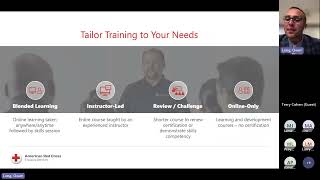
Owen Long from the American Red Cross describes a customizable BLS/ACLS/PALS training program that lets agencies adapt lessons to their own medical protocols. It includes e-learning, scenario banks, and multiple delivery modes. Large departments like Ventura County and Denver have already switched, and agencies typically only pay for certification cards while Red Cross covers the rest.
Questions this video answers
About six years.
Yes — obtained approval in all 50 states plus the District of Columbia at the statewide level (per presenter).
Ventura County Fire & EMS; Detroit Fire & EMS; Newport News Fire & EMS; Prince William County (VA) Fire & EMS; San Diego Fire & EMS; Denver Fire & EMS (presenter's examples).
Four delivery methods total; relevant options include blended learning (online modules + in-person skills), instructor-led classroom, and shorter review/challenge recertification courses. Online-only community courses are not applicable to BLS/ACLS/PALS.
The presenter said the only cost agencies typically pay is for the certification card itself; other resources/support are provided by the Red Cross.
Chapters
Day or anything we should know about before I move on?
Nope, all good.
Okay, good. And of course Peter can't join us because he's somewhere in the south of France still wearing some pants somewhere, I think. And Jim Augustine, good to see you too, my friend. And, and everybody else on the call, thanks for joining us once again and thank you for recording this, Angus, and we'll move on. And again, I've made the introduction of Owen Long, who's going to give us a presentation name. Before I do that name, what is the actual title of the group that you direct and run right now?
Yeah, sure. So again, my name's Owen and my title is the Director of First Responder Training for the American Red Cross. I'm responsible for a first responder group that oversees account management and support for police, fire, EMS agencies on behalf of our new resuscitation suite program. And I say new as a relative concept, new to the rest of. Compared to the rest of our program. So we've been around for first aid, cpr, aed, lifeguarding, you know, wilderness first aid. We've, we've played in those ponds for quite some time. But this is one of our newer approaches. And I have a little bit of a history of how we got here. But yeah, the first week funder training team.
Does that answer your question?
Can I just get a quick verification? Everybody can hear me?
Yep, we can hear you.
Okay, great. Cool. Awesome. And I just want to make sure I can't see anybody. So it's difficult for me to kind of gauge the interest here. So if you have anything, just come off Mike and by all means say it. So again, my name is Owen Long. I represent the American Red Cross First Responder Training Team in an initiative where we have really pursued our relationships with police, fire and EMS agencies, specifically fire and EMS agencies to look at a different approach to their bls, ACLS and PALS training programs. For many years we have gathered information, and especially from field clinicians, medical directors, training centers, et cetera, that we basically we teach these classes from the aha and we teach them as a checkbox. And that's not to say that the HA doesn't have great classes. It's not to say that, you know, there's one better than the other, but there are checkbox for us, right? We have to take ACLs, so this is the way that we do it. And we have to take our CPR every two years. So we're going to sign up for our CPR class and we're going to Check that box. We really wanted to take a very different approach to that, and we wanted to look at the, what we call resuscitation suite or Alphabet course trainings, the bls, acls, and pals, and look at it a little bit differently, look at it as an opportunity for practice, for what the clinicians are ultimately doing in the field. So first and foremost, we wanted to put at the front of our initiative the ability to customize our ACLs, our PALS, and our BLS classes to the medically directed protocols. Meaning we don't want the clinician or the instructor sitting in class and saying, okay, this is the way that the book says, and this is the way the national model says, but forget that once you leave the classroom, we need you to do it this way. We would like to see consistency across those two, I guess, avenues for training and see them kind of integrated into one to where that. That experience in the classroom becomes most similarly replicated of that of the field.
How did we come across this kind of, I guess, opportunity to speak to Dr. Antebe? It was very simple. Everybody in EMS is using the Hand Tevy app. So we were continuing to hear, well, can we use this in training? Can we have them pull it out like they're on a code on the back of a medic unit? So we're really trying to hear what the field was doing. And I took it kind of upon myself, to be honest, to reach out and say, Dr. Anteve, what are your core values of your program? What are you doing that is getting so much buy in from these clinicians, from these medical leadership agencies, from these full states that are buying into this. And he's very open and sharing the fact that we are.
Partnering with them in a customizable fashion to make their jobs easier, use their protocols, and ultimately give them more experience and training in what they will be doing in the field. So I said, well, we are too.
So it really became a very synergistic conversation because our goal is to, again, create that level of customization. So I say that in understanding that, we have provided kind of a broad set of course objectives that we don't compromise, right? So we have course objectives that are set. They are built based on ILCOR guidelines of what needs to be covered in a BLS class and ACLS and a PALS class. And ultimately, we have a line in our instructor's manual that says, okay, you know, this is what we're putting forward, but we would rather you replace this information with medically directed local protocol. Now that doesn't mean that we're not providing you the modalities deliver to deliver these trainings. We are giving you the E learnings just like the heart code model with the aha. We are giving you the instructor's manuals that are all available for download. We are giving you all the PowerPoints and the lectures. But that doesn't mean they cannot be augmented with videos that you use. For example, maybe you're using a very specific assignment for pit crew cpr or maybe you're. You're working on giving a class that is specific to the engine companies that are arriving on the scene. We encourage that to be integrated into these slide decks and into these presentations and ultimately even used for students to prepare for our courses. As sometimes we have agencies that elect just to use our course as the final test out. So, so that challenge program where they actually demonstrate the skills that they've learned in a in a protocol education course and then use our course to gain certification as a result of that.
The challenge course is what I was referencing there. Again, this is, this is allow allows for that customization completely prior to the actual administration of the final exam and the mega code to where you can actually build your education. Put our challenge course at the end of it as a test out. Again applying the protocol and it can be used as a certification based.
I guess they will achieve a certificate through that. So it becomes kind of I guess converted from just a practice or a training into a certification based course knocking them both out at once.
We do have four delivery methods. This online only do not Brett. That is not a course that is applicable to BLS, ACLs and PALS. That's more of our kind of public facing community education type stuff. But we do do that blended learning where they can actually take the online modules prior to coming to class and then, and then they do a in person skill session that is catered to that of the the agency. We do an instructor led training which is start to finish in the classroom but in the seat type deal and then our review and challenge courses again shorter courses that allow for recertification and still sit in line with those those competencies of the local agency.
Our courses are designed and reviewed specifically for first responder agencies. So we have a very unique in depth EMS practice and testing scenario bank. I do want to point out here that we do title our course just slightly differently for the ACLS side of things. We actually title it ALS Advanced Life Support and we did so not because there's a patent or any sort of copyright Infringement on acls. But rather we do take a little bit broader of an approach where aha, kind of segments out their courses. We have the ASLs, the ACLs. Ours is kind of all lumped into one. So it does include the cardiac interventions, the respiratory and pulmonary interventions. We look at shock pretty heavily and then ultimately we address trauma in those classes as well. Our pharmacology, we do have pharmacology specific to ems and again, that can be further drilled down to the pharmacology associated with your agency and then ultimately what's programmed into your hand TAVI app. And then we do have visual aids that are prepared for that. Of the scenarios representing the field, I actually recently just finished a partnership with iSimulate, so I don't know if you have any agencies on here that are using iSimulate, but we do actually have all of our programs. Program or I'm sorry, all of our scenarios programmed into. I simulate as well. So those EMS scenarios are all programmed into there.
We do give full administrative autonomy. And I say this to point out something very specific. One is if you have agencies that are looking to make this transition, they will be their own training center. So there's no going through a hospital, there's no going through another agency, there's no going through a rogue instructor to get cards. We do all of our work directly with the instructor or directly with the training center. The goal of this is to make the certificate more real time so they can generate that once they finish the course. But it also gives us a relationship directly with the customer and the first responder training specialist that sits on the account. So we actually work directly with the agency to do a full transition and then we continue to manage the account. All instructor credentials with the current agency have reciprocity with us. So we'll do an online orientation to our programs. But we do accept kind of what we call it the bridging program, where it's direct reciprocity with the agencies that already have instructors kind of alive and well in their system. Again, the main reason we see people starting to have these conversations with us usually isn't because they're, they're.
Actively seeking another agency. We have kind of seen two things. One, where they've gone away from certifications because they've, they've.
Seen less value in teaching, you know, one way in the classroom and then having to totally retrain in the field. So they've just done the way with the certification administration at the end of it anyway. But then two, we're having these kind of One off discussions and these discussions with large departments about integrating their ability to do this their way and you know, the way that the medical director is kind of leading the agency and being dynamic in the approach, and that's kind of where our customer base is coming from.
I'll say. Before I get into what a roadmap to a transition looks like, I will identify. We've been in existence now in this space for about six years. We started with the Military Training Network, so the entire Military training Network switched from the American Heart association over to the American Red Cross. So that we did that very strategically to make sure this worked, to make sure we could replicate it on a high level, we could scale it, we could grow it. And it did. So then they built a team of field professionals to go out and work with police firing, EMS agencies on these types of courses. So in our inaugural year, we really signed some very large agencies. And I don't know if any of them are on the call. So if you are, please feel free to come off mike and testify to everything that I'm saying is valid and accurate. But specifically, we are working with VC Fire and ems. So they've done a full transition from AHA over to the American Red Cross. We work with Detroit Fire & EMS. We work with Norfolk News Fire & EMS. I'm sorry, Newport News Fire & EMS. New Norfolk Fire & EMS. We work with Prince William County, Virginia Fire & EMS. We work with San Diego Fire & EMS, Denver Fire & EMS. And you know, these are just our big ones. Right. We've worked with some other agencies that are very notable and of great size and ability. But I say that to kind of point out that we've gained entrance into this market I think a lot quicker than anybody ever thought we would, due to the immense ability that we give to the end agency. I'm very specific. And when I say who we give the end autonomy to, the end autonomy is not the instructor, to be very clear, because we don't want instructors to go rogue. It is not cpr, acls or PALS by XYZ instructor. It is cpr, acls and PALS by X agency. So it is absolutely not a presentation of, hey, you know, go teach whatever you want. It is, it is definitely comes with quality control and assurance specifically from a national level. With us, we do have a quality assurance and audit team that sits at the national level that enforces compliance and regulation within our programs.
When you do kind of want to take a look at making such a transition within the space of this acls BLS and PALS training. We highly encourage you to kind of follow this roadmap to transition and implementation, if you will. So it starts with just a consult with our firing EMS specialists. So we would do an analysis of your current training, look at why you are interested in making this work, talk about what your end goals are. We assign a first responder training specialist to the navigation process. We then start with an agreement. We give you a licensed training provider agreement where your agency becomes licensed to use our programs. And then we bridge all your current instructors and we look at other instructors that may have similar credentials or lapped credentials where we could maybe give them an orientation to our programs to revitalize their ability to teach. And then ultimately we would establish your account structure and training paradigm. So that way you are fully autonomous to be able to deliver these training programs. Your account support does not go away. We are, we are there for your first class to make sure you feel supported and kind of see that this actually does come to life.
But it is a different, different model than what people are used to. And I applaud the Red Cross for being willing to step into this space. And the growth is going to be astronomical and very quick.
As we kind of navigate into this, this new era.
I don't want to dump all of this on you guys because I know that it is just supposed to be a very brief overview. And I told Dr. Anteby that this was just going to be kind of a scratch the surface. If there's anybody that's interested, we'd love to speak with you. We'd love to be able to kind of further have discussions on where this could maybe lead based on the geography of where you are. I'll assign kind of an appropriate conversationalist there with you. And our goal is to continue to obviously pursue the Red Cross mission. So we are very local with our disaster relief in all communities in the United States. We have partnered with you guys for a lot of agencies in the fire service, with sound the alarm campaigns, disaster relief, rehoming after house fires, et cetera. And all of the proceeds that do come from Red Cross training actually go back to the mission of the American Red Cross. I say that to. Again, we'll talk budget for just one hot second. I just had a conversation with Dr. Roach this week and he was like, so what does all this cost? When we were, we were down in Broward county and I, I will tell you, there's. For all of the things that you see on this map, there's absolutely no cost associated with any of it. The only thing you ever actually pay for with the American Red Cross is the cost of the certification card itself. So. So even if you aren't sure if this is somewhere where your agency may benefit or want to just try it and see what it's all about. I'm not here to try and sell you anything or waterfront property in Nebraska because that's just not going to happen. But.
It'S something that we put out there at your full disposal to be able to try it out as you please.
And that's all I have. Very brief, nothing crazy. I wanted to open it up for questions.
Comments or anything before I hop off. Great. This has been great and really eye opening and thank you again for having this across the nation, it sounds like already. So that actually brings up an interesting point. There are some states that are highly regulated and they have these committees that decide what your protocols are going to be or how you're going to do training and so on. And then there's some that are actually well directed, often by the local medical director dictated by that. So there's a span. So when you get to the states, for example, that have, let's say, regulations, are you okay on all those states in terms of they say. Do they say you have to be trained or each of your paramedics have to be trained in heart association and, or equivalent or have you run across that or where are you on.
That one? Is that been a roadblock? Yeah, that's a really great question. And has that been a roadblock? I would have said three years ago? Yeah, absolutely. And then we put together a team that gained us all 50 states plus the District of Columbia approval at the statewide level. So we worked with the departments of health to be able to be either written into code or written as an equivalent to the ha. So we've gained that and we have a lot of literature that supports our equivalency that we share in very early conversation. I'll tell you to be totally honest, where we, where we hit the roadblock is usually the agency itself actually to where they are kind of like it's ha. And it's ha. And it's HA because it's ha. Right. So we usually hit things along those lines, but at the state level, we hit the least resistance. It usually is when we get to the medical director level where we engage our chief nurse or we'll engage our, our scientific advisory council, help us gain equivalence and acceptance. At the local level is.
Where the intricacies usually come into Play. So you may have some local, let's say, friends here in many ways because of what you just said. Now, Wayne Lee. Wayne's one of our great mentors and one of our sages in this system.
So, Wayne, what's your question or comment? Well, thanks for that, Paul. Listen, Owen, very nice. Actually, I was very involved with the Red Cross here in Broward county quite a while. It's interesting. I saw that Tom DiBernardo made a comment about Department of Health will accept both. Aha is what he's saying, and Red Cross. And I know we're talking mostly EMS and paramedics here, however, and I notice you talked to Dr. Roach, who has a big title with Broward Health now. And one of the things that. And I was involved with Broward Health, one of the things, you know, if you remember, you may not remember, but ASAP had a course that they came out with a number of years ago. And so there were some competing courses and some of the hospitals put in their contracts that the physicians had had to have American Heart association acls. You're shaking.
Your head like you're familiar with that.
Too familiar maybe, but yes. Okay, goofy. But I.
Wonder if you could comment about that. Of course, of course. That really came down to the best way that I can describe it is when I need to blow my nose, do I grab a tissue or do I grab a Kleenex? It kind of just is a brand name on which I'm going to end up grabbing. Right. The AHA still dominates the market and has always been kind of the monopoly in the space. So we found that when a lot of policies and codes are being written, that was kind of the gold standard. So that was the Kleenex. Right. Of what needed to be delivered. Where we are kind of starting to penetrate the space and taking them one off. We built a review team to look at those policies and say, well, hey, here's all the information to write us in as an equivalent. The FDOH is one that I helped work. So we are actually written into the FDOH code where it says American Red Cross or aha. So at the hospital level, we have a team that pursues the same thing where they work to get written into code for hospitals and to agreements that.
Hospitals may have with larger health systems. So you would agree that that still.
Could be in place at some hospitals? Oh, I am confident that that.
Is still in play in.
Some hospitals. Okay, just a good.
Point. No, it's absolutely a good point. And Wayne is right up our alley for Two reasons. One is there are places where, when I've looked into contracts to help out as an assistant medical director, they are requiring, you know, specifically pals, ACLs, you know, whatever, those kinds of things. And that's been sort of, for many of us who, of course, gotten board certified in emergency medicine, has been like, what? Why do we need this on top of that? Right. So any event, you got the general idea. So I think this is very interesting and I'd. I'd be personally exploring this further as I get rid of this phone call here that came in at the wrong time. Telemarketer. But anyway, so that's it. Any other questions from the group here that.
We.
Can address?
Anybody out there that. That. Wayne, did he answer your question? Okay. I think so.
Right. Because we know that it's there. I'm just trying to figure out how to turn off my hand and make a good point, you know, regarding the contract and board certification, etc. And yet many hospitals still build that into the requirements, you know, and then some of it, I think, is attached to the trauma centers and their requirements, you know, so it gets kind of fuzzy. But I agree with you, Paul. It's always been.
A rock in our shoe, you know. So, Doug Kupas, you've been a state EMS director and then, you know, now medical director for namt. Any comments or.
Questions you have.
You'Re silent, you're muted.
So, yeah, I think you're muted to figure out how to get my hand not raised, too.
First of all, my first question, Owen, was, are you able to post in.
The.
Meeting chat here info your contact? Yeah. And, you know, to other comments that have been made out there, you know, locally. Our. Our hospital back in 2015.
Developed our own program much because of what some of the issues that you bring up, and I think this is overdue. I think it makes a whole lot of sense. When our hospital did this, we had a lot of, oh, you can't do that. You have to have. Aha. Well, you know, that's one of the big myths. And they would say, well, the Joint Commission requires it or whatever. When you go back into it, the Joint Commission just wants you to follow your hospital's policies, sets the policy, and it was a simple changing of our hospital policy to identify what CPR cards.
Again, I don't work for the state anymore, but the Commonwealth of Pennsylvania has a list of. It's about a dozen different types of CPR courses from the Mine Safety Administration to AHA to ARC to.
You know, many others.
On the CPR side. So, I mean, I think many places realize that it just shouldn't be pigeonholed. But, you know, don't believe it if you're, if people in your hospitals or wherever say, oh, the Joint Commission requires it, or whatever. You know, most of those are urban legend. And it's just people are used to thinking that it has to be just one thing or that's what they're married to because they're an instructor with it. But I applaud you for the whole concept because it makes so much more sense to apply the principles but then allow local variations. So there is no variation. I mean, the reason we did it was we wanted everybody bag, mask ventilating the same way. We wanted everybody doing.
The.
Same kind of compressions, et cetera. And.
So I think that by allowing variation, you're actually causing uniformity within agencies or.
Within hospitals and that sort of thing. I appreciate that insight and please feel free. I did put my contact information in the chat. Feel free to share as you feel fit.
And even if anybody just wants to reach out for initial consultative or more questions, things arise, shoot me an email, shoot me a text or a phone call. I'm happy to handle them on the one off as well. And I plan to continue. I have a meeting with my senior leadership here at the red Cross and Dr. Anntevi actually next week. So we're going to continue to look at opportunities.
For partnership and advancement of the relationship. Okay, so they can shoot you at text, text.
You, email, but don't shoot yet. Right. So exactly. That's the only.
Request. Just don't shoot me. Okay, good. Well, listen, this has been great so far. And anybody else have any questions or want to pipe in or have anything else to say, and Angus, I'll bump back to you. Anything else. We ready for transitioning over to the other side, so to speak. And anything else new we.
Need.
To know from the statewide level?
Sure. I'll just mention that.
The state has noticed a rulemaking session on education policy. If you all did not see that, it is Wednesday the 9th, I believe, from 9 to 11 in the morning. And there is a virtual option. So I know a lot of the medical directors on the call here have been with me in discussions about our statewide education system for EMTs and paramedics. And that is going to have some potential rulemaking workshop next week. So next Wednesday, 9 to 11, there is a virtual option and reach out to somebody, you know at the health.
Department if you didn't get the notice.
Okay. So anybody else so let's just repeat for everybody's sake, in case you got on late. And thank you, by the way, for. I think it was Wayne or someone like that who stuck it in there. The CME is 17400 this time. 17400. We're going to be now going over to 401, okay?
More from Peter




Melissa Olen MSN, FPN-C, CCRN: Sudden Cardiac Arrest Training in Schools (Project ADAM) 4/25/25



Pediatric Hospital Readiness: How Teamwork & CPR Metrics Drive Better Outcomes



Chelsea Kadish, MD & Kyle Goodknight, EMT-P, RT: Pediatric CPAP in EMS (3/14/25)