Palm Beach County Fire Rescue explains its whole blood program for trauma patients. Paramedics carry fresh blood in the field and transfuse it during emergencies like car crashes, before patients reach the hospital.
Questions this video answers
About 10 cc per squeeze.
Roughly 2 to 3 minutes.
15 to 18 days.
Between 1 and 8 °C.
About 38 °C (approximately 100 °F).
Chapters
Once the blood is spiked and the administration starts, we can roughly get a full unit of blood in anywhere from two to three minutes.
This is a demonstration of a whole blood administration done by our firefighters in the field.
Every time she squeezes, 10cc's of blood are pumped in through the IV.
This is drastically increasing survival rates because no time is wasted.
This is something that is done in.
The back of the rescue truck, rolling down the road, and we're actually bringing what the trauma services do in the.
Trauma center to the street.
Palm Beach County Fire Rescue is the first and only fire department in Palm beach county offering this life saving emergency medical procedure.
One precious thing that everyone wants back in life, and it's time.
It allows us to provide our trauma.
Centers with time so the trauma surgeons could be prepared.
And we turn that patient over still with a heartbeat and, and let them.
Prepare to get them to definitive care.
Which is really surgery.
But this innovative level of emergency care didn't happen overnight. A unit of whole blood is only good for 15 to 18 days. So proper storage and temperature are vital.
So when we pull the blood from the cooler, because we store it in a cooler, it stores anywhere between 1 and 8 degrees Celsius.
Our EMS captains monitor temperatures 24 hours a day.
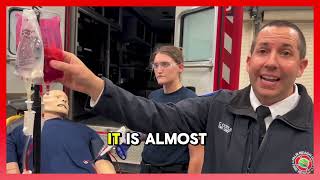
Monitoring device and that little monitoring device allows us to see the temperature inside this cooler at all times. When we put it here, it is almost ice cold at that particular time. What the warmer does is it converts it to 38 degrees Celsius in seconds. If I was to convert that over to Fahrenheit, that would be roughly 100 degrees.
After months of research, preparation and training, our whole blood program started in July of 2022. Our EMS captains and flight crews have administered more than 100 units of blood.
The largest number of patients needing blood, close to half are coming from motor vehicle crashes.
After administering the whole blood, their color improves, they don't need the airway intervention, and they know exactly what's going on.
They could actually remember the event that led them to the condition they're in.
This is the difference between life and death.
When you come to this county, you need to feel protected. You need to know that whatever goes wrong, we've got you, we're there to help. And this is just one of many things that we do that makes us different than most.