Ray Kemp - Not My Addiction (11/2/2021)
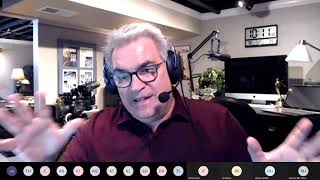
Ray Kemp made a documentary called Not My Addiction after his daughter struggled with opioid addiction. He built it around peer interviews and a structure of onset, crime, and recovery to help EMS clinicians see people with opioid use disorder as human. The film has been adopted widely in paramedic training across the U.S. and abroad.
Questions this video answers
13021
On the EMS World website (download and streaming available).
Gold at the 40th annual Telly Awards.
Chapters
All right, I think we'll go ahead and get started a couple of housekeeping things before we dive in. The CME code for today is 13021. That's 13021 and I'll put that in the chat for everybody.
So remember, there is CME available for today.
I don't see Melissa on unless she joined quickly. So in terms of announcements from FAEMS md, please go to the Mobilize portal. There's a number of events that have recently been put up there. There's the ITLS 2021 Connect virtual experience. There's the Project Echo links, as well as some interesting legislative things that people need to read and comment on. So if you haven't seen those yet, please go ahead and check the portal so you keep up to date with all the things that are happening around the state.
With that.
First of all, I want to thank Ray for being here with us. Ray is really a special guest for us today. He's had a connection with EMS for many, many years dating back to the. Well, I won't say exactly when, but.
For many years and currently is in St. Louis. And Ray is a filmmaker and he is the producer of a film called Not My Addiction. If you haven't seen the film, basically he uses for recovering opiate addicts.
Say opioid, opiate, whatever from the St. Louis area to educate EMS clinicians about opioid addicted patients. For the folks from my system that are on the line, they know this is something I'm pretty passionate about. In fact, we have a thing going on in my county right now where our medics are consenting people for enrollment and treatment right from the back of the ambulance and having folks reach out to them in a very short follow up. So I know a lot of us are focused on this. It's certainly something that many of us work on on a day to day basis in terms of helping our communities with these issues. And so I hope that you'll join me in welcoming Ray Kemp who's going to talk to us a little bit about what he's been up to with his film. So without further ado, go ahead.
Oh, thank you. Thank you very much and appreciate you all inviting me here to talk a little bit about Not My Addiction. It was a production that was very passionate to me, I think, to start with, let me give you a little background. What really led to the production. And it actually started with my youngest daughter who is addicted to opiates and I had learned about her addiction many years ago and in the process had. Was trying to help her get into a recovery program. And at one point she was staying here with me, and we could not get her into something. She had been off of opiates, at least for a day. And that's when I saw for the first time what withdrawal looks like. And she was just agonizing in pain in her room. And I've never seen this before. Even on the road, when I worked in EMS and all that, we typically never see this. And so up to this point, I had already been filming probably dozens and dozens of overdoses because I do a lot of work filming and writing with EMS. A lot of my work in the past, since 2004, has appeared in just about every paramedic and EMT textbook out there, photographically speaking. Did a lot of work with Gems magazine as well and other publications when it. Regarding EMS material and what have you. So. And then up to that point there, I had already had a lot of experience actually going on overdose calls and filming them. What have you. And I had. I had to admit I had a stigma. I just. To me, it was just people making, as I looked at it back then, and many people referred to this, making bad decisions about their lives and just wanting to get high. I had no idea that it was to the extent that I was witnessing now with my own daughter. And it was at that point there, watching her go through the withdrawal, that I realized there's more to this than I know. And I needed to do some more research on that, on that subject matter. And. And once I learned more about it, I realized that.
This was something that they don't want to go through. They would love to be clean, they being people who are addicted. My daughter, in this case here. So.
And it was not at all what I thought it was, and furthermore wasn't at all what the stigma that I saw experience with the medics, which was quite heavy in these. In these parts here and what have you. It was a lot of times very callous behavior towards addictions and what have you. And I, I filmed and what have you. But I didn't give it much of a second thought, so I wanted to learn more about it. And. And that's when I realized that. And this is how I penned it at the time. I said, I look at addiction like reverse pain management. They have to. That becomes their normal. They have to do it in order to keep the pain from withdrawal from coming in. That. That pain, that dope sickness, as they call it, is very, very agonizing, and they will they will go to all extents to, to relieve themselves or prevent that pain from happening, as my daughter had done many times at that time. So I tried to start having some conversation with the medics about that, a little bit about my experiences and what I was learning about it. And to some, I was getting through to them. They didn't know this. Oh, I didn't know that. And thank you for sharing that. You know, and. But it really wasn't the impact that I was looking for. And I decided at the time that let's do something about this. Let's. Let's put together a production that explains this in a very clear and concise way that the viewer, and in this case here, first responders could relate to. And that's where the, the idea for Not My Addiction was started. My cousin at the time was a.
Missouri state probation and parole officer and he was a counselor also for opiate addiction and what have you, and had numerous certifications and had many years of experience. And when I shared this with him, he was very excited about the concept. He loved the idea. But the one thing he told me, he said, ray, whatever you do when you film them, make them human. Make them human. And I knew, I knew what he was, I knew what he was grappling at. So we.
Managed to secure three individuals right off the bat. I had worked through another organization to obtain them for the filming. One of the girls I had already known, she was a friend of my daughter at the time. So that's when we started to arrange to do these interviews. And I wanted to do the whole production with just strictly these individuals. I did not want to put psychologists in there or doctors to give this or this is what happens to the body when you do this or that or whatever. I wanted compelling stories to come out that addressed basically several key areas. One was their onset, how they got started. Two, their experience with the drug initially in the beginning. Three, the realization that they're addicted and now that they have to control the pain, doing whatever they can to keep from, to stabilize themselves on a day to day basis so that they don't become sick and agonizing and go through withdrawal and dope sickness and what have you. Four, we then address their criminal activity. All of them got involved in criminal activity of some sort in order to maintain their habit at the time. And then finally we addressed recovery. And I wanted to kit those key areas there. But I also needed to make sure that when we made the film that I could get the viewers to relate to it. And again, this Sense here. I'm talking about first responders. So.
We started the film out, and when you see the film, if you haven't seen it yet, we started out. There's a. There's an overdose scene in the very beginning that I started with, and it doesn't show the individual. I kept that part of it out on the. You know, getting Narcan, all that. I started it from when he's being brought out of the stairwell. I shot that up in Spanish Lake and being taken into the ambulance. And then, long story short on that there, the crew member then, after the individual is realizing what happened, admitted to the crew that he had snorted the drug. And the medic then kind of goes into a little spiel with them. Nothing major, just a little, well, you know, you were nearly dead. You know, we saved you, blah, blah, blah. We're taking to the hospital. Kind of that typical speech that I hear from a lot of medics. And he wasn't doing anything wrong. He really felt he was. He was benefiting the patient by having this. This rather stern talk with him and what have you. I think, little does he know that the patient was really totally dialed out of that. His. His next thoughts now are, my God, I'm. I'm. I'm starting to become dope sick, and what can I do to get the drug, you know, to get things back to normal for him at that time there? But I felt it was important to include that in the film because the viewers can relate to that. I had a lot of medics say, oh, gee, wow, that's me. I've done that. And again, I'm not saying that was wrong, but again, it's important for us to get that relationship established early in the film. And that's. I think, part of what makes it so successful is now we have a captive audience, captive viewers, if you will, that can relate to what they're seeing in there. And then we start into the. To the interview processes. And the interviews all overlap, meaning that when we hit these subject areas there, they each share little pieces of them. We kind of bounce back and forth with them on those areas there. And we have it broken down into nice little sections, but it's very, very compelling storytelling. And the next objective here was, now, how can I. How can we structure this so that our viewers, first off, have a really clear understanding what's happening? So we spent a lot of time in the video. Excuse me. There's a lot of time in the production where they talk about the pain of what they going through and how they have to sustain themselves every day and how painful it is. And one of them even said it even hurt to take a shower. My hair hurts and what have you. So I felt it was important that first responders understand how deep this is impacting their patient and what they're going through and why they're doing this. They're not. They're not getting high. In other words, what I was trying to put out point out in the video was they're not getting high so they can see the sun and the moon and the stars all collide. It's not that type of high anymore. It's now to sustain themselves, become with what we call their new normal in order to avoid that pain of dope, sickness, withdrawal and what have you. And they will go through anything, do anything to get it, even to the point of becoming criminal. And that's brought out in the video very well. There was another point in the production though, I felt too where we needed to try and get a captive audience and go in here again to get the viewers to relate. And I had included. I had a couple of them read a Facebook post. It was a famous Facebook post several years ago from a firefighter paramedic who was just felt that they shouldn't be give out Narcan. And he made a rather foul comment about it. But I had that actual quote and I. And I just. Without them knowing it, I slipped it to. To. To the first interviewer which Hannah. Hannah Lombardozzi, and had her read it to get a reaction. And it was a very powerful reaction and I had it done with somebody else. So I think now at this point here we really had something to relate to because I know for a fact that a lot of our viewers said, gee, I didn't say anything like that, but I certainly thought it from time to time and again. That was the importance again of trying to keep that connection with our viewers as we get deeper into this. So the next steps getting into the production was now to get them to understand them being the viewers, to understand.
These people are going through and actually start to develop empathy. And that does succeed quite well in it. I was really surprised when we first previewed this how well the viewers responded.
To the participants in the video and what have you. And we have quite a powerful ending to.
Really resolves quite nicely. It gives a clear pathway of what's happened to them today. Out of the four individuals that we interviewed, though three of them had already been recover many years and doing quite well. We decided to bring a fourth person And I wanted to find somebody who was not that far along. And we found someone who is only less than 90 days sober from opiates. And. And she struggled. We were concerned after we filmed with her that we were going to lose her, because I talked to her, I talked to her coach later on, and he said, she's wanting to go back on heroin. And we weren't too sure how. How Hannah, another Hannah we had in the video was going to fare out a whole thing. But she came out of it very well. She. She actually ended up completing the program. She's remained sober and. And she completed her nursing degree. She's a registered nurse now and doing quite well. But there was. There was times that we thought we were gonna lose it, but we felt it was important to also bring somebody in who. Who was at the beginning stages to get a perspective from them as opposed to people who had recovered. Although we never reveal in the video what the fate or what their. What their outcome was in early in the video, we wanted to kind of lead that all the way to the end so the viewers don't know, is this person still alive? Are they still using drugs, whatever, where are they today? And we kind of left that all the way to the end and. And it worked out very well. We debuted the production at the EM Today conference in North Carolina, and that was the first time we ever showed it to a large audience. And the reaction out there was very, very surprising to me. You could hear a pin drop in there. I saw people crying. But afterwards, this is what really stunned me about it. I had medics coming up to me and thanking me, saying, thank you. Thank you. I am ashamed of how I treated my patients. This video has changed me, and I get that all the time. And I even get emails still to this day, people thanking us for the video. And it did its job. It does it in 40 minutes. But it gives you a much deeper understanding of what your patient is going through, why they do what they do. It'll give you an understanding, also gives the viewers an understanding why they leave the er, you know, and chances are they're going to leave the emergency room. They do, or the edd, whatever the case, or bolt from the ambulance, or get up, out, or refuse treatment, whatever the case might be. So you have a deeper understanding. The viewers now have a deeper understanding of what's really going on with their patient, why they're doing what they're doing. And I think, too, it puts them in a better position that they can communicate, you understand, dope, sickness, and you can talk to them about that a little bit and what have you. So there's that bonding. But this is particularly important for, I think, EMS services that are gonna be developing intervention programs such as what was mentioned earlier today, where the crews are actually gonna be doing things in the field with the patient, try and get them into certain programs or what have you. But what a lot of these places have to do is they have to realize that's only successful if you can get rid of some of the stigma problems you have within your organization. And we brought that out in the video production as well. We got St. Charles County Ambulance District, my old alma mater where I worked, they have an intervention program there. But they realized they, they could not get the program going successfully because they had a very bad stigma problem within their organization. And that's brought out in the video too. We felt that was important to kind of slip that in there. We wanted the viewers to understand that there are organizations admitting we have a problem with our troops and we have a lot of stigma towards opiate addicted patients that we needed to overcome. And so I think that was important we put that in there as well, kind of as a, as a segue, if you will, to a realization that there's other things you may need to work on. And for a lot of organizations, this video has turned out to be just what they wanted. I do know it's being used in hundreds of EMS and paramedic programs all throughout the United States. Australia just got ahold of me, but last year asking if they could use it out there. Chicago Fire contacted me about a year and a half or two years ago asking, and they don't need to ask. It's out there, it's available. But I was really honored that these places are utilizing this production for their, for their training programs or their continuing education, whatever the case might be. But it does the job. And I was really pleased that it does the job. I had another individual who runs, who runs a large organization, NCAD here in St. Louis, and he had seen the video and they do programs like this to help places deal with stigma and what have you. But the biggest compliment I had was he came back to me, he says, your video does in 40 minutes what we try to do in three hours. And that's the power of film. We have the ability to kind of control when we want to invoke emotion or certain responses. It's all about timing. And that's what I love about doing productions like this.
Because we can, we can put that in there. Certain points and all that and get those responses we're looking for, such as what I did with the, with the email, excuse me, with the YouTube. It's not the YouTube streaming Facebook post and had them read it back. There was very powerful responses from that that I know got to the viewers as well. And, and that's kind of the background of the production. On a side note though, my cousin who had really had.
Begged me to make them human, we did exactly that. The whole time we were filming. I wanted to make sure we had those human elements. And that's why you'll see in the video a little bit later on the girl they talk about, you know, when, what happens after she got out of prison and she has a son now and her career and wherever things are going. These are the human elements we wanted to bring back into the production. And when I had finished the video, just before I had gone up to North Carolina to debut it at their EM Today conference up there, I sent the copy over to my cousin and he was just ecstatic over, just loved it. He thought it was fantastic. He was almost crying on the phone. And my cousin's not that kind of guy, being a probation parole officer. But he was very, very, he just thought it was marvelous. And the sad part was I was on a Monday when he, when he saw the video. And on Sunday, the following Sunday he died of a heart attack. And I have to thank Gary because it was his inspiration and his words. Make them human, I think really is what made this production get the results that we were looking for. And I'm honored that so many places are using it as part of their ongoing education to kind of help.
Bring forth the understanding to their constituents, their students or their staff or whatever and have a better understanding as to what your opiate addicted patients are going through, why they're doing what they're doing. But we did it in a very simple manner through the video. And that's basically the foundation for it and how well it works.
Wow, fantastic.
Thank you.
I know there's a bunch of people on the call here who this, this particular issue hits close to home for them. As we said before.
Where can, for those who haven't seen the video, where can they see the film? I hear it's on the EMS World website, is that correct?
That is correct. EMS World became the official sponsor for the production. They were a very early supporter for it and it is now available on their site. Has been. And you can download it from their site as well. You can view it on their site but there's also a download button there and I believe the link will be provided. You guys will put the link out here for people to get to it and you can download the video. And we've updated it a few times since it's been released. So I think we have another update coming out here in the next month or two. So we kind of want to kind of keep it fresh with where they are today and some new updated pictures and things like that that we'll put into there as well. But, and I forgot to mention too, I was really proud that the video won the, the at the 40th annual Telly Awards. We took the gold for that video production, which just totally shocked me. I never expected to see a gold come. I would have been happy with the bronze or something along that line there. So we were very proud to take the gold medal for the, at the 40th annual Telly Awards for that particular production. But that's a little bit of a background behind it there. And again, my daughter and her situations, what really got it all started, but it was really important for the medics and students, what have you, to get a better understanding. And I feel too, it's really important that this is done in the classrooms early on. I still ride and film with the medics, but I, you know, when they're assigned to a crew, a preceptor and what have you, a lot of those guys had stigma. That's where they got their stigma. The students, they got it from whoever they were riding with, you know, and that's. It kind of picked up from there. So if we can intercept this early in the classroom arena, you've, you've, you've, you've carried it much farther along and they won't be subjected to somebody who's been on the road for quite a while and he's going to share his, his stigma, if you will, with that, with that new student.
Yeah, we certainly see that all the time. Okay, does anybody have any questions, comments?
Okay, so. Quiet group this morning for the first minute.
No, that's fine. Well, I didn't. It's understandable.
Yeah. Well, not, not an easy topic, but I've certainly changed my perspective when it comes to this over the last couple of years. And honestly, one or two of the people that have caused me to change that perspective are also on the call right now. But.
It'S worth sort of, or what sticks in my mind is that when somebody has an experience with a friend, a family member, something like that, who struggles with this disease it does seem to be a moment where that person has the opportunity to change their perspective on this, their understanding of it. And then I've just seen over and over again people use that and turn it to a positive to help educate other people. Certainly something that I think a lot of us have experienced and hopefully something that we can continue as far as picking up bad habits from the older folks. We all know that's true and some of us were certainly guilty of it when we were back on the trucks. But.
Certainly a good thing to try to change these perspectives early on.
I think too.
Those who are developing intervention programs, something like this is very important.
That program's success is really based upon how well that's going to be delivered by the crews in the field. And if you got a stigma problem, you're in trouble right off the bat. You got to get that, you got to overcome that part with your crews to make this successful. And this production here does very well in that area there. It's, it's. I think it would help system. Well, I know it helps other systems how to get those responses back, but it would be a big stepping stone to making your intervention program that much more successful.
Yeah, I know for sure. I'm going to take a look since we just started ours and see about, you know, how useful this can be for, for our training and for our folks to continue to do that.
Any other comments from the group?
I'm looking for the link on EMS World and the link Peter sent me doesn't seem to go directly to it. Do you happen to know.
Unless they changed it. Let me take a look here real quick.
Make sure people have access to it or I can even get it from you later and put it on our listserv.
You just.
Okay, it looks like. Yeah, I mean I got it here. Let me.
Hmp, let me see. Let me copy this and go to here and paste that and.
Try that there. That should get you to where you need to go and you'll. Like I said you can play the video right from the site. It plays very well on there. But then just down below the description there's a, there's a line that says download the video here and it will download a high res version that you can use in the classrooms, wherever you want to play.
Is available for free. That's. That link should work there for you.
Fantastic. Okay, I will. So that link is in the comments.
And.
We will make sure that that link also gets distributed to all of our members because I know for myself and I'm sure for several others, it's going to be a useful thing for us once we get a chance to take a look at it. Any other comments from the group? Otherwise, we'll get ready to switch over to the other meet.
First of all, this is a great presentation and more importantly, a great service. So thank you so much for what you did and the way you presented it to us today. That really meant a lot. And by the way, for those of you I think that claim the CME, it's 13021 today, if I remember correctly. Does that sound right? Angus 13021 Yes, 13021 in the chat.
If you just look back a little bit from the beginning of the meeting. 13021.
All right, sorry about that. See you later.
No worries.
Thank you very much and you are.
More than welcome to hang on with us and listen to the other meeting if you'd like. It's essentially what's sometimes referred to as the Eagles meeting, and we rebroadcast it on this feed for our Florida folks to be able to watch it live. So you're more than welcome to hang out with us. But thank you very, very much for taking the time and coming and talking with us about this. It's obviously very important. I think we all know that, and I'm definitely going to go watch this today and figure out how to fold it into our systems training. So thanks again very much. Really appreciate it.
Thank you all very much. I do have another meeting I got to jump into, so I won't be able to attend, but thank you all very much and feel free to contact me anytime you have any questions or anything like that about the production and we can do whatever we can to help.
More from Peter




Melissa Olen MSN, FPN-C, CCRN: Sudden Cardiac Arrest Training in Schools (Project ADAM) 4/25/25



Pediatric Hospital Readiness: How Teamwork & CPR Metrics Drive Better Outcomes



Chelsea Kadish, MD & Kyle Goodknight, EMT-P, RT: Pediatric CPAP in EMS (3/14/25)