Rob Lawrence - KAPE; Keeping your Agency in the Public Eye (10/25/2022)
Rob Lawrence, John McPherson, and Paul Pepe discuss how EMS agencies can stay visible and build trust through media engagement and social media. They cover practical strategies for public information officers, from pitching stories to reporters to managing your agency's online presence.
Chapters
Mentioned it and it's in the chat.
Good.
Yep. Thank you for sending that to me.
Okay, the recording has started. Thank you, Angus.
Hey, just one or two announcements, if anybody.
NAEMSP registration for the January meeting in Tampa is now officially open. You can go to the NAEMSP website to see the schedule and get yourself registered. The Waterside there is a great hotel. I think everybody will have a great time there.
And there will be also some state meetings scheduled for January as well if you haven't seen the dates of those. Also, if you are not signed up to get notifications from the state about workshops for rulemaking and the other stuff and you need to know how to do that, please reach out and we'll point you in the right direction to get signed up to get those notifications.
Hey, are we going to need any defensive weapons for some of the activities going on in the city at that time?
Yes.
I'm not sure how you defend against cannon fire, though.
That's great. That's great.
Angus. Angus, it's Kerry. I'm registering for NAEMSP now. Does anybody know if there's a hotel.
Block or hotel code or anything or.
It's just whatever should be in there.
I think there's two Marriotts right next to each other connected by a bridge. There's the. I think one's called the Waterfront and one's called like the GW Marriott or something like that.
Okay, I'm doing the registration now. I don't see. I don't see anything about it.
That's why I was.
I didn't do mine yet, so I didn't.
Oh, here we go.
Hotel and travel.
There. I see it.
Yeah, it's in there.
I see it. Never mind.
Okay, awesome. Perfect. Well, we're looking forward to it. Looking forward to the Tampa meeting for sure. All right, so without any further ado, let's get started. I see we have a. We have a quorum. And just so everyone does know, I put in the chat every speaker that we've had thus far. Thanks to Angus, we've been recording and then we've been putting it into a YouTube channel. There's over 75 talks. And I think just. It's just really great to see what we've amassed over time. So thanks to Dr. Pepe for getting that started. Today we have another great speaker. I sidebar him at EMS World in Orlando. And I said, hey, what are you speaking on? And he told me, I'm like, we have got to hear that. So obviously he does a four hour long version of this. But we're going to be hearing from Rob Lawrence today. For those of you who do not know Rob, Rob wears several hats and he somehow does them all very well. He's currently the Communications Chair for the American Ambulance Association. He works for Prodigy ems, which is a fantastic LMS for EMS systems and beyond prodigies used for any MSP and others.
You must see him on his regular podcast. He writes up lots of articles, so he's a perfect person to talk about how to keep our agencies in the public eye. And before I get started, I will say that there are lots of agencies out there who I think do a wonderful job putting their agencies out there, whether it's for hiring or just keeping the community up to speed. So that's what I wanted to kind of give us a primer on. So, Rob, if you're there, I lost your video. Did we lose. Rob?
I'm here, Peter, if you can hear me.
Yeah, yeah, yeah. But we don't see you. I'm not sure if you did that on purpose, but there you are. Okay, so I'm going to take my camera away so that the recording and we'll let you go. So, Rob, thank you so much for coming. Take it away.
Good morning, everybody. Peter, thank you so much for your kind words and just let me know if you can see my slide deck.
If I've pressed the right button.
Yes, we see it.
Excellent. So thank you all. Good morning everybody. I'm on the left coast, so it's now 8:05. As Peter said, I wear a number of hats. Primarily I'm with Prodigy EMS and Pro ems. I'm also the spokesperson. I'm the English voice of the American Ambulance association, which makes people laugh. And also I am part time the executive director of the California Ambulance Association. So I'm kind of mired in politics and publicity for a day job. When I saw Peter at Expo a while ago, he said, as you heard, what are we up to? We actually ran a four hour PIO intensive because we realized that, you know, we're not really good at telling our story and we need to achieve publicity and politics, then we have to be pretty cool at telling our story. And so a number of my American Animal association press and media colleagues have been on the road this year running pre conferences just to talk about that. So as Peter said, I'm going to try and cram four hours into 20 minutes by just giving you the highlights. And so this is called Cape, keeping your agency in the public eye. And let me see if I can advance the slide.
Seems to be on a go slow already. Oh, there we go. So, as Peter said, this is my background. I'm also have held, I'm recovering chief Operating Officer. I've held a number of posts both in the US and in the uk and prior to that I was an army officer in the British Army. So we want to avoid this in simple terms. And of course, if you have that reporter standing outside your amulet station or your fire headquarters or your fire station rattling the piece of paper, it's usually not a good thing. And so how do we avoid that? It's actually by being proactive, being realistic and being out there in the community. And as Peter said, there are a number of organisations that do this exceptionally well. But let's just go over some sort of key points. We also need to seek to avoid this. This is me in the UK when I was a Chief operating Officer of Eastern England Ambulance Service. I was meeting a patient whose father unfortunately died because guess what, the ambulance was late and in from the kitchen where they were hiding, came in the photographer and the reporter to catch me talking to the family and my face probably tells the story there. And so I've become very keen at dealing with, handling and making friends with the media and as we say, keeping our agency in the public eye. We're all billboard organizations. We drive around on a billboard, we drive around in an ambulance. They know exactly who we are, they know exactly what we do. And these days everybody's got a camera and therefore they show exactly what we do. We also have an industry image to keep up because there is inevitably the fact that we are held to a much higher standard than other people because of the job that we have to do. And of course, when something goes wrong, that comes to the fore. The fact that we have a paramedic, a medic, an EMT or whoever doing something that's slightly untoward and therefore, you know, we attract a lot of media attention. And so we seek to avoid that. We also suffer from the former image. And that as if somebody no longer works for us, they worked for us 10 years ago and then they do something untoward, they immediately tone in on the fact this person was a paramedic, is held to a higher standard and then come to us for an opinion and a view. And so those are the things that we have to be prepared to deal with on a daily basis. Who's reporting on us? Well, these days everybody is reporting on us. It's not just when you have the reporter doing a new story in your office, it's anybody with a camera, it's anybody that can immediately livestream, that can immediately record it and then edit it back to put their point of view. And of course there's a great, you know, debate around body cameras and ems. Of course, police departments have cracked this already to actually show, you know, your side of the story. But the key thing to remember is everybody is watching us.
So what do we have to do? Well, we have to do this thing that I call spp. SPP quite simply stands for. Sorry. SPP quite simply stands for shameless product placement. We have that billboard, we have that image, we have that professionalism. And so the key thing is to actually use that to good effect and to promote ourselves in the community by being our own publicist. So what do we need to do? Well, first of all, I maintain, and so do others in the industry, that it takes 10 good stories to trump one bad one. And so we've constantly got to be looking to create the positive image, the great story, the good news. Because the day that something untoward occurs, actually you might get not so much a free ride or a pass, but you actually might get a sympathetic ear when you're putting your point of view on something. So it takes 10 good stories to trump the one bad one. It also helps you maintain a good reputation within the community. It helps you develop stories to promote your initiatives, your public health initiatives, your cpr, your. The great things you do in the community. And of course, we'll talk about some of these momentarily. And of course it helps you be in the story, leading the story and talking about the story. Because in media it's quite simple. If you're not literally sitting at the table, you're probably on the menu. And so there's an opportunity to.
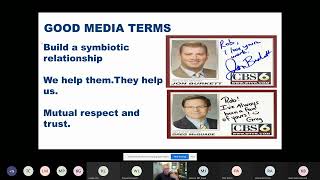
Use that to good effect. The key thing is to be on good media terms to actually, if you don't know your local media outlets, you don't have a person that's appointed as your pio, your press information officer, your communications lead, then they need to go out and work out who's out there reporting on them. And that's actually a key activity. If you have a new PIO appointed or someone's just gone on a class and actually, if you're from a fire based EMS system, public based EMS system, by all means look at the Emmetsburg catalog. And actually there is a number of free classes where they'll even pay for your guys to go and attend PIO classes. And I thoroughly recommend that. So make friends with your local journalists, help them because hopefully they will help us. And of course it helps build up a high degree of mutual respect. And of course I look to our own Dr. Antevi, who has been in a number of national news stories actually promoting not only the organization that he's a part of, but of course maintaining the national narrative on the issues that we're confronting. And I commend you for that, Peter, and by all means, please, please keep it up. Of course we want to be able to make the news and that news needs to be positive. And so once you've made friends with your local journalists, either you as medical directors, as EMS chiefs, or indeed your designated spokesperson, pio, you know, you're always making news. We are a newsworthy organization, not just for the bad things, but everything that's going on in your organization can become during the course of the year a news story. Provide a list of topics for what I call slow news days. It doesn't always have to be the impactful disaster headline. There are a number of things that you can do to actually keep your media in the loop. Slow news days. Offer them ride alongs. They love a ride along. Obviously you need to have some sort of HIPAA paperwork because they then become part of the crew. But actually it's an opportunity to show your local news market your lot. We talked about slow new days. These are just a few examples. If you have a bike team, this is always a favorite of mine because an EMS bicycle isn't just a bicycle, it's 50 pounds of kit on a bicycle. And actually to operate that piece of kit takes some degree of skill. And so demonstrate that, showcase your team, stick your local cub reporter on the bicycle, watch him fall off. Makes great television. Very positive things like, you know, joggers on the road when the clocks change. Clock change is always cause for road traffic accidents. I certainly looked at my data a while ago and said actually this is when it's occurring, is when students go back to school or back to college. And then when the clocks change, we see an increase in road traffic accidents. And so use that we have more data that we know what to do with. We're a data rich environment and so we can use that to actually demonstrate public health issues, items, causes and effects. And so don't be afraid to use data to good effect in the media. And of course 911 call centers combined with that data we have science, excuse me, science and technology up the wazoo. We are a stem based organization and so using that to educate how we can predict the next Emergency how we use automatic vehicle location systems. The technology on the truck is all something that's exceptionally newsworthy and again, helps you build those 10 stories to keep you on top of the game.
And.
Be the perfect host. We are. Again, people want to come and see what we're up to. And so when you, if you invite visitors over, then make sure that you tell the world they've been there. And this is just some examples from organisations I've been involved in, whether it's the Boys and Girls Club or whether it's international visitors from Australia coming for a ride along tell folk that are out there with you because again, it just portrays that positive, good image. Social media. Social media is one of those things I maintain as a weapons grade device if mishandled and of course there's a number of, you know, stories of career suicide that occur if you're not using social media. Well, but that said, again, to accentuate your positive, it only takes a few photographs, it takes a paragraph or two if you're friends with the editors of our EMS publications. And I know that we're now seeing our EMS publications going from paper just to online. But that said, EMS World, EMS1 and GEM still have a strong social media presence. And so, and they're constantly looking for images of our industry. And so add them to your distribution list of photographs and stories and it literally takes two seconds to gather two photographs to write a paragraph of what you're up to and then to email it to one of those three editors. And then all of a sudden your good activity, your good news story is then propelled across the entire EMS Twitter sphere, social media sphere, and again, it's a simple and effective way of promoting your own brand. And of course shameless product placement is about promoting your own brand.
Photos. Now, of course we have issues and this is where the kind of we run into problems when the medics take photographs of things they shouldn't do and then stick them on their own page. And of course we have HIPAA related issues. And of course HIPAA being a federal offence, as we all know, you may have the best medic on the truck, but if they're breaching hipaa, they then they may well be disappearing down the road finding other employment. So.
Sorry, I'm getting a message there. And so one of the things I found.
Can you still see my slides, Peter?
Now we can. There it is.
So we just cut in the way there. So the way that I get around this is wherever I go, I set up a photo email page and so I Encourage the medics to take photographs, obviously explain the HIPAA related nature of what we're doing and then have a simple email page photo at your organization. Guys can send photographs in and then you can then have your PIO or your publicist or whoever use them to good effect. And so therefore you become the kind of arbiter and the editor of photographs that are coming in to make sure you're not giving anything away. But actually that also allows you to maintain a fantastic bank of photographs to use for other things such as websites, web pages and annual reports.
Tell your story daily. This is an example of best practice from the Richmond Animals Authority in Richmond, Virginia. Every single day they put out one PowerPoint slide with a news story or an item one. It doesn't take much to do. It's usually three photographs, two paragraphs or two and a half paragraphs that talks about something that's happening in an organisation that celebrates their people, that celebrates their local environment, that celebrates saves, that celebrates everything they're up to. If you go to the Facebook or Twitter and just look up the Richmond Adams Authority, you'll see their word on the street that comes out on a daily basis. And it's a great way to inform both external and internal communication. And so again, an example of best practice, something get your PIO or your press person to have a look at this and it just helps you continuously tell your story. And by the way, at the end of the year it turns into an amazing yearbook, which is even better. Don't forget your local audience. If you have a predominant sub population that uses a different language, then of course don't forget to produce content and material as well in that particular language too. So again, don't forget the population that you're serving.
Twitter again, another social media opportunity. And of course depending on one's age these days, depends on the platform that you use. For example, a few years ago I googled some sort of home economics tip. I wanted to have a recipe or something. These days you search on.
Not Twitter, you search on. Oh, it's gone. There we go, I'm showing my age. Anyway, I'll go back to that. So use Twitter and social media to good effect. Again, a photograph and a phrase. One of the best practices I've seen actually is when you, when you have a number of trusted and appointed TikTok was this was the thing I was thinking about just then. But have a number of person people in your organization you give a sort of authorized Twitter page to, whether it's a battalion chief or Whether it's a firefighter that's really, really good at, you know, this sort of thing, and then have them tell your story from their perspective. And actually this gives the public not just the. The management would say this, of course, wouldn't they? But actually an opportunity to tell your story from a different angle. So think about who you would entrust with that responsibility in your organization.
Don't forget, if you win something, then you get the publicity that goes with it. And as I say, you have to be in it to win it. There are a number of opportunities to enter, whether it's individuals. We've just had the NAMT Awards of the year, and my own organization, Prodigy, was delighted to sponsor the Paramedic of the Year. But there's a number of things that you can enter, you can highlight and sell your organization. And again, it just requires someone that can actually write.
An award program application. And that's something that really brings you some great PR and some great kudos. So think about entering in for the awards and also whether, you know, accreditation. I put the CAS symbol there and the ACE for communication centers there. Of course, it takes a lot of work to go through these things, but actually becomes great PR value when you are talking about your excellence and your expertise going forward.
Write and publish. If you have an idea for a story, there are now many ways to become published. Before when it was just magazines only. And you can see on the slide there, these are kind of magazines only. But these days of digital publishing, if you have someone that can write 700 words, tell a story, there are editors out there, particularly our trade magazine editors will help actually, you know, polish that. And again, you have more publicity and more PR for your organization. Don't forget we have patients providing, it's HIPAA permitting to actually tell the success story and highlight their outcomes. And again, it's actually very, very powerful to have to tell your patient's story. Please. However, when you tell your patient story, don't forget that life saving begins with a phone call. And don't just include the crew that attended. Remember, there's the person that took the call. Also remember there's the person in the back room that prepared the truck, that stopped the truck, that put the oil in the truck. And so the save takes the whole EMS village or the whole fire department to achieve. So when you're celebrating your patient stories, make sure you have all the people in the room that had a hand or a fingerprint on that success.
Again, as I say, patients and survivors, there's always a great story to be told. And actually sometimes I say these people that had that fingerprint on there may have not even known that that call went on, but put them all together because it's fantastic for your internal morale as well as your external story. Again, a lot of campaigns, we pretty much all now have the CPR down, but obviously make sure that when you're going out doing CPR classes, you tell people you're out there doing them. Simple as that. I used to use my survivors to be our CPR instructors, which is great. And the other one, I also used to use my survivor's parents to come and do the cpr. And so in this case, this gentleman that you're looking on the left is the survivor. The lady on the right is his mother. And you dare tell the saliva's mum that you couldn't bring yourself to do cpr. It's powerful. Just an idea. So that really, Peter, was four hours compressed into 20 minutes. There are a number of ways that you can keep yourself in the public eye. There's a number of quick fire sort of top tips that you can do to, you know, keep yourself in social media, to keep yourself in the, in the press, to make friends with people. And obviously all of this, and I haven't used the other P word for publicity, that's politics, is that all of these stories then become the stories that you can present to your locally elected officials to help you win the vote. And remember, nothing happens without you winning the vote. And with that, Peter, I will stop sharing and hand it back to you.
Awesome, Rob. That was amazing. And I think that this is really a lesson for all of us to take as you were speaking. And I'm going to share my screen real quick.
Let me see if I can figure this out here, let me share this window. Hold on. Where is it? Chrome tab.
Actually, let me share the window. So bear with me while I share this real quick. And there's a few agencies that I think do a really good job of what you're talking about. Can you guys see my screen?
Yes.
Okay. Montgomery County. This is actually Montgomery county in Maryland, but the folks in Texas also do a great job. They have their own podcast. They're always tweeting. Austin, Travis county is another one they do an amazing job of. So this is from EMS World. They have their own LinkedIn page. And I saw this yesterday and I was like, wow, Whoa. They see this many cardiac arrests in a week. 40, 21 rollovers this week. Make sure not to move to Austin. But. But then again, it's it's highlighting all the great work that they do.
So I think that I'll stop sharing there. You know, I think that. Would you agree, Rob, that every EMS system should have a Twitter page, a Facebook page, a LinkedIn page, and they should be doing these kind of nice stories reporting on each and every day or at least once a week.
I think it's a no brainer, Peter. And it's not just about the external communication, it's about the internal communication. Because these days many of our employees communicate live via social media. And so therefore, if you're in amongst them, dare I say that helps you communicate what you're up to. I just want to go back to that word on the street slide I put up from Richmond that it started actually 10 years ago as a result of the town hall meeting. Folks saying no one tells us what's going on around here and they started with a slide and it's been going for 10 years because there's so much news to share, it's actually easy to do it.
Yeah, There probably isn't another industry in the world that's just producing constantly stories to tell that the public wants to hear. Right. We have a few minutes. First of all, thank you for being on time. We appreciate that there's a lot of really, you know, very, very smart people on this call who have been doing this for a long time. And I wonder, does anyone have any questions for Rob? Does anyone have any comments for Rob? Any clarifying questions, any thoughts in general?
And if you do, just raise your hand. But Rob, in the meantime, while people are thinking about that during this four hour class, first of all, where do you do them? How do if people on the call say, hey, I would love to go to send my PIO to the Rob Lawrence four hour masterclass, how do we do that?
Well, it's actually not just the Rob Lawrence four Hour. I'm one of a fantastic team of folk that are dedicated to doing this. And Mark Tenier from the Richmond Arms Authority, Alexa Jobson from remsa, Randall Mann from Acadian, who those three people are professional communicators. I am the sort of interloper because I love this sort of stuff and I've been kind of driven into it from my previous experiences. So we've been going around all the major conferences and doing this four hour class. If you're having a conference and you want us to come and do that, of course we can get together and come and do it. What the four hour class and how did I compress four hours into 20 minutes. The answer, of course we talk about social media policies, we talk about the good and the bad of operating corporately social media accounts. We talk about how, we talk about interview techniques and how to actually think about getting together, getting ready and getting prepared to do both live and recorded news interviews. Thanks to Prodigy, of course we show up with Mark, our trusty cameraman and you know, Mark, and we do live interviews with Popo. So we prepare a number of scenarios. We talk about the chief that just had the dui, we talk about the Amirates rollover and people will go, these things never happen. Just Google those things. They've happened in the last couple weeks. And so we talk about some of these scenarios and of course we build people up to do these interviews. We put them literally under the spotlight and it just helps prepare them so that the real, the first, real time isn't the first time. And so it's actually, it's all good fun but actually it's very informative. And so that's kind of the four hour class. And we also do a number of, you know, PIO related sessions at other conferences. Whether it's just the sort of basics of how to keep yourself in public eye or indeed how to, you know, do advanced things. Like, you know, these days everyone's getting a TikTok, even I've got a TikTok page with my escalator stuff, you know, my age. Good lord. But actually you need to be able to spread yourself across the whole spectrum.
Of viewers, especially when you're trying to hire. I mean I think the agencies wake EMS is another great example. They do such a good job of promoting what they do for these young kids who are saying, oh, another wake ad, another wake this, another wake greatness. And then all of a sudden they say hey, let me apply there. So I think for hiring and so.
Forth, it's very important and it's the way of the world now. You know, no one is going to get into a website and drill down into, into, into adverts these days. You have to be on top of the game. We talk about, you know, recruitment, retention. You've got to use every means possible to keep yourself in the public eye in order to attract people to come and work for you.
But you know, characteristically, and I guess we can end on this, is that in healthcare, whether you're a paramedic, a nurse, a doctor, we, we tend to be horrible at promoting what we do. And a great example is look at all the time and effort that Goes into research. Right. People publish. They spend years on a paper, they publish it and then they hope that someone picks up the magazine, the publication and reads it. You can't do that nowadays. Now you have to, you have to be publishing, if you will, in, you know, kind of, you know, in public. Ah, and there he is. Because I want to. Dr. Pepe, you've been doing this for so many years.
Well, what are your. Peter, I've got what I'm trying to tell you. This is exactly great, great. And I think the, the fact that you're doing it in a proactive banner is really that really important. And there are some things that you could pick up on that you could do that. Like, you know, let's do mass CPR training or let's do whatever. There are many things that you show that are just really good apple pie stuff that they can do. They can, you can start relationships and get to know people within media organizations. But I gotta switch over. I, I wrote a chapter for NAMSP on, you know, public speaking and dealing with the media. And it has some tricks of the trade, like 10 golden rules for dealing with them. And it talks about a lot of the stuff and I can maybe send that along.
And you said if you could forward that, yeah, that'd be wonderful. I'll add it to the thing. Okay.
But this, I think this is really important because it's great for morale. But then it gets also complicated if certain people are, you know, the ones that are on tv and then people get jealous and, you know, there's just a lot of that stuff, stuff that goes on. But the main concept is that we do have to do a better job of promoting ourselves. As we've shown before with those other, the Lady Hussein. We're kind of second class citizens, the police and fire, and we've got to do a better job of that. So. But we do well locally usually. So.
Yeah. All right, Paul, thank you for that. We're going to jump right over to you, to you in a second. Let me just get Dr. McPherson on for the last comment.
Hi, Rob. I'm in the process of educating law enforcement on the use of Narcan. And just as an example, how would you suggest we start getting media coverage on that?
Well, when you do it, lots of photographs, lots of images, if your local police department are alright with it, actually invite your local reporter in to see what they're up to. You know, that is almost a gift of a story because it's good public health. It's about the officers being trained and educated to do the right thing for that person that's in overdose. And so that sounds like a story where if you have someone that deals with the press on a regular basis, get them to invite them in to view the training. I think that. And you know, dare I say, tweet the crap out of it because it's a great piece of public relations about your officers being prepared to deal with the patient as they occur and before the ambatom arrives.
And John, it's interesting. At Coral Springs, my agency, our PIO department is so good, they'll create the entire package and they'll just ship it. They'll ship all the everything to the news. They don't have to show up and then it ends up on the news that night. So great question.
And again, that's kind of where we go to in the longer sessions, Peter. I mean, just a couple of. One thing that Paul said is that if it's a lower level, lower acuity story, it doesn't have to be your one chief that's doing the talking. It could be the subject matter expert within your organization, whether it's the vehicle mechanic or the supervisor, providing they've had a little bit of training, you can use them all again because they are the expert and they're the face on the ground. And yeah, of course, having packages ready. And one of the things we talk about the longer class is how to even collect B roll for your local news stations because that just helps them, you know, tell the story. And we talk about how to talk. You know, Paul talked about the top tips. Talking in sound bites, actually, if you have to breathe, then that's probably the time to end your sentence, etc. Again, we get a lot more into those sort of top tips.
All right, well, I appreciate that, Rob. How do people get in touch with you? Can you maybe.
John, you can. I am R. Laurence proems.org or if you're on social media, find me on LinkedIn @Rob Lawrence or on Twitter krobl1. And I'm sure, Peter, you've got those to share in your, in your bank of tweets somewhere.
Yeah. And then John, did you want to make a follow up to that? Sorry I cut you off.
No, that's, that's helpful.
To prepare our local media with the day of a presentation.
That's helpful information. Thanks, Rob.
Actually, I've just realized I've got the right mug here. I'm just going to do a plug again. The Emergency Management Institute at Emmitsburg, Maryland has a catalog of classes, not just about executive fire officer. They actually run a really good PIO class and it's absolutely free and they even pay for your folk to attend. All you have to do is show up with a check for for the food. So if you haven't got somebody gone through that, I recommend going to look it.
Awesome. Awesome. Thank you. All right. Thanks, Rob. Appreciate you as always. This will go up on the YouTube channel. Angus, if you wouldn't mind taking us away to the Dr. Peppy show, and I'll see you guys on the other side. Thank you so much.
More from Peter




Melissa Olen MSN, FPN-C, CCRN: Sudden Cardiac Arrest Training in Schools (Project ADAM) 4/25/25



Pediatric Hospital Readiness: How Teamwork & CPR Metrics Drive Better Outcomes



Chelsea Kadish, MD & Kyle Goodknight, EMT-P, RT: Pediatric CPAP in EMS (3/14/25)