Shelton / Cella / Joles: Danny's Dose (Protocols for Rare Diseases) (3/8/24)
EMS protocols often block paramedics from giving patients their own specialty medications for rare diseases like hemophilia and adrenal crisis, forcing dangerous delays. Darlene Shelton, Jessica Cella, and Kevin Joles share how Missouri and Kansas fixed this through legislation, protocol changes, and training so families don't have to choose between self-treating and waiting.
Chapters
Welcome, everybody. It is Friday, March 8, 2024. We have another great show for you today. The question I have for you is you're an EMS medical director, you're an EMS leader, and you have a patient who has congenital adrenal hyperplasia. They're unconscious. Does your EMS protocol have the right protocol in it? Number one, are you allowed to actually use the family's medication that they have right in front of you? Is that allowed in your protocol? And CAH is just one type of rare disease that we always encounter in ems. And so several years ago, I met some incredible people, starting with Darlene Shelton, who's the founder and president of Danny's Dose. And you'll meet Darlene and her team here in a minute. We have Jessica Sella, who is. She's a mother of a child who has a rare disease, and she's been a huge advocate, and she's on the roadshow with Darlene. And then a very good friend from Lawrence, Douglas County Fire is Chief Kevin Joel. And these three individuals have really made it their business to actually educate us, change protocols, change legislation, and make it better for these kids who other people are not fighting for. So, without any further ado, Darlene, if you want to take it away, and if you want to make any further introduction, but thank you guys so much for coming on and take it away.
Thank you so much, Peter, and thank you to everyone that is joining us today on this very important subject. Just a little bit about myself. No, I'm not medical. I am the grandmother of three wonderful kids with hemophilia. This is Danny Noah, our first grandson. The day that he was diagnosed with severe hemophilia B and noticed the blood pouring out of his mouth, that was the day we became a rare disease family and a family that is part of that group of patients with special medical needs. So, of course, we're a family that thinks outside the box. And we immediately asked his specialist, what do we do in an emergency? We can't poke those little chubby little arms and legs. We can't find a vein. And he said, oh, you just call 911. They do IVs all day long. It's standard mixed medication. Getting that clotting factor on board will give you the time you need to get him the hour away that it takes to get him to a hemophilia treatment center, to a level one trauma center that has a doctor that knows anything about his condition, that it takes an hour to get him to me is what the doctor was saying. But you're good. Just call 911. So for three years I laugh and say we wore our rose colored glasses until actually a friend had an automobile accident and was not able to get his clotting factor administered. Although he was alert, completely coherent and explaining his condition. That's how we learned that across the nation there's old protocols that prohibit paramedics from administering patient carried meds. And when I say I don't think I breathed for two weeks, that's the truth. We didn't know what we would do if we couldn't call 91 1, what would we do? So we kind of aren't the kind of family that sits back and does nothing. I started making phone calls and realized that the situation was kind of known most of the mostly it was more like, well, it's just one of those things that we live with. It's just outside of, of anything more than we can do. We just stabilize and transport. So out of sheer frustration, we knew that God had given us a new mission and the Danny Stos alliance was formed in 2015. Fortunately, we have a great group in Missouri and they were really great when we said we'll be part of the solution. What do we do? Teach us. And they started looking at the issue very quickly. We learned the three main goals of our organization is one, to raise awareness like we're doing today to you. Do you realize there's 28 million Americans that require specialized care that that I've been identified so far. I've also, I've stepped up to learn and I've listened. I realize you don't have the education and the treatment guidelines you need. So we're working on disease specific treatment guidelines for you with education and then also educating families. As families, no one tells us what we're supposed to do and how we're supposed to carry our meds, et cetera. We're doing that as an organization too. So it's eight years later. I'm very proud to say that I serve on EMS for Children nationally and on the Missouri board. I also was invited to be part of the home medical group under ppn. And that was an honor for me and very, very gladly accepted and proud to be able to be the one, the lone voice for the special medical needs patients in that group. Not really the lone voice. There's a lot of great people there. So eight years have gone by. So far I've identified 11 conditions that are patients that carry their own specialty meds. Every day they take them at home, they do prophylactic therapy. But in an emergency, there may be a secondary or even a third medication they have to have or just additional dosing. And that affects over 24 million Americans. Believe me, our family's not medical. I'm even still shocked at the numbers. There's an additional 21 conditions that just require specialized care. Most normally things that you should not do, but still quite important. Overall, over 28 million Americans are living life, running around every day in the United States of America. And you could get that call tomorrow, you could have that patient. I've included some data over on the right. I picked Florida because that's where Peter is. And then I've included all 50 states, just the main 11. If you would like all of the information that I've collected with your state specific numbers, just send me an email and I'll get that information to you. Happy, happy to do that and share that with you.
There. And I don't want to sound negative. There's successes. We've had a lot of successes. And what do you need to do in your state? First have that meeting to assess what the issue is and what changes need to be made. That's exactly what Missouri did. And then at this point, everybody, I hope everyone has a PEC within your system and I hope you're doing the PEDS readiness project under, under the PPN under hrsa. There's really good information there to help you and your service be able to provide better care and education there. Liability protections In Missouri, they realized our medical directors didn't have the protection they needed under our particular liability insurance and was one of the reasons for doing our bill. State scope of practice update. Do you still have old wording or do you have conflicting wording? Hate to say. That was another thing that we had in Missouri was two different spots. One said you can, one said you can't. That got cleaned up.
So. And then legislation, if you need legislation in your state, Danny's dose will bring the army to come behind you and support you in that and get those bills passed. We've done legislation in Missouri, Minnesota and Arkansas. Louisiana did a state scope of practice change. They didn't need a bill. And we don't come in and say, oh, let's do a bill. We come in and say, what's the fix in your state? Let's work together. And if you need legislation, we, we are going to rally behind that and we'll get that passed. Education.
Just changing words on a paper, doing a state scope of practice change does nothing without the education and implementation to go with it. And then collaboration. I see a huge gap between state and national rare disease groups and ems. Nobody knows the other one exists. And then even EMS for children as being playing an active role in that. I see that there's not a good connection even with the EMS services in the state. State and community outreach, it's vital. And then those treatment plans, meeting with those families and creating those treatment plans up front on a day when it's not an emergency makes everybody prepared for the day the emergency happens. And hopefully it never does. Hopefully you never need it, but when you do, it will be there. And then of course there's the STARS program that Missouri and now is in Florida and it is just an amazing program too. Another solution or if you just want to make sure this crazy lady isn't talking out of her head. NAEMSP did a position statement after we passed our Missouri bill and they do agree with the importance of administering patient carried meds. And I mentioned earlier about education in eight years. When I say I listen, I realize your budgets are toast and your time is toast. So as an organization, we brought together other rare disease organizations and were able to have a stakeholder meeting with specialists that you're probably not, you're not going to have access to the top of the top in the United States. And we brought in, we had some great EMS professionals really provide their time to pull that meeting together. And we've got treatment guidelines that are in the finishing process for everybody to kind of give their check mark of approval. Then this year at EMS World we'll be doing education on adrenal insufficiency, bleeding disorders, pulmonary hypertension. We'll hold our second meeting. Love to have you come help. And we'll be doing five more conditions to create guidelines and then work on education for that. We're trying to help you be able to educate your people and have proper information from the top specialist so you can do your job right and feel secure in doing it.
I did just a quick slide on stars because I know this is going to be on TikTok and you can look later, but basically it's an app program. There's a couple of them out there. I can't stress enough how much this has caused the success in Missouri that we have. When you've got trained individuals that are the liaison between the physician and and the patients and the EMS to make sure those treatment plans are correct and provide that education, it is key. One of the things that I find EMS doesn't know. Do you realize these families Live in fear every day of calling 911. Many of them do because of bad outcomes in the past or friends that have had bad outcomes. We know that can be fixed. I feel confident that and I brag on Missouri because of stars, because of the work we've done. Our families overall are no longer in fear of that phone call. They trust that phone call. So, yes, there are successes. We have proof positive. And just overall, just a better community. Outreach, awareness, education, we're seeing it work. However, I hate to tell you that just in 2024, and it breaks my heart. We have three individuals, men who died. We have three children who don't have a dad. We have a widow who's never going to have children with her husband, and a family whose older dad passed away. Did not receive their clotting factor in route. Did not receive their clotting factor after they got to the ER because that's a whole nother issue with lack of education and lack of knowledge. And yes, I lean on hemophilia a lot because I know it so well. But there's other conditions. And the fact of the matter is, time is of the essence. We want you to be able to do your job. We want to work together to create really an entire network of information and get rid of the fears so that no more failures happen. As I lead into that, Jessica is going to share with you a little bit from a mother's perspective on having a son with adrenal insufficiency. Jessica? Hi.
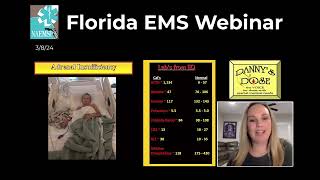
Good morning, everyone. As Darlene said, my name is Jessica Sella and I am a rare disease patient advocate. This is a picture of my son. He was diagnosed with adrenal insufficiency in 2019. I threw in the labs from the ED on there just for some of the docs on there if they were curious what that patient may look like. When we were diagnosed, one of the things they said before we left the hospital was if he goes into crisis, he's going to need an emerg, the injection. And it's an intramuscular injection. And if you look at the instructions, it's 14 steps. And as a new mom who just got diagnosed, my son just got diagnosed with a rare disease that is really overwhelming. I know most of you on the call probably do this, you know, every day. But someone like me who's a layperson, who doesn't, who doesn't give injections every day, it was really scary. And so one of the gifts that we did get was our doctor endocrinologist, one of the Things she did say was if you call 911 in an emergency in our town, all they're going to do is be able to transport. They don't carry the solucor on the, on the rigs and they don't have any other steroids on the truck as well. And so the best thing you can do is inject him yourself and get him to the children's hospital as quickly as you can. Unfortunately, that's exactly what we had to do the three times that he did go into crisis. And it's really scary, you know, when you're feeling like you're by yourself and you don't have any help and you don't have any medical help behind you, it's really not a great feeling. And so that's kind of how my advocacy came about. I met Darlene shortly after Cal's diagnosis and I decided that, you know, I wanted to help change that because I know that in EMS there's wonderful people and everybody wants to help, right? So sometimes you just don't know where the gaps are. So for us it's like, hey, let's get out there and start, you know, doing some education, start talking to some people and saying, hey, we have this issue, you know, can you guys help? The bottom line is nobody wants to show up to a scene and realize that there's nothing they can do besides transport. And you're seeing, you know, for instance, if you look at this picture of how, you know, if you were to see this nine year old child who's unconscious, there's nobody in ems, you know, who's going to feel good about just loading that child up and not, not being able to do anything for him.
Go ahead, darling.
So here are some of the statistics that the National Adrenal Disease foundation kind of helped us with. They did a survey of 600 families and here's some of the findings that they came up with. And like I said, the 14 step injection to lay people is really scary and overwhelming. And here's some of the reasons why people were unable to inject. You can take a look at that slide there. And so really the biggest thing that we're trying to get across is we really need you guys, right? Like in an emergency, you hope that you are going to respond the way that you've been trained. And you know, I could give this injection in my sleep, right? That's how I think about it. I've trained hundreds of people, I helped tons of new families. But you hope that in an emergency that your, that Your brain is actually working and that you're able to give this injection. Some of the other struggles that we have too is like for instance, when Cal goes to a friend's house, right? You're really putting your faith into, you know, said friend, that they're going to be able to do this 14 step injection. And it was interesting. One of the conversations on the Facebook groups for adrenal insufficiency just this last week was talking about sleepovers. And I thought it was really interesting that one of the moms commented and said we live in a state and a city that has a strong protocol that will help inject, you know, God willing that they need it. And so I do allow my son to go to sleepovers. And I think that's really important, you know, to share with you guys because I think that's just a value, right, that you guys can bring to our rare disease families and a peace of mind that you guys can really help us with, right, and help our kids to live a normal life and overcome some of those gaps that we have with pre hospital providers.
Here is an example of some of our patient carried meds. On the left hand side you'll see the Solu Medrol and the Solu Forte. They look very similar and they will save someone like Cal in an adrenal crisis. The solucortive is something that all of our AI families carry in an emergency should be used. But I also wanted to put the Solu Medrol up there because there's quite a few districts actually that carry Solu Medrol on their trucks, which is fantastic. Thank you. And on education side, hopefully if your people are trained on solumedrol, hopefully it should be an easy train how to inject the Solucorta as well. And then on the right hand side, this is the IV administration for hemophilia. And as you can see, both of these, you know, if you're a layperson, they can be overwhelming, right? Like I said, if you're at grandma, grandpa's house or if you're at a neighbor's house and these, these children go into, you know, an emergency situation, you know, you look at some of this stuff and you're like, oh, okay, that's overwhelming, right? For the regular person, that's really overwhelming.
Go ahead, John. Here's a picture of my son Cal today. He wrestles, he plays football, he plays basketball and he lives a normal life. And the reason why we wanted to point this out is because he's not at home sick every day now. Are There patients that are, of course, but someone like Cal, he's a little bit at higher risk, right? Like if he has a concussion in football or in wrestling, or if he breaks a bone on the mat, et cetera. It is an emergency situation and somebody needs to act quickly, right? And so some of the fears that we have is, like I said, going back is are we going to be able to rise to the occasion, Are we going to be able to do that on our own as parents, as grandparents, as neighbors, etc. And we really, we really need you guys to be prepared in the event that we need help and that we're not able to inject ourselves. And we hope and pray that when we call that we're in a state, in a location where you guys have protocols in place where you are able to help us.
This is how we view you guys really like as a rare disease, family and community. This is truly how we view you guys. I'm going to give you a quick story. So there was a little boy, we'll call him Steven. He was at school and he wasn't feeling well and he collapsed in the nurse's office. The nurses did have his salutor tap. Unfortunately, for whatever reason, she did not inject his soloporta. She called 911. The, the ambulance came to the school and they did not inject his patient carried meds because they were in a location where they are unable to do that and they did not carry any steroids on the truck. So unfortunately, all they were able to do was load Steven up into the truck and transport him. By the time he was able to get to the ED, it had been 40 minutes when he got to the ED. Thankfully they were able to give him his cellucor tef injection. But he was in such grave danger that they had to life flight him to the nearest hospital, Children's hospital. And the endocrinologist actually went on and told the family that he was probably minutes away from losing his life. And this is a situation that we never want to happen, right? We know that you guys want to be prepared and we want to help you guys be prepared. And so if we're asking you guys to be our superheroes, right, we're also saying, hey, we're here to help, right? We're here to give you some education. We're here to give you the patient side and give you some reasons as to why we need you. Like I said to you guys, 14 step injection, no big deal to us. And you know, some of the people that are in our, in our small bubble, a 14 step injection is, is really overwhelming. And I really hope that you guys, you know, consider putting some education and, or protocol in place if you don't already have one. And we really appreciate you guys. Thank you.
We're going to go to Kevin now.
Good morning or good afternoon. I suppose it depends on where we are in the, in the, the world. But Kevin Joel's. I'm the division chief of EMS here in Lawrence Douglas county, which is in Lawrence, Kansas. I was fortunate enough to meet Jessica and Darlene at EMS Expo. I think maybe I don't even remember what state it was but this last year, so maybe it's September and when we got to talking that story is probably another whole webinar and how we even, how we even all met. But when we did finally get to the, to the meat of this, you know, why they're advocates for all of the rare disease, it really made sense that we in EMS can do a lot with very little and the very little really falls back on the patient. They already have the medications and there's, there's services that it's just difficult when you already have a really lengthy formulary to add another drug for cost effectiveness and just, you know, knowledge base of being able to be very fluent in every medication that we need to be able to give on an instant. And so as we, as we just kind of went down this adventure of implementing a new protocol, it started to ring true that when we, there's a lot of services that are very close to hospitals and so we just have our crews and I was on an ambulance as well, so I'm certainly not pointing fingers at any of our crews specific of my own. But we were so close to the hospital. Why do we need to give it. We'll just let the hospital. But that just adds and adds and adds to the length in which we're not going to be able to get the medication delivered to the patient. There's no difference in, you know, why we took backboards away from EMS and we're just using them as a carrying tool now as opposed to leaving them on a backboard for hours and hours and hours to, you know, to, to their detriment. So as you look at some of the vital signs or the, just the signs and symptoms of adrenal crisis and I pick on, I'm going to pick on adrenal crisis. Not that any other rare disease is any less important, but it's the one that Jessica introduced to me. And so that's the One that I kind of started to take a lot of care for.
All of those symptoms are something that we run into with people that don't have these rare diseases. So this is a very difficult disease to diagnose in the field. But having that patient information and having these parents and these families that have the bracelets and the necklaces and any of the warning signs or placards in their homes along with their med kit is that's the signs that we need to be looking for on these kids. And somebody's usually typically going to be able to tell us that, that we need to be able to inject their patients prescribed medications. And so talking with our medical director, Dr. Cross here, he said this is a no brainer, we need to get this into our protocol. So we started out, we can go to the next slide, please. We started out with just adrenal insufficiency, adrenal crisis protocol. We're implementing that this first and second quarter of this year here in Lawrence. And it's just been essentially saying, please give this medication if they have it, call medical control if they don't, or if you don't have some direction to be able to give. And some of that's down in the lower part. But if there's no instructions on dosing strategies, call medical control. They'll walk you through it. And like Jessica had pointed out, Solucortif and Solu Medrol are essentially, you know, close enough to where Solu Medrol can be of help in a situation that's emergent. And so we're just implementing that now that the training is going fairly well. Of course we have those what ifs. There's going to be those what ifs from our crews all the time. And, and we appreciate that. And on the left here we can go to the next slide as well. On the left there was one of our patients that's, that's very, very local. So if I look left out of my window here, you see the University of Kansas across the street. We're just right down there on the left, the residence halls. And that's where this patient here lives. And Jessica was able to find her. And we, we did some interviews with her and her mother back in November and put together a video just talking about their journey and, and all the descriptions that as a parent, you know, you worry about sending your child off to school. And they made a comment here in this video. I watched it. When I put this, you know, grab this picture is the mom was talking about sending her kid to school you know, she's about 45 minutes away, and there's no way that she's gonna be able to get here to help. And there's only one of her friends, one of that patient's friends, that even know about her adrenal insufficiency. And so there needs to be more advocacy. She needs to share that with more people. But it's just part of the journey in which these patients have to go through every single day. And as EMS providers, we're able to extend that.
Safety net to be able to deliver these medications. We have one hospital in town, and if not, we've got to go to the west 45 minutes, and to the east another 45 minutes. And so we have to rely on our hospital to know what they're doing. And obviously, these patients need to know that we know what we're doing. Like I said, we started out with the adrenal insufficiency protocol, but that's going to be morphed into a rare disease protocol. And we're going to be able to lift as many.
Medications and afflictions as we can in there just to essentially let our providers know that if you're unsure, please call medical control. And I think that that's probably. I think most medical directors, I hope, would. Would agree that no matter what you find, even it's not in your protocol to please call your medical control, because I think they could walk you through it or at least be able to give you some tips on how to deliver that medication early, depending on your distance to the hospital. I think that's all I have.
Okay, thank you, Kevin and Jessica, and just one real quick comment. One thing I want to say is you. For you guys, I mean, at home, we do this every day. There, it's not rocket science. It's standard mix medications. And I have a question for you. In your state and in your service, are these two little heroes protected? These two little heroes are mine. Two of my grandbabies a few years back. And the main question is, when we can't.
Will you make sure that you can. Will you be the first one to step up to. For. For better treatment guidelines for proper care for your service and your state? And that is really what. What we want to put in front of you. And I think we'll open it up for. Have a few minutes for questions now, if you guys have any.
Wow. Darlene, Jessica, Kevin. What a powerful presentation.
As a father of a child who's type 1 diabetic, it's probably not as rare as the others, but, boy, we have the same exact emotions you have. In a couple years, he's gonna go off to college, and, boy, are we worried about him having a hypoglycemic episode in the middle of the night.
I love what you're doing. We'd love to entertain any questions.
Just so you know. You know, Florida is a delegated practice state, and I. I saw in your email that you mentioned to me that, you know, in the state of Florida, you kind of have to go one agency at a time, unfortunately. But that's why I wanted to bring you all here to this webinar, because you're talking directly to many of the leaders in Florida, EMS chiefs, etc.
And so I really thank you for. For what you've done. Are you able to. I guess I'll get this started off with some questions. Are you able.
Some of the protocols do you have on your website? Some of the protocols that people like Chief Joel's have, et cetera, so people don't have to recreate the wheel?
Yes, we can do that. And as I said, we are working on those treatment guidelines we developed in September that. So that we can make sure they're uniform across the United States, because there's some different guidelines out there that maybe some aren't as good as the others that I've ran across. So as soon as we have those, we definitely will. But we've got some different services that have some really good protocols in place.
Excellent. You had mentioned pediatric readiness. There was a big pediatric readiness project that occurred on the hospital side in May. So just in a couple of months here, there's a pre hospital pediatric readiness survey that's coming out. And I wonder if not in this one, maybe in future ones, because, you know, now there's pecs, right. And now there's a national view of, hey, are you ready? As an EMS system. And I know when you guys first came onto the scene, people thought, oh, this is just a rare thing. But when you mentioned the numbers of 28 million people, both children and adults, that's. That's a lot of people, and I think we need to be paying attention to that. So we only have a minute left. So I don't see any other questions. But I do want to give Darlene, Jessica, and Kevin a final word.
You're.
You're speaking to a lot of the people here who are making it, who can make a difference today at our agency. We can make a difference. So, Darlene, I'll start with you. We'll go to Jessica and finish it with Kevin and then we'll go to Dr. Pepe's webinar.
Okay, thank you, everyone. And of course, reach out at any time. We are really here to work with you because we, as I say, you get a bunch of smart people in the room, you can really make a difference, especially smart people with big hearts.
Excellent. Well said, Jessica.
You know, I know education, I know education is tough for some of you guys. And so I did make an educational video talking to EMS specifically about adrenal insufficient insufficiency in some of the challenges that we have. I put that in the chat here. It's the Dropbox link. If you're watching this again and don't have the link, please feel free to email me@jessica stella0721mail.com and I'd be happy to share that with you. Thank you for your time.
Awesome, Jessica. Thank you so much. And then, Chief Joel, finish this off?
Yeah, I guess it's really just, this is super simple. It's really easy. I understand there's some things that are some factors that might mitigate or might hinder your ability to implement this, but this is a really simple protocol to give our folks the ability to, you know, extend people's lives and give them the medications they need. So easy, easy, easy. And of course, the protocol sharing, we stole ours from somebody else too. So very easy. We'll be glad to share it.
R D, baby. Rip off and duplicate. That's what we do. Speaking of which, I put in the, in the link in the chat, I created a YouTube video with a patient who's a friend of mine's kid with adrenal insufficiency and his sister Lexi actually shows us how to actually administer the Solute Cortef. So many resources available. Thank you all for joining us. This is going to be a very well watched webinar on YouTube, I have a feeling. So please spread the word. And I put a link in the chat to join Dr. Pepe's webinar. So if you want to click on that link, I'll wait on here for a couple more minutes and we'll let you guys go. So thanks everyone and have a great weekend.
Thank you.
Thanks, Peter.
Appreciate you guys. Thanks so much. That was amazing. And right on time, too. I love it.
Punctual. Thanks, Peter. Talk to you soon.
More from Peter




Melissa Olen MSN, FPN-C, CCRN: Sudden Cardiac Arrest Training in Schools (Project ADAM) 4/25/25



Pediatric Hospital Readiness: How Teamwork & CPR Metrics Drive Better Outcomes



Chelsea Kadish, MD & Kyle Goodknight, EMT-P, RT: Pediatric CPAP in EMS (3/14/25)