Stroke Awareness
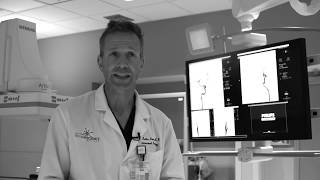
Paramedics can now identify large-vessel stroke signs in the field using simple exams like the Cincinnati Stroke Scale, then alert the cath lab before arrival. Endovascular therapy, a catheter procedure, treats many of these strokes and works up to 24 hours after onset if brain tissue is still salvageable. IV tPA still has a tight window: three hours FDA-approved, up to 4.5 hours by guideline.
Questions this video answers
3 hours.
4.5 hours (cannot give beyond ~4–4.5 hours).
Up to 24 hours (described as an arbitrary cutoff; may be extended based on physiology).
About 2 million nerve cells per minute.
Speakers reference a RACE score of 5 to justify pre-activation, and also mention 7 as an alternate/most accurate number.
Chapters
So the most important thing that the paramedics have to be aware of is how much we have changed how we approach stroke. It used to be that clot busting, age in the vein was the only treatment option. It didn't really matter what stroke severity you brought in. Since the advent of catheter therapy, we now treat almost as many patients with catheter therapy as we do with IV tpa. And so it is very important to activate the cath lab for those very severe strokes. And we have the ability through extension of the neurological exam by the paramedic to do that in the field rather than in the hospital. When the patient arrives and we save valuable minutes and time is brain, every minute we lose about 2 million nerve cells. So people realize that that time that is lost between the first medical encounter and the actual treatment is what differentiates whether they go home or whether they go to rehab or a nursing home. So the Cincinnati Stroke Scale basically just tells you, is it a stroke? And with what probability? If you have all three points on the Cincinnati Stroke Scale, you have, I think about an 80 plus percent probability of having a stroke. You don't know, is it a bleed? You don't know what type of stroke it is. Then you have to break that down further and to say, is this what's called a large vessel occlusion? Because large vessel occlusions is what I can treat with a catheter. You treat about almost half of the patients now with catheter based methods because they have a large vessel occlusion and the paramedics can look at that patient in the field. Basically protocolized neurological exam that looks at wakefulness, looks at motor function, looks at eye function and things like that, and basically makes him be able to communicate the severity of the stroke, stroke to the ED physician and the interventionalist. And once we have a race score of 5 or the most accurate number seems to be 7, then we know we have enough information to justify bringing in a team and pre activating before the team even hits the hospital door, before the patient has a CAT scan, problems, seizures, diabetes, anything like that. So the Rayscale has much less usability if it is communicated at the emergency room, because it needs to be communicated from the scene as early as it is available to the ED or directly to the interventionals, whichever way it's set up. But we relay it through the ED because that's the most robust way of doing it. Why don't we take you to the hospital? Okay, Golden Memorial is right down the road. We'll take you on over to there. You see a gaze deviation, meaning the eye, both eyes are turned away from the weak side. That almost guarantees that that patient will need to go to the Catholic lab to be treated. And we need that information from the field because that triggers me to call in the team right there. If you have other cortical signs like severe speech impairment, dysphasia or neglect, that is another important sign. Hemiplegia, being completely unable to move is also an important sign that is less accurate. So there's a group of features that we really need to understand. And once you give us those, we will then decide to bring in the team. And we, with this approach have been now able to break into the so called golden hour of treatment. What that basically does is it allows us to treat patients within an hour from symptom onset with catheter based means, which is really not available anywhere else in the country. We, I think are leading here in the nation because of this unique collaboration using the race corps between EMS and the hospitals. My partner's here going to assist you onto our stretcher. Okay. And then take good care of you. So if I wanted to summarize that in one sentence, I would call it the my mom test. So if this patient is somebody like your mom and you have to decide in the field, would you take this patient for intervention or is this a patient that's permanently disabled, bed bound, has a diaper, has no potential to benefit from this very intensive treatment. It's a type of brain surgery. We don't really want to activate team and cause a lot of health care expenses for somebody who will not benefit from that. So you kind of have to put yourself into a my mom kind of position. Say, does that make sense if you don't know? If in doubt, activate the team, communicate the information. You'll sort it out in the hospital. The other thing that's very important to know is go by the most profound severity if the patient had severe weakness and then improved. Don't take the improved race score. Take, take the race score when the patient was the most affected because that could mean they have penumbra, they are fluctuating. And those are the patients who will actually do the best once we reperfuse them. Hands and stubbles. Lock the door. Okay? Don't worry, we can take the scary. Focus on the importance of having more information about the patient's underlying medication history.
So for IV clot busting treatment, IV tpa, there is still a very rigid time window. The FDA approved time window is three hours. The recommended guideline window is now four and a half hours and we cannot give it beyond four, four and a half hours. So we need to have a clear time of onset, a last known, well time for the endovascular therapy. We actually go by brain physiology. We look at is that tissue still viable by looking at their CAT scan in a special window called the aspect score. In some very rare cases we'll still do a perfusion CT or a CT angiogram, kind of understand is it a reachable large vessel occlusion. But in the majority of cases we just now go directly to the lab.
And we have no longer a rigid.
Time window because if the physiology says 24 hours out that this brain still has salvageable penumbra, there's a mismatch between the clinical examining, very high race score, very high NIH stroke scale in the hospital and very good looking brain. We will go to the lab and we look for this large vessel occlusion and most of the time we'll find it and we'll treat it and the patient will get much better. So there is no longer a time window. The guidelines right now say up to 24 hours, but it is an arbitrary cutoff. You can find a patient up to 25 hours, 26 hours. The good news with those patients is they're getting much rarer. And in those patients, if you've had brain tissue that lasted 24 hours, they're also going to last another hour. So you have a little bit more leeway. The ones that are most vulnerable are the so called rapid progressors. Those are the patients that have witnessed onset and they have very bad penumbral vessels and they get bad within an hour or two. So an hour of difference in that patient group will make a huge difference between going home or between going to a nursing home. So we need to treat every patient like they are what's called a rapid progressor. The guidelines for instance, no longer require giving oxygen patients who have a saturation above 94%. That I think is in the domain of the EMS medical director what he would recommend. There's no harm giving oxygen. There's probably no harm in putting the patient flat, unless you're concerned they're aspirating, in which case you have to do your ABCs and all that stuff. What is really important is gathering relevant information, but at the same time realizing that the time is brain and coming to the hospital very quickly. So you've seen time should be minimized. At the same time, if you can give US a bystander phone number, give us a medication history if you can. Because if the patient is eligible for clot busting agent, but we don't know whether they're on blood thinning or not and they can't communicate, that will knock them out of the window. So if you as the paramedic have already communicated that you're bringing in a suspected large vessel occlusion with a race score 5 and above, you should expect.
To be greeted at the door by.
A whole team of people. An ED nurse, an ED physician, and basically they should triage you. They'll usually pull labs out and then while you're on the EMS stretcher without.
Taking you into the bay, they will.
Roll over to CT and put you on the CT table. And, and at that time I already should have been notified. I'm basically coming in over the phone figuring out what's going on, is there a bleed on ct? And if I have enough information to bring the team in before you hit the hospital, or I'll do that.
If I don't have quite enough information.
I may wait for the CT scan, then bring in the team. Sometimes I have to wait for the CT and CT perfusion if it's a really confusing case. But the key issue is the earlier.
I'm informed, the earlier I can come in.
And only that allows us to treat patients within an hour from onset with catheter therapy.
Another thing that's very, very helpful for us is knowing medication. Obviously every patient knowing their medication is important in this case, particularly when we're trying to give IV TPA and treatment to these stroke patients within 10 minutes like we sometimes do. We don't have that time to kind of wait for family to come. Sometimes they detour. I don't really know where they go, but then they come an hour later, two hours later. We don't really have that kind of time to wait to make those advanced decisions. Typically, if you can get a large bore and ac, that's helpful. If it's somebody that we think that we're going to do advanced multimodal imaging, which is the CTA and the perfusion study, we do require a larger bore and AC access for that is certainly helpful. If you can get two IVs, again helpful. I mean, that certainly should not delay any kind of transfer to the hospital though. So typically, and people who have brought patients to Delray probably know one of the first things out of my mouth is do we have, do we have a family member? Do we have somebody, do we have a Phone number. Can I call someone? Because there's, you know, a pretty stringent inclusion exclusion criteria when you're trying to, to see if someone is a candidate for tpa. And if we don't have that information and the patient can't give us that information, whether they're confused or aphasic or what have you, or they just don't know, we can't sometimes go on to treat them until that information becomes available. So if you have, whoever the bystander is, if it's a family member, I know a lot of the times they're hysterical. But if we can just get their cell phone number or the best contact number, again, it certainly shouldn't delay the transfer of the patient here. That's the number one priority. But it would make things very, very helpful because then I can pick up the phone right away, I can call, get the information that I need, hopefully before the patient is even done in CAT scan. And we can give them TPA right there on the CAT scan table, which is our goal. People who say, well, you know, my arm has been numb for two days and I went to sleep last night and it was numb and I thought it would get better. So there's something there still some mismatch of education where they're not quite grasping that. So certainly that the other thing is identifying these people who we think are large vessel occlusion patients, being able to call in ahead of time so that we can activate the team as we do. Again, I know Dr. Mueller touched on this, but we take to heart and we trust you guys 100%. So when you call and you say this is a high race, this person has a gaze deviation, I mean, we're activating things here within the hospital, calling people in if we need to based on that alone. And we haven't even seen the patient, and it's okay if that patient doesn't end up going to get that treatment, that's okay. We accept that. And no one's going to be upset about that. We would be more upset if there's a patient that is missed because it wasn't done appropriately. And again, Dr. Mueller spoke about the gaze of deviation is huge. Anytime I see somebody come in, I can tell from them walking in before I've even spoken to the patient when they're looking this way and they're paralyzed on the other side. That's a for sure go until proven otherwise, until we see hemorrhage on the CAT scan. And anytime that you have these symptoms, typically someone who has a gaze is going to have additional symptoms. Right. So they may have a gaze preference. They may also be aphasic. So being aphasic and having slurred speech are two different things. So sometimes you can have. But you can still comprehend and you can still speak and get out what you'd like to, even though it might be slurred. But people who have, you know, garbled speech, word salad, they can't follow your commands, and they have a gaze preference. And typically with at least some, you know, hemiparesis or hemiplegia on one side, those are kind of the gold ticket people. And it is certainly, again, helpful when we know what the race is when you're coming in. But if we know what got you that race, those signs and symptoms, that makes all the world of the difference.
More from Peter




Melissa Olen MSN, FPN-C, CCRN: Sudden Cardiac Arrest Training in Schools (Project ADAM) 4/25/25



Pediatric Hospital Readiness: How Teamwork & CPR Metrics Drive Better Outcomes



Chelsea Kadish, MD & Kyle Goodknight, EMT-P, RT: Pediatric CPAP in EMS (3/14/25)