Supraventricular Tachycardia (SVT)
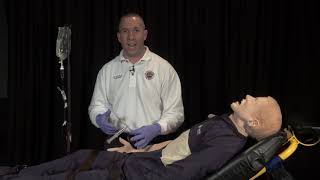
Peter Antevy teaches SVT management: how to spot it on ECG versus sinus tachycardia, the modified Valsalva maneuver (higher success rate), adenosine dosing (skip 6 mg, go straight to 12 mg), and diltiazem as second-line with specific dosing and IV setup tips.
Chapters
So let's go over our supraventricular tachycardia update for 2018. I'm going to add a couple of clinical pearls in here. The first is SVT and sinus tach are frequently confused. So let's go over some reason why you might suspect one versus the other. Because when you've got somebody going really fast with a narrow complex EKG that's regular, it could be either SVT or sinus. So obviously the absence of P waves really suggests that it's supraventricular tachycardia. Sinus tachycardia should be suspected in certain scenarios. So if you got somebody going at 160, 170, 180, but they've got fever, they're dehydrated, they've been vomiting and diarrhea the last several days, they're in a ton of pain, they were just in a car crash, et cetera. Things like this suggest that it's really just sinus tachycardia, in which case it is a physiological response to the underlying stress on the body and you should leave it alone. Don't try to reverse it, they probably need fluids, etc. SVT, on the other hand, usually doesn't have any of those other things. You've got somebody who's got regular narrow complex tachycardia greater than 150 and usually far greater than 150. We're usually talking in the 200 range and there's no P waves and it's nice and regular marching out. It's not afib, where it's kind of skipping all over the place. So for those folks, the first thing is you're going to try vagal maneuvers.
Get a good seal around that with your mouth and blow hard enough to make the needle reach. The modification was designed to increase venous return during the relaxation phase of the manoeuvre and involved laying the patient flat and lifting their legs in the air at the end of the strain phase.
Overall, we found that patients that were randomised to the standard manoeuvre, only 17% of patients were cardioverted to sinus rhythm, whereas for the modified technique, 43% of patients returned to sinus rhythm. You're doing really well.
Good stuff.
It really does demonstrate marked improvement with a modified technique, and I think we should consider using that as a standard approach to the initial treatment of this condition. 5, 4, 3, 2, 1. And just completely relax. Lift your legs up in the air. So we used a blood pressure manometer that was modified for the trial. And that can be done in emergency department, but in other practice or usual practice, a 10 mil syringe blowing just hard enough to start moving the plunger, we believe gives a similar sort of pressure. So you ready and ready, steady blow. The benefit of that is that patients can use this at home and outside of the hospital because it's a condition that can recur and that gives the patient some control.
But just briefly, you have the patient sit up at a 45 degree angle, have them take a 10cc syringe with no needle on it and have them blow straight out for 10 to 15 seconds like they're trying to blow the stopcock out of the syringe immediately. When they're done doing that, you lay them head down and lift their feet up to 45 degree angle for another 15 seconds. And that has about a 50, 50 success rate. So that's definitely what you try first. If that doesn't work, you can go straight to adenosine then and, and we're not going to bother with the 6 milligram. We're going to go straight to 12 milligram adenosine. It's a safe medication. But here's a caveat here. Please warn your patients that when you give them the adenosine, they're going to feel a discomfort in their chest. It might feel heavy, it might be hard to breathe, and that is absolutely expected. It is totally normal. It's a sign that the medication is working because we don't want our folks to be all, you know, get those sensations without being pre warned because then they think that they're dying and that's not a comfortable thing, not nice for us to do on our patients. So make sure you warn them before you give them the adenosine that they may feel that way. So let's say you give the adenosine and it works great, you're done. But let's say it does not work. It does not work for a couple of different reasons. Number one, let's say you went from 170 and it slowly decreased to 150. You're probably dealing with sinus tack because when you break, when you break svt, it breaks, it goes, you have a period of asystole and then it starts back up again on normal. Okay, so let's say it goes down and it comes right back up to 170 then. Now it's probably you're dealing with something else. It might even be aflut or afib, which are not abolished by adenosine, which Brings us to the next medication, which is cartasam. Now, cartazem will work for afib, it'll work for flutter, and it'll work for svt. So if you try your adenosine and it doesn't work now, you can go to your cardism. And keep in mind the trick that if they get hypotensive, you have calcium they can give after cardison to reverse the hypotensive effect of calcium. So don't forget that.
Okay, so we're going to talk about some ways of giving adenosine. So by this point, you've already done your vagal maneuvers with your patient and you determine this to be svt, not sinus tach. The traditional way of giving it is you have your bag spiked, you have your IV tubing and then you have your J loop. You would have your pre filled adenosine that you attach to one of the ports on your IV tubing and then you would attach your flush above that. So some of the things that could lead you to a little bit of complications with this is the textbook way of doing this is you're supposed to pinch here at this point, you're supposed to rapidly depress this. Then after you do that, you're supposed to come above here, rapidly depress this while pinching back here. So this really turns into a two person operation. So what we're going to show you today is a different way of doing this. And we're not saying you have to do it, it's just another tool for your toolbox. So we'll go ahead and take these off, we'll go back down to our actual J loop itself and we'll put our IV tubing over here. So now we have our catheter in our patient, you have the J loop coming out of the patient and we're going to introduce the three way stopcock. So, so we're going to go ahead and put our three way stopcock onto the end of our JJ loop. Our IV tubing is over to the side here. And then we're going to take it and we're going to take the off label or the off port here and we're just going to push it into nowhere. So you'll see there's an end here and an end here. And then this is shut off facing nowhere. We will go ahead and tie our adenosine in to the one end and then you would tie your flush into the other end. So basically this is what you have at this time. So now I've taken The tubing out. I've taken the second person out, and I'm going to go ahead and I'm going to administer to this to my patient. So I have nothing to pinch because I have nothing that could go back up the line. Make sure that you're printing during this time so you can catch any changes after administering the medication to your patient. One of the things that you have to be careful with, though, is you push this in. You have to make sure that you're holding this. So as I do this, it has to be a rapid.
Into my patient. Now, at this point, you can disconnect your stopcock with your medications. You can go ahead and get your IV tubing and hook it up to your J loop like you normally would have given your identicard. So now let's talk about some administration tips when administering Cartasam during the SVT protocol. So, as you're aware, the Cartasam comes packaged 25mg and 5mls. So your first dose of Cartasom after adenocard has failed, or if you determine it's contraindicated or would be 10mg, which is 2mls. So after you get your 2mls using your 3cc syringe, you have a couple of options here. The first option is you could administer the two mls over two minutes. Now, that's a very slow IV push, especially if you're transporting your patient. So one of the recommendations that we're giving you is you can take that 2mls of Cartizam and transfer it into a 50cc bag. You would label your bag as cartasim with the medication label. Then, no different than the ketamine video that we spoke about earlier, Ketamine administration. You can tie in your 60 drop set. You could run it wide open, and it should roughly deliver the medication in about two to three minutes for your patient during your transport. One of the changes you'll notice in the 2019 protocols is the repeat dose time of Cartizan. So if you're treating SVT in the old protocols, you'll notice that our repeat time was 15 minutes. So you give a dose of cartasam, there's no change in 15 minutes. You could repeat it in the new protocols. We changed that time to five minutes. So let's just run through the SVT protocol. You've done your vagal maneuvers, you've given your 12 milligrams of adenicard, you've given your first dose of cartasam, which was 10 milligrams, two mls. Now in five minutes. As long as there's no contraindications, you, you can repeat cartasem at 15 milligrams, which is three mls, and that again is going to be over two minutes after you drop the medication. You can do the same thing. You could administer the three mls over two minutes, or you could put it into another 50cc bag. Make sure you put your label on it this time. Your label would read Cartasy 15mg. Use your 60 drop set and run that in wide open. So let's review the definitions for stable and unstable when treating svt. So if you look under the stable category, it says AO times four with or without hypotension. So what does that mean? So basically, if your patient is AO times four and has a low blood pressure that deems them to be stable, let's think about the unstable criteria for a minute. What about if your patient has altermentation so they're not AEO times four? Well, it doesn't really matter what their blood pressure is. You're deeming them to be unstable at that time. So let's talk about the unstable patient. If you have an IV established and your patient becomes unstable, you, you can give them etomidate. However, if your patient is unstable when you first make patient contact and you do not have an IV established, do not delay synchronized cardioversion to establish an IV to administer etomidate. So now let's walk through the steps of synchronized cardioversion for your SVT patient. And we're going to start with the adult patient. So as you could tell, obviously at this point in your call, you've already determined stable or unstable. You've already given your meds if they were stable or if they're unstable. You went right to your LifePak15. Now, one of the first steps you're going to do is you're going to hit the synchronization button. As you do that, you're going to see a couple of things to ensure that you're in synchronization mode. Number one is you're going to look at the top of the QRS complex. You're going to look up at the R wave. There should be an upside down triangle on each one of the R waves. Number two, you're going to look down at the bottom and it should say synchronization mode. Number three is you could look at the actual sync button itself and, and it has a little blinking LED light. Now that you've done all that, you know that the patient's synchronized. Obviously nobody's touching your patient. To make sure that everyone's clear, you're going to go ahead and set your energy to 100 Joules. This is your first setting for an adult patient. You're going to go ahead and charge the monitor.
Again, clear everybody around your patient, and you're going to hold down the shock button to make sure that it's delivered right exactly on the R wave. Now, after you've given your first synchronized cardioversion, let's just say your patient has not converted out of that rhythm, you're going to go ahead and go to 200 joules. But one of the big teaching points here is after you deliver the first synchronized cardio version, the sync is going to be off. So if I was to go ahead and hit the energy selection and do it again, I would actually defibrillate my patient. So we make sure that you resync the monitor and you go through all the steps that we covered earlier.
More from Peter




Melissa Olen MSN, FPN-C, CCRN: Sudden Cardiac Arrest Training in Schools (Project ADAM) 4/25/25



Pediatric Hospital Readiness: How Teamwork & CPR Metrics Drive Better Outcomes



Chelsea Kadish, MD & Kyle Goodknight, EMT-P, RT: Pediatric CPAP in EMS (3/14/25)