Take A Seat & Speak Podcast - Episode 1 (Nyanna Slaughter and Dashine Moore) Black Business Owners
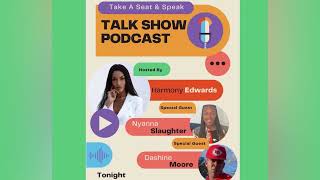
Harmony Edwards and Corey Johnson talk with Berkshire entrepreneurs Nayana Slaughter and Dashine Moore about launching Black-owned businesses. Nayana runs Move In Love and sits on the Berkshire Black Economic Council. Dashine opened a sneaker-and-clothing boutique and navigated insurance and liability alone. Both stress the need for Black-owned banks, mentorship, and policy change to close funding gaps.
Chapters
Hi and welcome. I'm Harmony Edwards here with Corey Johnson. We're the dynamic duo behind Take a Seat and Speak. This is our first episode and we couldn't be more excited to have Nayana Slaughter and Dasheen Moore as our special guests. Both Nayana and Dasheen have experience in the small business world. They know the struggles that startups face and they're committed to helping local businesses here in the Berkshires thrive. Nayana, do you want to introduce yourself first?
Sure. First, thank you so much, Harmony and Corey, for having me today. I'm definitely very excited to be here. Um, so yes, my name is Nayana Slaughter, born and raised here in Pittsfield, Massachusetts. Um, honestly, since I was younger, I've always been inside community service. So right now, um, I work in public service, right? And every single day I'm able to hear the different experiences that individuals are dealing with at a small business level, whether working with the Small Business Administration or other organizations to be able to receive funding. So I'm glad that you had me here today, as well as being a board member for the Berkshire Black Economic Council. You know, part of our mission is to be able to try to bring more economic equality as well as funding to different entrepreneurs and small businesses inside of Berkshire County. So I'm definitely excited to be here.
Oh, Dashi.
Um, good evening, my name is Dashi.
That's how you're gonna start?
Absolutely. I'm the owner of, uh, Mr. Feets on North Street. Uh, I invented the, uh, Beat the Streets program for Pittsfield. I have a clothing line called Demeanor Rough. It's been a struggle trying to get this to go, you know. Um, You know, there's not a lot of outlets that, um, that are open to, you know, people of color.
Uh, I don't know, it's been a big struggle for me.
I had my store almost 3 years and I haven't even begun to open it yet.
Let's talk about—
you spend so much money, you began to open it. Yeah, but I didn't know all the dynamics of what you had to do to open it.
The steps that I'm gonna move forward.
So I had to stop myself for a second and, um, regroup it.
Right, you gotta jump through all those hoops, so you gotta get yourself ready. Yeah, you know what I mean? Yeah, definitely. But let's talk about it, that's the whole point of us being here.
Yeah, so on the side of opening, what was your biggest struggle from finding the place to rent to opening the doors and then to now understanding that you have to regroup?
I think at first I thought that it would just be like something that I would just jump into. I didn't need an LLC or nothing. I was just gonna open a store and buy sneakers and clothes and just sell it. And however it was gonna be ran, I just didn't know the dynamics of it. But I did know that that's my passion, that's what I want to do. So I just went and did it. Um, I grew up in that building. When I first came from Trenton, New Jersey. So I'm not willing to just give up on it just because I don't know what I'm doing right now. I think with the help of you, Woo, and also Nayana, that I can grow because there's a lot of questions that I have. About, you know, just having a story in general and, and going about, you know, how you go about getting investors and people to back you.
Yeah, definitely.
Yeah, the inside of the business world, right? Because you're watching it from outside and you don't understand until you're, you're inside of it and you, you say, oh, I'm gonna start this business, and then you realize It's not that simple, right?
They told me I need a million dollars worth of, uh, liability for that, for that store.
Yeah, for insurance.
Yeah, yeah, yep. Coming in blind, you don't really know. Like I said, I came in blind.
Yeah, yeah, but I'm still, I'm still all in. I'm gonna find it. It's gonna take a while, but you know, anything that's just given to you or you get easy is easily taken.
So easy come, easy go.
Yeah, I'm glad that it's taking me this long to get on my feet. Do it the right way, you know.
And that's why it's taking you so long. The time is because you're doing it the right way instead of going and doing it your way, whatever way you feel comfortable doing it, and then being shut down and fined in the long run and figuring it out the hard way. You find the people that you need to direct you into doing it the right way.
Absolutely.
And then with those that you end up getting direction from, now then you're able to then become the director and help others avoid the trials and tribulations that you face to then help them in their businesses. I know you do so much inside of the community with our youth specifically, and that's huge because so much of business and wealth, you know, really does start off with youth and how we're, you know, developed as we grow up. So we're able to, you know, think in different mindsets to really, you know, go for our passions and dreams. Because like you said, like, you don't necessarily know what it is that you're doing, but I give you the utmost respect and credit for absolutely getting it done. You've had events there. So, you know what I mean? And that's why I'm glad we're having this conversation too, because it is true that so many small businesses ended up failing or just facing so many more, I'd say, maybe like pitfalls at different times and trials because of funding, because of lack of it, because of not knowing, you know, resources. And they always say what you don't know can hurt you, you know what I mean? And that's why I'd say it's so big to know like what resources and people you can connect to to be able to be able to bring something bigger to the table. And that's why I brought in Move In Love. That is my business, which is all about trying to bring community together, families together, to really bring more empowerment and enrichment just to one another, because I feel like so much, especially inside of, unfortunately, our minority community, I don't even like to say necessarily minority, but people of color, because of our struggles, sometimes we end up struggling more with ourselves in our own community. And if you think about, if we really came together, we'd be so unstoppable. It's so clear, like, in this world, like, the intimidation from what we bring to the table. And that's why we go through so much. And that's why I love having conversations like this. And, you know, really knowing what people in my community are doing to help out others, because coming together, like, it's fun. We get stuff done.
Like, we're able to communicate in a way that we're able to understand and comfortably express.
Yes.
Where, you know, there's no dialogue holdup where you're like, how do I say this to them?
It's so much easier when it's the right way to say it.
It's so much easier when you're in a room with your community. You're like, okay, this is what I need help with.
And who can help me?
Who can help me with this?
And who knows about this?
And if you don't understand what I'm saying, let me know. You know what I mean? Because it's more comfortable. It's a, it's a more transitional situation when you're talking to somebody already that's in your community or that looks like you and you're comfortable with kind of like letting go and being yourself, like your authentic self.
That holds a whole lot of weight, and I don't think other, other people— I'm just here to instigate, I just want to say. I said I was going to say that earlier, but I wasn't joking. But no, yeah, definitely. I don't think people are aware of how much impact it has to have someone that looks like you to make you feel comfortable, get away of that, get rid of that, all that anxiety that you have. Yeah, to explain something. So because first of all, you're not sure of yourself, so you're kind of stutter-stepping. And then you're like, you're diving into something that's uncharted territory, you know what I mean? So then like to have somebody be like, look, I'm trying to accomplish this, and they'd be like, oh, you just got to do this and this and this. But to come to just anyone and say that, you know what I mean, it holds us back a lot, especially trying to run a business, trying to do your own little thing. And I know that you spoke a lot about like how it was when you started, um, come like when you back from Jersey and starting your store, and you went through trials and tribulations. What was it like for you when you started your business?
Um, for me, let's see, um, so I found the IRS probably about in like April, so it's really honestly like the near beginning. So right now I'm really working on trying to get it more like business credit and different ways to be able to find funding for my business. Right now what I've really been doing is trying to promote more of the community aspect and things I can do at like at a free level, you know what I mean? Just service, because service is my heart at the end of the day, but Of course, I want to be able to leave a legacy for when I do have children and my family and, you know, be able to retire my parents.
There's no—
there's just no reason why my parents, I feel like, do as much as they do and, you know, still go through so much. But they're amazing. But I truly just know that through any trials and tribulations, when you choose to move in love, right, move in the right direction, Think about what it is that you're doing. Think about what it is that you're saying. You can get far. And that's honestly like my testimony of life, 'cause I've definitely been through ups and downs, right? And I think that we all have. And for me, what kept me honestly going was just like the golden rule we learned in like kindergarten. Like if, you know, if someone did this to you, like kind of like how would you feel type of thing.
Treat people how you want to be treated.
Exactly. And that's been my like, that just has hit home for me for so long. And even when sometimes when you wanna like come out of character, it's like, I honestly can't at all. And I just hold it in. And when you hold in for so long, that's sometimes that's not good, right? And I think that sometimes also can be kind of detrimental in, you know, when creating a business sometimes, because if you don't take the time to take care of yourself, you know, fully when trying to really do so many endeavors, that can become at different times, like different, I'd say like slowing points, you know, kind of start to, bring you back on a wave because you're having to still do, you know, get— you're trying to move forward, but you still have to deal with like what's gone on in the past because maybe you haven't necessarily dealt with it because you've had to continue to be strong, continue to go just to be able to continue to live and survive and provide, right?
You still have to process everything that you have to process the day today that's present too, because it's not like life is just like, oh, you're starting a business, we're gonna make everything in your life just fall together for you so you can focus on your business. No, you have every other problem Exactly. Happening phone calls that are not relative to your business but are taking time, energy, stressing you out, and then you still have to like maintain yourself to control your business and operate your business and push forward to what your goals are going to be.
You have to like literally internally create another version of you. Yeah, absolutely. And you got your business mind and then like it's a whole nother person. But it's always good to understand that you need to decompress when you get home, when you find your space to take care of yourself mentally. Yes, you know what I mean?
That's why sometimes I'm off the radar, right? Just at home doing nothing because I need to balance myself up because I'm doing too much and there's too much going on.
You have to reload, um, you have to reload yourself. And people do it in different ways. Some people don't go— don't need to go home and relax. Some people need to go to the gym. Some people need to, you know what I mean? There's like other ways that you can— you start to care for yourself and then you put it into your routine so that at that moment you're turning off everything else in the world, even all the other additional stress and drama. So like, for me, it's not the gym, it's not sitting at home, it's like 15 to 20 minutes of meditation. And it doesn't matter where it is, it could be in my car, right? You know what I mean? So it's when I have the time and I'm like No, I need a break right now. I'll just put my phone away and I'll sit there. Yeah, my eyes closed, my hands on my lap, and just let my mind go to anything. And then I take it and I push it out, take it and then I push it out, so that I'm not like focused on any set topic at that time. And then when I like open myself back up to the world 15, 20 minutes later, it hasn't like put a dent in my day.
Exactly.
Where sometimes going to the gym was putting a dent in my day. Because you go to the gym, it's not just time at the gym. You got to get dressed before the gym, get to the gym, set yourself up at the gym, workout, go home, shower, change, and then get ready for the day. So now your whole day is messed up and you have two phone calls that you need to get pulled in either direction, but you're at the gym sweating with your hair tied up. You can't go in either direction. So like sometimes you have to decide what's, what's important to me right now.
Mm-hmm.
Is my physical health but not in the sense that I need to go push 2 hours at the gym. So I can do 20 minutes of stretching and like light workout in the morning.
[Speaker:JESSICA] Absolutely.
[Speaker:JASON] And 20 minutes of a random time when I feel it's needed to then generate myself and my mind back up. So I think it's different for everybody. Some people need 5 days. Like they're like, okay, I need to take off 5 days. I need to get outta town, go do my own thing for 5 days. And then I come back. Everybody has their own way of processing and then like rebooting. And that's where you need to find your other self, because that's the time. That's, that's— you need to know what is it for me that helps me relax. I can go on vacation, it doesn't, it doesn't do anything for me. I'm gonna still take my phone calls, I'm gonna be on my laptop, I'm gonna be at the beach with my laptop taking notes and doing whatever else I have to do, because I'll still take my 20 minutes of the day.
But it's crucial that you take that.
So that 20 minutes is my time. Yeah, that's a crucial— it might be a weekend in the house you know what I mean? For somebody else, it could be going for a run.
I think everybody should take 20 minutes a day or get their wink in when they, when they can, because they actually show you actually retain information better when you do that. Yeah, if you're getting overwhelmed, you know, like you're writing, taking notes, writing a paper, setting up promotional things, if you just take like 10 seconds and just like not think about anything, or just push those like 10 minutes, 5 minutes, push those thoughts out of your brain and then come back to it, like you remember stuff more. Like, honestly, do you remember doing like free writing in school?
Yeah, where they'd be like, take a pencil, you have 30 seconds to write about anything you want to write about, just let your mind go. And you're just— I'd have a sentence. You're staring at your page, you're like, I can't, because all these different things are coming. But then it doesn't really matter what you wrote in that 10 minutes that the teacher gave you. The point of that exercise is to like release all of that so now you can focus. Yeah, on your studies. Yeah, you know what I mean? So that's really what they were doing that for. Is we're going to give you this 10 minutes to release all that crazy stuff that you've got going on in your mind right now so that you can then focus on your social studies or your math assignment or whatever it's going to be.
I want to focus on you now, Harm, though. I want to hear what it was like for you starting out.
My struggles?
Yes.
So, um, my struggles Where do they start?
When you got multiple businesses on a professional side, like, where is—
so it— but it starts beyond the professional side because I couldn't get into my professional— I couldn't get into any profession until I figured out who I was and where I was going with my life first. So it was like, who am I going to be? Do I want to be this person or that person?
What made you have that thought? Like, was that outside influence, or is it an epiphany?
That was inside of myself being unhappy, like depressed, like depression.
Like one day you're laying in bed, you're like, who do I even want to be?
Yeah, one day I was laying in the bed at like 4 o'clock in the morning and I couldn't sleep, and I was like, I just hate my life. This is not— like, there's got to be more than buying sneakers and riding around in the car all day with my friends smoking pot. Like, there's got to be more to life. And I'm looking on Instagram and these people that are younger than me, you know what I mean? I'm 21 at the time, they're 19, 18, 19-year-olds flying in jets and driving Benz, and they're not coming from their parents doing that. They're not, they're not, um, as you would say, like silver spoon babies, you know what I mean? They started these online businesses. And then I realized I'm in a world where you can pull money out of thin air. Right, yeah, so if you— if businesses like Expedia and Booking.com that own no real estate, they own nothing, they know no hotel, they own bookings and Expedia, and then they generate money from other people spending money on something that somebody else has, like Amazon. All of these businesses are able to generate money. Why can't I generate money in that way? Why am I out running around trying to figure out different hustles to get money when there's already a blueprint on how to get it. It's the algorithms that other people have already created, social media algorithms, um, like the systems that you have available online. Like, you record things, you have these systems. You don't— you didn't create Pro Tools. Would you have sat there and created Pro Tools? No. But you learn how to use it, right?
Yes, it's about—
because you're not on the tech side. So there are people that are like tech people that create these products that then you can capitalize capitalize on, right? Just like a website, you know what I mean? You go on GoDaddy, you create your website, now you're able to sell on your website. You making money, GoDaddy's making money. GoDaddy has nothing to offer but the platform of the website. So like, it was like, I mean, realizing those things, you know.
Huh? I used to think GoDaddy was a strip club. Even Daddy was. Somebody was like, yeah, I met Daddy. I was like, yeah, the strip club. Like, I don't know why my mind went there.
Put Daddy in it, it just Yeah, when I first started, I was like, what? That's so funny, because I was learning about different like website builders and stuff like that.
I use Shopify.
But it's something that catches your name. Web.com, oh cool. GoDaddy, what the hell? You know what I mean? That was marketing. But so that was— I knew I could hustle, so I was like, I just have to figure out how to hustle how these people are hustling, and how do I do that? So, um, Long story short, got into sales. So telemarketing sales, that was like posted a job in Indeed or whatever, and I signed up for it. I realized I was really good at sales when I started working at the job and started working my way up the ladder. So then I got into life insurance, which I hated. It's all like all documents. It's horrible.
Absolutely.
The fun part about it is talking to people, and then you have to do their documents and you're like, huh, I wish I never talked to you. I wish I never met you.
Right.
I don't even care.
It almost—
until you get that paycheck, it's almost not even worth it. Yeah. You talk to somebody like, yeah, I can help you. You're paying how much? That's crazy. I got you like ready to do this. Did you think about this? Oh, you should. And then next thing you know, you sign up. Then you realize you got to go to DocuSign, you gotta go file all this stuff.
I hate it. And the documents are extensive, like real estate documents. I don't love them, but I don't hate them.
I'll do them. I know I'm gonna get paid when I'm doing them, but is it as bad as—
no, it's not.
I think that— I don't know, I was thinking much easier.
Um, we can get into that on another— yeah, um, so obviously I have the, the situations that I went through personally in life, so I had a lot of building my reputation back up and writing personal letters to people in the community to like right my wrongs, for say. Um, which did— which made a major impact because they're like, this girl knows that she messed up. She's trying to change. So a lot of them became referrals for me. So like, in order to get my real estate license, I had to go back and say, okay, these situations happened. I understand you can like— you have access to seeing that. This is why it happened. This is what I was going through emotionally. These are the type of people I was around. This is what I've done so far. And I have all of these people behind me that are— will tell you that I'm a changed person.
And I feel like you're not—
I haven't done that any— I haven't done that in years, any of those types of things. So that was like the first challenge in business was building a reputation, rebuilding a reputation. So building an initial reputation is easy. Yeah, you get your first shot. Yeah, once you mess that shot, once you mess up, people don't trust you anymore. That's a whole new thing that you have to develop. So that was before any creating a business, that, that's what it was, is building the reputation. And I think that a lot of people need to in some way build a reputation for themselves before they're in business. Do you? You've had a reputation in a sense. You've had a reputation.
That's why I go back to the community, because I corrupted my community, right? And then there's no one there to show these kids right from wrong or been through the things that I've been through in our community. So if I show them the right way, maybe they'll do the right thing. Right, but I feel like I have to give them back something.
Yeah, definitely. It's all about the give back. I mean, like, and then I think that it shows a whole lot more. I, I will respect— I got— I have more respect for people like you, Harmony, that, um, rebuild your reputation than somebody that already has a good one. Because when you re— when you have to rebuild, you have to acknowledge the fact that you're not perfect. Like, you, you make mistakes, and it makes it— it makes you more relatable. Yeah, because everybody, everybody's done things that they're not proud of, and everybody was like a teenager and like got the bad influences. And yeah, you know what I mean? And like, I gotta say, Dash, it's not your fault. No, that like, you, you didn't corrupt your community. You, you were raised in it. Yeah, exactly. You mirrored the community that you were a part of, pretty much.
So it's like kids raising kids.
Yeah, basically. Yeah, yeah, but I think older kids—
the older adults weren't around when the kids that influenced us were around. Yeah, but they looked up to—
yeah, but the kids, yeah, the— their older, like, adults weren't around to give them any type of guidance, you know what I mean? Like, you know how much potential— when I look outside, you know what I mean? Like, how much potential I see. I'm like, you, you— why are you focused on that? Go do this and this and this and this. But it's people like you that, like, change lives forever, you know what I mean? Like the Beast of the Streets program, like I couldn't be more proud of you for that. Like, you know what I mean? Like, Harmony's like trying to like, like, like, like, we've had discussions in the past about like gentrification and things like this and how it changes this way or that way. She's like, why don't we do that ourselves? And Nyan is constantly saying like, why aren't we spinning with each other? And the, the thing that I want to connect all together is that we, we didn't, or don't, because we didn't know, we didn't have the guidance, we didn't have the guidance. Because if, if I knew that Harmony was trying to pursue this business venture and you were, and we all connected at the same time like we do now, right? Then it would have been gone already. It would have been— everything would be different.
It comes back to community though, because we're raised in a community where people compete against each other.
Yes, for no reason.
Even if you're on a sports team, right?
For no reason.
You know, there's actually a science instead of playing together. You be— you're raised to compete against each other. Yeah, so it makes the problem.
I don't even want to get into that. That's, that's by design. I don't even want to— yeah, right. That's what I'm saying. That's definitely not an accident.
No, at all. Yeah, and it starts way back from slavery times.
That's another—
that's another one. Psychologically though, on a serious note, we can't— like, as a community, the only thing that I want most people to take from anything that I do is that you can't keep on pointing the finger and saying, because this happened to me It doesn't matter what happened to you, doesn't matter where you came from, it doesn't matter how much trials and tribulations you went through. If you have tomorrow, anything, you literally— anything is possible. You can do whatever you put your mind to. How hard are you gonna fight to make that happen? How hard are you gonna put that work in to make that your reality? Like, you tell me, like, other people come here from other countries and they all live together in the same house. Like, you got, you got 10 people in one apartment and they all work the same job. Yeah, they all work at the same time. They don't compete, they don't compare each other, they don't— they're not buying the newest They wear those Walmart shoes proudly every day for 10 years and then go buy the gas station, and then their cousin buys the other gas station. Next thing you know, they have 5 gas stations.
And they've got a Tesla.
That's how it happens though. Somebody has to have that vision and keep everybody going. Like, keep it like, you know what I mean? Nipsey Hussle went back to the hood. He gave his— he's employing people with felonies, you know what I mean? Like, you can't get a job, you don't have a choice, which is by design, but we can't— it doesn't matter that that happened. How are we gonna do?
That's why we have to change policy, and that's why it's so important for people to get involved. I know people don't necessarily like politics. However, that is literally where decisions are made every single day that govern our lives. And that's coming from exactly why we need so many more of our, you know, so many more people of color at the table coming to— when I was on the school committee, it was like nobody even knows you can call into these meetings to voice your concerns about our children, right? You know what I mean?
City council meetings all the time.
You need to start going, you know?
Yes, come as group, families, you know, growing up, standing up.
That's where, that's where the bridge comes, because you can go and sit in it, right?
Yeah.
And make that point.
Absolutely.
And then you got to get the petitions behind you.
Yeah. And you got that because, like you said earlier, Corey, like, representation is so important. Being on that school committee, I was the only one of color after Dennis had left.
So it's like, even further than that, it takes, it takes small steps going into the positions that we want to be in— school committee, city council, um, all of it— further up in the corporate chain, because a lot of major corporations are ran by one pool of people in one age group. So, so you know what I mean? In one gender specifically, that is slowly turning over, but totally not fair. But we can break that down and break those barriers by building Black banks. That's one thing. And then focusing our funding through those sources.
Investing.
REITs, real estate trusts, collaborating all of our funds together and buying big properties that are actually going to give us a return.
Yes.
Providing housing in our communities.
Yeah.
Fair housing at that. Not just, not just providing housing, but providing fair, equal housing. To our community. Those are the types of things that we can immediately make without going up and petitioning. We can make that changes in, in small steps by campaigning, getting on boards, buying up the properties, collaborating and investing our money together.
Yeah.
So that we are in the stronghold because money talks at the end of the day. You could be in politics, we could all be in politics, right? If we don't got the money to back the politics, our campaign's not going anywhere, and we're never going to get heard unless you legitimately have the people.
But it's hard to— it's hard to do both.
But once you have the people, why you have the people is because with the people comes the money. That's the support, right? They're, they're donating money into their candidates that they want to win, right? And then they come up with a pool of money, right?
So, um, I just have to say, we have to build our own. It's almost like literally starting an economy from scratch. Like, we have to do it. We have to do it all. We need, we need, we need the banks, we need the— to influence our youth, we need the schools, we need— we literally— so, you know, like, on a business standpoint, on a knowledge, on mental health, on like everything, the only way that we win is if we help each other. Like, I— like, I'm so tired of like— yeah, exactly. Like, like you were saying, like, I will back you a thousand—
any—
anybody sitting here, I'll back them a thousand. If there's anything that I could ever do to help any of you, I would in a moment's notice, you know what I mean? Like, there's been times I've used your store, like we've all used your store, a store that you feel like emotionally you feel that your store hasn't opened. Yeah, but like, all right, we're all here because of you. It's possible because of you, right?
I mean, we had some good events to go on in the store, but just imagine if when I first started the store that we would have had this though, right?
But it wasn't—
I've been there. It's not saying like that needs to be open every day, 4 days a week, because the vision doesn't come in a snap. No, absolutely.
You know what I mean? So, so what he's saying is you have to enjoy the process. You are already moving along in your process where a lot of people are still selling sneakers out of the back of their trunk, right?
Right, right, right, right, right. And I had to focus on getting my son out here first.
And even if you just wanted to say Hey, meet me at the store to buy a pair of shoes.
I could do that.
You could do that.
That's right, I could do that.
But we're, we're a privately closed sneaker store and we do custom only and styling appointments, so please book via Facebook and I will meet you at your scheduled time.
Yeah, but the only way we're gonna have something is together. I mean, even though we got all, you know, separate entities and things of that nature, you know what I'm saying? But once we get something where we can all collab on it and it's gonna help everyone, we have to invest in each other.
Well, we here now, so, um, what we say? No, I'm just saying we're here now.
Yeah, starting these conversations is the beginning. Is the first— it's like the first step is just like realizing. And that's why we are a younger generation.
Yeah.
And culturally, Berkshire County is 30 to 40 years behind other communities.
Yeah.
If you're looking at what they're doing in Hampden County, in Albany County, in Boston, a lot of the programs that are available to those communities are not accessible to in the Berkshires, and that's— and we don't have those resources, so we need to become those resources within our community. Exactly. You know what I mean? So we have to be the outreach, um, and then as we grow and we develop, our representation inevitably will create a next generation of more people outreaching into the community, and then we're going to be able to pull people back to this community because people don't want to come here and stay here. A lot of people that move in here are not happy. Like, they might live here because their career is here and they got comfortable here, their kids go to school here, but they're not staying a lot of the time because they're happy or flourishing, or because they're happy and they're enjoying their time here.
Guess who can change that though?
All of us.
It's only like— it's sad to say, right? But like, if they gave us the floor, even though we're gonna have to invent the floor for ourselves we would invent things that'll make those people stay here more.
But it's just a lot of people are afraid of innovation, right?
That's true, right? Yeah, but you have to show— we have to move and we have to do it the right way. Yes, you know what I mean? So it's, it's, it's, it kind of binds you in a way because like there's, there's so many people that you want to work with that you know things will be good, but you can't because you have to like— there's like barriers that need to be broken.
You know what I mean?
And people have barriers.
You know what I mean? And people don't—
people have complexes.
They pretend like they're not there, like, you know what I mean? And they really are, you know what I mean? Like, at the end of the day, like, we're— we— like, I don't care where you go, like, we're the most influential, you know what I mean? Like, what we do— they want to wear the shoes that we wear, you know what I mean? They want to, like, dress the way that we dress, drive what we drive. We have to make sure that we're, um, Are you ready for this? You ready for this?
You ready for this?
More from Harmony
How to buy land to survive #offgrid in Western Massachusetts- accessible plan for NYC and Boston
Let me tell you why you should NOT buy this turnkey house under $300k in Pittsfield Mass #househunt
This is why people love real estate. #bossmovesonly It’s not flashy at first. Then one day… it is.
#DesignYourLife #MindsetShift #BossMovesOnly #EntrepreneurLifestyle #MotivationForSuccess
The Truth About Being a Woman in a Man’s Field #womenempowerment #mompreneur #womeninbusiness