In this instructional video, Harry Harrington of Bonsai for Me presents a concise, step‑by‑step primer for caring for Scots pine bonsai throughout the year. He frames pine care as five distinct seasonal stages and emphasizes that mastering these core actions—without adding extra techniques—makes pine bonsai management much simpler. The first stage (winter to early spring) focuses on bud control, limiting each tip to two buds and avoiding fertilization, with optional seaweed as the trees awaken. The second stage (late spring) begins when night temperatures reach ~12 °C; buds elongate into “candles,” which should be allowed to thicken to about an inch, then the very tip is removed to halt further elongation and redirect growth energy. The third stage (mid‑summer, June‑July) sees new needles emerging; the grower should keep watering moderate to avoid overly long needles, refrain from pruning, and monitor for branch swelling that can damage wiring. The fourth stage (late summer, August) is marked by the appearance of new buds on current‑year growth; at this point heavy organic fertilization (including seaweed) and needle plucking are recommended, and it is the optimal time for wiring and styling. The final stage is the annual recap: by consistently applying these five steps, pine bonsai growers can achieve reliable, balanced growth and encourage back‑budding for the following year. Harrington’s tone is instructional and supportive, aiming to demystify pine bonsai care for beginners.
Chapters
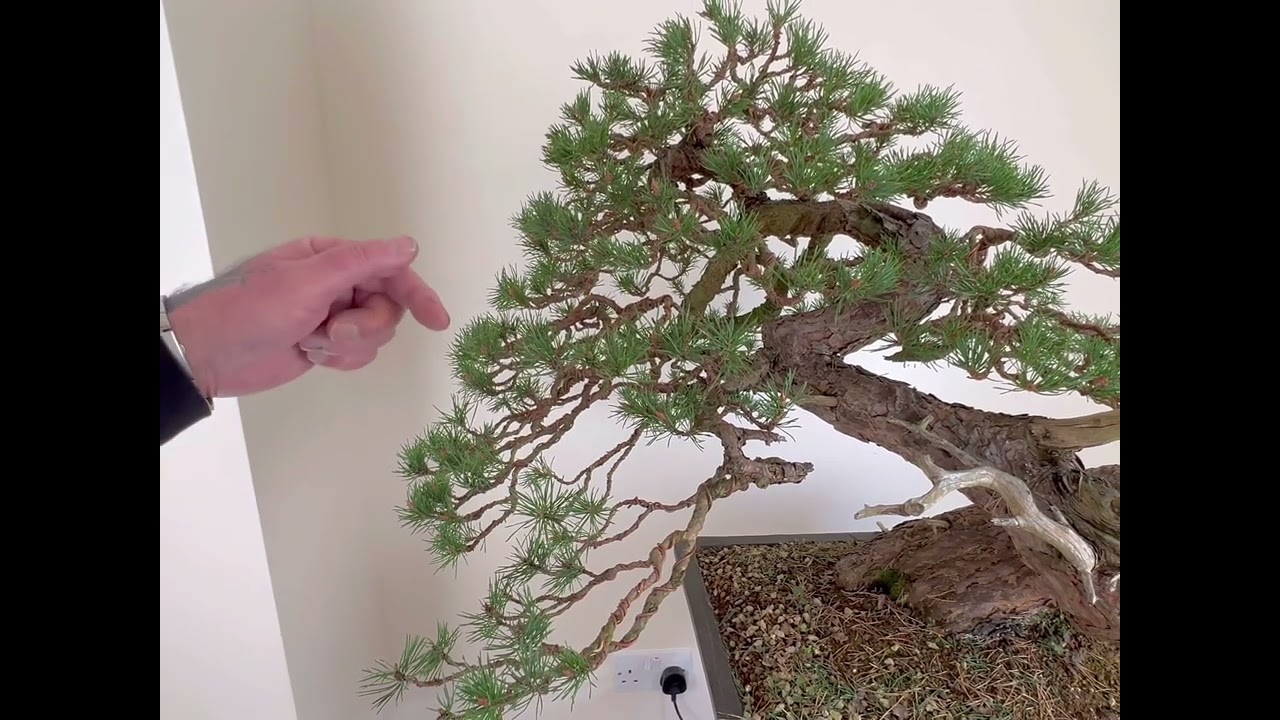
Hello, my name is Harry Harrington from Bonsai for Me, and today's video is intended as a primer for pine bonsai. Now, this is a Scots pine that I've just styled. There's an example next to me. So today's video is a primer for dealing with the 5 different stages of pines through the year. And if you can get your head around these basic 5 steps without the interference of all the extra techniques that you can apply to, uh, pine bonsai Then your life will become much, much simpler just getting that basic understanding. So the first step is caring for the tree in the winter and early spring up until around April. Now at this point, the pine will have Buds at the tips. All you need to be doing is making sure that there are no more than 2 buds at each tip. If you have a 3rd or a 4th bud, just pull it away entirely. You always want to distribute the number of buds per tip across the entire tree, so there are just the 2 buds. Don't fertilize in the early spring, although you can give some seaweed just as your deciduous trees are starting to wake up. The second step of pine growth through the year is late spring. Now this actually starts when your night temperatures in your area reach around 12 degrees Celsius, and each of these buds that have been sitting here through the winter will slowly start to elongate, and they will turn into what are known as candles. And the candles will start to extend out, and you want to allow them to reach approximately the same thickness as your thumb, which is around an inch. You don't remove the candle. Removing the candle will weaken the tree. What you want to do is take the very, very tip of that candle off, and it will stop the candle extending any further. It will also redirect energy from From the first, the candle that you find, and you stop and redirect it to other parts of the tree. Step 3 is the summer, which I'm calling June, July, around midsummer. The new needles will start to emerge from each of the candles. It's important now to try not to Water the pine too heavily or allow too much rain onto it. Excess rain will cause much larger elongated needles. But do not prune the new growth yet, even if the tree is actually starting to look a little untidy. Allowing this extra growth will allow the tree to manufacture More sugars and more starches, and it invigorates the tree ahead of hopefully prompting back budding later in the season. During this period, watch carefully for swelling branches, which will cause the wire that sat on the branches to start to cut in. The fourth stage during the care calendar for pines is August or late summer. The really important signal to look out for are new buds starting to emerge on the current year's growth. This means that the needle length, the, or the, the length of the new needles that have emerged during June and July is set. You can start fertilizing your tree heavily. Try to feed your pine with an organic fertilizer and use plenty of seaweed as well. From this point onwards, all the needles can be plucked Or the newest growth pruned back. The loss of needles after needle plucking will really start to prompt new growth next year, as the tree will be out of balance between its, its new roots and the amount of foliage that's left on the, the foliage mass, and it will prompt the tree to try and back bud next year. This is also the very best time to wire and style your pine. So caring for your pines is really that simple as following those 5 steps of growth each year. The growth habit is different than deciduous trees or trees that we might be used to in our gardens. But actually, the pine growth and the pine year is very, very reliable and very easy to, to get your head around once it's broken down into those basic 5 steps. I hope this video is useful to you and makes life a little simpler.